
文化传承与创新

Search documents
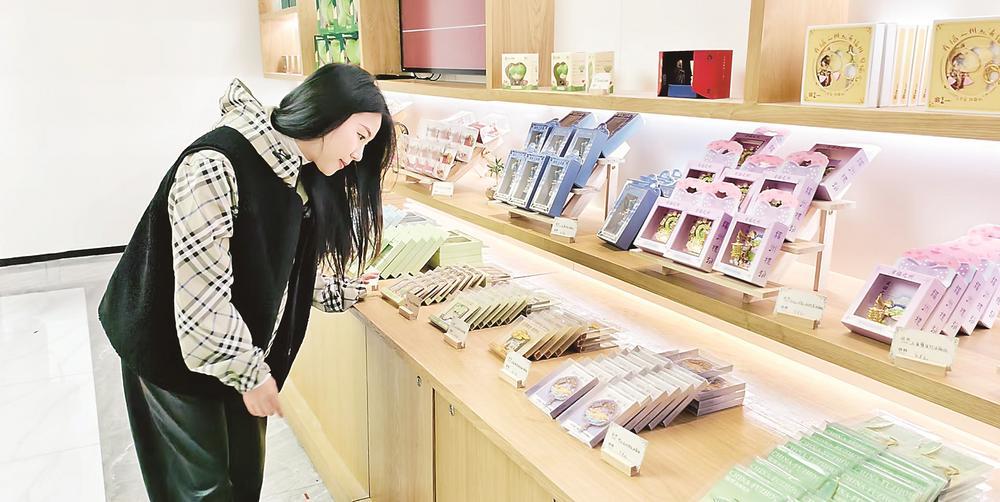
“福建礼物”品牌在榕发布
Xin Lang Cai Jing· 2026-01-10 23:42
Group 1 - The "Fujian Gift" brand was launched in Fuzhou, aiming to transform traditional cultural tourism products into innovative cultural items that reflect Fujian's heritage and promote consumption upgrades [4][5] - The first batch of "Fujian Gift" products showcases distinct regional, artistic, and practical characteristics, featuring high-quality cultural creations from nine cities and one district in Fujian, such as Dehua porcelain and Fuzhou lacquerware [4] - A visual identity system for "Fujian Gift" was also released, symbolizing the development and integration of Fujian culture through a design that combines geographical imagery and traditional gift vessel shapes [4] Group 2 - The initiative is described as a cultural expression innovation, aiming to empower cultural preservation and tourism economic development through a model that includes a cultural reception area, a gift shop, and an AI interactive experience zone [5] - The event was guided by the provincial cultural and tourism department and organized by the Fujian Folk Museum [6]

以文载道,在北京同世界对话
Xin Lang Cai Jing· 2026-01-10 10:13
Group 1 - The core mission of the new era is to enhance the influence of Chinese civilization through the implementation of Xi Jinping's cultural thought, with Beijing positioned as a key area for cultural exchange [1] - The relationship between "principle" and "strategy" is emphasized, highlighting the need for a balance between theoretical understanding and practical application in promoting Xi Jinping's cultural thought [1] - The importance of storytelling in conveying deep thoughts in a relatable manner is stressed, using narrative strategies to make profound ideas accessible [1] Group 2 - The relationship between "roots" and "leaves" is crucial for the creative transformation and innovative development of traditional Chinese culture, with a focus on extracting and showcasing the essence of Chinese civilization [2] - Key concepts such as "common prosperity" and "human destiny community" are highlighted as part of the continuous logic of civilization that needs thorough explanation [2] Group 3 - The relationship between "similarity" and "difference" is essential for fostering mutual learning between Eastern and Western cultures, emphasizing the need to respect differences in cultural exchanges [3] - The importance of cultural dialogue as a means of equal interaction and understanding is underscored, with a call for maintaining cultural confidence and identity [3] Group 4 - The relationship between "division" and "integration" is highlighted in the context of reconstructing the international communication landscape, advocating for a systematic approach to enhance the effectiveness of international communication [4] - The potential of Beijing's rich cultural resources and media industry is noted, with a call for collaborative platforms to effectively share compelling stories about Beijing and China [4]
通州为千年“中国彩虹”搭建广阔舞台
Xin Lang Cai Jing· 2026-01-10 03:00
Core Viewpoint - The establishment of the Bayi Kiln's red and green ceramic exhibition cabinet in Beijing's Tongzhou District represents a significant cultural exchange and a new pathway for the preservation and development of this national intangible cultural heritage [5][6]. Group 1: Cultural Significance - The Bayi Kiln, located in Changzhi City, Shanxi Province, is known for its unique red and green ceramics, which have historical significance dating back to the Northern Song Dynasty [5]. - The ceramics are characterized by a white glaze base with red and green decorations, marking a pioneering moment in China's ceramic history [5]. - The collaboration between Tongzhou District and Bayi Kiln aims to enhance cultural exchange and promote the unique charm of Bayi Kiln ceramics [6]. Group 2: Business Development - The exhibition cabinet has already led to multiple orders from Beijing and invitations for exhibitions and exchanges, indicating a growing market interest [7]. - The presence of the exhibition cabinet has increased tourist visits to the Tang Dazhuang homestay village, boosting occupancy rates and surrounding consumption, showcasing the effectiveness of the "culture + tourism" integration model [7]. - The Bayi Kiln's management emphasizes the importance of balancing traditional craftsmanship with modern design to meet contemporary aesthetic and lifestyle needs [6].

从观光到度假:西安大唐芙蓉园探索文旅升级之路
Zhong Guo Xin Wen Wang· 2026-01-01 13:20
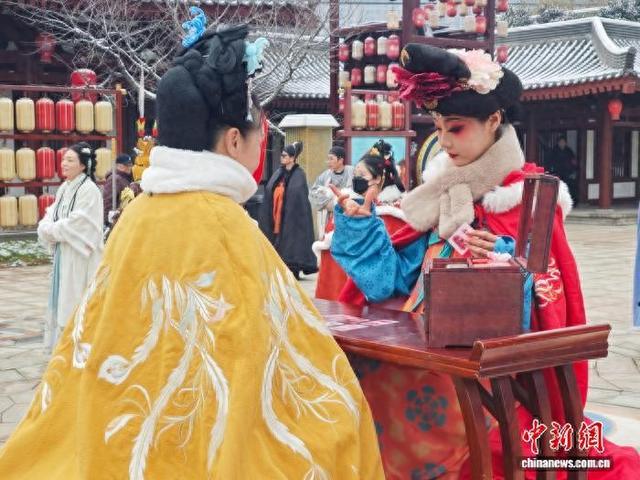
Group 1 - The establishment of the "Shiwushuang" Art Center and the "Miaochang'an" Hanfu Industry Development Center marks the transformation of the Datang Furong Garden from a sightseeing tourist attraction to a micro-vacation destination in Xi'an [1][5] - The "Shiwushuang" Art Center aims to shift from providing tourism products to offering a platform for cultural ideas, featuring an inaugural exhibition that includes 62 works from 24 artists, exploring the themes of cultural inheritance and innovation [3][5] - The "Miaochang'an" Hanfu Industry Development Center is designed to promote the Hanfu industry towards quality and clustering, planning to create a comprehensive product and service chain that includes design, production, exhibition, and retail [5][7] Group 2 - The dual establishment of the centers reflects the development strategy of "recreating tradition" by integrating creative thinking and innovative language to transform static historical landscapes into dynamic cultural production spaces [5][7] - The "2026 Chang'an Lantern Festival" was officially launched at the Datang Furong Garden, featuring themes that connect traditional culture with modern festivities, enhancing the depth of the scenic area and promoting consumption upgrades [7]

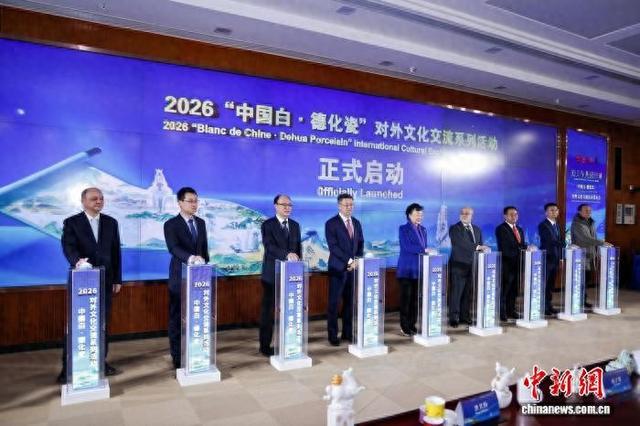
“中国白·德化瓷”对外文化交流系列活动在京启动
Xin Lang Cai Jing· 2025-12-29 12:00
Core Viewpoint - The "China White·Dehua Porcelain" cultural exchange activity aims to enhance the international influence of Dehua porcelain and promote cultural exchange along the Maritime Silk Road [1][3]. Group 1: Event Overview - The event was held in Beijing on December 29, focusing on deepening cultural exchanges and showcasing the heritage and innovation of Dehua porcelain [1]. - The event is part of a broader initiative to promote Dehua porcelain as a significant cultural IP through international exhibitions and cultural weeks [3][5]. Group 2: Future Plans - A new action plan for Dehua County's ceramic development for 2026 was announced, which includes seven key activities such as international exhibitions and marketing promotions [5]. - The cooperation framework agreement for 2026 was signed between Dehua County's cultural, sports, and tourism bureau and the "China and Foreign Cultural Exchange" magazine [5]. Group 3: Cultural Significance - Dehua porcelain has a history of over 3,700 years and is renowned for its quality, becoming a key export during the Song and Yuan dynasties [3]. - The event featured a ceramic exhibition showcasing both traditional and contemporary designs, highlighting the craftsmanship and historical significance of Dehua porcelain [7].
(文化中国行)新疆木卡姆焕新“声”:文化瑰宝奏响时代新韵
Xin Lang Cai Jing· 2025-12-27 05:18
Core Viewpoint - The Xinjiang Uyghur Muqam art, recognized as a cultural treasure, is experiencing a revival through systematic inheritance and innovation, marking the 20th anniversary of its inclusion in UNESCO's intangible cultural heritage list [1][2][3] Group 1: Cultural Heritage and Protection - The Muqam art form has transitioned from "rescue protection" to "systematic inheritance" over the past 20 years, supported by government regulations and planning [1] - The "Xinjiang Uyghur Muqam Art Protection Regulations" legally define the rights of intangible cultural heritage inheritors and outline the responsibilities of various government levels and society [1] - Enhanced protection measures and regulated development paths have been established to address practical issues in the inheritance of intangible cultural heritage [1] Group 2: Talent Development and Innovation - Xinjiang Arts Academy has trained over 250 professionals in Muqam since establishing a dedicated program in 1996, contributing significantly to the art's transmission [2] - The Wan Tong Shu Muqam Documentation Center houses 311 pieces of notation manuscripts and recordings, preserving the art form that was at risk of disappearing [2] - Innovative projects, such as the opera "Muqam Love Song - Wan Tong Shu," combine traditional rhythms with multimedia and AI elements to engage younger audiences [2] Group 3: Digital Preservation and Modern Engagement - The China Uyghur Classical Literature and Muqam Society is advancing a digital preservation project to create a "China Xinjiang Muqam Digital Resource Library," utilizing AI technology for resource optimization [3] - The Muqam art is evolving to resonate with younger generations, transforming from a traditional favorite of the older generation to a new passion among youth [3]
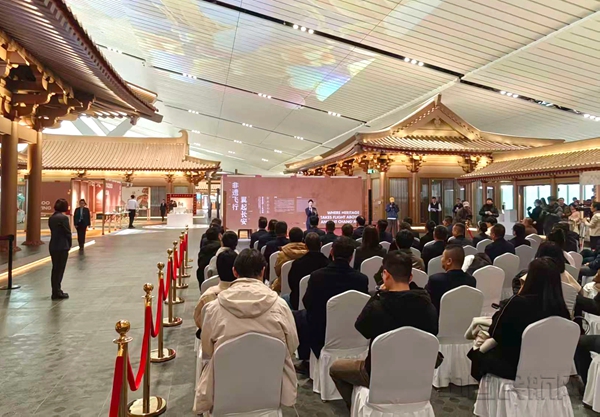
在机场邂逅非遗之美 西安咸阳机场“非遗飞行·翼起长安”炫目亮相
Zhong Guo Min Hang Wang· 2025-12-26 09:31
Core Viewpoint - The "Intangible Cultural Heritage Flight: Wings of Chang'an" cultural exhibition at Xi'an Xianyang Airport integrates traditional cultural elements with modern air travel, showcasing over ten intangible cultural heritage projects from Shaanxi province, creating a unique artistic experience for travelers [1][3]. Group 1: Cultural Integration - The exhibition features traditional Shaanxi crafts such as Ansai paper-cutting, Yanchuan cloth pile painting, Huaxian shadow puppetry, Fengxiang clay sculpture, and more, blending these heritage arts into the modern travel environment [1][3]. - The event aims to enhance the cultural richness of the airport, positioning it as a "city living room" that reflects the historical and cultural essence of Shaanxi [3][7]. Group 2: Artistic Collaboration - Renowned designers, artists, and architects collaborated on the exhibition, presenting not only classic intangible cultural heritage works but also contemporary furniture and art installations inspired by traditional crafts like bamboo weaving and lacquer [3][7]. - The exhibition layout is open, allowing for a natural integration of heritage works into passenger flow, complemented by Tang-style architecture that enhances the cultural atmosphere [3][7]. Group 3: Ongoing Commitment - Xi'an Xianyang Airport will continue to leverage Shaanxi's rich historical and cultural heritage, promoting the integration of regional culture with modern transportation services to contribute to the province's cultural development [7].
从“急需保护”到“传承有序”:赫哲族伊玛堪的守护与传承之路
Xin Hua Wang· 2025-12-11 23:12
Core Viewpoint - The Huzhe ethnic group's oral tradition, "Imakan," has been successfully transitioned from an urgent protection list to a representative work of human intangible cultural heritage, highlighting the importance of systematic protection and revitalization efforts [1][12]. Group 1: Cultural Heritage Protection - "Imakan" is a narrative art form that embodies the values of heroism, justice, and harmony with nature, serving as a cultural symbol for the Huzhe people [3]. - In the early 21st century, only five individuals could perform "Imakan," prompting a systematic rescue and protection initiative that began in the 1980s [3]. - The establishment of the intangible cultural heritage law in 2011 provided institutional support for the protection of "Imakan" [3]. Group 2: Revitalization Efforts - Currently, over 100 inheritors are actively involved in the revival of "Imakan," with seven training centers fostering its continuation [4]. - Wu Baochen, a key figure in the protection and transmission of "Imakan," has contributed significantly to teaching and developing educational materials [6]. - The establishment of the Tongjiang Intangible Cultural Heritage Festival and the creation of various artistic works have increased public interest in "Imakan" [8]. Group 3: Language and Education - The preservation of the Huzhe language is crucial for the continuation of "Imakan," as there are only about 5,000 Huzhe people, with few fluent speakers [9]. - The introduction of Huzhe language into primary school curricula is a significant step towards ensuring the continuity of cultural heritage [9]. Group 4: Innovation and Modernization - "Imakan" has embraced modern technology, with initiatives like 5G and VR enhancing the cultural experience and integrating it into contemporary life [11]. - Young inheritors are blending traditional "Imakan" with modern music and social media to keep the art form vibrant and relevant [11]. Group 5: Cultural Exchange and Impact - The successful transition of "Imakan" to a representative work of heritage serves as a model for other ethnic groups in China, promoting cultural prosperity and exchange [12][14]. - The experience gained from protecting "Imakan" is expected to enhance the international visibility and appeal of Chinese culture [14].

中国民间文学大系出版工程的时代意义
Ren Min Ri Bao· 2025-12-11 22:11
Core Viewpoint - The "Chinese Folk Literature Series" project is a significant initiative aimed at preserving and promoting Chinese folk literature, which is deeply embedded in the cultural heritage and spiritual world of the Chinese people [1][2]. Group 1: Project Overview - The project was initiated in 2017 as part of the "Opinions on Implementing the Traditional Culture Transmission and Development Project," with the "Chinese Folk Literature Series" being one of the first key projects [1]. - Over the past eight years, more than 12,000 experts and folk literature workers have contributed to the organization, research, publication, and dissemination of folk literature [1]. - As of September this year, the project has published over 100 volumes, with a total of 619 volumes compiled and 116 volumes published, establishing a national collection library for folk literature [1][2]. Group 2: Academic and Cultural Significance - The compilation and publication of the series represent a continuation of the Chinese cultural lineage and an exploration of building an independent knowledge system in the field of folk literature [2]. - The project emphasizes the integration of various elements, including fieldwork and narrative practices, and employs a multi-format approach (text, audio, video) to preserve the living and situational aspects of folk literature [2]. - The project has organized numerous seminars, workshops, and training sessions, fostering academic discussions and producing significant research outcomes that contribute to the construction of an independent knowledge system in Chinese folk literature [2][3]. Group 3: Modern Application and Impact - The project aims to revitalize folk literature by integrating traditional stories, songs, and myths into contemporary contexts, thus enhancing their relevance and application in modern life [3]. - The establishment of a database containing over 1.6 billion characters serves as a solid foundation for academic research and supports the development of digital culture and creative industries in the country [3]. - The rich resources of folk literature are seen as valuable cultural IP, with potential for development in various industries, including gaming and film, leading to a complete industrial chain of content products and derivatives [4]. Group 4: Cultural Identity and Community - Folk literature serves as a vital medium for cultural exchange, social practice, and community bonding, distinguishing groups within the broader society [4]. - The project aims to enhance cultural cohesion and identity among the people, providing a historical and contemporary reference for emotional expression and cultural confidence [4]. - The initiative aligns with the broader goal of integrating traditional cultural values with contemporary artistic creativity, thereby invigorating the vitality of Chinese culture [5].
重新发现民间文学
Ren Min Ri Bao· 2025-12-11 22:05
Core Viewpoint - The article emphasizes the significance of folk literature as a vital cultural heritage that reflects the collective imagination and values of a nation, highlighting its evolution from oral traditions to documented forms and the ongoing efforts to preserve and innovate within this literary domain [1][2][4]. Group 1: Definition and Importance of Folk Literature - Folk literature is characterized as a collective oral creation that serves as the root of written literature, embodying the cultural identity and moral values of a nation [1]. - It has been a source of immense literary creativity, with historical texts like "Shijing" preserving rich examples of early folk literature [1]. - The article describes folk literature as an essential part of daily life, often expressed in conversations and cultural practices, making it an integral aspect of national identity [2]. Group 2: Preservation Efforts - Significant efforts have been made in China to protect and document folk literature, transitioning from rescue-based approaches to scientific preservation, supported by government initiatives and cultural awareness [2][3]. - Major projects, such as the "Chinese Folk Literature Series Publishing Project," have resulted in a comprehensive collection of folk literature, filling gaps in literary and cultural history [2]. Group 3: Innovation and Modern Relevance - The article discusses the need for innovation in folk literature, suggesting that modern technology and media can revitalize traditional stories, as seen in contemporary games and films inspired by folk narratives [3]. - There is a growing interest among younger generations in traditional culture, indicating a potential for revitalizing folk literature through new platforms and experiences [3]. Group 4: Cultural Responsibility - The article stresses the importance of recognizing and respecting cultural heritage, advocating for a balance between innovation and the preservation of original characteristics [4]. - It calls for a collective responsibility to pass down cultural treasures to future generations, emphasizing the significance of the "Chinese Folk Literature Series Publishing Project" as a monumental cultural achievement [4].