
新型举国体制

Search documents
重大成果竞相涌现!这就是大国实力!
Ke Ji Ri Bao· 2026-01-21 09:45
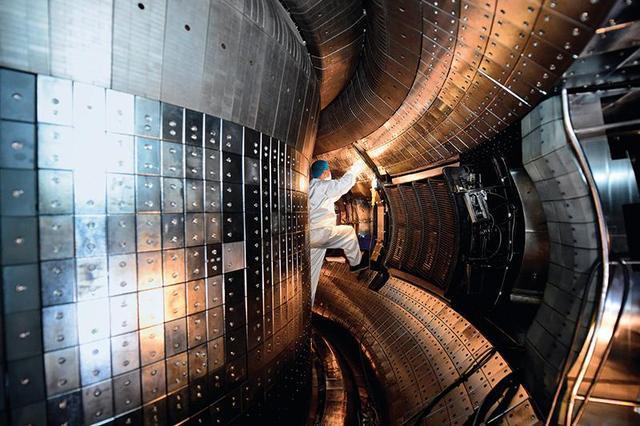
Group 1 - China's "artificial sun" achieved a world record of "one billion degrees for a thousand seconds," marking a significant leap from basic science to engineering practice in fusion energy research [1] - The drilling depth of China's Shendi Chuan Ke No. 1 well has surpassed 10,000 meters, indicating a robust advancement in deep earth exploration [1] - The global first 5G-A humanoid robot "Kua Fu" successfully completed the torch relay for the 15th National Games, showcasing advancements in robotics [1] Group 2 - China ranks first globally in the number of approved innovative drugs, reflecting a successful completion of clinical trials [2] - Technological achievements are increasingly transitioning from laboratories to production lines, resulting in tangible changes in daily life [2] - The Ministry of Science and Technology emphasizes that 2026 will be a critical year for advancing the construction of a strong technological nation [4] Group 3 - The Ministry of Science and Technology will focus on innovation-driven strategies, enhancing strategic planning, policy measures, and resource platforms to improve the overall effectiveness of the national innovation system [4] - There is a commitment to increase high-quality technological supply and cultivate new driving forces to lead the development of new productive forces [4] - China's technology sector is poised for another "harvest year," reinforcing its path towards high-quality development [4]
中国科技再迎“丰收年” ——2025科技工作新亮点之一
Ke Ji Ri Bao· 2026-01-21 06:50
Group 1 - China's fusion energy research has made a significant leap from basic science to engineering practice, supported by a new type of national system that has enabled breakthroughs in superconducting magnet design and manufacturing [1] - The successful drilling of the deep exploration well in Sichuan, reaching a depth of over 10,000 meters, marks another important milestone for China National Petroleum Corporation (CNPC) in deep earth exploration [1] - A collaborative innovation consortium formed by nine state-owned enterprises, including CNPC and China National Petroleum Corporation, is driving technological advancements in deep oil and gas exploration [1] Group 2 - The new type of national system has demonstrated its advantages in major technological breakthroughs across various fields, including the Beidou system and lunar exploration, showcasing the effectiveness of coordinated efforts [2] - The 14th Five-Year Plan emphasizes the need for a new type of national system to achieve decisive breakthroughs in key core technologies across critical sectors [2] - The transition from quantitative accumulation to qualitative leaps in technology reflects the strengths of the new type of national system in addressing external technological blockades and fostering new productive forces [2] Group 3 - The rapid development of emerging industries such as artificial intelligence, industrial robotics, and clean energy is evident, with significant advancements in smart manufacturing and container operations at Tianjin Port [3] - By 2025, China's production and sales of new energy vehicles are expected to exceed 16 million units, maintaining its position as the global leader for 11 consecutive years [3] - The low-altitude economy is projected to surpass a market scale of 1.5 trillion yuan, indicating the formation of a new strategic emerging industry cluster [3] Group 4 - The successful clinical trial of a brain-machine interface for precise tumor boundary localization represents a key step in the clinical application and industrialization of this technology [5] - By 2025, China is expected to approve 76 innovative drugs, leading the world in the number of new drug approvals, with a total transaction value of over 130 billion USD for innovative drug licensing [5] - Technological advancements are increasingly integrated into daily life, enhancing various sectors such as smart agriculture and digital cultural heritage [5] Group 5 - The Ministry of Science and Technology emphasizes the importance of independent innovation in advancing high-quality development and enhancing the overall effectiveness of the national innovation system [6] - The focus for 2026 will be on strengthening strategic planning and resource allocation to foster new driving forces and lead the development of new productive forces [6]


中国科技再迎“丰收年”
Huan Qiu Wang Zi Xun· 2026-01-21 01:30
Core Insights - In 2025, China is experiencing a significant year of technological achievements, showcasing advancements in various fields such as nuclear fusion, artificial intelligence, and innovative pharmaceuticals, positioning itself as one of the fastest-growing economies in terms of innovation [1][4][9]. Group 1: Breakthroughs in Technology - The "artificial sun" project achieved a world record by maintaining plasma operation at 1 million degrees Celsius for 1066 seconds, marking a significant leap in fusion energy research [2][4]. - China Petroleum successfully drilled over 10,000 meters deep in the Sichuan Basin, demonstrating advancements in deep-earth exploration technologies through collaborative efforts among enterprises, universities, and research institutions [4][5]. Group 2: Innovation Mechanisms - The new type of national system has proven effective in overcoming technological barriers, enabling breakthroughs in critical areas such as superconducting magnets and deep-earth drilling technologies [4][5]. - The integration of resources and collaborative efforts across various sectors has been emphasized as a key strategy for achieving decisive breakthroughs in core technologies [5][9]. Group 3: Economic Transformation - The rapid expansion of 5G-A networks across over 300 cities has facilitated advancements in smart manufacturing and large-scale event support, contributing to economic growth [6][8]. - In 2025, China's production and sales of new energy vehicles exceeded 16 million units, maintaining its position as the world's largest market for such vehicles [8][9]. Group 4: Healthcare Innovations - A groundbreaking clinical trial using a domestically developed microelectrode array for precise tumor boundary localization during surgery was successfully completed, marking a significant advancement in brain-computer interface technology [10][12]. - In 2025, China approved 76 innovative drugs, leading the world in the number of new drug approvals, with total authorized transactions exceeding $130 billion [12]. Group 5: Future Directions - The Ministry of Science and Technology plans to enhance the national innovation system's overall efficiency and promote high-quality technological supply to foster new economic drivers [13].

高铁里程破5万公里的启示
Jing Ji Ri Bao· 2026-01-19 22:21
陕北黄土高原,千沟万壑之间,一列"复兴号"动车组如银龙般穿梭而过。近期,西延高铁正式开通运 营,延安跨入"高铁时代"。与此同时,中国高铁运营里程突破5万公里,占全球高铁总里程七成以上, 可绕地球赤道一圈有余。高铁已超越现代交通运输体系的范畴,成为观察中国经济地理演变、产业升级 脉络和创新驱动发展进程的一扇重要窗口。 (文章来源:经济日报) (中国经济网供稿) 高铁不仅缩短了时空距离,更极大提升了要素流动的效率。正如西延高铁将延安融入西安"1小时经济 圈",让陕北的苹果、小米能更快地通江达海,高铁网正打破地域壁垒。在京津冀、长三角、粤港澳大 湾区,高铁使城市群产生同城效应,催生出高密度的科创走廊与产业带;在中西部地区,高铁网的延伸 不仅解决了运力瓶颈,更引导资金、技术、人才向腹地流动。高铁正在拉平区域间的"鸿沟",为区域协 调发展提供强有力的支撑。这种由交通改善带来的发展机遇,让更多人能在家门口抓住时代红利。 高铁网日益织密,有力激发了国内超大规模市场的潜力。年客运量30亿人次带动了旅游、餐饮、物流等 服务业的蓬勃发展。高铁让"流动的中国"呈现出前所未有的广度与密度,其意义远超交通本身。它重构 了国人的生活节奏 ...
新华财经早报:1月18日
Zhong Guo Jin Rong Xin Xi Wang· 2026-01-18 00:50
Group 1 - China Aviation Engine Group's "Taihang Three Brothers" has completed evaluation and acceptance, marking a significant breakthrough in gas turbine R&D and technology, which will strongly promote the industrialization and commercialization of the gas turbine industry in China [1][1][1] - The People's Bank of China and the National Financial Regulatory Administration announced that the minimum down payment ratio for commercial housing loans will be adjusted to no less than 30%, aiming to support a new model for real estate development [1][1] - The Ministry of Industry and Information Technology has revised the management measures for high-quality small and medium-sized enterprises, including technology-based SMEs in the cultivation scope, which will be implemented from April 1, 2026 [1][1] Group 2 - The National Energy Administration announced that by 2025, China's total electricity consumption will exceed 10 trillion kilowatt-hours, reaching 10.4 trillion kilowatt-hours, a year-on-year increase of 5%, which is unprecedented for a single country [1][1][1] - In 2025, the foreign trade import and export volume of Yiwu, Zhejiang, is expected to exceed 800 billion yuan, reaching 836.5 billion yuan, with imports hitting 105.8 billion yuan, a year-on-year increase of 32.3% [1][1] - In 2025, Shanxi's renewable energy generation is projected to reach 118 billion kilowatt-hours, a year-on-year increase of 26%, equivalent to the annual electricity consumption of approximately 35 million households [1][1]

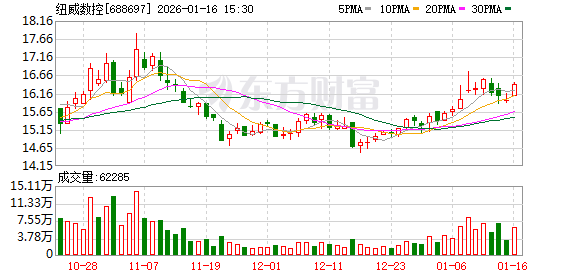
纽威数控:公司生产经营情况一切正常
Zheng Quan Ri Bao· 2026-01-16 10:47
Core Viewpoint - The company, Nuwei CNC, is maintaining normal production and operational conditions, with future growth plans in place despite current economic pressures in China [2] Company Summary - Nuwei CNC has developed a five-year strategic plan, with Phase IV expected to be operational by May 2025 and Phase V anticipated to commence production by July 2027 [2] - The company has a sufficient backlog of orders, indicating strong demand for its products [2] Industry Summary - The CNC machining rate in China's machine tool industry has increased from 30% in 2015 to an expected 51% by 2024, highlighting significant growth potential compared to developed countries with rates of 70%-80% [2] - From January to November this year, China's metal cutting machine imports totaled $4.31 billion, a slight decrease of 0.5% year-on-year, while exports reached $5.66 billion, reflecting a year-on-year growth of 12.3% [2] - The national "14th Five-Year Plan" emphasizes the need for breakthroughs in key core technologies in critical fields such as integrated circuits and high-end machinery, supporting the long-term growth of the machine tool market in China [2]

上海交大:助力青年勇闯“科研无人区”
Zhong Guo Qing Nian Bao· 2026-01-16 02:16
Core Insights - Shanghai Jiao Tong University (SJTU) has made a significant breakthrough in battery technology with the publication of a research paper on high-voltage, anode-free sodium-sulfur batteries, marking a first in the international arena [1] - The research is part of SJTU's initiative to encourage young scholars to engage with cutting-edge scientific frontiers and address national needs, supported by the university's transformative molecular frontier science center [1][2] Group 1: Research and Development - The sodium-sulfur battery research addresses global challenges related to resource abundance and safety in battery technology, with sodium being a more abundant and cost-effective alternative to lithium [2] - The research direction was influenced by SJTU's "Brick Forum," where experts provide critical feedback on research proposals, ensuring that projects align with national and societal needs [2][3] - SJTU emphasizes a supportive research environment, allowing researchers like Sun Hao to focus on transformative projects without pressure, providing funding, laboratory space, and time for thorough research [3] Group 2: Talent Development and Support - SJTU has established the "Outstanding Doctoral Graduate Development Scholarship," offering up to 300,000 yuan annually for two years to top graduates for further research opportunities globally [4] - The university has a unique evaluation system that prioritizes innovative and original research over traditional metrics, exemplified by the "SJTU 2030" plan, which funds only projects with disruptive ideas [3][4] - SJTU has implemented a "flat" research environment where all principal investigators (PIs) have equal academic rights and funding support, fostering collaboration and innovation among researchers [3] Group 3: Innovation and Commercialization - SJTU has created a new role of technology transfer specialists to assist researchers in commercializing their innovations, providing comprehensive support for project implementation [6] - The Zhangjiang High-tech Park hosts two innovative platforms from SJTU, which have attracted numerous high-level research teams and fostered interdisciplinary collaboration [6] - The university offers stable funding and support for basic research, allowing researchers to focus on impactful projects without financial concerns [7] Group 4: Recruitment and Advancement - SJTU has streamlined its recruitment process for young faculty, allowing for the direct hiring of nearly 100 young teachers annually, and has established mechanisms for early promotion based on merit [8] - The university encourages outstanding young faculty to advance to senior positions without the usual time constraints, with over 140 young talents having successfully promoted, some as young as 33 [8]
木桶与竹竿(人民论坛)
Ren Min Ri Bao· 2026-01-15 23:51
长板引领突破,锻长板是实现弯道超车的破局之道。 近年来我们发挥新型举国体制优势,关键核心技术攻关突围,正是竹竿效应的投射。人工智能大模型你 追我赶、芯片自主研发有了新突破、天问二号开启"追星"之旅……重大科技成果,离不开有为政府与有 效市场的有机结合。面对关键技术、前沿领域的对垒,抢机遇、扬优势才能占先机、赢未来。 面对考试,一门课丢分,都影响总分;着眼今后,把一项做到最好,就是满分……以木桶效应与竹竿效 应为喻,一位老师鼓励同学专注热爱、做深做透。课堂上的新"劝学篇",引人思考。 木桶装水看短板,竹竿取物凭长节,两个朴素隐喻,道出成长道理,也折射发展逻辑。 木桶效应,强调短板的制约;竹竿效应,凸显长板的优势。二者不是非此即彼的选择题,而是辩证统一 的方法论,是底线思维与高线思维的有机融合。实现高质量、可持续的发展,既要以补短求均衡,又要 以扬长谋超越。 短板牵制全局,补短板是提升竞争力的策略之选。 基础设施建设,弥补硬件不足;脱贫攻坚,消除区域性贫困;教育普及,提升全民素养。实打实的举 措,有力夯实发展基石,也有效提升整体效能。 扬长与补短,是动态平衡,也能动态转化。曾经的短板,在突破瓶颈后,可能转化为新的 ...
发挥体制优势建设太湖世界级生态湖区
Xin Hua Ri Bao· 2026-01-12 23:43
□ 刘伟京 王淑芬 操庆 党的二十届四中全会审议通过的《中共中央关于制定国民经济和社会发展第十五个五年规划的建议》明 确提出"加快经济社会发展全面绿色转型,建设美丽中国"的战略部署,强调要"筑牢生态安全屏障,增 强绿色发展动能"。太湖作为长三角生态安全与经济的重要支撑,2024年太湖水质改善取得突破,水质 总体达到Ⅲ类,创30年来最好水平,首次全年达到国家良好湖泊标准。同年,江苏提出"再用10年左右 的时间,使太湖的生态环境发生质的变化,把太湖打造成世界级生态湖区和创新湖区"。 太湖治理实践是美丽中国建设的先行探索,充分展示了习近平生态文明思想的实践伟力,也充分印证了 高质量发展和高水平保护精神相辅相成、相得益彰的辩证统一关系。 发展与保护矛盾叠加不利自然因素 湖泊治理是公认的世界性难题,太湖治理则更甚。江苏太湖流域人口密集、经济发达,资源开发强度 大。太湖流域常住人口密度远超日本琵琶湖和北美伊利湖流域,国土开发强度超过30%临界点,用水量 超过本地水资源量。工业园区超过450个,传统产业工业废水排放量大,新兴产业迅速发展又带来新的 污染特征和环境压力。种植业品种多、产量大,畜禽养殖和水产养殖面广量大,化肥施 ...
从延安通高铁感悟欣欣向荣的中国
Ren Min Ri Bao· 2026-01-12 04:03
当复兴号驶向宝塔山,西延高铁开通了,陕北革命老区从此迈入"高铁时代"。 随着陕西西安至延安高铁开通,中国高铁营业里程突破5万公里,领跑世界。 5万公里,织就全球最大、最先进的高铁网,营业里程超过全球其他国家总和两倍,人流、物流、信息 流、资金流相互交织,生机涌动。 建不建?怎么建?面对京沪高铁构想,我们曾激辩10余年。《中长期铁路网规划》的发布实施,让中国 高铁迈入跨越式发展新阶段。 习近平主席发表二〇二六年新年贺词时指出:"大家拼搏进取、耕耘奉献,铸就了欣欣向荣的中国。" 路,联通大江南北,串联历史与现实。从西延高铁开通看发展的确定性、创造性、机遇性,我们更能感 悟一个欣欣向荣的中国。 (一) 历史地看,从西延高铁开通,可以看到中国发展的确定性。 1991年12月26日,延安结束无铁路的历史,延安到西安需14小时;2012年,西安到延安开通动车,全程 2.5小时;2025年12月26日,开通后的西延高铁,设计时速达350公里。 当全长299公里的西延高铁融入全国高铁网,2004年发布的首版《中长期铁路网规划》更显"奠基石"的 意义。 循序渐进,步步为营。2008年、2016年,连续发布两版《中长期铁路网规划 ...