
新能源汽车出口

Search documents
瑞达期货铝类产业日报-20251118
Rui Da Qi Huo· 2025-11-18 08:18
1. Report Industry Investment Rating No information provided. 2. Core Viewpoints of the Report - For alumina, the fundamentals may be in a stage where supply slightly converges and demand remains generally stable. The current oversupply situation may improve with production control. Suggest light - position short - term long trades at low prices, while controlling the rhythm and trading risks [2]. - For electrolytic aluminum, the fundamentals may be in a stage of temporary supply - demand stability with a slight accumulation of social inventory. The option market sentiment is bullish, and the implied volatility slightly decreases. Suggest light - position range - bound trading, while controlling the rhythm and trading risks [2]. - For cast aluminum alloy, the fundamentals may be in a stage of supply convergence and slightly reduced demand. Suggest light - position range - bound trading, while controlling the rhythm and trading risks [2]. 3. Summary According to Relevant Catalogs 3.1 Futures Market - **Aluminum Futures**: The closing price of the Shanghai aluminum main contract was 21,465 yuan/ton, down 260 yuan; the main - second - contract spread was - 60 yuan, up 80 yuan; the main contract holding volume was 356,547 lots, down 34,312 lots; the net holding of the top 20 in Shanghai aluminum was 19,360 lots, down 5,102 lots; the Shanghai - London ratio was 7.65, up 0.05; the Shanghai Futures Exchange inventory was 114,899 tons, up 1,564 tons; the Shanghai Futures Exchange warehouse receipt was 69,484 tons, up 4,742 tons [2]. - **Alumina Futures**: The closing price of the alumina futures main contract was 2,780 yuan/ton, down 37 yuan; the main - second - contract spread was - 61 yuan, up 21 yuan; the main contract holding volume was 405,009 lots, up 14,515 lots [2]. - **Cast Aluminum Alloy Futures**: The closing price of the cast aluminum alloy main contract was 20,730 yuan/ton, down 260 yuan; the main - second - contract spread was - 105 yuan, down 45 yuan; the main contract holding volume was 13,191 lots, down 508 lots; the Shanghai Futures Exchange registered warehouse receipt was 59,431 tons, unchanged; the Shanghai Futures Exchange inventory was 65,119 tons, up 779 tons [2]. 3.2 Spot Market - **Aluminum Spot**: The price of Shanghai Non - ferrous A00 aluminum was 21,460 yuan/ton, down 170 yuan; the price of Yangtze River Non - ferrous AOO aluminum was 21,590 yuan/ton, down 140 yuan; the Shanghai Wumao aluminum premium/discount was - 40 yuan/ton, down 20 yuan; the LME aluminum premium/discount was - 38.42 dollars/ton, down 10.37 dollars; the basis of electrolytic aluminum was - 5 yuan, up 90 yuan [2]. - **Alumina Spot**: The spot price of alumina in Shanghai Non - ferrous was 2,775 yuan/ton, down 5 yuan; the basis of alumina was - 5 yuan, up 32 yuan [2]. - **Cast Aluminum Alloy Spot**: The average price (tax - included) of ADC12 aluminum alloy ingots nationwide was 21,450 yuan/ton, down 100 yuan; the basis of cast aluminum alloy was 720 yuan, up 10 yuan [2]. 3.3 Upstream Situation - **Alumina**: The national alumina production was 799.90 million tons, up 7.42 million tons; the national alumina capacity utilization rate was 86.96%, down 1.31 percentage points; the demand for alumina (electrolytic aluminum part) was 704.31 million tons, down 21.49 million tons; the supply - demand balance of alumina was 46.85 million tons, up 18.12 million tons; the export volume of alumina was 25 million tons, up 7 million tons; the import volume of alumina was 6 million tons, down 3.44 million tons [2]. - **Aluminum Scrap**: The average price of crushed raw aluminum in Foshan metal scrap was 17,000 yuan/ton, down 200 yuan; the average price of crushed raw aluminum in Shandong metal scrap was 16,600 yuan/ton, down 150 yuan; China's import volume of aluminum scrap and fragments was 155,414.40 tons, down 17,195.97 tons; China's export volume of aluminum scrap and fragments was 68.54 tons, up 15.31 tons [2]. 3.4 Industry Situation - **Electrolytic Aluminum**: The social inventory of electrolytic aluminum was 59.70 million tons, up 3.10 million tons; the import volume of primary aluminum was 246,797.10 tons, up 31,034.96 tons; the export volume of primary aluminum was 28,969.92 tons, up 3,365.58 tons; the total production capacity of electrolytic aluminum was 4,523.20 million tons, unchanged; the production of electrolytic aluminum was 590 million tons, up 35.18 million tons; the export volume of unwrought aluminum and aluminum products was 98.24 million tons, down 0.12 million tons [2]. - **Aluminum Products and Alloys**: The production of aluminum products was 590 million tons; the production of recycled aluminum alloy ingots was 60.83 million tons, down 4.82 million tons; the export volume of aluminum alloy was 2.35 million tons, down 0.56 million tons; the production of aluminum alloy was 177.60 million tons, unchanged [2]. 3.5 Downstream and Application - **Automobile**: The monthly automobile production was 327.90 million vehicles, up 5.25 million vehicles; in 2025, the automobile investment growth rate reached 17.5%; in October 2025, automobile production was 328 units, up 11% year - on - year; new energy vehicle production was 171 units, up 19% year - on - year, with a penetration rate of 52%; fuel vehicle production was 157 units, up 4% year - on - year; from January to October 2025, automobile production was 2,733 units, up 11% year - on - year; new energy vehicle production was 1,267 units, up 28% year - on - year, with a penetration rate of 46%; fuel vehicle production was 1,465 units, unchanged year - on - year [2]. - **Real Estate**: The national real estate climate index was 92.43, down 0.34 [2]. 3.6 Option Situation - The 20 - day historical volatility of Shanghai aluminum was 11.83%, up 1.08 percentage points; the 40 - day historical volatility of Shanghai aluminum was 10.23%, up 0.42 percentage points; the implied volatility of the Shanghai aluminum main contract at - the - money was 11.16%, down 0.0051; the call - put ratio of Shanghai aluminum options was 1.34, up 0.1024 [2]. 3.7 Industry News - **Federal Reserve News**: Fed Vice - Chair Jefferson said the downside risk of employment has increased but reiterated the need for more cautious policy adjustment; Fed Governor Cook denied fraud accusations; Fed Chair candidate Hasset said the job market signals are confusing and AI may suppress recruitment demand; Fed Governor Waller supported a 25 - basis - point rate cut in December [2]. - **Fiscal Revenue and Expenditure**: From January to October this year, the national fiscal revenue was 18.65 trillion yuan, up 0.8% year - on - year; in October, the national fiscal revenue was 2.26 trillion yuan, up 3.2% year - on - year; from January to October, the national fiscal expenditure was 22.58 trillion yuan, up 2% year - on - year [2]. - **Automobile Industry**: In October, new energy vehicle exports were 256,000 units, up 15.4% month - on - month and 99.9% year - on - year; from January to October, new energy vehicle exports were 2.014 million units, up 90.4% year - on - year [2].

中国汽车工业协会:10月新能源汽车出口25.6万辆 同比增长99.9%
Zheng Quan Shi Bao Wang· 2025-11-17 09:50
Group 1 - The core viewpoint of the article highlights the significant growth in China's electric vehicle (EV) exports, with a notable increase in both monthly and yearly figures [1] Group 2 - In October 2025, the export of new energy vehicles reached 256,000 units, representing a month-on-month increase of 15.4% and a year-on-year increase of 99.9% [1] - From January to October 2025, the total export of new energy vehicles amounted to 2.014 million units, showing a year-on-year growth of 90.4% [1]
消息 || 前10月新能源汽车出口突破200万辆
Zhong Guo Qi Che Bao Wang· 2025-11-17 09:10
Core Insights - China's automobile exports reached 5.616 million units from January to October, marking a year-on-year increase of 15.7% [1] - New energy vehicle (NEV) exports surpassed 2 million units for the first time, totaling 2.014 million units, which accounts for 35.9% of total exports and represents a significant year-on-year growth of 90.4% [1] Monthly Performance - In October, NEV exports were 256,000 units, reflecting a month-on-month increase of 15.4% and a year-on-year growth of 99.9% [1] - Passenger NEV exports reached 250,000 units in October, with a month-on-month increase of 15.3% and a year-on-year increase of 100% [1] - Commercial NEV exports were 6,000 units in October, showing a month-on-month growth of 20.6% and a year-on-year increase of 26.7% [1] Cumulative Data - From January to October, cumulative passenger NEV exports totaled 1.944 million units, representing a year-on-year increase of 89.3% [1] - Cumulative commercial NEV exports reached 70,000 units, reflecting a year-on-year growth of 130% [1] Market Segmentation - There is a notable difference between overseas and domestic markets, with plug-in hybrid vehicles (PHEVs) showing a significantly higher growth rate compared to pure electric vehicles (EVs) [1] - From January to October, pure electric vehicle exports were 1.296 million units, up 55% year-on-year, while plug-in hybrid vehicle exports reached 718,000 units, marking a year-on-year increase of 220% [1] Company Performance - Chery exported 1.063 million vehicles in the first ten months, a year-on-year increase of 12.9%, accounting for 18.9% of total exports [1] - BYD exported 789,000 vehicles in the same period, representing a year-on-year growth of 140% [1] - BYD plans to exceed 1.6 million vehicle exports by 2026 [1]

中国企业出海,保险公司跑步跟上
经济观察报· 2025-11-15 10:12
Core Viewpoint - The insurance demand for Chinese enterprises going abroad is increasing, but the domestic insurance industry faces challenges such as insufficient supply and weak service capabilities [1][4]. Group 1: New Insurance Demands - The insurance needs of Chinese enterprises going abroad are diverse, including cargo insurance, product liability insurance, and various project-related insurances [4]. - The rapid growth of China's new energy vehicle (NEV) exports presents new opportunities for insurance services, with NEV exports reaching 1.758 million units from January to September, a year-on-year increase of 89.4% [7]. - Domestic insurance companies are focusing on overseas markets, particularly in developing countries, to seek new growth avenues amid fierce competition in the domestic auto insurance market [6]. Group 2: Challenges in Providing Insurance - Domestic insurance companies face challenges such as data difficulties, compliance barriers, insufficient service network, and special risk management capabilities when providing insurance for NEV exports [8]. - The lack of understanding of local driving environments and repair costs complicates accurate pricing for NEV insurance [8]. - Compliance with diverse regulatory requirements in different countries adds pressure on domestic insurers when designing coverage terms [8]. Group 3: Innovative Solutions - To address the challenges, domestic insurers are exploring partnerships with local insurance companies to facilitate insurance issuance and claims processing in overseas markets [9][10]. - The Shanghai International Reinsurance Registration Trading Center is being utilized to enhance the efficiency of cross-border insurance transactions [11]. Group 4: Evolving Risk Management Needs - As NEV exports increase, there is a growing demand for insurance solutions related to battery lifecycle management, especially with the upcoming EU battery passport regulation [13]. - Insurance companies are collaborating with professional institutions to integrate battery health monitoring services into the insurance process [14]. Group 5: International Engineering Insurance - The demand for international engineering insurance services is also rising, with China's overseas contracting business reaching a revenue of 876.4 billion yuan, a year-on-year increase of 12.2% [18]. - New types of risks, such as geopolitical risks and cybersecurity threats, are emerging, prompting companies to seek tailored insurance solutions [18][20]. Group 6: Industry Challenges - The domestic insurance industry faces challenges such as insufficient product supply, lack of pricing capabilities, and inadequate service capabilities in supporting enterprises going abroad [21]. - There is a need for improved data platforms, global networks, and innovative reinsurance solutions to empower insurance companies in their international endeavors [22].




中汽协:2025年前10个月,我国新能源汽车出口首超200万辆
Mei Ri Jing Ji Xin Wen· 2025-11-11 07:58
Core Insights - In the first ten months of 2025, China's exports of new energy vehicles (NEVs) exceeded 2 million units for the first time, reaching 2.014 million units, representing a year-on-year growth of 90.4% [1] Industry Summary - The significant increase in NEV exports indicates a robust demand for electric vehicles in international markets, highlighting China's growing influence in the global automotive industry [1] - The achievement of surpassing 2 million units in exports reflects the successful expansion strategies of Chinese NEV manufacturers and their competitive positioning in the global market [1] - The year-on-year growth rate of 90.4% underscores the accelerating trend towards electrification and the increasing acceptance of NEVs among consumers worldwide [1]

零跑汽车月交付首破7万辆领跑新势力 鸿蒙智行成交均价39万超越BBA
Chang Jiang Shang Bao· 2025-11-06 00:14
Core Viewpoint - The Chinese new energy vehicle (NEV) market is experiencing significant growth, with major manufacturers reporting record delivery numbers in October, driven by seasonal demand and favorable policies [2][4]. Group 1: Market Performance - In October, the wholesale sales of NEVs in China reached 1.61 million units, marking a year-on-year increase of 16% and a month-on-month increase of 7% [4]. - Cumulative wholesale sales from January to October 2025 are projected to be 12.054 million units, reflecting a 30% year-on-year growth [4]. - The top five new car manufacturers have raised their delivery threshold to 40,000 units in October [3][7]. Group 2: Key Players and Deliveries - Leap Motor delivered 70,300 vehicles in October, achieving a year-on-year growth of 84.1% and a month-on-month growth of 5.4%, marking its highest monthly delivery ever [6]. - Hongmeng Zhixing delivered 68,200 vehicles in October, also setting a new monthly record, with an average transaction price of 390,000 yuan, surpassing traditional luxury brands [3][6]. - Xiaopeng Motors delivered 42,000 vehicles in October, a year-on-year increase of 76% [7]. - NIO's deliveries reached 40,400 units in October, with a year-on-year growth of 92.6% [7]. Group 3: Future Outlook - The NEV export scale is expected to reach $32.5 billion by 2025, $139.6 billion by 2028, and $236.3 billion by 2030 [5]. - Xiaomi Motors aims to deliver 300,000 vehicles in 2025, with an optimistic projection of reaching 420,000 units [10][12].


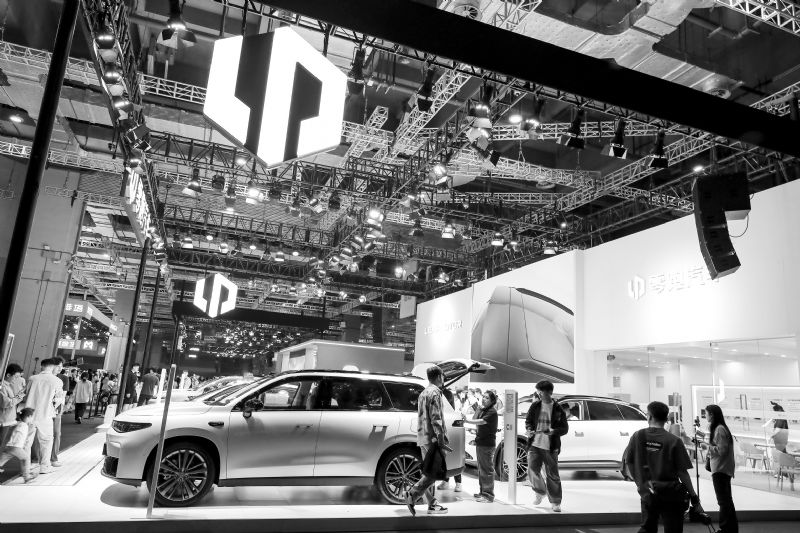
竞争力、国际化、技术多元……借助关键词透视新能源汽车出口多点开花劲头足
Yang Shi Wang· 2025-10-30 06:21
Core Viewpoint - The Chinese government is committed to advancing the standardization of the automotive industry, aiming to enhance its openness and competitiveness in the global market [1][5]. Group 1: Standardization Initiatives - The Chinese government has accelerated the development and revision of key automotive standards since 2025, including mandatory national standards for autonomous driving systems and electric vehicle energy consumption [3]. - A comprehensive standard system covering the entire automotive industry chain, including research, production, usage, and recycling, will be established during the 14th Five-Year Plan period [5]. - The government plans to lead technological breakthroughs through standardization, focusing on areas such as automotive artificial intelligence, solid-state batteries, and automotive chips [5]. Group 2: International Collaboration - China aims to actively participate in international standard-setting activities, sharing its experiences in automotive standardization to contribute to global sustainable development [7]. - The establishment of the "China-Africa Automotive Standardization Cooperation Mechanism" will facilitate effective alignment between Chinese and African automotive standards, focusing on electric vehicles and low-carbon technologies [10]. - The China Automotive Standard International Center in Bangkok has been established to enhance international collaboration in automotive standards with Southeast Asia, South Asia, and the Australia-New Zealand region [12]. Group 3: Digital Platforms and Networks - The China Automotive Technology Research Center has launched a global automotive standards digital platform, covering over 90% of industry standard innovation application scenarios [14]. - China has built a multi-level international collaboration network in automotive standards, leading to the publication of 17 international standards and ongoing work on 19 additional standards [16]. Group 4: Export Growth and Market Diversification - In the first three quarters of 2025, China's electric vehicle exports reached 2.32 million units, a 52% increase year-on-year, with September alone seeing 300,000 units exported, up 66% [22]. - The market for Chinese electric vehicles is diversifying, with significant growth in exports to the UAE, Mexico, and the UK, reflecting improved product competitiveness [24][26]. - Europe remains a core market for Chinese electric vehicle exports, with notable demand from Belgium and the UK, while the Middle East is emerging as a rapidly growing region [28].
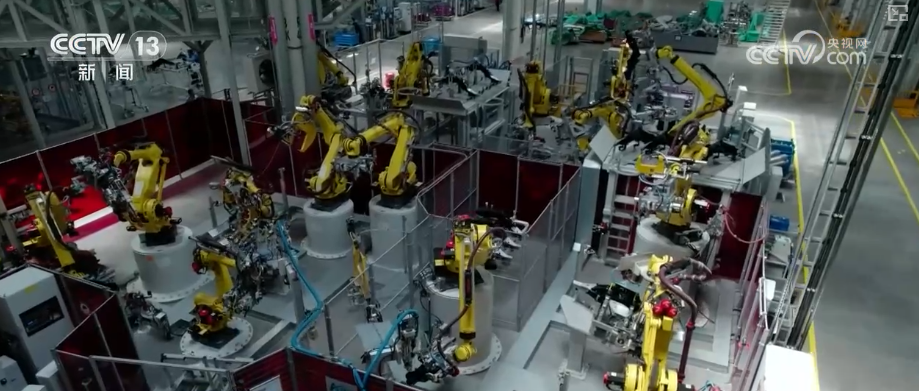
竞争力、国际化、技术多元、……借助关键词透视新能源汽车出口多点开花劲头足
Yang Shi Wang· 2025-10-30 03:32
Core Viewpoint - China is committed to advancing the standardization of its automotive industry, focusing on enhancing the openness and quality of automotive standards to support sustainable development and technological innovation [1][3][10]. Group 1: Standardization Initiatives - The Ministry of Industry and Information Technology (MIIT) plans to establish a comprehensive standard system covering the entire automotive industry chain, including research, production, usage, and recycling during the 14th Five-Year Plan period [3]. - Key areas for standard development include autonomous driving systems, intelligent connected vehicles, and new energy vehicle (NEV) energy consumption limits, with the aim of leading technological breakthroughs [1][3]. - The establishment of the "China-Africa Automotive Standardization Cooperation Mechanism" aims to align Chinese standards with African standards in electric vehicles and low-carbon technologies [6]. Group 2: International Collaboration - China is actively participating in international standard-setting activities, sharing its experiences in automotive standardization to contribute to global sustainable development [5][10]. - The opening of the China Automotive Standardization Center in Bangkok represents a strategic move to enhance collaboration with Southeast Asia, South Asia, and the Oceania region [8]. - The China Automotive Technology Research Center has launched a digital platform for global automotive standards, covering over 90% of industry standard applications and including more than 6,000 regulatory texts [8]. Group 3: Export Growth and Market Diversification - In the first three quarters of 2025, China's NEV exports reached 2.32 million units, marking a 52% year-on-year increase, with September alone seeing 300,000 units exported, a 66% increase [11]. - The European market remains the core region for NEV exports, with significant growth observed in the Middle East, particularly in the UAE, and strong performance in Southeast Asia [13]. - The diversification of export markets is attributed to the increasing competitiveness of Chinese products, with notable growth in exports to the UAE, Mexico, and the UK, exceeding 50% in some cases [13].
我国新能源重卡连续7个月销量破万
Huan Qiu Wang Zi Xun· 2025-10-28 03:25
Core Insights - Since March this year, China's new energy heavy trucks have maintained sales exceeding 10,000 units for seven consecutive months, with September sales surpassing 20,000 units, setting a new record [1] - The domestic sales surge is complemented by strong international market performance, as regions like Europe, Southeast Asia, and the Middle East implement clean freight support policies, providing an excellent opportunity for Chinese new energy heavy trucks to enter international markets [1] - According to data from the China Association of Automobile Manufacturers, from January to September, exports of new energy commercial vehicles reached 64,000 units, representing a year-on-year increase of 150%, with new energy heavy trucks being a significant component of this category [1]
汽车早报|蔚能电池增资至约21.4亿 巧克力换电计划2026年建成2500座以上换电站
Xin Lang Cai Jing· 2025-10-22 00:37
Group 1: Regulatory Developments - The Ministry of Industry and Information Technology is soliciting opinions on the revision plan for the mandatory national standard for vehicle factory certificates, highlighting the need to update standards to meet new demands such as battery traceability for electric vehicles [1] Group 2: Automotive Export Trends - In September, China's automotive exports exceeded 600,000 units, with a notable increase in new energy vehicle (NEV) exports, which reached 222,000 units, reflecting a year-on-year growth of 100% [1] - For the first nine months of 2025, passenger car exports totaled 4.201 million units, marking a year-on-year increase of 15.6% [1] Group 3: Battery Production Insights - In September, China's total production of power and other batteries reached 151 GWh, representing a year-on-year increase of 50% [2] - From January to September, the cumulative production of power and other batteries was 1,122 GWh, showing a year-on-year growth of 44% [2] Group 4: Company Developments - Wuhan Weinan Battery Co., Ltd. increased its registered capital from approximately 1.87 billion RMB to about 2.14 billion RMB, reflecting a growth of about 14% [3] - Jiangling Motors reported a significant decline in net profit for Q3 2025, down 93.94% year-on-year, with a net profit of 16.406 million RMB [5] Group 5: Infrastructure Expansion - The Chocolate Battery Swap Plan aims to establish over 2,500 battery swap stations across more than 120 cities in China by 2026, with the current number of stations exceeding 700 [6] - Volvo Cars announced a free home charging plan for new electric vehicle buyers in Sweden, offering one year of free home charging starting from February 2026 [7] Group 6: New Product Launches - Great Wall Motors announced the pre-sale of its new Tank 400 model, with a starting price of 309,800 RMB [4]