智能工厂

Search documents
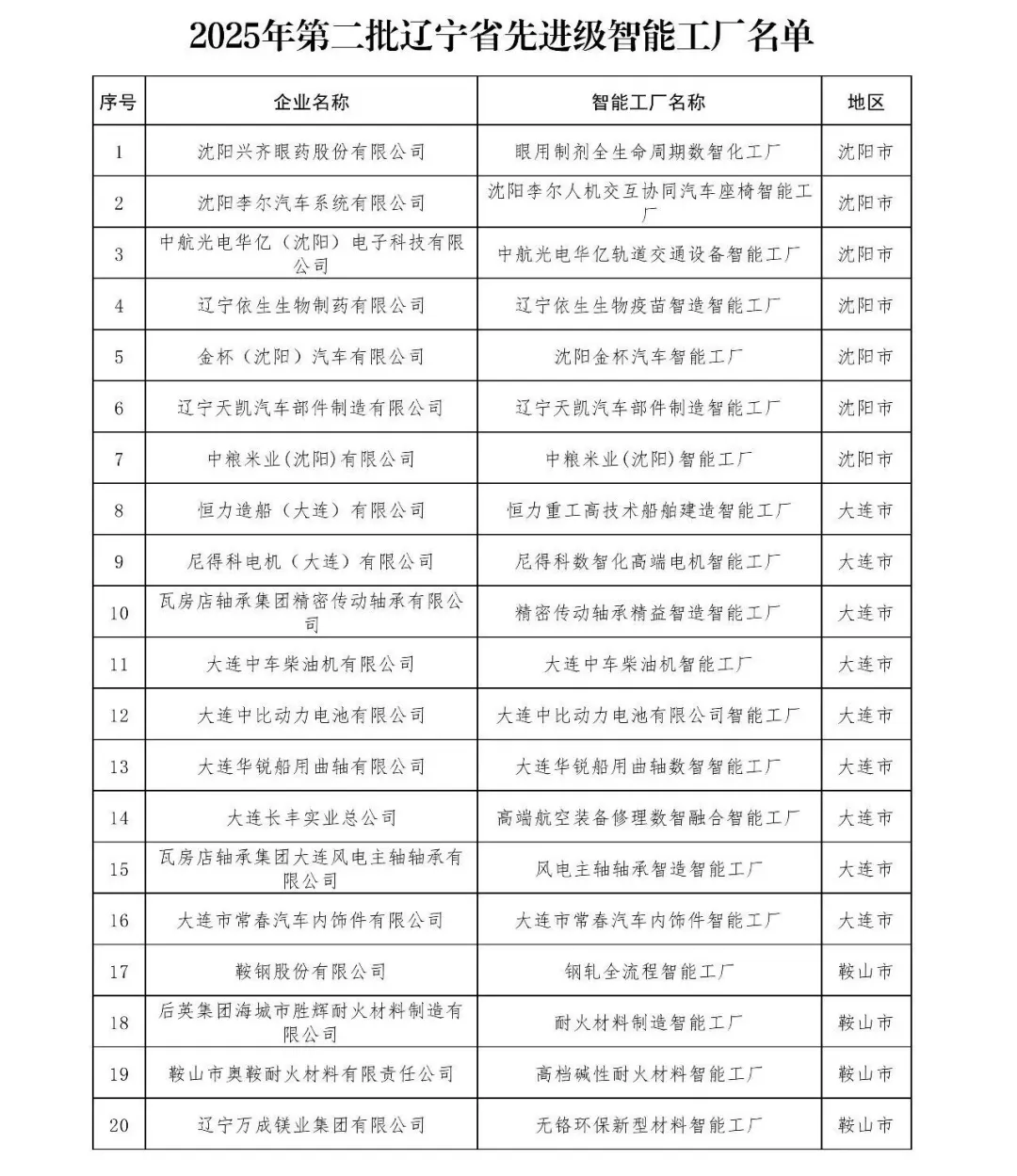
2025年第二批辽宁省先进级智能工厂名单公布,35家企业入选
Xin Lang Cai Jing· 2026-01-10 15:26
Core Insights - The Liaoning Provincial Department of Industry and Information Technology has announced the second batch of advanced intelligent factories for 2025, with 35 companies selected, covering various sectors including biomedicine, automotive parts manufacturing, equipment manufacturing, electronic information, and new metallurgical materials [1] - The total number of advanced intelligent factories in the province has reached 273 [1] - Advanced intelligent factories focus on digital transformation and networked collaboration, aiming to establish industry-leading benchmarks [1] Group 1: Intelligent Factory Development - The intelligent factories are categorized into four levels: basic, advanced, excellent, and leading [1] - The Dalian Zhongbi Power Battery Co., Ltd. is highlighted for its intelligent battery production base, achieving significant results in automation and smart management [1] - The production line at Dalian Zhongbi has a 100% automation rate for key processes such as winding, baking, and liquid injection, with a smart control center enabling full process visualization and traceability [1] Group 2: Future Plans - The province plans to implement a gradient construction action for intelligent factories, promoting the upgrade of production processes and the establishment of advanced-level factories [2] - The goal is to add over 80 advanced and above intelligent factories by 2026 [2]



去年海南规上工业增加值快速增长
Hai Nan Ri Bao· 2026-01-09 23:24
Core Insights - Hainan's industrial added value saw a rapid growth of 10.4% year-on-year from January to November, ranking among the top two in the country, with high-tech manufacturing increasing by 33.2% [2][3] Group 1: Industrial Growth - The province's industrial sector achieved significant integration of technological and industrial innovation, with "Deep Sea No. 1" recognized as a national leading intelligent factory [2] - Seven advanced intelligent factories and nine basic intelligent factories were newly cultivated in the province [2] - The establishment of a technology innovation consortium in the refining industry and the acceleration of high-level platform construction for new drug screening and safety evaluation were noted [2] Group 2: Cross-Regional Cooperation - The collaboration in advanced manufacturing between Hunan and Hainan led to the establishment of an industrial park, attracting 30 projects, with 11 already under construction [3] - The provincial industrial and information technology department signed over 200 projects with a total value exceeding 100 billion, including international investments from the UAE and Japan [3] Group 3: Enterprise Development - The province saw the addition of one national key "little giant" enterprise and two "little giant" enterprises, along with 129 provincial specialized and innovative enterprises and 432 innovative enterprises [3] - The establishment of new national and provincial characteristic industrial clusters was also reported, promoting the launch of a specialized board in Hainan's regional equity market [3] Group 4: City-Level Contributions - Haikou's industrial added value grew by 21.4%, contributing approximately 70% to the province's overall industrial growth [3] - Other cities like Danzhou, Chengmai, and Wanning also reported double-digit growth in industrial added value from January to November [3]

康尼机电:公司成功入选“2025年江苏省先进级智能工厂”与“工信部第一批卓越级智能工厂”
Zheng Quan Ri Bao Wang· 2026-01-07 13:10
Core Viewpoint - The company, Kanni Electromechanical, has successfully implemented its "Kanni Manufacturing 2025" plan, focusing on digital transformation through a "data-driven + business-driven" approach, which has led to its recognition as an advanced intelligent factory in Jiangsu Province and among the first batch of excellent intelligent factories by the Ministry of Industry and Information Technology [1] Group 1 - The company aims to enhance operational efficiency and strategic implementation through its new "Kanni Manufacturing 2030" plan, which continues the digital transformation journey [1] - The new plan emphasizes the design and planning work led by various industrial units, establishing a new phase of digital construction strategies and implementation guidelines [1] - Specific pathways include the establishment of management organizations within business domains, development of information management standards, and system platform integration to ensure low-cost replication and interconnectivity of systems and operations [1]

第1,第1,第1……武汉厉害了
Chang Jiang Ri Bao· 2026-01-07 06:53
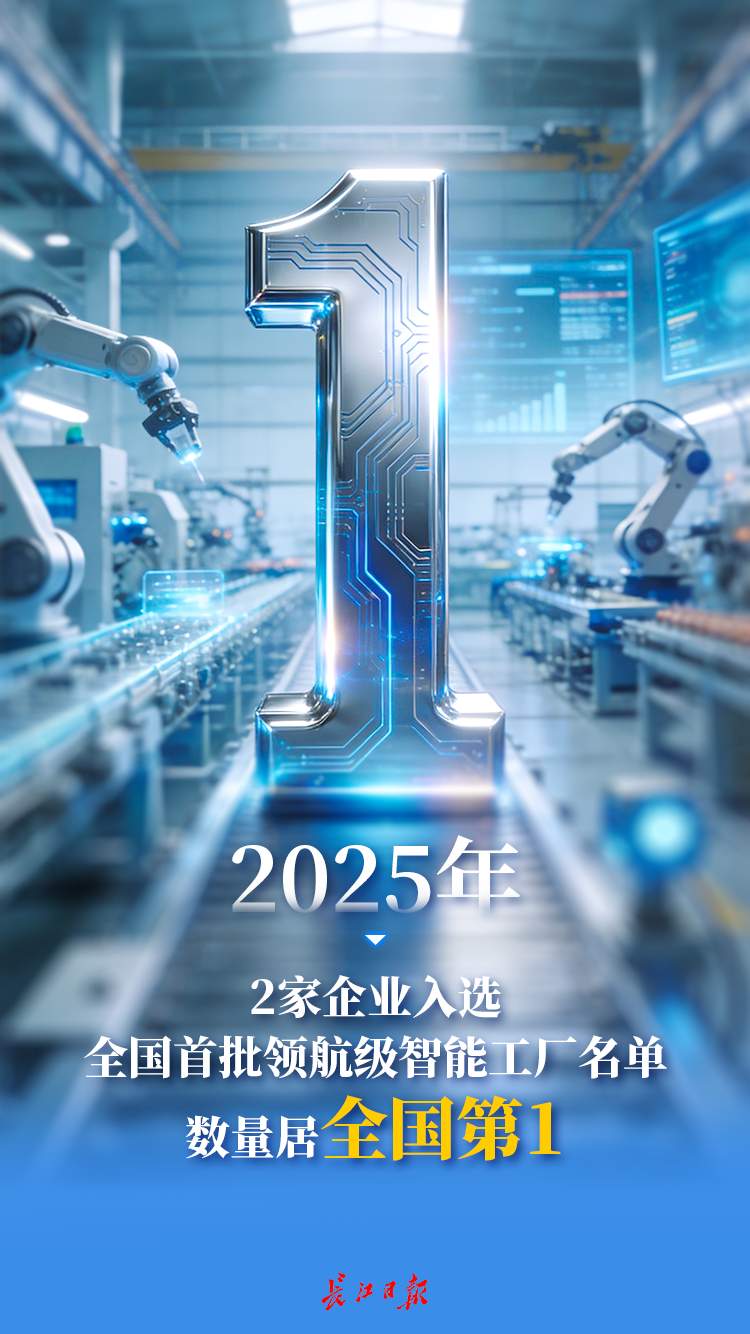
Group 1 - Wuhan ranks first in the number of enterprises selected for the national first batch of leading intelligent factories, with two companies on the list [4] - The total number of A-level and above logistics enterprises in Wuhan increased by 21, maintaining the top position in the country [6] - Wuhan Port's container throughput reached 195 million TEUs, ranking first in the Yangtze River middle and upper reaches [9] Group 2 - Tianhe Airport's passenger throughput exceeded 30 million, ranking first in Central China [11] - Wuhan added 11 academicians, ranking second in the country [16] - The number of newly registered business entities surpassed 600,000, ranking second among sub-provincial cities [16] Group 3 - The number of private enterprises in Wuhan exceeded 1.2 million, ranking fourth among sub-provincial cities [21] - Wuhan achieved a breakthrough in national laboratories during the "14th Five-Year Plan" period, leading the construction of national key laboratories, ranking third in quantity [19] - Wuhan's natural index for scientific research cities ranks eighth globally and fifth nationally, with the balance of loans for technology-based enterprises exceeding 420 billion yuan [22]
“一带一路”俄罗斯激光焊接机行业市场发展趋势及投资价值评估报告(2026版)
Sou Hu Cai Jing· 2026-01-04 02:26
Core Insights - The global laser welding machine market is projected to grow from $1.9 billion in 2025 to $2.48 billion by 2033, indicating a significant expansion driven by advancements in laser welding technology and its diverse applications across various industries [2][4]. Market Overview - Laser welding technology is increasingly popular in high-growth sectors such as entertainment electronics, photovoltaics, and medical devices, due to its ability to provide fast welding with minimal thermal distortion [2][4]. - The market is segmented into various types of laser welding machines, including fiber laser welding machines, CO2 laser welding machines, and solid-state laser welding machines, each suited for specific applications [4]. Industry Applications - Key industries benefiting from laser welding technology include medical devices, electronics, aerospace, and automotive, where high-quality welding is essential for manufacturing complex components and ensuring structural integrity [4][5]. - In the automotive sector, laser welding is utilized to assemble lightweight materials, enhancing fuel efficiency and vehicle safety [4][6]. - The aerospace industry relies on laser welding for creating strong, lightweight structures that meet stringent safety and regulatory requirements [5][6]. Technological Advancements - The growth of industrial automation is a major driver for the laser welding machine market, as traditional manual welding is being replaced by automated solutions that offer improved accuracy and efficiency [5][6]. - The integration of laser welding machines into automated production lines is becoming crucial with the rise of Industry 4.0 and smart factories, leading to increased demand for complex welding solutions [5][6]. Market Expansion - The demand for lightweight components and increased production volumes in the automotive industry necessitates efficient welding technologies [6]. - The electronics sector is moving towards smaller, more complex parts, requiring precise welding capabilities [6]. - The aerospace industry is expanding its need for robust, lightweight materials, which can only be produced through advanced welding processes [6].
星基智造北交所IPO:董事长周代烈夫妇控股85%,何松桂任供应链总监
Sou Hu Cai Jing· 2025-12-29 01:38
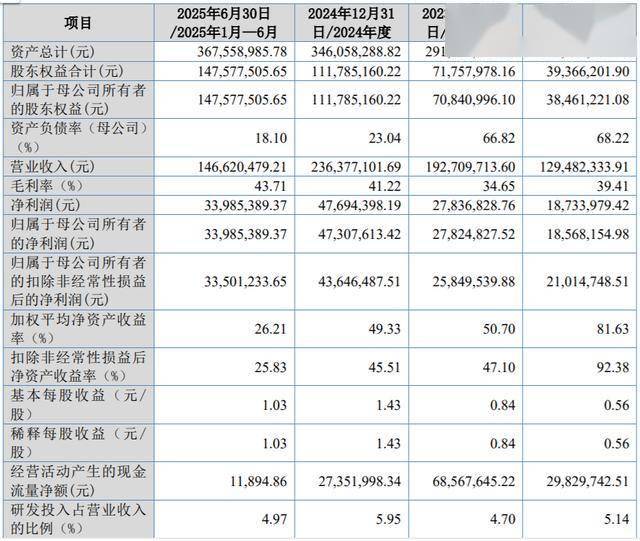
Core Viewpoint - Jiangsu Xingji Intelligent Manufacturing Technology Co., Ltd. has received acceptance for its IPO application on the Beijing Stock Exchange, focusing on the development, production, and sales of intelligent cable equipment and digital smart factory solutions [1] Group 1: Company Overview - Xingji Intelligent Manufacturing was established in April 2021 and has since focused on intelligent cable equipment and digital smart factory solutions [1] - The company’s business covers various fields including automotive cables, construction cables, industrial control cables, power and new energy cables, and communication and electronic cables [1] Group 2: Financial Performance - The company reported operating revenues of 129 million yuan, 193 million yuan, 236 million yuan, and 147 million yuan for the years 2022 to 2025 (first half) respectively [2] - Net profit attributable to the parent company for the same periods was 18.57 million yuan, 27.82 million yuan, 47.31 million yuan, and 33.99 million yuan [2] - For the first nine months of 2025, the company achieved operating revenue of 221 million yuan, representing an 18.18% year-on-year increase, and a net profit of 46.92 million yuan, up 27.6% year-on-year [3] Group 3: Shareholder Structure - The actual controllers of the company are Zhou Dailie and He Songgui, who together control 85% of the shares [5] - Zhou Dailie holds 42.43% of the voting rights directly and has additional voting rights through partnerships [5] Group 4: Management Background - Zhou Dailie, born in 1971, has extensive experience in the electrical engineering field and has held various positions in different companies before founding Xingji Technology [6] - He Songgui, born in 1972, has a background in electronics and has been involved in several companies related to electrical machinery and supply chain management [7]
“科技人文秀”倒计时1天:12月28日晚8点,欢迎来到我的直播间
吴晓波频道· 2025-12-27 00:29
Core Viewpoint - The article emphasizes the transformative impact of AI on various sectors and individuals, highlighting the importance of adapting to new tools in the modern era [4]. Group 1: AI and Industry Transformation - The article discusses the "AI three elements" that have created a competitive landscape between China and the US, focusing on multi-modal content production, large models reshaping industries, and the emergence of intelligent agents [9]. - It identifies the robotics sector as a potential market worth 10 trillion [9]. - The article mentions that the service industry will experience a complete transformation due to AI, creating new experiences for consumers [10]. Group 2: Event Details - The "AI Shining China" event is set to showcase the results of a year-long AI research initiative, promising an engaging experience filled with insights and discussions [38]. - The event will take place on December 28, with a detailed schedule including check-in times and entry procedures [14][15]. - Various parallel activities are planned from December 27 to 29, focusing on topics such as global supply chain innovation and opportunities in Southeast Asia [24][25][26].

石化化工数字化改造空间有多大?
Zhong Guo Hua Gong Bao· 2025-12-17 03:04
Core Viewpoint - The announcement of the first batch of 15 leading intelligent factories in China, including companies in the petrochemical sector, highlights the significant potential for digital transformation and improvements in this industry [1]. Group 1: Intelligent Factory Development - The construction of intelligent factories is essential for digital transformation, with digital twin factories being a key component of digital engineering [2]. - China Petrochemical's Zhenhai Refining & Chemical Company is the only refining enterprise on the list of leading intelligent factories, achieving full coverage of project phases and integrated business processes through a collaborative digital engineering approach [2]. - The optimization of the entire production chain, from raw materials to product delivery, is a common challenge faced by petrochemical companies during digital transformation [2]. Group 2: Global Optimization Techniques - Global optimization is a foundational technology that enhances production efficiency across various scales and processes, aligning with national strategic needs [3]. - New intelligent global optimization solvers have been successfully applied to processes like wet phosphoric acid production, enabling precise simulations and comprehensive optimizations [3]. - The establishment of a modern management system is crucial for the operation of intelligent factories, as demonstrated by China National Petroleum's Dushanzi Petrochemical Company, which has gained recognition as a benchmark for intelligent manufacturing [3]. Group 3: AI Integration in the Industry - Artificial intelligence (AI) is a transformative technology for the petrochemical sector, with the Kunlun model being the first industry-specific large model approved in China [5]. - The Kunlun model has defined five key objectives, including industry models and application scenarios, and has developed 470 intelligent scenarios to enhance operational efficiency [5]. - China National Petroleum has trained 62 large models across various business lines, leading to initial improvements in operational efficiency [5]. Group 4: AI-Driven Innovations - The focus on computing power, data, and algorithms is essential for upgrading enterprise management and enhancing business efficiency through AI [6]. - The development of AI applications, such as AI-assisted design and material modification, showcases the significant potential of AI in the industry [6]. - A new generation of intelligent factory solutions integrating AI and industrial internet aims to address the diverse needs of the petrochemical sector, enabling fully automated operations and optimized production processes [6].
健盛集团20251215
2025-12-16 03:26
Summary of the Conference Call for Jian Sheng Group Company Overview - Jian Sheng Group is investing in Egypt to leverage local population resources (approximately 120 million) and lower labor costs (actual wages around $200/month) to address rising domestic production costs [2][3] Key Industry Insights - Egypt offers significant tariff advantages for exports to Europe (zero tariffs) and the U.S. (10% tariffs for products from QIZ zones), making it a competitive location compared to China and Vietnam, which face tariffs of 40%-50% [2][3][8] - The geographical proximity allows for reduced shipping times, with sea transport to Europe taking only 3-4 days and to the U.S. about two weeks [2][3] Core Investment Strategies - Jian Sheng Group has purchased 300,000 square meters of land (approximately 450 acres) to mitigate future land price increases, as suitable industrial land in Egypt is scarce [5] - The company plans to develop a vertically integrated park that includes sock production, seamless garments, dyeing, and auxiliary materials to lower management costs and improve production efficiency [5][6] Project Developments - The Jiangshan Intelligent Factory project will be implemented in phases with an estimated total investment of 80-90 million RMB, focusing on smart equipment and digital management systems to enhance production efficiency and quality control [6][7] - The company anticipates that the Egyptian project will contribute significantly to future sock production capacity, with some production expected to be operational by 2027 [3][9] Financial Considerations - Jian Sheng Group has a low debt-to-equity ratio and strong cash flow, preferring bank financing with a cost of around 2% [10] - There are no current plans for equity financing, but the company may consider divesting underperforming assets to ensure sufficient funds while maintaining dividend levels [10] Labor and Operational Efficiency - The labor situation in Egypt is favorable, with a high number of applicants for job openings, and English is widely spoken, facilitating management [3][13] - The company is confident in its ability to manage and train local employees, although the efficiency of Egyptian labor compared to Vietnamese labor is still being assessed [13] Market Outlook - The company expects a positive outlook for its seamless and cotton sock businesses in 2026, with optimistic order forecasts, particularly for seamless products [18][22] - The domestic asset management strategy includes consolidating production facilities to optimize operations, although this is not the primary funding source for the Egyptian investment [19][20] Conclusion - Jian Sheng Group's strategic investment in Egypt is driven by favorable labor conditions, tariff advantages, and logistical efficiencies, positioning the company for growth in the global market while addressing current production capacity constraints in Vietnam.

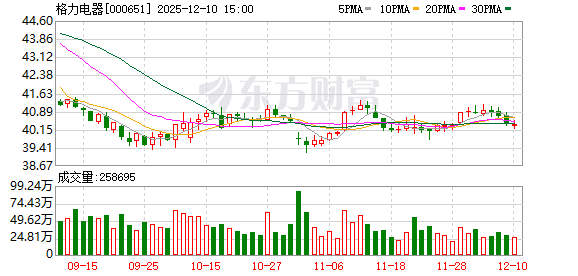
格力金湾陈华东:智能工厂的竞争是工业软件和智能装备的竞争
2 1 Shi Ji Jing Ji Bao Dao· 2025-12-10 09:45
Group 1 - The Ministry of Industry and Information Technology and five other departments have officially announced the first batch of leading intelligent factories, which includes 15 companies across key industries such as equipment manufacturing, raw materials, electronic information, and consumer goods [2] - Gree Electric Appliances (Zhuhai Jinwan) Co., Ltd. has been selected for the highest level "leading" intelligent factory cultivation list with its "Gree Collaborative House Air Conditioning Intelligent Factory" project, being the only enterprise from Guangdong Province to be included [2] - Gree Jinwan has introduced an innovative "Gree Collaborative House" intelligent manufacturing collaborative model to address challenges in global manufacturing, which enhances operational efficiency across the entire value chain [2] Group 2 - China has established over 7,000 advanced intelligent factories, with hundreds of factories reporting an average reduction of 29% in product development cycles, a nearly 22% increase in production efficiency, and a 20% decrease in carbon emissions after upgrades [2] - Gree Jinwan's General Manager Chen Huadong emphasized that competition in intelligent factories ultimately reflects the competition of underlying technology, particularly in industrial software and intelligent equipment [3] - The future direction for Gree Jinwan is to create intelligent production lines and factories that achieve synergy between components and assembly, covering the entire logistics process [3]