
民生福祉

Search documents
句容市交出2025民生“暖心账单” 30项2026年实事项目发布
Zhen Jiang Ri Bao· 2026-01-21 23:48
Group 1 - The core viewpoint of the news is that Jurong City has successfully completed its 2025 annual goals for 10 livelihood projects, enhancing public services and citizen satisfaction [1][2][3] Group 2 - In the education sector, Jurong City has replaced 3,200 adjustable desks and chairs, installed 1,585 air conditioners in classrooms, and provided 820 affordable childcare slots in 37 public kindergartens, achieving recognition as a "National City for Universal Preschool Education" [1] - The healthcare system has seen improvements with the Jurong People's Hospital passing a three-level evaluation, the relocation of the Jurong Traditional Chinese Medicine Hospital, and the introduction of 42 medical experts throughout the year [1] - Social security measures have expanded, with 1,315 individuals supported in entrepreneurship and over 170 million yuan in various employment subsidies distributed [1] Group 3 - Urban and rural development has been enhanced with the completion of road renovations, the addition of 10 optimized bus routes, and the transformation of 6 old residential communities [2] - Ecological governance has shown significant results, including the completion of the Jurong River remediation and the establishment of 19 themed parks [2] - Cultural activities flourished with over 500 events held, reaching 1.5 million participants, and the inclusion of the Chishan Lake irrigation project in the 2025 World Irrigation Heritage List [2] Group 4 - In September 2025, Jurong City initiated the collection of public opinions for the 2026 livelihood projects, resulting in 36 candidate projects across various sectors [2] - The confirmed 30 projects for 2026 include improvements in healthcare information integration, rural road maintenance, educational support, and upgrades to emergency services [2][3] Group 5 - Jurong City aims to enhance the well-being of its citizens by implementing the "14th Five-Year Plan" and aligning with the strategy of "Integrating into Nanjing, Supporting Zhenjiang" [3]
我国经济总量首次突破140万亿元 经济底盘更实抗风险能力更强
Zhong Guo Qing Nian Bao· 2026-01-20 00:57
Economic Overview - In 2025, China's GDP reached 140,187.9 billion yuan, marking a 5% increase from the previous year, showcasing a stable and resilient economic growth trajectory [1][2] - The "14th Five-Year Plan" period saw China's economy achieve significant milestones, with GDP surpassing 110 trillion, 120 trillion, 130 trillion, and finally 140 trillion yuan [1] Economic Stability and Growth - The year 2025 is characterized by stability in economic metrics such as total GDP, employment, and foreign trade, with a notable increase in goods trade and foreign exchange reserves exceeding 3.3 trillion USD [2][3] - High-tech manufacturing's value added accounted for 17.1% of industrial output, and final consumption contributed over 50% to economic growth, indicating a shift towards a more optimized economic structure [2] Trade and Innovation - China's exports of high-tech products grew by 13.2% in 2025, with total goods imports and exports increasing by 3.8%, and exports alone rising by 6.1% [3] - Research and development expenditure reached 2.8% of GDP, surpassing the OECD average for the first time, and China's innovation index entered the global top ten [3] Social Welfare and Employment - The average disposable income per capita for residents was 43,377 yuan, reflecting a 5% real growth, with rural incomes growing even faster at 6% [5] - The urban unemployment rate remained stable at an average of 5.2%, with the total number of migrant workers reaching 30.115 million, an increase of 0.5% from the previous year [4][5] Urbanization and Education - By the end of 2025, the urbanization rate in China reached 67.89%, with the average education level for the population aged 16-59 increasing to 11.3 years [6] Future Outlook - Despite external challenges, the foundation for China's economic growth remains strong, with expectations for continued stability and opportunities in 2026 [6][7]
五年政府工作报告中的广州发展密码:产业与创新成“双引擎”
Nan Fang Du Shi Bao· 2026-01-20 00:44
Core Insights - Guangzhou aims to revitalize its old city and enhance its development quality during the "14th Five-Year Plan" period, with a focus on high-quality growth and modernization [1][2] - The government work reports highlight key terms such as "development," "innovation," and "industry," indicating a strategic focus on economic advancement and urban modernization [2][3] Development Blueprint - The top ten high-frequency words in government reports include "development," "construction," "innovation," and "service," reflecting Guangzhou's commitment to high-quality development and modernization [2] - Guangzhou's GDP is projected to increase by 700 billion yuan during the "14th Five-Year Plan," with the total economic output surpassing 3 trillion yuan [2] Industry Evolution - The government emphasizes "industry first, manufacturing city," indicating a renewed focus on the real economy and manufacturing sector [3][7] - Significant industrial projects have been launched, with industrial investment rising from 103 billion yuan in 2020 to 171 billion yuan in 2024, marking a 66% increase [8] Technological Innovation - Guangzhou has established a robust technological innovation framework, becoming the only city in China to host national laboratories and major scientific platforms [9][10] - The number of high-tech enterprises in Guangzhou has exceeded 13,500, with over 50% being large-scale enterprises [10] Reform and Opening Up - Guangzhou has positioned itself as a core engine for the Guangdong-Hong Kong-Macao Greater Bay Area, with significant developments in Nansha as a strategic platform [11][12] - The city has implemented various reforms to enhance its business environment, resulting in over 4.25 million operating entities, a 58% increase since 2020 [12] Urban Governance - Urban renewal efforts have shifted focus to the transformation of urban villages, with significant investments planned for key areas [13][15] - The city has adopted a "refined" and "intelligent" governance approach, improving urban management and public services [14][15] Public Welfare - Guangzhou has prioritized public welfare, with healthcare initiatives being the most prominent in government reports, reflecting a commitment to improving citizens' quality of life [16][17] - Over the past five years, the city has created 1.634 million new jobs and expanded public education resources significantly [17]

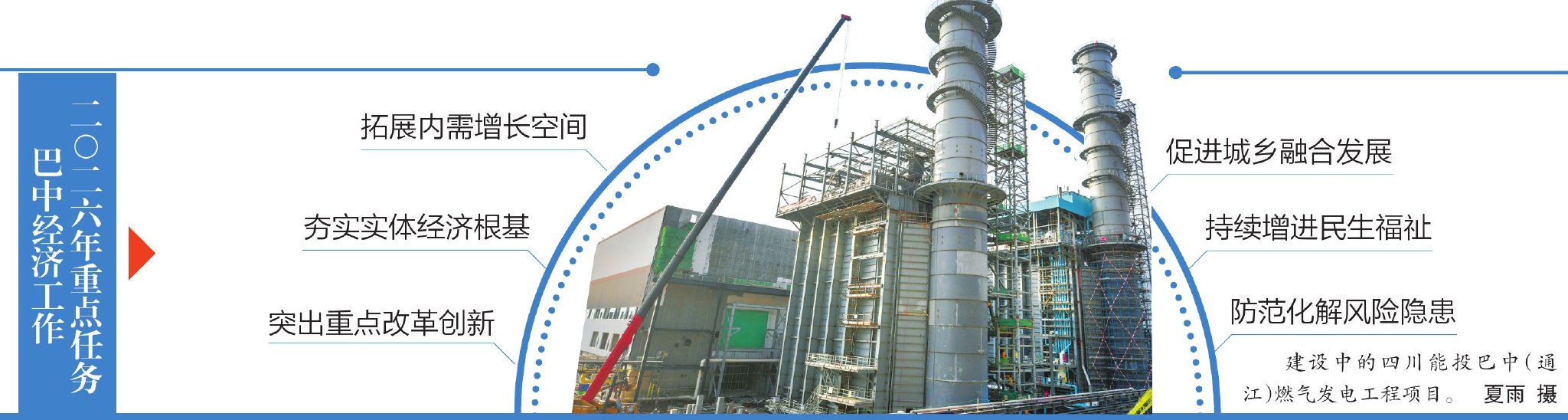
巴中画定今年经济发展“施工图”
Xin Lang Cai Jing· 2026-01-19 22:17
Core Viewpoint - The Ba Zhong Municipal Economic Work Conference emphasizes the necessity of maintaining a relatively fast economic growth rate despite the small economic scale, setting ambitious targets for 2026, including a focus on expanding domestic demand and enhancing the industrial foundation [1][2]. Group 1: Domestic Demand Expansion - Ba Zhong prioritizes expanding domestic demand as a key task for the year, focusing on boosting consumption and effective investment as core strategies [2]. - In the first three quarters of 2025, Ba Zhong achieved a total retail sales of consumer goods amounting to 40.362 billion yuan, reflecting a year-on-year growth of 6.7% [2]. - The city plans to implement special actions to stimulate consumption, innovate consumption formats, and enhance the consumption environment, including a series of promotional activities [2]. Group 2: Strengthening the Real Economy - Ba Zhong aims to solidify its industrial foundation by focusing on key industries such as energy and chemicals, advanced materials, electronic information, food and beverage, and healthcare [3][4]. - The city is leveraging its natural gas reserves of 1.4 trillion cubic meters and shale oil resources of approximately 2.5 billion tons to develop the energy and chemical industry [3]. - A sodium-ion battery industry park is being established, with over 1,500 acres allocated for development, aiming to attract leading companies in the sector [4]. Group 3: Urban-Rural Integration and Social Welfare - The city is committed to enhancing urban-rural integration and improving the well-being of its residents, with a focus on modernizing agriculture and rural areas [5][6]. - Plans include the development of a modern urban area in the Mengzi River section, featuring parks and recreational facilities [6]. - Initiatives to boost employment, improve education and healthcare, and enhance cultural services are being prioritized to elevate the quality of life for residents [7].

市场监管总局:2025年发布国家计量技术规范213项
Yang Shi Xin Wen· 2026-01-19 03:29
Core Viewpoint - The State Administration for Market Regulation has reported that the number of national metrology technical standards will increase to 2,273 by 2025, representing a growth of 63.8% compared to 2024 [1] Group 1: Supporting Public Welfare - The release of national metrology technical standards for electronic weighing scales, optical lens boxes, digital electric energy meters, and weighing scales aims to ensure fair transactions and enhance public satisfaction [1] Group 2: Supporting Manufacturing Strength - New national metrology technical standards for satellite navigation interference simulation sources, metrology instrument software identification, and Bluetooth testing instruments are designed to support the development of high-end manufacturing [1] Group 3: Promoting Green Development - The introduction of national metrology technical standards for energy resource measurement reviews in key public institutions, zero-carbon building measurement evaluations, and vehicle emission gas testing instruments will facilitate the achievement of carbon neutrality goals [1]
真金白银提升民生福祉
Xin Lang Cai Jing· 2026-01-17 17:41
Group 1 - During the "14th Five-Year Plan" period, Qinghai Province invested a total of 24.64 billion yuan in civil affairs, completing 964 various civil affairs facility construction projects [1] - Approximately 15.9 billion yuan was allocated for various assistance funds, benefiting nearly 3 million disadvantaged individuals [1] - The standards for urban and rural subsistence allowances and special hardship assistance were increased by 15.5%, 21%, and 15.4% respectively [1] Group 2 - A total of 1.27 billion yuan was invested in the construction of elderly care service facilities, and 566 million yuan was allocated to provide meal, care, and rehabilitation services for economically disadvantaged and elderly individuals [1] - High-age subsidies totaling 2.5 billion yuan were distributed to 1.9 million elderly individuals [1] - 8.34 million yuan was allocated for the "two subsidies" for 129,000 disabled individuals [1] Group 3 - Qinghai Province's sales of welfare lottery tickets reached 5.997 billion yuan, raising 1.858 billion yuan for public welfare [1] - In 2025, 54,700 new urban and rural disadvantaged individuals will be included, with a total expenditure of approximately 3 billion yuan for assistance funds, effectively ensuring the basic living needs of 500,000 disadvantaged individuals [1] - Over 47 million yuan was allocated for basic living security for disadvantaged children, benefiting 5,172 children and providing care for 24,000 children in need [1] Group 4 - Qinghai Province completed the renovation of 16 elderly care institutions and 108 rural mutual happiness homes, achieving 100% coverage of elderly care facilities at the county level and 60% at the town (street) level [2] - 12,000 economically disadvantaged and elderly individuals received elderly care service subsidies, and 2,056 households of elderly individuals in difficulty underwent age-appropriate renovations [2] - The sales of welfare lottery tickets amounted to 1.38 billion yuan, raising 412 million yuan for public welfare, benefiting over 100,000 individuals through various charitable projects [2]
如何做好2026年财政工作?内蒙古敲定七个“聚力”……
Xin Lang Cai Jing· 2026-01-17 13:34
Core Viewpoint - Inner Mongolia aims to enhance its fiscal work in 2023 through seven strategic focuses, emphasizing support for national strategies, consumption, investment, modern industry, and social welfare [1][2]. Group 1: Strategic Focuses - The fiscal system will align with national strategies, supporting the construction of "two barriers," "two bases," and "one bridgehead" to strengthen the sense of a shared Chinese national community [1]. - There will be a focus on promoting consumption and expanding investment, with fiscal support for actions aimed at boosting consumption and effective investment, while ensuring compliance with national market construction requirements [1]. - The development of a modern industrial system will be prioritized, with fiscal support for technological and industrial innovation, as well as infrastructure improvements to foster the growth of advantageous and characteristic industries [1]. Group 2: Social Welfare and Risk Management - The fiscal system will work towards enhancing social welfare, focusing on education, healthcare, and employment to promote common prosperity [1]. - A comprehensive risk prevention system will be established, with a commitment to safeguarding basic livelihoods, salaries, and operational stability while prohibiting new hidden debts [2]. - Fiscal reforms will be implemented to improve management efficiency, including zero-based budgeting reforms and enhanced lifecycle management of bond funds [2]. Group 3: Financial Discipline and Oversight - The fiscal system will emphasize strict financial discipline to ensure the successful implementation of major national strategies, with increased scrutiny and accountability for financial misconduct [2].
集贤 民生领域投入占比86%
Xin Lang Cai Jing· 2026-01-12 22:06
Group 1 - The core idea of the articles emphasizes the commitment of Jixian County to enhance the well-being of its citizens by focusing on key areas such as employment, education, transportation, and healthcare, with 86% of fiscal spending directed towards these sectors in 2025 [1] Group 2 - In 2025, Jixian County achieved a cumulative increase of 3,303 jobs in urban areas, completing 134.81% of the annual employment target [2] - A total of 44.82 million yuan has been secured to improve educational conditions, with a total investment of approximately 77 million yuan for the fire safety enhancement project in the education system [2] - The county's "Transportation Strong Nation" pilot project for rural roads has been successfully completed with a total investment of 827 million yuan [2] - The project for the renovation of the Anbang River Bridge on Friendship Street has been fully opened to traffic [2] - 240 million yuan has been invested in the integration of urban and rural transportation, including the replacement of 60 new energy buses [2] - The drainage system of the Shuangfu Road Interchange, which has been in operation for 40 years, has been renovated [2] - 170 million yuan has been allocated for the construction and renovation of 23.31 kilometers of rain and sewage pipelines, along with upgrades to 16.8 kilometers of water supply, gas, and heating pipelines [2] - 90.3742 million yuan has been invested in implementing basic assistance programs [2] - The average price of drugs has decreased by 30% due to optimized centralized procurement, saving the public over 6 million yuan in medication costs [2] - A total of 9.2 million yuan has been distributed as childcare subsidies to alleviate the financial burden of families [2]

绘好发展规划图 干出实干实景图
Xin Lang Cai Jing· 2026-01-11 22:25
Core Insights - The city has outlined a development blueprint for the "15th Five-Year Plan," emphasizing the importance of industrial development and the cultivation of new productive forces [1][2][7]. Group 1: Industrial Development - The city aims to "focus on industry and prioritize industrial development," with a commitment to transforming planning into actionable projects [2][3]. - The Economic Development Bureau plans to leverage the "Project Assault Year" to advance key projects, ensuring the implementation of the city's strategic goals [2]. - Traditional industries will be upgraded to high-end production, while emerging industries will be expanded to scale, and future industries will be clustered [2][8]. Group 2: Economic Growth and Planning - The Five-Year Plan emphasizes a solid foundation for economic work, with specific tasks and measures to ensure a strong start [3][10]. - The focus will be on high-quality project work to support economic growth, with a commitment to converting planning documents into actionable plans [3][12]. - The city will actively pursue project construction, particularly in key areas such as energy and materials, to enhance economic stability and growth [9][10]. Group 3: Community and Social Welfare - The meetings highlighted the need to enhance community services and address urgent issues faced by residents, aiming to improve overall quality of life [4][6]. - Initiatives will be implemented to foster a sense of community and shared prosperity among diverse populations [4][6]. - The focus on consumer services, particularly in tourism and cultural sectors, aims to stimulate economic activity and enhance community engagement [5][6]. Group 4: Governance and Implementation - Local governments are encouraged to adopt a proactive approach in implementing the directives from the meetings, ensuring that the spirit of the meetings translates into tangible outcomes [11][12]. - There is a strong emphasis on optimizing the business environment and fostering a supportive ecosystem for enterprises [8][12]. - The commitment to grassroots governance and community engagement is seen as essential for achieving the broader goals of the development plan [11][14].
用心用情为居民做好事办实事
Xin Lang Cai Jing· 2026-01-10 08:11
Group 1 - The meeting focused on gathering opinions and suggestions from grassroots representatives regarding the 2026 Government Work Report and government operations [1] - Suggestions included improving the structure of beds in elderly care institutions, enhancing community-based elderly services, and encouraging more social participation [1] - Other recommendations involved optimizing land use and housing repair policies in rural areas to enhance farmers' sense of gain and promote economic and ecological value [1] Group 2 - The mayor emphasized the importance of grassroots work in promoting high-quality development and addressing the urgent needs of urban and rural residents [2] - There is a commitment to strengthen support for grassroots governance, reduce burdens on grassroots workers, and enhance resource allocation and management [2] - The government aims to create a new path for grassroots work that aligns with the characteristics and rules of a megacity [2]