
流感

Search documents
叮当快药数据显示抗流感药物销量在近一周激增
Zheng Quan Ri Bao Wang· 2025-12-03 11:14
Core Insights - The demand for antiviral drugs and related testing kits has surged significantly as multiple regions in the country enter a high flu season [1] Sales Growth - Sales of the new antiviral drug "Sufuda" increased by 900% week-on-week - Sales of the classic drug "Oseltamivir" rose by 700% week-on-week - Sales of children's medication "Kewai Granules" saw a 115% increase week-on-week - Sales of "Renhe" flu testing kits skyrocketed by over 1000% week-on-week, indicating a heightened public awareness for early screening [1][1][1] Supply Chain and Logistics - The company has utilized an AI early warning system to increase the stock of core medications in advance - A cross-regional allocation mechanism has been initiated to ensure a continuous supply in key areas - The platform has advised users to purchase medications rationally to avoid stockpiling [1][1] Delivery Trends - Orders for medications delivered to schools increased by 155% week-on-week - Orders to shopping malls grew by 95%, highlighting that densely populated areas are currently hotspots for flu transmission [1][1] Health Advisory - The platform's online pharmacists recommend early testing for symptoms such as fever and muscle pain, and to use medications under the guidance of doctors or pharmacists - Users are advised to wear masks, wash hands frequently, and reduce gatherings to mitigate the spread of the flu [1][1]
12月3日沪深两市强势个股与概念板块
2 1 Shi Ji Jing Ji Bao Dao· 2025-12-03 10:57
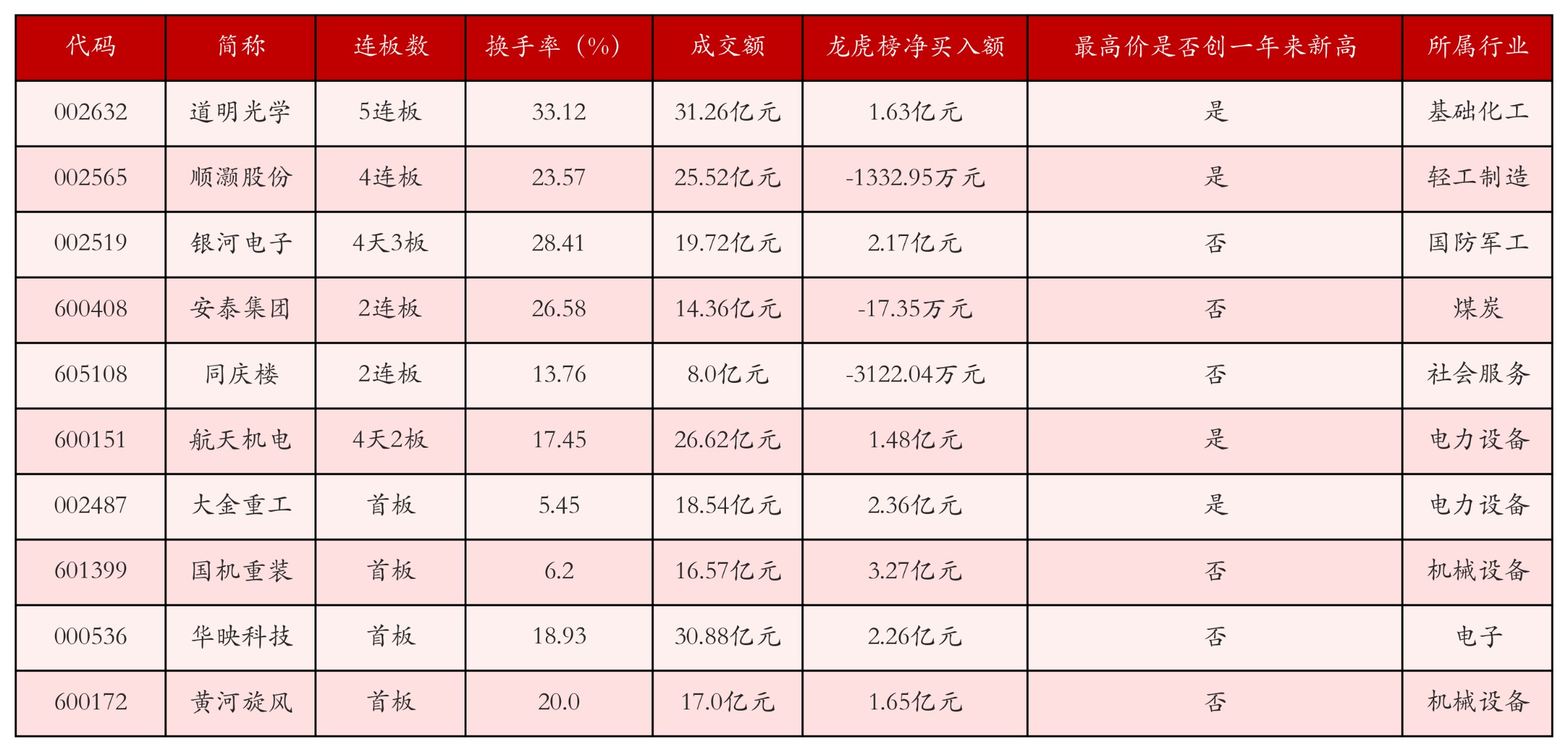
Strong Individual Stocks - As of December 3, the Shanghai Composite Index fell by 0.51% to 3878.0 points, the Shenzhen Component Index decreased by 0.78% to 12955.25 points, and the ChiNext Index dropped by 1.12% to 3036.79 points [1] - A total of 54 stocks in the A-share market hit the daily limit up, with the top three strong stocks being: Daoming Optics (002632), Shunhao Co., Ltd. (002565), and Galaxy Electronics (002519) [1] - The top 10 strong stocks with specific data include: - Daoming Optics (002632): 5 consecutive limit ups, turnover rate of 33.12%, and closing price of 31.2 - Shunhao Co., Ltd. (002565): 4 consecutive limit ups, turnover rate of 23.57%, and closing price of 25.5 - Galaxy Electronics (002519): 3 limit ups in 4 days, turnover rate of 28.41%, and closing price of 19.7 [1] Strong Concept Sectors - The top three concept sectors with the highest gains in the A-share market are: Cultivated Diamonds, Hyperbaric Oxygen Chambers, and China-South Korea Free Trade Zone [2] - The top 10 concept sectors with their respective gains include: - Cultivated Diamonds: 2.72% increase - Hyperbaric Oxygen Chambers: 0.92% increase - China-South Korea Free Trade Zone: 0.77% increase [3]


应对流感高发期,今年有什么新变化与新办法?
Yang Shi Xin Wen Ke Hu Duan· 2025-12-03 05:29
Group 1 - The flu season has reached a high epidemic level in the country, with the H3N2 subtype of the influenza virus accounting for over 95% of cases [2][4] - The outpatient visit volume for respiratory diseases at Beijing Children's Hospital has increased since mid-November, with a 20% week-on-week rise noted, although recent data shows a 15% decrease compared to the same period last year [3][4] - The clinical symptoms of the H3N2 virus are similar to other influenza strains, including fever, nasal congestion, sore throat, and muscle aches, without significantly more severe symptoms compared to H1N1 [4] Group 2 - For young children showing flu-like symptoms, it is recommended to seek medical attention rather than self-medicate at home, as the disease can progress rapidly [5][6] - Key indicators for assessing flu risk include awareness of flu activity in the environment, contact with individuals exhibiting flu-like symptoms, and the presence of flu-like symptoms in oneself [6] - The healthcare system is improving its capacity for early diagnosis and treatment of seasonal diseases like influenza, with a focus on enhancing the capabilities of primary care pediatric services [7]
1分钟,垂直涨停,000078六连板
Zheng Quan Shi Bao· 2025-12-03 05:11
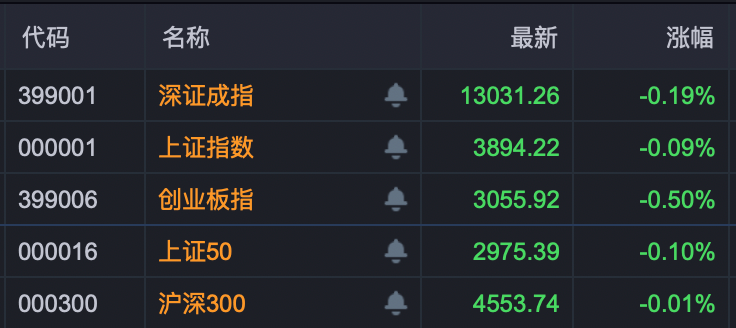
Market Overview - A-shares experienced slight fluctuations around the previous day's closing levels, with major indices showing minor declines. The number of declining stocks significantly outnumbered advancing ones, while trading volume remained stable [1] - The Shenzhen Component Index decreased by 0.19% to 13,031.26, the Shanghai Composite Index fell by 0.09% to 3,894.22, and the ChiNext Index dropped by 0.50% to 3,055.92 [2] Electricity Sector - The electricity sector showed strong performance, with the sector index rising for the fifth consecutive day. Companies like Huadian Power and Mindong Electric reached their daily price limits shortly after the market opened [4] - The National Development and Reform Commission has revised several pricing methods related to electricity transmission and distribution, which may impact future pricing and cost assessments [6][7] - The International Energy Agency predicts that global electricity demand will double for data centers by 2030, with significant growth driven by electric mobility and artificial intelligence [7] - UBS forecasts that China's electricity demand growth rate will increase to 8% from 2028 to 2030, indicating a potential electricity supercycle lasting 5-10 years [8] Pharmaceutical Sector - The pharmaceutical retail sector has shown significant strength, with seven out of the last eight trading days seeing gains. Companies like Haiwang Bio and Ruikang Pharmaceutical have experienced rapid price increases [10] - The recent surge in flu cases has led to a sharp increase in sales of antiviral medications, with sales of Oseltamivir rising by 237% and other related medications seeing over 50% growth [14][15] - The market for antiviral medications in China is projected to reach 26.9 billion yuan by 2028, with a compound annual growth rate of 20.2% [16]
大爆发!这一板块 集体拉升!
Zheng Quan Shi Bao· 2025-12-02 05:02
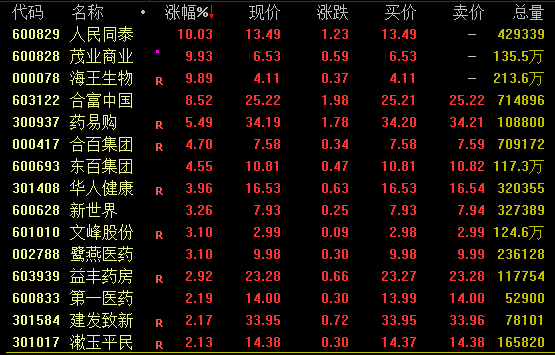
Market Overview - A-shares experienced a decline with major indices falling, as the Shanghai Composite Index dropped by 0.55% to fall below 3900 points, and the ChiNext Index fell by 0.88% [1] - Nearly 4000 stocks were in the red, with sectors such as non-ferrous metals, pharmaceuticals, brokerages, and semiconductors declining, while insurance and coal sectors saw gains [1] Retail Pharmacy Sector - Retail pharmacy stocks surged, with notable gains including People's Tongtai and Haiwang Biological reaching their daily limit, and Hezhi China rising over 8% [3][4] - The increase in flu-like cases is expected to benefit the retail pharmacy sector, driving demand for antiviral medications and symptomatic treatments [3][4] Fujian Local Stocks - Fujian local stocks saw significant increases, with companies like Jiarong Technology and Pingtan Development hitting their daily limit [6][7] - The rise is attributed to the issuance of measures to promote the development of computing power infrastructure in Fujian, which includes plans for enhancing network transmission efficiency [6][7] Strong Performing Stocks - Jinfu Technology achieved a 7-day consecutive limit up, with its stock price reaching a historical high [9] - The company is in the process of planning an acquisition of at least 51% of Guangdong Lanyuan Technology, which is still in the due diligence phase [9] - Tongyu Communication has seen a 4-day consecutive limit up, focusing on expanding its satellite communication business and holding over 700 patents in the RF communication field [10]
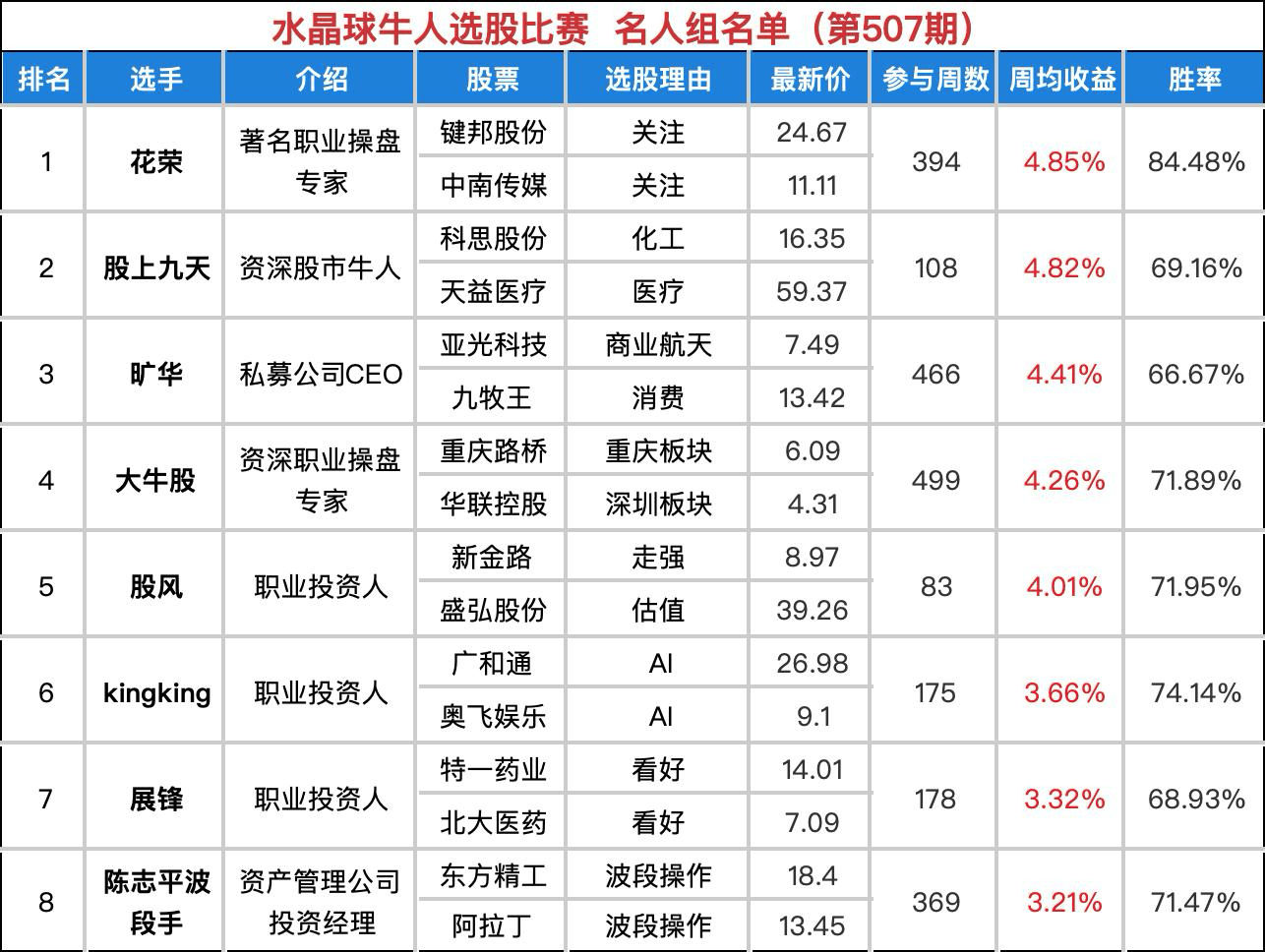
水晶球牛人选股比赛第507期名单!
Sou Hu Cai Jing· 2025-11-30 16:36
Core Insights - The article highlights significant stock performance in the recent week, with notable gains in companies such as Guangku Technology, which surged by 39.19%, and Huasheng Lithium Battery, which increased by 20.22% [1][2] - Various sectors are under focus for potential investment opportunities, including aerospace, chips, AI, and influenza-related companies [1][2] Sector Summaries Aerospace - Companies like Yaguang Technology, Tianyin Machinery, and Aerospace Software are gaining attention due to recent positive developments in the aerospace and satellite navigation sectors [1][2] Chip Industry - Key players in the chip sector include Microguide Nano, Yunhan Chip City, and Northern Huachuang, which are being closely monitored for their growth potential [1][2] AI Sector - Companies such as Guanghe Tong and Ao Fei Entertainment are highlighted as significant players in the AI space, attracting investor interest [1][2] Influenza-related Companies - Notable companies in the influenza sector include Te Yi Pharmaceutical and Beida Pharmaceutical, which are considered promising investments [2] Light Communication - Guangku Technology and other firms like Changxin Bochuang and Lian Te Technology are recognized for their advancements in light communication technology [2] Human-like Robots - Companies such as Haoen Qidian and Dongfang Jinggong are noted for their developments in the human-like robot sector, indicating a growing market interest [2]
龙虎榜 | 成都系+bike770顶板流感龙头,4机构抱团石基信息
Ge Long Hui· 2025-11-28 00:43
Company Insights - Haike New Source has signed a three-year supply agreement with Kunlun New Materials to supply electrolyte solvents from 2026 to 2028, with specific quantities based on orders [8] - The company is currently in a full production and sales state for its main products, which include lithium-ion battery electrolyte solvents, additives, and high-end propylene glycol [8][9] - Haike New Source has a leading global market share in lithium battery electrolyte solvents and is continuously investing in the research and development of cutting-edge materials such as solid-state electrolytes and lithium supplementation agents, with some products already in pilot testing [9] Industry Insights - Lithium carbonate prices have increased by over 60% in the past six months, driven by supply-demand mismatches and inventory depletion, with recent main contract prices breaking through 100,000 yuan/ton, reaching a new high since June 2024 [7][11] - The 2025 China International Lithium Industry Conference revealed that global lithium demand is expected to reach 2 million tons of lithium carbonate equivalent by 2026, reinforcing the industry's growth expectations due to a tight supply-demand balance [7][11] Company Performance - Te Yi Pharmaceutical reported a revenue of 692 million yuan for the first three quarters, a year-on-year increase of 51.86%, and a net profit of 65.52 million yuan, up 985.18% year-on-year, with its core product, cough syrup, recovering to 64% of the same period last year [15][16] - The company has seen a significant increase in demand for its cough syrup during the flu season, with a total effectiveness rate of 93% for treating flu-related coughs [16]

帮主郑重:流感有机硅逆势狂欢!明天盯紧这三条线
Sou Hu Cai Jing· 2025-11-27 08:08
Core Viewpoint - The market experienced mixed performance with the ChiNext index closing down 0.44%, while the influenza and organic silicon sectors surged, indicating a divergence in market sentiment driven by specific sectoral developments [1][4]. Group 1: Influenza Sector - The influenza sector saw a significant uptick, with flu-like cases in northern provinces rising to 7.0%, markedly higher than the same period in previous years [4]. - Sales of antiviral drugs, such as Oseltamivir, surged by 237% over the past week, indicating strong demand driven by rising flu cases [4]. - Jindike has completed the production season with 1.56 million doses of its quadrivalent flu vaccine approved for release, and is ramping up production capacity to 30 million doses [4]. Group 2: Organic Silicon Sector - The organic silicon sector experienced a boost following Dow Chemical's announcement of a 10%-20% price increase on major products starting December 10, which acted as a catalyst for domestic stocks [4]. - Companies like Hongbai New Materials and Chenguang New Materials saw their stocks hit the daily limit, while Dongyue Silicon Material rose over 10% [4]. - Smart money has already positioned itself in this sector, with Chenguang New Materials seeing a net inflow of 85.14 million yuan over the past ten trading days [4]. Group 3: Underperforming Sectors - The Hainan sector faced significant declines, with companies like Jingliang Holdings and Hainan Haiyao dropping nearly 7%, highlighting the lack of performance support for regional themes [4]. - The film and content industry also struggled, with Huanrui Century hitting the daily limit down and Shanghai Film falling nearly 7%, reflecting uncertainty in the content sector [4]. Group 4: Market Sentiment and Strategy - The overall trading volume decreased by 93.5 billion yuan compared to the previous day, indicating a cautious market sentiment and a tendency for rapid sector rotation [4]. - Investment strategies suggest focusing on the influenza sector for low-entry opportunities and the organic silicon sector for potential gains, while avoiding sectors lacking performance, policy support, or growth potential [5].






流感和普通感冒有何区别?如何预防流感?一文了解
Yang Shi Xin Wen· 2025-11-27 03:45
Core Viewpoint - The article emphasizes the significance of understanding influenza, its symptoms, transmission methods, and preventive measures, especially during the winter season when flu cases rise [1][3][8]. Group 1: Differences Between Influenza and Common Cold - Influenza is caused by the influenza virus, while the common cold can be caused by various viruses such as rhinoviruses and coronaviruses [5]. - Symptoms of influenza appear suddenly and are more severe, including high fever (above 38°C) lasting 3 to 5 days, while common cold symptoms develop gradually and usually involve low fever or no fever [6]. - Influenza can lead to serious complications like pneumonia and myocarditis, whereas the common cold has a low risk of complications [6][10]. Group 2: Transmission Methods - Influenza spreads primarily through respiratory droplets when an infected person coughs, sneezes, or talks [3]. - Contact transmission occurs when the virus is transferred from contaminated surfaces to hands and then to the face [3]. - Aerosol transmission can happen in poorly ventilated spaces, increasing the risk of infection [3]. Group 3: Prevention Strategies - Annual vaccination is the most effective way to prevent influenza, recommended for children over 6 months old [8]. - Good personal hygiene practices, such as frequent handwashing and using masks in crowded places, are crucial for prevention [8][9]. - Maintaining a well-ventilated environment and enhancing personal immunity through a balanced diet and regular exercise are also important [8]. Group 4: Management of Influenza Symptoms - Individuals showing symptoms like fever and cough should rest and seek medical attention promptly [10]. - For children, it is advised to wait until they are symptom-free for 48 hours after fever resolution before returning to school to prevent virus transmission [10].

流感来袭,小儿易感,专家支招辨病情
Xin Hua She· 2025-11-26 18:14
Core Insights - The current respiratory pathogens are exhibiting a "multi-strain mixed combat" characteristic, with a notable increase in influenza virus positivity rates, particularly affecting children [1][2] - The three-step identification method proposed by experts helps parents assess their child's condition, focusing on mental state, respiratory symptoms, and temperature changes [1] Group 1: Respiratory Pathogens - The prevalent respiratory pathogens include influenza virus, rhinovirus, and respiratory syncytial virus (RSV), with influenza showing significant positivity rates [1] - Influenza symptoms include high fever and body aches, while RSV primarily affects infants under 2 years old, potentially leading to bronchiolitis [1] - Rhinovirus is a common cause of colds and is a major contributor to recurrent colds in children [1] Group 2: Parental Guidance - Parents are advised to observe their child's mental state, respiratory condition, and temperature to differentiate between common cold and more severe illnesses like influenza or pneumonia [1] - Symptoms indicating severe illness include lethargy, irritability, rapid breathing, and persistent high fever [1] Group 3: Treatment and Prevention - Influenza patients should follow medical advice for treatment, maintain good nutrition, stay hydrated, and consume easily digestible foods [2] - High-risk groups, including the elderly, chronic disease patients, children, and pregnant women, should seek medical attention promptly if they exhibit fever during flu season [2] - Vaccination against influenza is recommended for high-risk groups before the flu season begins [2]