消费券

Search documents
杭州发放新一轮补贴、消费券
Xin Lang Cai Jing· 2025-12-24 05:26
Group 1 - Hangzhou's Yuhang and Qiantang districts have launched a new round of consumer subsidies and vouchers to stimulate spending [1] - Yuhang district has completed the fourth round of car purchase subsidies and is initiating the fifth round to meet consumer demand at year-end [2] - The fifth round of car purchase subsidies will run from December 23 to December 31, with a total budget of 1.5 million yuan, available on a first-come, first-served basis [3] Group 2 - Qiantang district is launching the "Tide Enjoy Life · Vitality Warm Winter" consumer season, offering 3,000 vouchers to encourage shopping [4] - Consumers can claim the no-threshold vouchers from now until December 25, 2025, with a limited quantity available [6] - The vouchers can be used at designated merchants from December 26, 2025, to January 4, 2026, and are subject to specific usage rules [7]
【商洛】优化消费品以旧换新补贴发放方式
Shan Xi Ri Bao· 2025-12-18 00:29
Core Viewpoint - The article discusses the optimization and adjustment of consumption coupon issuance and redemption rules in Shangluo City, effective from December 15, aimed at enhancing the effectiveness of the old-for-new consumption program and increasing the redemption rate of coupons and fund disbursement [1] Group 1: Consumption Coupon Adjustments - The adjustments involve multiple categories of consumer goods subsidies, including home appliances and digital products, which will be issued daily at 9 AM through the "Yunshanfu" platform, valid for the same day and can be reapplied the next day until funds are exhausted [1] - Automotive replacement and upgrade coupons will be issued in a one-time release at 9 AM on December 15 via the "Yunshanfu" platform, available until all are claimed; scrap vehicle replacement coupons will be distributed through the Shangluo City Commerce Bureau's departmental channel [1] - Consumers must complete relevant procedures for the two types of automotive coupons by December 31 and submit subsidy documentation by January 10, 2026, or they will forfeit the subsidy [1] Group 2: Other Consumer Goods - The old-for-new electric bicycle and home renovation consumer coupons will continue to be issued on the Alipay platform, with unchanged issuance time and method [1] - Consumers are advised to redeem the coupons within the validity period, and participating merchants must upload subsidy application materials by December 31, correcting any feedback from the system promptly; late submissions will not be compensated [1]
鼓励商家平台发放消费券
Sou Hu Cai Jing· 2025-12-14 23:26
Core Viewpoint - The joint notice issued by the Ministry of Commerce, the People's Bank of China, and the Financial Regulatory Administration aims to enhance consumer spending through coordinated efforts between business and finance, introducing 11 policy measures to stimulate consumption [3][5]. Group 1: Policy Measures - The notice outlines three main areas of focus: deepening collaboration between business and financial systems, increasing financial support for key consumption areas, and expanding cooperation among government, financial institutions, and enterprises [3][5]. - Specific measures include encouraging local departments to improve communication and collaboration, and to create a "combination punch" of policies by integrating fiscal, credit, and social capital [3][5]. Group 2: Financial Support for Consumption - Financial institutions are encouraged to optimize their products and services around five key areas: upgrading product consumption, expanding service consumption, fostering new types of consumption, innovating diverse consumption scenarios, and supporting consumption assistance [5]. - The notice emphasizes the need for tailored financial support measures that align with local conditions to promote new consumption models and scenarios [5]. Group 3: Government-Business-Finance Collaboration - The notice promotes the collaboration of government, financial institutions, and businesses to conduct diverse consumption promotion activities and information sharing, aiming to better meet the needs of businesses and consumers [5]. - It encourages merchants and platforms to issue consumption vouchers and provide low-interest or interest-free installment options, fostering a cooperative environment for consumption expansion [5].


年轻人为什么不愿消费了?
Sou Hu Cai Jing· 2025-11-24 01:42
Core Insights - The article discusses the significant shift in consumer behavior among young people, moving from a culture of excessive spending to a more cautious approach towards consumption, reflecting broader economic uncertainties and income concerns [1][4]. Group 1: Consumer Behavior Changes - There has been a notable change in the perception of consumption among young people, transitioning from viewing it as a status symbol to seeing it as a potential trap [4]. - The current consumer market shows a clear polarization, with traditional consumption sectors struggling while emotional spending, such as travel and entertainment, is on the rise [5][8]. - Fast fashion brands have seen a 15% increase in sales, while luxury brands have experienced a 5% decline, indicating a shift in consumer preferences [5]. Group 2: Economic Factors Influencing Consumption - The average daily spending during the recent holiday period was 113.9 yuan, reflecting a 13% decrease compared to the previous year and a drop to levels seen in 2019 [7]. - Many consumers are opting for lower-cost options, with a significant increase in orders under 20 yuan in major cities, suggesting a trend towards frugality [5][6]. - The reduction in income and job security has led to increased anxiety and a more cautious approach to spending among young consumers [13][14]. Group 3: Emotional and Health-Related Spending - Despite the overall decline in consumption, there is a notable increase in spending on emotional and health-related products, such as sleep aids and wellness items [10]. - The popularity of blind box products, particularly from brands like Pop Mart, highlights a growing trend in emotional consumption among young people [9]. Group 4: Recommendations for Stimulating Consumption - To address the current consumption stagnation, it is suggested that measures such as issuing large-scale consumption vouchers or cash incentives could serve as a "strong heart injection" to stimulate spending [18]. - The article emphasizes the need for a balance between supply and demand to encourage price increases and ultimately boost consumer confidence [18].
龙华区商务局发放超百万元政府消费券
Sou Hu Cai Jing· 2025-11-10 08:30
Group 1 - The government of Haikou City and Longhua District has issued over 1 million yuan in consumer vouchers to stimulate market activity [1] - The consumer vouchers are available on the cdf Hainan APP from November 9, 10 AM, and can be used for discounts during the shopping process [1] - The vouchers are structured in four tiers: 120 yuan off for 2000 yuan spent, 300 yuan off for 4000 yuan, 550 yuan off for 6000 yuan, and 650 yuan off for 8000 yuan, with each user limited to one tier during the promotion [1] Group 2 - The consumer vouchers can be combined with other discounts available on the cdf Hainan APP, and the promotion will last until November 24, 11 PM [2] - The ongoing "11.11 Sale Festival" on the cdf Hainan official mall includes a wide range of products such as skincare, jewelry, fashion, electronics, and beverages, featuring multiple discounts across duty-free and member channels [2]

最高减300元!江门消费券“上新”啦丨早安,江门
Sou Hu Cai Jing· 2025-11-08 03:38
Group 1 - The "Eat in Jiangmen" dining coupon event is launched, running from November 7, 2025, to March 31, 2026, aimed at reducing consumer spending and enhancing dining experiences [1][14] - Coupons can be claimed through the Cloud Flash Payment APP, with specific instructions for users to ensure they are located in Jiangmen city [1][17] - The event features various discount tiers, such as a reduction of 300 yuan for spending over 1500 yuan, 200 yuan for over 1000 yuan, and smaller discounts for lower spending thresholds [14][15] Group 2 - The coupons are valid for three days from the date of receipt and can only be used for dine-in services at participating restaurants [11][16] - Each user can claim one coupon per category per week, with a total limit of four per month, emphasizing the limited availability of the coupons [16] - The event is part of a broader initiative to stimulate local consumption and enhance the dining sector in Jiangmen [24][26]
88VIP无门槛9折消费券再发一波 全年最优惠 天猫“双11”再加码
Zheng Quan Ri Bao Wang· 2025-10-31 08:49
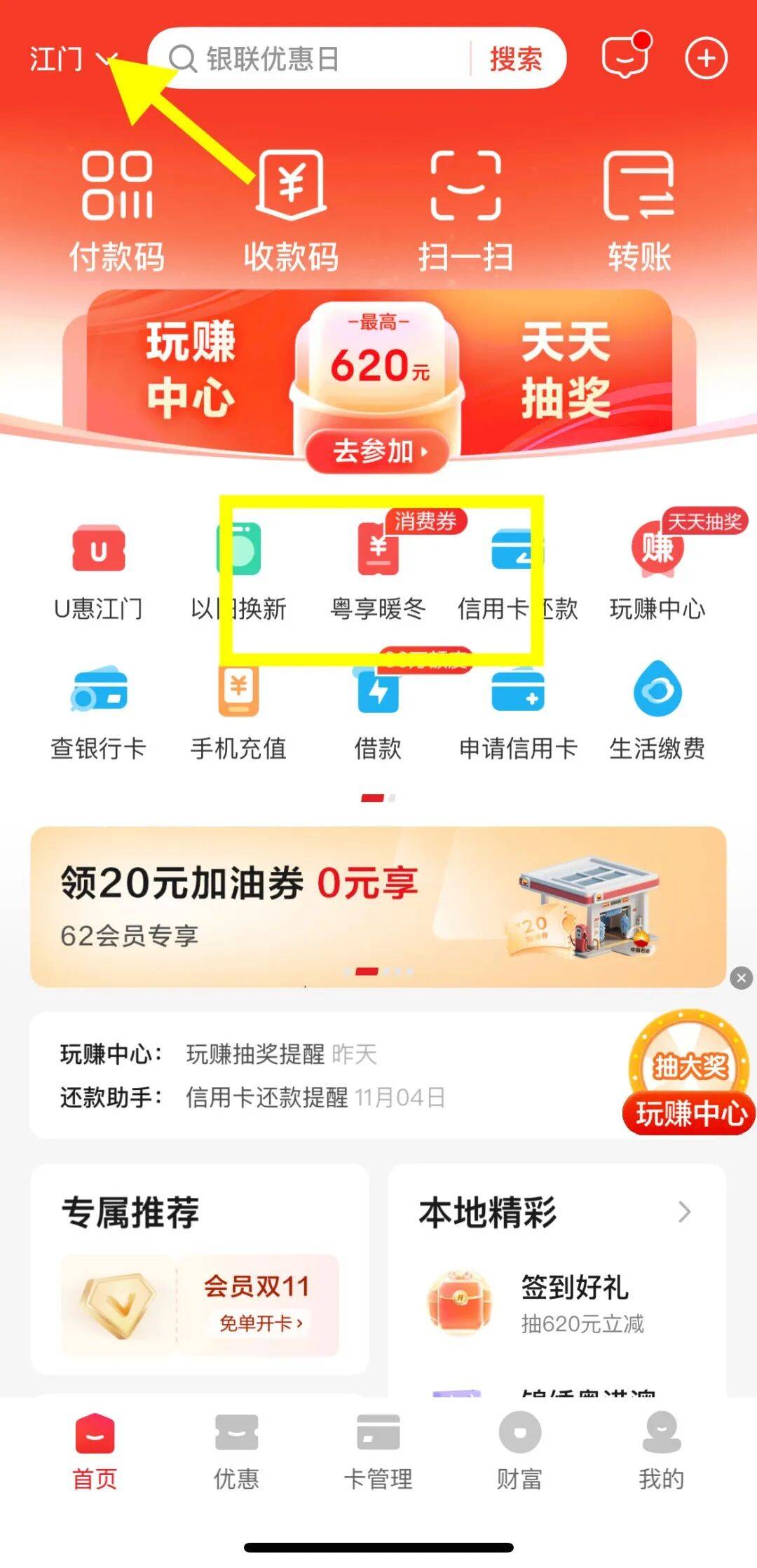
Core Points - Tmall's "Double 11" event is offering significant discounts, including a base 15% off and additional no-threshold 10% coupons, industry-specific coupons, and shopping credits [1] - Multiple promotional rights will be released at midnight, creating an optimal shopping opportunity for consumers [1] Discounts and Promotions - 88VIP coupons are being issued with a no-threshold 10% discount, which can be combined with other platform discounts [18] - Consumers can receive up to 10,000 yuan in category coupons across over 15 popular categories, including beauty, apparel, and food [19] - A new "Beauty Brand Sale" is introduced, offering discounts as low as 20%, with specific products significantly reduced in price [20] - Over 180 outdoor sports brands are participating, offering store-wide coupons that can be combined with platform discounts for up to 50% off [21] - New smartphone models, such as the iPhone 17 Pro, come with surprise coupons worth 300 yuan, while Huawei offers discounts up to 1,500 yuan [22] - Home appliances and furnishings can be purchased at 50% off after applying multiple discounts, including a base 15% off, 10% coupons, and up to 20% in national and brand subsidies [23] - Pet brands are also offering discounts, with some products available for as low as 54% off after applying various coupons and shopping credits [24] Event Duration - The Tmall "Double 11" event will run until November 14 at midnight, encouraging consumers to take advantage of the best deals of the year [25]
湖南消费券首轮摇号近80万用户中签!第二轮马上开始
Sou Hu Cai Jing· 2025-10-27 12:58
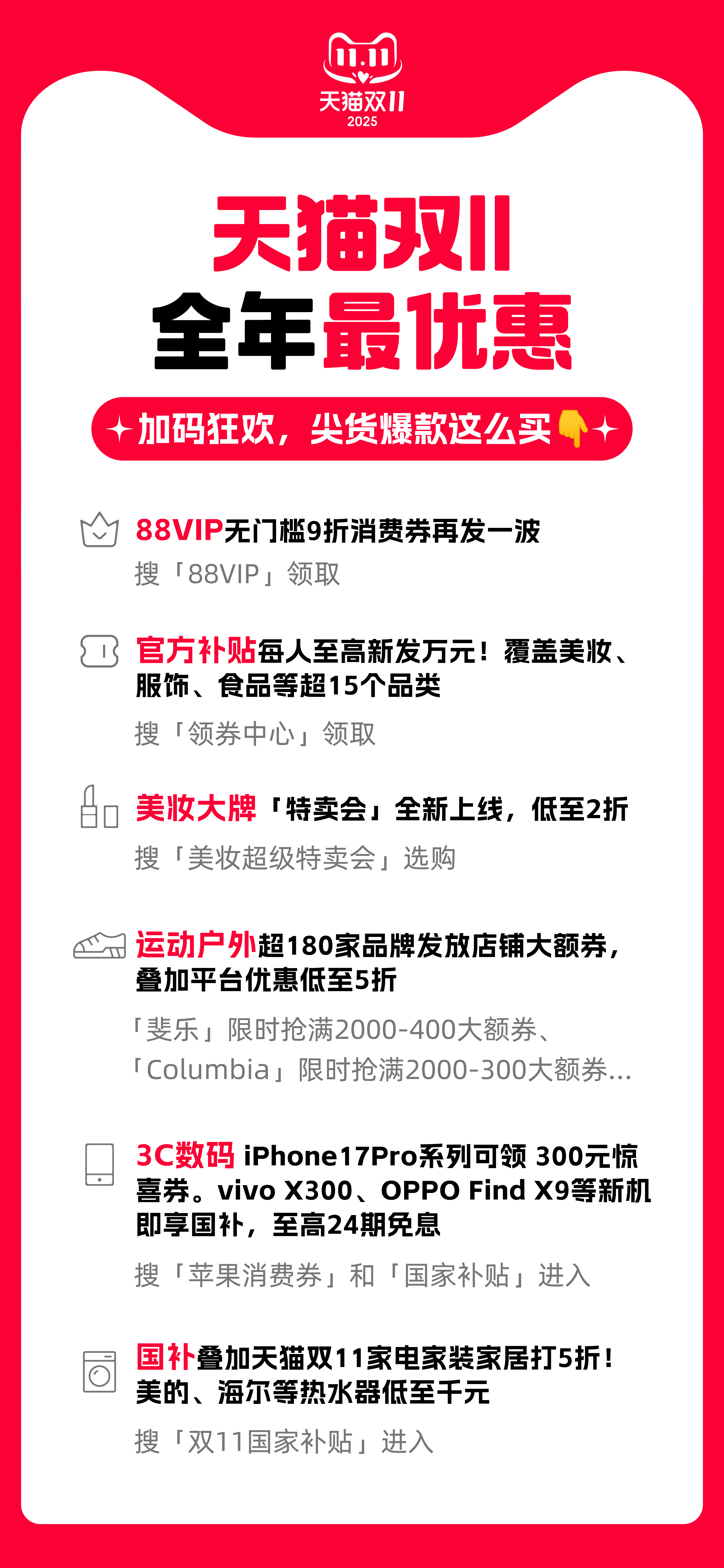
Core Points - The first round of the "Enjoy Hunan · Xiang Dang You Hui" consumption voucher lottery was successfully completed, with over 780,000 users winning out of more than 1.8 million applicants [1][3] - The lottery process was conducted under strict supervision to ensure fairness and transparency, with all data verified and anonymized before the draw [3][4] - The winning vouchers can be used in various categories such as dining, fuel, home services, and beauty, and are valid for 7 days from October 28 to November 3 [3][4] Summary by Sections Lottery Process - The lottery was held at the Changsha Star City Notary Office, with representatives from the platform and the Hunan Provincial Department of Commerce present [3] - The process involved a certified lottery system operating in a closed environment to ensure data integrity and randomness [3] User Participation - Over 1.8 million users registered for the vouchers, with some categories having application numbers ten times higher than the number of available vouchers [1][3] - Users can check their results through designated platforms such as Alipay, UnionPay, Meituan, and Douyin starting from October 27 [3] Voucher Usage - The vouchers can be combined with existing merchant discounts for additional savings but are non-transferable and cannot be used for cash or prepaid card recharge [4] - Violators of the usage rules may face disqualification and legal consequences [4]
湖南以旧换新消费券有效期缩至3天
Sou Hu Cai Jing· 2025-10-24 22:45
Core Points - Hunan Province has adjusted its old-for-new policy for consumer goods, reducing the validity period of consumption vouchers from 30 days to 3 days [1] - The new policy aims to enhance the efficiency of voucher usage and accelerate the realization of policy benefits [1] - Consumers must complete the delivery or pickup process within 30 days after placing an order, with all goods to be delivered by January 10, 2026 [1] Summary by Category - **Policy Changes** - The validity of consumption vouchers is now limited to 3 days, requiring prompt usage [1] - Vouchers received on November 1 must be used by November 3, and those received on December 1 must be used by December 3 [1] - **Implementation Guidelines** - Consumers and merchants are required to complete the delivery or pickup within 30 days of order placement [1] - Final delivery of all products must occur by January 10, 2026 [1] - **Objectives** - The adjustment is part of Hunan's response to national initiatives aimed at expanding domestic demand and promoting consumption upgrades [1] - Consumers are advised to plan their voucher usage and order timing carefully to maximize benefits [1]