
科技转型

Search documents
衢州发展30亿并购先导电科,万通发展8.54亿入局芯片,房企科技转型加速
Jin Rong Jie· 2025-08-14 00:32
Group 1 - The core viewpoint is that under the deep adjustment of the real estate industry, small and medium-sized listed real estate companies are shifting their strategic focus towards the technology industry through mergers and acquisitions, reflecting their transformation exploration under market pressure and the strategic value of technology assets in the current economic environment [1] Group 2 - Cross-industry merger and acquisition cases are emerging, with Quzhou Development planning to acquire 95.4559% of Xian Dao Electric Science and Technology through share issuance and raise up to 3 billion yuan in matching funds, focusing on advanced PVD sputtering targets and evaporation materials [3] - Wantong Development is also making significant strides in technology transformation by planning to invest 854 million yuan to acquire 62.98% of Shudu Technology, which specializes in PCIe high-speed switching chips, aiding its strategic shift towards digital technology business [3] Group 3 - The adjustment of the real estate market has significantly impacted the profitability of small and medium-sized real estate companies, prompting some to quickly enter emerging fields through mergers and acquisitions to seek sustainable development paths [4] - The capital market maintains a high interest in technology concepts, with real estate companies hoping to enhance market attention and valuation through cross-industry mergers and acquisitions [4] - Small and medium-sized real estate companies face significant gaps in land reserves, financing channels, and market influence compared to leading enterprises, making cross-industry mergers into high-growth emerging industries beneficial for building a second growth curve and enhancing cyclical resilience [4] Group 4 - The funding sources for mergers and acquisitions are becoming diversified, with ample operating cash flow providing foundational support, and small and medium-sized real estate companies actively utilizing capital market financing tools [4] - Huayi Family's reverse capital increase investment in Haihe Pharmaceutical, with a participation of up to 300 million yuan, reflects real estate companies' optimism about the long-term development potential of strategic emerging industries [4] Group 5 - The trend of cross-industry mergers and acquisitions among small and medium-sized real estate companies is expected to continue, with some companies potentially optimizing their business structures and gradually exiting traditional real estate sectors to allocate resources towards technology and other growth industries [5] - This transformation not only helps enhance the long-term competitiveness of companies but also promotes the concentration of industry resources towards more innovative potential fields [5] - Successful transformation requires companies to possess corresponding management and technical reserves, as cross-industry mergers demand higher integration capabilities, resource matching, and sustained investment capabilities [5]



科技转型,欧洲为何“大象转身难”
Xin Hua She· 2025-08-04 16:10
Group 1 - Europe's technology transformation faces significant challenges, with historical infrastructure becoming a burden for modernization [1] - Despite early advancements in AI, Europe lacks major tech giants to lead large-scale AI initiatives, falling behind competitors like OpenAI and DeepMind [1] - The electric vehicle transition in Europe is slow, with traditional automakers like Volkswagen and BMW struggling to adapt to new technologies [1] Group 2 - Strong industrial inertia is a major obstacle to transformation, as established supply chains and manufacturing systems hinder the shift to electric and smart technologies [2] - A conservative social mindset and business culture in Europe limit innovation, with only 29% of UK companies encouraging AI tool usage [2] - The lack of risk appetite in European venture capital leads to a preference for stable projects, delaying the incubation of disruptive technologies [2] Group 3 - Political changes result in policy inconsistency, complicating the transition to electric vehicles, as seen with fluctuating government subsidies in the UK [3] - Insufficient long-term planning and infrastructure development, such as sparse charging stations, impede the electric vehicle adoption process [3] - The EU plans to invest €1.3 billion in key technologies from 2025 to 2027, while the UK aims to invest £1 billion to enhance national computing power [3]
专栏丨科技转型,欧洲为何“大象转身难”
Xin Hua She· 2025-08-04 14:17
Group 1 - The article highlights Europe's struggle with technological transformation, particularly in AI and electric vehicles, where it lags behind the US and Asia despite its early start in AI research [1][2] - The inertia of established industries, particularly in the automotive sector, is identified as a significant barrier to transformation, as traditional supply chains and manufacturing systems hinder the shift to electric and smart vehicles [1] - A conservative social mindset and business culture in Europe stifle innovation, with only 29% of UK companies encouraging the use of AI tools, leading to a preference for stable projects over high-risk innovations [2] Group 2 - Political instability and policy fluctuations, such as the inconsistent support for electric vehicle subsidies in the UK, create uncertainty in the market and hinder long-term planning and infrastructure development [3] - The EU plans to invest €1.3 billion in key technologies like AI from 2025 to 2027, while the UK government aims to invest £1 billion to enhance national computing power, indicating a push to accelerate technological advancement [3] - To successfully navigate the transformation, Europe needs to streamline policy mechanisms, guide capital flows, and alleviate social anxieties, while also fostering global collaboration [3]
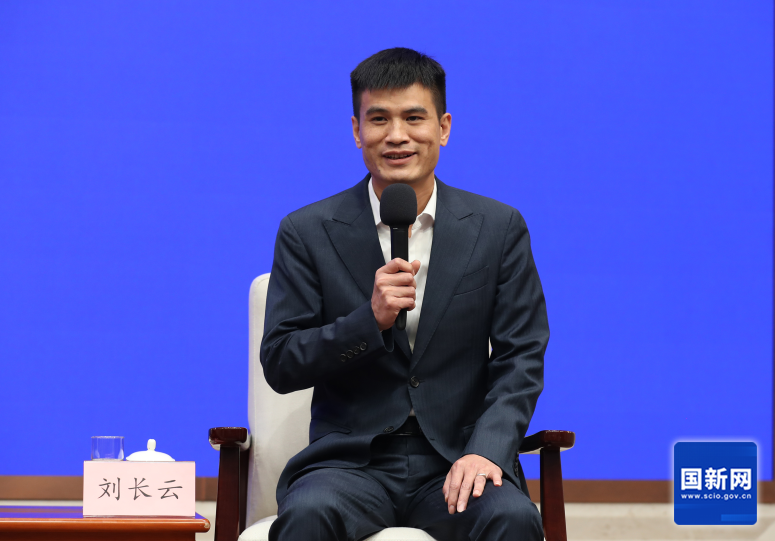
九州通董事长刘长云:以科技为核心的转型将成为企业培育核心竞争力的关键所在
Zhong Guo Jin Rong Xin Xi Wang· 2025-07-15 11:53
Core Viewpoint - The pharmaceutical industry in China is poised for significant growth due to the potential of the consumer market and the upgrade in health consumption, with technology-driven transformation being crucial for building new productivity and core competitiveness [1][3]. Group 1: Market Potential and Policy Support - China possesses the world's most promising consumer market, which will expand further as health consumption upgrades [1]. - Continuous release of policy benefits will lead to a brighter future for the private economy, with stable and long-term policy support [3]. Group 2: Company Strategy and Commitment - The company, Jiuzhoutong, focuses on serving grassroots rural and remote areas, demonstrating a willingness and capability to address the challenges of these markets [3]. - Jiuzhoutong has established over 400 modern logistics centers nationwide and employs around 5,000 to 6,000 delivery personnel to enhance service in underserved regions [3]. - The company is committed to long-term investment in grassroots services and digitalization, with annual investments amounting to hundreds of millions [4]. Group 3: Long-term Vision and Social Responsibility - The company acknowledges that short-term returns from significant investments may not be immediately visible, but it remains dedicated to its mission [4]. - Meeting the medical service needs of grassroots citizens is seen as both a driving force for the company's development and a social responsibility [4].

【金融一线调研】从“看行业”到“看转型”:银行重构农企信贷逻辑
Jing Ji Guan Cha Wang· 2025-07-14 15:52
Group 1: Industry Overview - The eel farming industry is becoming a new growth engine for Tianma Technology, which has expanded its operations from feed production to a comprehensive modern aquaculture group, including health food, safe feed, smart farming, quality seed sources, and international trade [3] - Tianma Technology has established a strategic positioning centered on the eel industry, with a focus on food as a new blue ocean and feed as a foundational pillar, operating large-scale industrial bases in Fujian and Guangdong [3] - The company has developed domestically produced eel feed, breaking the foreign technology monopoly previously held by Japan [3] Group 2: Financial Support and Growth - Agricultural Bank of China (ABC) has increased its credit support for Tianma Technology, signing a strategic cooperation agreement for a credit line of 1 billion yuan in 2024, with a total credit of 417 million yuan currently provided [4] - The financial support aims to promote the company's strategic layout, which includes the core eel industry and four strategic sectors: special aquatic products, livestock, integrated industries, and food [4] - Spring Lun Group, a tea industry player, has also received tailored financial support from Guangfa Bank, which provided a "technology loan" of 10 million yuan to facilitate its transformation and modernization efforts [6] Group 3: Technological Innovation - Spring Lun Group is leveraging technology and digital transformation to modernize the traditional jasmine tea industry, establishing a national tea processing technology research center and holding 12 national patents [5] - The company has implemented automated production lines and IoT technologies to enhance production efficiency, achieving over a 30% increase in capacity through optimized fertilization and irrigation [5] - Spring Lun Group is also developing a comprehensive project integrating research, e-commerce, and cultural tourism, with an expected annual increase in output value of 1.5 billion yuan by 2025 [6]

ST板块狂飙背后:重组新规催生“乌鸡变凤凰”神话?散户跟风需警惕三大暗雷
Sou Hu Cai Jing· 2025-05-25 06:11
Group 1 - The recent surge in the ST (Special Treatment) stocks in the A-share market is attributed to the new restructuring regulations released by the China Securities Regulatory Commission (CSRC) on May 16, which provide a "green channel" for ST companies [3] - ST companies like ST Hengji and ST Yatai are experiencing significant price increases due to market speculation on potential transformations and asset injections, despite their previous financial struggles [3][4] - The restructuring regulations allow for phased payment of acquisition funds and shortened review periods, which has led to a wave of optimism among investors regarding the potential for these companies to recover [3] Group 2 - A significant risk exists as 32% of companies that were designated as ST last year ultimately faced delisting, indicating a high failure rate among these stocks [4] - Many ST stocks suffer from low liquidity, with average daily trading volumes often below 1 million, making it difficult for investors to exit positions during downturns [4] - There is a prevalence of unsubstantiated rumors regarding restructuring, with less than 10% of such rumors resulting in actual successful outcomes, highlighting the speculative nature of investing in ST stocks [4] Group 3 - Investors are advised to prioritize state-owned enterprises (SOEs) when considering ST stocks, as they are generally perceived to be more reliable than private companies [5] - It is recommended to focus on companies that show tangible progress in restructuring efforts rather than those that are merely speculative [6] - Maintaining strict discipline in investment strategies is crucial, including limiting exposure to individual stocks and setting stop-loss limits to mitigate potential losses [7]
高新发展(000628) - 成都高新发展股份有限公司2024年度网上业绩说明会投资者关系活动记录表
2025-05-13 09:52
Group 1: Business Performance and Strategy - The company aims to become a world-class high-tech modern enterprise by 2024, with 95% of its main business in construction, while the semiconductor business is still in a loss phase [2] - In Q1 2025, the company reported a decline in both revenue and profit, indicating significant challenges in achieving its goals [2] - The company plans to enhance its core construction business and improve the performance of its semiconductor and digital energy sectors to foster high-quality growth [5] Group 2: Digital Energy and Semiconductor Developments - In 2024, the company launched 11 new green smart energy projects and 3 digital virtual power plant projects [3] - The company is focusing on developing high-margin products in the semiconductor sector and enhancing supply chain resilience [4] - The digital energy business is expanding its application scenarios, including the establishment of a virtual power plant management platform [6] Group 3: Financial Performance and Shareholder Returns - The company plans to distribute a cash dividend of 0.55 CNY per 10 shares in 2024, totaling 19.3754 million CNY, which represents 31.57% of the net profit attributable to shareholders [8] - The company has established a three-year shareholder return plan (2024-2026), committing to distribute at least 30% of the distributable profit as cash dividends [8] Group 4: Project Management and Future Outlook - As of March 31, 2025, the company has 133 signed but uncompleted projects worth approximately 28.472 billion CNY, ensuring future revenue sources [7] - The company is enhancing project management capabilities and compliance to improve operational efficiency and project quality [7] Group 5: ESG and Governance - The company has established a three-tier ESG governance structure to enhance its sustainable development capabilities [8] - An ESG report for 2024 has been disclosed, detailing the company's key performance indicators in environmental, social, and governance aspects [8]
