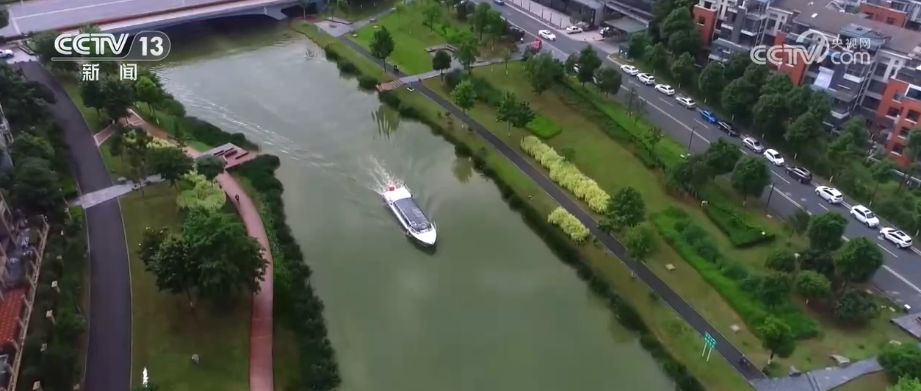
绿色低碳循环发展

Search documents
提高认识统一思想强化责任 坚决打好污染防治攻坚战主动仗
Zheng Zhou Ri Bao· 2025-09-08 00:41
Core Points - The meeting emphasized the importance of ecological civilization construction as a major political issue related to the party's mission and a significant social issue affecting people's livelihoods, business environment, and urban image [2] - The city aims to enhance pollution prevention efforts and achieve ecological environment goals set for the 14th Five-Year Plan, laying a solid foundation for a green, low-carbon, and circular economic development system for the 15th Five-Year Plan [1][2] Group 1 - The meeting highlighted the need for clear objectives and focused efforts on environmental quality improvement, emphasizing structural adjustments and the upgrade of industrial structures [3] - It called for targeted governance by concentrating on key pollution sources, periods, and areas, implementing precise measures to achieve a balance between ecological protection and socio-economic development [3] - The meeting stressed the importance of strengthening organizational leadership, accountability, and a results-oriented approach to ensure effective pollution prevention and environmental protection [3] Group 2 - Various city departments, including the Ecological Environment Bureau and Development and Reform Commission, participated in the meeting, indicating a collaborative approach to ecological protection [4]
枣庄加速构建现代能源体系
Da Zhong Ri Bao· 2025-09-05 02:48
Core Insights - The launch ceremony for the pilot project of carbon dioxide hydrogenation to methanol was held on August 18, marking a significant step for the company in advancing its catalyst technology towards industrialization [1] - A cooperation agreement was signed between Shandong Zhongke Green Carbon Technology Co., Ltd. and the company to establish a "Green Methanol Pilot Platform" [1] Project Overview - The pilot project is located in the Zaozhuang City Xuecheng Chemical Industry Park, with the company providing small-scale test data and catalysts, while Shandong Zhongke Green Carbon Technology Co., Ltd. supplies the pilot site, raw materials, and utilities for construction [1] - The project aims to synthesize methanol using carbon dioxide and hydrogen, validating the company's newly developed generation of catalysts and process technology [1] Strategic Goals - The Zaozhuang Municipal Government expressed hopes to deepen cooperation to expand the application of methanol fuel in inland shipping and energy storage, promoting the collaborative development of the new energy industry [1] - The pilot project is seen as a crucial step in bridging the "last mile" of industrialization, allowing for the verification of the long-term stability of the company's catalysts and the engineering feasibility of its new process technology [1]

枣庄|枣庄加速构建现代能源体系
Da Zhong Ri Bao· 2025-09-05 01:16
Core Viewpoint - The establishment of a pilot project for methanol production from carbon dioxide and hydrogen marks a significant step towards industrialization for Geely Innovation Center, aiming to validate new catalyst technology and process feasibility [1] Group 1: Project Overview - The pilot project for methanol production is located in Zaozhuang City, Xuecheng Chemical Industry Park, and is a collaboration between Geely Innovation Center and Shandong Zhongke Green Carbon Technology Co., Ltd [1] - The project utilizes carbon dioxide and hydrogen as raw materials for methanol synthesis, with Geely providing catalyst data and Shandong Zhongke supplying the pilot site and raw materials [1] Group 2: Strategic Goals - The local government aims to expand the application of methanol fuel in inland shipping and energy storage, promoting collaborative development in the new energy industry [1] - The project is seen as a crucial step in bridging the gap to industrialization, validating the long-term stability of Geely's catalyst and the engineering feasibility of its new process technology [1] Group 3: Future Implications - The pilot project is expected to accumulate critical data and practical experience for large-scale industrial applications, enhancing the overall energy system and fostering a green low-carbon circular development model [1]
洪通燃气: 新疆洪通燃气股份有限公司2025年半年度报告
Zheng Quan Zhi Xing· 2025-08-29 16:18
Core Viewpoint - The report highlights the financial performance and operational status of Xinjiang Hongtong Natural Gas Co., Ltd. for the first half of 2025, indicating significant growth in revenue and net profit, driven by increased sales of liquefied natural gas (LNG) and compressed natural gas (CNG) [2][3]. Financial Performance - The company's operating revenue for the first half of 2025 reached approximately 1.49 billion yuan, representing a 34.37% increase compared to the same period last year [3]. - The total profit amounted to approximately 85.23 million yuan, reflecting a 16.21% increase year-on-year [3]. - The net profit attributable to shareholders was approximately 72.89 million yuan, up by 15.98% from the previous year [3]. - The net cash flow from operating activities surged by 300.67%, reaching approximately 105.06 million yuan [3]. Key Financial Indicators - Basic earnings per share increased to 0.2595 yuan, a rise of 16.21% compared to the previous year [3]. - The weighted average return on equity improved to 3.73%, an increase of 0.30 percentage points [3]. - The company's total assets decreased by 4.03% to approximately 2.49 billion yuan, while net assets attributable to shareholders slightly decreased by 0.56% [3]. Industry Overview - The company operates within the gas production and supply industry, which is regulated by the Ministry of Housing and Urban-Rural Development and the Xinjiang Housing and Urban-Rural Development Department [4]. - The industry is encouraged by national policies focusing on the development of natural gas infrastructure, including LNG and CNG technologies, to promote cleaner energy consumption [4][6]. - The demand for LNG is expected to grow significantly due to its environmental benefits and the government's push for cleaner energy sources [6][12]. Market Trends - The report indicates a strong market trend towards the adoption of LNG as a vehicle fuel, with a projected increase in LNG consumption for transportation purposes [11][12]. - The natural gas vehicle market is expected to expand significantly, supported by government policies and the economic advantages of using natural gas over traditional fuels [13][14]. - The company is well-positioned to benefit from the increasing demand for LNG and CNG, particularly in the transportation sector, as the market for natural gas vehicles continues to grow [12][13].

云中马: 浙江云中马股份有限公司2025年半年度报告
Zheng Quan Zhi Xing· 2025-08-26 16:56
Core Viewpoint - Zhejiang Yunzhongma Co., Ltd. reported a slight increase in revenue but a significant decrease in profit for the first half of 2025, indicating challenges in the industry and economic environment [1][6]. Financial Performance - The company achieved operating revenue of CNY 1,245,189,242.30, a 2.17% increase compared to the same period last year [3][6]. - Total profit amounted to CNY 39,544,822.43, reflecting a 30.88% decrease year-on-year [3][6]. - Net profit attributable to shareholders was CNY 35,763,312.94, down 30.46% from the previous year [3][6]. - The net cash flow from operating activities was negative at CNY -99,115,559.77, an improvement from CNY -202,102,988.97 in the previous year [3][6]. Industry Overview - The textile industry is experiencing a stable yet challenging environment, with a demand index of 54.6, indicating moderate growth [6][7]. - The domestic and international demand for industrial textiles, including leather base fabrics, is closely linked to the performance of downstream consumer goods sectors [6][7]. - The export value of industrial textiles in China reached USD 21.47 billion in the first half of 2025, with a year-on-year growth of 2.8% [6][7]. Company Operations - The company focuses on the research, production, and sales of knitted leather base fabrics, which are essential raw materials for synthetic leather [6][7]. - The production of leather base fabrics reached 114,880 tons, a 6.63% increase compared to the previous year [7][8]. - The company has implemented smart production upgrades and green low-carbon transformation strategies to enhance operational efficiency and reduce costs [7][9]. Competitive Advantages - The company holds a leading position in the knitted leather base fabric industry, benefiting from scale advantages and strong brand recognition [10][11]. - Continuous innovation in production processes, such as the development of wet-laid leather base fabric technology, has strengthened the company's competitive edge [11][12]. - The company emphasizes environmental sustainability, having received ISO14001 certification and recognition as a water-saving benchmark unit in Zhejiang Province [12][13].

轻工业迈向“碳值竞争”新阶段
Xiao Fei Ri Bao Wang· 2025-08-26 02:58
Core Viewpoint - The introduction of carbon labels is becoming a pivotal element in driving the green transformation of the light industry in China, reshaping its low-carbon competitiveness from source to terminal systems [1] Policy Collaboration - The Chinese light industry is responding positively to national strategies aimed at establishing a green low-carbon circular economy, with policies like the 2024 directive on comprehensive green transformation and the 2025 notice on zero-carbon park construction [2][3] - Carbon labels, while not yet included in national zero-carbon park evaluation indicators, are closely linked to the task of optimizing industrial structure within these parks, promoting the "green manufacturing" model [2] - The China Light Industry Federation plans to select 100 benchmark green manufacturing enterprises during the 14th Five-Year Plan period, focusing on low-carbon development strategies and technologies [2] Industry Standards Development - Various light industry organizations are actively establishing carbon footprint standards, with specific guidelines released by associations for lighting, home appliances, and bicycles [4] - The aim is to create a unified carbon footprint management system that supports the green transformation of the industry [4] Mechanism Design - Carbon labels represent a breakthrough in the mechanism design for the green low-carbon upgrade of the light industry, shifting from traditional administrative constraints to a market-driven approach [7] - The carbon label system encourages companies to disclose full lifecycle carbon emissions, transforming low-carbon investments into competitive advantages through market recognition and value realization [7] - The system promotes a collaborative approach across the supply chain, ensuring that carbon reduction efforts are integrated from raw material procurement to end consumption [7] Support for SMEs - To address the high carbon accounting costs faced by small and medium-sized enterprises (SMEs), a public service platform for carbon labels and a green supply chain management platform will be established [8] - These platforms will provide low-threshold accounting templates and support for data collection, enabling SMEs to participate in the carbon label system and gain market advantages [8] International Alignment - The establishment of a carbon label certification grading system aligned with international standards is crucial for the light industry to overcome trade barriers [9] - Efforts will be made to connect the carbon label system with international standards such as ISO and GHG Protocol, facilitating compliance for enterprises in both domestic and international markets [9] Future Outlook - The light industry's "carbon value revolution" aims to transform carbon emissions from hidden costs into visible competitive advantages, with goals to reduce overall carbon emission intensity by approximately 20% and increase the proportion of green products to over 50% by the end of the 14th Five-Year Plan [10]
看浙江三“变”(活力中国调研行)
Ren Min Ri Bao· 2025-08-25 22:27
Group 1: Energy Transformation - The Zhoushan LHD marine tidal energy power station utilizes underwater turbines to convert tidal movements into green electricity [1] - The Meishan Port area has achieved a container throughput of 7.4782 million TEUs in the first seven months of the year, a year-on-year increase of 14.66% [2] - The Meishan Port's wind-solar-storage integrated project has generated over 40 million kilowatt-hours of electricity since its launch, reducing carbon emissions by approximately 24,000 tons [2] Group 2: Industrial Upgrading - The Huzhou "transformation financial loan" supports Hongchang Aluminum's production line upgrade, enhancing energy efficiency and productivity [1] - The Jiaxing Port area has deployed 100 hydrogen-powered trucks, saving approximately 3 million yuan in costs and reducing carbon emissions by about 5,000 tons annually compared to traditional fuel vehicles [3] - The Shaoxing Shangyu District has transformed a traditional chemical park into a hub for strategic emerging industries, with a projected output value of over 100 billion yuan in new materials by 2024 [4] Group 3: Waste to Resource - Agricultural waste such as straw and citrus peels is being converted into biofuels, contributing to carbon reduction efforts [7] - The "blue cycle" model for marine plastic waste management has successfully recovered 58,000 tons of marine plastic waste, reducing carbon emissions by 52,200 tons [7] Group 4: Green Development Initiatives - Zhejiang is actively cultivating green low-carbon industries and promoting green technologies and products, leading to the emergence of several billion-yuan recycling resource industries [8] - The region emphasizes ecological priority and green low-carbon development, driving a transformation in production and economic structure [8]
以发展“含绿量”提升增长“含金量” 看浙江三“变”(活力中国调研行)
Ren Min Ri Bao· 2025-08-25 22:03
Core Insights - The articles highlight the ongoing transformation in Zhejiang province towards green and low-carbon development, emphasizing the integration of technology and sustainability in various industries [1][8]. Group 1: Energy Transformation - The Zhoushan LHD Ocean Tidal Energy Power Station utilizes underwater turbines to convert tidal movements into green electricity [1]. - The Meishan Port area has implemented a wind-solar-storage integrated project, generating over 40 million kilowatt-hours of electricity since its launch, which corresponds to a reduction of approximately 24,000 tons of carbon emissions [2]. - The Jiaxing Port area has introduced 100 hydrogen-powered trucks, saving around 3 million yuan annually in costs and reducing carbon emissions by about 5,000 tons compared to traditional fuel vehicles [3]. Group 2: Industrial Upgrading - The Shaoxing Shangyu District has transformed a traditional chemical park into a hub for strategic emerging industries, with a new high-performance cobalt project aimed at aerospace applications [4]. - The Longxing County in Huzhou has shifted from lead-acid batteries to new energy batteries, reducing the number of companies from 175 to 16 while increasing output value by 14 times [6]. - The overall strategy in Zhejiang focuses on eliminating low-efficiency, high-pollution enterprises and fostering advanced manufacturing clusters [6][5]. Group 3: Waste Utilization and Recycling - Agricultural waste such as straw and citrus peels is being converted into biofuels, showcasing the potential for high-value applications [7]. - The "Blue Cycle" model for marine plastic waste management has successfully recovered 58,000 tons of marine plastic waste, leading to a reduction of 52,200 tons in carbon emissions [7]. - The emphasis on recycling and waste-to-resource initiatives is part of a broader strategy to promote green technologies and sustainable practices across industries [8].
济源税务:“税务蓝”为传统产业注入“绿动能”
Sou Hu Cai Jing· 2025-08-18 08:06
Core Viewpoint - The article highlights the importance of tax incentives in supporting the green and low-carbon transformation of traditional industries, showcasing how specific tax policies can enhance cash flow and drive innovation in companies [1][2]. Group 1: Tax Incentives and Financial Impact - Henan Jinma Energy Co., Ltd. received a VAT refund of 1.42 million yuan, which is seen as a significant boost for expanding green production [1]. - Jiyuan Steel Group benefits from tailored high-tech enterprise tax incentives, saving over 10 million yuan annually for R&D, leading to advancements in ultra-pure electric slag steel ingot technology [2]. - Henan Yuguang Gold and Lead Co., Ltd. enjoyed a VAT refund of 129 million yuan in the first half of the year, accelerating the mass production of high-purity metals [2]. Group 2: Collaborative Efforts and Policy Implementation - The Jiyuan tax authority established a "green transformation service team" to provide targeted support for enterprises, creating a customized list of green tax benefits [1]. - A cross-departmental collaboration mechanism was developed, allowing for information sharing between tax, water resources, and finance departments to support companies in enjoying tax reductions [1]. - The tax authority aims to enhance the "policy outreach" mechanism, utilizing big data to ensure that green tax benefits are effectively delivered to the front lines of innovation and production [2].
降碳、减污、扩绿……重磅数据出炉!多角度透视碳达峰碳中和重要成果
Yang Shi Wang· 2025-08-16 03:22
Core Viewpoint - The article highlights the significant achievements in carbon peak and carbon neutrality initiatives in China over the past five years, emphasizing the collaborative efforts across regions and sectors to promote green transformation in economic and social development [1][3]. Group 1: Policy Framework - The national level has introduced two key top-level design documents for "dual carbon" work, including the "Action Plan for Carbon Peak Before 2030" [3]. - A total of 12 sector-specific carbon peak implementation plans and over 30 supporting schemes covering technology, finance, standards, and consumption have been developed [3]. Group 2: Energy Transition - By 2024, China's energy consumption per unit of GDP is expected to decrease by 11.6% compared to 2020, equating to a reduction of 1.1 billion tons of CO2 emissions, making it one of the fastest countries in terms of energy intensity reduction globally [7]. - The share of coal consumption in China has decreased from 56.8% in 2020 to 53.2% in 2024, while the share of non-fossil energy consumption has increased from 15.9% to 19.8% [13]. Group 3: Renewable Energy Development - China has the largest renewable energy generation capacity in the world, with a total installed capacity reaching 2.159 billion kilowatts by June 2025, accounting for approximately 59.2% of the country's total installed capacity [13]. - The country has cultivated 66 national-level strategic emerging industry clusters and over 6,400 national-level green factories [9]. Group 4: Green Infrastructure - By 2024, the proportion of newly built green buildings in urban areas is expected to exceed 97%, with energy-efficient buildings accounting for over 66% of existing urban building area [14]. - The area of clean heating in northern regions has reached 2.09 billion square meters, representing nearly a 50% increase since 2020 [14].