美国经济放缓

Search documents
美联储戴利:FOMC官员们必须在通胀目标与就业目标之间取得平衡
Sou Hu Cai Jing· 2025-08-15 23:43
Core Viewpoint - The Federal Open Market Committee (FOMC) officials must balance between inflation and employment targets, indicating a nuanced approach to monetary policy [1] Group 1 - The expectation of two interest rate cuts by the Federal Reserve in 2025 is considered a reasonable outlook [1] - There is room for "recalibrating" the policy interest rate, suggesting potential adjustments in response to economic conditions [1] - The U.S. economy is clearly slowing down, but the growth rate is not characterized as slow [1]
瑞银:看空美国经济、看空美元、看空美股
Hu Xiu· 2025-08-13 08:05
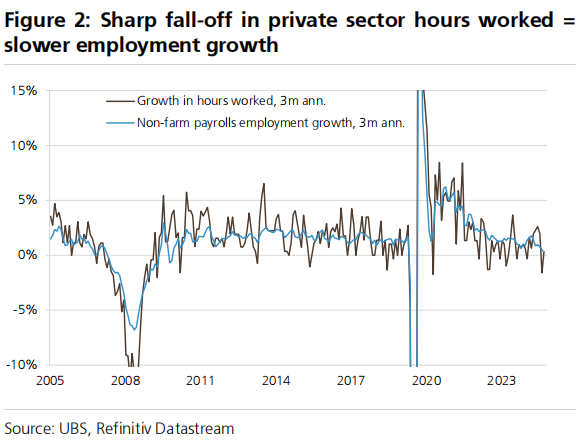
Group 1: Economic Outlook - UBS predicts a sharp slowdown in US GDP growth from 2.0% in Q2 to 0.9% in Q4, significantly below the consensus estimate of 1% [2][11] - Indicators such as a decline in private sector working hours and a weaker ISM employment index suggest an inevitable economic slowdown [5][6] - Factors supporting this outlook include pre-tariff demand exhaustion, depletion of excess savings, and rising effective interest rates during debt extensions [11][12] Group 2: Interest Rate Expectations - UBS forecasts a 1% decrease in interest rates by year-end, contrasting sharply with the market consensus of only a 0.5% reduction [13] - The report highlights that the sensitivity of the economy to short-term rates is unusually low due to a high proportion of fixed-rate debt among households and businesses [16] Group 3: Dollar Outlook - UBS maintains a long-term bearish stance on the dollar, citing a net investment position of -88% of GDP as a condition for a potential correction before a new dollar bull market [3][20] - Despite a recent rebound in the dollar, UBS argues that the fundamental logic for a dollar bear market remains intact [23][24] Group 4: Stock Market Risks - UBS sets a year-end target of 960 points for the MSCI global index, with a 2026 target of 1000 points, while warning of significant downside risks [4][26] - Concerns about valuation and positioning are evident, with nearly all clients inquiring about bubble risks, as UBS identifies six out of seven conditions for a bubble being met [30] - The report notes that approximately 70% of earnings growth is driven by generative AI, but warns that capital expenditure growth among large firms may slow significantly by 2026 [31][33]

罕见坚定看空的大行,瑞银:看空美国经济、看空美元、看空美股
Hua Er Jie Jian Wen· 2025-08-13 07:16
Core Viewpoint - UBS has adopted a rare "triple bearish" stance, issuing warnings on the US economy, the US dollar, and US equities simultaneously [1] Economic Outlook - UBS predicts a sharp slowdown in US GDP growth from 2.0% in Q2 to 0.9% in Q4, significantly below the consensus estimate of 1% [7] - Indicators such as a sharp decline in private sector work hours and a weaker ISM employment index suggest an inevitable economic slowdown [2] Interest Rate Expectations - UBS forecasts a 1% decrease in interest rates by year-end, which is double the market consensus of 50 basis points [8] - The report highlights that the sensitivity of the economy to short-term rates is unusually low due to a high proportion of fixed-rate debt [9] US Dollar Analysis - UBS maintains a long-term bearish outlook on the US dollar, citing a net investment position of -88% of GDP as a condition for a necessary correction before a new dollar bull market [11][13] - Despite a recent rebound in the dollar, UBS argues that the fundamental logic for a dollar bear market remains intact [15] Equity Market Risks - UBS sets a year-end target of 960 points for the MSCI global index and 1000 points for 2026, while warning of significant downside risks [16] - Concerns include high valuations, positioning worries, and the concentration of earnings growth in large tech firms [21] - UBS identifies a 25% probability of entering a bubble if the Fed lowers rates as expected [20] Sector-Specific Concerns - The report indicates that approximately 70% of earnings growth is driven by generative AI, but warns that capital expenditure growth for large firms may slow significantly [21] - UBS believes that the market is underestimating tariff risks, as many non-US countries are reducing trade barriers [22]

罕见“坚定看空”的大行,瑞银:看空美国经济、看空美元、看空美股
Hua Er Jie Jian Wen· 2025-08-13 05:56
Core Viewpoint - UBS has adopted a rare "triple bearish" stance, issuing warnings on the US economy, the US dollar, and US equities simultaneously [1] Economic Outlook - UBS predicts a sharp slowdown in US GDP growth from 2.0% in Q2 to 0.9% in Q4, significantly below the consensus estimate of 1% [6] - The firm highlights several factors contributing to this outlook, including pre-tariff demand exhaustion, depletion of excess savings, immigration slowdown, and fiscal drag from the Infrastructure Investment and Jobs Act [6][2] - Despite potential upward risks, UBS emphasizes that the trend of economic slowdown is unavoidable [6] Interest Rate Predictions - UBS forecasts a 1% decline in interest rates by year-end, which is double the market consensus of 0.5% [6] - The firm notes that the sensitivity of the economy to short-term rates is unusually low due to a high proportion of fixed-rate debt among households and corporations [6] US Dollar Analysis - UBS maintains a long-term bearish outlook on the US dollar, citing that the net investment position has reached -88% of GDP, suggesting a necessary correction before a new dollar bull market [11][7] - The firm acknowledges recent dollar rebounds but asserts that the fundamental logic for a dollar bear market remains intact [12] Equity Market Concerns - UBS sets a target of 960 points for the MSCI Global Index by year-end and 1000 points by 2026, warning of significant downside risks in the near term [15] - The firm expresses concerns over valuation and positioning, noting that global stock exposure is near historical highs [15][20] - UBS identifies a concentration risk in tech stocks, with about 70% of earnings growth attributed to generative AI, and warns that capital expenditure growth for large firms may slow significantly [21] Tariff Risks - UBS believes that the market is complacent regarding tariff risks, as evidenced by the performance of tariff-affected baskets in the US and Europe [22] - The firm emphasizes that the US accounts for only 16% of global trade, with many non-US countries reducing trade barriers among themselves [22]

海外宏观周报:美国经济放缓信号显现-20250812
China Post Securities· 2025-08-12 10:39
Economic Indicators - The ISM Services PMI in July fell to 50.1 from 50.8, nearing the threshold of expansion and contraction[1] - The Manufacturing PMI dropped to 48, marking five consecutive months in contraction territory[1] - The prices paid index surged to 69.9, a 34-month high, indicating increased cost pressures on consumer prices[1] Employment and Market Outlook - Recent non-farm payroll data suggests a weakening labor market, with initial jobless claims remaining elevated[1] - Short-term outlook for U.S. equities indicates potential downward pressure due to slowing corporate earnings growth and historical volatility in September[1] - The large-cap tech sector may benefit from a potential interest rate cut cycle, which could lower financing costs and support profit resilience[2] Risks and Recommendations - Risks include unexpected inflation rebound and delayed Fed rate cuts, as well as a sharper-than-expected economic downturn impacting corporate profits[3] - Historical experience suggests that market corrections during economic soft landing phases can present opportunities for quality asset accumulation[2]
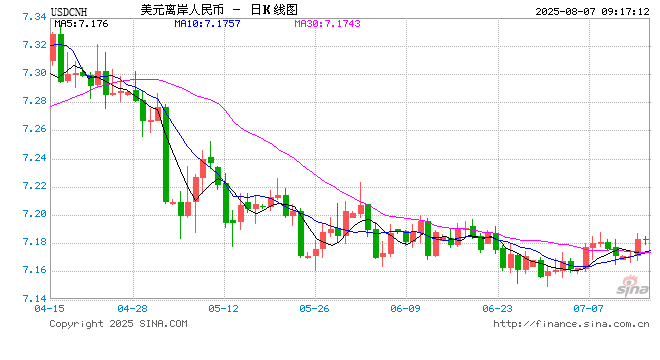
人民币兑美元中间价报7.1345,上调64点!美联储卡什卡利:美国经济正在放缓,今年降息两次似乎仍然合适
Sou Hu Cai Jing· 2025-08-07 01:36
Group 1 - The central bank of China adjusted the RMB to USD midpoint rate to 7.1345, an increase of 64 points [2] Group 2 - Federal Reserve official Kashkari noted that the economy is slowing down and suggested that two rate cuts this year may still be appropriate [4] - There is uncertainty regarding the impact of tariffs on inflation, and the Fed needs to respond to the economic slowdown [4] - Wage growth is declining, indicating a cooling labor market, and the Fed is cautious about employment data revisions [4] Group 3 - Bond traders are increasing bets on rate cuts by the Federal Reserve this year, with expectations of three rate cuts in the remaining meetings [5] - Some positions are betting on a 50 basis point cut in the next meeting, driven by weak economic indicators [5] - A recent report indicated stagnation in the U.S. services sector growth in July, heightening market concerns [5]
美联储卡什卡利:短期内可能适宜降息,再等关税明朗不现实
Feng Huang Wang· 2025-08-06 22:14
Group 1 - Neel Kashkari, President of the Minneapolis Federal Reserve, indicated that the U.S. economy is slowing down, suggesting that interest rate cuts may be an appropriate policy choice in the short term [1] - Kashkari expressed concerns about the uncertainty surrounding tariffs and their potential impact on inflation, stating that waiting for clarity on tariffs may not be the best option compared to lowering rates [1] - The Federal Reserve maintained the federal funds rate target range at 4.25% to 4.50%, marking the fifth consecutive decision to keep rates unchanged, citing "economic outlook uncertainty" as the main reason [1] Group 2 - The U.S. Labor Department reported that non-farm payrolls increased by 73,000 in July, which was below expectations, and the unemployment rate slightly rose to 4.2% [2] - Federal Reserve Governor Lisa Cook described the July employment report as "concerning," suggesting it may indicate a turning point for the U.S. economy [2]
Gold Set to Shine Again: ETFs to Tap the Momentum
ZACKS· 2025-08-06 15:01
Core Viewpoint - Gold is experiencing a resurgence in momentum due to fears of a U.S. economic slowdown, weak labor data, and expectations of Federal Reserve rate cuts, leading to a rise of over 3% in gold prices over four days [1][5]. Economic Data - The U.S. economy added only 73,000 jobs in July, significantly below the expected 104,000, with prior months' job gains revised down by 258,000, raising recession fears [3]. - The services sector index fell to 50.1 in July from 50.8 in June, indicating a near standstill in business activity due to weak demand and rising costs [4]. Federal Reserve Rate Cuts - The weak economic data has increased the likelihood of the Federal Reserve lowering interest rates in September, with a 92% probability indicated by market tools [5]. - Lower interest rates enhance the attractiveness of gold as a non-yielding asset compared to fixed-income investments [5]. Tariffs and Safe-Haven Buying - The Trump administration's recent tariff hikes, ranging from 15% to 40% on various countries, have spurred safe-haven buying of gold [6]. - The inflationary pressures from these tariffs are expected to bolster gold's status as a hedge against rising prices [7]. Currency and Central Bank Activity - A weaker U.S. dollar and increased central bank purchases are contributing to the rise in gold prices, with 95% of central banks expecting to increase their gold reserves in the next year [8]. Gold Price Forecasts - Citigroup has raised its 3-month gold price forecast to $3,500 per ounce from $3,300, citing economic deterioration, rising inflation, and changing tariffs [9]. ETFs Performance - Gold ETFs such as SPDR Gold Trust ETF (GLD), iShares Gold Trust (IAU), and others are expected to perform well due to rising gold prices [2][10]. - SPDR Gold Trust ETF has an AUM of $103 billion and trades about 9 million shares daily, while iShares Gold Trust has an AUM of $33 billion with 6 million shares traded daily [11][12]. - Other notable ETFs include SPDR Gold MiniShares Trust (AUM: $16.2 billion), abrdn Physical Gold Shares ETF (AUM: $5 billion), and iShares Gold Trust Micro (AUM: $3.3 billion) [13][14][15]. Conclusion - Given the prevailing economic uncertainty and potential Fed rate cuts, interest in gold ETFs is likely to remain strong in the upcoming months [16].

美元指数高频追踪20250804
Zhong Xin Qi Huo· 2025-08-06 06:16
Group 1: Report Core View - The US dollar index strengthened to the upper edge of 100 during the week but quickly depreciated below 99 after the release of non - farm payroll data on Friday. The subsequent outlook suggests a further decline in the US dollar index, and the view of a downward trend in the US dollar is maintained for the year [2]. - The reasons for the mid - week strengthening of the US dollar include the agreement between the US and major trading partners, the closing of crowded short - dollar positions before events, and better - than - expected US Q2 GDP and ADP employment data as well as a hawkish Fed in July [2]. - The weak non - farm payroll data on Friday reversed the logic of the strengthening US dollar. The 3 - month average non - farm payrolls have been slowing since February 2025, and only 35,000 jobs were added as of July [2]. - The logic supporting the downward trend of the US dollar this year includes the slowdown of the US economy and further Fed rate cuts, the recovery of other economies and rising investment returns, and the room for the increase of foreign exchange hedging ratio [2]. Group 2: Other Observations - The spread between US and German yields oscillated downward while the US dollar index generally trended upward [4]. - The US Citigroup economic surprise index declined [5]. - The CFTC net position shows that the net short position of the US dollar has decreased [10]. - The euro swap basis indicates that the cross - border liquidity pressure of the US dollar is limited [12]. - Based on the 30 - 10Y US Treasury yield spread and 10Y swap spread, concerns about US Treasury deficits are not the main contradiction affecting the US dollar [14][17]. - The US dollar index rebounded above the 9 - day moving average, and the RSI indicator is approaching overbought [19]. - The gold - to - copper ratio declined and then rose again on August 1st. Crude oil prices climbed and then fell, and copper prices declined [20].
连续3日“吸金”!黄金ETF基金(159937)冲击4连涨,机构:三大事件齐发,有望推动金价趋势上行
Sou Hu Cai Jing· 2025-08-06 04:00
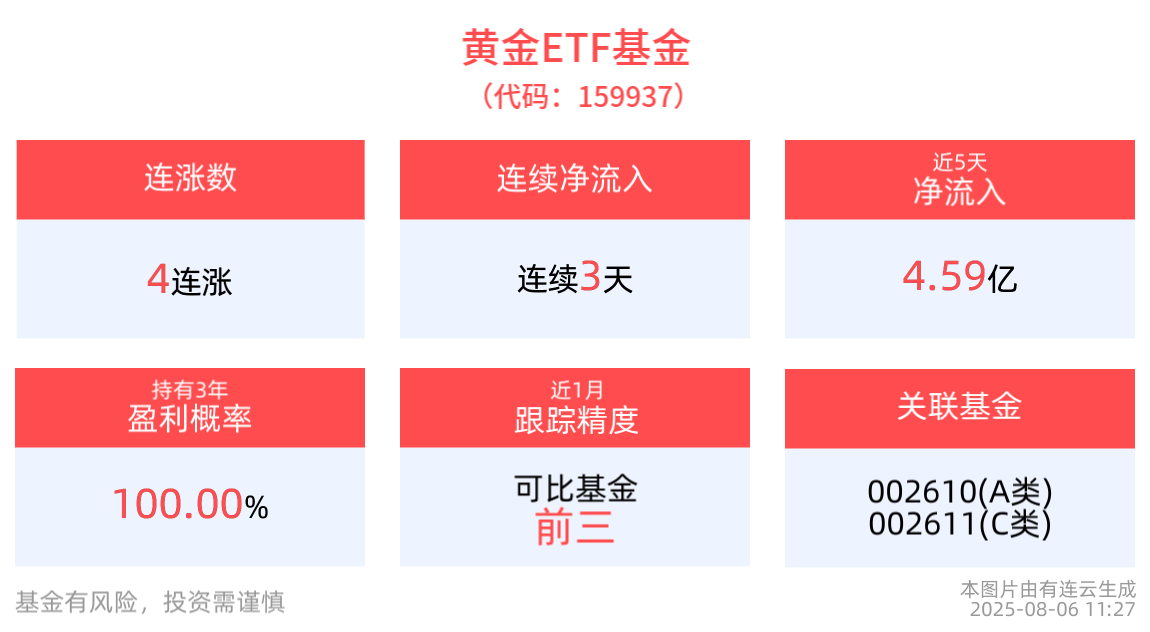
Core Viewpoint - The recent performance of gold ETFs indicates a positive trend, driven by various economic factors and market dynamics, suggesting potential for further price increases in gold [3][4]. Group 1: Gold ETF Performance - As of August 6, 2025, the gold ETF (159937) has risen by 0.17%, marking a four-day consecutive increase, with the latest price at 7.46 yuan [3]. - Over the past week, the gold ETF has accumulated a 1.29% increase [3]. - The trading volume for the gold ETF reached 1.14 billion yuan, with a turnover rate of 0.39% [3]. - The average daily trading volume over the past week was 12.11 billion yuan, ranking it among the top two comparable funds [3]. Group 2: Economic Indicators and Market Sentiment - The U.S. non-farm payrolls added 73,000 jobs in July, falling short of the expected 110,000, with downward revisions totaling 258,000 for May and June [4]. - The resignation of a key Federal Reserve official, coupled with political actions regarding employment data, is expected to influence market perceptions of the Fed's independence and support gold prices [4]. - Recent data indicates a significant drop in the U.S. job market, which has heightened expectations for a rate cut in September [4]. Group 3: Fund Inflows and Performance Metrics - The gold ETF has seen continuous net inflows over the past three days, totaling 526 million yuan, with a peak single-day inflow of 421 million yuan [4]. - The latest financing buy-in for the gold ETF reached 20.82 million yuan, with a financing balance of 3.612 billion yuan [4]. - Over the past five years, the gold ETF's net value has increased by 72.48%, ranking it among the top two comparable funds [4]. Group 4: Risk and Fee Structure - The gold ETF has a management fee of 0.50% and a custody fee of 0.10% [5]. - The fund's Sharpe ratio over the past year is reported at 2.39, indicating strong risk-adjusted returns [5]. - The tracking error for the gold ETF over the past month is 0.002%, reflecting high tracking precision compared to similar funds [5].