能力圈

Search documents
涨停!又涨停!面对投资“诱惑”,如何选择?
Zheng Quan Shi Bao· 2025-08-10 08:17
Group 1 - The core investment principle is to focus on risk rather than potential returns, emphasizing the importance of understanding one's own investment capabilities [1] - Successful investors, like Warren Buffett, have historically avoided the temptation of emerging trends while still achieving significant long-term returns [1] - The market teaches humility, as even aggressive investors can learn the value of long-term deep value investing [2][3] Group 2 - Chris Horn, the head of TCI, emphasizes the importance of assessing whether a company will exist in 30 years before investing, highlighting the rarity of companies with long-term compounding capabilities [3] - Only about 5% of companies possess strong pricing power, high barriers to entry, and stable governance, making them suitable for long-term investment [3][4] - Many investors underestimate the impact of competition and disruption, often focusing on short-term gains rather than long-term profitability [3][5] Group 3 - Emerging industries face significant challenges, including the difficulty of identifying future winners among many competitors [5][6] - Buffett's investment strategy has focused on traditional industries, achieving a success-to-failure ratio close to 100:1, despite occasional setbacks [6] - New industries often rely on technological advantages that can be quickly replicated by competitors, leading to diminished returns over time [6][7] Group 4 - The strength of a company's competitive moat is difficult to ascertain without the test of time, as many perceived advantages can erode [7] - Value investors seek companies with monopolistic characteristics, wide moats, and strong pricing power, but most moats are not as robust as believed [7]
段永平的投资哲学:从商业本质到人生智慧的深度解码
Sou Hu Cai Jing· 2025-08-08 02:53
Core Insights - The essence of investing is understanding that buying stocks equates to buying companies and their future cash flows [3][4][17] - Value investing is often misunderstood, with few grasping its true essence [3][17] Group 1: Investment Philosophy - The fundamental value of a company lies in its cash flow rather than profits, as demonstrated by the investment in NetEase, where a low market cap contrasted with high cash reserves [3][4] - Valuation is viewed as an art rather than a precise calculation, with a focus on qualitative assessments rather than strict financial models [4][17] - Market fluctuations are seen as opportunities rather than risks, with a strategy of buying during downturns exemplified by the investment in Tencent [5][17] Group 2: Dynamic Competitive Advantages - The concept of a "moat" is redefined as a dynamic capability to withstand competition, rather than static financial metrics [6][17] - Unique geographical advantages and proprietary formulas create irreplaceable barriers, as seen in the case of Moutai and Yunnan Baiyao [6][17] - Network effects in ecosystems, such as Apple's iOS and Tencent's WeChat, enhance value as user bases grow, leading to increased switching costs [7][17] Group 3: Cultural and Philosophical Insights - Corporate culture is emphasized as a crucial element of competitive advantage, with a focus on values that prioritize customer needs [8][17] - Awareness of one's own limitations is vital, as illustrated by the decision to avoid banking stocks due to a lack of understanding [9][17] - A contrarian approach to investing, such as increasing positions during market declines, is highlighted as a strategy to navigate market volatility [10][17] Group 4: Long-Term Investment Strategies - A long-term perspective is essential, with patience allowing for the benefits of compounding to materialize, as evidenced by the long-term holdings in Apple and Moutai [11][17] - The importance of understanding the fundamental value of companies remains constant, even amidst technological changes like AI [13][17] - Practical application of options strategies, such as selling put options, demonstrates a flexible approach to managing investment costs and risks [14][17] Group 5: Value Creation - The ultimate goal of investing is to create value rather than merely distribute it, with a focus on solving real problems for consumers [15][17] - The insights from the investment philosophy extend beyond finance, offering a broader perspective on life and decision-making [17]


《天道》:人一旦开窍,钱就来得很容易
洞见· 2025-07-24 12:08
Core Insights - The article emphasizes the importance of understanding one's own capabilities and the underlying logic of making money, as illustrated through the characters in the drama "Tiandao" [5][6][7] Group 1: Personal Development and Capability - Ouyang Xue represents the potential for ordinary individuals to achieve success through hard work and understanding their own strengths [9][10] - She started from a disadvantaged background, worked in various roles in the food industry, and eventually opened her own restaurant, demonstrating the importance of perseverance and skill development [11][12][14] - Ouyang Xue's decision to stop trading stocks after realizing the risks involved reflects a clear understanding of her own capability and the importance of staying within her comfort zone [18][20][21] Group 2: Networking and Social Capital - The article discusses the significance of social connections in enhancing one's opportunities, as highlighted by the character Xiao Yawen, who leveraged her relationships to transition from an employee to a business partner [28][32][38] - It emphasizes that successful individuals often recognize the value of surrounding themselves with those who are more accomplished, which can lead to greater opportunities [30][40][50] Group 3: Cultural Attributes and Mindset - Ding Yuanying's concept of "strong culture" versus "weak culture" illustrates the mindset necessary for success, where individuals take responsibility for their own growth rather than relying on external factors [53][54][61] - The article suggests that understanding the essence of things and adapting to circumstances is crucial for personal and financial success [61][66] - The narrative concludes that true enlightenment and financial success come from accumulated experiences and insights, rather than mere effort [68][70]


A股再度上攻,放心,我还是坚守自己的观点!
Sou Hu Cai Jing· 2025-07-23 08:20
Group 1 - The market is currently at a high level, and the company is cautious about making investments outside its capability circle, regardless of market fluctuations [1][2][3] - The banking sector is showing signs of recovery, supported by the securities sector, but the overall trend may only lead to fluctuations rather than a return to past highs [5] - The prices of key raw materials for new energy, such as silicon and lithium, have experienced significant volatility, indicating potential market instability [6][7] Group 2 - The liquor industry saw a brief surge but has since retreated, suggesting that new opportunities may be developing [8][9] - Maintaining independent judgment in trading is crucial, especially when the company is among the minority in its views [10]

顶级投资人都有一道“心理护城河”!乔尔·格林布拉特:你必须有情绪上的韧性,才能享受到10年后带来的回报……
聪明投资者· 2025-07-21 07:00
Core Viewpoint - The importance of emotional resilience in investing is emphasized, suggesting that understanding the market and maintaining patience can lead to significant long-term returns [1][24]. Group 1: Investment Philosophy - Joel Greenblatt advocates for a systematic value strategy, focusing on buying companies with high profitability and low valuations, referred to as the "magic formula" [2][12]. - The challenge in this strategy lies in its contrarian nature, requiring investors to buy when the market sentiment is negative [3][19]. - Greenblatt introduces the concept of a "psychological moat," which is built on deep understanding and experience, rather than just intelligence [5][6]. Group 2: Market Behavior and Investor Psychology - Many investors struggle to stick to a strategy during market downturns, often doubting their methods when faced with underperformance compared to popular stocks [4][16]. - The necessity of a long-term perspective is highlighted, with successful investors needing to maintain patience over extended periods, often beyond three years [17][18]. - Emotional resilience is crucial; investors must accept that market fluctuations are normal and prepare to endure periods of underperformance [24][33]. Group 3: Investment Strategies and Techniques - Greenblatt discusses the importance of understanding company valuations and having a diversified portfolio to mitigate risks [28][30]. - He emphasizes that successful investing requires a clear understanding of a company's future earnings potential, integrating both growth and value perspectives [36][38]. - The discussion includes the transition from special situation investments to more systematic strategies, reflecting changes in market conditions and fund sizes [46][49]. Group 4: Practical Insights and Recommendations - Greenblatt shares insights on the difficulties of executing multi-strategy approaches, particularly in volatile markets, and the importance of risk management [55][57]. - He advises against easily replicating complex strategies without a solid understanding of the underlying principles and risks involved [58][59]. - The current market environment is characterized by extreme valuations, presenting opportunities for those who can identify undervalued stocks [60].
陈文彬出席大连理工国际青年学者交流会论“愿力人生”:知道去哪,世界都会为你让路
第一财经· 2025-07-11 09:13
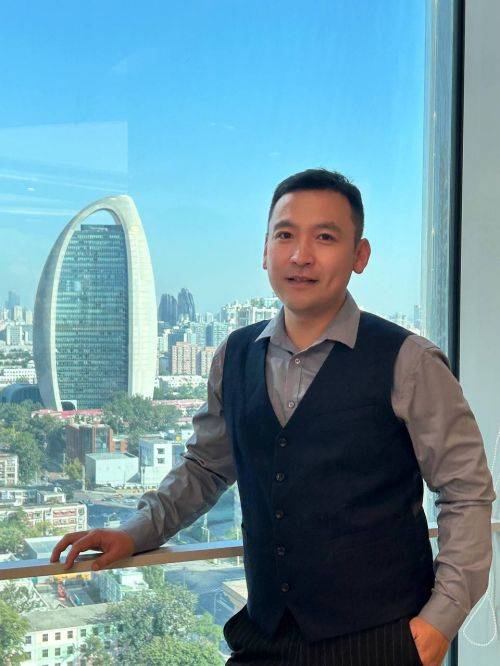
Core Viewpoint - The conference emphasizes the importance of talent attraction and innovation in building a world-class university and a strong educational foundation for the revitalization of Northeast China [1][4][19]. Group 1: Conference Overview - The 10th Dalian University of Technology International Youth Scholars Exchange Conference focuses on the construction of a national talent center and innovation hub, inviting leaders and experts to discuss talent policies and research dynamics [1][3]. - The conference aims to promote collaboration between local governments and educational institutions to support the development of young talents [1][19]. Group 2: Key Speeches and Presentations - Chen Wenbin, founder and CEO of Jiufang Zhitu Holdings, delivered a keynote speech on the path to success for young talents, emphasizing the importance of strong inner will and clear goals [2][10][13]. - Guo Dongming, an academician of the Chinese Academy of Engineering, highlighted the role of young scholars in driving national technological innovation and addressing major strategic needs [9]. - The conference featured a roundtable dialogue with outstanding young scholars sharing their experiences and insights on career choices and growth paths [19]. Group 3: Talent Policies and Support - The Liaoning Provincial Organization Department introduced the "Xingliao Talent Plan," aimed at cultivating and utilizing talents comprehensively [6]. - Dalian City officials presented policies focused on supporting young scientific and technological talents, aligning with the city's strategy for talent development [7]. Group 4: Insights on Career Development - Chen Wenbin discussed the significance of aligning personal interests with industry trends, identifying the "correct track" for career happiness [14]. - He emphasized the need for continuous deepening of expertise and cross-disciplinary integration to create value in today's rapidly changing environment [16][18]. Group 5: Embracing Change and Innovation - The importance of embracing AI and lifelong learning was stressed as essential for young talents to thrive in the current era [18]. - The conference concluded with a call for integrating personal aspirations with the broader goals of regional development, fostering a new advantage for the future [19].

股市中最重要的器官
Hu Xiu· 2025-06-19 08:54
Group 1 - The core argument emphasizes the importance of emotional resilience in investing, suggesting that even with the right decisions, investors may struggle with market volatility [1][6][19] - A study by Morgan Stanley indicates that the median maximum drawdown for the best-performing stocks from 1985 to 2024 is 72%, with a recovery time of 4.3 years [2][3] - The analysis of the S&P 500 shows a median maximum drawdown of 58% and a recovery time of 4.2 years, highlighting the potential for significant declines in both individual stocks and index funds [4][5] Group 2 - The article discusses the metaphorical roles of the brain, heart, and stomach in investment decision-making, where the stomach represents emotional management and resilience [16][30] - It argues that a strong understanding of investments is crucial to withstand market fluctuations, as cognitive clarity can mitigate emotional distress [24][28] - The relationship between cognitive understanding and emotional response is explored, suggesting that a lack of knowledge can lead to fear and poor decision-making [25][26] Group 3 - The concept of the "circle of competence" is introduced, emphasizing the need for investors to operate within their knowledge boundaries to avoid cognitive dissonance and emotional discomfort [40][45] - The article posits that a healthy "stomach" can help investors reject opportunities that fall outside their expertise, thus maintaining discipline and focus [48][50] - Ultimately, the piece concludes that the most important aspect of investing is the balance and honesty among the brain, heart, and stomach, which together facilitate sound decision-making [55][58]
创投困局的本质:缺的不是钱,而是能力
3 6 Ke· 2025-06-17 03:21
Core Insights - The fundamental issue in the equity investment sector is not a lack of capital but a deficiency in value creation capabilities [2][6] - The perception of fundraising difficulties and project shortages masks the underlying problem of capability scarcity [3][6] Fundraising Challenges - The industry faces a dilemma of whether funding or projects are more critical, with most institutions often experiencing a "funding thirst" [3][4] - The scarcity of good projects leads to a misalignment in priorities, where funding appears more important due to the prevailing conditions [3][4] Value Creation and Scarcity - The essence of business lies in scarcity, which is the foundation of value [6][14] - Creating a differentiated competitive barrier is essential, as most investment behaviors are homogenous and rely heavily on relationships and brand power [5][6] Investment Strategies - A reverse investment model that emphasizes controlling the supply side and accurately matching demand can alleviate the need for traditional fundraising [5][6] - The focus should be on creating unique investment scenarios rather than competing for limited resources [5][6] Performance Metrics - The core competitiveness of institutions has shifted from brand recognition to performance metrics, with actual results being the primary measure of success [12][14] - The investment logic must withstand practical scrutiny, as theoretical strategies often fail in real-world applications [16][14] Market Dynamics - The investment landscape is undergoing significant changes, with a decline in brand premiums and asset bubbles, leading to a reevaluation of previously held industry myths [12][14] - Successful investment is akin to market transactions, where the key lies in buying low and selling high while minimizing intermediary costs [14][15]
创投困局的本质:缺的不是钱,而是能力
FOFWEEKLY· 2025-06-16 09:59
Core Viewpoint - The essence of the industry's dilemma is not a lack of capital, but a lack of value creation capability [6]. Group 1: Fundraising Challenges - In the equity investment field, fundraising is the most fundamental, difficult, and painful aspect [5]. - The disappearance of market-oriented LPs and the dominance of state-owned LPs have led to ongoing fundraising difficulties, creating a perception of a "lack of money" in the industry [5][8]. - Most institutions are in a long-term state of "capital hunger," leading to a perception that funds are more important than projects [9]. Group 2: Core Contradictions - The core contradiction behind fundraising difficulties and project shortages points to a scarcity of capability [13]. - The first secret of business is scarcity, which is also the essence of value [12]. - Investment should focus on creating scarcity rather than competing in a homogeneous manner [11]. Group 3: Investment Strategies - Building a differentiated competitive barrier is crucial for success in investment [11]. - A reverse investment model that emphasizes supply-side control and precise demand matching can help institutions avoid the need for fundraising [11]. - The focus should be on creating investment scenarios that allow for greater control and success-driven marketing [11]. Group 4: Changing Market Dynamics - The equity investment market is undergoing profound changes, with brand premiums declining and asset bubbles being cleared [21]. - The core competitiveness of institutions is shifting from brand recognition to performance [23]. - The essence of investment is akin to market logic, focusing on buying low and selling high while minimizing waste [23]. Group 5: Performance and Capability - Performance is the only true moat for institutions, as highlighted by the example of a consumer fund achieving over 10 times returns from a single liquor project [24]. - Investment logic must withstand practical tests, as there is often a significant gap between knowledge and action [25]. - Understanding the boundaries of one's capability circle is essential for successful investment strategies [26].

专访弘量研究有限公司李立成:坚持走出一条china式的巴菲特之路
Sou Hu Cai Jing· 2025-06-13 02:05
Key Achievements - Li Licheng is a stock market investment expert and a well-known philanthropist, serving as the chief economist and analyst at a Hong Kong investment group [2] - He emphasizes that his success is attributed to persistence and the ability to overcome human weaknesses, maintaining rationality and patience in investment [2] Investment Philosophy - The most important aspects of investment include managing emotions, maintaining a rational and objective attitude, and having the ability to research and analyze industries and companies [4] - Li Licheng believes that avoiding major failures is more crucial than achieving great successes in the stock market, as small victories can accumulate to significant gains [4] Advice for New Investors - New investors are encouraged to start investing early, as smaller initial assets lead to lesser actual losses during downturns [5] - It is essential for new investors to acquire necessary knowledge and develop a suitable investment strategy rather than relying on luck [5] Views on Foreign Investment Banks - The opening of foreign investment banks in China is seen as beneficial for enhancing service levels and competitiveness within the securities industry [6][7] - Domestic securities firms are urged to strengthen their traditional business capabilities and innovate to adapt to the evolving market landscape [7] Competitive Landscape - Foreign investment banks possess advantages such as superior transaction capabilities, experienced product design, and comprehensive financial services, but face challenges like insufficient local networks and cultural differences [8] - The entry of foreign firms into the Chinese market is expected to intensify competition, prompting domestic firms to enhance their competitiveness [9]