自由贸易协定

Search documents
印度和欧盟达成自贸协定
Jing Ji Guan Cha Wang· 2026-01-27 07:21
经济观察网 据央视新闻客户端消息,当地时间1月27日,印欧领导人在新德里举行会晤。印度总理莫迪 宣布,印度和欧盟达成自由贸易协定,并表示该协议覆盖全球GDP的25%和全球贸易额的三分之一。 ...
110%→10%?印度汽车关税“世纪级让步”内幕
汽车商业评论· 2026-01-26 23:27
Core Viewpoint - India is approaching a significant reduction in import tariffs on certain EU cars, potentially lowering the rate from a maximum of 110% to 40%, with further reductions planned to 10% in subsequent phases [4][11][27]. Group 1: Tariff Reduction Details - The Indian government has agreed to lower tariffs on certain imported cars from the EU, specifically those priced above €15,000 (approximately $17,739) [5][10]. - The initial reduction to 40% will apply to a limited number of vehicles, with an annual quota of around 200,000 fuel vehicles set to be taxed at this new rate [10][11]. - The plan includes a phased approach, with tariffs expected to decrease to 10% over a longer period, thereby reducing the marginal cost for European brands entering the Indian market [11][12]. Group 2: Market Implications - This tariff reduction marks a significant opening of the Indian market, which has historically maintained high import tariffs, often criticized by industry leaders, including Tesla's CEO Elon Musk [18][21]. - Currently, foreign brands hold less than 4% market share in India's automotive sector, dominated by local companies like Suzuki, Tata, and Mahindra, which together account for about two-thirds of the market [23][24]. - The anticipated growth of the Indian automotive market to 6 million annual sales by 2030 necessitates clearer cost expectations for both imported and localized vehicles for European brands [24]. Group 3: Strategic Considerations - The tariff concessions are part of broader trade negotiations between India and the EU, aimed at balancing interests and expanding bilateral trade, particularly in textiles and jewelry [27][28]. - The automotive sector is a sensitive area in these negotiations, with the EU's long-standing demand for reduced tariffs being a key focus, while India seeks to protect its domestic electric vehicle investments by delaying tariff reductions on electric cars for five years [29][30]. - European automakers, such as Renault and Volkswagen, are actively seeking to expand their presence in India, with new strategies and investment plans in response to these changing tariff conditions [30][33].

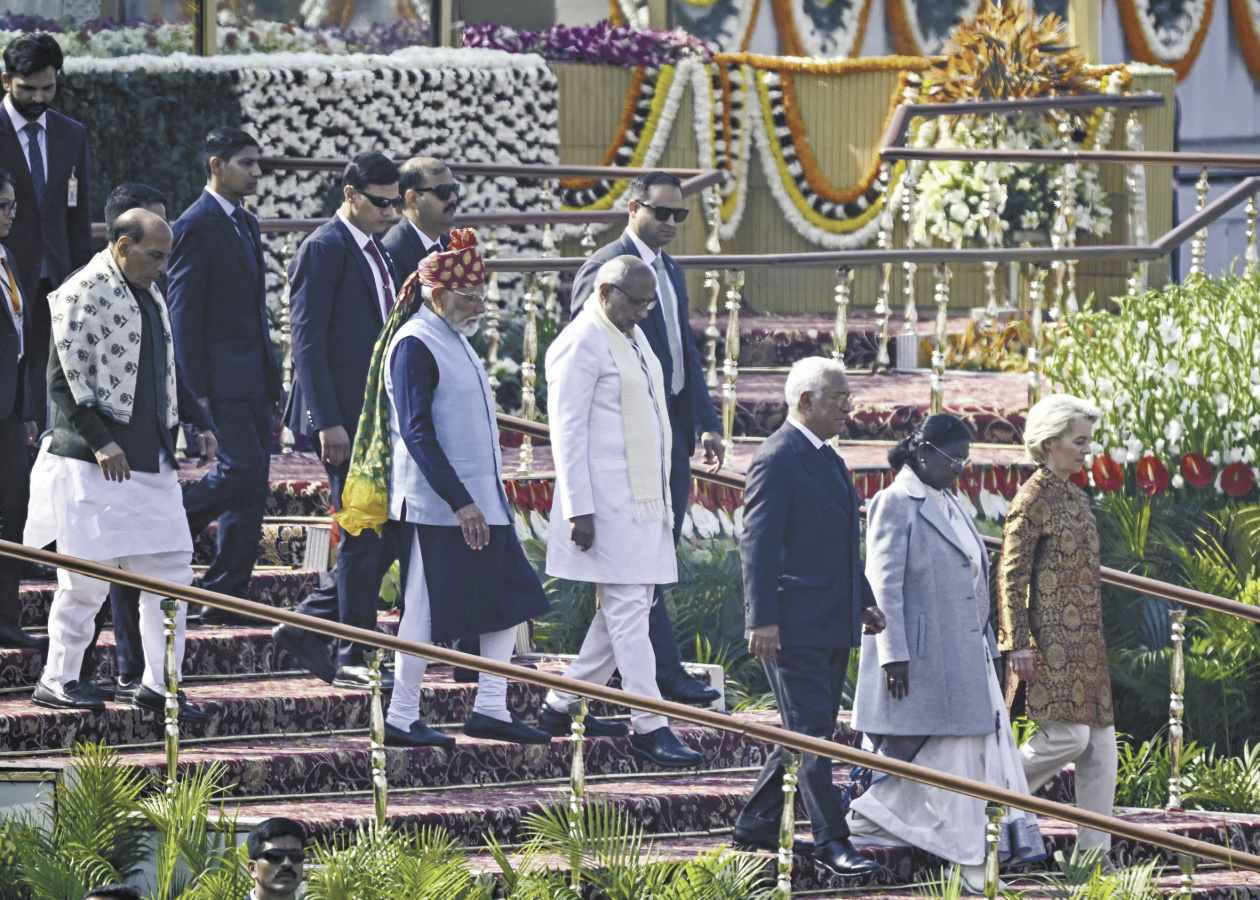
欧盟-印度峰会前 欧盟领导人出席印度阅兵式
Xin Hua She· 2026-01-26 23:19
Group 1 - The core viewpoint of the article highlights the potential signing of a free trade agreement between the EU and India during the upcoming EU-India summit, aimed at opening new markets in response to tariff threats from the US [2] - The Indian government plans to significantly reduce import tariffs on fuel vehicles from the EU, from a maximum of 110% to 40%, marking the largest market opening initiative by India to date [2] - Currently, European cars hold a market share of less than 4% in India, indicating substantial room for growth in this sector [2]
有意“抱团”应对美国,关键领域仍存分歧,印欧今天或敲定自贸协定
Huan Qiu Shi Bao· 2026-01-26 23:09
【环球时报驻德国特约记者 青木 环球时报特约记者 余见】据"德国之声"等多家外媒报道,欧盟与印度将于27日在新德里举行峰会,预计将宣布完成长达近 20年的自由贸易协定谈判,并签署一项新的安全与防务伙伴关系协议。欧洲新闻台26日引述欧盟委员会贸易和经济安全委员谢夫乔维奇的话说,这项协定将 创建一个覆盖20亿人口的自由贸易区,它是"有史以来最大的贸易协定"。路透社25日引述消息人士的话披露称,印度计划将欧盟进口汽车关税从最高达 110%的水平削减至40%,这是迄今为止该国开放汽车市场"最激进的举措"。欧盟-印度峰会召开的前一天,欧洲理事会主席科斯塔与欧盟委员会主席冯德莱 恩出席了印度"共和国日"庆祝活动。印度总理莫迪说,这凸显印欧关系日益增强及双方对共同价值观的承诺。而在英国《经济学人》杂志网站看来,印度与 欧盟能够下定决心达成自贸协定,要"归功于"美国政府。 《经济学人》称,印欧自贸协定主要是为了促进长期经济合作。预计双方还将签署一项新的安全与防务伙伴关系协议。"这种伙伴关系显示了更高水平的信 任。"德国马歇尔基金会学者莫汉说。当然,双方依旧存在诸多分歧。俄乌冲突仍在持续,而印度不会削弱与俄罗斯的关系,它同时也 ...
印度峰会前 欧盟领导人出席印度阅兵式
Xin Lang Cai Jing· 2026-01-26 15:53
Core Viewpoint - The EU and India are set to strengthen their economic ties through a potential free trade agreement, aimed at opening new markets in response to tariff threats from the US [1] Group 1: EU-India Summit - EU Commission President Ursula von der Leyen and European Council President Charles Michel attended India's Republic Day parade in New Delhi [1] - The EU-India summit is scheduled for January 27, where a free trade agreement may be signed [1] Group 2: Trade and Market Access - India plans to reduce import tariffs on approximately 200,000 fuel vehicles from the EU from a maximum of 110% to 40%, marking India's largest market opening initiative to date [1] - Currently, European cars hold less than 4% market share in India [1]
报道:印度拟将欧盟汽车进口关税由110%削减至40%
Hua Er Jie Jian Wen· 2026-01-26 15:51
印度目前是全球第三大汽车销售市场,但其汽车产业长期受到高度保护。新德里对进口汽车征收的关税 高达70%至110%,这一政策曾受到包括特斯拉首席执行官埃隆·马斯克在内的多位国际企业高管的批 评。此次关税下调被视为印度市场开放的重要转折点。 印度与欧盟接近达成一项具有里程碑意义的自由贸易协定。根据协议,印度计划大幅削减从欧盟进口汽 车的关税,税率将从目前最高110%降至40%。 据路透社援引知情人士消息,印度莫迪政府已同意立即对价格超过1.5万欧元(约合1.77万美元)的欧盟 进口汽车降低税率,并计划在未来逐步将关税进一步下调至10%。此举将为大众、梅赛德斯-奔驰和宝 马等欧洲汽车制造商进入印度市场提供重要便利。 双方预计最早将于周二宣布结束多年的谈判,随后将完成细节敲定并正式批准这份被称为"所有协议之 母"的贸易协定。该协定有望显著扩大双边贸易规模,并提振印度纺织品、珠宝等商品的出口。这些产 业自去年8月底以来一直面临美国50%关税的压力。 据央视新闻,当地时间8月25日,美国国土安全部发布预告通知,拟自8月27日零时起对印度商品加征 50%关税。美国总统特朗普8月6日签署行政令,以印度"以直接或间接方式进口俄 ...
印欧“闪婚”!或于明日达成历史性贸易协定
Xin Lang Cai Jing· 2026-01-26 12:44
Core Viewpoint - India and the European Union (EU) are negotiating a landmark free trade agreement that could be finalized as early as January 27, marking a significant development in trade relations after 18 years of discussions [1][2]. Trade Agreement Details - The agreement is expected to create a market for 2 billion people and is projected to increase bilateral trade between India and the EU to approximately $136 billion in the fiscal year 2024-2025, with India exporting around $76 billion and importing about $60 billion [2][11]. - If signed, this will be India's largest and most comprehensive free trade agreement, allowing access to the EU's 27 member states under a single framework [2][11]. - Predictions indicate that by the fiscal year 2031, the agreement could increase India's trade surplus with the EU by over $50 billion, with the EU's share of India's total exports potentially rising from 17.3% in 2025 to 22%-23% [2][11]. Tariff Changes - Currently, the EU imposes an average tariff of about 3.8% on Indian goods, with labor-intensive sectors like textiles facing tariffs around 10% [3][12]. - The agreement aims to restore market access and reduce tariffs on key export products such as clothing, pharmaceuticals, steel, and machinery, helping Indian businesses cope with increased U.S. tariffs [3][12]. Sector-Specific Impacts - India is likely to protect politically sensitive sectors such as agriculture and dairy from the agreement, while tariffs on automobiles, wine, and spirits may be reduced gradually [4][13]. - The EU's average tariff on Indian exports is approximately 9.3%, with particularly high tariffs on automobiles and chemicals [15]. Automotive Industry Focus - India plans to reduce tariffs on EU-imported cars from 110% to 40%, a significant move to open its automotive market [16]. - The reduction will be phased, with tariffs on vehicles priced over €15,000 being lowered immediately, and further reductions expected over time [16][17]. - Currently, European car manufacturers hold less than 4% of the Indian market, dominated by local brands [16]. Challenges and Disputes - Key issues remain, including the EU's focus on intellectual property protection and India's concerns over the EU's new carbon border adjustment mechanism (CBAM), which could impose additional costs on Indian exports [5][14]. - The CBAM is viewed as a potential new border tax on Indian exports, particularly affecting small and medium enterprises due to compliance costs [6][14].
110%下调至40%!关税,突传重磅!印度、欧盟,大动作
券商中国· 2026-01-25 23:25
Core Viewpoint - India is set to significantly reduce import tariffs on European Union (EU) cars from a maximum of 110% to 40%, marking a major step towards opening its market and potentially finalizing a free trade agreement with the EU [1][2]. Group 1: Tariff Reduction Details - India plans to lower the import tariff on cars from the EU, with immediate reductions for vehicles priced over €15,000 (approximately $17,700) [2]. - Future tariff reductions could bring the rate down to 10%, benefiting major European car manufacturers like Volkswagen, Mercedes-Benz, and BMW [2][3]. - The Indian government proposes an annual quota of 200,000 internal combustion engine vehicles subject to the 40% tariff, representing a significant liberalization of the automotive sector [2][3]. Group 2: Market Impact - The reduction in tariffs is expected to benefit European car manufacturers, which currently hold less than 4% of the Indian automotive market, while local brands like Maruti Suzuki and Mahindra dominate with a two-thirds market share [3]. - The Indian automotive market is projected to grow to 6 million annual sales by 2030, prompting companies like Renault and Volkswagen to invest in new strategies and production plans [3]. Group 3: Related Trade Developments - U.S. Treasury Secretary Janet Yellen indicated that there may be a path to easing tariffs on India, contingent on India's reduced oil imports from Russia [4][5]. - The U.S. has imposed a 25% punitive tariff on Indian goods, raising overall tariffs to about 50%, which India has resisted, emphasizing its commitment to protecting consumer interests [5][6].


Exclusive: India to slash tariffs on cars to 40% in trade deal with EU
Reuters· 2026-01-25 12:34
It's the biggest opening yet of the country's vast market as the two sides close in on a free trade pact that could come as early as Tuesday. ...
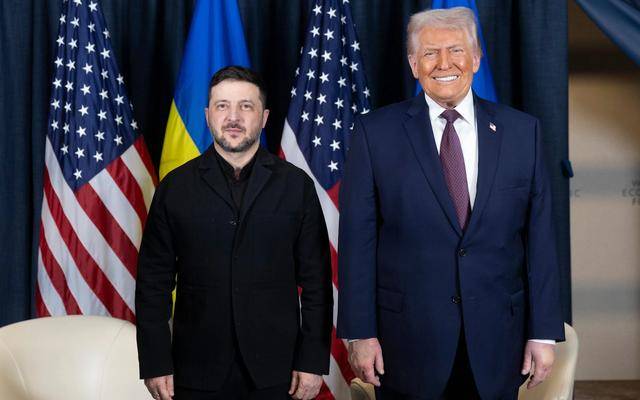
特朗普抛出贸易橄榄枝,乌副总理警示:乌克兰入欧盟恐成泡影!
Sou Hu Cai Jing· 2026-01-24 05:14
Core Viewpoint - The article discusses President Trump's initiative to establish a zero-tariff zone between the U.S. and Ukraine, which could complicate Ukraine's aspirations to join the European Union [1][4]. Group 1: Zero-Tariff Zone Initiative - Trump is actively promoting a plan to create a "zero-tariff zone" in Ukraine, aimed at eliminating trade tariffs and allowing free trade between Ukraine and the U.S. [1] - The implementation of this trade agreement is contingent upon Ukraine reaching a peace agreement with Russia [1]. - The initiative is expected to incentivize companies to establish factories in Ukraine, facilitating cheaper exports to the U.S. and aiding in post-war reconstruction [1]. Group 2: Implications for EU Membership - Former UK trade official Crawford Faulkner warns that this plan could complicate Ukraine's EU membership efforts and potentially undermine its chances of joining [4]. - Faulkner explains that EU rules prohibit member states from independently negotiating trade agreements with external countries, which is a core principle of the EU trade system [4]. - If Ukraine joins the EU, it would have to transfer its trade control to the EU Commission, which would set common external tariffs, limiting Ukraine's ability to negotiate with the U.S. [4][6]. Group 3: Diverging Opinions and Tensions - Trump's special envoy to Ukraine, Steve Witkoff, described the zero-tariff plan as "disruptive," suggesting it would attract significant business interest due to the absence of tariffs [7]. - Ukrainian Deputy Prime Minister Taras Kachka acknowledged the potential complications of establishing a free trade zone with the U.S. while pursuing EU membership [7]. - Tensions between Ukraine and the EU have surfaced, with President Zelensky criticizing the EU for its internal disputes and lack of political will to address the situation with Russia [7][8].