
芯片法案

Search documents


X @外汇交易员
外汇交易员· 2025-08-22 00:48
Government Policy & Funding - The Trump administration is considering reallocating at least $2 billion from the CHIPS Act to fund critical minerals projects [1] - The proposed move aims to reduce US reliance on China for critical minerals [1] Strategic Implications - The reallocation seeks to bolster the Commerce Secretary's influence in strategic areas [1] - The initiative avoids new spending requests by drawing from already allocated funds for semiconductor research and chip factory construction [1]
8点1氪:泡泡玛特发半年报,王宁:今年营收300亿很轻松;富士康进入招聘高峰期,3月工资可超2万;按规发放的育儿补贴免征个税
36氪· 2025-08-21 00:01
Core Viewpoint - Pop Mart's founder Wang Ning expressed confidence in achieving a revenue of 30 billion yuan for the year 2025, emphasizing the importance of healthy growth metrics behind the numbers [5][6]. Financial Performance - For the first half of 2025, Pop Mart reported a revenue of 13.88 billion yuan, representing a year-on-year increase of 204.4% [5]. - The adjusted net profit for the same period was 4.71 billion yuan, showing a significant year-on-year growth of 362.8% [5]. Future Projections - Wang Ning stated that while the initial target for this year was 20 billion yuan, he feels that reaching 30 billion yuan is quite feasible [6].



格林大华期货早盘提示-20250821
Ge Lin Qi Huo· 2025-08-20 23:31
1. Report Industry Investment Rating - The report recommends a long position for macro and financial index futures, including IM, IC, IF, IH [1]. 2. Core View of the Report - The major indices of the two markets on Wednesday first declined and then rose, with the chip sector surging in the afternoon and the Shanghai Composite Index reaching a new high in this round. The trading volume of the two markets was 2.40 trillion yuan. The inflow of continuous funds will drive the stock market to maintain an upward trend [1][2]. 3. Summary by Relevant Catalogs 3.1 Market Review - The major indices of the two markets on Wednesday first declined and then rose, with the chip sector surging in the afternoon and the Shanghai Composite Index reaching a new high in this round. The trading volume of the two markets was 2.40 trillion yuan. The CSI 1000 Index closed at 7305 points, up 62 points or 0.86%; the CSI 500 Index closed at 6728 points, up 72 points or 1.09%; the SSE 300 Index closed at 4271 points, up 48 points or 1.14%; the SSE 50 Index closed at 2846 points, up 34 points or 1.23%. Among industry and theme ETFs, the top gainers were Science and Technology Innovation Chip ETF, Artificial Intelligence ETF Science and Technology Innovation, Chip 50 ETF, Science and Technology Innovation Information ETF, and Semiconductor Equipment ETF, while the top losers were Financial Technology ETF, Film and Television ETF, and Biological Vaccine ETF. Among the sector indices of the two markets, the top gainers were commercial vehicles, chemical fibers, semiconductors, hotel and catering, and optical and optoelectronic indices, while the top losers were navigation equipment, ground military equipment, radio and television, film and television theater chains, and CXO concept indices. The settlement funds of CSI 1000, SSE 300, CSI 500, and SSE 50 index futures had net inflows of 9.9 billion, 3.6 billion, 3.4 billion, and 0.8 billion yuan respectively [1]. 3.2 Important Information - Among the 31 Shenwan primary industries, 28 have risen overall this year. The top five gainers are the communication, non-ferrous metals, pharmaceutical and biological, machinery and equipment, and comprehensive industries, with annual increases of over 20%. The communication and non-ferrous metals industries have both increased by over 30% [1]. - As of the close on August 18, among the 5424 A-share stocks, 4514 have risen overall this year, accounting for 83%. 360 stocks have doubled this year, accounting for 6.6% [1]. - Overseas capacity construction has shifted its focus to equipment procurement. The imports of production equipment such as milling machines and grinding machines in the US, India, Malaysia, etc. have significantly increased since the second half of 2024, and the imports of generators and transformers are also picking up [1]. - Wall Street traders are buying a large number of "disaster puts" on the Invesco QQQ Trust Series 1 ETF that tracks the Nasdaq 100 Index, seemingly worried about a repeat of the sell-off in April [1]. - A MIT report states that "95% of organizations have received zero returns on their generative AI investments," combined with a bubble warning from OpenAI CEO Sam Altman, causing investors to flee high-momentum technology stocks and move to defensive sectors [1]. - Japan's export data for July reflects the continuous impact of tariffs. Japan's exports of automobiles and parts to the US decreased by 28.4% and 17.4% respectively, and exports of semiconductor manufacturing equipment decreased by 31.3%. Economists warn that Japan may fall into a recession [2]. - The US government has quietly expanded the scope of steel and aluminum tariffs, adding over 400 product categories with a 50% tariff rate, which will add more cost-push inflation pressure [2]. - The US Commerce Secretary is exploring how to obtain more equity in major chip manufacturers through the Chip Act funds. If the equity-for-subsidy model is fully implemented, the US government will become an important shareholder in major global chip manufacturers [2]. 3.3 Market Logic - The major indices of the two markets on Wednesday first declined and then rose, with the chip sector surging in the afternoon and the Shanghai Composite Index reaching a new high in this round. Hedge funds' net purchases of Chinese stocks last week reached the highest in seven weeks, making China the market with the largest net capital inflow on the Goldman Sachs platform since August [1][2]. 3.4 Future Market Outlook - The major indices of the two markets on Wednesday first declined and then rose, with the chip sector surging in the afternoon and the Shanghai Composite Index reaching a new high in this round. As of the close on August 18, among the 5424 A-share stocks, 4514 have risen overall this year, accounting for 83%. 360 stocks have doubled this year, accounting for 6.6%. Hedge funds' net purchases of Chinese stocks last week reached the highest in seven weeks, making China the market with the largest net capital inflow on the Goldman Sachs platform since August. Goldman Sachs believes that China's humanoid robot industry is undergoing product iterations at an astonishing speed, and the commercialization path is becoming increasingly clear. The chief strategist of Bank of America believes that the Fed may deal with debt through currency depreciation, making shorting the US dollar the core investment theme. Gold, cryptocurrencies, commodities, and emerging markets will be the biggest winners. The probability of a Fed rate cut in September has risen to 100%. The "de-Americanization" of global financial asset reallocation is expected to accelerate the inflow of international funds into the A-share market. The short-term technical index correction has ended, and the major indices of the two markets have entered an upward phase again. Continuous capital inflows will drive the stock market to maintain an upward trend [1][2]. 3.5 Trading Strategy - For index futures directional trading, the short-term technical index correction has ended, and the major indices of the two markets have entered an upward phase again. Continuous capital inflows will drive the stock market to maintain an upward trend [2]. - For index option trading, with continuous capital inflows, investors can choose to buy out-of-the-money long-term call options on growth index futures [3].
连损四年,台积电称美国厂盈利
Guan Cha Zhe Wang· 2025-08-20 03:41
Group 1 - TSMC reported a net profit of NT$398.27 billion (approximately RMB 94.78 billion) for Q2 2025, with its Arizona factory contributing NT$6.447 billion (approximately RMB 1.534 billion) in investment income after four years of losses [1] - The Arizona factory had accumulated losses exceeding NT$39.4 billion over the past four years, with losses of NT$4.976 billion and NT$4.979 billion in Q3 and Q4 of 2024, respectively [1] - Despite the contribution from the Arizona factory, it only accounted for 1.62% of TSMC's total net profit for Q2 [1] Group 2 - TSMC announced a total investment of $65 billion for three advanced chip factories in the U.S., followed by an additional $100 billion for three more advanced chip factories, two advanced packaging plants, and a research center [2] - The P1 factory began production in Q4 of last year, while the P2 factory is expected to start equipment installation in Q3 of next year and begin mass production in 2027 [2] Group 3 - TSMC's subsidiary in Japan, JASM, continues to operate at a loss, with losses reported at NT$11.19 billion, NT$11.87 billion, NT$32.49 billion, and NT$29.73 billion over recent quarters [4] - The low capacity utilization rate of approximately 50% at JASM's first wafer fab is attributed to intense competition in mature process nodes [4] - The slow recovery in the automotive and consumer markets is cited as a reason for the delayed construction of JASM's second factory [4] Group 4 - TSMC's Arizona factory has achieved a monthly production capacity of approximately 34,000 wafers for 4nm chips, fully booked by clients such as Apple and AMD [5] - The profitability of the Arizona factory is contingent on capacity utilization and product margins, with TSMC indicating that overseas factory mass production will dilute margins by 2-3% annually in the initial years, increasing to 3-4% later [5] Group 5 - U.S. government officials have expressed concerns about the return on investment from subsidies provided to semiconductor manufacturers, including TSMC [6] - The U.S. government is considering acquiring equity stakes in companies like TSMC as part of the Chip Act funding [6][7] - There is a push from U.S. officials to relocate some chip manufacturing back to the U.S. for national security reasons [7]

“美积电”成真了?特朗普要拿补贴换股份
半导体行业观察· 2025-08-20 01:08
Group 1 - The U.S. Commerce Secretary Howard Lutnick is investigating the possibility of acquiring equity stakes in semiconductor manufacturers funded by the CHIPS Act, including Intel, Micron, TSMC, and Samsung [2][3][4] - The U.S. government is considering a deal to acquire a 10% stake in Intel in exchange for cash grants, marking a significant shift in government involvement in large corporations [4][5] - The CHIPS Act, officially known as the CHIPS and Science Act, allocates $52.7 billion for semiconductor research and factory construction in the U.S. [4][5] Group 2 - The U.S. government has decided to provide substantial subsidies to Samsung ($4.75 billion), Micron ($6.2 billion), and TSMC ($6.6 billion) for semiconductor production in the U.S. [5]
美商务部长证实正和英特尔谈入股,不忘威胁台积电
Guan Cha Zhe Wang· 2025-08-20 00:20
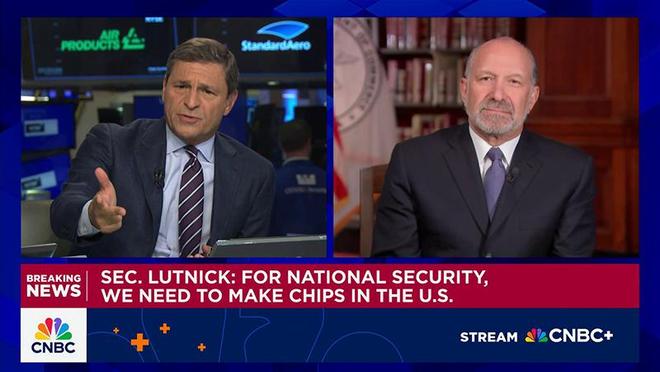
【文/观察者网 熊超然】当地时间8月19日,美国商务部长卢特尼克在接受美国消费者新闻与商业频道 (CNBC)一档节目采访时表示,英特尔公司必须向美国政府提供该公司股权,以换取《芯片和科学法 案》("芯片法案")的拨款。他证实,美国政府正与英特尔就入股这家芯片制造商进行磋商,并将该计 划描述为是将"芯片法案"拨款转换为股权的尝试。 卢特尼克接受CNBC采访 视频截图 此前,当地时间8月18日,彭博社援引一名白宫官员和其他知情人士报道称,特朗普政府正考虑将"芯片 法案"的资助款项部分或全部转换为股权,就收购陷入困境的芯片制造商英特尔公司10%的股份进行谈 判。 卢特尼克猛烈抨击美国前总统拜登签署的这项法案,称该法案为半导体制造商提供补贴,但美国纳税人 却没有任何回报。他还解释,尽管该计划可能会使美国政府成为英特尔的最大股东,但不会赋予美国政 府对英特尔的治理权或投票权,只是"拨款转股权"而已。 "我们为什么要给一家价值1000亿美元的公司这么多钱?这对美国纳税人有什么好处?唐纳德·特朗普的 答案是,我们应该用这笔资金换取股权,"卢特尼克说:"因此,我们将兑现拜登政府已承诺的资金,我 们将获得股权作为回报。" 彭博 ...
美商务部长卢特尼克批评资金流向台积电:不能依赖中国台湾芯片
Jing Ji Ri Bao· 2025-08-19 23:19
他强调,芯片法案原本就是对有钱企业的送礼。「我们对英特尔的态度是,把拜登原本打算白送的钱, 转换成美国人民的股权。是的,对英特尔而言比免费补助糟,但对纳税人来说更有利,这就是特朗普的 思维。」 外界关注英特尔获得大笔银弹支援后,与台积电的竞合关系发展。 美国商务部长卢特尼克接受采访时,批评资金流向台积电,「我们希望英特尔在美国取得成功」,并证 实美方有意通过原以芯片法案补助英特尔的资金,取得英特尔股权。 卢特尼克强调,美国不能依赖中国台湾制造芯片,且美国总统特朗普认为,拜登时期提供英特尔资金, 因此应让联邦政府「获得股权」。至于政府是否会因持有英特尔10%股份而介入公司治理,他则否认: 「不,别想太多。我们只是把拜登时期的补助金,转换成特朗普政府下的股权。这不是治理问题。」 卢特尼克说,在国安考量下,美国必须能在本土制造芯片,不能过度依赖中国台湾。就地理距离来看, 中国台湾距离美国9,500英里,距离中国大陆仅80英里,99%的先进芯片都集中在中国台湾,显然不可 行。 他补充,这也是美日、美韩协议的一部分,要建立足够的基础设施与产能,好让美国有能力制造这些芯 片。 「如果英特尔能够在美国生产芯片节点、推动本土 ...
股价大涨!特朗普政府拟“入股”
Sou Hu Cai Jing· 2025-08-19 14:46
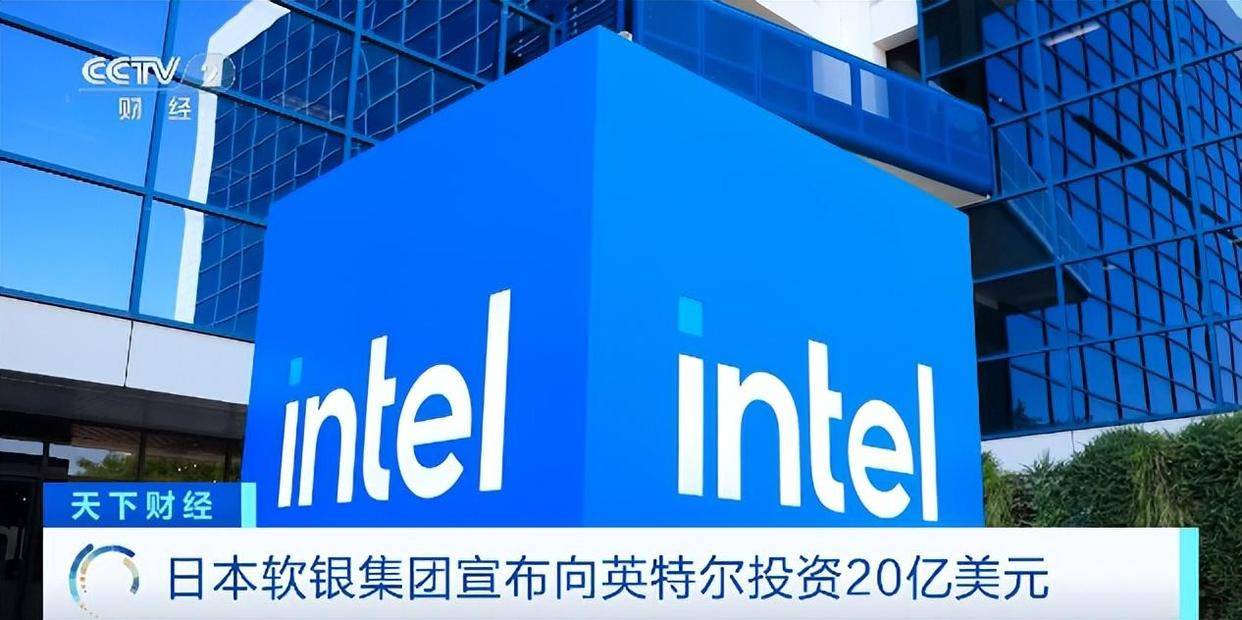
有分析认为,美国政府出手拯救一家美国蓝筹股公司,可能意味着英特尔的竞争地位比任何人担心的都要糟糕得多。也有分析认为,如果美国政府与英特尔 达成协议,将有助于英特尔在俄亥俄州规划建设芯片生产基地。英特尔曾承诺将这一基地打造成全球最大芯片制造中心,但项目已多次延期。 (来源:央视财经) 18日,日本软银集团宣布将向英特尔投资20亿美元,购买相当于该公司约2%的股票。此外,特朗普政府正在酝酿一项可能重塑美国产业政策的重大举措, 考虑将联邦补贴转为对芯片巨头英特尔的直接股权投资,此举或将使美国政府成为其最大股东。 18日,日本软银集团和美国英特尔公司宣布,软银将向这家陷入困境的芯片制造商投资20亿美元,软银将以每股23美元的价格收购英特尔的普通股。消息公 布后,截至18日收盘,英特尔股价收于每股23.66美元。在盘后交易中上涨约6%,至每股24.93美元。由于未能在由英伟达主导的人工智能市场上获得吸引 力,英特尔的股价去年下跌了60%。 此外,路透社等媒体18日报道称,特朗普政府正在讨论通过将《芯片与科学法案》的部分或全部拨款转换为股权,以持有英特尔约10%的股份,此举或将使 美国政府成为英特尔最大的股东。《芯片与科 ...
X @外汇交易员
外汇交易员· 2025-08-19 14:21
Government Intervention & Investment - The U S government is considering acquiring approximately 10% of Intel's shares, potentially making it the largest shareholder [1] - This move involves converting some or all of the subsidies Intel receives from the CHIPS Act into equity [1] - Intel has been approved to receive a total of $109 billion in subsidies under the CHIPS Act for commercial and military chip production [1] - A 10% stake in Intel is valued at approximately $105 billion based on Intel's current market capitalization [1] Political & Economic Strategy - The Trump administration aims to convert funds allocated by the Biden administration into equity [1]