
车规级芯片

Search documents
车规级芯片研发揭榜挂帅项目启动
Bei Jing Qing Nian Bao· 2025-09-04 17:47
Core Viewpoint - The Beijing Municipal Science and Technology Commission, along with the Zhongguancun Management Committee, has launched a project to solicit research and development projects for automotive-grade chips, focusing on innovation and collaboration in the smart city and intelligent connected vehicle sectors [1]. Group 1: Chip Categories - The project includes two categories of automotive-grade chips: 1. Storage chips, specifically a high-bandwidth, low-power LPDDR5x dynamic random-access memory chip with various advanced features such as automatic refresh and ECC support [2]. 2. SOC chips, which are high-performance digital signal processors designed for audio data processing, featuring multiple interfaces and capabilities for audio enhancement and noise reduction [2]. Group 2: Project Evaluation and Funding - After the project solicitation, experts will evaluate submissions based on factors like technological maturity, innovation, and production feasibility, with a maximum funding of 30 million yuan for each chip category [3]. - There are no entry barriers for project leaders or participating units, and the project will include strict performance assessments and accountability measures, including potential financial penalties for failure to meet objectives [3].
经纬恒润(688326):2025年中报点评:25Q2净利润扭亏为盈,业务多元发展
Soochow Securities· 2025-09-01 02:42
Investment Rating - The report maintains a "Buy" rating for the company [1] Core Views - The company achieved a turnaround in net profit in Q2 2025, with a revenue of 1.58 billion yuan, marking a 38.90% increase quarter-on-quarter and an 18.98% increase year-on-year [7] - The company is diversifying its business, with significant growth in electronic products and new client acquisitions [7] - The company is in a critical phase of performance release, with multiple high-investment projects beginning to contribute to revenue [7] Financial Summary - Total revenue for 2023 is projected at 4.678 billion yuan, with a year-on-year growth of 16.30% [1] - The company expects to achieve a total revenue of 7.149 billion yuan in 2025, representing a year-on-year increase of 29.02% [1] - The net profit for 2025 is forecasted to be 22.84 million yuan, a significant recovery from previous losses [1] - The earnings per share (EPS) is expected to be 0.19 yuan in 2025, with a projected P/E ratio of 617.51 [1] - The company’s R&D expenses have decreased significantly, indicating improved cost management [7] - The company has established strategic partnerships to enhance its technological capabilities and product offerings [7]

拓普集团20250829
2025-08-31 16:21
Summary of Top Group's Conference Call Company Overview - **Company**: Top Group - **Industry**: Automotive Parts and Technology Key Points and Arguments 1. **Profit Decline and Recovery**: Top Group reported an 11% decline in profits for the first half of 2025, but showed signs of recovery in Q2. The company expects double-digit growth starting from Q3 2025 through 2030, driven by domestic and international market expansion, particularly in the electric vehicle sector with major automakers like BBA and Volkswagen [1][2][5]. 2. **Robotic Actuator Business**: The company is the exclusive supplier for a well-known client in the robotic actuator business, focusing on technology iteration. Despite potential dual-supplier scenarios in the future, Top Group is optimistic about long-term growth, anticipating mass production by 2026 [1][4]. 3. **Liquid Cooling Business**: This new growth area has secured an initial order of 1.7 billion yuan. The company aims to become a D-class supplier for major clients like NVIDIA, leveraging automotive thermal management experience [1][11]. 4. **Electronic Expansion Valve Production**: After launching its electronic expansion valve business, Top Group can deliver 500,000 units per production line, achieving 100% self-sufficiency in thermal management system products [1][8][9]. 5. **Sales and Revenue Goals**: The company targets 30 billion yuan in sales for 2025, with at least a 20% increase in 2026, driven by various business segments including electric drive joints and liquid cooling systems [1][17]. 6. **Market Expansion**: Top Group is actively expanding its client base in both domestic and international markets, with significant partnerships established with major automotive manufacturers [2][10]. 7. **Financial Management**: The company maintains a management fee rate of 2.5% and a sales fee rate of 1%, indicating efficient operational management compared to industry peers [2][3]. 8. **Future Product Development**: Top Group plans to enter the automotive-grade chip sector to enhance its competitive edge, which may require substantial R&D investment [2][26][27]. 9. **Self-Sufficiency in Components**: The company has achieved 100% self-sufficiency in key components of its thermal management systems, with no expected competition in the next five years [9][21]. 10. **Collaboration with Major Clients**: Top Group has established strong partnerships with companies like Huawei and is exploring opportunities in the automotive-grade chip market to further enhance its product offerings [25][26]. Additional Important Information - **Production Capacity and Challenges**: The company is cautious about its production capacity due to past delays and is currently ramping up production in new facilities in Poland and Thailand [18][24]. - **Market Trends**: The liquid cooling technology is expected to have higher profit margins compared to traditional automotive businesses, reflecting the growing demand for energy-efficient solutions [12][28]. - **Investment in R&D**: Top Group invests approximately 100 million yuan annually in R&D, focusing on robotics and liquid cooling technologies, which are anticipated to drive future growth [22][29]. This summary encapsulates the essential insights from Top Group's conference call, highlighting the company's strategic direction, market positioning, and financial outlook.

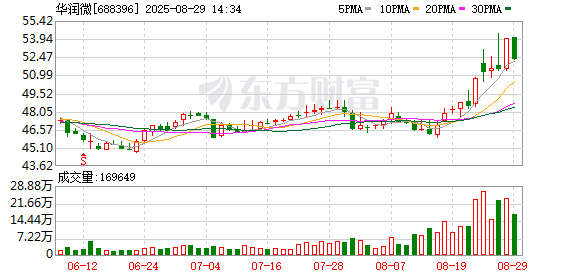
华润微上半年净利润3.39亿元 同比增长20.85%
Xin Hua Cai Jing· 2025-08-29 06:33
Financial Performance - The company reported a revenue of 5.218 billion yuan for the first half of 2025, representing a year-on-year increase of 9.62% [2] - The net profit attributable to shareholders was 339 million yuan, up 20.85% year-on-year, while the net profit excluding non-recurring items decreased by 3.95% to 273 million yuan [2] - The gross margin for the first half of 2025 was 25.65%, a decrease of 0.75 percentage points year-on-year, while the net profit margin increased by 0.62 percentage points to 5.35% [2] R&D and Innovation - The company invested 548 million yuan in R&D during the first half of 2025, accounting for 10.50% of its revenue [3] - Significant technological breakthroughs include the completion of the first-generation automotive-grade planar gate high-performance SiC MOSFET products and the successful development of MEMS high-end three-layer structure silicon microphone sensors [3] - The company's self-developed "Buck LED Constant Current Driver QPT4115" won the "2025 Automotive Electronics Golden Chip Award" [3] Market Position and Strategy - The global power semiconductor market is experiencing steady growth, with China holding a 38.6% market share valued at 29.1 billion USD [3] - The company is deepening its AI full-scenario layout, focusing on consumer electronics and automotive smart transformation, as well as cloud AI solutions [4] - The company is accelerating its layout in automotive-grade chips, achieving full-scene coverage in cockpit, body, and autonomous driving applications [4] Production Capacity and Product Development - The company’s 12-inch power device wafer production line in Chongqing has reached full production capacity of 30,000 wafers per month [5] - The Shenzhen 12-inch specialty analog integrated circuit production line is ramping up, with multiple products in mass production on the 90nm platform [5] - Sales revenue from third-generation semiconductor SiC and GaN products has seen rapid growth, with a focus on applications in new energy vehicles, charging piles, and data center power supplies [5]


车规级芯片放量 聚辰股份上半年净利同比大增43.5%
Zheng Quan Ri Bao Zhi Sheng· 2025-08-25 04:12
Core Insights - Juchen Semiconductor Co., Ltd. reported a significant increase in revenue and net profit for the first half of 2025, achieving operating income of 574.9 million yuan, a year-on-year growth of 11.69%, and a net profit attributable to shareholders of 205 million yuan, up 43.50% [1] - The company’s basic earnings per share reached 1.30 yuan, reflecting a 42.86% increase, while the weighted average return on equity improved by 1.85 percentage points to 8.92% [1] Financial Performance - In the first half of 2025, Juchen Semiconductor's R&D investment amounted to 103 million yuan, a 25% increase, representing 17.86% of operating income, marking a historical high [2] - The net cash flow from operating activities was 149 million yuan, a decline of 10.55% year-on-year, primarily due to increased inventory and extended customer payment terms [2] - As of the end of the first half, total assets reached 2.45 billion yuan, a 6.30% increase, while net assets attributable to shareholders grew by 7.80% to 2.377 billion yuan [2] Product Development and Market Strategy - The company has focused on high-value markets, with significant growth in shipments of DDR5 SPD chips, automotive-grade EEPROM chips, and high-performance industrial-grade EEPROM chips, which have driven revenue and profit [1] - Juchen Semiconductor successfully entered the supply chain of several leading global automotive electronics Tier 1 suppliers with its automotive-grade NOR Flash chips, enhancing its competitiveness in the automotive market [1] - The company is pursuing a "high value + differentiation" product strategy, actively expanding into long-cycle markets such as automotive electronics, industrial control, and high-end storage [2]

消费级芯片上车到底靠不靠谱?
3 6 Ke· 2025-07-11 11:46
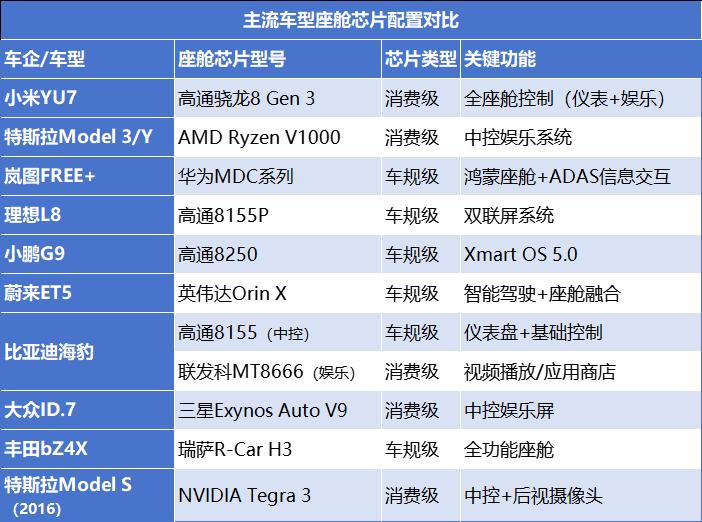
Core Viewpoint - The discussion surrounding the use of consumer-grade chips in the Xiaomi YU7 has sparked significant debate, particularly regarding the safety and reliability of such chips in smart vehicles [1][6]. Group 1: Use of Consumer-grade Chips - The automotive industry has seen a trend where some manufacturers, including Tesla, have utilized consumer-grade chips in their vehicles, raising questions about safety and reliability [2][9]. - The classification of chips ranges from consumer-grade to automotive-grade, with automotive-grade chips requiring stringent testing and certifications such as AEC-Q100 and ISO26262 for safety-critical functions [2][8]. - Xiaomi's YU7 uses the Qualcomm Snapdragon 8 Gen 3, a consumer-grade chip, for full cabin control, while other manufacturers like Li Auto and NIO use automotive-grade chips for their systems [3][4]. Group 2: Safety and Reliability Concerns - Consumer-grade chips are generally more powerful and cost-effective but come with lower reliability and safety standards compared to automotive-grade chips [7][9]. - The potential failure modes of consumer-grade chips in non-safety-critical functions may lead to issues like screen blackouts or loss of climate control, but not life-threatening situations [10][12]. - Historical data shows that companies like BYD and Tesla have successfully integrated non-automotive-grade chips without significant issues, indicating that the reliability of such chips can be acceptable under certain conditions [9][10]. Group 3: Market Implications and Consumer Choices - The current automotive market offers a diverse range of vehicles, allowing consumers to choose between high-performance consumer-grade chips and more stable automotive-grade options [11][12]. - As the quality of consumer-grade chips improves, the gap between consumer-grade and automotive-grade may narrow, suggesting that the debate over chip classification could evolve over time [12].



从电源到车身控制,南芯如何突破车规核心场景?
半导体行业观察· 2025-07-03 01:13
Core Viewpoint - The article emphasizes the significant transformation in China's automotive industry towards "electrification and intelligence," with chips becoming the critical engine for this innovation. The automotive electronics market in China is projected to reach 1,158.5 billion yuan in 2024, focusing on areas like smart cockpits, electric drive control, BMS, and power management [1]. Group 1: Company Performance - Nanchip has shown remarkable performance in the automotive-grade chip market, offering high-reliability power solutions for applications such as cameras, radars, and MCUs/SOCs. The company's experience in consumer electronics has laid a solid foundation for its entry into the automotive sector [2]. - Nanchip's high-side switch products are essential components in vehicle body control systems, with a demand of over 75 units per electric vehicle. The trend towards integration and collaboration in electric vehicles presents an upgrade opportunity for power chip manufacturers [4][5]. Group 2: Product Development - Nanchip's high-side switch products have evolved rapidly, with over 20 models now available, ranging from 1A to 30A, significantly increasing power density. The company has begun validating these products for mass production in various OEM projects starting in 2024 [7][8]. - The company has introduced a range of products, including an 8-channel half-bridge driver and an automotive-grade eFuse, which is the first of its kind to achieve mass production in China. Additionally, a high-speed CAN/CAN FD transceiver was launched, marking a new breakthrough in control systems [11][16]. Group 3: Market Strategy - Nanchip is strategically positioning itself in the automotive electronics market by offering a comprehensive chip solution that includes vehicle charging, smart cockpits, intelligent driving, and body control applications. This approach is attracting more automotive electronics customers [16]. - The company is focused on long-term strategies in the automotive-grade market, viewing it as an opportunity to refine technology and product lines. Nanchip believes that the technical achievements in automotive applications can also benefit industrial applications, creating a positive cycle of technology and market development [19].


骁龙8 gen3上车了 消规级、车规级SOC有何区别?
Zhong Guo Zhi Liang Xin Wen Wang· 2025-06-18 07:18
Group 1 - The rise of smart cockpit technology has shifted the focus towards cockpit domain chips, which are now crucial for driving multiple high-resolution displays in vehicles [1][2] - The integration of cockpit systems has evolved from distributed control systems to a more centralized cockpit domain, enhancing the user experience with interconnected displays [2] - The Snapdragon 8155 chip can simultaneously drive multiple high-resolution screens, showcasing its capability compared to mobile devices that typically manage fewer displays [5] Group 2 - The increasing number of cameras in vehicles for advanced driver-assistance systems (ADAS) necessitates robust processing capabilities, with the Snapdragon 8155 supporting multiple video inputs [6] - Automotive-grade chips are designed to withstand harsher environments compared to consumer-grade chips, with stricter reliability and performance standards [10][11] - The AEC-Q series standards define various temperature ranges and reliability requirements for automotive components, ensuring stable operation under extreme conditions [14][16] Group 3 - The differences between automotive-grade and consumer-grade chips include enhanced anti-interference capabilities and rigorous reliability testing to prevent failures in critical systems [15][17] - The Snapdragon 8 Gen3 chip, built on a 4nm process, offers superior performance compared to the Snapdragon 8295, which is designed for mobile devices [20][22] - Automotive safety standards require chips to have fault detection and redundancy features, which are less stringent for consumer-grade chips [22]
中微半导(688380):24年营收稳步增长,车规、工规产品打开新成长空间
Great Wall Securities· 2025-05-26 12:48
Investment Rating - The report upgrades the investment rating to "Buy" [4][10] Core Views - The company is expected to achieve steady revenue growth in 2024, with a projected revenue of 912 million yuan, representing a year-on-year increase of 27.76% [2][10] - The company has successfully turned around its net profit to 137 million yuan in 2024, compared to a loss of 22 million yuan in 2023 [2][10] - The company is focusing on expanding its product offerings in automotive and industrial control sectors, which are anticipated to drive future revenue growth [9][10] Financial Performance Summary - Revenue is projected to grow from 714 million yuan in 2023 to 1,922 million yuan by 2027, with a compound annual growth rate (CAGR) of approximately 25.2% [1][11] - The net profit is expected to increase significantly from -22 million yuan in 2023 to 271 million yuan in 2027, indicating a strong recovery and growth trajectory [1][11] - The gross margin for 2024 is forecasted at 29.86%, up by 12.41 percentage points year-on-year, reflecting improved profitability [2][11] Product and Market Development - The company has a robust product portfolio with over 900 products available, including MCU, power devices, and various integrated circuits [3][8] - In 2024, the company is expected to ship over 2.4 billion units, a year-on-year increase of approximately 30%, with significant growth in both 8-bit and 32-bit MCU segments [8][9] - The automotive electronics market is driving demand for MCU products, with the company planning to increase its output of automotive-grade chips significantly [9][10]

中微半导:长城证券、赢舟资本等多家机构于5月15日调研我司
Zheng Quan Zhi Xing· 2025-05-16 09:40
Core Viewpoint - Company reported significant growth in gross margin and aims to exceed historical revenue levels in 2025 [2][10] Financial Performance - In Q1 2025, the company achieved a revenue of 206 million yuan, a year-on-year increase of 0.52% [11] - The net profit attributable to shareholders was 34.42 million yuan, up 19.4% year-on-year [11] - The net profit after deducting non-recurring items was 32.58 million yuan, reflecting a 31.75% increase year-on-year [11] - The gross margin stood at 34.46% [11] - The company has a debt ratio of 7.93% and reported investment income of 9.51 million yuan [11] Product Development - The company has improved its gross margin due to lower wafer prices and the introduction of cost-effective new products [2] - The second-generation automotive-grade MCU has enhancements in frequency, interfaces, and resources compared to the first generation, making it more competitive [3] - The company is expanding its automotive-grade control chips into general and specialized products, focusing on high-performance SoC designs for applications like motor control and battery management [4] Market Presence - The automotive-grade chips have been adopted by several well-known car manufacturers, including Changan, Seres, Hongqi, and Geely [6] - The company is experiencing a continuous increase in orders for automotive MCUs [5] Industrial Growth - Growth in the industrial control sector is primarily driven by the demand for brushless motor drive control products [7] Supply Chain and Pricing - The company has not received any price adjustment notifications from foundries and maintains stable relationships with suppliers, ensuring reasonable pricing and capacity [9]