
长期投资理念

Search documents
割肉的、开始的、买少的、怕涨的
银行螺丝钉· 2025-08-15 05:21
Core Viewpoint - The article discusses different types of investors during a bear market, emphasizing the importance of long-term investment strategies and the psychological aspects of investing during market downturns [1]. Group 1: Types of Investors - There are various types of investors observed in the current market: those who panic sell, those who are just starting, those who invest conservatively, and those who fear missing out on buying opportunities [1]. - Panic sellers have significantly reduced their investments, with some funds experiencing a decline of 50%-60% since March 2021 [6][9]. - New investors entering the market during a bear phase are in a favorable position, as they can buy at lower prices and develop a healthy respect for market volatility [12][13]. Group 2: Investment Strategies - For new investors, starting during a bear market can be advantageous, as it allows them to buy at lower prices and understand market fluctuations [12][17]. - Investors are encouraged to maintain a stock allocation based on the formula "100 - age," which is a common guideline for long-term asset allocation [20][21]. - In a bear market, it is suggested to increase stock allocations when the market is undervalued, particularly when it reaches around 5-star ratings [22][23]. Group 3: Market Behavior and Psychology - Many investors prefer to buy during market dips, as evidenced by increased subscription rates during low market points [33]. - The ideal scenario for dollar-cost averaging is to have a prolonged bear market followed by a significant bull market, allowing for accumulation of assets at lower prices [35]. - Patience is emphasized as a crucial trait for investors, as markets will eventually recover and present new opportunities [39][41].


多只绩优权益基金产品限购,主动控规模保业绩
Huan Qiu Wang· 2025-08-10 02:22
Core Viewpoint - The recent trend of "purchase limits" in the public fund industry reflects a shift towards controlling fund size to ensure effective investment strategies and protect the interests of existing investors [1][4]. Group 1: Fund Performance and Purchase Limits - Several high-performing active equity funds have announced limits on large subscriptions, with approximately 50 funds implementing such measures since July [1]. - Notable funds include the China Europe Medical Innovation Fund, managed by Ge Lan, which has a year-to-date return of over 87%, and the China Europe Science and Technology Innovation Fund, managed by Shao Jie, with a return of 84.33% [2][4]. - The purchase limits range from 50,000 to 1 million yuan, aimed at controlling fund size and maintaining performance [2][4]. Group 2: Rationale Behind Purchase Limits - The primary reason for implementing purchase limits is to balance fund size and returns, as rapid inflows can dilute existing investors' returns and affect the fund manager's ability to adjust portfolios effectively [4]. - The limits are also intended to protect investors from potential market volatility, encouraging rational investment behavior and reducing the risk of "buying high and selling low" [4][5]. Group 3: Industry Shift Towards Quality - The current purchase limit trend indicates a transition in the fund industry from a focus on size competition to prioritizing quality and effective strategies [5]. - Fund managers are increasingly emphasizing long-term investment principles over short-term size expansion, as seen in the consistent purchase limits on Ge Lan's medical funds and similar actions by emerging fund managers [5].
Fitlife Brands' Next Chapter Hinges On M&A And New SKUs
Seeking Alpha· 2025-07-22 14:58
Core Insights - True value in investments comes from growth rather than short-term gains, emphasizing a long-term perspective on evaluation [1] - Great businesses provide significant societal value and demonstrate durability, which is essential for sustained growth [1] - Companies that offer products and services significantly better than competitors are positioned to achieve substantial growth [1] Business Characteristics - Selection, convenience, and value are critical traits sought in businesses [1] - Durability acts as a multiplier for value, with a preference for non-cyclical businesses [1] - The ability to innovate and maintain competitive advantages is crucial for long-term success [1] Revenue and Structure - Multiple revenue streams and anti-fragile business structures are preferred for resilience [1] - A business's ability to recover from adversity is a strong indicator of its durability [1] - Uniqueness is identified as the primary driver of value [1] Cost and Investment Strategy - Low costs associated with maintaining existing operations allow for high leverage in reinvestment and growth [1] - Minimal marketing expenses are advantageous for sustainable growth [1] - Trust and network effects are valuable indicators of a business's durability [1] Management and Leadership - Effective management is critical, with a preference for executives who have aligned interests and a strong focus on the business [1] - Companies led by seasoned CEOs, founders, or family businesses are favored [1] - Good management fosters a culture that attracts talent and empowers employees [1] Market Timing and Investment Philosophy - The best investment opportunities arise when negative news is already priced in, revealing true value [1] - Companies that can maintain stability during layoffs and adverse conditions are seen as more valuable [1] - Price movements are influenced by expectations, with a focus on undervalued companies that have negative factors priced in [1]


第一财经布局评级赛道,推出“壹评级——专业股票评价体系”三大先导产品
第一财经· 2025-07-15 08:41
Core Viewpoint - The article discusses the launch of "Yi Rating," a professional stock evaluation system by Shanghai Media Group's First Financial, aimed at enhancing pricing efficiency in China's capital market [1][2]. Group 1: Overview of Yi Rating - "Yi Rating" encompasses various dimensions of stock evaluation, including business model rating, operational performance rating, in-depth research rating, trading aspect rating, and risk rating, utilizing nearly 30 indicators [2]. - The methodology combines quantitative analysis of financial data with qualitative analysis of industry and company fundamentals, focusing on long-term investment value [2]. Group 2: Initial Launch and Future Plans - In September, "Yi Rating" will release multiple stock rating lists and the first batch of in-depth research evaluation reports for listed companies [3]. - Prior to this, on July 11, "Yi Rating" introduced three pilot products aimed at enhancing professional investment research services, solidifying the theoretical foundation of the evaluation system, and promoting rational, value, and long-term investment concepts [3]. Group 3: Strategic Vision and Development - First Financial aims to continuously iterate and upgrade its methodology, accumulate market research data, and leverage its professional stock evaluation system to connect investors, regulatory bodies, and financial institutions for the healthy development of China's capital market [3]. - In 2024, First Financial has established a "Leading Financial Platform Navigation Special Plan," outlining a strategy of "one platform, two pillars, three ecosystems, and N products," with "Yi Rating" being the first step in the rating business sector [3].

完善机制引导长期资金愿投敢投
Jing Ji Ri Bao· 2025-07-05 22:15
Group 1 - The core viewpoint emphasizes the need for patient capital to support the commercialization of technological innovation, which faces challenges such as long cycles, high investment, and high risks [1] - Developed countries like the US and Europe have established relatively mature patient capital supply systems through policy guidance and market mechanism innovation, providing valuable lessons [1][3] - The US government has set up venture capital guidance funds to attract private capital into early-stage tech startups, significantly impacting job creation and economic growth [1][2] Group 2 - Various measures have been taken to expand the sources of patient capital, including reforms to pension fund systems and favorable tax regulations to encourage long-term investments in venture capital [2] - The US has seen a substantial reduction in tax rates for venture capital, with the total tax rate dropping from 49% to 20%, stimulating the growth of venture capital [2] - In the UK, the 2017 Pension Reform Act allows pension funds to invest in high-risk assets, including venture capital, enhancing the flow of long-term capital into the market [2] Group 3 - Establishing a comprehensive entrepreneurial innovation ecosystem is crucial for enhancing the success rate of startups, with Silicon Valley serving as a prime example due to its conducive environment for transforming entrepreneurial spirit into technological innovation [3] - High-level research universities play a vital role in foundational research, exemplified by Stanford University’s model of collaboration with industry, leading to the creation of numerous companies [3] Group 4 - Promoting a patient capital mindset involves educating investors about the long-term value of investments and enhancing their professional capabilities in risk assessment and investment management [4] - A robust institutional environment is necessary for the development of patient capital, including improved evaluation systems and mechanisms to support long-term investments [4] Group 5 - Creating a favorable ecosystem for patient capital development requires stable and predictable policy support, as well as a market-oriented and legal environment [5] - Many attempts to replicate Silicon Valley's success have failed due to a limited understanding of its operational model, highlighting the importance of stable policies for fostering patient capital [5]
以稳应变 信有所为 同方全球人寿经营报告会成功召开
Bei Jing Shang Bao· 2025-06-17 13:52
Core Insights - Tongfang Global Life Insurance held a business report conference in Shanghai, showcasing its achievements in 2024 and outlining its development plans for 2025, emphasizing its core philosophy of "responding to changes with stability" and commitment to customers [1][2] Business Performance - The company achieved a premium income of over 8.7 billion yuan in 2024, with a growth rate of 6.88%, and its asset scale exceeded 46 billion yuan, growing by 28.77%. It has maintained profitability for eight consecutive years [2] - The company received multiple high-quality ratings, including a B grade in corporate governance and an AAA rating in risk assessment, the highest level, along with an AA+ credit rating from leading domestic rating agencies [2] Investment Strategy - Since 2015, the company has consistently outperformed the industry in both financial and comprehensive investment returns, demonstrating strong investment resilience and competitiveness [5][7] - The company emphasizes asset-liability management as a core investment principle, enhancing macroeconomic analysis capabilities and capturing significant investment opportunities [7] Product Development - In the health insurance sector, the company focuses on optimizing products and enhancing its health insurance advantages, developing high-end medical products and comprehensive health service solutions [4][8] - The company is committed to providing comprehensive pension solutions, including dividend pension products and long-term care insurance, tailored to meet diverse customer needs [4][10] Customer Service Innovations - In 2024, the company provided coverage for 128,000 customers amounting to 172.94 billion yuan, with a claims payout of 670 million yuan and a maturity benefit payout of 700 million yuan [11] - The company launched the "Tongyi Investment" intelligent underwriting system to enhance underwriting efficiency and customer experience [13]

发挥险资中长期资金“压舱石”作用需跨越三重门槛
Jin Rong Shi Bao· 2025-06-09 12:08
Core Viewpoint - The reform pilot for long-term investment of insurance funds is entering a rapid implementation phase, with insurance companies establishing private equity funds to allocate capital primarily to the secondary market for long-term holding, becoming an important means to guide medium- and long-term funds into the market [1][5]. Group 1: Investment Scale and Progress - The first batch of pilot projects approved by the Financial Regulatory Bureau in October 2023 has successfully landed with a total of 500 billion yuan by early March this year [1]. - The second batch, approved in January and March 2025, has a total scale of 1,120 billion yuan, while the third batch of 600 billion yuan is set to open participation to small and medium-sized insurance companies, increasing the total scale of the three batches to 2,220 billion yuan [1][5]. Group 2: Market Impact and Investment Trends - As of the end of the first quarter, the stock investment scale of insurance companies reached 28.2 trillion yuan, with a net purchase scale of nearly 390 billion yuan, marking the largest quarterly increase in recent years [2]. - Life insurance companies' stock investment balance increased by 3.775 billion yuan, a growth of 16.65%, while property insurance companies saw an increase of 118 million yuan, a growth of 11.61% [2]. Group 3: Investment Strategy and Challenges - To effectively support the capital market and the real economy, insurance funds must overcome three key thresholds: investment capability, assessment mechanisms, and market perception [2][4]. - Emphasizing value investment and optimizing asset allocation are crucial for enhancing investment returns and reducing risks, which will support the sustainable development of the insurance industry [2][4]. Group 4: Future Outlook - The acceleration of insurance funds entering the market signifies not only an expansion of capital scale but also an upgrade in investment philosophy, aiming for a virtuous cycle that supports national strategies while achieving self-value [5].

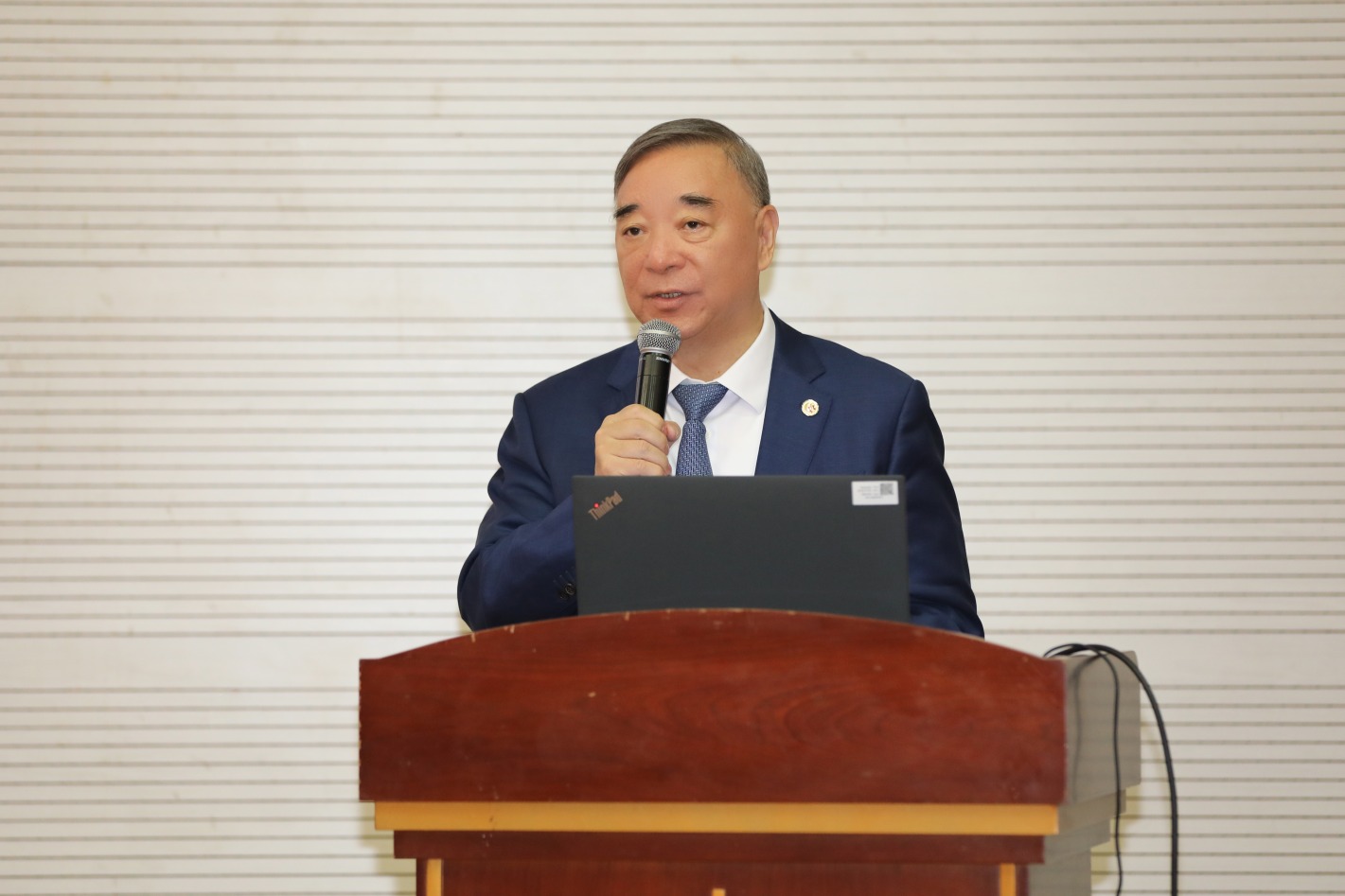
中国上市公司协会会长宋志平:投资和融资更加协调的市场生态正在加快形成
Zheng Quan Ri Bao· 2025-05-15 14:45
Group 1 - The "5·15-5·19 Small Investor Protection Publicity Week" event aims to promote rational, value, and long-term investment concepts among investors, enhancing their risk awareness and self-protection abilities [1][2] - The event highlights the importance of a stable stock market for the overall economy and the interests of millions of investors, with small investors making up 96% of the 220 million investors in China [2] - The total number of listed companies in the market is 5,420, with a total market capitalization exceeding 84 trillion yuan [2] Group 2 - In 2024, the overall performance of listed companies is robust, with revenue reaching 71.98 trillion yuan and net profit at 5.22 trillion yuan, alongside a record high dividend payout of nearly 2.4 trillion yuan [3] - The average dividend payout ratio is 37.78%, with 1,277 companies having a payout ratio exceeding 50%, and 89.2% of profitable companies planning to distribute cash dividends [3] - The number of companies implementing quarterly or semi-annual dividends has significantly increased, with 1,013 companies participating [3]
中金:势如破竹,公募基金行业发展迈入新时代
中金点睛· 2025-05-08 23:33
Core Viewpoint - The article discusses the "Action Plan for Promoting High-Quality Development of Public Funds" issued by the China Securities Regulatory Commission, aiming to address issues in the public fund industry and achieve a turning point in high-quality development within three years [1][7]. Group 1: Overall Requirements - The plan emphasizes building a public fund industry that aligns with the essence of Chinese modernization, focusing on strong regulation, risk prevention, and high-quality development [8]. - It aims to shift from a focus on scale to prioritizing investor returns, targeting a significant improvement in the industry's quality within three years [8]. Group 2: Optimizing Operational Models - The plan proposes establishing a floating management fee mechanism linked to fund performance, with a target for leading institutions to issue at least 60% of such funds in the next year [8][19]. - It highlights the need to strengthen the constraint of performance benchmarks, ensuring strict regulation of how fund companies select and disclose these benchmarks [9][10]. - Enhancements in transparency are proposed, including revising information disclosure templates for actively managed equity funds to improve readability and relevance [2][18]. Group 3: Improving Evaluation Systems - The plan outlines reforms to the performance evaluation mechanism for fund companies, emphasizing long-term performance and investor returns [20][24]. - It suggests that the weight of fund investment return indicators should not be less than 50% for company executives and 80% for fund managers [20][24]. - The plan aims to reshape industry evaluation and award systems, encouraging a focus on long-term performance over short-term metrics [20][24]. Group 4: Increasing Equity Investment Proportion - The plan aims to enhance regulatory guidance and institutional supply to significantly increase the scale and proportion of equity investments in public funds [25][26]. - It notes the historical decline in the scale of actively managed equity funds, with a recovery expected following the implementation of the plan [25][26]. Group 5: Guiding Long-Term Investment Behavior - The plan emphasizes the establishment of a counter-cyclical adjustment mechanism to dynamically adjust product registration based on market conditions [29][30]. - It aims to curb speculative behaviors such as high turnover rates and style drift, promoting a culture of long-term investment [29][30]. Group 6: Optimizing Fund Registration Processes - The plan proposes optimizing the registration mechanisms for different types of public fund products, including a rapid registration process for stock ETFs [33][34]. - It aims to reduce the average registration time for various fund types, with a target of completing ETF registrations within five working days [33][34]. Group 7: Encouraging Fund Companies to Invest in Their Own Equity Funds - The plan increases the weight of self-purchase of equity funds in the evaluation system for fund companies by 50% [4][39]. - It reports that in Q1 2025, fund companies invested 3.9 billion yuan in net purchases of public non-cash products, with a significant portion in bond funds [4][39]. Group 8: Establishing Research and Investment Capability Evaluation Systems - The plan calls for the establishment of a research and investment capability evaluation system for fund companies, incorporating both internal and external perspectives [45][46]. - It emphasizes the importance of enhancing core research and investment capabilities within the industry [45][46]. Conclusion - The implementation of the "Action Plan for Promoting High-Quality Development of Public Funds" is expected to significantly enhance the public fund industry's role in serving the real economy and stabilizing the capital market, leading to a healthier and more sustainable development trajectory [47].

从最新季绩,看巴菲特的“舍”与“得”
Jin Rong Jie· 2025-05-06 12:05
于是,伯克希尔的2025年业绩,很可能成为股神;亲自主持下的最后一年业绩。 在年度股东大会召开前夕,伯克希尔公布了2025年第1季业绩,对比于巴菲特的金句,这份业绩所体现 的投资结果;,或更能体现股神;的投资理念和风格。 投资本钱还有利息可收 今年五月初投资界的头等盛事莫过于在奥马哈举行的伯克希尔(BRK.B.US)年度股东大会,这次与别 不同的是,巴菲特在股东大会临近结束时宣布将于2026年1月1日退休,而63岁的副董事长格雷格·阿贝 尔(Greg Abel)将为其接班人,但巴菲特仍担任伯克希尔董事长一职。 从并表的主营业务来看,伯克希尔旗下的子公司经营稳定,第1季并表收入为897.25亿美元,按年微跌 0.16%;主营业务的税前利润为114.57亿美元,按年下降14.10%;但真正令其业绩与上年同期拉开距离 的是投资亏损64.35亿美元,相较上年同期为投资收益18.76亿美元,差距达83亿美元。 不过需要注意的是,这笔投资亏损主要来自未出售投资,只是因为期内股价出现波动而暂时亏损而已, 这也是巴菲特多次强调短期投资损益只是会计处理需要,并不能作为投资业绩准绳的原因。当股价回 升,未来的投资收益可能显著上升 ...