新零售

Search documents
比音勒芬涨2.06%,成交额1.15亿元,主力资金净流入177.29万元
Xin Lang Cai Jing· 2025-11-10 03:02
Core Viewpoint - The stock of Biyinlefen has shown a slight increase recently, but the company has experienced a significant decline in stock price year-to-date, indicating potential challenges in its financial performance and market perception [1][2]. Financial Performance - For the period from January to September 2025, Biyinlefen achieved a revenue of 3.201 billion yuan, representing a year-on-year growth of 6.71%. However, the net profit attributable to shareholders decreased by 18.70% to 620 million yuan [2]. - Since its A-share listing, Biyinlefen has distributed a total of 1.736 billion yuan in dividends, with 1.027 billion yuan distributed over the past three years [3]. Stock Market Activity - As of November 10, Biyinlefen's stock price was 16.37 yuan per share, with a market capitalization of 9.342 billion yuan. The stock has decreased by 21.71% year-to-date but has seen a slight recovery in the last five, twenty, and sixty trading days [1]. - The stock has experienced a net inflow of 1.7729 million yuan from main funds, with significant buying activity from large orders [1]. Shareholder Structure - As of September 30, 2025, Biyinlefen had 36,400 shareholders, a decrease of 4.26% from the previous period. The average number of circulating shares per person increased by 4.45% to 10,687 shares [2]. - Notable shareholders include Huaxia Consumption Leader Mixed A and Hong Kong Central Clearing Limited, with the latter being a new entrant among the top ten circulating shareholders [3].

步步高涨2.14%,成交额2.62亿元,主力资金净流入764.09万元
Xin Lang Cai Jing· 2025-11-10 03:02
Core Viewpoint - The stock of Bubugao has shown a mixed performance in recent trading, with a year-to-date increase of 33.16% but a recent decline over the past 20 days [1][2] Financial Performance - For the period from January to September 2025, Bubugao achieved a revenue of 3.201 billion yuan, representing a year-on-year growth of 26.45%. However, the net profit attributable to shareholders decreased by 88.83% to 226 million yuan [2] - The company has cumulatively distributed 1.677 billion yuan in dividends since its A-share listing, with no dividends distributed in the past three years [3] Stock Market Activity - As of November 10, Bubugao's stock price was 5.26 yuan per share, with a market capitalization of 14.143 billion yuan. The stock experienced a net inflow of 7.6409 million yuan from main funds [1] - The company has appeared on the "龙虎榜" (a stock trading list) 10 times this year, with the most recent appearance on September 9, where it recorded a net buy of -51.1528 million yuan [1] Shareholder Information - As of September 30, 2025, the number of shareholders increased by 95% to 172,500, while the average circulating shares per person decreased by 27.06% to 12,476 shares [2] - The Hong Kong Central Clearing Limited has exited the list of the top ten circulating shareholders [3] Business Overview - Bubugao operates primarily in the retail sector, with its main business segments being supermarkets (64.34%), other retail (27.44%), department stores (6.01%), and logistics and advertising (2.21%) [1][2]

新华百货涨2.07%,成交额4555.85万元,主力资金净流入201.55万元
Xin Lang Cai Jing· 2025-11-10 02:59
Core Viewpoint - Xinhua Department Store's stock has shown a positive trend with a year-to-date increase of 7.72% and a recent rise of 2.07% on November 10, indicating investor interest and potential growth in the retail sector [1][2]. Company Overview - Xinhua Department Store, established on January 3, 1997, is the largest retail enterprise in Ningxia, primarily engaged in commercial retail, logistics, and property leasing [2]. - The company's revenue composition includes 63.88% from chain supermarkets, 20.98% from electrical appliances, and 15.15% from department stores [2]. - As of October 31, 2025, the number of shareholders is 21,700, with an average of 10,410 circulating shares per person [2]. Financial Performance - For the period from January to September 2025, Xinhua Department Store reported a revenue of 4.707 billion yuan, a year-on-year decrease of 1.11%, and a net profit attributable to shareholders of 108 million yuan, down 1.29% year-on-year [2]. - The company has distributed a total of 742 million yuan in dividends since its A-share listing, with 124 million yuan distributed over the past three years [3]. Shareholding Structure - As of September 30, 2025, notable changes in the top ten circulating shareholders include the entry of new shareholders such as Bosera Consumption Innovation Mixed A and Zhongyou Ruixin Enhanced Bond, while CITIC Prudential Multi-Strategy Mixed A has exited the list [3].

孩子王涨2.01%,成交额1.10亿元,主力资金净流入1022.72万元
Xin Lang Cai Jing· 2025-11-10 02:59
Core Viewpoint - The stock of Kidswant has shown fluctuations with a recent increase of 2.01%, but it has experienced a decline of 5.67% year-to-date, indicating potential challenges in the market [1]. Company Overview - Kidswant Children's Products Co., Ltd. is based in Nanjing, Jiangsu Province, established on June 1, 2012, and listed on October 14, 2021. The company focuses on retail and value-added services for maternal and infant products, operating as a data-driven, customer relationship-oriented innovative service provider for new families [1]. - The main revenue sources for Kidswant include: 88.10% from maternal and infant product sales, 6.83% from supplier services, 2.56% from maternal and infant services, 1.25% from platform services, 0.73% from招商 services, 0.47% from advertising services, and 0.05% from other services [1]. Financial Performance - For the period from January to September 2025, Kidswant achieved a revenue of 7.349 billion yuan, reflecting a year-on-year growth of 8.10%. The net profit attributable to the parent company was 209 million yuan, marking a significant increase of 59.29% [2]. - Since its A-share listing, Kidswant has distributed a total of 187 million yuan in dividends, with 165 million yuan distributed over the past three years [3]. Shareholder Information - As of September 30, 2025, Kidswant had 79,000 shareholders, an increase of 51.37% from the previous period. The average number of circulating shares per person decreased by 33.93% to 15,875 shares [2]. - Among the top ten circulating shareholders, Hong Kong Central Clearing Limited is the seventh largest with 13.5386 million shares, while Southern CSI 1000 ETF is the ninth largest with 8.0745 million shares, having decreased its holdings by 76,800 shares compared to the previous period [3].
武商集团涨2.10%,成交额8121.08万元,主力资金净流入440.19万元
Xin Lang Cai Jing· 2025-11-10 02:59
Core Viewpoint - Wushang Group's stock has shown a slight increase in recent trading sessions, with a current market capitalization of 7.859 billion yuan and a notable net inflow of funds [1][2]. Financial Performance - For the period from January to September 2025, Wushang Group reported operating revenue of 4.523 billion yuan, a year-on-year decrease of 11.64%, while net profit attributable to shareholders increased by 2.98% to 128 million yuan [2]. - The company has cumulatively distributed 1.783 billion yuan in dividends since its A-share listing, with 378 million yuan distributed over the past three years [3]. Stock Market Activity - As of November 10, Wushang Group's stock price increased by 2.10%, reaching 10.22 yuan per share, with a trading volume of 81.21 million yuan and a turnover rate of 1.05% [1]. - The stock has experienced a 0.52% increase year-to-date, with a 2.30% rise over the last five trading days and a 6.99% increase over the last 20 days [1]. Shareholder Information - As of September 30, 2025, Wushang Group had 39,500 shareholders, a decrease of 3.13% from the previous period, with an average of 19,438 circulating shares per shareholder, an increase of 3.24% [2]. - The top ten circulating shareholders include notable entities such as Zhongtai Xingyuan Flexible Allocation Mixed A, which holds 8.2188 million shares, and Hong Kong Central Clearing Limited, holding 7.1723 million shares, both showing a decrease in holdings compared to the previous period [3]. Business Overview - Wushang Group, established on November 2, 1991, and listed on November 20, 1992, primarily operates in the retail sector, focusing on mid-to-high-end department stores and hypermarkets [1]. - The company's revenue composition includes 84.77% from retail business, 14.68% from other supplementary activities, and 0.55% from real estate [1].

三只松鼠涨2.02%,成交额1.19亿元,主力资金净流入317.25万元
Xin Lang Cai Jing· 2025-11-10 02:54
Core Viewpoint - The stock price of Three Squirrels has experienced a significant decline of 35.20% year-to-date, with recent trading showing slight fluctuations in both directions, indicating potential volatility in the market [1][2]. Group 1: Stock Performance - As of November 10, Three Squirrels' stock price increased by 2.02% to 23.73 CNY per share, with a trading volume of 119 million CNY and a turnover rate of 1.81%, resulting in a total market capitalization of 9.532 billion CNY [1]. - The stock has seen a net inflow of 3.1725 million CNY from main funds, with large orders contributing to both buying and selling activities [1]. - Over the past five trading days, the stock has risen by 0.59%, but it has decreased by 0.84% over the last 20 days and by 7.49% over the last 60 days [1]. Group 2: Financial Performance - For the period from January to September 2025, Three Squirrels reported a revenue of 7.759 billion CNY, reflecting a year-on-year growth of 8.22%, while the net profit attributable to shareholders decreased by 52.91% to 161 million CNY [2]. - Since its A-share listing, Three Squirrels has distributed a total of 553 million CNY in dividends, with 265 million CNY distributed over the past three years [3]. Group 3: Shareholder Information - As of September 30, 2025, the number of shareholders for Three Squirrels increased by 12.02% to 51,200, while the average number of circulating shares per person decreased by 10.71% to 5,471 shares [2]. - Among the top ten circulating shareholders, Hong Kong Central Clearing Limited is the fourth largest, holding 3.7502 million shares, an increase of 32,900 shares from the previous period [3].

新城控股涨2.02%,成交额1.51亿元,主力资金净流出1336.11万元
Xin Lang Cai Jing· 2025-11-10 02:49
Core Insights - New City Holdings' stock price increased by 2.02% on November 10, reaching 14.11 CNY per share, with a total market capitalization of 31.827 billion CNY [1] - The company has experienced a year-to-date stock price increase of 17.98%, but has seen declines of 0.42% over the last five trading days, 8.50% over the last 20 days, and 10.75% over the last 60 days [1] Financial Performance - For the period from January to September 2025, New City Holdings reported a revenue of 34.371 billion CNY, a year-on-year decrease of 33.34%, and a net profit attributable to shareholders of 0.974 billion CNY, also down 33.05% year-on-year [2] - Cumulative cash dividends since the company's A-share listing amount to 14.595 billion CNY, with no dividends distributed in the past three years [3] Shareholder Structure - As of September 30, 2025, the number of shareholders decreased by 12.34% to 43,200, while the average number of tradable shares per person increased by 14.07% to 52,155 shares [2] - The top ten circulating shareholders include Hong Kong Central Clearing Limited, which holds 16.6308 million shares, a decrease of 701,400 shares from the previous period, and ICBC Value Selection Mixed A, a new shareholder with 15.7412 million shares [3]

社服零售行业周报:博裕入主星巴克中国,百胜中国Q3同店延续正增长-20251109
HUAXI Securities· 2025-11-09 15:08
Investment Rating - Industry rating: Recommended [4] Core Insights - Starbucks has formed a strategic partnership with Boyu Capital to establish a joint venture aimed at expanding Starbucks' store count in China to 20,000 from the current 8,000 [1][21] - Yum China reported a revenue of $3.206 billion in Q3 2025, representing a 4% year-on-year increase, with same-store sales growth of 1% [2][26] Summary by Sections Industry and Company Dynamics - Starbucks and Boyu Capital's joint venture will manage Starbucks' retail operations in China, with Boyu holding up to 60% equity and Starbucks retaining 40% [1][21] - Yum China's Q3 2025 performance included a net profit of $282 million, down 5% year-on-year, but up 7% when excluding the impact of its investment in Meituan [2][26] Macroeconomic and Industry Data - In September, China's total retail sales reached 4.20 trillion yuan, growing by 3.0% year-on-year, with a notable decline in restaurant revenue growth [26][27] - Online retail sales of physical goods increased by 6.5% year-on-year from January to September, indicating a stable performance in physical store operations [27][28] Investment Recommendations - Five investment themes are highlighted: 1. Continuous upgrades in AI technology with beneficiaries including companies like Core International and Focus Technology [3][55] 2. Enhanced consumer willingness to pay for emotional value, benefiting new retail players like Miniso and Pop Mart [3][55] 3. Recovery in cyclical sectors under domestic demand stimulation, with beneficiaries including Yum China and Haidilao [3][55] 4. Expanding opportunities for domestic brands overseas, with a focus on service providers and strong product offerings [3][55] 5. Revitalization of traditional business formats as offline traffic returns, benefiting companies like Yonghui Supermarket and Kidswant [3][55]

三季报“蓄力”,华致酒行等待起跳?
Sou Hu Cai Jing· 2025-11-09 12:21
Core Viewpoint - The liquor distribution industry is facing significant challenges during the deep adjustment period of the liquor market, with companies like Huazhi Liquor experiencing substantial declines in performance [1][2]. Financial Performance - In the first three quarters of 2025, Huazhi Liquor reported revenue of 5.164 billion yuan, a year-on-year decline of 34.07%, and a net loss attributable to shareholders of 199 million yuan, down 218.48% year-on-year [2][3]. - For Q3 alone, revenue was 1.214 billion yuan, a decrease of 35.7%, with a net loss of approximately 255 million yuan, reflecting a staggering decline of 2112.58% year-on-year [3]. Asset Impairment and Inventory Management - The significant losses were primarily driven by a surge in asset impairment losses, which reached 325 million yuan, a dramatic increase of 114.63 times compared to the same period last year [6]. - The increase in asset impairment losses is attributed to the rise in inventory write-down provisions due to declining market prices for premium liquors [7][8]. - Huazhi Liquor's proactive approach to slowing down operations is seen as a strategy to adjust future business rhythms, focusing on inventory reduction and brand pressure relief [9][10]. Strategic Adjustments - The company has initiated a reform strategy emphasizing "de-inventory, promoting sales, stabilizing prices, adjusting structures, strengthening teams, and optimizing models" [10]. - Huazhi Liquor has been reducing its prepayments to suppliers, which had previously reached 2.739 billion yuan in 2022, accounting for 31.45% of total revenue [15][17]. - The company has also seen a significant reduction in its contract liabilities, indicating a cautious approach from downstream distributors [19]. Market Position and Future Outlook - Despite the current challenges, Huazhi Liquor is exploring new opportunities, including a shift towards online channels and digital transformation to enhance operational efficiency [22][23]. - The e-commerce segment has shown remarkable growth, with a year-on-year increase of 72.87%, becoming the only revenue growth area amid overall declines [24]. - However, the company faces competition from established online platforms, which may dilute its competitive advantages in the market [25]. Cost Management - Huazhi Liquor has successfully reduced its sales expenses by 40.33%, management expenses by 20.76%, and financial expenses by 30.78% in the first three quarters of 2025 [29]. - The reduction in sales expenses is attributed to a decrease in the number of sales personnel, while management expenses have been lowered through strategic operational adjustments [30]. Conclusion - The current period for Huazhi Liquor is characterized by both pain and potential, as the company navigates through a challenging market while laying the groundwork for future growth [20][31].


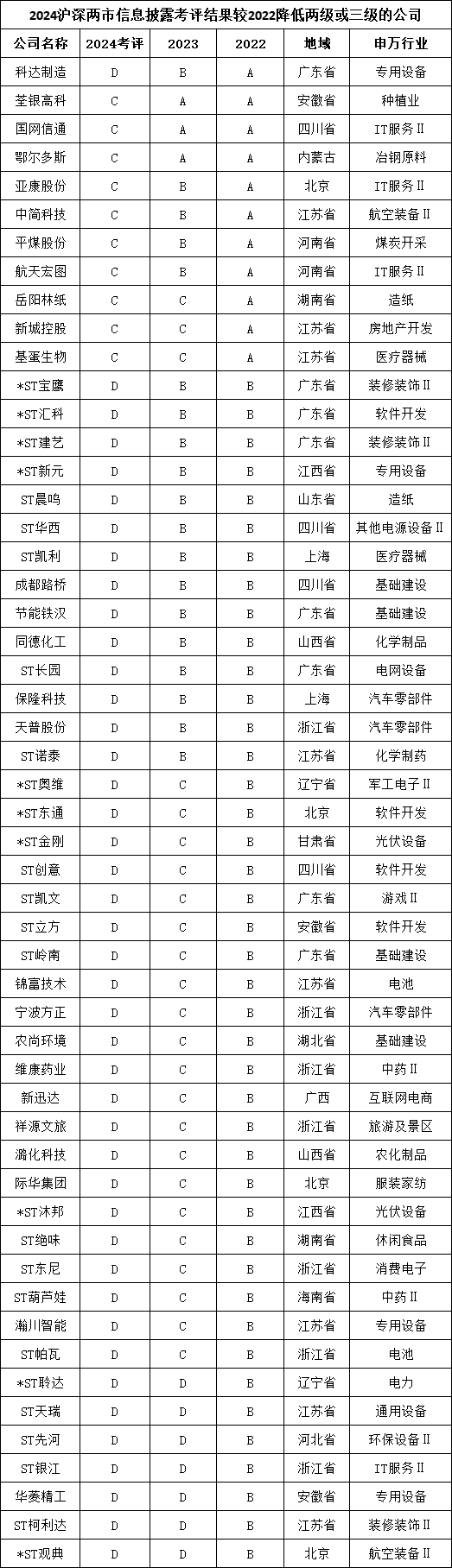
新城控股信披评级两年下降两级,从A优秀降低至C合格
Xin Lang Zheng Quan· 2025-11-07 10:07
Core Viewpoint - The information disclosure evaluation results for listed companies in 2024 show a significant decline in ratings for several companies, including New城控股, which dropped from an A rating to a C rating compared to 2022 [1][2]. Group 1: Company Performance - New城控股's information disclosure rating decreased two levels from A to C in 2024 [1]. - The company is primarily engaged in real estate development and sales, with its revenue composition being 68.63% from real estate development sales, 29.06% from property leasing and management, and 2.31% from other sources [3][4]. Group 2: Industry Context - New城控股 belongs to the real estate development sector, specifically commercial real estate, and is associated with various concept sectors including REITs, elderly care industry, new retail, mid-cap, and heavily held by funds [4].