碳中和

Search documents
马斯克:建设太空AI算力中心!太空光伏概念爆发,碳中和ETF泰康(560560)强势涨超3%
Xin Lang Cai Jing· 2026-01-23 05:27
Group 1 - The core viewpoint of the news highlights the significant rise in the carbon-neutral ETF and its underlying index, driven by strong performances from key stocks in the solar energy sector [1] - As of January 23, 2026, the carbon-neutral ETF from Taikang (560560) increased by 3.01%, while the index it tracks, the CSI Mainland Low Carbon Economy Theme Index (000977), surged by 2.84% [1] - Notable individual stock performances include Maiwei Co., Ltd. and Jiejia Weichuang, both rising by 20.00%, and JinkoSolar increasing by 18.09% [1] Group 2 - Elon Musk, CEO of Tesla, expressed strong support for space-based solar power during the World Economic Forum, revealing plans for significant solar production capacity increases [1] - Musk announced a target of achieving an annual solar manufacturing capacity of 100GW within the next three years, in collaboration with SpaceX [1] - The demand for GW-level space solar power is expected to grow exponentially alongside the increase in global satellite launches, with photovoltaic technology being well-suited for space energy needs [1] Group 3 - The report from Shenwan Hongyuan indicates that space solar power is undergoing a technological evolution, transitioning from high-efficiency gallium arsenide to scalable silicon-based HJT technology, and eventually to perovskite tandem cells [1] - Industry experts believe that the future of space solar power is promising, potentially serving as a complementary solution to terrestrial energy, with commercialization expected to align with advancements in commercial space technology and new battery technologies [1] Group 4 - The Taikang Carbon Neutral ETF (560560) closely tracks the CSI Mainland Low Carbon Economy Theme Index, which includes companies involved in clean energy generation, energy conversion and storage, clean production and consumption, and waste management [2] - As of December 31, 2025, the top ten weighted stocks in the CSI Mainland Low Carbon Economy Theme Index include CATL, Yangtze Power, Sungrow Power Supply, and Longi Green Energy, collectively accounting for 61.07% of the index [2]
《分布式能源规划员》(综合能源服务方向)培训通知丨系列培训
中国能源报· 2026-01-23 03:23
Core Viewpoint - The article emphasizes the importance of developing distributed energy and integrated energy services as a crucial path towards carbon neutrality, highlighting the need for interdisciplinary talent in energy planning and management [1] Group 1: Training Overview - The training titled "Distributed Energy Planner (Integrated Energy Services Direction)" is organized to address the shortage of professionals skilled in energy planning, conversion, and intelligent control [1] - The training will be conducted online from February 10 to February 13, 2026 [2] - The training is hosted by the Human Resources and Social Security Ministry's Social Security Capacity Building Center and organized by China Energy News Co., Ltd [2] Group 2: Target Audience - The training targets various stakeholders including provincial and municipal power companies, energy groups, and enterprises in the oil and gas sector [2] - It also includes new energy companies (wind, solar, storage), energy service companies, equipment manufacturers, and research institutions [2] - Individuals interested in the fields of new energy, distributed energy, and integrated energy services are encouraged to participate [2] Group 3: Course Outline - The course covers an overview of integrated energy services, including its driving forces and current development status both domestically and internationally [3] - It includes modules on planning comprehensive energy solutions, distributed photovoltaic projects, natural gas distributed energy applications, smart microgrids, hydrogen energy applications, new energy storage, and zero-carbon factory assessments [4] - Each module addresses specific aspects such as customer demand analysis, project construction, operational models, and economic evaluations of energy projects [4] Group 4: Training Fees - The training fee is set at 3600 yuan per person, which includes training, materials, and certification costs [5] Group 5: Contact Information - For inquiries, contact details for instructors are provided: Yang (15801248899) and Wang (15201547047) [6]


钢铁企业如何避免“碳竞争力”掉队?
Zhong Guo Jing Ji Wang· 2026-01-23 01:45
Core Viewpoint - The implementation of the EU Carbon Border Adjustment Mechanism (CBAM) presents unprecedented systemic challenges for Chinese steel enterprises, but it can also be transformed into a significant opportunity for promoting high-quality industrial development through proactive adaptation and transformation [1] Group 1: Challenges Faced by Steel Enterprises - The implementation of CBAM poses three main challenges for export enterprises: difficulty in carbon data accounting, unfamiliarity with compliance processes, and unclear emission reduction pathways [2] - The stringent monitoring, reporting, and verification requirements of the EU for carbon emissions data may lead to increased carbon costs if enterprises rely on high default values set by the EU [2] - Enterprises face risks such as fines and market access issues due to potential errors in the compliance process, which involves multiple steps including product classification and emissions calculation [2] Group 2: Recommendations for Steel Enterprises - Steel enterprises should prioritize low-carbon technology research and application as a core strategy, accelerating the implementation of advanced processes like hydrogen metallurgy to reduce carbon emissions [3] - Establishing a compliance system that aligns with EU standards for carbon measurement and reporting is essential, including promoting low-carbon product certifications and collaborating with third-party verification agencies [3] - Companies should optimize market strategies by deepening domestic market engagement and expanding into international markets, particularly in countries involved in the Belt and Road Initiative [3] Group 3: Policy and International Cooperation - China should enhance negotiations for mutual recognition of carbon markets with the EU, aiming for carbon quota recognition to reduce dual carbon costs for enterprises [4] - Active participation in global carbon pricing rule-making and international climate governance is necessary to advocate for a fair international trade environment [4] - The steel industry association should provide public services such as carbon accounting and compliance consulting to support small and medium-sized enterprises [4] Group 4: Technological Pathways - Structural adjustments and technological innovations, such as hydrogen metallurgy and carbon capture, utilization, and storage, are essential for achieving carbon neutrality in the steel industry [4] - Despite the high costs associated with hydrogen metallurgy, advancements in this technology position China at the forefront globally, with large-scale applications expected as green hydrogen costs decrease [4]
超1GWh订单!该地储能处于爆发前夕
行家说储能· 2026-01-22 10:01
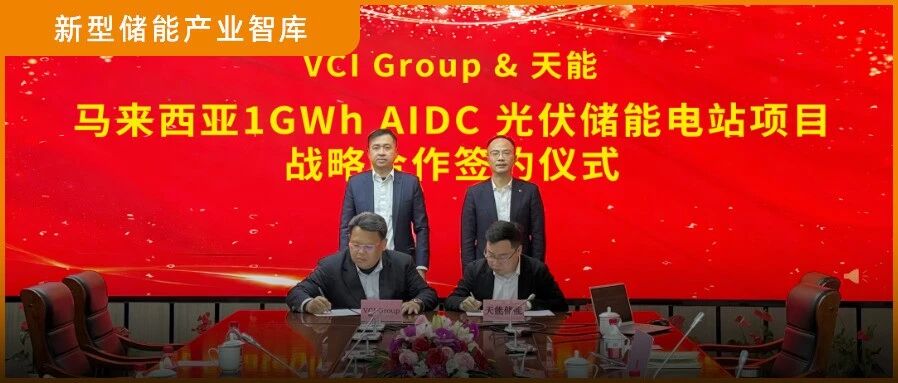
Core Viewpoint - Malaysia's energy storage market is on the brink of explosive growth, driven by the country's goal of achieving 70% renewable energy by 2050 and a series of significant events in the sector [2][11]. Group 1: Recent Developments - Teneng Energy has secured a 1GWh "solar-storage-computing" integrated project in Malacca, Malaysia, in collaboration with VCI Global Limited, aiming to establish a benchmark for green energy in Southeast Asia [4][6]. - Zhiguang Electric has signed a supply and service agreement to provide 150 fully liquid-cooled energy storage units to the Malaysian market, with delivery expected by 2026 [7][8]. Group 2: Market Growth and Projections - The Malaysian energy storage market is projected to reach $13 billion by 2032, with a compound annual growth rate (CAGR) of 17.45% [12]. - The largest grid-level energy storage tender in Malaysia, MyBEST, will involve a capacity of 400MW/1600MWh, with significant investments from various consortiums [12]. - The upcoming LSS6 solar tender is expected to add 2GW of solar capacity, likely requiring energy storage solutions, creating a market opportunity exceeding 6 billion ringgit (over 10 billion RMB) [12]. Group 3: Industry Trends - The rapid expansion of data centers in Malaysia is a key driver of energy storage demand, with 49 projects confirmed to require substantial power support [11][12]. - Companies like Tianeng and local firms are increasingly focusing on "solar + storage" solutions to meet the growing energy needs of data centers, indicating a clear trend towards integrated energy solutions [13]. - Chinese companies are establishing production bases in Malaysia to prepare for the anticipated surge in demand, with significant investments in energy storage battery projects [13][16].
锂电池行业专题研究:新型储能产业链之河南概况(三)
Zhongyuan Securities· 2026-01-22 09:03
Investment Rating - The report maintains an "Outperform" rating for the lithium battery industry relative to the CSI 300 index [2]. Core Insights - The new energy storage market is experiencing significant growth, with global new energy storage installations expected to reach 74.1 GW/177.8 GWh by the end of 2024, representing year-on-year growth of 62.5% and 61.9% respectively. In China, the new energy storage capacity is projected to increase by 103% and 136% to 43.7 GW/109.8 GWh [10][17]. - Lithium batteries are expected to dominate the energy storage technology landscape, with shipments in China reaching 430 GWh in the first three quarters of 2025, marking a year-on-year increase of 99.07% [10][24]. - The report highlights the supportive policy environment for the energy storage industry, with multiple initiatives launched by the Chinese government to promote the development of new energy storage technologies [10][35]. Summary by Sections 1. Energy Storage Industry Overview - The global energy system is undergoing significant changes to meet carbon neutrality commitments, with a focus on increasing the share of renewable energy [15][16]. - Energy storage technologies are categorized into mechanical and electrochemical storage, with pumped storage being the most mature technology [16][22]. 2. Energy Storage Policies - Since 2021, the Chinese government has introduced a series of policies to support the development of energy storage, including the "New Energy Storage Manufacturing High-Quality Development Action Plan" [35][36]. - The goal is to achieve over 100 million kW of new energy storage capacity by 2027, with significant investments expected [36][37]. 3. Electrochemical Energy Storage - Lithium-ion batteries are highlighted as the most mature and widely used technology in energy storage, with a market share of 97.5% in new energy storage technologies [24][29]. - The report discusses the advantages of lithium batteries, including high energy density and long lifespan, while also noting safety risks [22][24]. 4. Mechanical Energy Storage - Pumped storage remains a significant part of the energy storage landscape, accounting for 54.3% of total storage capacity as of the end of 2024 [24][29]. - Other mechanical storage technologies, such as compressed air and flywheel storage, are also discussed, highlighting their respective advantages and limitations [22][24]. 5. Henan Province Energy Storage Overview - Henan Province has implemented policies to accelerate the development of new energy storage technologies, aiming for a scale of over 15 million kW by 2030 [10][36]. - Key companies in the Henan energy storage sector include multiple firms specializing in lithium, sodium, and flow batteries [10][36].



如何一键布局创业板核心资产?创业板50ETF(159949)单日成交近13亿 流动性居市场前列
Xin Lang Cai Jing· 2026-01-22 08:29
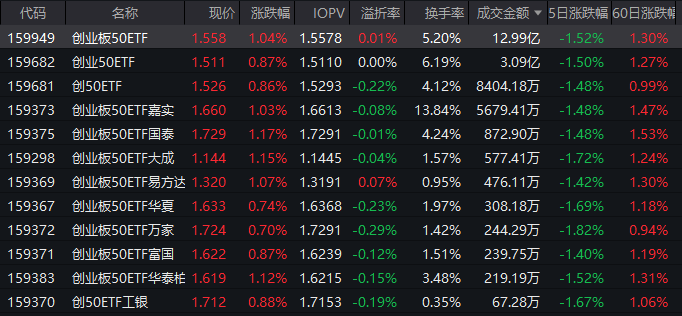
Market Performance - On January 22, the A-share market experienced a morning surge followed by a pullback, with the three major indices closing in the green, and the ChiNext Index rising nearly 1% [1][6] - The ChiNext 50 ETF (159949) increased by 1.04%, closing at 1.558 yuan, with a turnover rate of 5.20% and a transaction volume of 1.299 billion yuan, ranking first among similar ETFs [1][6] Liquidity and Trading Data - As of January 22, the ChiNext 50 ETF (159949) recorded a cumulative transaction amount of 38.006 billion yuan over the last 20 trading days, with an average daily transaction amount of 1.900 billion yuan; since the beginning of the year, the cumulative transaction amount over 14 trading days was 27.332 billion yuan, with an average daily transaction amount of 1.952 billion yuan [2][7] - The circulating scale of the ChiNext 50 ETF was 24.900 billion yuan as of January 21, 2026 [2][7] Fund Holdings and Performance - The latest quarterly report indicates that the top ten holdings of the ChiNext 50 ETF (159949) showed mixed performance, including stocks like CATL, Zhongji Xuchuang, and Mindray Medical [3][8] - The fund manager noted that the fourth quarter saw a return to structural market trends, with significant divergence in the ChiNext, particularly in sectors like AI and new energy [10] Investment Outlook - The ChiNext 50 ETF is viewed as a convenient tool for long-term investors interested in China's technology growth sector, with a three-year return of 35.16%, outperforming its benchmark and ranking 526th among 1,633 similar products [5][11] - Recommendations for investors include adopting a dollar-cost averaging strategy or phased investment to smooth out short-term volatility while closely monitoring the performance of constituent stocks and relevant policy developments [5][11]





碳标签农产品暨首款安溪铁观音碳中和茶发布会在京举行
Zhong Guo Jin Rong Xin Xi Wang· 2026-01-22 08:11
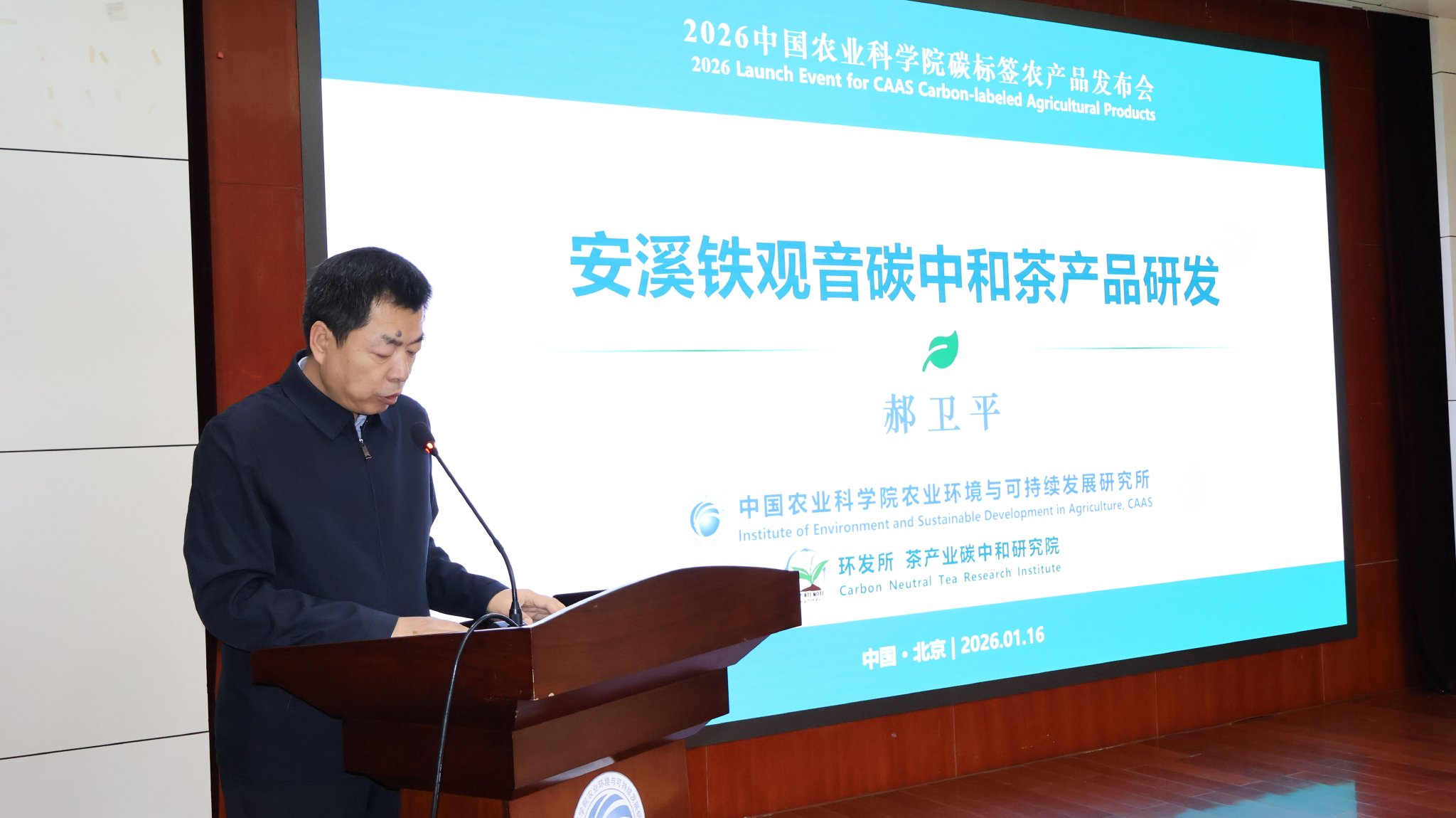
Core Viewpoint - The launch of the first carbon-neutral Anxi Tieguanyin tea product marks a significant advancement in China's tea industry regarding carbon footprint accounting, carbon label promotion, and carbon neutrality practices [1][3][5] Group 1: Event Overview - The event was co-hosted by multiple organizations, including the Chinese Academy of Agricultural Sciences and the Anxi County Government, focusing on the core goal of low-carbon transformation in agriculture [1][3] - The Anxi Tieguanyin carbon-neutral tea was officially released, showcasing Anxi County's role as a key player in the tea industry and its commitment to sustainable practices [3][5] Group 2: Product and Certification - The carbon-neutral tea product was developed with support from the Anxi County Government and the tea industry carbon neutrality research institute, utilizing methods such as organic material substitution and biodiversity restoration [3][5] - The product received certification as a "carbon label agricultural product" for 2025, emphasizing its dual authority in low-carbon production and standard certification [5] Group 3: Standards and Collaboration - Four group standards related to carbon labeling and greenhouse gas quantification for agricultural products were introduced, aiming to guide the industry towards sustainable practices [5][7] - Ten tea companies from Anxi participated in a cooperation launch for carbon label agricultural products, indicating a collective effort to integrate carbon neutrality into the entire tea production chain [5][7] Group 4: Future Directions - A roundtable forum discussed the theme of "carbon labels promoting agricultural green transformation," highlighting the need for collaboration among research institutions, market entities, government departments, and consumers [7] - The introduction of the carbon-neutral Anxi Tieguanyin tea not only provides consumers with a low-carbon choice but also serves as a practical example for carbon neutrality management in agricultural products nationwide [7]

中国积极发展核电,服装企业雅戈尔也入局了
第一财经· 2026-01-22 06:36
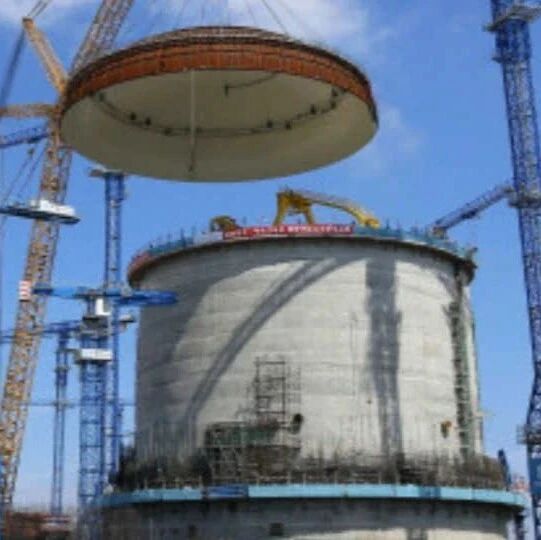
Core Viewpoint - The article discusses the entry of the domestic clothing giant, Youngor Group, into the nuclear power sector, driven by favorable nuclear energy policies in China [3]. Group 1: Company Involvement - Youngor Group has become a significant shareholder in China Nuclear (Xiangshan) Nuclear Energy Co., Ltd., which was officially registered on January 20, 2026, with a registered capital of 250 million yuan [3][5]. - Youngor is the third-largest shareholder in the new nuclear company, with a subscribed capital of 21.425 million yuan, alongside other major shareholders including Ningbo Riyue Group and Minsheng Life Insurance [5][6]. Group 2: Industry Context - The nuclear power sector in China has traditionally been dominated by state-owned enterprises like China National Nuclear Corporation (CNNC) and China General Nuclear Power Group, with limited participation from private enterprises [6]. - Recent government policies have encouraged private capital to enter the nuclear power sector, aiming to enhance industry vitality and support the development of nuclear energy as a key component of China's clean energy strategy [6][7]. - The global nuclear power generation is expected to reach a ten-year high in 2024, with projections indicating that the installed capacity of nuclear power worldwide will exceed 900 million kilowatts by 2050, effectively doubling current levels [6][7]. Group 3: Future Outlook - The Chinese government plans to approve 10 nuclear reactor units annually from 2022 to 2025, with 11 units approved for 2024 alone, indicating a robust investment trend in the nuclear sector [7]. - Each nuclear reactor unit requires an investment of approximately 20 billion yuan, with a total investment exceeding 800 billion yuan for the planned 41 units [7]. - Experts suggest that while companies like Youngor are optimistic about the nuclear industry's prospects, they may face challenges due to a lack of expertise and financial capacity to engage in core industry activities [7].


新闻1+1|用电量屡创新高 我国电力保供的底气从何而来
Yang Shi Xin Wen Ke Hu Duan· 2026-01-22 06:21
Core Insights - The national electricity load in China has reached a winter peak of 1.417 billion kilowatts, marking the first time it has surpassed 1.4 billion kilowatts during winter [1] - In 2025, the total electricity consumption in China is projected to exceed 10 trillion kilowatt-hours, reflecting the vitality of the country's economic and social development [1] Group 1: Electricity Supply Challenges - The characteristics of national electricity load show dual peaks, with summer peaks generally higher than winter peaks; last summer's peak was 1.508 billion kilowatts compared to this winter's peak of 1.417 billion kilowatts [5] - Winter electricity supply faces unique challenges compared to summer, including reduced hydropower storage due to dry conditions, significant impacts from weather on wind and solar energy, and difficulties posed by natural disasters like freezing [6][8] Group 2: Regional Supply Strategies - Due to the vast geographical differences and varying energy resources across provinces, targeted supply measures are necessary, leading to the implementation of "one province, one policy" strategies for electricity supply [8] Group 3: Electricity Supply Confidence - China's confidence in electricity supply stems from significant advancements in power generation capacity and the development of a robust grid system, including ultra-high voltage transmission and strong local distribution networks [11][12] Group 4: Energy Structure Trends - Coal power is expected to decrease in proportion over time, but it will remain a primary energy source in the short to medium term, with coal power utilization hours dropping from 5,500 hours to approximately 4,400 hours by 2024; wind and solar energy are projected to account for about 18% of electricity generation in 2024 [15] Group 5: Role of Electricity in AI Development - The importance of electricity in supporting AI development is emphasized, with the argument that while AI can solve many problems, it fundamentally relies on a stable and robust energy supply [18]
“印钞机”变“碎钞机”,光伏集体巨亏
投中网· 2026-01-22 06:06
Core Viewpoint - The photovoltaic industry is undergoing a significant restructuring, with major companies expected to report substantial losses in 2025 due to overcapacity, price wars, and rising raw material costs [5][10][12]. Group 1: Industry Overview - Trina Solar forecasts a loss of 65-75 billion yuan for 2025, contributing to a total expected loss of over 600 billion yuan across the photovoltaic sector [5][10]. - The entire industry chain, from upstream silicon materials to downstream components, is experiencing collective losses, with the gross profit margin for polysilicon dropping to -6.30% in the first half of 2025, compared to 73% in 2022 [12][13]. - The price of silver has surged by 140% over two years, further compressing profits as component prices have fallen below cash cost levels [6][14][16]. Group 2: Key Indicators for Industry Restructuring - Analysts suggest monitoring three key indicators for the industry's clearing process: energy consumption, conversion efficiency, and profit margins [7][19]. - The industry is expected to enter a brutal elimination phase in 2026, focusing on energy efficiency, technology, and cost [8][18]. Group 3: Company Performance and Differentiation - Major companies like LONGi Green Energy and Tongwei Co. are projected to incur significant losses, but some are showing signs of reduced losses compared to previous years [21]. - TCL Zhonghuan is facing challenges due to high energy consumption and outdated production processes, leading to a decline in competitiveness [21][23]. - Companies are investing in new technologies, such as LONGi's focus on BC cell technology and Tongwei's optimization of silicon material costs, to prepare for the upcoming technological competition in 2026 [25].