
新型能源体系

Search documents
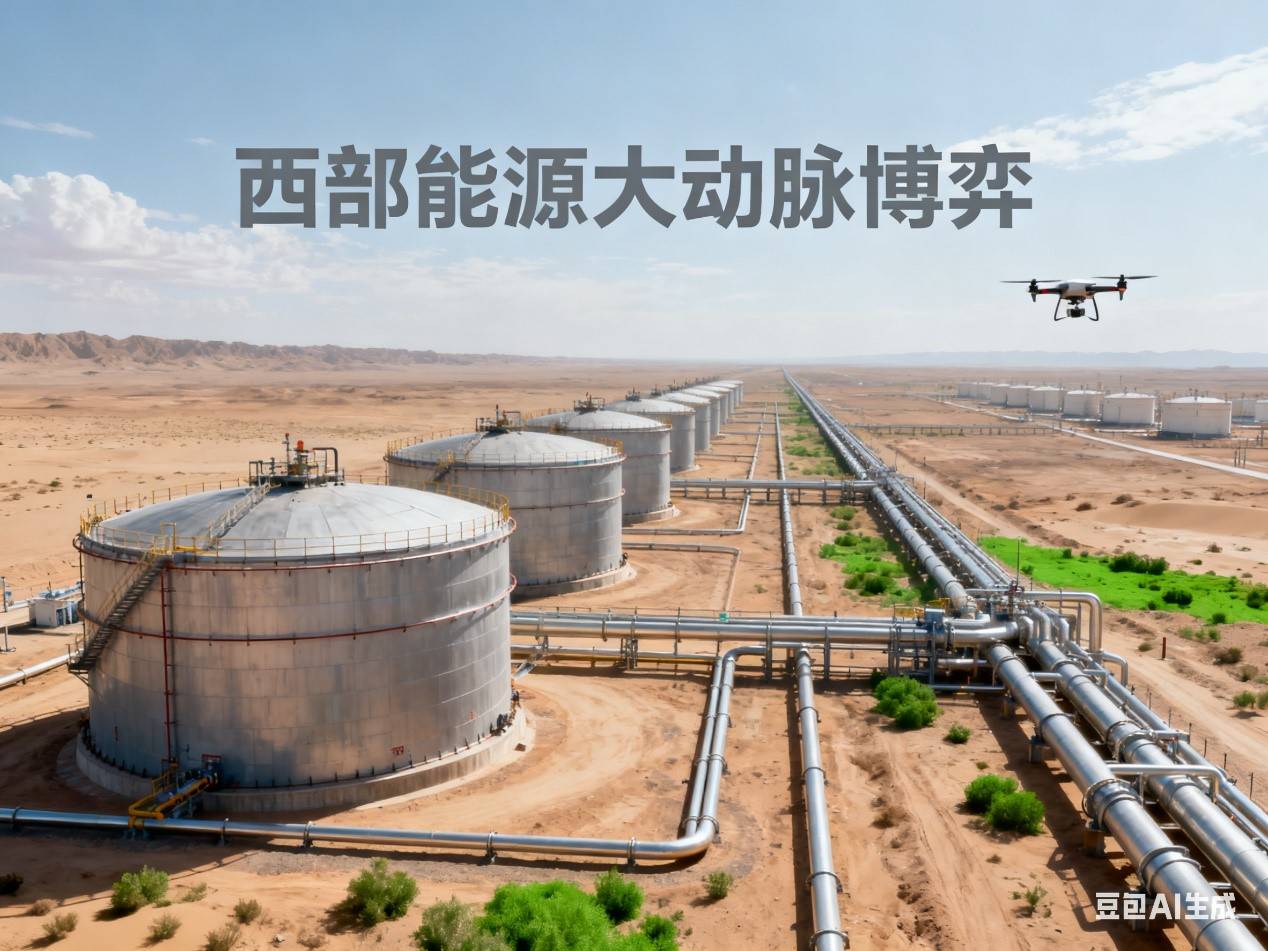
破纪录的2亿吨背后,西部能源大动脉却暗藏博弈
Sou Hu Cai Jing· 2025-11-26 04:02
Core Insights - The West Oil Pipeline has safely operated for 18 years and has transported over 200 million tons of crude oil, reflecting China's strategic layout in energy security and asset optimization amid dual carbon goals and energy supply constraints [1][5]. Group 1: Strategic Importance of the West Oil Pipeline - The West Oil Pipeline, stretching 1,541 kilometers from Xinjiang to Gansu, is a core support for the "West Oil East Transport" national strategy, forming a significant land-based energy hub [3]. - It connects seamlessly with the China-Kazakhstan oil pipeline and integrates production from major oil fields in Xinjiang, creating a vast energy supply network that enhances energy security without reliance on maritime transport [3]. - The cumulative transport of 200 million tons positions the pipeline as a stabilizing force for the petrochemical industry in Western China, converting resource advantages into economic momentum for the central and eastern markets [3]. Group 2: Technological Advancements and Environmental Considerations - The West Oil Pipeline has seen a doubling of oil transport efficiency since its inception, increasing from 1,000 cubic meters per hour to over 2,000 cubic meters [4]. - It is the first large-diameter pipeline in China to achieve the sequential transport of multiple types of crude oil, showcasing advanced technology that enhances adaptability to different oil markets [4]. - The implementation of energy-saving techniques, such as optimizing the use of elevation differences in storage tanks, has resulted in annual electricity savings of 4 million kilowatt-hours, demonstrating the potential for low-carbon transformation in traditional energy infrastructure [4]. Group 3: Role in Energy Transition - The milestone of 200 million tons transported by the West Oil Pipeline counters the notion that traditional oil and gas infrastructure will soon become obsolete, highlighting the complexity and long-term nature of energy transition [5][6]. - The pipeline supports not only fuel supply but also serves as a foundational resource for high-end manufacturing in Western China, emphasizing the enduring role of oil as a chemical raw material [6]. - The stable operation of the pipeline over 18 years signifies a mature management system and emergency response mechanisms, acting as a stabilizing force during the transition from traditional to new energy systems [6].

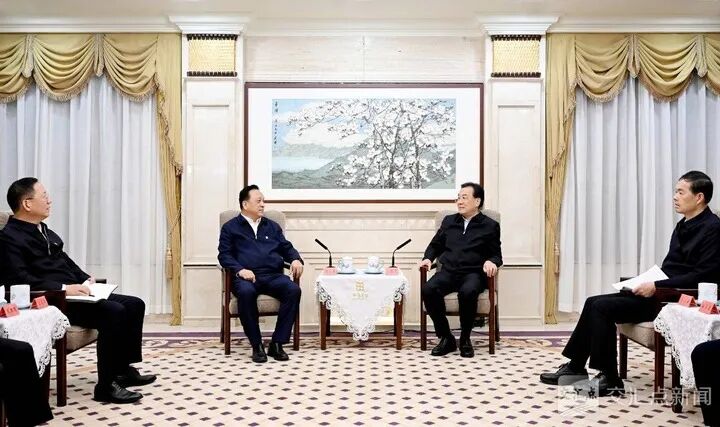
信长星刘小涛会见中国石化董事长侯启军
Xin Hua Ri Bao· 2025-11-25 12:37
Core Points - The meeting between Jiangsu provincial leaders and the chairman of Sinopec emphasizes the importance of collaboration in energy supply and the petrochemical industry transformation [1][3] - Jiangsu is focusing on implementing the strategic deployment from the 20th Central Committee regarding the construction of a new energy system [3] - Sinopec is committed to enhancing its cooperation with Jiangsu, leveraging its full industry chain advantages to support high-quality development in the province [3] Group 1 - Jiangsu provincial leaders expressed gratitude to Sinopec for its contributions to the province's development [3] - The provincial government is planning to enhance energy supply, industrial innovation, and safety production, which are crucial for the petrochemical industry's upgrade [3] - Sinopec aims to promote intelligent, green, and integrated development through advanced technologies and quality projects [3] Group 2 - The meeting included discussions on deepening cooperation to cultivate new growth points in the energy system and petrochemical industry [3] - Sinopec's chairman highlighted the company's political responsibility in ensuring national energy security [3] - The meeting was attended by key provincial leaders and Sinopec's vice president, indicating a high-level commitment to collaboration [3]

新能源板块集体走强,储能电池ETF(159566)受资金关注
Sou Hu Cai Jing· 2025-11-25 12:01
Group 1 - The new energy sector showed strong performance today, with the Guozheng New Energy Battery Index rising by 2.1%, the Zhongzheng New Energy Index by 1.9%, the Zhongzheng Photovoltaic Industry Index by 1.8%, and the Zhongzheng Shanghai Carbon Neutrality Index by 1.2% [1] - The storage battery ETF (159566) attracted over 1.2 billion yuan in investments this month, indicating strong market interest [1] - Huatai Securities emphasizes the importance of accelerating the construction of a new energy system during the 14th Five-Year Plan, focusing on the development of new energy storage and smart grid construction [1] Group 2 - The index focusing on the energy storage sector consists of 50 companies involved in battery manufacturing, energy storage battery inverters, energy storage system integration, and battery temperature control and fire protection [4] - The photovoltaic ETF managed by E Fund tracks the Zhongzheng Photovoltaic Industry Index, which includes 50 representative companies across the upstream, midstream, and downstream of the photovoltaic industry chain [6]

“十四五”济南市能耗强度累计下降23.5%以上,节能降碳成效持续显现
Zhong Guo Fa Zhan Wang· 2025-11-25 09:04
Core Viewpoint - Jinan City has made significant progress in green low-carbon transformation and high-quality energy development since the "14th Five-Year Plan," aligning with national strategies for carbon peak and carbon neutrality [1][2]. Group 1: Carbon Neutrality Initiatives - The city has established a comprehensive "1+N+X" policy system for carbon peak and carbon neutrality, implementing the "Jinan Carbon Peak Work Plan" and focusing on key sectors such as energy, industry, transportation, and agriculture [1]. - The implementation of ten major projects for carbon peak has been initiated, with a notable decrease in carbon emission intensity meeting scheduled targets [1]. Group 2: Energy Efficiency and Emission Reduction - Jinan has developed a robust energy-saving system, launching the "14th Five-Year Energy Conservation and Emission Reduction Implementation Plan," which includes annual energy-saving and carbon reduction plans across various sectors [1]. - Since the beginning of the "14th Five-Year Plan," the city's energy consumption intensity has decreased by over 23.5%, surpassing provincial targets [1]. Group 3: New Energy Development - The city has accelerated the development of new energy, with operational wind farms, photovoltaic power stations, and biomass power projects, achieving a total installed capacity of 5.1081 million kilowatts, a 168% increase since 2020 [2]. - Jinan has also enhanced energy storage applications, with eight storage power stations totaling 711.6 thousand kilowatts [2]. Group 4: Green Lifestyle Promotion - The promotion of electric vehicles has been prioritized, with over 120,000 charging facilities and 1,620 public charging stations established, achieving full coverage at the community level [3]. - The establishment of the province's first municipal virtual power plant service center has enabled the integration of 15 virtual power plants, with a regulation capacity of 683 thousand kilowatts, leading the province [3].
报名:第八届新能源材料检测新技术及应用网络会议
仪器信息网· 2025-11-24 09:06
特别提示 微信机制调整,点击顶部"仪器信息网" → 右上方"…" → 设为 ★ 星标,否则很可能无法看到我们的推送。 在"双碳"战略目标持续深入推进的背景下,我国新能源产业进入规模化、高质量发展新阶段。根据近期国家"十五五"规划建议,我国正加快建 设以非化石能源为主体的新型能源体系,并致力于推动氢能、新型储能等成为新的经济增长点。新技术、新工艺的涌现对检测技术的精准性、 效率及前瞻性提出了更高要求。为促进新能源领域产、学、研、用各方的深度交流,仪器信息网连续第八年举办新能源系列网络会议。 2025年11月25-26日,仪器信息网将携手顺德职业技术大学能源与汽车工程学院共同举办"第八届新能源检测技术及应用网络会议",本届会 议将全面聚焦太阳能/光伏、固态电池/钠电池、氢能及燃料电池、储能四大板块,汇聚业内顶尖专家与领先仪器厂商,共同探讨最新检测标 准、前沿技术挑战与创新应用解决方案,为产业链上下游企业提供技术交流与合作的高价值平台,助力我国新能源产业技术创新与质量提升。 会议时间: 2025年11月25-26日 主办单位: 仪器信息网 协办单位: 顺德职业技术大学能源与汽车工程学院 会议日程: | 11月25日 ...

《石油天然气基础设施规划建设与运营管理办法》解读之五︱强化油气基础设施管理 赋能行业高质量发展
国家能源局· 2025-11-24 08:28
Core Viewpoint - The article discusses the issuance of the "Regulations on the Planning, Construction, and Operation Management of Oil and Gas Infrastructure," which aims to enhance the management of the oil and gas industry, promote high-quality development, and adapt to new market conditions and regulatory requirements [3][11]. Group 1: Background of the Regulations - The 2014 "Regulations on the Management of Natural Gas Infrastructure Construction and Operation" was a key regulation for the midstream natural gas sector, but the evolving market dynamics necessitated a revision to better align with recent reforms and the establishment of the National Oil and Gas Pipeline Group [4][5]. - The 20th National Congress and subsequent meetings emphasized the need for an energy revolution and a unified national market, which further necessitated the revision of these regulations to ensure fair access and efficient operation of energy infrastructure [5][6]. Group 2: Key Highlights of the Regulations - The revised regulations clarify definitions of key terms to avoid misunderstandings among different stakeholders, ensuring consistent policy execution [6]. - The regulations emphasize the importance of planning, mandating that cross-border and inter-provincial pipeline projects must be included in national planning to eliminate fragmented local planning [6][7]. - The investment mechanism is streamlined to encourage private capital participation in oil and gas pipeline projects, enhancing infrastructure development and operational efficiency [7][8]. - New operational mechanisms are introduced, including strict separation of business responsibilities to prevent conflicts of interest and ensure market order [8]. - The regulations outline specific storage responsibilities, mandating that various entities maintain a certain percentage of gas storage capacity to enhance emergency supply capabilities [9]. - Enhanced supervision and legal responsibilities are established, including a credit monitoring system for stakeholders to ensure compliance and maintain market order [10]. Group 3: Overall Implications - The regulations align with market-oriented reforms and the central government's energy policy, establishing new rules for independent pipeline operations, promoting fair competition, and ensuring energy supply security [11].

《全球能源转型报告》发布
Zhong Guo Jing Ji Wang· 2025-11-24 06:01
Core Insights - The 2025 Energy Transition Conference focuses on accelerating the construction of a new energy system and promoting green and low-carbon transformation in the energy sector [1] Group 1: Global Energy Transition Trends - The "Global Energy Transition Report (2025)" indicates that global demand for coal and oil is stabilizing, while natural gas consumption is experiencing rapid growth. Solar and wind energy are becoming the main growth drivers, and nuclear technology is seeing a resurgence [1] - The report highlights that achieving the renewable energy "threefold installed capacity" goal will face significant challenges due to global development imbalances, with key minerals becoming strategic focal points for countries [1] Group 2: China's Energy Transition Efforts - The State-owned Assets Supervision and Administration Commission (SASAC) emphasizes the role of central enterprises in adjusting energy supply structures and optimizing energy consumption methods, advocating for a multi-energy approach including wind, solar, water, and nuclear [2] - The National Energy Administration (NEA) reports that by the end of this year, China is expected to exceed the target of 20% non-fossil energy consumption, with new energy installations accounting for about 60% of global increments [3] Group 3: Technological and Infrastructure Developments - The State Grid Corporation plans to enhance the reliability and capacity of the power grid to support high-quality development of new energy, aiming for a capacity of 800 million kilowatts of distributed energy and 60 million charging facilities by 2030 [4] - The emphasis on circular economy as a sustainable resource guarantee is highlighted, with significant opportunities for innovation in carbon neutrality, particularly in the recycling of solar components [4] Group 4: Industry Analysis and Guidance - The launch of the "China Gas Station (Energy Station) Development Blue Book (2025-2026)" aims to provide in-depth analysis of industry policies, market dynamics, and technological applications, serving as a strategic guide for industry practitioners [5]

中国担当全球光热发电主力
中国能源报· 2025-11-23 23:33
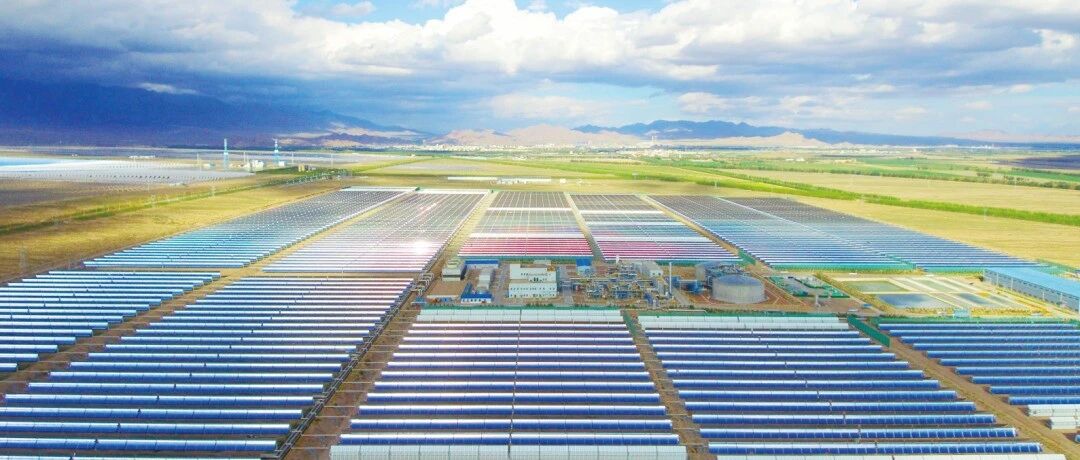
Core Viewpoint - The solar thermal power industry in China is rapidly developing, becoming a key player in supporting high proportions of renewable energy integration and ensuring the stability of the power system, particularly in the context of the "dual carbon" goals and the construction of a new power system [1][4][13]. Industry Development - As of September 2025, China's solar thermal power generation capacity reached 157,000 kilowatts, ranking third globally [3][7]. - The average annual compound growth rate of China's solar thermal power industry is 11.7%, significantly higher than the global average of 4.24% [3][7]. - The levelized cost of solar thermal power has decreased from 1.15 yuan per kilowatt-hour to approximately 0.6 yuan per kilowatt-hour, indicating a substantial improvement in economic viability [3][11]. Technological Advancements - China has mastered mainstream solar thermal technologies, including tower, trough, and Fresnel systems, with a domestic equipment localization rate exceeding 95% [3][11]. - The country has developed a comprehensive solar thermal power industry chain and has published over 40 relevant standards covering manufacturing, design, construction, and operation [11][14]. Strategic Importance - Solar thermal power is recognized as a stabilizing force in the energy system, effectively addressing challenges posed by high proportions of renewable energy sources [6][8]. - The National Energy Administration has emphasized the strategic role of solar thermal power in its recent policy documents, advocating for its integration as a regulatory power source [8][14]. Project Highlights - The Golmud 350 MW tower solar thermal project, currently under construction, is set to be the largest single-unit solar thermal project globally, expected to generate approximately 960 million kilowatt-hours of clean electricity annually [6][10]. - The successful operation of the 50 MW solar thermal demonstration project in Delingha has provided valuable experience for future large-scale projects [10][11]. Future Outlook - By 2030, global installed capacity for solar thermal power is projected to reach 22.4 million kilowatts, with about 10% of global electricity supply expected to come from solar thermal by 2050 [13]. - The industry is anticipated to transition from being a supplementary power source to a supportive power source as its economic viability and application scale continue to expand [11][15].

建信金租向融和元储投放首笔独立储能租赁项目
中关村储能产业技术联盟· 2025-11-23 23:06
Core Viewpoint - The article highlights the successful launch of a financing lease project by Jianxin Financial Leasing for a storage energy project, marking a significant breakthrough in the green leasing sector and an initial foray into the energy storage market [2][4]. Group 1: Project Details - Jianxin Financial Leasing has initiated its first independent energy storage financing lease project with Shanghai Ronghe Yuanchu Energy Co., Ltd., which has a cumulative shipment volume exceeding 20 GWh and an asset operation scale of over 9.2 GWh [2]. - The financing is aimed at supporting the construction of an energy storage power station in Taicang City, Suzhou, Jiangsu Province, with a phase one scale of 100 MW/200 MWh [4]. Group 2: Strategic Collaboration - This project enhances the strategic partnership between Jianxin Financial Leasing and Ronghe Yuanchu, laying a solid foundation for further collaboration [4][5]. - The company aims to leverage its "financing + asset" product advantages to provide tailored service solutions, optimizing debt structure and reducing financing costs [4]. Group 3: Future Directions - Jianxin Financial Leasing plans to continue focusing on new energy storage, wind power, and photovoltaic sectors, innovating products and optimizing services to contribute to the construction of a new energy system and achieving carbon peak goals [5].

二〇二五能源转型大会在京开幕 张玉卓殷勇致辞
Xin Lang Cai Jing· 2025-11-22 23:34
Core Insights - The 2025 Energy Transition Conference opened in Beijing, emphasizing the importance of green energy transformation and international cooperation in achieving carbon neutrality goals [1] Group 1: Energy Transition Strategy - The Chinese government has established a new energy security strategy focusing on "four revolutions and one cooperation," guiding the country's energy transition [1] - The 14th Five-Year Plan outlines significant goals for achieving peak carbon emissions, highlighting the commitment to green energy initiatives [1] Group 2: Local Government Initiatives - Beijing has accelerated its green and low-carbon energy transition, optimizing its energy structure historically and developing a robust green energy industry ecosystem [1] - The city aims to become a benchmark for international green economies during the 14th Five-Year Plan, focusing on comprehensive green transformation in economic and social development [1] Group 3: Technological Innovation and Industry Support - Emphasis on technological leadership, particularly in solid-state battery technology, to drive innovative green technology [1] - The development of a multi-energy complementary system is prioritized, alongside the cultivation of competitive green energy enterprises [1] Group 4: Demonstration and Investment Opportunities - The establishment of zero-carbon demonstration parks and other green energy applications is a key focus to create iconic scenarios and business models [1] - The Future Science City is highlighted as a hub for energy innovation, inviting scientists and investors to participate in high-quality energy development opportunities [1]