
气候变化

Search documents
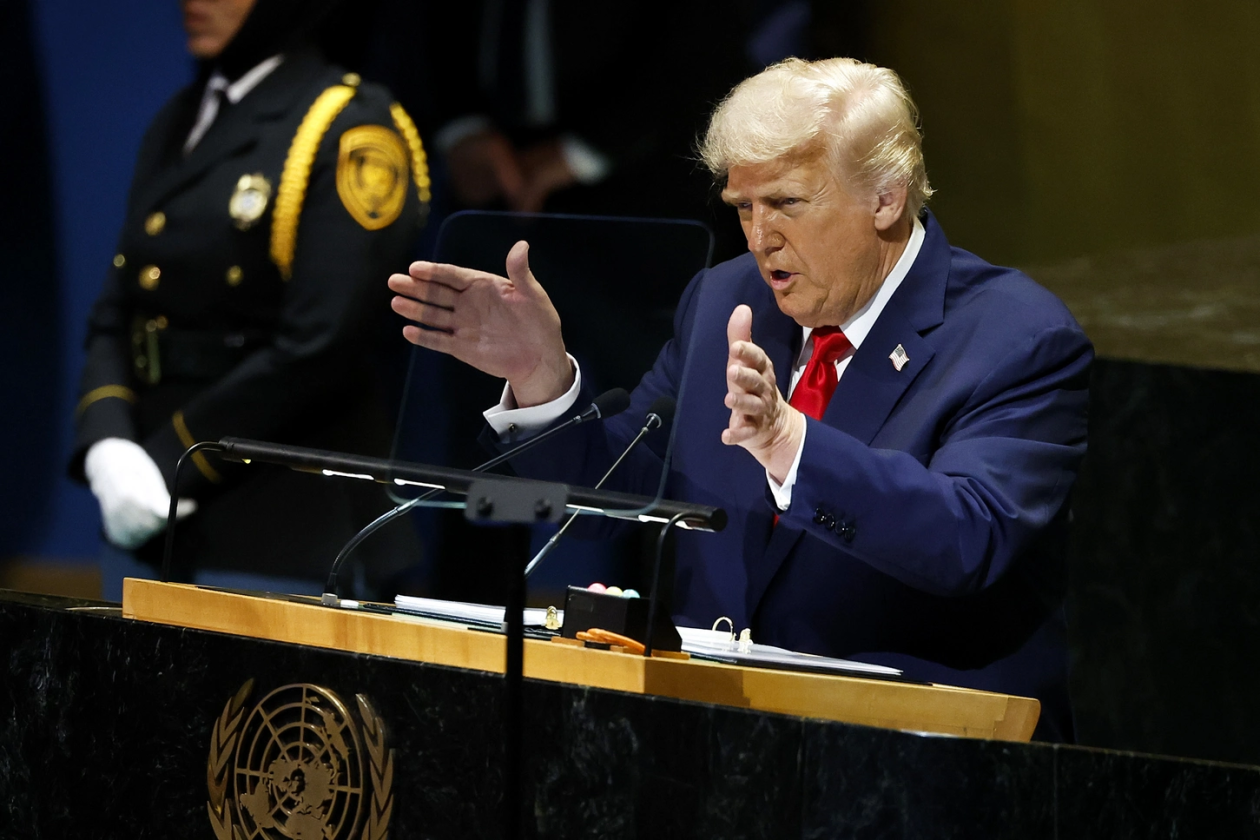
特朗普联大演讲:批评联合国,警告俄罗斯
Zhong Guo Xin Wen Wang· 2025-09-24 01:05
Group 1 - The core viewpoint of the article is President Trump's criticism of the United Nations and his warning to Russia regarding severe tariffs if the conflict continues [1][2] - Trump questioned the effectiveness of the United Nations, stating that it seems to only produce strong-worded letters without follow-up actions [1] - He criticized the renovation project of the UN headquarters, claiming it cost between $20 billion to $40 billion, while he had proposed a $500 million plan that was rejected [1] Group 2 - Trump warned that if Russia does not end its military actions, the U.S. will impose very severe tariffs, and European countries must also implement similar measures [2] - On the Gaza issue, he urged immediate action to release all hostages and warned that unilateral recognition of Palestine would reward Hamas's violence [2] - He criticized the UN for spending $372 million in 2024 to support 624,000 immigrants entering the U.S., arguing that the UN should prevent invasions rather than encourage them [2]
充满对抗性!“你们的国家正在走向地狱”,特朗普联大演讲与欧洲国家针锋相对
Huan Qiu Wang· 2025-09-24 00:54
Group 1 - The core message of Trump's speech at the UN General Assembly was a strong criticism of Europe, particularly regarding immigration and climate change policies, which he claimed were leading European countries towards disaster [1][3] - Trump emphasized the need for strong border control and traditional energy sources, arguing that Europe's immigration and energy policies were detrimental to its future [3][4] - The speech was characterized by numerous false and misleading statements, appealing to Republican voters domestically while addressing international leaders [4] Group 2 - French President Macron's subsequent speech countered Trump's views, highlighting the importance of the United Nations and the urgent need to address climate change [3] - Trump displayed a more conciliatory tone during meetings with UN Secretary-General Guterres and EU Commission President von der Leyen, despite his earlier criticisms of Europe [4]

【金工】股票ETF资金转为净流入,科技板块基金净值涨幅优势延续——基金市场与ESG产品周报20250922(祁嫣然/马元心)
光大证券研究· 2025-09-23 23:06
Market Performance Overview - The domestic equity market indices showed mixed performance during the week of September 15-19, 2025, with the ChiNext Index rising by 2.34% [4] - In terms of sectors, coal, power equipment, and electronics industries had the highest gains, while banking, non-ferrous metals, and non-bank financial sectors experienced the largest declines [4] Fund Product Issuance - The domestic new fund market saw increased activity, with 63 new funds established, totaling 748.28 billion units issued. This included 27 bond funds, 27 equity funds, 7 mixed funds, 1 international (QDII) fund, and 1 REIT [5] - A total of 31 new funds were issued across the market, with 21 being equity funds, 4 FOF funds, 4 mixed funds, 1 bond fund, and 1 international (QDII) fund [5] Fund Product Performance Tracking - Various industry-themed funds exhibited volatile and divergent performance, with TMT theme funds continuing to show a net value increase of 2.56%, while financial and real estate theme funds saw a notable decline [6] - As of September 19, 2025, the performance of different themed funds was as follows: New Energy (2.07%), National Defense and Military Industry (1.50%), Balanced Industry (0.92%), Rotation Industry (0.49%), Consumption (-0.53%), Cyclical (-1.63%), Pharmaceutical (-2.41%), and Financial Real Estate (-2.68%) [6] ETF Market Tracking - Domestic stock ETFs experienced a net inflow of funds, while Hong Kong stock ETFs maintained significant inflows. Specifically, stock ETFs had a median return of 0.03% with a net inflow of 77.93 billion yuan [7] - Hong Kong stock ETFs recorded a median return of 0.84% with a net inflow of 166.52 billion yuan, and cross-border ETFs had a median return of 1.56% with a net inflow of 1.227 billion yuan [8] Fund Positioning Monitoring - The estimated equity positioning of actively managed funds decreased by 0.27 percentage points compared to the previous week. Increased allocations were observed in the automotive, electronics, and basic chemicals sectors, while banking, pharmaceutical, and agriculture sectors saw reduced allocations [9] ESG Financial Products Tracking - A total of 34 new green bonds were issued this week, with a cumulative issuance scale of 379.48 billion yuan. The domestic green bond market has steadily developed, with a total issuance scale of 4.82 trillion yuan and 4,153 bonds issued as of September 19, 2025 [10] - The median net value changes for ESG funds were as follows: active equity funds (1.42%), passive equity index funds (0.21%), and bond ESG funds (0.04%). Funds focused on climate change, low-carbon economy, and carbon neutrality showed significant performance advantages [10]
Latvia's President Says Europe Must Not Buy Russian Oil
Youtube· 2025-09-23 18:13
Core Viewpoint - The discussion centers around the need for NATO to adopt a more stringent defense policy in response to Russian incursions into Baltic airspace, emphasizing the importance of air defense and the potential for increased military readiness among member states [1][2][4]. Group 1: NATO's Response to Russian Incursions - NATO countries are urged to take decisive action against Russian aircraft violating their airspace, with a call for a show of force to deter further incursions [2][6]. - The Baltic states, including Latvia, are currently under NATO's Light patrolling mission, which is transitioning to a full-fledged air defense mission due to the lack of their own fighter jets since joining NATO in 2004 [4][5]. - There is a pressing need for enhanced anti-drone defenses to address incursions by drones into Polish, Romanian, and Latvian territories, which are viewed as tests of NATO's resolve [3][8]. Group 2: Energy Policy and Sanctions - The president supports the proposal for European nations to stop purchasing Russian oil and gas, aligning with the stance taken since Russia's full-scale aggression began in February 2022 [10][11]. - Latvia currently imports approximately 75% of its liquefied natural gas from the United States, indicating a shift away from reliance on Russian energy sources [12]. Group 3: U.S. Military Funding and Support - The Pentagon is reportedly pulling back on funding for NATO's eastern flank programs, including the Baltic Security Initiative, which raises concerns about the future of military support for Latvia [13][14]. - Latvia is actively engaged in discussions with the U.S. Department of War to ensure continued cooperation and support, emphasizing the importance of U.S. military aid for their defense capabilities [15][16]. Group 4: Historical Context and Warnings to Russia - The president warns that crossing the line with military incursions could lead to significant consequences, drawing lessons from history about the risks of escalating tensions [24][25]. - Clear messages from NATO allies, including the U.S., are being communicated to Russia, urging them not to test the resolve of the alliance [25].
1.5℃ Talk | 诺奖得主卡洛斯·诺布雷:气候物理风险正加速变现 金融体系需重塑自然资本定价
Xin Hua Cai Jing· 2025-09-23 13:57
Core Viewpoint - The global climate is approaching an irreversible tipping point, with the Amazon rainforest being a critical area of concern. Urgent action is needed to prevent catastrophic carbon emissions and potential new pandemics, emphasizing the importance of COP30 in advancing global climate goals [1][5]. Group 1: Climate Change and Its Impacts - The scientific community has long warned that global temperature increases must be kept below 1°C to avoid disastrous climate impacts, yet effective global responses have been lacking, leading to a rise in greenhouse gas emissions [2]. - Extreme heat waves are now a leading cause of climate-related deaths, particularly affecting vulnerable populations. Research indicates that annual deaths from heat waves could exceed 500,000, with severe risks for the elderly and infants in high-temperature environments [3]. - The Amazon rainforest, which stores over 1,500 billion tons of carbon, is facing unprecedented degradation due to deforestation and drought, potentially releasing over 2,500 billion tons of CO2 into the atmosphere by the end of the century if current trends continue [5]. Group 2: Financial and Economic Considerations - The current economic incentive structures are flawed, encouraging environmental degradation while undervaluing ecosystem contributions. For instance, Brazil's livestock sector contributes 17% to GDP but occupies vast land resources, while biodiversity products contribute only 1.2% [4]. - The international financial system must facilitate a transition from resource-depleting to eco-friendly economies, with significant investments needed for ecological restoration and enhancing the value chain of biodiversity products [4]. Group 3: COP30 Expectations - COP30 is expected to be a pivotal moment in climate action, with calls for countries to advance net-zero targets to 2040 and establish binding agreements to halt deforestation. A green climate fund mobilizing $13 trillion annually is also proposed to support energy system transformation and climate resilience [6].
新研究:欧洲近年夏季高温致每年数万人死亡
Xin Hua Wang· 2025-09-23 07:41
Core Insights - A new study published in the journal Nature Medicine indicates that high temperatures in Europe, influenced by climate change, are linked to tens of thousands of deaths annually [1] - The research, led by the Barcelona Institute for Global Health, covers 32 European countries and estimates that over 181,000 deaths related to high temperatures occurred from 2022 to 2024, with more than 62,700 deaths in the summer of 2024 alone [1] - Italy is projected to have the highest number of heat-related deaths in summer 2024, exceeding 19,000, followed by Spain with over 6,700, and Germany, Greece, and Romania also significantly affected [1] - The study highlights that women and the elderly are at a higher risk of heat-related deaths during summer [1] - The warming rate in Europe is approximately twice the global average, necessitating enhanced climate change adaptation strategies, including the development of advanced heat health warning systems [1]
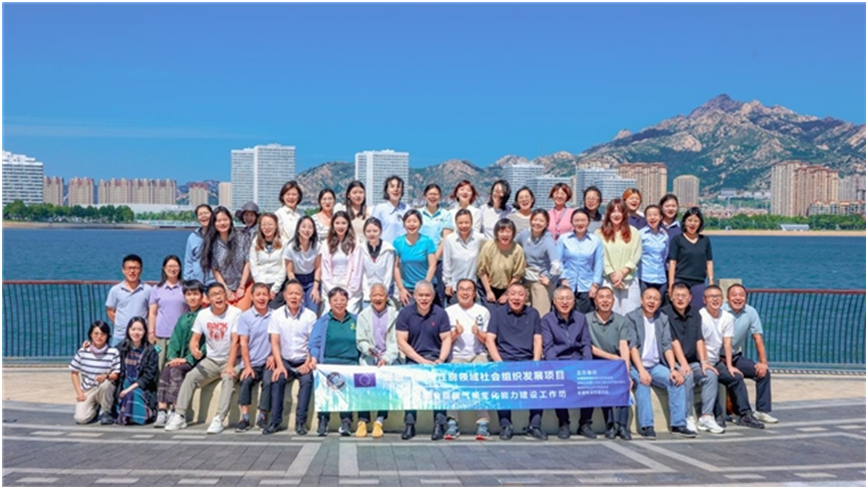
社会组织能力建设工作坊在青岛举办
Qi Lu Wan Bao· 2025-09-23 04:56
Group 1 - The workshop aimed to enhance the capacity and effectiveness of social organizations in addressing climate change [1][4] - Key discussions included the importance of compliance and asset protection in public welfare, as emphasized by experts [3] - The event featured practical activities, such as visiting fishing villages and participating in beach cleaning, to integrate theory with practice [3] Group 2 - The workshop provided support for social organizations to engage in climate action from various perspectives, including policy, law, and local practices [4] - Future collaborations are anticipated to promote green, equitable, and sustainable climate governance [4]
纪念联合国成立80周年高级别会议举行
Xin Hua She· 2025-09-22 22:35
Group 1 - The core message emphasizes the need to reaffirm commitment to multilateralism and the principles of the UN Charter, highlighting the importance of strengthening the role of the United Nations in addressing global challenges such as war, hunger, and climate change [1] - UN Secretary-General António Guterres stated that the principles of the UN Charter are facing unprecedented attacks and called for collective action among member states to implement key agendas like the "Future Pact" and the "UN 80th Anniversary Reform Initiative" [1] - The President of the 80th UN General Assembly, Annalena Baerbock, noted that the 80th anniversary of the UN marks a critical turning point, stressing the importance of choosing the right path to demonstrate the ability to work together [1] Group 2 - Former Liberian President Ellen Johnson-Sirleaf acknowledged the underperformance of the international multilateral framework established to protect future generations from war and urged nations to make concrete commitments to protect civilians and create opportunities for youth [2] - Former Norwegian Prime Minister Gro Harlem Brundtland pointed out that over 80% of sustainable development goals are off track, emphasizing the indispensable role of the UN in addressing climate change and gender equality [2]
推动全球科技开放合作迈出更大步伐——2025浦江创新论坛主论坛探讨如何应对全球性挑战
Ke Ji Ri Bao· 2025-09-22 09:26
Group 1 - The 2025 Pujiang Innovation Forum emphasized the importance of technological innovation as a key force for addressing global challenges and promoting development, with the Chinese government prioritizing strategies to enhance scientific and technological capabilities [1] - China aims to build a global scientific community through enhanced bilateral and multilateral cooperation, focusing on technology exchange and collaborative platforms such as joint laboratories and innovation cooperation zones [1] - The forum highlighted the significance of international scientific collaboration in addressing major global health challenges, exemplified by the development of a novel cell therapy for chronic hepatitis B involving teams from Germany, Singapore, and China [2] Group 2 - The successful development of the TCR-T cell therapy for chronic hepatitis B represents a milestone in treatment options, potentially offering a solution to the lifelong medication challenge faced by patients [2] - The forum underscored the necessity of diverse thinking in scientific research, advocating for the establishment of more international research platforms in China to facilitate long-term collaboration among scientists [3] - China is actively participating in major international scientific projects, such as the International Thermonuclear Experimental Reactor and the Square Kilometer Array, which are crucial for advancing knowledge and addressing significant scientific challenges [4]
生态环境部:全国碳排放权交易市场累计成交额达489.61亿元
Qi Huo Ri Bao Wang· 2025-09-19 08:48
Core Insights - The press conference highlighted the importance of high-level ecological protection in promoting high-quality development, with a focus on climate change as a significant global challenge [1][2] - The Ministry of Ecology and Environment has made substantial progress in establishing a national carbon market, which is now the largest in the world, covering over 60% of the country's carbon dioxide emissions [1][2] Group 1: Carbon Market Development - The national carbon emissions trading market has achieved a cumulative trading volume of 714 million tons and a total transaction value of 48.961 billion yuan as of September 18, 2025 [2] - The market has seen improvements in the standardization, accuracy, and timeliness of carbon emissions data statistics [2] - The carbon market is recognized as a significant measure for achieving carbon peak and carbon neutrality, enhancing China's efforts to address climate change [2] Group 2: Regulatory Framework - The Ministry has initiated the establishment of a voluntary greenhouse gas reduction trading market and has issued several key documents to support the carbon market's development [1] - Over 30 regulatory measures have been formulated, contributing to a multi-tiered and relatively complete regulatory framework for the carbon market [1]