
产业升级

Search documents
国机精工(002046) - 002046国机精工投资者关系管理信息20260126
2026-01-26 08:20
Company Overview - The history of Guoji Precision Engineering dates back to 1958 with the establishment of the Luoyang Bearing Research Institute and Zhengzhou Abrasives Research Institute, and it was listed on the Shenzhen Stock Exchange in 2005 [2][3] - The company focuses on precision manufacturing, driven by technological innovation, providing key products, technologies, and services that meet national strategic needs [2][3] Business Segments and Applications - Guoji Precision operates in five major sectors: new materials, basic components, machine tools, high-end equipment, and supply chain management, with applications in aerospace, military, electronics, renewable energy, high-end machine tools, and automotive industries [2][3] - The company has achieved over 2,400 research results and revised 1,076 national and industry standards since its inception [3] Financial Performance - In the first three quarters of 2025, the company reported a revenue of CNY 2.296 billion, a year-on-year increase of 27%, with core products like special and precision bearings and superhard materials contributing to over 50% growth [3][4] - Gross profit reached CNY 797 million, a 20% increase year-on-year, while net profit was CNY 245 million, up 15.4% [3][4] Business Highlights Bearing Business - The special bearing segment is a key driver of profit growth, with a 90% supply rate for key products in aerospace applications [4] - The wind power bearing business has seen significant growth, with the company developing the first domestically produced 8 MW and 18 MW wind power bearings [4] Abrasives Business - The superhard materials segment continues to grow, with the company being a pioneer in the industry since 1963 [5] - The company has developed high-efficiency processing tools for the semiconductor industry, addressing critical material needs [5] Strategic Focus and Future Outlook - The company aims to consolidate its existing advantages in bearings and abrasives while exploring new high-growth areas such as commercial aerospace and humanoid robot bearings [8] - Guoji Precision plans to maintain a dividend payout ratio of no less than 40%, with a target to rank in the top 70% of listed companies by dividend payout rate by 2024 [8][9] Governance and Investor Relations - The company emphasizes transparency in governance and investor relations, establishing a trust system that includes information disclosure and ESG governance [9] - It actively engages with investors through various channels to enhance understanding of its core value drivers and competitive advantages [9]

去年广州外贸规模超1.2万亿元 出口突破8000亿元 同比增长17.8%
Nan Fang Ri Bao Wang Luo Ban· 2026-01-26 08:16
Core Insights - In 2025, Guangzhou's foreign trade reached a record high of 1.2 trillion yuan, marking a 10.4% year-on-year increase, with exports surpassing 800 billion yuan, up 17.8%, leading Guangdong province in growth [1] - Guangzhou is emerging as a strong international consumption center, with imports from over 60 countries and regions showing double-digit growth, and consumer goods imports nearing 100 billion yuan [1] - The number of foreign trade enterprises in Guangzhou exceeded 30,000, with private enterprises accounting for over 60% of the total foreign trade value, maintaining double-digit growth [1] Trade Dynamics - Guangzhou's foreign trade enterprises are diversifying their markets, achieving positive growth in trade with over 190 countries and regions, with 33 trading partners exceeding 10 billion yuan in trade volume [2] - Trade with the EU and ASEAN surpassed 200 billion yuan, with year-on-year growth of 19.2% and 28% respectively, while trade with Belt and Road countries grew by 22.5% [2] - Emerging markets in the Middle East, Latin America, and Africa showed faster growth rates than the overall trade growth [2] Product and Market Trends - Exports of "new three samples" products reached 26.25 billion yuan, a 68.3% increase, with electric vehicle exports growing by 70.3% [2] - Guangzhou imported aircraft and related materials worth 21.25 billion yuan, with an increase of over 9 billion yuan [2] - New business models such as cross-border e-commerce and market procurement trade are rapidly developing, with market procurement trade exports at 10.95 billion yuan, up 39.5%, and cross-border e-commerce trade exceeding 200 billion yuan [2]
外资看多2026中国经济,长线资金抢筹核心资产
Huan Qiu Wang· 2026-01-26 07:18
Group 1 - The core viewpoint of the articles highlights the optimistic outlook for China's economy in 2026, driven by structural upgrades in exports and recovery in domestic consumption, which are expected to provide significant certainty for global economic growth [1][3]. - International financial institutions are increasingly confident in China's economic resilience, with reports indicating a fundamental shift in export drivers from cost advantages to technology and supply chain efficiency [1][3]. - The competitiveness of Chinese exports is being enhanced through product upgrades and innovation, particularly in high-value and high-tech sectors such as automobiles, batteries, solar energy, and grid equipment [1][3]. Group 2 - The recovery and upgrade of domestic consumption are seen as key drivers of economic growth, with evidence of structural transformation in demand patterns [3]. - The stability of China's industrial and supply chains is a significant advantage for multinational companies, making China an attractive market for foreign investments [3]. - Foreign institutions are actively reallocating assets towards Chinese markets, with a shift in focus from short-term valuation benefits to long-term growth potential driven by industrial transformation [3][4]. Group 3 - Long-term capital is increasingly securing cornerstone investments in high-quality Chinese assets, indicating a shift from short-term holdings to long-term allocations [4][5]. - The average subscription rate for cornerstone investors in Hong Kong IPOs has reached 39.15%, the highest in two years, reflecting growing international capital interest in China's industrial upgrades [4]. - The focus of international long-term capital is shifting from price-driven strategies to value-driven approaches, emphasizing the importance of companies' positions in the supply chain, technological barriers, and future profitability [5].

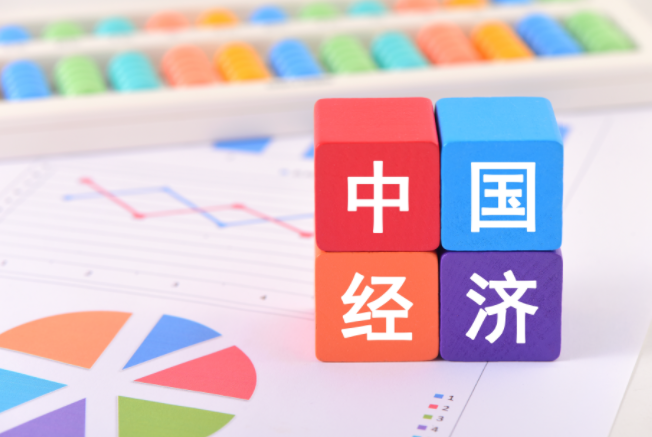
聚焦健康与智能领域!山东集中批复设立4所高职院校!
Qi Lu Wan Bao· 2026-01-26 06:15
Core Viewpoint - The Shandong Provincial Government has approved the establishment of four new vocational colleges, focusing on health and technology sectors, to meet regional industry demands and enhance local talent development [1][8][10]. Group 1: Establishment of New Colleges - The four new colleges include Jining Health and Wellness Vocational College, Qingdao Health Technology Vocational College, Dezhou Intelligent Technology Vocational College, and Binzhou Health Technology Vocational College [1][4]. - Jining Health and Wellness Vocational College will have a student capacity of 7,500 and will offer up to 6 vocational programs [2][9]. - Qingdao Health Technology Vocational College will be the largest with a student capacity of 12,000 and will offer up to 7 vocational programs [4][9]. Group 2: Management and Funding - All four colleges will operate under a dual management system involving both provincial and municipal authorities, with local governments responsible for funding [8][9]. - Binzhou Health Technology Vocational College is the only private non-profit institution among the four, managed by a board of directors and funded by the board [8]. Group 3: Alignment with Regional Needs - The new colleges are designed to align closely with current industrial upgrades and public needs, particularly in the health sector and intelligent manufacturing [8][10]. - The establishment of these colleges is part of a broader strategy to optimize higher education in Shandong, filling gaps in regional talent cultivation for economic development [10].
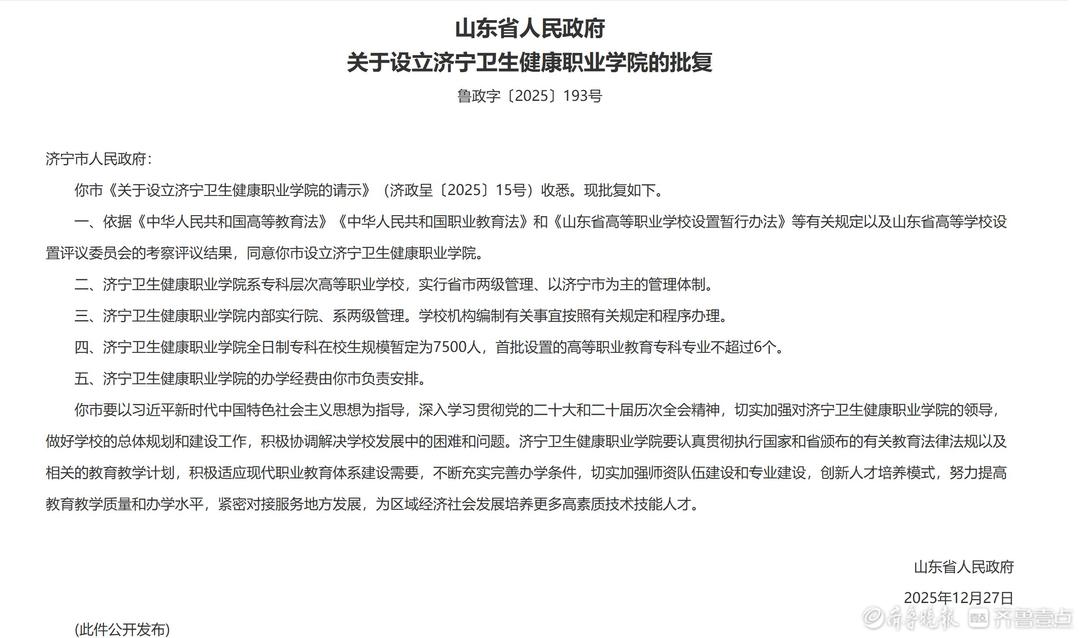
中国反弹 vs 日本平稳:解码2025年中日创投市场温差
3 6 Ke· 2026-01-26 05:22
Core Insights - The 2025 equity investment markets in China and Japan exhibit distinct evolutionary paths amid complex macroeconomic and geopolitical contexts, with China showing a "V-shaped rebound" and Japan experiencing stable growth with a focus on restructuring [3] Group 1: Market Size and Activity - China saw a significant increase in transaction volume, with 9,058 investment transactions in 2025, a 28% year-on-year growth, surpassing the 2021 peak, indicating strong market recovery [5] - The total investment amount in China was 821.368 billion RMB, a slight decrease of 0.44% year-on-year, reflecting a "volume increase, price stability" trend [6] - Japan's VC market remained stable with a total investment of approximately 761.3 billion JPY (about 37 billion RMB), while the PE market reached a historic high, expected to exceed 40 billion USD (about 290 billion RMB) [8][9] Group 2: Financing Rounds and Structure - In China, early-stage financing (seed/angel/A rounds) accounted for 67% of total investments, indicating a dominance of early-stage funding [11] - The middle-stage financing (B/C rounds) saw a drastic decline, creating a "barbell" structure with significant early and late-stage funding but a lack of support for growth-stage companies [12] - Japan experienced an 18% decline in Series A funding, while Series B funding increased by 11%, indicating a shift towards verified quality projects [13][14] Group 3: Funding Sources and Attributes - In China, state-owned enterprises (SOEs) dominated with a penetration rate of 44.55%, marking a historical high, while RMB funds became predominant as USD funds receded [16][17] - Japan's market saw a rise in corporate venture capital (CVC) investments, increasing by 32 billion JPY, alongside a surge in foreign investments from global PE giants like Blackstone and KKR [18][19] Group 4: Exit Environment: IPO vs M&A - China's IPO market rebounded with 277 IPOs, a 26% increase year-on-year, while M&A transactions totaled 955, indicating a growing emphasis on diverse exit strategies [20][22] - Japan's IPO market faced challenges with only 108 IPOs, the lowest in a decade, while M&A activity surged with 167 cases, reflecting a shift towards mergers as a primary exit route [23][24] Group 5: Investment Tracks and Hotspots - In China, key investment areas included advanced manufacturing, AI, and healthcare, while traditional sectors like consumption and education saw reduced interest [25] - Japan focused on deep tech and digitalization, with funding favoring projects with high technological barriers [26][27] Group 6: Matthew Effect and Capital Concentration - In China, 1.43% of leading companies (raising over 1 billion RMB) captured 40.48% of total funding, highlighting a significant concentration of capital [28] - Japan's funding distribution became more selective, with a decrease in the median size of financing rounds from 77.6 million JPY to 62.4 million JPY [30] Group 7: Common Features - Both markets are transitioning from a focus on scale to quality, with China emphasizing high-quality development and Japan focusing on efficiency optimization [32] - The head effect is intensifying, with capital increasingly concentrated in top-tier assets, indicating a challenging environment for lower-tier projects [32] - Strategic capital is replacing purely financial capital, with China seeing a rise in government-led funds and Japan witnessing the strong emergence of CVCs [32] - Both countries are experiencing significant policy interventions to guide capital flows and reshape market rules [34]
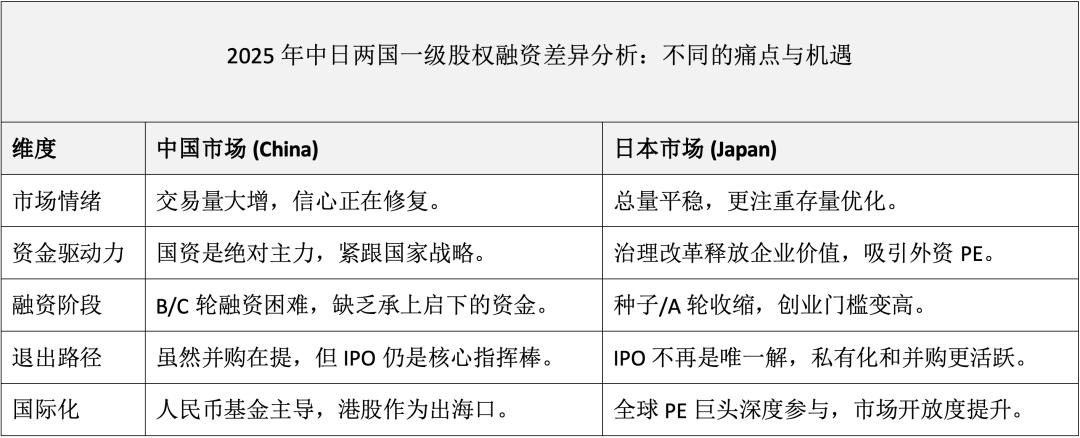
贵州省两会启幕 政协委员登上“委员通道”话发展路径
Zhong Guo Xin Wen Wang· 2026-01-26 04:45
Group 1: Technological Innovation and Industry Development - Guizhou is transitioning from a "follower" to a "pathfinder" in technology innovation, particularly in the black phosphorus new materials sector, which is expected to drive a trillion-level industry [2] - The "3M model" developed by Guizhou Minzu University, which involves collaboration between the university, top universities, and enterprises, is enhancing research and development capabilities [2] - The Guizhou aviation industry is focusing on independent manufacturing capabilities and has established an innovation system to enhance self-control over the industrial chain, aiming to break foreign technology monopolies [3][4] Group 2: Agricultural Modernization - Guizhou's agricultural modernization is leveraging modern technology to adapt to mountainous terrain, transforming local specialties into large-scale industries [6] - The Guizhou Academy of Agricultural Sciences has developed over 300 new crop varieties and expanded cultivation areas to 50 million mu, significantly enhancing agricultural productivity [7] Group 3: Cultural and Tourism Integration - Guizhou is aiming to become a world-class tourism destination by integrating cultural and tourism industries, with significant growth in visitor numbers, including a 50% increase in inbound tourists in 2025 [10][11] - The "Shuai Guizhou" IP is revitalizing local culture through various events and activities, contributing to the local economy [10] Group 4: Traditional Industry Transformation - Traditional industries in Guizhou are undergoing transformation through automation and technological upgrades, resulting in a 15% increase in production efficiency and a 5% improvement in product quality [8][9] - The focus is on integrating traditional craftsmanship with modern technology to enhance competitiveness in the market [9]
茂名高新区举办智能制造招商推介会
Zhong Guo Hua Gong Bao· 2026-01-26 04:27
中化新网讯1月16日,茂名高新区举办2026年智能制造招商推介会。大陆智源、无限聚合、中科星图等6 家企业进行项目路演,辖区17家企业参会。路演企业聚焦工业机器人、具身智能控制、低空经济服务平 台等领域,现场展示了多项前沿技术与创新应用。 "今年是'十五五'开局之年,要加快培育高新区人工智能产业,进一步推动茂名高新区产业升级、战略 性新兴产业培育和未来产业发展。"茂名高新区党工委副书记、管委会主任梁小东介绍,依托千亿级绿 色石化产业集群优势,茂名高新区正加速推动"智能产业化"与"产业智能化"双向赋能。茂名高新区将立 足绿色石化、精细化工、钛锆新材料等产业,聚焦石化行业安全巡检、设备维护等领域,重点布局工业 机器人、智能生产线,鼓励区内企业与人工智能龙头企业合作,加快技术产品创新,开辟人工智能产业 发展新赛道。 梁小东透露,为筑牢产业发展根基,茂名高新区正加快中科(茂名)智能制造加速器、清研新材料加速基 地(二期)等创新载体建设,谋划推进共青湖创新中心,构建"政产学研金"高效对接平台。 ...
吉林石化以科技创新赋能产业升级
Zhong Guo Hua Gong Bao· 2026-01-26 03:25
Core Viewpoint - In 2025, Jilin Petrochemical emphasizes technological innovation as a core element of its development strategy, achieving significant results in scientific research and product development, thereby enhancing its self-reliance in high-level technology [1][2][3] Group 1: Research and Development Achievements - Jilin Petrochemical established a comprehensive research system linking strategic guidance, scientific research breakthroughs, and results transformation, completing 51 technology projects and achieving 12 successful transformations in 2025 [1] - The company reported a total economic benefit of over 60 million yuan and direct revenue exceeding 46 million yuan, creating a virtuous cycle of "research empowering production and production feeding back into research" [1] Group 2: Key Technological Breakthroughs - The successful development of large-tow carbon fiber production technology fills a domestic technological gap, while breakthroughs in ethylene-propylene rubber were achieved through collaboration with domestic universities, overcoming 56 key technical challenges [2] - The stable operation of the second industrialization test for ENB-containing ethylene-propylene rubber products demonstrated the effectiveness of domestically produced catalysts, expanding product application areas and addressing high-quality development constraints in the industry [2] Group 3: Product Upgrades and Market Positioning - Jilin Petrochemical focused on high-end product development in key areas such as ABS, synthetic rubber, and polyolefins, achieving significant advancements in product quality, with the 0215H product passing RTI certification and large-diameter polyethylene pipe materials receiving national PE100 grade certification [3] - The commissioning of a new 400,000-ton/year high-density polyethylene facility enabled the successful development of new product grades, enhancing the product matrix and extending the value chain [3] Group 4: Innovation Mechanisms and Ecosystem - The continuous emergence of major technological innovations is supported by a robust institutional mechanism, addressing common challenges such as insufficient innovation motivation and low collaborative efficiency [3] - Jilin Petrochemical formed innovation alliances with universities and research institutes, implemented research management mechanisms like "ranking and leading," and improved result transformation mechanisms to accelerate the transition of laboratory technologies to production lines and markets [3]
边角料里“淘”出百亿产业
Ren Min Ri Bao· 2026-01-26 03:05
Core Viewpoint - The steel tape measure industry in Yu County, Henan, has evolved from a small-scale, family workshop model to a comprehensive industrial ecosystem, producing 1.5 billion units annually, accounting for 85% of China's market and over 65% of the global market, with an annual output value of 12 billion yuan [3][4]. Group 1: Industry Development - Yu County has over 2,000 steel tape measure companies, showcasing a complete industrial chain from R&D to production and sales [3]. - The industry has seen significant innovation, with companies introducing high-end products such as laser measuring tape and hollow steel tape measures, enhancing functionality and aesthetic appeal [4][7]. - The introduction of smart automation production lines has increased production efficiency by over 50% [6]. Group 2: Product Innovation - Companies are focusing on R&D to create differentiated and higher-quality products, responding to market demands and leading innovation [5][6]. - The hollow steel tape measure, which has 39 patents and a lifespan three times longer than standard models, has seen sales grow from 6 million units in 2022 to over 30 million units projected for 2025 [6][8]. - New product features include laser measurement modules and multifunctional designs, catering to diverse user needs [7]. Group 3: Market Expansion - Companies are actively expanding their market presence through cross-border e-commerce platforms, achieving stable shipments in the European and American markets [8][10]. - The establishment of a bonded logistics center in Yu County has facilitated steel tape measure exports, enhancing the region's foreign trade capabilities [9]. - Companies are also building overseas warehouses to improve product exposure and expedite shipping [9][10]. Group 4: Brand Development - The industry is shifting towards brand creation, with companies like Yu County's Xuan Shi focusing on building brand recognition and increasing product value [11][12]. - The dual-brand strategy allows companies to operate under different trademarks in domestic and international markets, enhancing brand presence [12][13]. - Efforts to participate in global exhibitions and obtain international certifications are underway to boost brand visibility and support high-end market transitions [13].
历史性突破!东北第一座万亿GDP城市,来了
3 6 Ke· 2026-01-26 02:58
Core Viewpoint - Dalian has officially entered the "trillion GDP club," becoming the first city in Northeast China to achieve this milestone, with a projected GDP of 10,002.1 billion yuan by 2025, reflecting a year-on-year growth of 5.7% at constant prices [1]. Economic Performance - In 2024, Dalian's GDP reached 9,516.9 billion yuan, indicating it was on track to become a trillion-yuan city [1]. - Dalian's GDP growth rate for the first three quarters of the previous year was 6%, showcasing a robust growth momentum [1]. - The city's second industry is expected to contribute 3,532.5 billion yuan to the GDP in 2025, with a growth rate of 7.7%, the highest among the three industries [3]. Industrial Growth - The industrial sector's steady growth is a crucial support for Dalian's achievement of a trillion GDP [4]. - The petrochemical industry saw an 8.9% increase in value added, while the equipment manufacturing sector grew by 15.4%, with the railway and shipbuilding industry experiencing a remarkable 57.5% growth [4]. - High-tech manufacturing grew by 13.9%, with computer and office equipment manufacturing surging by 78.2% and pharmaceutical manufacturing increasing by 30.9% [5]. Structural Transformation - Dalian's economic structure still relies heavily on petrochemicals, equipment manufacturing, shipbuilding, and electronic information, indicating a need for further industrial upgrading [6]. - The city is actively transitioning towards "smart manufacturing," with initiatives to enhance advanced manufacturing and foster specialized enterprises [6]. - Notable advancements include the launch of the world's first ultra-large turntable bearing and the completion of a domestic 450,000 tons/year polypropylene mixing and granulating machine [6]. Investment Trends - Manufacturing investment in Dalian is projected to grow by 2.8% in 2025, while infrastructure investment is expected to decline by 11.9% [6]. - Investment in technological transformation of industrial enterprises is anticipated to rise by 14.5% [6]. Emerging Industries - Dalian is focusing on developing new industry clusters, including advanced manufacturing, new-generation automobiles, high-end bearings, and rail transit, with expected outputs of 1,000 billion yuan, 200 billion yuan, and 180 billion yuan respectively [6]. - The city aims to develop new information technology and clean energy industry clusters, targeting outputs of over 2,000 billion yuan and 610 billion yuan [8]. Regional Significance - Dalian's entry into the trillion GDP club marks a significant breakthrough for Northeast China, with Shenyang expected to follow suit soon [9]. - The historical context shows that major cities in Northeast China have seen a decline in their national rankings, emphasizing the need for sustainable competitiveness [12][15]. - The revitalization of Northeast China is increasingly reliant on the leading role of its major cities, particularly Dalian and Shenyang [25][30].
