通用人工智能(AGI)

Search documents
50公里:硅谷通往AGI的距离
3 6 Ke· 2025-12-11 10:00
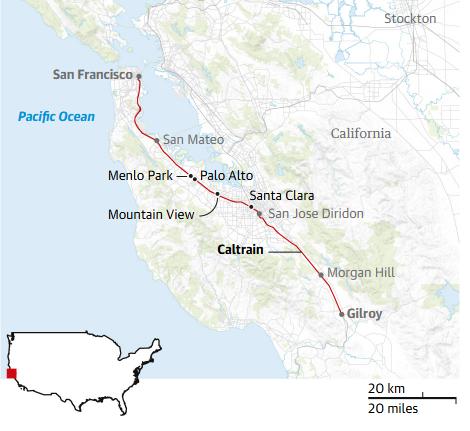
Core Insights - The article discusses the emergence of a "Tech Corridor" in Silicon Valley, which is significantly influencing the competition landscape of the AI era, particularly in the pursuit of Artificial General Intelligence (AGI) [1][3] - The competition is characterized by unprecedented speed and intensity, driven by substantial capital investments, with predictions suggesting AGI could be achieved as early as 2026 or 2027 [4][5] Group 1: Investment and Competition - The competition for AGI is fueled by massive investments from venture capital, which have more than doubled in the past year, raising concerns about a potential bubble [5] - Citigroup has raised its forecast for AI data center spending to $2.8 trillion by 2030, surpassing the annual economic output of countries like Canada, Italy, or Brazil [5] - Major players in the AI space, including OpenAI and Anthropic, have valuations exceeding $500 billion, contingent on the stability of the predicted AI bubble [5] Group 2: Key Players and Locations - Key locations along the Tech Corridor include Santa Clara, Mountain View, Palo Alto, Menlo Park, and San Francisco, each hosting significant AI companies and research institutions [4][5] - Santa Clara is home to Nvidia, whose market value has surged 30 times since 2020, reaching $4.3 trillion, and is a hub for AI data centers operated by major tech firms [6][8] - Mountain View hosts Google DeepMind, which is at the forefront of AI technology and is grappling with intense competition from emerging players like Elon Musk's xAI and others [11][13] Group 3: Workforce and Talent Dynamics - The workforce in the AI sector is increasingly young, with many key roles filled by individuals in their twenties, such as Isa Fulford at OpenAI, who is focused on developing autonomous AI models [21][25] - The influx of young talent is driven by significant donations to institutions like Stanford University, which continues to supply skilled graduates to leading AI companies [21][23] - Concerns have been raised about the lack of experience among younger employees, which may lead to limitations in critical thinking and decision-making [26] Group 4: Ethical and Regulatory Challenges - There is a growing recognition of the potential risks associated with AGI, with Google DeepMind's researchers warning about the serious harm AGI could cause to humanity [14][15] - The absence of comprehensive AI legislation in the U.S. and U.K. has created a regulatory vacuum, prompting industry leaders to self-regulate and establish boundaries for technology development [17][18] - Calls for international standards to prevent unacceptable risks from AI have emerged, with prominent figures advocating for a consensus by 2026 [33][34]



OpenAI 盲测新模型不如 Nano Banana Pro?曝 Altman 要暂停 Sora,死磕 ChatGPT
3 6 Ke· 2025-12-11 08:14
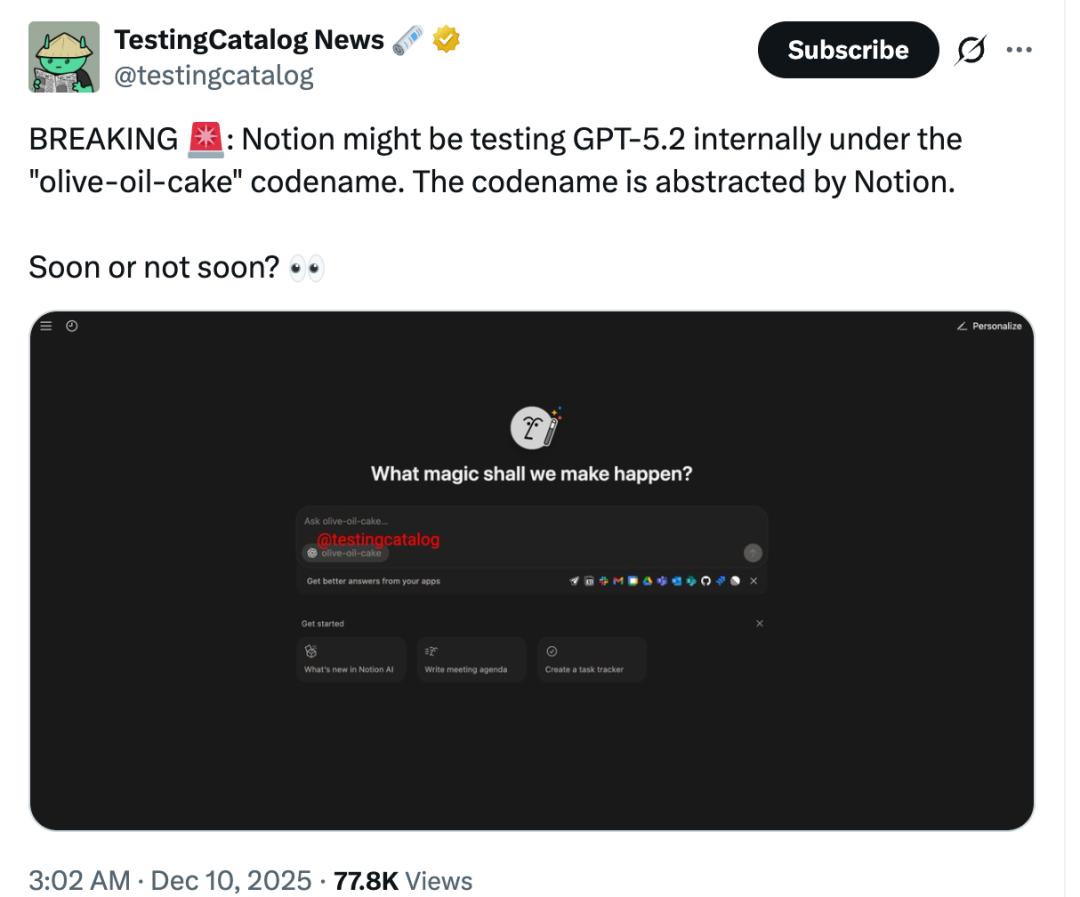
近日,有网友发现 Notion 可能正在内部测试 GPT-5.2,代号为"olive-oil-cake"。此前,有网友表示 GPT-5.2 最新发布日期是当地时间周四。 此外,x 上还曝出,OpenAI 已悄悄已在 Design Arena 与 LM Arena 平台开启盲测新的图像生成模型,新模型名称:"Chestnut"和"Hazelnut",结果接近 Nano Banana Pro。 不过,上面流出来的生成图并没有获得网友的好评。"在我看来,图像质量仍然不如 Nano Banana Pro。它们看起来塑料感很强。我希望它不是基于 4o 版 本,但它比 GPT Image 1 好多了。"有网友称。 爆料博主也认为它仍然基于 4o 版本。"不过,相比 GPT-Image-1,这仍然是一个巨大的飞跃。我同意它目前还达不到 Nano Banana Pro 的水平。但我们需 要等待正式版发布才能了解所有设置和功能。" 有分析称,此次盲测通常是 OpenAI 重大模型发布前 1-3 周的常规流程。结合此前流传的路线图,新一代图像模型极有可能与传闻中的 GPT-5.2 同步推 出。 据外媒报道,当 OpenAI CE ...
OpenAI 盲测新模型不如 Nano Banana Pro?曝 Altman 要暂停 Sora,死磕 ChatGPT
AI前线· 2025-12-11 07:28
作者 | 褚杏娟 近日,有网友发现 Notion 可能正在内部测试 GPT-5.2,代号为"olive-oil-cake"。此前,有网友表示 GPT-5.2 最新发布日期是当地时间周四。 此外,x 上还曝出,OpenAI 已悄悄已在 Design Arena 与 LM Arena 平台开启盲测新的图像生成模 型,新模型名称:"Chestnut"和"Hazelnut",结果接近 Nano Banana Pro。 根据网友的说法,新模型具有与 Nano Banana Pro 类似的全球知识、可以生成与 Nano Banana Pro 质量非常相似的名人自拍照,并且能够很好地在图像中编写代码。 不过,上面流出来的生成图并没有获得网友的好评。"在我看来,图像质量仍然不如 Nano Banana Pro。它们看起来塑料感很强。我希望它不是基于 4o 版本,但它比 GPT Image 1 好多了。"有网友 称。 爆料博主也认为它仍然基于 4o 版本。"不过,相比 GPT-Image-1,这仍然是一个巨大的飞跃。我同 意它目前还达不到 Nano Banana Pro 的水平。但我们需要等待正式版发布才能了解所有设置和功 能 ...

吕本富:在良性竞争中共同拓展AI边界
Huan Qiu Wang Zi Xun· 2025-12-10 23:08
Core Insights - The article discusses the strategic advancements in the AI sector by both China and the United States, highlighting a competitive yet complementary relationship that is shaping the global AI landscape [1][4]. Group 1: AI Development Strategies - China has implemented policies to accelerate the cultivation of 22 key AI application scenarios, building on the "AI+" initiative, while the U.S. has launched the "Genesis Project," marking a significant mobilization of federal scientific resources since the Apollo program [1]. - The U.S. tends to adopt a closed-source approach focusing on general capabilities and maintaining commercial advantages through technological barriers, whereas China combines open-source and closed-source strategies, emphasizing the integration of technology with real-world applications [1][4]. Group 2: Competitive Dynamics - The article argues that the U.S. underestimates China's AI innovation capabilities, as evidenced by Chinese models like DeepSeek-V3.2 and Baidu's ERNIE-5.0-Preview, which have achieved competitive performance despite U.S. restrictions on advanced GPUs [3]. - The competition in AI is evolving from controlling single supply chain segments to a comprehensive integration of chips, frameworks, models, and application services, emphasizing the need for systemic innovation and ecosystem development [3]. Group 3: Unique Aspects of China's AI Path - China's AI development is uniquely driven by real-world scenarios, allowing it to define technological needs and create new model architectures that address challenges not encountered in Western lab environments [4]. - The article posits that the competition between the U.S. and China can lead to a beneficial coexistence, where breakthroughs in one country can provide valuable insights for the other, necessitating collaboration in key areas to mitigate risks and accelerate technological progress [4][5]. Group 4: Future of AI and Global Cooperation - The future of AI requires significant investment across the entire stack, and no single entity can maintain a leading edge independently, highlighting the importance of technology flow and market openness [5]. - The article emphasizes that AI safety, ethics, and governance are global challenges that require dialogue and cooperation between the U.S. and China, advocating for a rules-based competitive environment to manage risks effectively [5][6].
人工智能赶考
Bei Jing Shang Bao· 2025-12-10 12:13
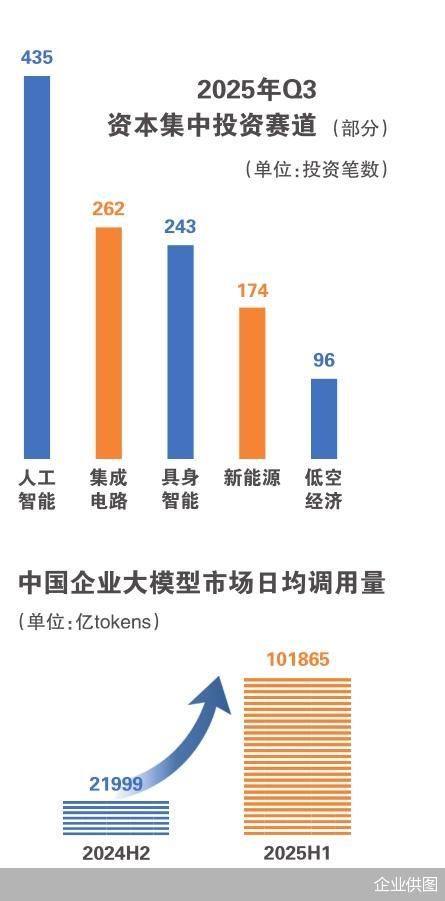
Core Insights - By 2025, China's AI industry is at a historical turning point, with generative AI users reaching 515 million by June 2025, an increase of 266 million from December 2024 [1] - The Chinese government has outlined a clear direction for AI development through the "AI+" action plan, which includes six key actions and eight foundational capabilities [1] - The capital market has responded positively, with 709 investment events in the AI sector in 2025, amounting to approximately 59.145 billion yuan, which is 94.5% of the total investment in 2024 [1] Investment Trends - The AI sector has seen a significant increase in investment events, with 435 new financing events in Q3 2025, a year-on-year growth of 99% and a total financing scale of about 37 billion yuan [8] - Major AI companies have collectively raised over 10 billion yuan, with MiniMax, Xizhi Technology, and Qianli Zhijia leading the way [8] - The investment logic in AI has shifted from a focus on "dreams of winners" to a more grounded approach, emphasizing the commercial viability of certain AI sectors [2] Market Dynamics - The competition landscape in the AI industry has become increasingly complex, with both tech giants and startups competing on the same level [11] - The user base for AI-native apps reached 287 million by September 2025, indicating a growing acceptance and integration of AI technologies in daily applications [12] - The demand for AI hardware is also on the rise, with IDC predicting that China's smart terminal market will exceed 900 million units by 2026, reflecting a shift towards AI-driven productivity [16] Technological Advancements - The average daily usage of large models in China exceeded 10 trillion tokens in the first half of 2025, marking a 363% increase from the second half of 2024 [14] - Large models are becoming the core engine for digital and intelligent upgrades in enterprises, with applications in various scenarios such as enhanced Q&A and document processing [14] - The integration of AI technologies into hardware is creating new commercial opportunities, as seen with the successful sales of AI-powered consumer robots [16] Future Outlook - The "technology-industry-capital" cycle is expected to deepen, with the potential for broader development in the AI sector as technology matures and application scenarios expand [19] - Companies are increasingly focusing on achieving a unified value proposition that encompasses technological, industrial, and commercial value to thrive in the evolving AI landscape [19]
LLM距离AGI只差一层:斯坦福研究颠覆「模式匹配」观点
机器之心· 2025-12-10 10:30
机器之心报道 编辑:杨文、泽南 有关大语言模型的理论基础,可能要出现一些改变了。 斯坦福发了篇论文,彻底颠覆了「LLM 只是模式匹配器」的传统论调。 它提出的不是扩展技巧或新架构,而是一个让模型真正具备推理能力的「协调层」。 核心观点:AGI 的瓶颈在于协调,而非规模 人工智能界正因围绕大语言模型本质的争论而分裂。一方面,扩展派认为 LLMs 足以实现 AGI;另一方 面,有影响力的批评者认为 LLM「仅仅是模式匹配器」,在结构上不具备推理、规划或组合泛化能力,因 此是死胡同。 作者认为这场争论建立在一个错误的二分法之上,并提出一个颠覆性极强的核心观点: LLM 的失败不是因 为缺乏推理能力,而是因为我们缺少将其模式与目标绑定的系统。 为了解释这一点,作者用了一个捕鱼隐喻。 海洋代表模型庞大的模式库,渔夫不用鱼饵就撒网,收获的只是最常见的鱼类(训练数据中的通用模 式)。批评者谴责这些未锚定的输出,但他们观察到的只是未加诱饵的捕捞所产生的原始统计基线,这不 是系统损坏,而是系统在默认模式下的自然表现。 然而,智能行为不仅仅是撒网,它还涉及下饵和过滤。如果诱饵过于稀疏,它就无法吸引特定、稀有的 鱼,海洋的先验仍然 ...
华尔街日报:谷歌带来最严峻挑战,OpenAI“重大战略调整”:“增强用户活跃”优先于“实现AGI”
美股IPO· 2025-12-10 03:38
Core Viewpoint - OpenAI has initiated a "red code" alert in response to increasing competition from Google, leading to a strategic shift that prioritizes short-term commercial goals over the long-term vision of achieving Artificial General Intelligence (AGI) [1][3][4]. Group 1: Strategic Shift - OpenAI has decided to pause long-term projects, including the Sora video generator, for eight weeks to focus on improving user engagement with ChatGPT [5][6]. - The company aims to leverage user signals to enhance ChatGPT's performance on model rankings and increase user retention [3][5]. - This decision reflects an internal struggle between the commercialization team, advocating for immediate product success, and the research team, which prefers pursuing cutting-edge technological breakthroughs [5][6]. Group 2: Competitive Landscape - OpenAI faces significant challenges as Google's recent launches, such as the Nano Banana image generator and Gemini 3 model, have quickly gained market traction and outperformed OpenAI's offerings [4][8]. - The financial sustainability of OpenAI is under pressure, especially with a recent $1.4 trillion infrastructure contract that may be difficult to fulfill if user growth slows [4][8]. - OpenAI's valuation reached $500 billion, with weekly active users exceeding 800 million, necessitating a robust user growth strategy to support its operational costs [8]. Group 3: User Engagement Strategy - The "user signal" strategy, which relies on user feedback for model training, has led to high engagement but raised concerns about the potential negative impact on user mental health [9][10]. - OpenAI previously faced backlash for prioritizing user engagement over safety, leading to a temporary shift in training methods to address these issues [9][10]. - The company plans to release a new model in January that will improve image quality, speed, and personalization, marking the end of the "red code" state [10][11]. Group 4: Future Outlook - OpenAI is navigating the delicate balance between immediate commercial success and the long-term goal of AGI, similar to challenges faced by other tech giants [10][11]. - The company must find a way to manage high operational costs while addressing ethical concerns related to user safety and mental health [11].
谷歌带来最严峻挑战,OpenAI“重大战略调整”:“增强用户活跃”优先于“实现AGI”
Hua Er Jie Jian Wen· 2025-12-10 00:56
Core Insights - OpenAI is undergoing a significant strategic shift in response to increasing competition from Google, marked by the issuance of a "red code" alert by CEO Sam Altman [1][2] - The company is temporarily halting long-term R&D projects, including the Sora video generator, to focus on enhancing user engagement with ChatGPT [1][3] - OpenAI's internal debate centers around prioritizing immediate consumer product success versus the long-term goal of achieving Artificial General Intelligence (AGI) [2][4] Group 1: Strategic Adjustments - OpenAI will pause non-core projects for eight weeks to concentrate on improving ChatGPT's performance in rankings like LM Arena [3] - The decision reflects a power struggle within the company between commercialization efforts led by executives like Fidji Simo and Sarah Friar, and the research team led by Jakub Patchocki [3] - Management has rejected requests to delay the release of new models, with a new model, code-named 5.2, set to be released soon [3] Group 2: Competitive Landscape - OpenAI faces its most severe challenges since its inception, with Google's recent launches, including the Nano Banana image generator and Gemini 3 model, surpassing OpenAI's offerings [2][4] - The company risks financial strain due to a $1.4 trillion infrastructure contract if user growth continues to slow [2][4] - OpenAI's valuation reached $500 billion, with over 800 million average weekly active users, necessitating sustainable growth to support its operational scale [4] Group 3: User Engagement Strategy - Altman's emphasis on utilizing "user signals" for model training has sparked internal debate, as this approach can lead to AI models that cater excessively to user preferences [6] - The reliance on user feedback has previously resulted in mental health issues among users, prompting OpenAI to adjust its training methods to mitigate these risks [6] - Despite earlier adjustments leading to decreased user engagement, the company is now reverting to a more popular model to enhance user interaction [6] Group 4: Future Outlook - OpenAI plans to release an improved model in January that enhances image quality, speed, and personalization, aiming to exit the "red code" state [7] - The company believes that there is no fundamental conflict between broad AI tool adoption and the pursuit of AGI benefits for the public [7] - The current challenge lies in balancing technological advancements with commercial competition, high operational costs, and ethical safety concerns [7]
阿里最新架构变动!
证券时报· 2025-12-10 00:11
证券时报·券商中国记者日前获悉,阿里已成立千问C端事业群,由阿里巴巴集团副总裁吴嘉负责。 据悉,该事业群由原智能信息与智能互联两个事业群合并重组而来,包含千问APP、夸克、AI硬件、UC、书 旗等业务。 这也是今年9月宣布的额外AI基础设施投入的一部分。今年9月,吴泳铭概述了他自己推出新模型和"全栈"AI 技术的计划,这反映了阿里巴巴既要开发服务,也要开发支撑该技术的基础设施的意图。 9月24日,阿里巴巴集团CEO、阿里云智能集团董事长兼CEO吴泳铭在云栖大会演讲中表示,大模型是下一代 操作系统,而AI云是下一代计算机。也许未来全世界只会有五六个超级云计算平台。目前阿里正积极推进 3800亿元的AI基础设施建设,并计划追加更大的投入。 吴泳铭认为,实现AGI(通用人工智能)已是确定性事件,但这仅是起点,终极目标是发展出能自我迭代、 全面超越人类的ASI(超级人工智能),以解决气候、能源、星际旅行等重大科学难题。 通往超级人工智能之路分为三个阶段:一是"智能涌现",AI通过学习人类知识具备泛化智能;二是"自主行 动",AI掌握工具使用和编程能力以"辅助人",这是行业当前所处的阶段;三是"自我迭代",AI通过连接 ...

梁文锋,Nature全球年度十大科学人物!
具身智能之心· 2025-12-10 00:03
Core Viewpoint - Liang Wenfeng has been recognized as one of the top ten scientists of 2025 by the journal Nature for his significant contributions to the AI field through the DeepSeek model, which has disrupted traditional AI paradigms [3][4][8]. Group 1: DeepSeek Model and Its Impact - The DeepSeek model has dramatically reduced costs in the AI industry while enhancing the global visibility of domestic large models [9]. - DeepSeek demonstrates that high-performance models do not necessarily require vast amounts of data, parameters, or servers to achieve top-tier capabilities [10]. - The recent release of the DeepSeek V3.2 series model has achieved the highest evaluation level among current open-source models in the Agent domain [11][12]. Group 2: Liang Wenfeng's Background - Liang Wenfeng, born in 1985, excelled academically, becoming a top student in his high school and later studying electronic information engineering at Zhejiang University [14][15]. - He transitioned into quantitative investment in 2008, capitalizing on the emerging trend of quantitative trading in China, and his team quickly grew their proprietary funds to over 500 million yuan [17]. - In 2021, his firm, Huanfang Quantitative, became one of the largest quantitative private equity firms in China, managing over 100 billion yuan [19]. Group 3: Recognition of Other Researchers - Mengran Du, another researcher recognized by Nature, discovered the deepest known animal ecosystem on Earth, contributing to the understanding of extreme life and carbon cycling in deep-sea environments [25][28]. - Du's research has been published in prestigious journals and she has participated in numerous deep-sea explorations, enhancing the scientific community's knowledge of deep-sea ecosystems [33].