
数字技术

Search documents
维链通数字技术(上海)有限公司成立,注册资本5000万人民币
Sou Hu Cai Jing· 2025-07-22 21:29
Core Viewpoint - Recently, the establishment of WeChain Digital Technology (Shanghai) Co., Ltd. has been reported, with a registered capital of 50 million RMB, fully owned by Shanghai WeChain Technology Co., Ltd. [1] Company Summary - Company Name: WeChain Digital Technology (Shanghai) Co., Ltd. [1] - Legal Representative: Xu Hui [1] - Registered Capital: 50 million RMB [1] - Shareholder: Shanghai WeChain Technology Co., Ltd. holds 100% [1] - Business Scope: Includes technology services, development, consulting, data processing, cloud computing, internet security, health consulting, and various sales and management services [1] Industry Summary - Industry Classification: Information transmission, software, and information technology services, specifically in internet and related services [1] - Business Address: 15, Guyuan Road, Hongkou District, Shanghai [1] - Company Type: Limited liability company (wholly owned by a natural person) [1] - Business Duration: Until July 21, 2025, with no fixed term thereafter [1] - Registration Authority: Hongkou District Market Supervision Administration [1]
景顺报告:60%中东主权基金增配中国资产,27万亿美元押注四大创新领域!
Sou Hu Cai Jing· 2025-07-21 23:51
Core Insights - Foreign institutional investors are significantly changing their allocation strategies towards Chinese assets, with around 60% of Middle Eastern sovereign wealth funds planning to increase their investments in China over the next five years [1][3]. Group 1: Investment Trends - In addition to the Middle East, 88% of sovereign funds in the Asia-Pacific region and 80% in Africa also plan to increase their investments in China, while about 73% of North American sovereign funds hold a positive outlook towards investing in China [3]. - The main drivers for sovereign funds to increase their allocation to Chinese assets include strong returns, portfolio diversification, and improved access to foreign markets [3]. Group 2: Attractive Investment Sectors - Sovereign wealth funds are betting on China's strengths in digital technology, renewable energy, and advanced manufacturing, entering innovation-driven sectors with a sense of urgency previously directed at Silicon Valley [4]. - The most attractive investment areas in China include digital technology and software, advanced manufacturing and automation, clean energy and green technology, as well as healthcare and biotechnology [4]. - A Middle Eastern sovereign fund representative noted that China has no real competitors in the clean energy and green technology sectors, predicting that China will dominate the solar, wind, electric vehicle, and battery markets in the coming decades [4]. Group 3: Market Performance - The A-share market has shown strong performance, with the Shanghai Composite Index and the ChiNext Index reaching new highs for the year, increasing by 0.72% and 0.87% respectively [5]. - The Hong Kong stock market has also been robust, with the Hang Seng Index briefly surpassing 25,000 points, marking a 24.6% increase for the year [5]. - A major hydropower project in the Yarlung Tsangpo River basin, with a total investment of approximately 1.2 trillion yuan, is expected to boost market sentiment and support various sectors, including non-ferrous metals and steel [5].


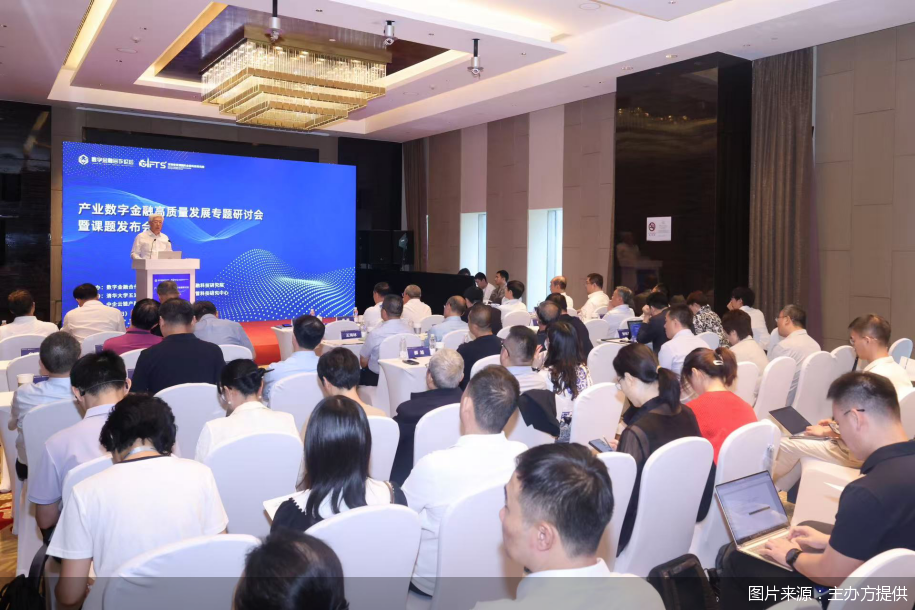
破解中小企业融资难!产业数字金融提供的不止于“钱”
Bei Jing Shang Bao· 2025-07-21 13:08
Core Viewpoint - The core of China's economy lies in the industrial economy, which is heavily reliant on financial support and digital technology, particularly for small and medium-sized enterprises (SMEs) [1] Group 1: Development of Industrial Digital Finance - The development of industrial digital finance is seen as a solution to the financing difficulties faced by SMEs, with a consensus on using digitalization to address these challenges [1][3] - Industrial digital finance is characterized by the integration of data, technology, innovation, and an ecosystem that supports its growth [1][3] - The concept of industrial digital finance emerged in 2022, evolving from previous models like supply chain finance and scenario finance [3][5] Group 2: Technological Integration and Financial Services - The integration of technologies such as IoT, blockchain, AI, and big data is crucial for breaking down information barriers between finance and industry, enabling better tracking and evaluation of assets and transactions [4] - Financial services are becoming deeply embedded in the entire industrial ecosystem, allowing for a holistic risk assessment based on the entire supply chain rather than individual enterprises [4][5] - The shift from traditional company finance to industrial digital finance reflects a transition from point-based to network-based financial services [5] Group 3: Case Studies and Innovations - Successful case studies in various regions demonstrate the effectiveness of industrial digital finance, with platforms like "泉融通" in Jinan facilitating over 30 billion yuan in financing by aggregating data from multiple sources [6][7] - Innovations such as AI-driven risk verification and the use of digital RMB for secure transactions highlight the advancements in financial technology applications [6][8] Group 4: Challenges and Recommendations - Despite positive developments, challenges remain in areas such as platform construction, service innovation, and collaboration between industry and finance [7] - Recommendations for future development include accelerating the digital transformation of SMEs, establishing risk-sharing mechanisms, and ensuring that financial institutions play a leading role in providing tailored services [7][8]
弘扬“上海精神” 共促经贸合作提质升级(弘扬“上海精神”:上合组织在行动)
Ren Min Ri Bao· 2025-07-20 21:47
Group 1: Core Perspectives - The Shanghai Cooperation Organization (SCO) aims to deepen regional development strategies and enhance economic cooperation among member states to contribute to global peace and prosperity [1][2] - The forum emphasizes the importance of regional and cross-regional cooperation in the context of global economic instability and rising protectionism [2][3] Group 2: Economic Cooperation and Development - The SCO is recognized as the largest regional international organization in terms of area and population, promoting an open, pragmatic, and mutually beneficial economic cooperation model [2] - Belarus has officially joined the SCO, expanding the scope of cooperation within the SCO Business Council [2][3] Group 3: Green Development Initiatives - Green energy transition is a key focus, with China playing a crucial role in projects like the world's largest single photovoltaic power station in the UAE [4] - Uzbekistan is actively pursuing energy cooperation with other SCO members, including solar and green hydrogen projects, and seeks to establish a green energy development roadmap [4][5] Group 4: Supply Chain and Connectivity - The forum discusses the restructuring of global supply chains and the role of digital technology in enhancing connectivity and simplifying logistics [6][7] - The report highlights significant achievements in supply chain cooperation among SCO member states, including the continuous growth of the China-Europe Railway Express [7]
汇聚澎湃力量 高质量发展蹄疾步稳 | 透视重磅数据 深度看中国经济“答卷”
Yang Shi Wang· 2025-07-19 03:37
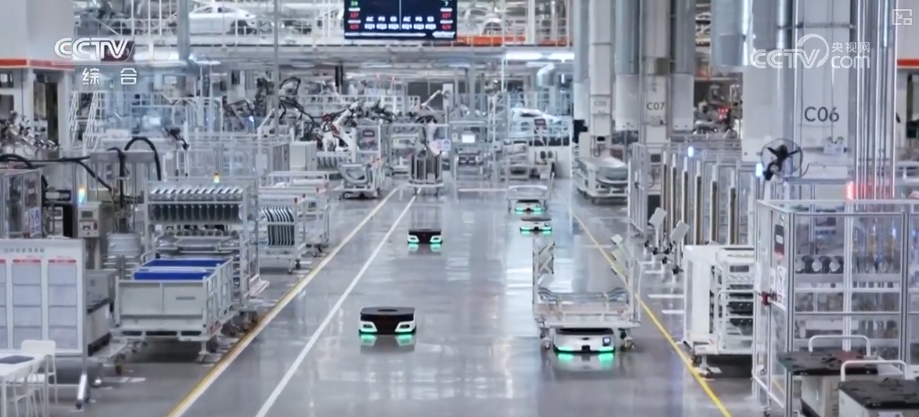
Core Viewpoint - The industrial and information technology sectors in China are expected to see steady growth in key economic indicators by the first half of 2025, with significant advancements in manufacturing and digital technologies [1][13]. Industrial Growth - In the first half of 2025, the industrial added value above designated size increased by 6.4% year-on-year, demonstrating strong resilience following a good start in the first quarter [3][14]. - The manufacturing value added accounted for 25.7% of GDP, remaining stable [3][14]. - Manufacturing investment grew by 7.5% year-on-year, supported by major engineering projects under the 14th Five-Year Plan [14]. Equipment Manufacturing - The equipment manufacturing sector continued to show robust growth, contributing 35.5% to the total industrial added value [16]. - The added value of the equipment manufacturing industry increased by 10.2% year-on-year, driving a 3.4 percentage point increase in overall industrial growth [18]. - Key products in the equipment manufacturing sector saw significant production and sales increases, with shipbuilding metrics indicating a global market share of 51.7% for completed orders, 68.3% for new orders, and 64.9% for hand-held orders [20]. Digital Technology Development - Digital technologies, including 5G and AI, are rapidly advancing, with the digital industry achieving a business revenue growth of 9.3% year-on-year, an increase of 3.4 percentage points compared to the previous year [11][16]. - The number of mobile internet users has shown double-digit growth for six consecutive months, with 5G applications integrated into 86 out of 97 major categories of the national economy [45]. Green Transformation - The deep green transformation of traditional industries is a primary task for low-carbon industrial development, focusing on steel, non-ferrous metals, petrochemicals, and building materials [24]. - The goal is to increase the proportion of recycled materials in raw materials by 2027, targeting 22% for scrap steel, 30% for scrap copper, and 25% for scrap aluminum [26]. Financial Support for Manufacturing - The national financial cooperation platform has facilitated over 1.2 trillion yuan in financing for manufacturing enterprises, with an average of nearly 34 million yuan in support per company [37]. - The A-share market raised 148.8 billion yuan for industrial enterprises through various financial instruments, marking a year-on-year increase of 51.6% [41]. Telecommunications Sector - The telecommunications sector maintained stable operations, with a 9.3% year-on-year growth in total telecom business volume, reaching 905.5 billion yuan in revenue [40][44]. - By the end of June, the number of 5G base stations reached 4.55 million, with 5G mobile phone users totaling 1.118 billion, achieving a penetration rate of over 79% [44].
上半年规上工业稳定向好 数字产业增势提速 钢铁、有色金属、石化、建材等十大重点行业稳增长方案即将出台
Zheng Quan Shi Bao· 2025-07-18 17:11
Group 1 - In the first half of the year, China's industrial added value above designated size grew by 6.4% year-on-year, with the manufacturing added value accounting for 25.7% of GDP [1] - The number of industrial enterprises above designated size reached 520,000, and profits in the manufacturing sector increased by 5.4% year-on-year [1] - The digital industry, driven by rapid advancements in digital technologies such as 5G and AI, achieved a business revenue growth of 9.3%, an increase of 3.4 percentage points compared to the same period last year [1] Group 2 - In the automotive industry, production and sales reached 15.621 million and 15.653 million units respectively, marking year-on-year growth of 12.5% and 11.4% [2] - New energy vehicles saw production and sales of 6.968 million and 6.937 million units, with year-on-year growth of 41.4% and 40.3%, making up 44.3% of total new car sales [2] - The Ministry of Industry and Information Technology plans to introduce stability growth plans for key industries such as steel, non-ferrous metals, petrochemicals, and building materials [2]
向稳、向新、向优——工业和信息化部有关负责人详解上半年工业经济
Xin Hua Wang· 2025-07-18 15:15
Core Viewpoint - The industrial economy in China showed steady growth in the first half of the year, with significant contributions from key industries and advancements in technology and innovation [2][4]. Group 1: Industrial Economic Performance - The industrial added value of large-scale enterprises increased by 6.4% year-on-year, with the manufacturing sector's contribution to GDP remaining stable at 25.7% [2]. - Key industries such as electrical machinery, automotive, electronics, general equipment, chemicals, and non-ferrous metals experienced rapid growth, enhancing their contribution to overall industrial growth [2]. - All 31 provinces reported growth in industrial added value, with eight major industrial provinces exceeding the national average profit growth rate [2]. Group 2: New Growth Drivers - The equipment manufacturing sector maintained a strong growth trend, accounting for 35.5% of the total industrial added value [2]. - The digital industry saw a business revenue increase of 9.3% year-on-year, with a 3.4 percentage point acceleration compared to the previous year [2]. - Green factories contributed over 20% to the total manufacturing output, and energy consumption per unit of industrial added value continued to decline [2]. Group 3: Innovation and Technology Integration - The Ministry of Industry and Information Technology supported the high-quality development of 1,241 specialized "little giant" enterprises [3]. - The number of registered technology contracts reached nearly 410,000, with a transaction value exceeding 3 trillion yuan, marking a 14.2% year-on-year increase [4]. - The establishment of 33 national manufacturing innovation centers was reported, with a focus on key strategic areas [4]. Group 4: Industrial Transformation and Upgrading - The added value of high-tech manufacturing increased by 9.5% year-on-year, contributing 23.3% to the overall industrial growth [5]. - As of June, the total number of 5G base stations reached 4.55 million, with 5G applications integrated into 86 out of 97 major categories of the national economy [5]. - Software business revenue reached 55.788 billion yuan from January to May, reflecting an 11.2% year-on-year growth [6].
金十图示:2025年07月18日(周五)新闻联播今日要点
news flash· 2025-07-18 12:59
Group 1 - The "14th Five-Year Plan" period has seen a significant enhancement in the role of consumption as a driving force and stabilizer for the economy, with the retail sales of consumer goods expected to exceed 50 trillion yuan this year, reflecting an average annual growth of 5.5% over the past four years [5][6] - The contribution rate of consumption to economic growth has reached around 60%, indicating its sustained prominence as a main engine of growth [6] - China's position as a major trading nation has been further solidified, with the scale of goods trade surpassing 6 trillion USD, marking a 32.4% increase from the end of the "13th Five-Year Plan" period [6][7] Group 2 - The industrial economy has shown steady improvement in the first half of the year, with the industrial added value of large-scale enterprises growing by 6.4% year-on-year, demonstrating strong resilience [8] - The manufacturing sector's added value accounted for 25.7% of GDP, remaining stable, while key products in the equipment manufacturing sector have seen robust production and sales [8][9] - Investment in equipment and tools has increased by 17.3% year-on-year, significantly boosting the level of intelligence and greenness in manufacturing [9] Group 3 - The construction of a high-quality pediatric medical service system is being accelerated, with nearly 8,000 general hospitals and 98% of county hospitals providing pediatric services [10][11] - Over 300 children's hospitals and general hospitals with pediatric departments have formed medical alliances to enhance the continuity and convenience of pediatric services [11]

重大利好!汽车、钢铁等十大重点行业稳增长方案即将出台
证券时报· 2025-07-18 09:30
Core Viewpoint - The article highlights the significant growth in China's industrial and information technology sectors in the first half of 2023, emphasizing advancements in digital technology and manufacturing, as well as the government's initiatives to ensure stable economic growth and promote innovation. Group 1: Industrial Growth - In the first half of 2023, China's industrial added value increased by 6.4% year-on-year, with the manufacturing sector accounting for 25.7% of GDP [1] - The number of large-scale industrial enterprises reached 520,000, and profits in the manufacturing sector grew by 5.4% year-on-year [1] - The digital industry saw a business revenue increase of 9.3%, with a growth rate improvement of 3.4 percentage points compared to the previous year [1] Group 2: Equipment Manufacturing - The equipment manufacturing sector accounted for 35.5% of the total industrial added value, acting as a stabilizer for industrial development [2] - Fixed asset investment in key manufacturing sectors such as railways, shipbuilding, aerospace, and automobiles experienced double-digit growth [2] - In the automotive industry, production and sales reached 15.62 million and 15.65 million units, respectively, with year-on-year growth of 12.5% and 11.4% [2] Group 3: Future Initiatives - The Ministry of Industry and Information Technology plans to introduce growth stabilization plans for key industries such as steel, non-ferrous metals, petrochemicals, and building materials [3] - The ministry will also implement digital transformation plans across various sectors, focusing on 82 typical scenarios for intelligent upgrades [4] - Future initiatives will include fostering new industries and technologies, such as biomanufacturing and humanoid robots, to drive innovation and economic growth [4]

工信部:上半年数字产业完成业务收入同比增长9.3% 增速较上年同期提高3.4个百分点
news flash· 2025-07-18 07:30
Group 1 - The number of industrial enterprises above designated size reached 520,000 in the first five months, an increase of over 8,000 compared to the end of last year [1] - Profits of industrial enterprises in the manufacturing sector grew by 5.4% year-on-year [1] - The digital industry, represented by technologies such as 5G and large AI models, achieved a business revenue growth of 9.3%, with an acceleration of 3.4 percentage points compared to the same period last year [1]