
数字经济

Search documents
在印尼:会中文,月薪近万
第一财经· 2026-02-04 10:22
Core Viewpoint - The article highlights the growing presence of Chinese companies in Indonesia, particularly in the electric vehicle and e-commerce sectors, as they capitalize on the country's large market potential and increasing demand for digital services and products [5][10][19]. Group 1: Market Dynamics - Japanese brands dominated the Indonesian automotive market a decade ago with a 90% market share, which has now decreased to around 70% due to the rise of Chinese electric vehicles [3]. - Indonesia is the largest single market in Southeast Asia, accounting for approximately 40% of the region's GDP and 50% of its e-commerce market [6][13]. - TikTok has become the leading e-commerce platform in Indonesia, with its gross merchandise volume (GMV) surpassing $60 billion in the first half of 2025, marking a 100% year-on-year growth [13]. Group 2: Investment Opportunities - Chinese direct investment in Indonesia reached $4.59 billion in 2024, a 46.5% increase year-on-year, making it the fifth-largest destination for Chinese outbound investment [10]. - The success of companies like J&T Express, which became Southeast Asia's largest courier service with a valuation of approximately 100 billion yuan, exemplifies the potential for growth in the region [14]. - The article emphasizes that capturing the Indonesian market can facilitate easier expansion into other Southeast Asian countries, as it represents 40% of the region's market [14]. Group 3: Talent and Education - There is a growing demand for Chinese-speaking professionals in Indonesia, with salaries for those who can speak and write Chinese reaching up to 10,000 RMB per month [8][9]. - The increasing number of Chinese companies in Indonesia has led to a rise in Chinese language schools, reflecting a shift in local attitudes towards Chinese products and culture [9]. Group 4: Consumer Behavior and Trends - The article notes a significant shift in consumer behavior, with Indonesian consumers increasingly embracing new brands and products, particularly in the digital economy [18]. - The rapid development of e-commerce and social media is enabling faster brand establishment, reducing the time required to build a brand from several years to just a few [18]. Group 5: Challenges and Considerations - While there are numerous opportunities in Indonesia, the article warns that many Chinese companies face challenges in navigating local regulations and compliance issues, which can lead to significant penalties for violations [20]. - The logistics and supply chain setup in Indonesia is complex due to its geography, but focusing on key islands can effectively cover a large portion of the population [20].


得印尼者得东南亚:中企扎堆掘金 会中文月薪近万
Di Yi Cai Jing· 2026-02-04 09:40
Core Insights - The dominance of Japanese car brands in Indonesia is being challenged by Chinese electric vehicles, with Japanese market share dropping from 90% to around 70% in recent years [1] - Indonesia is a significant market for Chinese companies, with a growing demand for Chinese products and services, particularly in the digital economy and e-commerce sectors [1][3] - The increasing importance of the Chinese language in Indonesia reflects a shift in perception towards Chinese goods and a growing demand for bilingual talent [2] Investment Trends - In 2024, China's direct investment in Indonesia reached $4.59 billion, a 46.5% increase year-on-year, making it the fifth-largest destination for Chinese outbound investment [3] - The e-commerce market in Indonesia is projected to grow significantly, with a forecasted GMV of approximately $71 billion by 2025, representing over 50% of Southeast Asia's e-commerce market [5] - Companies like WOOK are preparing for IPOs, indicating a robust growth trajectory, with projected revenues of 1.05 billion yuan and net profits exceeding 20 million yuan in 2024 [3] Market Dynamics - Indonesia's young population and high internet penetration (over 75%) provide a substantial user base for e-commerce and digital services [5] - The logistics and infrastructure sectors are critical for the growth of e-commerce, as seen with successful companies like J&T Express, which has become Southeast Asia's largest courier service [6] - The gaming industry, exemplified by companies like Moonton, has found significant success in Indonesia, indicating a strong market for digital entertainment [7][8] Consumer Behavior - There is a notable shift in consumer preferences towards Chinese brands, driven by rising disposable incomes and the rapid development of e-commerce platforms [9] - The emergence of new consumption patterns facilitated by social media and e-commerce platforms allows brands to establish themselves more quickly than in the past [9] - The demand for Chinese products is expected to grow as local manufacturing capabilities remain limited, presenting opportunities for Chinese companies [10] Strategic Insights - The phrase "whoever captures Indonesia captures Southeast Asia" reflects the strategic importance of the Indonesian market for broader regional expansion [5] - Companies are advised to focus on high-potential sectors with significant growth ceilings to ensure sustainable profitability and competitive advantages [11] - Despite challenges in logistics and compliance, Indonesia remains an attractive entry point for companies looking to expand in Southeast Asia [11]
得印尼者得东南亚:中企扎堆掘金,会中文月薪近万
Di Yi Cai Jing· 2026-02-04 09:31
Core Insights - Indonesia represents a significant market opportunity, accounting for approximately 40% of Southeast Asia's market share, making it a strategic target for companies looking to expand in the region [4][14][19] Market Dynamics - Japanese brands dominated the Indonesian automotive market a decade ago with a 90% market share, which has now decreased to around 70% due to the rise of Chinese electric vehicles [1] - Indonesia is the largest single market in Southeast Asia, with a GDP and e-commerce scale representing about 40% and 50% of the region, respectively [4][14] - The internet penetration rate in Indonesia exceeds 70%, with a young population driving the digital economy [4][13] Investment Trends - Chinese direct investment in Indonesia is projected to reach $4.59 billion in 2024, marking a 46.5% year-on-year increase, positioning China as one of the top foreign investors in the country [7] - Companies like WOOK are successfully expanding from Indonesia to other Southeast Asian markets, indicating a trend of regional growth [8] Talent and Language - The demand for Chinese-speaking professionals in Indonesia has surged, with salaries for bilingual positions reaching up to 10,000 RMB per month [6][7] - The increasing number of Chinese companies in Indonesia has created a need for local talent who can bridge communication gaps [7] E-commerce Growth - TikTok has become the leading e-commerce platform in Indonesia, with its gross merchandise volume (GMV) surpassing $6 billion in the first half of the year, reflecting a growth of over 100% year-on-year [13] - The e-commerce market in Indonesia is expected to grow by over 14% by 2025, reaching approximately $71 billion [14] Strategic Insights - Companies that establish a foothold in Indonesia can leverage their success to expand into other Southeast Asian markets more easily [14][19] - The logistics and supply chain challenges in Indonesia can be navigated by focusing on key islands where the majority of the population resides [20] Consumer Behavior - There is a growing acceptance of new brands and business models in Indonesia, driven by the rapid development of e-commerce and social media [18] - The local market is witnessing a shift towards higher-quality products, providing opportunities for Chinese brands to compete effectively [18]

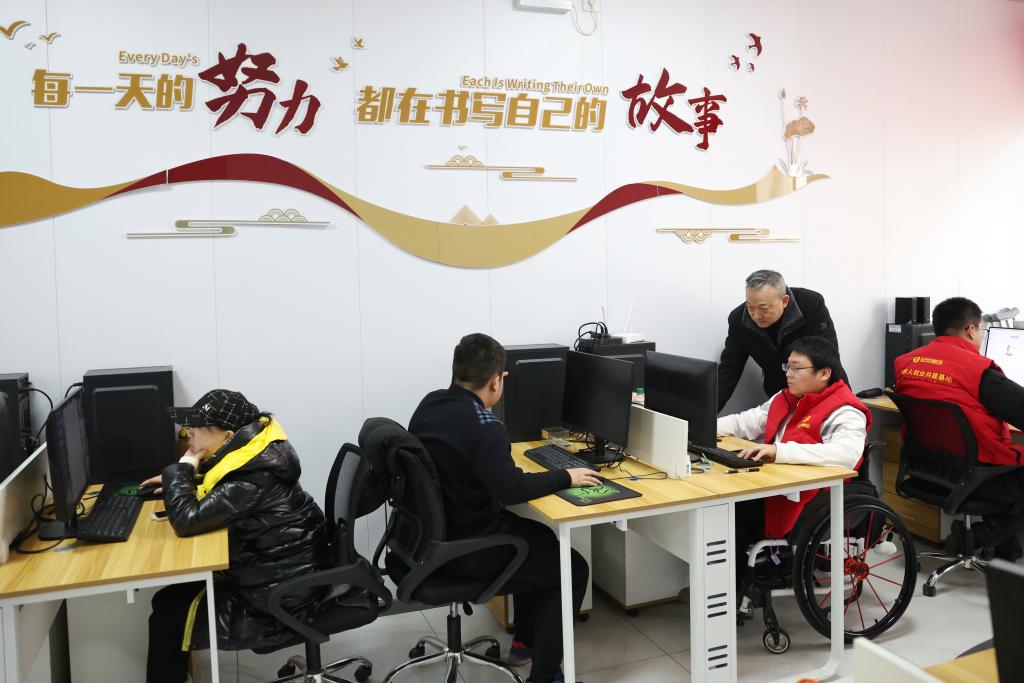
新春走基层丨探访残疾人“AI就业工坊”
Xin Hua She· 2026-02-04 08:23
Core Viewpoint - The establishment of the AI Employment Workshop for disabled individuals in Lanzhou, Gansu Province, represents a significant shift in employment opportunities for this demographic, leveraging technology to create new job roles that accommodate their needs [3][5]. Group 1: Employment Opportunities - The AI Employment Workshop trains disabled individuals as AI trainers, a role that has gained recognition since being included in the national occupational classification in 2020, providing a low-physical-demand job that can be done remotely [3][5]. - The workshop has successfully trained 19 individuals who have obtained vocational skill certificates, enabling them to secure employment in various sectors including automotive, catering, and information services [3][5][6]. Group 2: Personal Impact - Participants like Yang Zhiwen, who suffered a severe leg disability, have found meaningful employment through the workshop, earning a monthly income of 3,000 to 4,000 yuan, which has significantly improved their quality of life [5][6]. - The workshop fosters a supportive community environment, providing free equipment and facilities, which has positively influenced the mental well-being and motivation of participants [5][6]. Group 3: Future Prospects - The demand for AI-related jobs is increasing, with several companies actively seeking to hire trained disabled individuals, indicating a growing recognition of their capabilities in the digital economy [5][6]. - The Gansu Provincial Disabled Persons Vocational Education and Employment Service Center plans to expand training in emerging fields such as artificial intelligence, online customer service, and drone repair, aiming to enhance the employment prospects for disabled individuals [6].
继承传统深化全面战略伙伴关系
Xin Lang Cai Jing· 2026-02-04 08:13
Core Viewpoint - The article emphasizes the importance of the 38-year diplomatic relationship between China and Uruguay, highlighting the need for deepening strategic partnerships and cooperation in various sectors to adapt to new global circumstances [1] Group 1: Diplomatic Relations - China and Uruguay have maintained mutual respect and beneficial cooperation over the past 38 years, regardless of changing international dynamics [1] - Both countries aim to inherit traditional ties and enhance their comprehensive strategic partnership, fostering a stronger friendship [1] Group 2: Economic Cooperation - The two nations are committed to supporting each other's core interests and major concerns, promoting friendly exchanges at all levels [1] - There is a focus on aligning development strategies and deepening cooperation in areas such as trade, finance, agriculture, infrastructure, and information communication [1] - New potential areas for collaboration include green development, digital economy, artificial intelligence, and clean energy, aimed at transforming and upgrading economic growth [1] Group 3: Global Collaboration - China supports Uruguay's presidency of the "Group of 77 and China" and is willing to strengthen solidarity and cooperation among the Global South [1] - The countries seek to promote a multipolar world and inclusive economic globalization, contributing to the construction of a community with a shared future for mankind [1]
汉朔科技跌1.50%,成交额1.53亿元,近5日主力净流入-7265.57万
Xin Lang Cai Jing· 2026-02-04 07:51
Core Viewpoint - Hanshuo Technology is experiencing a decline in stock price and trading volume, with a focus on its electronic price tag systems and SaaS cloud platform services, while benefiting from the depreciation of the RMB and advancements in AI technology [1][4]. Company Overview - Hanshuo Technology Co., Ltd. specializes in electronic price tag systems and SaaS cloud platform services, with its main products being electronic price tag terminals, accessories, and other smart hardware [2][8]. - The company was established on September 14, 2012, and is located in Jiaxing, Zhejiang Province, with its main business focusing on digitalization in retail through IoT wireless communication technology [8]. Financial Performance - For the period from January to September 2025, Hanshuo Technology reported a revenue of 2.809 billion yuan, a year-on-year decrease of 11.04%, and a net profit attributable to shareholders of 314 million yuan, down 40.51% year-on-year [9]. - The company's overseas revenue accounted for 94.10% of total revenue, benefiting from the depreciation of the RMB [4]. Product and Service Development - The company has developed an innovative AI application solution for retail, leveraging Microsoft Azure's cloud services, and has become the first ISV partner in China to receive certification for retail AI software solutions [3]. - Hanshuo Technology has also launched the All-Star IoT digital platform to address diverse downstream application needs and information silos, providing a one-stop solution for retail customers [4]. Market Activity - On February 4, the stock price of Hanshuo Technology fell by 1.50%, with a trading volume of 153 million yuan and a turnover rate of 7.72%, resulting in a total market capitalization of 24.761 billion yuan [1]. - The stock has seen a net outflow of 18.6491 million yuan from major investors, indicating a trend of reduced holdings over the past three days [5][6].
湖南两会关注数智赋能 强算力成就赛道超车“硬底气”
Zhong Guo Xin Wen Wang· 2026-02-04 07:50
Group 1 - The core focus of the news is on the advancements in computing power and smart manufacturing in Hunan Province, highlighting the integration of 5G and industrial internet technologies to enhance production efficiency and safety [1][2] - During the "14th Five-Year Plan" period, Hunan's total computing power surpassed 13,000 PF, with intelligent computing power reaching 4,800 PF and supercomputing power at 228 PF. The province established 206,000 5G base stations, achieving full coverage in urban areas and connecting all administrative villages with gigabit optical networks [1] - The rapid infrastructure development translates into tangible production efficiencies, such as the ability to produce one excavator every six minutes and the implementation of unmanned operations for steel billet handling in smart factories [1] Group 2 - Hunan's strong computing power provides a competitive edge in the field of embodied intelligence, supported by core technologies, industrial foundations, and leading enterprises. However, there are challenges related to policy coordination and the effective transformation of innovation into market-ready products [2] - Recommendations include establishing a provincial-level major technology project for humanoid robots, creating a testing and verification platform, and fostering an open community to gather global innovation resources [2] - The Hunan Provincial Committee of the Democratic Progressive Party emphasizes the need to address data flow bottlenecks by leveraging provincial computing power management platforms and enhancing data product design and standardization capabilities [2]
让中乌友谊之树愈加枝繁叶茂
Bei Jing Wan Bao· 2026-02-04 07:14
会谈后,两国元首共同见证签署投资促进、贸易等领域10余份合作文件。 会谈前,习近平在人民大会堂北大厅为奥尔西举行欢迎仪式。 奥尔西抵达时,礼兵列队致敬。两国元首登上检阅台,军乐团奏中乌两国国歌,天安门广场鸣放礼炮21 响。奥尔西在习近平陪同下检阅中国人民解放军仪仗队,并观看分列式。 新华社电 2月3日上午,国家主席习近平在北京人民大会堂同来华进行国事访问的乌拉圭总统奥尔西举 行会谈。 习近平指出,中国和乌拉圭虽然远隔重洋,但双方理念相近、友谊深厚。38年前的今天,中乌实现建 交。38年来,无论国际形势如何变化,两国始终坚持相互尊重、互利合作的相处之道。新形势下,双方 要继承传统,深化全面战略伙伴关系,让两国友谊之树愈加枝繁叶茂。 习近平强调,中乌两国要继续坚定支持彼此核心利益和重大关切,密切各层级、全方位友好交往,加强 治国理政经验交流,不断深化战略互信。中共二十届四中全会通过"十五五"规划建议,为未来5年中国 经济社会发展擘画蓝图,也为包括乌拉圭在内的各国提供更多机遇。双方要加强发展战略对接,深化经 贸、金融、农牧业、基础设施建设、信息通信等合作,挖掘绿色发展、数字经济、人工智能、清洁能源 等新兴领域合作潜 ...
给新就业形态劳动者一份确定的安全感
Jin Rong Shi Bao· 2026-02-04 05:32
Core Viewpoint - The article discusses the establishment and expansion of occupational injury protection for new employment forms in China, highlighting the need for a comprehensive legal framework and sustainable funding mechanisms to support the 84 million workers in gig economy roles [1][2][4]. Group 1: Current Status and Expansion - As of July 2022, China initiated a pilot program for occupational injury protection, which has expanded from 7 provinces and 4 industries to 17 provinces by July 2025, covering major platforms like Didi and SF Express [1]. - By the end of 2025, the cumulative number of insured individuals under the pilot program is expected to reach 25.1 million [1]. Group 2: Legislative and Institutional Development - The National People's Congress is reviewing a report aimed at improving the legal framework for the rights of flexible and new employment form workers, emphasizing the need for legislative action to establish a robust protection system [1][2]. - There is a consensus among representatives from various provinces to transition from pilot programs to legally mandated protections for new employment forms [1]. Group 3: Challenges and Recommendations - Current challenges include the limited coverage of the occupational injury protection program, primarily benefiting large platform companies while excluding many small and flexible employment platforms [2]. - A multi-tiered funding mechanism is recommended, involving platform contributions, government subsidies, and voluntary participation from individuals to ensure sustainability [3]. - The need for product and service innovation is highlighted, encouraging the insurance industry to develop tailored products for gig workers and enhance digital service processes [3]. Group 4: Social Implications - The occupational injury protection system is framed as a matter of social equity, requiring collaboration among government, platform companies, insurance institutions, and society to provide comprehensive protection for gig workers [4].
国新证券每日晨报-20260204
Guoxin Securities Co., Ltd· 2026-02-04 05:12
国内市场综述 震荡攀升 缩量反弹 | 市场研究部证券研究报告 | | | 2026 年 | 2 月 4 日 | | --- | --- | --- | --- | --- | | | 国内市场 | 收盘点位 | 涨跌 | 涨跌幅% | | 国内市场综述 | 上证综指 | 4067.74 | 51.99 | 1.29 | | 震荡攀升 缩量反弹 | 深证成指 | 14127.11 | 302.75 | 2.19 | | 周二(2 月 3 日)大盘震荡攀升,缩量反弹。截至收 | 沪深 300 | 4660.11 | 54.13 | 1.18 | | 盘,上证综指收于 4067.74 点,上涨 1.29%;深成指 | 中小 100 | 8524.43 | 180.05 | 2.16 | | 收于 14127.11 点,上涨 2.19%;科创 50 上涨 1.39%; | 创业板指 | 3324.89 | 60.78 | 1.86 | | | 科创 50 | 1471.07 | 20.17 | 1.39 | | 创业板指上涨 1.86%,万得全 A 成交额共 25656 亿元, | | | | | | 较前一日有所上 ...