机器人技术

Search documents
前三季度机器人行业营收同比增长近3成
Xin Lang Cai Jing· 2025-11-04 04:06
Core Insights - The robotics industry experienced a revenue growth of 29.5% year-on-year in the first three quarters of this year [1] - Industrial robot production reached 595,000 units, while service robot production hit 13.5 million sets, both exceeding the total production expected for the entire year of 2024 [1] - The performance and quality of robotic products have significantly improved, with successful development of high-performance industrial robots in various applications [1] Industry Developments - The industry has successfully developed autonomous brands of heavy-duty, welding, spraying, and mobile operation robots, filling gaps in the high-end robotics sector [1] - Service robot technologies, including cleaning, delivery, education, entertainment, and surgical robots, are maturing rapidly [1] - The supporting capabilities for robot components are steadily enhancing, with breakthroughs in key components such as high-precision reducers, high-performance servo systems, and intelligent controllers [1]

自主移动机器人仍是推动日本医疗护理转型的主力军
Di Yi Cai Jing· 2025-11-02 12:35
Group 1: Core Insights - The aging population in Japan is creating a significant demand for professional nursing services, with over 7 million elderly individuals requiring care, representing 19.4% of the elderly population [1] - The Japanese government is responding to the crisis in elderly care by encouraging day care institutions to expand home care services, with a new subsidy program expected to be implemented next year [1] - The autonomous mobile robot (AMR) market in Japan is projected to grow from $225.76 million in 2024 to $1.07934 billion by 2033, reflecting a compound annual growth rate (CAGR) of 19.20% from 2025 to 2033 [2] Group 2: Market Dynamics - Japan's Ministry of Economy, Trade and Industry (METI) has allocated $3.2 billion in 2024 to promote the application of robotics in labor-intensive sectors, including healthcare [3] - The elderly care market in Japan is expected to grow from $10.96 billion in 2023 to $20.99 billion by 2032, with a CAGR of 7.49% from 2024 to 2032 [4] - By 2024, 2,800 AMRs are expected to be deployed in 450 elderly care facilities, assisting with tasks such as medication delivery and patient care [4] Group 3: Technological Advancements - Hospitals like Tokyo Medical University Hospital rely on AMRs for 8,500 medication deliveries daily, while Osaka General Medical Center uses them for waste management and internal logistics [5] - AMRs equipped with natural language processing capabilities are being deployed in elderly care settings to enhance interaction with seniors and reduce caregiver fatigue [5] - A new elderly care robot designed to assist bedridden patients is expected to be developed by 2040, highlighting the long-term potential of robotics in addressing care shortages [5] Group 4: Investment Opportunities - The aging population in China presents a larger market for elderly care services, with the market expected to exceed 12 trillion RMB by 2025, indicating significant investment opportunities [7] - Both Japan and China are experiencing a shift in elderly care models, leading to new investment avenues in high-end care facilities, telemedicine, and robotic caregiving [7]
宇树科技王兴兴:唯有携手共进,才能迎接机器人技术带来的全新文明图景
人民网-国际频道 原创稿· 2025-11-01 13:50
谈及中国企业,王兴兴认为,中国科技企业是连接世界的重要纽带,既分享全球科技成果,也贡献 自身创新能力。他特别强调,人工智能和机器人技术的进步离不开全球协作。 展望未来,中国将担任亚太经合组织2026年东道主,王兴兴表示,这将是一次促进全球科技交流与 合作的重要契机。他坚信,唯有携手共进,才能迎接机器人技术带来的全新文明图景。 人民网韩国庆州10月31日电 (记者赵瞳、张文捷)在2025年亚太经合组织(APEC)工商领导人峰 会期间,宇树科技创始人王兴兴在接受人民网采访时表示,当前世界不可回避的主旋律是合作与协同共 赢,AI驱动的机器人产业有望成为推动全球经济增长的最大引擎。 王兴兴表示亚太各经济体在智能制造、AI与机器人领域拥有巨大合作潜力。"我这次来韩国也约了 当地的合作方,或者潜在合作方探讨一些合作项目。"科技发展是全球共创的过程,各国企业、科研机 构都在其中扮演重要角色。宇树科技近年来在亚太及全球市场积极布局,通过与本地合作伙伴协作,推 动机器人在工厂、服务场景中的落地应用。 ...
仅用乐高组件,布里斯托大学团队造出拟人化机器手,实现12自由度抓取!
机器人大讲堂· 2025-10-31 12:16
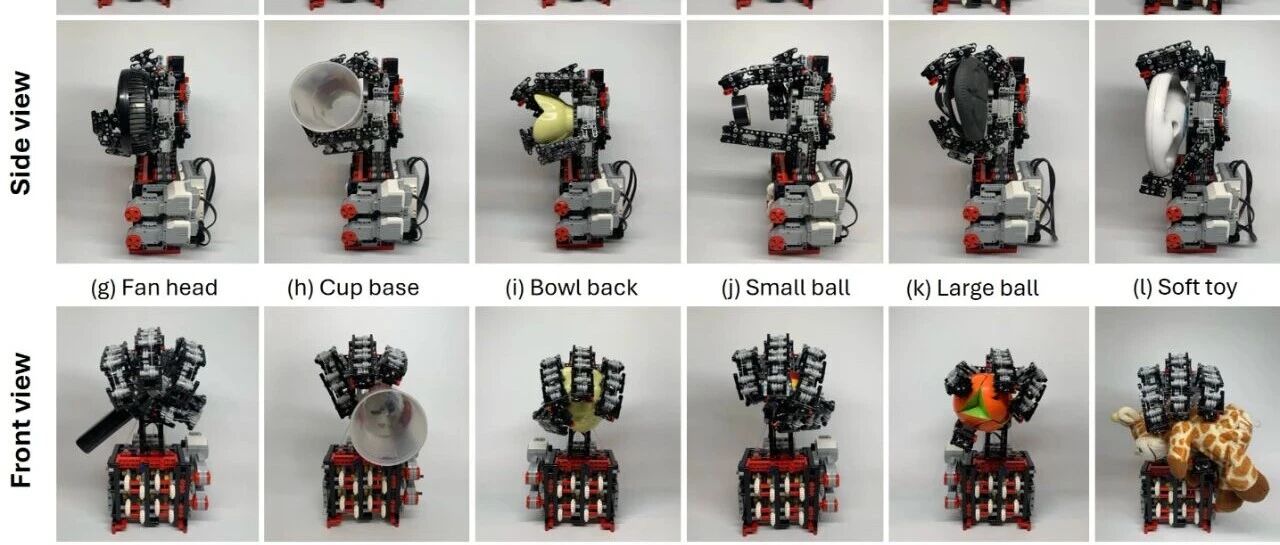
Core Insights - The article emphasizes the importance of developing humanoid robotic hands that closely mimic human anatomy and functionality to meet complex scenario demands in robotics [1] - It highlights the limitations of existing LEGO robotic hands and the urgent need for innovative designs that contribute to modern robotics research [1] Group 1: Trends in Robotic Hand Design - The development of robotic hands is following two main trends: simplifying design while retaining functionality and adopting soft robotics technology for flexibility and adaptability [2] - The PISAIIT SoftHand exemplifies a highly adaptable humanoid tendon-driven hand that simplifies control systems while enhancing stability and adaptability in grasping [4] Group 2: Educational SoftHand-A Prototype - The Educational SoftHand-A prototype was created using standard LEGO components, allowing students to understand robotic hand design principles through hands-on experience [5] - The design features a customized antagonistic tendon layout and utilizes clutch gears for flexible cooperative movement, improving finger motion synchronization and overall responsiveness [7] Group 3: Structural Design and Drive System - Educational SoftHand-A consists of four fingers, each with three rotational joints, providing a total of 12 degrees of freedom, enabling adaptive grasping based on external constraints [10] - The drive system includes two MINDSTORMS EV3 motors and a programmable controller, allowing users to adjust tendon tension for grasping and opening [11] Group 4: Performance Testing - The prototype underwent various tests to evaluate its response time and load capacity, with single-finger movements taking approximately 1 second for a full cycle [17] - The Educational SoftHand-A demonstrated a load capacity of 5-6 Newtons per finger, slightly lower than its 3D-printed counterparts [17] Group 5: Adaptive Grasping Capability - The prototype successfully grasped various household items weighing between 0.1-0.8 kilograms, showcasing its adaptive grasping capabilities [20] - The hand adjusted its grip based on the shape and depth of objects, reflecting the cooperative operation characteristics of the PISAIIT SoftHand [22] Group 6: Conclusion - Despite being constructed entirely from LEGO components, Educational SoftHand-A's performance in response speed, force transmission, and adaptive grasping is comparable to other SoftHand versions, making it a valuable platform for robotics education and research [22]

平治信息:投资未来伙伴已推出智能机器人系列产品
2 1 Shi Ji Jing Ji Bao Dao· 2025-10-31 09:54
Core Viewpoint - The company has announced an investment in Future Partners Robotics (Shenzhen) Co., Ltd., acquiring a 40% stake, with plans to enhance its robotics business through strategic partnerships with telecom operators [1] Group 1: Investment and Stake - The company will invest in Future Partners Robotics (Shenzhen) Co., Ltd. in October 2025, holding a 40% equity stake [1] Group 2: Robotics Business Strategy - The primary market entry point for the company's robotics business will be through sales via telecom operator channels [1] - The company aims to leverage long-term partnerships with telecom operators to promote the standardization, modularization, and scaling of its robotics products [1] - The focus is on developing industry-specific robotic solutions to accelerate product promotion [1]

亚马逊(AMZN.US)Q3电话会:AWS增长速度创三年最高水平 未履约合同余额达2000亿美元
Zhi Tong Cai Jing· 2025-10-31 07:53
Core Insights - Amazon's AWS growth rate has reached its highest level since 2022, with a year-on-year growth rate of 20.2%, achieving an annualized run rate of $132 billion [1] - The backlog of unfulfilled contracts has reached $200 billion, not including several new contracts expected to be announced in October, which exceed the total transactions of the third quarter [1] - AWS continues to lead the market with a diverse range of services and rapid innovation, recognized as a leader by Gartner for 15 consecutive years [1] AWS Capacity and AI Investments - AWS's power capacity has doubled compared to 2022 levels and is expected to double again by 2027, with at least 1 gigawatt planned for the fourth quarter [2] - The Trainium2 chip business has seen a 150% quarter-on-quarter growth, with significant collaboration with companies like Nvidia, AMD, and Intel [2] - The company is investing heavily in AI, anticipating strong capital returns in the long term, while also enhancing its logistics network to support business growth [2] Trainium Chip Development - Trainium2 has a limited but large customer base, with a price-performance advantage of 30% to 40% over alternatives, driving demand [4] - Trainium3 is expected to be previewed by the end of this year, with mass production anticipated in early 2026, generating interest from both large and medium-sized customers [4] - The success of projects like Rainier, which utilizes Trainium2, is expected to enhance the credibility of Trainium chips among customers [6] Grocery Business Expansion - Amazon's grocery business has surpassed $100 billion in total merchandise sales over the past 12 months, positioning it among the top three grocery retailers in the U.S. [7] - The company is expanding its fresh grocery delivery service, which has already reached 1,000 cities and is expected to grow to 2,300 by the end of the year [7] - The focus is on changing consumer habits towards same-day delivery for fresh items, indicating significant potential in this area [7] Automation and Robotics - Amazon has over 1 million robots in its fulfillment network, with plans for further innovation and investment in robotics to enhance safety and productivity [8] - The company aims to create a collaborative fulfillment network where robots and humans work together, optimizing costs and improving customer experience [8] Advertising Growth - Amazon's advertising business has seen significant growth, with a comprehensive solution that includes brand awareness and sales conversion strategies [12] - The demand-side platform (DSP) has rapidly expanded, with improvements based on customer feedback, positioning it as a robust advertising tool [12] - Video advertising is also identified as a key growth area, contributing substantial revenue despite being in its early stages [12]

豪恩汽电:超声波雷达已成功搭载智元机器人并量产
Zheng Quan Shi Bao Wang· 2025-10-31 06:37
Core Viewpoint - The company, Haon Auto Electric (301488), plans to officially enter the robotics sector in 2024, leveraging its existing automotive perception technology for this new market [1] Business Expansion Path - Initially, the company will enter the market as a perception system supplier, reusing mature perception technology from the automotive field for robotics [1] - The company has established a partnership with NVIDIA to utilize its Thor chip and other core products to develop the "brain" (decision control system) for robots, creating an integrated layout of "perception + decision" [1] Product Layout - The company's product offerings currently cover two core aspects of robotics: - Perception, which includes visual perception (6-8 units per robot), ultrasonic radar perception (6-8 units per robot), and pure solid-state LiDAR - Decision-making, which is based on NVIDIA chips for the robot controller (brain) [1] Collaboration with Clients - The company has formed deep collaborations with leading robotics firms such as Zhiyuan and Zhejiang Renxing, with ultrasonic radar successfully integrated into Zhiyuan's robots and achieving mass production [1]
人工智能引爆风险偏好,结构性变革箭在弦上|亚太市场观察
2 1 Shi Ji Jing Ji Bao Dao· 2025-10-30 09:55
Core Insights - Despite challenges such as tariffs and geopolitical conflicts, several markets in the Asia-Pacific region, including China, Japan, South Korea, and Southeast Asia, have shown strong stock market performance [1][2] - The key drivers behind the robust performance of the Asia-Pacific markets include a revaluation of Chinese market values, corporate governance reforms in Japan, and the cyclical nature of technology stocks in South Korea [1][2] - The future of the Asia-Pacific capital markets may face pressures from traditional growth models due to demographic changes, geopolitical factors, and global supply chain restructuring [1][3] Market Dynamics - The Asia-Pacific region is experiencing a divergence between developed markets like Japan and Australia and less developed markets, highlighting the varying economic conditions across the region [2] - Market liquidity is becoming less significant as more companies opt for privatization, leading to a situation where not all economic indicators are publicly available [2] - Tariffs have introduced uncertainty that affects economic activities requiring stability, such as investment decisions and mergers [2] Future Trends - The power of capital will ultimately manifest as companies consider various manufacturing locations, including China, Southeast Asia, and developed regions like the U.S. [3][4] - The importance of low-cost labor is expected to diminish over the next 50 years due to the rise of artificial intelligence and related technologies, leading to a shift in manufacturing site selection closer to consumer bases [4] - The Asia-Pacific region, with two-thirds of the world's population, is likely to remain a central hub for manufacturing due to its high domestic consumption levels [3][4]
人工智能引爆风险偏好,结构性变革箭在弦上
2 1 Shi Ji Jing Ji Bao Dao· 2025-10-30 09:48
Core Insights - Despite challenges such as tariffs and geopolitical conflicts, markets in the Asia-Pacific region, including China, Japan, South Korea, and Southeast Asia, are performing exceptionally well [1] - The core drivers behind the strong performance of these markets include a revaluation of value in China, corporate governance reforms in Japan, the cyclical nature of technology stocks in South Korea, and industrial transitions in Southeast Asia [1][2] - The future of the Asia-Pacific capital markets may face pressures from traditional growth models due to demographic changes, geopolitical factors, and global supply chain restructuring [1][3] Market Dynamics - The Asia-Pacific markets are influenced by both negative factors, such as geopolitical uncertainties and tariffs, and positive factors, including optimism surrounding technological revolutions like artificial intelligence [2] - There is a significant disparity between developed markets like Japan and Australia and less developed markets in the region [2] - Market liquidity is becoming less critical as more companies opt for privatization, leading to a situation where not all economic indicators are publicly available [2] Tariff Impacts - Tariffs have introduced considerable uncertainty, affecting economic activities that require stability, such as investment decisions and mergers [2] - It is anticipated that tariffs will stabilize at higher levels, but not reach the extreme levels previously proposed [2] Future Manufacturing Trends - The rise of artificial intelligence and related technologies will diminish the importance of low-cost labor in manufacturing over the next 50 years [4] - Manufacturing locations may shift closer to consumer bases, potentially leading to significant changes in the Asian economy [4][5] - The Asia-Pacific region, which houses two-thirds of the world's population, will continue to be a focal point for manufacturing due to its high domestic consumption levels [3][5]
唐源电气:前三季度核心主业收入增速超10%
Zhong Zheng Wang· 2025-10-30 02:45
Core Viewpoint - Tangyuan Electric's third-quarter report indicates significant growth in revenue and net profit, driven by a focus on technology and innovation in the field of machine vision and robotics [1] Financial Performance - The company achieved operating revenue of 404 million yuan in the first three quarters, with core business revenue from machine vision and big data systems reaching 347 million yuan, a year-on-year increase of 10.73% [1] - The net profit attributable to shareholders was 39.09 million yuan, with a net profit of 48.47 million yuan after deducting share payment expenses [1] Strategic Focus - Tangyuan Electric is centered on machine vision and robotics control technologies, creating a product matrix that spans various professional fields including contact networks, railways, tunnels, and vehicles [1] - The company has set a strategic direction of "AI technology leadership + multi-industry scenario expansion + Belt and Road Initiative layout," aiming to enhance both the scale and profitability of its core business and innovative projects [1] Future Growth Potential - The planned fundraising for the AI large model project aims to deepen "image + audio multimodal" training, enhancing defect recognition accuracy in high-speed scenarios [1] - The robotics project will focus on motion control and intelligent perception core platforms, improving the product lineup [1] - The integration of AI and robotics technologies is expected to open up continuous growth opportunities for the company [1]