
贸易保护主义

Search documents
突发特讯!欧盟通告全球:取消小包裹免税政策,中国外交部回应,罕见措辞引爆国际舆论
Sou Hu Cai Jing· 2025-11-14 16:42
Core Viewpoint - The new EU tax policy targets the influx of "Made in China" products, aiming to create a fairer competitive environment for EU businesses while raising concerns about protectionism and its impact on global trade [1][3]. Group 1: EU Tax Policy - The EU has decided to eliminate the tax exemption for small packages valued under 150 euros, which was initially designed to facilitate small-scale trade and consumer convenience [3]. - This policy change is seen as a response to the rapid growth of Chinese e-commerce, which has captured a significant share of the European market with affordable products [3]. - The EU Commission explicitly stated that the goal is to protect internal EU businesses, indicating a shift towards a more protectionist stance [3]. Group 2: China's Response - The Chinese Foreign Ministry responded to the EU's policy by emphasizing the need for a fair, transparent, and non-discriminatory business environment for all companies, including Chinese firms [5][6]. - The response highlighted concerns about the fairness and transparency of the EU's decision-making process and questioned whether the new policy would lead to further trade friction [6]. Group 3: Impact on Stakeholders - European consumers are likely to face higher prices for goods previously available at lower costs, effectively imposing a "collective tax" on them [8]. - EU small and medium-sized retailers that rely on Chinese imports for materials or semi-finished products will also be adversely affected, as increased tariffs raise overall industry costs [8]. - Chinese exporters, particularly small sellers, may experience short-term challenges due to rising logistics and customs costs, leading to a potential industry reshuffle [8]. Group 4: Global Trade Context - The EU's decision reflects a broader trend of rising protectionism and a retreat from globalization, as seen in various countries' policies targeting foreign enterprises [10]. - China's commitment to maintaining an open trade environment contrasts with the EU's protectionist measures, showcasing a divergence in trade philosophies [10]. - The situation serves as a test of strategic resolve for countries amid the pressures of de-globalization, urging Chinese enterprises to focus on core technologies and competitive advantages [13].

【图解】我国货物进出口保持增长 外贸韧性持续彰显
Zhong Guo Jing Ji Wang· 2025-11-14 13:48
Core Viewpoint - China's goods import and export maintained continuous growth, demonstrating strong resilience and vitality in the face of rising global trade protectionism and significant uncertainty in the trade environment [3]. Group 1: Trade Performance - In October, the total import and export value reached 37,028 billion yuan, a slight increase of 0.1% year-on-year [5]. - From January to October, the total import and export value was 373,090 billion yuan, reflecting a growth of 3.6% [5]. - The growth rates for trade with key partners included ASEAN at 9.1%, the EU at 4.9%, and countries involved in the Belt and Road Initiative at 5.9% [6]. Group 2: Trade Dynamics - Despite the impact of high tariffs, imports and exports with the United States have decreased, but China continues to expand high-level openness and orderly unilateral opening [7]. - Trade with partners such as ASEAN and the EU has accelerated, significantly supporting the continuous growth of foreign trade [8]. Group 3: Business Vitality - From January to October, the import and export value of private enterprises grew by 7.2%, significantly outpacing the overall growth of goods import and export [9]. - Foreign-invested enterprises also saw a growth of 2.9%, continuing to maintain an upward trend [9]. - Various supportive measures have been implemented to assist foreign trade enterprises in navigating the increasingly unstable external environment, enabling them to actively consolidate and expand markets [9].

外交部:希望欧盟为中国企业营造公平、可预期的市场环境
Xin Hua She· 2025-11-14 13:48
Core Viewpoint - The Chinese government emphasizes the need for the EU to adhere to commitments of market openness and fair competition, while addressing the concerns of Chinese enterprises operating in Europe [1][3]. Group 1: Business Environment Concerns - The EU-China Chamber of Commerce reported that the overall business environment rating for Chinese companies in the EU has declined for six consecutive years, with 81% of surveyed companies indicating increased uncertainty [1]. - 90% of respondents believe that the EU's "de-risking" policies and economic security strategies are harming business operations and market confidence [1]. - Over 40% of Chinese enterprises have experienced differential treatment, with "uncertainty" identified as the biggest obstacle to operations in Europe [1]. Group 2: EU's Protectionist Measures - The EU has been promoting economic competition against China and implementing a series of protectionist measures under the guise of maintaining "economic security" and "fair competition," which disrupts global supply chains [2]. - These measures are seen as detrimental not only to the competitiveness of EU industries but also as a negative signal regarding the openness of the EU market, ultimately harming the investment confidence of Chinese companies [2]. Group 3: Opportunities for Cooperation - Chinese enterprises have been actively contributing to the EU's economic growth and green transformation, and the recent "14th Five-Year Plan" outlines a blueprint for China's economic development over the next five years [3]. - The Chinese government advocates for dialogue and cooperation between China and the EU to address differences and promote free trade and fair competition, suggesting that the EU should recognize the opportunities presented by China's development plans [3].
“什么自割咽喉?西班牙就要做中国在欧洲最好的朋友”
Guan Cha Zhe Wang· 2025-11-13 11:19
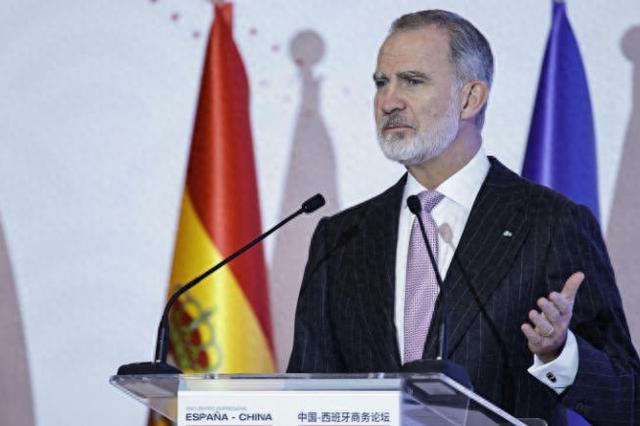
【文/观察者网 齐倩】 从马德里到成都、北京,两大文明古国跨越欧亚大陆的握手,正为一个多极化世界该如何运作,写下了 超越集团对抗的崭新范式。 "早上好!非常感谢。"11月11日上午,西班牙国王费利佩六世在成都举行的中国-西班牙商务论坛开幕 式上,秀了一句中文。此次论坛共有180家西班牙企业和近200家中国企业参加。 论坛上,西班牙经济、贸易和企业大臣卡洛斯·奎尔波表示,"不确定性"已成为全球形势新常态,但中 国仍是西班牙政府"毋庸置疑的优先事项"。他同样说了几句中文,赢得了热烈掌声。 12日,两国元首共同见证签署经贸、科技、教育等领域的10份合作文件,以实实在在的成果为此次历史 性访问写下了最有力的注脚。 西班牙国王费利佩六世在成都活动上发言 西班牙媒体 应中方邀请,费利佩六世10日开启对中国为期四天的国事访问。一名商界官员告诉英国《金融时报》, 在西班牙国王率领的访华团中,包括了来自汽车、食品、能源和制药等行业的一大批西班牙企业领袖和 代表。 多家西班牙媒体赞扬此次访华行程。其中,《世界报》引述中国媒体报道称,"2025年最令人惊讶的外 交时刻之一,无疑是费利佩六世访华"。《先锋报》提到,此行旨在缩小已近4 ...
特朗普最担心的来了:美国面临“生死存亡”时刻,这一次他输不起
Sou Hu Cai Jing· 2025-11-13 07:23
Core Points - The article discusses the significant legal battle in the U.S. Supreme Court regarding Trump's tariff policies, which he claims are crucial for the nation's future [1][3] - Trump's tariffs have led to increased costs for American consumers, contradicting his previous claims that foreign countries would bear the burden [3][5] - The Supreme Court's conservative justices are scrutinizing the legality of Trump's tariffs under the International Emergency Economic Powers Act, which has never been used for comprehensive tariffs [5][6] Group 1 - Trump's assertion that the case is the "most important in history" highlights its potential to redefine presidential power and impact the U.S. economy and trade for decades [3][5] - The Supreme Court's conservative majority, including justices appointed by Trump, is questioning the extent of presidential authority in imposing tariffs [6][8] - Economic analyses indicate that Trump's tariffs have resulted in over $1.2 trillion in losses for U.S. businesses, with more than half of the costs passed on to consumers [5][8] Group 2 - The core dispute centers on whether Trump has the authority to impose tariffs based on a 1977 law, with historical precedent suggesting such powers belong to Congress [5][6] - The justices expressed skepticism about the justification for tariffs, with some questioning the validity of Trump's claims regarding foreign investment resulting from these tariffs [6][8] - Potential outcomes of the Supreme Court's ruling include full support for Trump's tariff powers, complete rejection of his policies, or a compromise that partially upholds and partially overturns the tariffs [8][10]

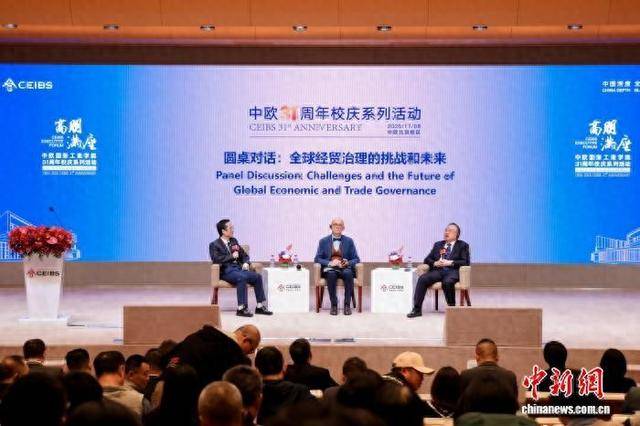
应对全球单边主义、贸易保护主义,中外专家共议全球经贸治理
Sou Hu Cai Jing· 2025-11-13 06:39
Core Insights - The forum highlighted the challenges and future of global economic governance, emphasizing the need for cooperation amidst rising unilateralism and protectionism [3][4] Group 1: China's Economic Strategy - China is advancing institutional openness to create a win-win cooperation environment, countering the rise of unilateralism and trade protectionism [3] - Recent policies include the implementation of "three negative lists" for cross-border service trade, investment, and market access, promoting consistent management of domestic and foreign capital [3] - The bilateral trade between China and ASEAN grew by 9.6% year-on-year from January to September 2025, indicating deepening economic ties [3] Group 2: Global Trade Dynamics - Pascal Lamy identified three new norms in global trade: the rise of protectionism, the strengthening of preventive measures, and the weaponization of trade [4] - Lamy emphasized the importance of maintaining a multilateral system and fostering flexible international cooperation, particularly between China and the EU on shared concerns like climate change [4] Group 3: WTO and Multilateral Trade System - The WTO remains essential for global trade, and China is committed to multilateralism, advocating for structural reforms to enhance the efficiency of the dispute resolution mechanism [6] - The U.S. has shifted from being a proponent of free trade to a disruptor of the multilateral trade system, impacting global trade dynamics [5] - Lamy suggested that the WTO's effectiveness could be improved by enhancing organizational efficiency and addressing new complex issues [5][6] Group 4: Future Economic Pathways - Lamy recommended that China continue its economic transformation, particularly by boosting consumption, while businesses should enhance supply chain resilience and adaptability [4] - The dual-edged effect of digital technology was discussed, highlighting its role in accelerating service trade growth while also creating new trade barriers due to differing data regulations [4][5]
应对全球单边主义、贸易保护主义 中外专家共议全球经贸治理
Zhong Guo Xin Wen Wang· 2025-11-12 17:29
Core Viewpoint - The event highlighted the challenges and opportunities in global trade, emphasizing the need for multilateral cooperation amidst rising protectionism and unilateralism [1][2][4]. Group 1: China's Trade Policies - Zhao Jinping outlined China's recent policies aimed at service trade openness, including the implementation of "three negative lists" for cross-border service trade, investment, and market access [1]. - The cooperation between China and ASEAN has deepened, with bilateral trade growing by 9.6% year-on-year from January to September 2025, serving as a stabilizing anchor for China's foreign trade relations [1]. Group 2: Global Trade Dynamics - Pascal Lamy identified three new norms in global trade: the rise of protectionism, the strengthening of preventive measures, and the weaponization of trade [2]. - Lamy emphasized the importance of maintaining a multilateral system and suggested that China and the EU should seek cooperation in areas like climate change and biodiversity [2]. Group 3: WTO and Multilateralism - The discussion highlighted the U.S.'s shift from a proponent of free trade to a disruptor of the multilateral trading system, impacting the WTO's effectiveness [3][4]. - Zhao Jinping reaffirmed China's commitment to multilateralism and the necessity for structural reforms within the WTO to enhance its dispute resolution efficiency [4]. Group 4: Strategic Choices for China - Zhao Jinping proposed that external pressures could lead to greater willingness for regional economic cooperation, advocating for deeper market reforms and proactive multilateral and regional collaboration [5].
国际观察|美关税冲击欧洲高端制造
Xin Hua She· 2025-11-12 05:36
Core Viewpoint - The European high-end manufacturing industry, particularly luxury goods, is facing significant pressure due to U.S. tariff policies, leading to a decline in performance across various sectors [1][2]. Group 1: Impact on Luxury Goods - European luxury brands are experiencing a downturn, with LVMH reporting a revenue drop in its fashion and leather goods division from €299.2 billion to €276.1 billion, a decrease of approximately 8% year-on-year [2]. - Kering's revenue also fell by about 12% to €11 billion, with its flagship brand Gucci seeing a 22% decline in revenue [2]. - The high-end automotive sector is similarly affected, with Porsche's operating profit plummeting by approximately 99%, from €40.35 billion to €400 million [2]. Group 2: Swiss Watch Industry - The Swiss watch industry is under severe strain, with a 39% tariff imposed on Swiss watches leading to a 56% year-on-year drop in exports to the U.S. in September [3]. - Swatch Group, which includes brands like Omega, relies heavily on the U.S. market, which constitutes nearly 17% of its exports [3]. Group 3: Consumer Confidence in the U.S. - The U.S. market accounts for over 23% of global personal luxury goods sales, and the tariff pressures are causing European luxury brands to raise prices, which is dampening American consumer purchasing intent [4]. - Porsche and Swatch have announced price increases of 5% to 15% in the U.S. market, reflecting the industry's response to cost pressures [4]. - Experts indicate that consumer confidence is crucial for luxury spending, and uncertainty in the economic and policy environment is leading to a cautious approach among American consumers [4]. Group 4: Long-term Industry Uncertainty - While price increases may provide short-term relief, they pose long-term risks to brand image and consumer loyalty, potentially deterring younger customers [5]. - Some European luxury brands are exploring local production in the U.S. to avoid tariffs, but face challenges such as a lack of skilled labor and low production efficiency [5][6]. - Efforts to optimize supply chains to control costs are also costly and may jeopardize craftsmanship standards, contributing to significant uncertainty in the global high-end consumer market [6].
六个问答诠释进博会:加大制度型开放,以实践对抗贸易保护主义
Xin Lang Cai Jing· 2025-11-11 04:31
Core Viewpoint - The participation of multinational companies from developed economies in the China International Import Expo (CIIE) is driven by the desire to access China's vast market, its role as a manufacturing hub, and the potential for achieving economies of scale [1][2][3]. Group 1: Motivations for Participation in CIIE - Multinational companies value China's large and effective purchasing power market, being the second-largest importer globally after the U.S. [1] - China serves as a central hub for manufacturing, allowing foreign companies to sell intermediate and capital goods, which are then processed into final consumer products for global markets [1][2]. - The potential for achieving industry and enterprise scale economies in China is attractive, as it allows foreign firms to maximize average cost efficiency and gain monopoly profits [2]. Group 2: China's Trade Strategy - China aims to counter external pressures, such as U.S. supply chain reshaping, by signing more regional and multilateral free trade agreements, including RCEP and CPTPP [3]. - The implementation of unilateral visa-free policies for developed economies and the promotion of cross-border e-commerce are part of China's strategy to enhance trade facilitation [4]. Group 3: Unique Features of CIIE - The eighth CIIE introduced a special zone for products from underdeveloped economies, offering zero tariffs to help them access the market [5]. - The expo has expanded from a national to a provincial level, encouraging local government collaboration with foreign entities [5]. - Cross-border e-commerce is highlighted as a key feature, enabling small and medium enterprises to enter the Chinese market effectively [6]. Group 4: CIIE's Role Against Trade Protectionism - CIIE exemplifies China's commitment to multilateral free trade policies, promoting high-standard trade agreements to counteract protectionism [8]. - The expo facilitates the integration of domestic and international supply chains, particularly in key industries like photovoltaics and electric vehicles [8]. - Institutional reforms, such as visa facilitation and digital currency payment options, are seen as effective measures against trade protectionism [8]. Group 5: Integration into China's Ecosystem - For multinational companies, CIIE serves as a vital channel for integrating into China's economic ecosystem, especially for those familiar with the Chinese market since the 1980s [9]. - The expo provides opportunities for underdeveloped economies to find business prospects in China, thereby expanding China's economic ecosystem [9][10]. Group 6: CIIE's Broader Impact - CIIE acts as a connector between domestic and international markets, supporting the Belt and Road Initiative and fostering communication with underdeveloped economies [10]. - The expo's cross-border e-commerce platform addresses information asymmetry and reduces costs, allowing more small and medium enterprises to participate [10]. - By promoting multilateral trade and opposing protectionism, CIIE strengthens China's position in global trade dynamics [11].
专访欧委会贸易总司原司长:数字监管分歧或将引发欧美贸易新争端
2 1 Shi Ji Jing Ji Bao Dao· 2025-11-11 00:12
Group 1: U.S.-EU Trade Relations - The U.S. trade policy is causing a fundamental shift in U.S.-EU trade relations, moving away from a rules-based system to a more aggressive stance [1][5] - The EU is facing a "perfect storm" in its steel and automotive industries due to U.S. tariffs of 50% on steel and 15% on automobiles, leading to significant pressure on these sectors [2][6][7] - The recent framework agreement between the U.S. and EU is viewed as a "risk mitigation" measure rather than a stable foundation for trade relations [5][12] Group 2: EU's Strategic Response - The EU is adopting a "diversification" strategy to reduce reliance on the U.S. by pursuing trade agreements with countries like Indonesia, Malaysia, Thailand, and India [2][10][11] - The EU aims to strengthen its internal market resilience while avoiding a protectionist path similar to the U.S. [2][11] - The EU is committed to compliance with WTO rules while addressing the challenges posed by U.S. unilateral actions [2][11] Group 3: Future Trade Disputes - The digital regulation area is anticipated to be a new focal point for trade disputes, with U.S. tech companies pressuring the government to counter EU digital rules [2][13] - Potential conflicts may also arise from EU climate legislation, particularly regarding environmental regulations [2][13] - The U.S. has threatened to initiate investigations under Section 301 against EU digital regulations, indicating a risk of escalating tensions [12][13] Group 4: WTO Reform and Leadership - The EU is called to take a leadership role in WTO reforms, focusing on key areas such as subsidy rules, economic security policies, and dispute resolution mechanisms [3][14] - Cooperation with like-minded countries and key players like China is essential for effective WTO reform, particularly in subsidy rule discussions [3][14] - The EU's strategy includes enhancing its free trade agreement network, aiming to solidify partnerships that adhere to a rules-based trade system [17]