
预制菜

Search documents
卖保质期2年的西兰花,山姆回应
2 1 Shi Ji Jing Ji Bao Dao· 2025-09-20 06:49
Core Viewpoint - The debate surrounding pre-packaged frozen vegetables, particularly the two-year shelf life of frozen broccoli, has gained significant attention, with various stakeholders discussing its implications for nutrition and consumer choice [1][2]. Group 1: Product Discussion - The two-year shelf life frozen broccoli has become a focal point of controversy, with similar products available in the market, such as those sold by Sam's Club [1]. - Consumers have expressed mixed opinions on the value of purchasing frozen broccoli, especially considering the membership fees associated with buying from certain retailers [1]. Group 2: Nutritional Insights - Industry analysts indicate that the processing technology for long-shelf-life pre-packaged vegetables is well-established, and these products do not require preservatives [2]. - However, it is noted that the freezing process may lead to some loss of nutritional content during processing, storage, and transportation [2]. - Experts recommend that while fresh fruits and vegetables are preferable when available, commercially frozen options can be a viable alternative for long-term storage [2].

龙大美食回应上半年业绩下滑,围绕市场需求,持续加大研发和创新
Xi Niu Cai Jing· 2025-09-19 11:18
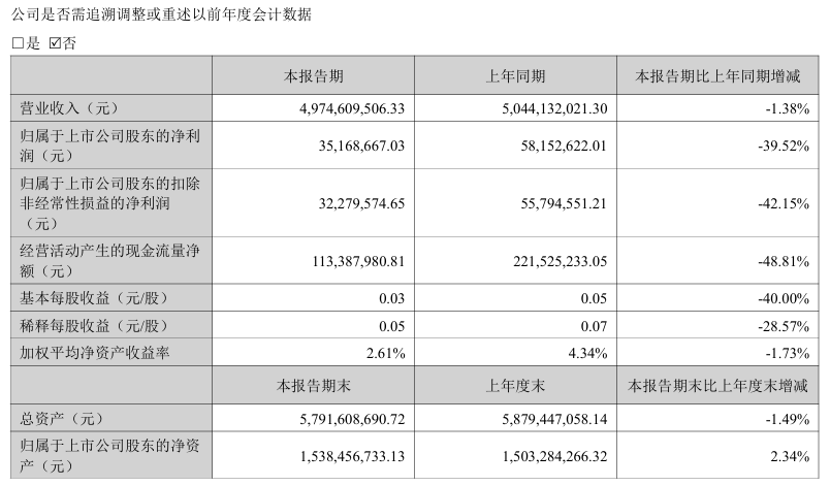
Core Viewpoint - Longda Food (002726.SZ) reported a decline in revenue and net profit for the first half of 2025, indicating challenges in the pre-prepared food segment and overall market conditions [1][2]. Financial Performance - The company achieved a revenue of 4.975 billion yuan, a decrease of 1.38% year-on-year [2]. - Net profit attributable to shareholders was 35.169 million yuan, down 39.52% compared to the previous year [2]. - The net profit after deducting non-recurring gains and losses was 32.280 million yuan, reflecting a 42.15% decline [2]. - The net cash flow from operating activities was 113.388 million yuan, a significant drop of 48.81% [2]. - Basic earnings per share were 0.03 yuan, down 40% year-on-year, while diluted earnings per share were 0.05 yuan, a decrease of 28.57% [2]. - The weighted average return on equity was 2.61%, down from 4.34% in the previous year [2]. - Total assets at the end of the reporting period were 5.792 billion yuan, a decrease of 1.49% from the previous year [2]. - Net assets attributable to shareholders increased by 2.34% to 1.538 billion yuan [2]. Business Segment Analysis - Revenue from pre-prepared foods was 783 million yuan, a decline of 19.5% year-on-year [3]. - The overall food industry revenue was 866 million yuan, down 19.91% [3]. - The company stated that the decline in revenue was due to a strategic focus on optimizing product structure and reducing low-margin businesses [3][4]. - The overall gross margin for the pre-prepared food segment improved by 1.24% compared to the previous year [4]. - The company is focusing on high-margin products and has developed new products for both B-end and C-end customers, including customized offerings and seasonal products [4].


“无败绩”的罗永浩、下厨的刘强东、硬刚苹果的雷军...大佬们集体搞事为哪般?
Sou Hu Cai Jing· 2025-09-19 10:27
Group 1 - The article discusses the recent activities and controversies surrounding prominent industry figures such as Lei Jun, Luo Yonghao, and Li Bin, highlighting their impact on the market and consumer sentiment [1][2][6] - Luo Yonghao's public dispute with Xibei over the quality of pre-made dishes has sparked discussions about food safety and consumer rights, leading to significant media attention [8][9] - Lei Jun's strategy with Xiaomi involves leveraging user feedback through community engagement, which has proven effective in managing public relations crises [8][9] Group 2 - Li Bin's NIO has adopted a competitive pricing strategy for new products, aiming to boost sales and market presence, which is seen as a shift towards more pragmatic business practices [19][20] - The article notes that NIO's recent product launches and pricing adjustments are expected to drive significant sales growth, with a target of 50,000 units per month by Q4 [19][20] - The ongoing restructuring at Wahaha, led by Zong Fuli, indicates a strategic shift towards new business models, with the closure of several factories and the establishment of new production lines [22][23] Group 3 - Liu Qiangdong's launch of the "Seven Fresh Kitchen" is viewed as a strategic move to enhance customer engagement and establish a foothold in the competitive food delivery market [11][13] - The article suggests that Liu's approach mirrors JD's logistics strategy, aiming to create a comprehensive local lifestyle platform that could challenge existing players like Meituan [11][13] - The contrasting narratives of Tesla's operations in China and the U.S. highlight the company's dual focus on vehicle sales and ambitious AI projects, raising questions about its long-term strategy [15][16][17]





又一个“西贝”暴雷!3亿中产天塌了
商业洞察· 2025-09-19 09:22
Core Viewpoint - The article discusses the challenges faced by the popular restaurant chain "Tai Er" in light of recent controversies surrounding pre-prepared dishes, particularly in the context of the broader dining industry and consumer perceptions [3][10]. Group 1: Company Overview - Tai Er has become a prominent player in the Chinese dining market, particularly known for its signature dish, sauerkraut fish, which has gained popularity due to its unique flavor profile and marketing strategies [19][21]. - The brand has experienced significant growth, with a projected compound annual growth rate of 33.7% in the sauerkraut fish market from 2018 to 2024, potentially reaching a market size of over 800 billion yuan by 2025 [20]. Group 2: Recent Challenges - Tai Er has faced scrutiny regarding its use of pre-prepared ingredients, with consumers questioning the authenticity of its "freshly made" claims, especially after reports of rapid service times [5][10][11]. - The company has seen a decline in performance, with a reported revenue drop of 13.3% year-on-year, and a reduction of 65 stores over the past year, indicating a significant operational challenge [26][27]. Group 3: Strategic Responses - In response to the controversies, Tai Er has initiated a transformation strategy, including the introduction of "fresh active" stores and expanding its menu to include other protein options like fresh chicken and beef, aiming to diversify its offerings and reduce reliance on sauerkraut fish [27][29]. - The brand is also adapting its dining model by allowing larger groups and introducing takeaway services, which marks a shift from its previous operational restrictions [27][30]. Group 4: Market Perception - The pre-prepared dish controversy has created a significant challenge for Tai Er, as consumer trust is critical in the restaurant industry, and any association with pre-prepared food can lead to negative perceptions [10][17]. - The article emphasizes the importance of establishing a clear distinction between pre-prepared and freshly made dishes, as consumer expectations evolve and competition increases in the dining sector [17][31].

中金辐照(300962.SZ):公司的辐照技术能为预制菜企业提供灭菌技术服务
Ge Long Hui· 2025-09-19 07:13
Group 1 - The core viewpoint of the article is that Zhongjin Irradiation (300962.SZ) is leveraging its irradiation technology to provide sterilization services for the prepared food industry, thereby extending the shelf life of prepared dishes [1] - The company aims to actively enhance market expansion and seek extensive cooperation to contribute positively to the healthy development of the prepared food industry [1]
又一个“西贝”暴雷!3亿中产天塌了
创业邦· 2025-09-19 06:27
Core Viewpoint - The article discusses the challenges faced by the hotpot restaurant chain "Tai Er" amid controversies surrounding the use of pre-prepared dishes, particularly in the context of the recent "Xi Bei" incident, which has heightened consumer scrutiny on food quality and preparation methods [5][10]. Group 1: Company Overview - Tai Er has gained popularity for its unique dining experience, including long wait times and strict dining rules, but is now facing allegations of using pre-prepared ingredients, which contradicts its branding as serving "live fish" [6][10]. - The company has seen a significant decline, closing 65 stores in the past year and experiencing a sharp drop in revenue, with a reported income of 1.949 billion yuan, down 13.3% year-on-year [8][21]. Group 2: Market Context - The pre-prepared dish controversy has become a nightmare for many restaurant brands, as consumer perception can quickly turn negative, impacting sales and brand reputation [10][14]. - The Chinese sauerkraut fish market is projected to grow at a compound annual growth rate of 33.7% from 2018 to 2024, with the market size expected to exceed 80 billion yuan by 2025, indicating significant consumer potential [17]. Group 3: Strategic Responses - In response to the controversies, Tai Er has initiated a transformation strategy, including the introduction of "fresh live concept stores" and expanding its menu to include other core items like fresh chicken and beef, aiming to diversify its offerings and reduce reliance on sauerkraut fish [22]. - The company is also adapting its dining policies to attract family customers by allowing larger groups and introducing new cooking styles, which marks a shift from its previous strict dining rules [22]. Group 4: Future Outlook - The ongoing pre-prepared dish debate presents both a challenge and an opportunity for Tai Er to redefine its brand narrative and potentially regain consumer trust through genuine quality improvements [22][24]. - As competition intensifies and consumer interest wanes, the company must focus on building long-term brand loyalty and differentiating itself in a crowded market to avoid stagnation [24].
天康生物涨2.12%,成交额2.53亿元,主力资金净流入1201.34万元
Xin Lang Zheng Quan· 2025-09-19 03:30
Core Viewpoint - TianKang Biological has shown a significant increase in stock price and trading volume, indicating positive market sentiment and potential growth in the agricultural and livestock sector [1][2]. Company Overview - TianKang Biological Co., Ltd. is located in Urumqi, Xinjiang, and was established on December 28, 2000, with its stock listed on December 26, 2006. The company specializes in the production and sales of biological vaccines for livestock, feed, and plant protein, as well as pig breeding, pig farming, slaughter processing, and meat product sales [1]. - The revenue composition of TianKang Biological includes: 32.20% from pig farming, 27.51% from feed, 16.37% from protein and oil processing, 14.75% from corn, 5.44% from veterinary drugs, and 3.40% from other sources [1]. Financial Performance - For the first half of 2025, TianKang Biological achieved an operating income of 8.847 billion yuan, representing a year-on-year growth of 10.68%. The net profit attributable to the parent company was 338 million yuan, reflecting a year-on-year increase of 22.27% [2]. - Since its A-share listing, TianKang Biological has distributed a total of 1.891 billion yuan in dividends, with 598 million yuan distributed over the past three years [3]. Shareholder Information - As of September 10, 2025, the number of shareholders of TianKang Biological was 69,400, an increase of 1.60% from the previous period. The average number of circulating shares per person decreased by 1.57% to 19,672 shares [2]. - Notable institutional shareholders include Guotai Zhongzheng Livestock Breeding ETF, which holds 15.5491 million shares, and Jiashi Agricultural Industry Stock A, holding 10.2945 million shares, both of which have increased their holdings compared to the previous period [3].

煌上煌涨2.41%,成交额6660.11万元,主力资金净流入300.19万元
Xin Lang Zheng Quan· 2025-09-19 03:24
Group 1 - The stock price of Jiangxi Huangshanghuang Group Food Co., Ltd. increased by 2.41% on September 19, reaching 13.16 yuan per share, with a total market capitalization of 7.363 billion yuan [1] - The company has seen a year-to-date stock price increase of 56.29%, with a recent decline of 3.73% over the last five trading days [1] - As of September 10, the number of shareholders increased by 13.74% to 41,200, while the average circulating shares per person decreased by 12.08% to 12,396 shares [2] Group 2 - The main business revenue composition of Huangshanghuang includes fresh products (60.71%), rice products (31.67%), slaughter processing (4.12%), packaging products (1.97%), and others (1.49%) [2] - For the first half of 2025, the company reported operating revenue of 984 million yuan, a year-on-year decrease of 7.19%, while net profit attributable to the parent company was 76.92 million yuan, a year-on-year increase of 26.90% [2] - The company has distributed a total of 518 million yuan in dividends since its A-share listing, with 169 million yuan distributed over the past three years [3]

惠发食品跌2.02%,成交额4728.27万元,主力资金净流出104.38万元
Xin Lang Cai Jing· 2025-09-19 02:27
Core Viewpoint - Huhua Food's stock price has experienced a decline of 12.76% year-to-date, with a recent drop of 2.02% on September 19, 2023, indicating potential challenges in the market [1][2]. Company Overview - Huhua Food, established on February 2, 2005, and listed on June 13, 2017, is located in Zhucheng, Shandong Province. The company specializes in the research, production, and sales of frozen food products, including prepared dishes, meatballs, sausages, fried products, and skewers [2]. - The company's revenue composition includes: Supply Chain 34.76%, Meatballs 20.18%, Fried Products 15.20%, Chinese Dishes 9.46%, Sausages 8.43%, Skewers 6.26%, Other 3.27%, Materials and Others 1.77%, and Catering 0.66% [2]. Financial Performance - As of June 30, 2023, Huhua Food reported a total of 25,700 shareholders, a decrease of 0.61% from the previous period, with an average of 9,346 circulating shares per shareholder, an increase of 0.61% [3]. - For the first half of 2023, the company achieved a revenue of 735 million yuan, a year-on-year decrease of 17.75%, and a net profit attributable to shareholders of -29.99 million yuan, a decline of 82.54% year-on-year [3]. Stock Market Activity - Huhua Food's stock has seen a trading volume of 47.28 million yuan with a turnover rate of 1.91% as of September 19, 2023. The stock price was reported at 10.19 yuan per share [1]. - The stock has appeared on the "Dragon and Tiger List" once this year, with the most recent occurrence on March 5, 2023, where it recorded a net purchase of 2.65 million yuan [2].

广州酒家跌2.04%,成交额3235.87万元,主力资金净流出468.22万元
Xin Lang Cai Jing· 2025-09-19 02:07
Group 1 - The core viewpoint of the news highlights the recent stock performance and financial metrics of Guangzhou Restaurant Group, indicating a decline in stock price and mixed financial results [1][2]. - As of September 19, the stock price of Guangzhou Restaurant was reported at 16.78 yuan per share, with a market capitalization of 9.544 billion yuan [1]. - The company experienced a net outflow of main funds amounting to 4.6822 million yuan, with significant selling pressure observed [1]. Group 2 - For the first half of 2025, Guangzhou Restaurant achieved a revenue of 1.991 billion yuan, reflecting a year-on-year growth of 4.16%, while the net profit attributable to shareholders decreased by 33.11% to 39.1007 million yuan [2]. - The company has distributed a total of 1.586 billion yuan in dividends since its A-share listing, with 774 million yuan distributed over the past three years [3]. - As of June 30, 2025, the number of shareholders decreased by 0.39% to 22,300, while the average circulating shares per person increased by 0.39% to 25,460 shares [2][3].
