AI算力

Search documents
应用光电股价大幅波动,受科技股回调及基本面影响
Jing Ji Guan Cha Wang· 2026-02-13 14:10
公司基本面 公司基本面因素:根据2025年第三季度财报,公司归母净利润为-1793.6万美元,净利率为-15.12%。尽 管营收同比增长82.08%,但持续亏损状态可能加剧了市场对高估值股票的担忧,在整体市场调整时放 大了波动。 以上内容基于公开资料整理,不构成投资建议。 科技股整体回调压力:2月12日,美股三大指数集体下跌,纳斯达克指数跌幅达2.03%。科技板块承 压,尤其是AI算力相关股票在前期大幅上涨后出现获利了结,市场情绪转向谨慎。 股价异动原因 板块与个股技术性调整:尽管AI算力与光通信板块近期是市场热点,但应用光电股价在2月11日收于 48.40美元,年初至当日涨幅达38.61%。短期累计涨幅较大后,部分资金选择在高位兑现收益,导致股 价回调。 经济观察网应用光电(AAOI.OQ)股价在2026年2月12日出现大幅波动,当日收盘价为43.99美元,较前一 日下跌9.11%,振幅达13.31%。此次波动主要受以下因素影响: 股票近期走势 ...
马斯克领跑太空光伏,中国何时产业化落地
Di Yi Cai Jing· 2026-02-13 13:52
Core Viewpoint - The emergence of space photovoltaic technology, driven by Elon Musk's vision, presents both opportunities and challenges for the Chinese photovoltaic industry, with a focus on collaboration with domestic aerospace companies and the need for technological advancements in the sector [1][2][6]. Group 1: Market Dynamics - The space photovoltaic sector is projected to have a market potential of 5.6 trillion yuan, driven by the deployment of satellites and the integration of solar energy with AI capabilities [2][3]. - The Wind Space Photovoltaic Index saw a nearly 40% increase in January, but has since corrected by over 8% due to clarifications from multiple companies [1][2]. - The capital frenzy surrounding space photovoltaics has been influenced by Musk's statements at the Davos Forum, highlighting the importance of solar energy for AI [1][2]. Group 2: Technological Challenges - The high cost of satellite launches and limited capacity have historically constrained the scalability of space photovoltaics, but advancements in reusable rocket technology by SpaceX are changing this landscape [3][7]. - The industry remains cautious about the large-scale commercialization of space photovoltaics, citing the need for extensive testing and validation of technologies in extreme space environments [3][4]. - Current space photovoltaic solutions are primarily custom-made in small batches, necessitating the establishment of standardized supply chains and quality control systems [3][4]. Group 3: Strategic Collaborations - Chinese photovoltaic companies are encouraged to leverage their existing advantages in ground solar energy to collaborate with aerospace firms, aiming to capture opportunities in the space photovoltaic market [6][8]. - The integration of advanced technologies such as perovskite and heterojunction (HJT) solar cells is seen as crucial for the future of space photovoltaics, with potential applications in satellite energy systems [7][8]. - Companies are actively pursuing partnerships to test new technologies, with plans to replace traditional gallium arsenide solar cells with more efficient alternatives in upcoming satellite missions [6][7]. Group 4: Future Outlook - The global race towards space energy systems is intensifying, with initiatives like China's "Sunshine Plan" and the EU's SOLARIS plan emphasizing the importance of space photovoltaic stations [7]. - The next few years are expected to yield significant technological advancements in the photovoltaic sector, particularly in the development of P-type ultra-thin HJT cells and perovskite tandem cells [7][8]. - The Chinese photovoltaic industry is positioned to play a pivotal role in the future of space energy, given its comprehensive supply chain and competitive cost structure [8].


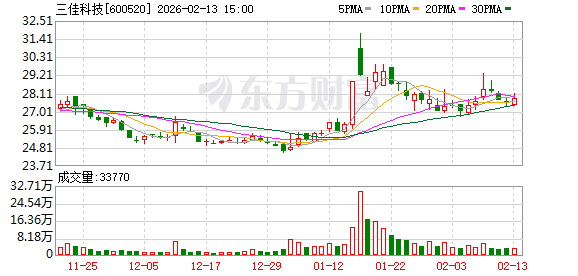
三佳科技:公司子公司三佳山田长期专注于半导体专用设备的研发与制造
Zheng Quan Ri Bao· 2026-02-13 12:13
Group 1 - The core viewpoint of the article highlights that Sanjia Technology's subsidiary, Sanjia Shantian, has become an important supplier of packaging equipment in China, focusing on the research and manufacturing of semiconductor-specific equipment [2] - The company is responding to the explosive growth in AI computing power, which is driving demand for HBM (High Bandwidth Memory) chips and 5G RF chips [2] - The project aims to address the urgent needs of advanced packaging forms such as MAP BGA and MAP QFN, focusing on breakthroughs in key technologies for ultra-low forming and high-precision plastic packaging equipment with substrate sizes within 100×300 [2]


涨停复盘:今日全市场共46只股涨停,连板股总数5只,半导体板块国风新材、圣晖集成涨停!
Jin Rong Jie· 2026-02-13 10:26
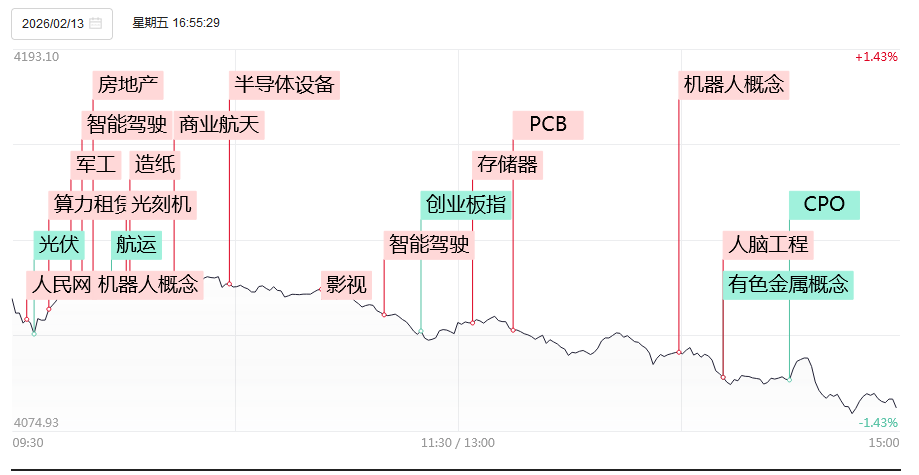
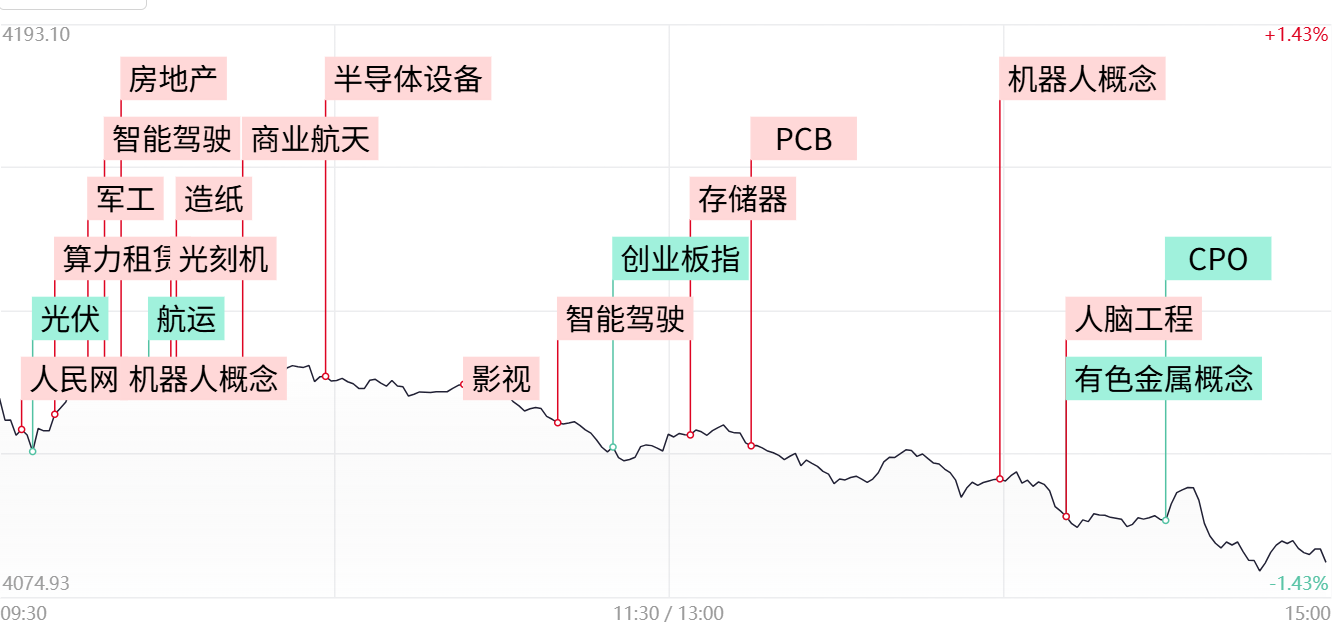
Market Overview - On February 13, the A-share market experienced a collective decline across the three major indices, with the Shanghai Composite Index falling by 1.26% to close at 4082.07 points, the Shenzhen Component Index down 1.28% to 14100.19 points, and the ChiNext Index decreasing by 1.57% to 3275.96 points [1] - The total trading volume in the Shanghai and Shenzhen markets was 199.91 billion, a decrease of 16.19 billion compared to the previous day [1] Sector Performance - The military industry sector showed strong performance, with key stocks like Yaxing Anchor Chain hitting the daily limit [1] - The semiconductor sector was active, with concepts such as photolithography machines and photolithography adhesives seeing rapid increases, exemplified by Guofeng New Materials achieving two consecutive limits in four days [1] - The paper-making sector also performed well, with Wuzhou Special Paper hitting the daily limit [1] - Conversely, the port and shipping sector saw significant declines, with China Merchants Energy and China Merchants Shipping experiencing substantial drops [1] Stock Highlights - A total of 32 stocks hit the daily limit, with five stocks achieving consecutive limits, and 11 stocks failed to maintain their limits, resulting in a limit rate of 74% (excluding ST and delisted stocks) [1] - Notable stocks included Zhangyue Technology, which achieved five consecutive limits, and Yunnan Energy Holdings, which reached three consecutive limits [1]




英诺赛科切入谷歌AI供应链 股价短期冲高后震荡
Jing Ji Guan Cha Wang· 2026-02-13 10:22
Core Viewpoint - The recent stock price fluctuations of InnoScience (02577.HK) are primarily driven by its entry into Google's AI hardware supply chain, intertwined with market sentiment, industry performance, and company fundamentals [1]. Recent Events - On February 3, 2026, InnoScience announced that its Gallium Nitride (GaN) power chips have completed significant design integration into Google's AI hardware platform and signed a compliance supply agreement, officially entering Google's AI server and data center supply chain. This collaboration focuses on high-growth areas, highlighting the company's technological leadership and serving as a direct catalyst for the stock price. Following this news, the stock opened over 11% higher on February 4 and closed up 3.90% at HKD 55.90 [2]. Stock Performance - After the announcement, the stock price continued to rise, with a single-day increase of 6.87% on February 10 (closing at HKD 60.65) and a further rise of 4.41% to HKD 61.60 on February 12. As of the close on February 13, the stock was at HKD 63.50, reflecting a cumulative increase of 17.59% from the low of HKD 54.00 on February 6. Trading activity increased significantly, with a transaction volume of HKD 798 million on February 10 and a turnover rate of 2.51%, indicating a notable rise in investor interest. On February 13, the transaction volume remained high at HKD 518 million. The semiconductor sector also showed strength during this period, with InnoScience, as a leader in GaN technology, receiving substantial capital support and achieving notable gains [3]. Industry Position - InnoScience is the world's first IDM company to achieve large-scale production of 8-inch silicon-based GaN, with a monthly capacity of 15,000 wafers and a yield rate of 97%. Its products can enhance server power density by 50%. The company has received recognition from major players like NVIDIA and Google, reinforcing market expectations regarding its positioning in the AI computing supply chain [4]. Financial Performance - In the first half of 2025, the company reported revenue of HKD 553 million, a year-on-year increase of 43.43%. The gross margin improved from -21.6% to 6.8%, although the net profit remained a loss of HKD 429 million. The collaboration with Google is expected to accelerate the commercialization of its high-end business (AI/data centers), potentially aiding in the reduction of losses [5]. Industry and Risk Analysis - Market sentiment is mixed: while the AI computing theme is gaining traction, the company's valuation is under pressure (TTM P/E ratio of -53.73). Some investors are taking profits, leading to intraday stock price volatility. The GaN sector is characterized by rapid technological iterations, and the company faces competition from international giants. Continuous losses and high R&D expenditures may exacerbate financial pressures. The stock price fluctuations reflect a market interplay between "short-term boosts from significant collaborations" and "long-term uncertainties regarding profitability." The partnership with Google validates the company's technological capabilities and growth potential, but the sustainability of the stock price will depend on the progress of order fulfillment and actual improvements in profitability [6].
阿莱德股价近期活跃上涨,机构关注其业绩增长与估值压力
Jing Ji Guan Cha Wang· 2026-02-13 10:13
Group 1 - The stock price of Alade (301419) has been active in the past week, rising by 5.52% with a price fluctuation of 6.42% from February 9 to 13, 2026 [1] - On February 12, the stock increased by 2.49% with a trading volume of 161 million yuan and a turnover rate of 5.63%, but experienced a slight decline of 0.11% on February 13, closing at 36.16 yuan [1] - The technical indicators show that the stock price has broken through the upper Bollinger Band, and the MACD indicator has turned positive, indicating a short-term bullish trend, although the 20-day resistance level at 36.31 yuan should be monitored [1] Group 2 - According to a report by Yasiwei on February 12, Alade's revenue for the first three quarters of 2025 reached 316 million yuan, representing a year-on-year growth of 25.11%, while the net profit attributable to shareholders was 52.24 million yuan, up by 89.00%, indicating a significant improvement in profitability [2] - The report forecasts a compound annual growth rate of net profit of approximately 35%-45% from 2025 to 2027, driven by the demand for 5G-A construction, AI computing power, and expansion in the new energy vehicle sector [2] - However, the current price-to-earnings ratio (TTM) stands at 61.60 times, suggesting that the valuation is relatively high, and a wait-and-see approach is recommended until performance aligns with valuation [2] Group 3 - On a macro level, the release of U.S. non-farm payroll data on February 11 and China's CPI data on February 13 has led to increased volatility in global markets [3] - The telecommunications sector has recently been catalyzed by the 5.5G concept, but on February 13, the overall telecommunications equipment sector declined by 1.51%, with Alade showing relative resilience [3]

AI 算力倒逼电力革命,节后这个方向不容错过
3 6 Ke· 2026-02-13 09:49
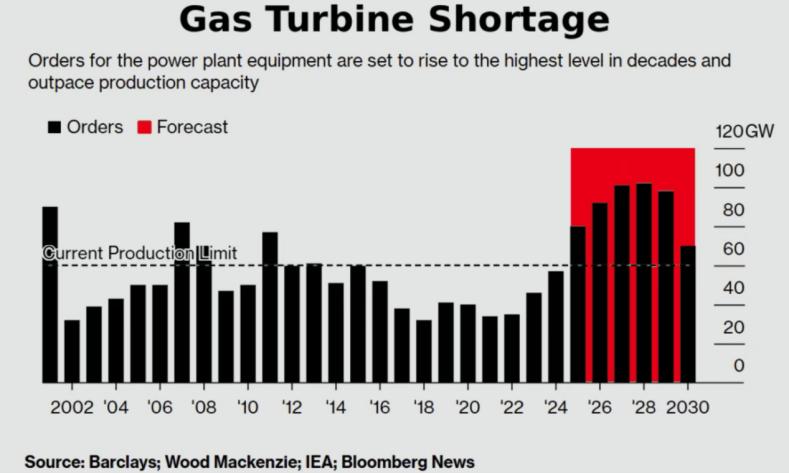
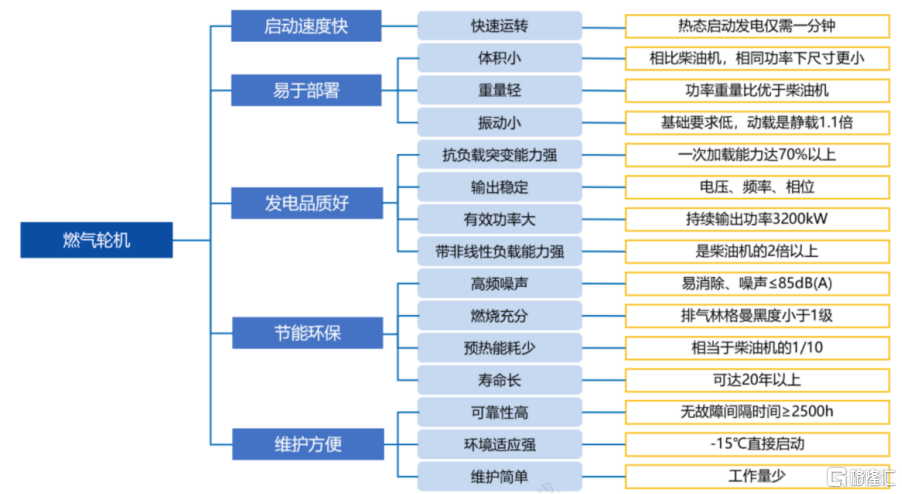
Core Viewpoint - The increasing power consumption of AI data centers is creating a significant demand for gas turbines, which are becoming the preferred solution for addressing power supply gaps in the industry [1][2]. Group 1: Demand and Supply Dynamics - The gas turbine sector is experiencing a robust uptrend driven by four key factors: explosive demand, rigid supply constraints, technological barriers, and overseas market transmission [2]. - AI data centers' electricity consumption has surged from 50MW to as high as 1GW, with projections indicating that by 2030, AI data centers will account for 16% of total U.S. electricity consumption, necessitating an additional 104-130GW of power generation capacity [2]. - The aging U.S. power grid, with an average lifespan exceeding 35 years, is unable to meet the rising electricity demand, while alternative energy sources like nuclear and renewables face long construction timelines and stability issues [2]. Group 2: Gas Turbine Market Characteristics - Gas turbines are favored for their quick startup, short construction cycles, economic efficiency, and high reliability, making them the standard power supply solution for AI data centers [3]. - The global gas turbine market is dominated by three major players—Mitsubishi Heavy Industries, Siemens Energy, and GE Vernova—who collectively hold a 76.3% market share, with future global orders expected to reach 100GW per year against a current manufacturing capacity of approximately 60GW, indicating a significant supply-demand gap [3][7]. - Orders for popular gas turbine models are currently scheduled for delivery between 2028 and 2030, highlighting the extended lead times in the industry [3]. Group 3: Industry Growth and Opportunities - Major overseas players are experiencing a surge in orders, with GE Vernova reporting a 46% year-on-year increase in gas turbine orders, and Siemens Energy's gas service business seeing a 42% increase in new orders [7]. - The supply chain for gas turbines is complex, with critical components like high-temperature blades facing long production cycles of 3-5 years, creating bottlenecks in supply [8]. - Domestic companies are positioned to benefit from the overflow of orders as international firms shift production to China, leveraging a complete high-end manufacturing supply chain and technological advancements [8]. Group 4: Investment Focus Areas - Future investments should focus on three main areas: overseas demand transmission, technological barriers, and domestic substitution [9]. - Companies with strong overseas integration capabilities and local service advantages are prioritized for short-term performance, while core component suppliers are seen as long-term stable investments due to their critical role in the gas turbine value chain [9][10]. - Domestic pioneers in gas turbine technology are expected to gain traction as the industry moves towards greater localization, particularly in heavy-duty turbines and supporting materials [10]. Conclusion - The surge in AI computing demand is reshaping the global energy supply landscape, with gas turbines emerging as the optimal short-term power solution, leading to a period of significant growth in the industry [11]. - The ongoing verification of industry data and the increasing demand for gas turbines suggest a favorable outlook for the sector, with a focus on overseas demand, technological barriers, and domestic substitution as key investment themes [11].


AI 算力倒逼电力革命,节后这个方向不容错过!
Sou Hu Cai Jing· 2026-02-13 09:18
Core Viewpoint - The increasing power consumption of AI data centers is creating a significant demand for gas turbines, which are becoming the preferred solution for addressing power supply shortages in the industry [1][2]. Group 1: Demand and Supply Dynamics - The gas turbine sector is experiencing a strong upward trend driven by four key factors: explosive demand, rigid supply constraints, technological barriers, and overseas market conditions [2]. - AI data centers' electricity consumption has surged from 50MW to as high as 1GW, with projections indicating that by 2030, AI data centers will account for 16% of the total electricity consumption in the U.S., necessitating an additional 104-130GW of power generation capacity [2]. - The aging U.S. power grid infrastructure, with an average lifespan exceeding 35 years, is unable to meet the rising electricity demand, while alternative energy sources like nuclear and renewables face long construction timelines and stability issues [2]. Group 2: Market Structure and Competition - The global gas turbine market is dominated by three major players: Mitsubishi Heavy Industries, Siemens Energy, and GE Vernova, which collectively hold a 76.3% market share [4]. - The global order for gas turbines is expected to reach 100GW per year, while current manufacturing capacity is only about 60GW, indicating a significant supply-demand gap [4]. - Popular gas turbine models currently have order backlogs extending to 2028-2030, with delivery cycles of 3-5 years [5]. Group 3: Industry Growth and Opportunities - Major companies like GE Vernova and Siemens Energy are reporting substantial increases in gas turbine orders, with GEV's new orders up 46% and Siemens Energy's gas service orders increasing by 42% year-on-year [8]. - The supply chain for gas turbines is complex, with critical components like high-temperature blades facing long production cycles of 3-5 years, creating bottlenecks in expansion [8]. - Domestic companies are positioned to benefit from the overflow of orders as international leaders shift production to China, leveraging a robust high-end manufacturing supply chain [9]. Group 4: Investment Focus Areas - Investment strategies should focus on three main areas: overseas demand transmission, technological barriers, and domestic substitution [10]. - Key investment targets include companies with strong overseas integration capabilities, core component suppliers, and domestic pioneers in technology breakthroughs [10][11]. - The gas turbine industry is entering a "golden development period" characterized by rising demand and prices, driven by the explosion of AI computing needs [11].
【每日收评】三大指数震荡下挫均跌超1%,全市场超3800股收绿,成交额不足2万亿
Xin Lang Cai Jing· 2026-02-13 08:40
Market Overview - The market experienced a day of volatility with all three major indices falling over 1%, and trading volume shrinking to 1.98 trillion yuan, a decrease of 159.1 billion yuan from the previous trading day [1] - Over 3,800 stocks in the market declined, with the military industry sector showing notable strength, including stocks like Yaxing Anchor Chain and Aviation Power hitting the daily limit [1][2] - The Shanghai Composite Index fell by 1.26%, the Shenzhen Component Index by 1.28%, and the ChiNext Index by 1.57% [1] Sector Performance - The military sector outperformed, with stocks such as Andavil and Yaxing Anchor Chain reaching their daily limit, driven by the 14th Five-Year Plan emphasizing high-quality defense modernization and the importance of national security amid global conflicts [2] - The semiconductor industry also showed activity, with stocks like Guofeng New Materials and Zhiguang Electric hitting the daily limit, supported by the announcement of Beijing Huazhuo Precision Technology's IPO plans [2][3] - The film and media sector saw a rebound in the afternoon, with Light Media rising over 15%, attributed to strong pre-sale ticket sales for the upcoming Spring Festival films [4] Individual Stock Movements - The overall sentiment in individual stocks was low, with only five stocks remaining on a consecutive limit-up streak, and the advancement rate dropping to 20% [6] - The optical communication sector weakened significantly, with stocks like Tefa Information and Tongding Interconnection hitting the daily limit down, indicating a broader market correction [6] Future Market Analysis - The market is expected to face a new round of directional choices post the upcoming Spring Festival, with current short-term risk aversion evident [8] - The military and autonomous driving sectors are highlighted as potential areas for capital inflow after the holiday, although their current popularity is relatively low [8] Key Events - China successfully completed its first sea recovery mission for a rocket's first stage, marking a significant milestone in reusable rocket technology [11][12] - The upcoming release of the DeepSeek-V4 model is anticipated to break through existing technological barriers in the AI sector, potentially accelerating innovation in China's AI industry [12]
AI 算力倒逼电力革命,节后这个方向不容错过!
格隆汇APP· 2026-02-13 08:17
Core Viewpoint - The article discusses the rising demand for gas turbines driven by the explosion of AI computing power, highlighting a significant shift in the energy supply landscape and the emergence of a golden development period for the gas turbine industry [4][16]. Group 1: Industry Demand and Supply Dynamics - AI data centers' power consumption has surged from 50MW to as high as 1GW, creating a substantial electricity supply gap that gas turbines are well-positioned to fill [4][7]. - The demand for electricity from AI data centers is expected to grow exponentially, with projections indicating that by 2030, AI data centers will account for 16% of total U.S. electricity consumption, necessitating an additional 104-130GW of power generation capacity [7]. - The global gas turbine market is characterized by an oligopolistic structure, with three major players—Mitsubishi Heavy Industries, Siemens Energy, and GE Vernova—holding a combined market share of 76.3% [8]. Group 2: Market Trends and Order Backlogs - Current global gas turbine orders are backlogged until 2028-2030, with delivery cycles ranging from 3 to 5 years, indicating strong demand and supply constraints [9]. - Major companies like GEV and Siemens Energy have reported significant increases in new gas turbine orders, with GEV's orders up 46% and Siemens Energy's gas service orders increasing by 42% year-over-year [12]. Group 3: Supply Chain and Technological Barriers - The gas turbine supply chain is complex, with critical components like high-temperature blades facing production bottlenecks due to long expansion cycles and cautious capital expenditure from leading manufacturers [12][13]. - The article emphasizes the importance of technological barriers in the gas turbine industry, which create high entry barriers for smaller firms and allow leading companies to maintain profitability amid rising demand [13]. Group 4: Investment Opportunities and Strategic Focus - Future investment strategies should focus on three main themes: overseas demand transmission, technological barriers, and domestic substitution, with an emphasis on identifying core companies that can leverage these trends [14][15]. - Key areas for investment include leading companies with integrated capabilities, core component suppliers, and domestic pioneers in gas turbine technology, particularly in heavy-duty turbines and supporting materials [15]. Conclusion - The surge in AI computing demand is reshaping the global energy supply landscape, with gas turbines emerging as the optimal short-term power solution, leading to a period of simultaneous volume and price increases in the industry [16].