创新药

Search documents
综合晨报:美国12月CPI同比上涨2.7%符合预期-20260114
Dong Zheng Qi Huo· 2026-01-14 00:45
[T报ab告le_日R期an:k] 2026-01-14 宏观策略(美国股指期货) 美国 12 月 CPI 同比上涨 2.7%符合预期 美国 12 月 CPI 符合预期,缓解市场通胀担忧,周期板块相对跑 赢,指数高位震荡。 宏观策略(黄金) 美联储穆萨勒姆:通胀水平更接近 3%而非 2% 综 金价震荡收跌,鲍威尔被刑事诉讼以及地缘政治风险推动的上 涨势头缓解,美国 12 月核心 CPI 略低于预期,但美联储萨勒姆 的讲话表明短期降息意愿不高,金价回吐涨幅。 日度报告——综合晨报 美国 12 月 CPI 同比上涨 2.7%符合预期 合 宏观策略(股指期货) 晨 A 股放量回调,止步 17 连阳 报 A 股市场放量调整,前期热门的商业航天概念普跌,但创新药概 念涨幅较大。近期股市热度较高,监管层面出手稳定市场,A 股 或有震荡,但中期上涨趋势仍在。 农产品(棉花) USDA1 月报告:美国及全球棉花期末库存下调 USDA1 月报告下调 25/26 美及全球期末库存,但报告调整幅度 不大,未改变美棉偏宽松、全球松平衡的供需格局,且市场更 关注需求及新作种植意向,报告利多影响有限。 有色金属(锌) 1 月 12 日【 ...



湖北一年新增4个一类创新药 药品原始创新获历史最佳成绩
Chang Jiang Shang Bao· 2026-01-13 23:52
Core Insights - In 2025, Hubei province achieved a record high with 4 new Class I innovative drugs and 3 Class III innovative medical devices approved for market, with Wuhan contributing 3 of the Class I drugs [1][2] Group 1: Innovative Drug Developments - Hubei's new Class I innovative drugs include two significant products from local companies: He Yuan Bio (688765.SH) and Jianmin Pharmaceutical (600976.SH) [1][2] - He Yuan Bio's recombinant human albumin injection (rice-based) is the first approved recombinant human serum albumin product in China, addressing the issue of reliance on imported albumin [2][5] - Jianmin Pharmaceutical's pediatric heat-reducing patch is the only approved traditional Chinese medicine gel patch for children in the last 20 years, filling a market gap for pediatric external treatments [3] Group 2: Policy Support and Industry Ecosystem - Hubei's innovative achievements are supported by a robust industrial ecosystem, with over 3,000 biopharmaceutical companies in the Optics Valley Biotech City, creating a comprehensive industry chain from R&D to production [4] - The Hubei provincial government aims to double the biopharmaceutical industry's revenue to 250 billion yuan by 2027, with specific targets for companies exceeding 500 million yuan, 100 million yuan, and 50 million yuan in revenue [4] - The provincial drug regulatory authority has implemented measures to enhance the approval process for innovative products, significantly boosting the vitality of the pharmaceutical industry [4][5]

博道基金张建胜:追求成长但不为高溢价“买单”
Zhong Guo Zheng Quan Bao· 2026-01-13 22:53
Core Viewpoint - The current market equates "investing in technology" with "buying AI," with popular sectors like optical modules seen as entry points into the AI trend. However, fund manager Zhang Jiansheng from Bodao Fund adopts a unique investment style that focuses on early-stage opportunities rather than chasing hot stocks, achieving significant returns through a diversified approach [1][2]. Investment Strategy - Zhang's investment framework emphasizes a "bottom-up, moderately diversified, and balanced growth" approach, with a strong focus on valuation and drawdown control. His cautious risk preference stems from his early career experiences during market volatility [2][3]. - He employs a "left-side trading" strategy, setting target market value ranges for companies and gradually selling once stock prices enter these pre-set areas, avoiding high premium purchases [2][3]. Market Insights - Zhang believes that leading companies with high market attention require deep industry knowledge to generate excess returns. He prefers to identify "left-side" targets with lower market attention and reasonable valuations, which helps manage downside risks [3][4]. - His portfolio is diversified across high-end manufacturing, TMT, and consumer sectors, with no single industry exceeding 25% of holdings, resulting in better drawdown control compared to other growth-style fund managers [3][4]. Portfolio Construction - Zhang's focus on valuation allows him to uncover opportunities in less popular market segments, such as his early 2024 positioning in the Hong Kong stock market and the innovative drug sector in 2025, where he aimed to capitalize on valuation recovery [4][5]. - He combines valuation assessments with industry trend analysis, as seen in his 2025 investments in semiconductor storage, where he identified low valuations alongside positive industry signals [5][6]. Future Market Outlook - Zhang maintains an optimistic view on the A-share market, supported by a significant decrease in risk premiums, ongoing regulatory support, and signs of corporate earnings recovery [6][7]. - He plans to focus on three main areas in 2026: AI applications, resource sectors benefiting from "re-industrialization" and "re-globalization," and valuation recovery opportunities in traditional industries like chemicals and consumer goods [6][7][8].
博道基金张建胜: 追求成长但不为高溢价“买单”
Zhong Guo Zheng Quan Bao· 2026-01-13 22:29
Core Viewpoint - The current market equates "investing in technology" with "buying AI," with many investors viewing optical modules as a ticket to the AI market. However, some fund managers, like Zhang Jiansheng from Baodao Fund, adopt a different approach by focusing on growth without chasing extreme hot stocks, achieving significant returns through early-stage investments in various sectors [1][2]. Investment Strategy - Zhang Jiansheng's investment framework emphasizes a "bottom-up, moderately diversified, and balanced growth" approach, with a strong focus on valuation and drawdown control. His cautious risk preference stems from early career experiences during market volatility [2]. - His investment style features distinct left-side trading characteristics, where he sets target market values for companies and gradually sells once stock prices reach predetermined levels, avoiding high premium purchases [2][3]. Market Insights - Zhang believes that leading companies with high market attention and expectations require deep industry knowledge to generate excess returns. He prefers to identify "left-side" targets with lower market attention and reasonable valuations, which helps manage downside risks [3][4]. - His portfolio construction strategy involves limiting single industry holdings to no more than 25%, maintaining a balanced allocation across high-end manufacturing, TMT, and consumer sectors, which aids in drawdown control [3][4]. Valuation Focus - Zhang's emphasis on valuation allows him to uncover opportunities in less popular market segments, such as his early 2024 positioning in the Hong Kong stock market and the 2025 focus on the innovative drug sector, where he aims to profit from valuation recovery [4][5]. - He recognizes that low valuations do not guarantee stock price increases; thus, identifying marginal changes in industry dynamics is crucial. His investment in semiconductor storage reflects a dual assessment of valuation and industry trends [5][6]. 2026 Market Outlook - Zhang maintains an optimistic view of the A-share market, supported by three key factors: a significant decrease in risk premiums, ongoing regulatory support for capital markets, and signs of corporate earnings recovery [6][7]. - In terms of investment focus for 2026, he highlights three areas: AI, particularly in storage and connectivity, resources and high-end manufacturing benefiting from "re-industrialization" and "re-globalization," and valuation recovery opportunities in traditional industries like chemicals and consumer sectors [6][7].
A股成交额连续3日超3万亿元 医药股集体走强
Shang Hai Zheng Quan Bao· 2026-01-13 18:34
Group 1: Market Overview - The A-share market experienced an overall adjustment, with the Shanghai Composite Index closing at 4138.76 points, down 0.64%, and the Shenzhen Component Index down 1.37% [2] - The trading volume in the Shanghai and Shenzhen markets reached 36,988 billion, marking the third consecutive trading day exceeding 30 trillion, setting a new record for daily trading volume in A-shares [2] Group 2: AI and Pharmaceutical Sector Performance - The AI application sector remained active, with the GEO (Generative Engine Optimization) direction leading the gains, and several stocks like Ingrity Media and Tianlong Group achieving multiple consecutive gains [2] - Pharmaceutical stocks collectively surged, particularly in AI healthcare and innovative drugs, with companies like Nossger and Rongchang Bio hitting the 20% daily limit [5][6] Group 3: Pharmaceutical Sector Catalysts - Leading companies in the pharmaceutical sector reported positive earnings forecasts, with WuXi AppTec expecting a net profit of approximately 19.15 billion, a year-on-year increase of about 102.65% for 2025 [6] - Rongchang Bio signed an exclusive licensing agreement with AbbVie for its new PD-1/VEGF dual-specific antibody drug, receiving an upfront payment of $650 million and potential milestone payments up to $4.95 billion [6] - A new AI joint innovation lab is being established by NVIDIA and Eli Lilly in the San Francisco Bay Area, with a planned investment of up to $1 billion over five years, focusing on AI-enabled drug discovery and development [6] Group 4: Market Sentiment and Future Outlook - The market is expected to maintain a slow upward trend, with structural differentiation intensifying, as highlighted by the ongoing policy catalysts and industry rotations [8] - Analysts suggest that the A-share market will continue to experience a slow growth pattern in 2026, with technology and resource sectors identified as core investment themes [9]


JPM峰会上的中国医疗公司,现在都走了到哪一步?
GLP1减重宝典· 2026-01-13 14:15
Core Viewpoint - The article discusses the evolving landscape of the Chinese healthcare sector, particularly in the context of the upcoming JP Morgan Healthcare Conference, highlighting the diversification of Chinese companies and their strategic positioning in the global market [4][29]. Group 1: Conference Overview - The JP Morgan Healthcare Conference is the largest and most informative international healthcare investment and business development meeting, scheduled for January 12-15, 2026, in San Francisco [4]. - Approximately 22 Chinese companies are participating, categorized into four distinct roles: transaction-oriented innovative drug companies, disclosure companies at commercialization or regulatory milestones, supply-side platforms for global R&D and production outsourcing, and device companies focusing on efficiency and international expansion [4]. Group 2: Supply-Side Platforms - Supply-side platform companies are becoming essential in the global innovation chain, as they focus on delivering stable and efficient R&D and production capabilities, especially during periods of increased volatility in innovative drug companies [6][8]. - WuXi Biologics is shifting its focus from project quantity to project quality, emphasizing capacity utilization and long-term contract stability as key indicators of its value in the global biopharmaceutical supply chain [8]. Group 3: Cross-Border Licensing and Outbound Companies - The pricing logic for Chinese innovative drugs in cross-border licensing has evolved, with a focus on the overall deliverable capabilities rather than just the individual molecules [14]. - Companies like Kelun-Blotech and BaiLi Tianheng are exemplifying this trend by integrating their platforms into global R&D systems and establishing long-term collaborations with multinational pharmaceutical companies [16][18]. Group 4: Regulatory and Commercialization Companies - Companies that have accumulated clinical data and registration progress are transitioning towards verifiable sales and profit curves, shifting their valuation logic from future expectations to tangible cash flows [19]. - Zai Lab and Antengene are in the early commercialization stages, with their success hinging on their products' acceptance in clinical settings and the speed of prescription growth [21][23]. Group 5: Medical Device Companies - Mindray Medical is recognized for its comprehensive coverage of hospital workflows, with a focus on multi-product synergy rather than single-device performance, which is crucial for establishing long-term customer relationships [26]. - MicroPort Scientific is navigating a challenging environment where operational efficiency and cash flow management are critical for sustaining long-term clinical validation and international expansion [28]. Group 6: Industry Trends and Insights - The Chinese healthcare sector is transitioning from a phase of visibility to one of selection, where companies must clearly define their positions and deliverables in a high-intensity global exchange [29]. - The differentiation among Chinese companies in the global system is accelerating, with a clear divide between transaction-oriented innovative drug companies and those that have crossed critical regulatory milestones, focusing on verifiable growth [31].



中国生物制药12亿收购赫吉亚,中外大药企缘何“独宠”小核酸?
2 1 Shi Ji Jing Ji Bao Dao· 2026-01-13 13:36
Core Viewpoint - The acquisition of Hegia Biotech by China National Pharmaceutical Group for 1.2 billion RMB is seen as a strategic move to strengthen its position in the rapidly growing small RNA drug sector, which is becoming a new frontier in innovative pharmaceuticals [1][2]. Company Summary - China National Pharmaceutical Group has expanded its portfolio by acquiring Hegia Biotech, a company specializing in siRNA innovation, which has developed six delivery platforms and has four drugs in clinical stages [1][2]. - Hegia Biotech, founded in 2018, has a strong R&D team with over 20 years of experience and has secured more than 50 core patents, establishing a comprehensive drug development system from target discovery to clinical proof of concept [2][3]. - The acquisition is expected to enhance China National Pharmaceutical Group's capabilities in the large chronic disease market, providing a complete closed loop from technology development to clinical transformation [3][10]. Industry Summary - The small RNA drug sector is emerging as a significant area of innovation, following PD-1 and ADC, with global pharmaceutical companies actively investing in this space [2][4]. - The global small RNA drug market is projected to grow from $5.7 billion in 2024 to $20.6 billion by 2029, with a compound annual growth rate (CAGR) of 29.4% [7]. - In China, the RNAi therapy market is expected to expand from approximately $4 million in 2022 to over $30 million by 2030, indicating a CAGR exceeding 300% [7]. - The successful listing of Suzhou Rebio Biotech on the Hong Kong Stock Exchange signifies growing recognition of China's independent R&D capabilities in the small RNA drug field [6][5]. - The industry is witnessing significant advancements, including the successful overcoming of delivery patent barriers and the establishment of a mature industrial chain ecosystem [5][6]. Competitive Landscape - The competition in the small RNA drug market will focus on three dimensions: technological platform advantages, depth and differentiation of pipelines, and globalization capabilities [10]. - Companies are expected to pursue mergers and acquisitions to quickly acquire technology and teams, as the high technical barriers in the small RNA sector may hinder independent research and development [10].

智通港股解盘 | 担忧地缘政治多数黄金股创历史新高 利好推动CXO全线走强
Zhi Tong Cai Jing· 2026-01-13 13:11
Market Overview - The A-share market has experienced a correction after continuous growth, while the Hong Kong stock market showed signs of catching up, opening with a gap and closing up 0.90% with a trading volume of HKD 315.2 billion [1] - The AI sector is gaining significant attention, with Alibaba's Tongyi Qianwen series models achieving over 700 million downloads, making it the highest downloaded open-source AI series on the Hugging Face platform [1] - Concerns remain in the market due to geopolitical tensions, particularly with the U.S. urging citizens to leave Iran, which has affected investor sentiment [1] AI Sector - Several domestic AI companies, including MiniMax and Zhipu AI, have recently gone public in Hong Kong, attracting market interest, with the latest listing of Zhaoyi Innovation seeing a rise of over 40% [2] - Despite recent adjustments in the AI sector, the overall interest in high-tech companies remains strong [2] Pharmaceutical and Biotechnology - Merck's CEO indicated plans for aggressive acquisitions to strengthen its innovative drug pipeline before the expiration of the patent for Keytruda in 2028, which is positive news for Chinese innovative drug companies [3] - WuXi Biologics reported record high upfront and total payment amounts for research services, with potential milestone payments exceeding USD 4 billion, leading to a positive outlook for CXO companies [3] Commercial Aerospace - A number of companies in the commercial aerospace sector issued risk warnings, indicating that their aerospace business constitutes a minimal portion of their operations, with most being less than 1% [2] - Regulatory efforts appear to be aimed at cooling down the commercial aerospace hype, as evidenced by a nearly 10% drop in shares of Goldwind Technology [2] Renewable Energy and Storage - The domestic energy storage market saw a significant increase in bidding volume, with a year-on-year growth of 61% in new bidding capacity [5] - Companies like Guofeng Lithium and Tianqi Lithium have performed well, driven by market expectations for increased demand in the short term due to policy changes regarding export tax rebates for photovoltaic and battery products [4] Gold and Mining - Zijin Mining International's stock rose over 7% as gold prices reached new highs, supported by rising risk aversion among investors [7] - The company has a significant amount of gold resources and a low average acquisition cost for gold mines, which positions it favorably for future growth [8] - The company’s gold production is expected to maintain a compound annual growth rate (CAGR) of over 15% through 2025-2027, driven by both internal growth and acquisitions [8]
谨慎补仓?
第一财经· 2026-01-13 11:42
Core Viewpoint - The A-share market is experiencing a collective pullback, with the ChiNext index leading the decline, indicating increased short-term adjustment pressure and a shift in market sentiment towards defensive sectors [5][7]. Market Performance - The Shanghai Composite Index is at 4138.76, with 1619 stocks rising and 3726 stocks falling, reflecting a poor profit-making effect in the market [9][5]. - The trading volume in both markets has exceeded 3 trillion yuan for three consecutive days, marking a historical high, supported by both incremental and existing capital adjustments [5]. Capital Flow - There is a net outflow of 805.56 billion yuan from institutional funds, while retail investors are showing a net inflow [6]. - Institutions are exhibiting a "risk-averse and divergent strategy," reallocating funds from high-growth sectors like commercial aerospace and AI applications to undervalued defensive stocks such as banks and pharmaceuticals [7]. Investor Sentiment - Retail investor sentiment shows that 75.85% are cautious, with 36.99% increasing their positions and 19.78% reducing them, indicating a shift towards more defensive strategies [8][11].

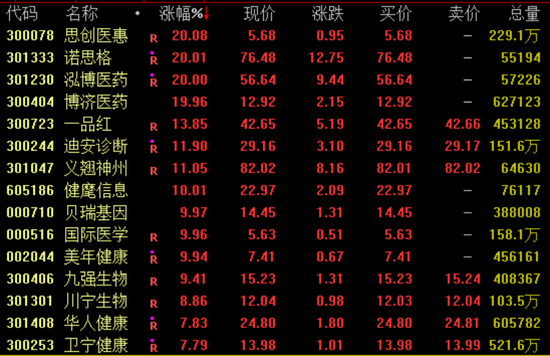
A股,今日回调!603598,7天6板,提示GEO业务风险
Xin Lang Cai Jing· 2026-01-13 10:24
Market Overview - The A-share market experienced a pullback on January 13, with the Shanghai Composite Index dropping nearly 1% and the ChiNext Index falling over 2% [1][14] - The total trading volume across all A-shares reached approximately 3.7 trillion yuan, setting a new historical record and surpassing 3 trillion yuan for three consecutive trading days [1][14] - The Shanghai Composite Index closed down 0.64% at 4138.76 points, while the Shenzhen Component Index fell 1.37% and the ChiNext Index decreased by 1.96% [1][14] Sector Performance - The commercial aerospace sector saw a significant decline, with stocks like Aerospace Huanyu dropping over 18% and Shaoyang Hydraulic falling more than 13% [8][22] - The semiconductor sector also faced losses, with companies like Changguang Huaxin and Saiwei Microelectronics dropping over 10% [15] - Conversely, the insurance and banking sectors performed well, with Xinhua Insurance rising over 4% to reach a new historical high and China Life increasing by more than 3% [15] AI Medical Sector - The AI medical concept saw strong performance, with stocks such as Nossger and Hongbo Pharmaceutical hitting the daily limit, and Di'an Diagnostics rising nearly 12% [2][16] - OpenAI's recent launch of ChatGPT Health aims to integrate multi-source health data, marking a significant advancement in AI's penetration into the healthcare sector [18] - The domestic AI medical application is accelerating, with Ant Group's AI medical product achieving over 15 million monthly active users, indicating a deepening integration of internet healthcare and AI [18] Innovative Drug Sector - The innovative drug concept also gained traction, with stocks like Rongchang Bio and Puris reaching the daily limit of 20% [5][19] - The National Medical Products Administration (NMPA) plans to implement precise policies to support innovative drugs, including establishing a market exclusivity system for pediatric and rare disease medications by 2026 [19] - Several new drugs have been approved for market release in early 2026, indicating a recovery trend in the biopharmaceutical sector [19] GEO Concept - The GEO (Generative Engine Optimization) concept became active, with Tianlong Group hitting the daily limit and stocks like Zhidema and Yidian Tianxia rising over 10% [20][21] - The GEO business of Yingu Media is still in the planning stage and has not yet formed a mature business model, indicating uncertainty in market recognition and profitability [21] Commercial Aerospace Sector Risks - The commercial aerospace sector is facing significant volatility, with companies like Aerospace Huanyu and Shaoyang Hydraulic issuing warnings about high speculative risks due to their stock prices deviating significantly from market trends [10][24] - Companies in this sector have reported that their products are primarily used in industries like metallurgy and hydropower, rather than directly serving the commercial aerospace sector [24][25]