
产品创新

Search documents
未来10年,最挣钱的凭什么一定是这群人?
创业家· 2025-10-09 10:10
Core Insights - Amazon's report on global e-commerce trends highlights emerging consumer demands and market opportunities driven by technology, emotional needs, and lifestyle changes [1][2][39]. Group 1: AI and Emotional Engagement - The trend of "AI Quality Space" indicates that homes are evolving into emotionally interactive environments, with over 65% of consumers in Europe and the US willing to spend more on smart home products [3][4]. - The market for personalized customization, emotional interaction, and privacy is significant, focusing on how technology can meet emotional needs [7]. Group 2: Sleep Economy - The "Dream Cabin" trend addresses the growing issue of sleep quality, with 37% of American adults reporting a decline in sleep quality in 2023 [10]. - Consumers are increasingly willing to invest in products that enhance sleep quality, reflecting a shift towards valuing health and lifestyle quality [12]. Group 3: Workplace Happiness - The "Happy Office" trend emphasizes the importance of ergonomic designs in workspaces, with a focus on products that enhance comfort and productivity [13][14]. Group 4: Subtle Technology Integration - The trend of "Technology in Everyday Life" reflects a consumer preference for seamless technology integration that enhances quality of life without being intrusive [15]. Group 5: Pet Economy - The pet industry is projected to grow by 45% over the next six years, with 55% of pet owners in Europe and Japan willing to spend more on pet health insurance and wellness products [16][17]. - Pets are increasingly viewed as family members, creating demand for health-focused pet products and services that foster emotional connections [19]. Group 6: Outdoor Cooking - The trend of outdoor cooking is gaining popularity, driven by a desire for unique experiences and social interactions in natural settings [20][22]. Group 7: Mobile Living Spaces - Vehicles are transforming into multifunctional spaces, serving as homes, entertainment areas, and offices, with a focus on enhancing comfort and efficiency during travel [23][27]. Group 8: Generation Z Consumers - Generation Z, as digital natives, prioritize values-driven consumption, personalization, and unique experiences, emphasizing the need for brands to engage authentically [28][30]. Group 9: Health and Fitness - The "Fitness Pioneer" trend highlights a growing focus on scientific, efficient, and personalized approaches to health and fitness, supported by technology [31][34]. Group 10: Esports Market - The esports market is rapidly expanding, particularly in emerging markets, with consumers seeking high-performance equipment and immersive experiences [35][36]. Group 11: Key Drivers of Trends - The report identifies three main drivers of these trends: accelerated technology, emotional shifts, and evolving lifestyles, reflecting the complex needs of contemporary consumers [39][40].


初中辍学卖包子,安徽老板年入16亿
创业家· 2025-10-09 10:10
Core Viewpoint - The article highlights the success story of Baba Food, a leading Chinese steamed bun company, which has transformed from a small business into a publicly listed company with an annual revenue of 1.6 billion and a market value of several billion, driven by the founder Liu Huiping's innovative approach and commitment to quality [5][21]. Group 1: Company Background - Baba Food, known as the "first stock of Chinese steamed buns," has been in operation for over 20 years and has achieved significant financial milestones, including a revenue of 8.35 billion in the first half of 2025, representing a year-on-year growth of 9.31% [6][21]. - The founder, Liu Huiping, is a self-made entrepreneur who started from humble beginnings in Anhui Province and faced numerous challenges before establishing a successful brand in Shanghai [7][12][13]. Group 2: Business Strategy and Growth - Liu Huiping recognized the need for localization and product differentiation to succeed in the competitive Shanghai market, leading to the establishment of "Liu Shifu Da Bao," which later rebranded to "Baba Mantou" to appeal to a broader audience [18][19]. - The company has implemented a standardized production process through a central kitchen to ensure product quality and consistency, which has been crucial for its expansion and franchise model [20][21]. Group 3: Financial Performance - Baba Food's financial performance has shown resilience, with a notable increase in net profit by 18.08% year-on-year, reaching 1.32 billion in the first half of 2025 [21]. - The company has also expanded its franchise network, with a total of 5,685 stores nationwide by mid-2025, reflecting a net increase of 542 stores in the first half of the year [21]. Group 4: Challenges and Future Outlook - Despite its successes, Baba Food has faced challenges, including a decline in average store revenue from 254,500 in 2022 to 242,300 in 2024, prompting the company to implement various strategies to improve store performance [23][24]. - The company is actively pursuing market expansion in central China and has formed strategic partnerships to enhance its market presence, aiming to become the leading brand in the Chinese steamed bun sector [24][25].

FERRARI CAPITAL MARKETS DAY TARGETING NEW HEIGHTS
Globenewswire· 2025-10-09 09:47
Core Insights - Ferrari has presented its profitability targets for the end of the decade, upgrading its 2025 guidance and exceeding 2026 profitability targets one year ahead of schedule [1][7]. Financial Targets - The company aims for net revenues of approximately €9.0 billion by 2030, with a compounded annual growth rate of around 5%, primarily driven by sports cars and related activities [2]. - EBIT is projected to reach at least €2.75 billion in 2030, with a margin of at least 30%, supported by a strong product mix and limited-edition models [3]. - EBITDA is targeted to be at least €3.6 billion in 2030, with an EBITDA margin of at least 40%, indicating strong profitability and cash flow generation [4]. Shareholder Returns - Ferrari plans to increase the dividend payout to 40% of adjusted net profit starting from the 2025 annual results, leading to a cumulative dividend distribution of approximately €3.5 billion from 2027 to 2031 [6]. - The company will initiate a new share repurchase program of around €3.5 billion from 2026, aligned with industrial free cash flow generation [8]. Operational Insights - The company anticipates cumulative industrial free cash flow of approximately €8.0 billion over the 2026-2030 period, with capital expenditures estimated at around €4.7 billion [4][7].


瑞幸多个产品获“首创认证”,中国咖啡创新实力彰显
Zhong Guo Xin Wen Wang· 2025-10-09 06:24
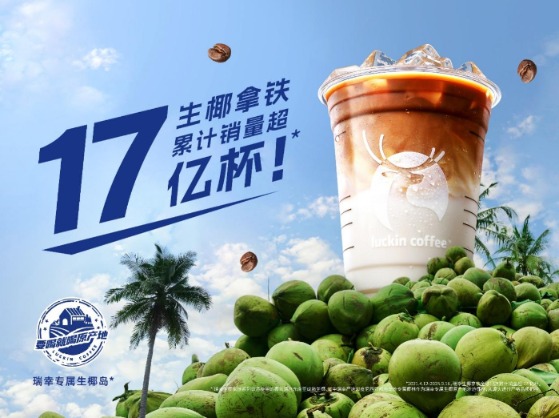
Core Insights - Luckin Coffee's three flagship products, including the Coconut Latte, Ice Coconut Latte, and Orange C Americano, have received the "Luckin Original" certification from an independent research institution, highlighting the company's innovative capabilities in the coffee industry [1][3] - The Coconut Latte has been recognized as the best-selling coconut latte globally, with over 1.7 billion cups sold as of September 2023, showcasing Luckin's significant impact on the coffee market and its role in upgrading China's coffee industry [2][3] Company Innovation - Luckin Coffee has established a digital product development system that continuously optimizes and upgrades product formulas, resulting in high-quality coffee beverages that appeal to health-conscious consumers [3][4] - The Coconut Latte combines plant-based coconut milk with coffee, creating a unique flavor profile that has led to its status as a phenomenon in the ready-to-drink beverage market [3][4] - The Orange C Americano has also gained popularity, with cumulative sales exceeding 350 million cups by the second quarter of 2023, reflecting consumer preference for healthier coffee options [3][4] Industry Impact - Analysts note that Luckin Coffee's ability to create multiple blockbuster products demonstrates its successful establishment of a scalable product innovation mechanism, positioning it as a significant innovator in China's ready-to-drink beverage industry [4] - The company has invested heavily in quality control, assembling a professional coffee research and development team and employing world champion baristas to design and develop coffee recipes, leading to multiple awards from the International Institute of Coffee Tasting [4][5] - Luckin Coffee has built smart roasting bases in Fujian and Jiangsu, with plans for additional facilities, creating a supply network with an annual capacity of 155,000 tons, ensuring efficient production and quality management [5] Future Prospects - The recent certifications from third-party institutions affirm Luckin's originality and systematic innovation capabilities, which are crucial in a competitive market characterized by homogenization [5] - As Luckin continues to expand internationally, it is expected to influence global coffee consumption patterns and enhance the impact of Chinese coffee culture [5]

新标家居集团董事长国庆深入华南市场巡店,赋能终端决胜市场
Sou Hu Cai Jing· 2025-10-09 02:48
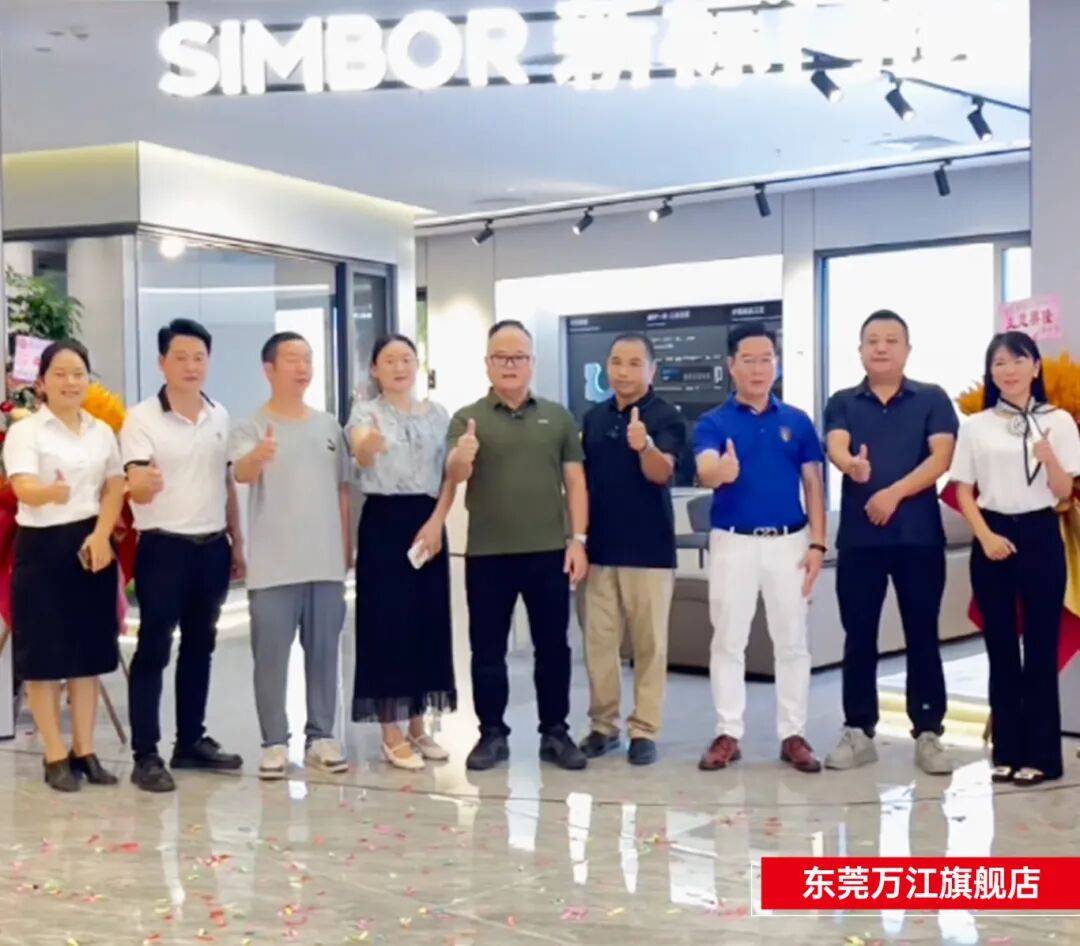
Core Insights - The National Day and Mid-Autumn Festival holiday period serves as a crucial window for consumer potential and market engagement, with the company demonstrating a strong commitment to market presence and collaboration with distributors [1][26]. Group 1: Market Engagement - The chairman of the company, Huang Dongjiang, conducted an extensive market visit in South China, emphasizing the importance of firsthand market insights and direct communication with distributors and frontline teams [2][10]. - During store visits, the focus was on key performance indicators such as foot traffic and conversion rates, highlighting the necessity of being attuned to consumer trends [2][10]. Group 2: Product Innovation - The company received positive feedback on its new large glass panoramic curtain wall window series, which addresses industry pain points related to balancing visibility and safety [7]. - The success of this product reinforces the company's innovation strategy, which is rooted in understanding user scenarios and translating technical advantages into perceivable value for consumers [7]. Group 3: Operational Empowerment - The market visit was not only a research initiative but also aimed at empowering terminal operations through discussions on marketing strategies, service standards, and customer experience [10]. - Huang provided on-site guidance to address operational issues identified during the visits, ensuring that support policies are effectively implemented [10]. Group 4: Strategic Collaboration - In discussions with distributors, the company emphasized its comprehensive supply chain support and multi-category product layout, which are essential for enhancing operational capabilities and market responsiveness [17][19]. - The company aims to build a collaborative ecosystem with distributors, focusing on shared growth and mutual benefits in a competitive market landscape [19]. Group 5: Long-term Commitment - The visit reinforced the company's long-term commitment to brand development and user value, particularly during a critical phase of industry transformation [26]. - The company plans to continue prioritizing consumer-centric innovation and collaboration with partners to foster high-quality growth [26].
雷军:小米17系列首销权益延续至10月31日
Sou Hu Cai Jing· 2025-10-08 17:33
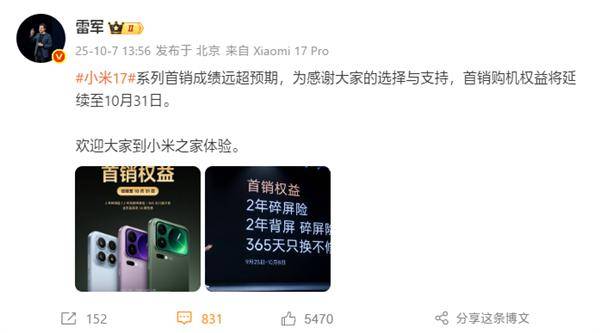
Core Insights - Xiaomi's founder and CEO Lei Jun announced that the sales performance of the Xiaomi 17 series exceeded expectations, leading the company to extend the promotional sales rights until October 31 [1] - The Xiaomi 17 series achieved over 1 million units sold, with the fastest sales record compared to previous models, and set new sales records for the premium smartphone segment in China [3] Group 1 - Xiaomi 17 series offers three major consumer benefits: 2-year screen protection, 2-year back screen protection, and a 365-day exchange service, reflecting the company's confidence in product quality and understanding of consumer needs [1] - The Xiaomi 17 series achieved a sales record of over 1 million units within a short time frame, with the Xiaomi 17 Pro Max breaking sales and revenue records for the first day of sales among domestic smartphones [3] Group 2 - The Pro Max model was the best-selling among the three models in the Xiaomi 17 series, with the Pro model following closely, successfully crossing the 6000 yuan price threshold, indicating a significant improvement in product structure [3] - Despite the risks associated with bold innovations and changes in strategy, positive user feedback and purchasing enthusiasm validate the effectiveness of Xiaomi's approach in the market [3]

福建:“圣诞订单”提前到 企业创新拓市场
Xin Hua Wang· 2025-10-08 08:18
Group 1 - The core viewpoint of the articles highlights the significant growth in Christmas product exports from Fujian Yinghao Cultural Creative Co., Ltd., with a year-on-year increase of approximately 12% in Christmas goods exports as of this year [1] - The company experienced an earlier production and shipping peak by 1 to 2 months compared to previous years, driven by overseas clients' concerns over logistics delays and changing trade environments, leading them to place orders earlier [1] - The growth in Christmas orders is attributed to the company's development of green technology, utilizing recycled plastic materials, which are well-received in the European market, and the integration of traditional Chinese cultural elements into Western Christmas products [1] Group 2 - The textile and apparel sector is also a significant category for Christmas orders, with an early export period leading to increased export value and a slight recovery in the foreign trade situation [2] - Companies are actively innovating and expanding into diverse international markets, maintaining traditional markets like the EU and Japan while exploring emerging markets in Africa and Latin America [2] - Some companies have achieved breakthroughs through product innovation and brand building, contributing to the overall positive trend in Christmas product exports [2]
开店越过100家,蔡澜点心奔赴10个亿
21世纪经济报道· 2025-10-07 23:56
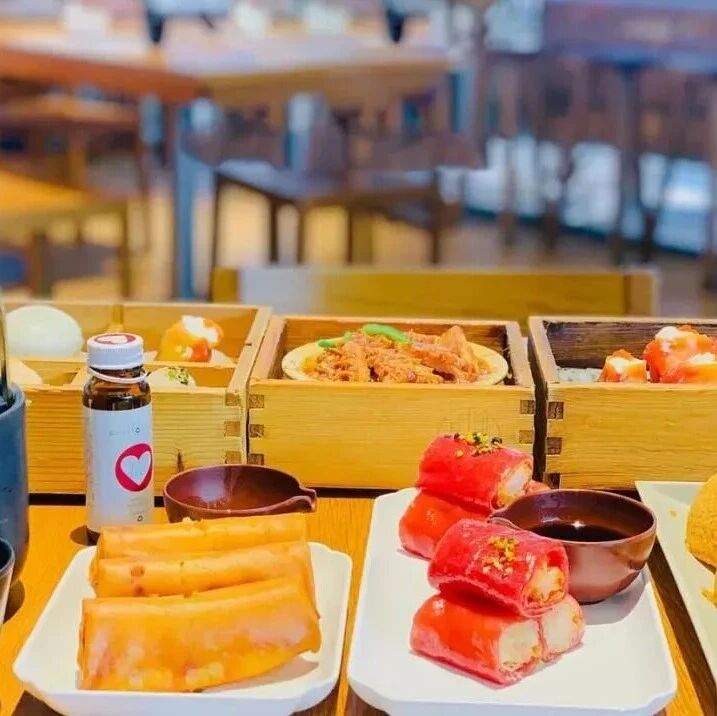
Core Viewpoint - The article discusses the growth and strategy of Cai Lan Dim Sum, a Cantonese dining brand founded by the renowned writer and food critic Cai Lan, focusing on appealing to a younger demographic while maintaining its cultural roots and quality standards [1][5]. Company Overview - Cai Lan Dim Sum has expanded steadily over the past seven years, currently operating 100 stores nationwide, with an annual customer flow of approximately 10 million and an average spending of around 90 yuan per person, indicating a business volume nearing 1 billion yuan [3][5]. - The brand is managed by Cai Wei Xiong, who joined in 2018 and emphasizes a balanced growth strategy, aiming for a reasonable pace of opening 20 stores per year [3][5]. Target Demographic - The brand targets young consumers, with over 8 million members contributing to nearly 65% of total sales, and has designed its menu and store ambiance to attract this demographic [5][7]. - The store environment features natural materials and a relaxed atmosphere, strategically located in urban shopping centers to enhance accessibility for young shoppers [7][8]. Product Innovation - Cai Lan Dim Sum focuses on product innovation, with a commitment to handmade items and a transparent kitchen process, where the kitchen occupies about one-third of the store space [12]. - The brand has a dedicated team that proposes around 400 new product concepts annually, with about one-third making it to development after rigorous internal tasting sessions [12]. Cultural Integration - The brand maintains its cultural identity by not overly adapting to local tastes, ensuring that its offerings reflect the essence of Lingnan culture [8][10]. - Recent collaborations with artisans in traditional crafts have been initiated to enhance the cultural experience and freshness of the brand [10]. Future Outlook - Cai Lan Dim Sum is optimistic about the market for Cantonese dim sum, focusing on the "slow food" and "light food" trends, and plans to explore new customer segments and dining scenarios [10][12]. - The brand aims to continue evolving while honoring the legacy of its founder, Cai Lan, by embodying his philosophy of quality and authenticity in its operations [13].
两个理工科生做的中餐,让美国人“又恨又爱”
创业家· 2025-10-07 09:44
Core Viewpoint - The article discusses the acquisition of the Portland Trail Blazers by a couple, Cheng Zhengchang and Jiang Peiqi, who built their business empire through the Panda Express brand, which has become a symbol of American Chinese cuisine with significant cultural impact in the U.S. [4][5] Group 1: Company Overview - Panda Express generates an annual revenue of $100 billion, making it the largest Chinese fast-food chain in the U.S. and a hallmark of American Chinese cuisine [5]. - The brand's signature dish, Orange Chicken, has been a menu staple since 1987, adapted to American tastes with a sweet and spicy flavor profile [11][12]. - The couple's innovative approach to traditional Chinese dishes has allowed them to establish a strong foothold in the American market [13]. Group 2: Founders' Background - Cheng Zhengchang was born in 1947 in Jiangsu, China, and initially did not plan to enter the restaurant business, but he eventually opened his first restaurant, Panda Inn, in 1973 [16][17]. - The couple's journey began with a small restaurant that faced initial challenges, but they quickly expanded by opening a second location in a shopping mall in 1983, leading to rapid growth [19]. - Jiang Peiqi, with a background in engineering, introduced data-driven management practices that helped optimize operations and menu offerings [20]. Group 3: Cultural Impact and Community Engagement - Cheng Zhengchang emphasizes the importance of cultural exchange through food, organizing events to promote Chinese culture in the U.S. [20]. - The couple has maintained strong ties to their hometown, donating to educational initiatives and supporting local communities in China [21]. - Panda Express has over 2,300 locations globally, but Cheng has no plans to open restaurants in China, citing concerns over brand authenticity [23]. Group 4: Market Position and Consumer Behavior - Chinese cuisine holds a significant place in American culture, with a survey indicating that Chinese restaurants rank second in consumer spending during Christmas, only behind movie theaters [23]. - The brand's strict quality control and standardized operations have contributed to its status as a staple in American dining, despite criticisms regarding its high-calorie offerings [23]. - The article notes a trend of overseas Chinese restaurants evolving towards higher-end and more diverse offerings, reflecting changing consumer preferences [23].

业绩承压下的韧性:珍酒李渡的调整与突围
Sou Hu Cai Jing· 2025-10-06 05:05
Core Insights - The article discusses the challenges faced by the Chinese liquor industry, particularly the company Zhenjiu Lidou, which reported a revenue of 2.497 billion yuan and an adjusted net profit of 613 million yuan, reflecting a slowdown in growth amidst a tough market environment [2][3]. Industry Overview - Since 2025, the liquor industry has been grappling with price inversion and weak sales, leading to a decline in production among major liquor companies [2]. - The structural change in consumption patterns has resulted in a significant drop in government and business banquets, while family consumption has increased but at lower price points, affecting the sales of mid-to-high-end products [2][5]. - Increased competition from leading brands like Moutai and Wuliangye, along with changing preferences among younger consumers for lower-alcohol beverages, has further pressured traditional liquor demand [2][5]. Company Performance - Despite a contraction in revenue, Zhenjiu Lidou's fundamentals remain strong, with a slight increase in gross margin to 59% and a stable adjusted net profit margin of 24.6% [5]. - The company's core product, Zhenjiu, saw a decline in revenue, but the brand Lidou experienced a 27.79% increase in sales, raising its revenue contribution from 16.3% to 24.5% [5]. Strategic Initiatives - Zhenjiu Lidou is focusing on channel optimization and product structure improvement, opting for a conservative growth strategy to solidify its foundation for future recovery [5][11]. - The company has reduced the number of distributors by 516 but increased the number of valuable "cooperative partners" by 55, indicating a shift towards quality over quantity in its distribution strategy [5]. - The exit from the "Wanshang Alliance" plan aims to strengthen relationships with distributors through stricter entry requirements and better price control, fostering a collaborative environment [5]. Product Innovation - Zhenjiu Lidou has launched a new product, "Da Zhen·Zhenjiu," priced at 600 yuan per bottle, targeting the high-end market, and introduced a premium beer, "Niu Shi," priced at 88 yuan, to attract younger consumers [7]. - The company's willingness to innovate during a downturn has garnered market recognition, positioning it as a potential leader in the industry's recovery [9]. Leadership and Vision - The strategic direction of Zhenjiu Lidou is heavily influenced by its chairman, Wu Xiangdong, whose extensive experience in the liquor industry has equipped the company with resilience and adaptability [9][11]. - The company's approach of balancing traditional strengths with innovative strategies serves as a replicable model for transformation within the industry [9][11].
