区域协调发展

Search documents
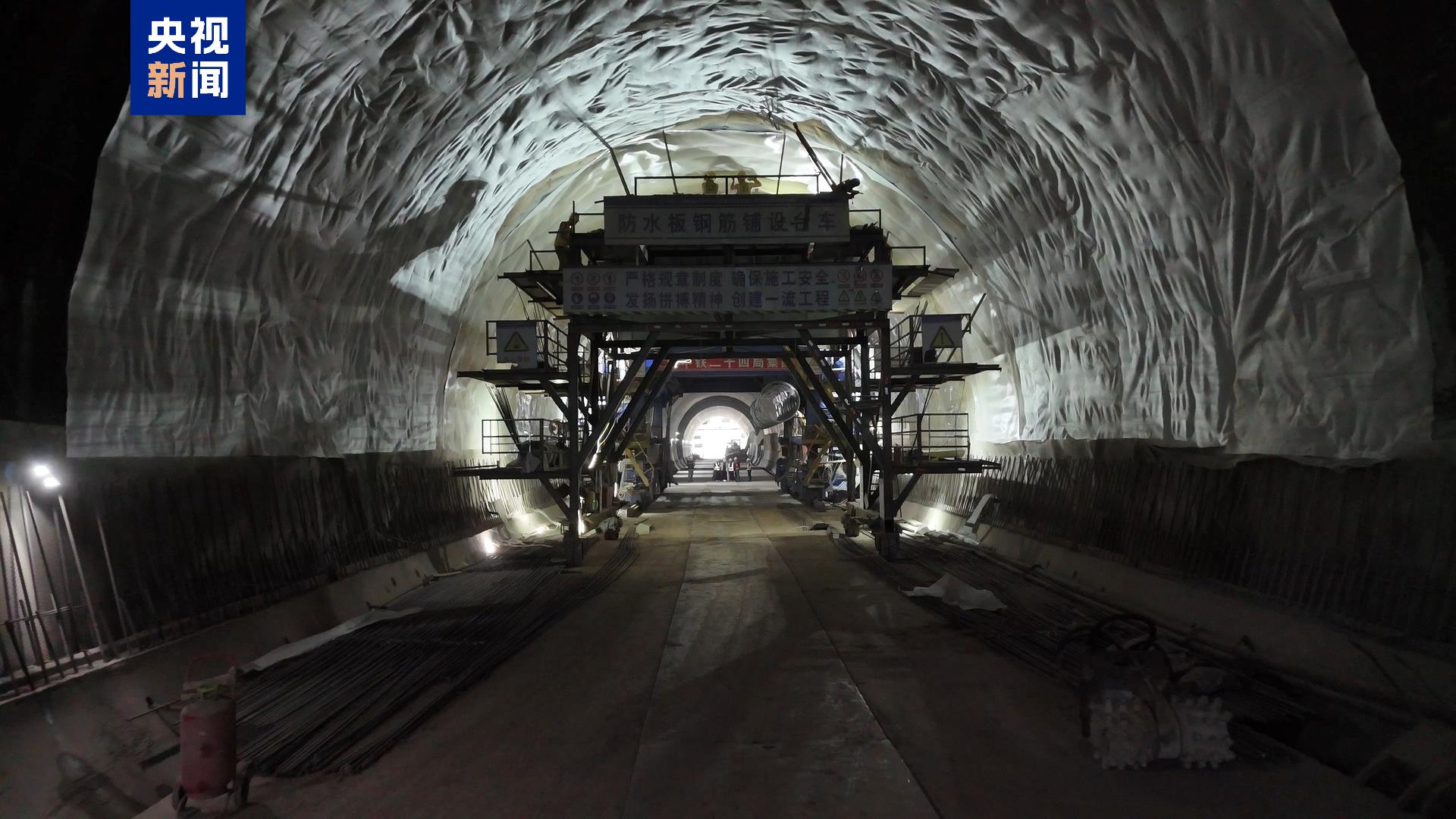
西渝高铁伍家岚一号隧道贯通
Yang Shi Xin Wen· 2025-10-14 08:11
Core Points - The successful completion of the Wujialan No. 1 Tunnel on October 14 marks significant progress in the construction of the Chongqing hub section of the Xiyu High-Speed Railway [1][3]. Group 1: Project Overview - The Chongqing hub section of the Xiyu High-Speed Railway spans a total length of 24.13 kilometers, featuring 15 bridges and 10.5 tunnels [3]. - The Wujialan No. 1 Tunnel, which has been completed, is located in Tongjiacxi Town, Beibei District, Chongqing, and measures 385 meters in length [3]. Group 2: Strategic Importance - The Xiyu High-Speed Railway is a crucial part of China's "Eight Vertical and Eight Horizontal" high-speed rail network, specifically connecting the Beijing-Kunming corridor and the Baotou-Haikou corridor [4]. - Upon completion, the project is expected to significantly reduce the travel time between urban and rural areas along the route, contributing to the consolidation of poverty alleviation efforts, promoting rural revitalization, urban-rural integration, and regional coordinated development, thereby establishing a new pattern for the development of the western region [4].

抢筹码啊!
Datayes· 2025-10-13 11:47
Core Viewpoint - The article discusses the recent fluctuations in the A-share market, influenced by political statements and economic data, highlighting the resilience of China's export growth amid trade tensions and the potential for policy adjustments in the near future [1][4][5][6]. Economic Data - China's export growth in September exceeded expectations, with a year-on-year increase of 8.3%, surpassing the forecast of 6.6% and the previous value of 4.4%. Imports also rose by 7.4%, compared to a prior value of 1.3% [5][6]. - Morgan Stanley attributes the strong trade data to the timing of the Mid-Autumn Festival, which shifted from September to October in 2025, along with a low base effect [6]. Market Performance - On October 13, A-shares opened significantly lower but recovered slightly by the end of the day, with the Shanghai Composite Index down 0.19% and the Shenzhen Component down 0.93% [8]. - The total trading volume in the Shanghai and Shenzhen markets was 23,745.45 billion yuan, a decrease of 1,599.53 billion yuan from the previous day [8]. Sector Analysis - The article notes that sectors such as metals, rare earths, semiconductors, and banking saw significant gains, while automotive and non-bank financial sectors experienced outflows [22][30]. - The rare earth sector saw a surge, with multiple stocks hitting the daily limit up, driven by rising prices of gold and silver [8]. Policy Outlook - Goldman Sachs predicts that the actual GDP growth rate for the third quarter may remain around 5%, with expectations for the implementation of previously announced policies, but no new easing measures anticipated in the near term [7]. - Analysts expect that the current tariff suspension period may be extended beyond November 10, with limited concessions from both sides in trade negotiations [4][6]. Company Performance - Notable company forecasts include: - Jucheng Technology expects a net profit of 151 million yuan for the first three quarters, a year-on-year increase of 112.94% [20]. - New China Life Insurance anticipates a net profit between 29.986 billion yuan and 34.122 billion yuan, reflecting a growth of 45% to 65% [20]. - Chuangjiang New Materials projects a staggering net profit growth of 2057.62% to 2242.56% for the same period [20]. Investment Trends - The article highlights that the main capital inflow was into the non-ferrous metals sector, with Baogang Group leading the net inflow [22]. - The article also mentions that the automotive sector saw significant net outflows, particularly from companies like BYD and Sailis [22].






新思想引领新征程︱完整、准确、全面贯彻新发展理念 坚定不移推动高质量发展
Yang Guang Wang· 2025-10-13 01:56
Group 1: High-Quality Development - The core task of building a modern socialist country is high-quality development, guided by new development concepts emphasizing innovation, coordination, green, openness, and sharing [1] - During the "14th Five-Year Plan" period, various regions and departments are expected to construct a new development pattern and promote high-quality development, reinforcing China's institutional advantages and innovation vitality [1] Group 2: Technological Innovation - Emphasis on integrating technological innovation with industrial innovation, enhancing the role of enterprises in the innovation chain, and ensuring seamless connection with the industrial chain [2] - The focus on breakthrough key technologies and transforming scientific achievements into advanced productivity is seen as a new driving force for economic development [2] Group 3: Regional Development - Regional coordinated development is essential for addressing imbalances, with significant strategies acting as engines for high-quality development [3] - The Chongqing and Chengdu areas are highlighted as important growth poles in the western region, promoting integrated development [3] Group 4: Rural and Urban Integration - The income gap between urban and rural residents is gradually narrowing, with a focus on modernizing agriculture and rural areas by 2035 [4] - The commitment to high-level opening up aims to release the benefits of China's large-scale market, creating new opportunities for other countries [4] Group 5: Open Economy - The transition from a flow-based open economy to a rule-based and regulatory open economy is underway, with various platforms enhancing mutual empowerment [5] - Xiamen has become a major export port for lithium battery products, showcasing successful reforms in international shipping management and enhancing China's influence in international rules for new energy products [5] Group 6: People-Centric Development - The development approach is centered around the people, focusing on improving basic, inclusive, and safety-oriented social welfare, translating development outcomes into public well-being [5] - The goal is to ensure decisive progress in achieving socialist modernization during the "15th Five-Year Plan" [5]
经济大员北上的含义
经济观察报· 2025-10-12 07:47
中国区域发展不平衡、不充分的现象突出,除了政策、资金等 常规的宏观调控手段,官员交流也成为促进区域协调发展的重 要措施。 从厅局级到省部级,这一轮官员的北上调任,可谓渐成气候。这也为接下来的省部级官员人事调动,做出了指向。更多懂经济的省部级官员北 上履新,有利于为北方经济的发展打开新局面。 中国区域发展不平衡、不充分的现象突出,除了政策、资金等常规的宏观调控手段,官员交流也成为促进区域协调发展的重要措施。东北和长 三角之间的"定向"干部交流,就是在东北振兴和"对口协作"政策的背景下逐步形成的。 跨区域官员的调动,和中国各区域经济发展不平衡直接相关。历史上,中高级别官员的跨区域调动就有深厚的历史传统,在大一统的治理体系 中殊为贵重。其意义在于,一方面,地方官若久居一隅,容易形成盘根错节的利益网;另一方面,中国不同省域的治理重点天差地别,通过跨 区域调动,能不断丰富和历练官员的治理能力。 作者: 宋馥李 封图:图虫创意 国庆节前夕,两则官员调动备受关注。9月3 0日,广东省省长王伟中调任内蒙古自治区党委书记,而一日之后,江苏省省长许昆林调任辽宁省 委书记。内蒙古和辽宁是北方的经济大省,也是东北振兴的重要省份,两省 ...

经济大员北上的含义
Jing Ji Guan Cha Bao· 2025-10-12 03:05
Group 1 - The recent appointments of provincial leaders from southern regions to northern provinces indicate a strategic move by the central government to enhance regional coordination and macro layout [1][2] - The trend of southern officials moving north has been ongoing since July 2024, with several officials from the Yangtze River Delta being assigned to key positions in northeastern provinces, reflecting a desire to inject new economic dynamics into these areas [1][2] - The cross-regional official transfers are aimed at addressing the economic imbalance between regions, allowing officials with experience from developed areas to bring fresh perspectives and resources to underdeveloped regions [2][3] Group 2 - The ongoing compilation of the "15th Five-Year Plan" is crucial for local economic and social development, with a focus on achieving significant economic growth by 2035 [3] - The appointment of experienced leaders from economically advanced southern provinces to northern regions is expected to facilitate the implementation of effective economic strategies and enhance local governance [3]
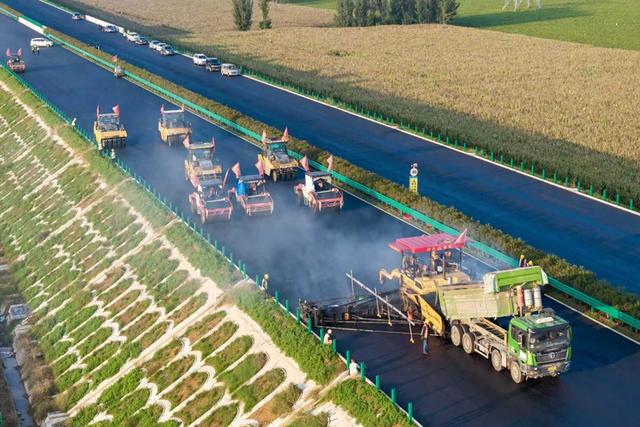
北京建设者奋战沁伊高速,冲刺年底通车目标
Bei Jing Ri Bao Ke Hu Duan· 2025-10-10 04:04
Core Points - The construction of the Qinyi Expressway project in Jiaozuo, Henan, is progressing rapidly, with over 90% completion expected to be ready for traffic by the end of the year [1][3] - The project is part of the Henan Provincial Highway Network Planning (2021-2035) and is a key construction project under the "13445" initiative [3] - The expressway will significantly improve regional transportation, facilitating the export of local agricultural products and supporting rural revitalization [3] Summary by Sections - **Project Progress**: The Qinyi Expressway's first section has seen over 24 million tons of asphalt laid, with construction teams working diligently during the National Day holiday to meet the year-end completion target [1] - **Project Significance**: Once completed, the expressway will connect key areas in Jiaozuo, enhancing transportation conditions and contributing to the development of the local economy and infrastructure [3] - **Challenges and Management**: The project team has effectively managed challenges such as long construction lines and extreme weather, ensuring a systematic approach to project execution [3]
刘建宁:新质生产力如何撬动区域协调发展
Jing Ji Ri Bao· 2025-10-10 00:03
Core Viewpoint - The article emphasizes the importance of cultivating new productive forces characterized by digitalization and greening, which serve as engines for industrial transformation and solutions for regional development imbalances [1][2]. Group 1: New Productive Forces - New productive forces are defined as advanced productive qualities that are driven by innovation, featuring high technology, high efficiency, and high quality, aligning with new development concepts [1]. - The breakthrough and application of cutting-edge technologies such as artificial intelligence, quantum information, and life sciences lead to a qualitative leap in productivity [1]. Group 2: Regional Development Challenges - The uneven and uncoordinated distribution of innovation resources, along with structural issues, hinders the development of new productive forces [2]. - Regions with innovation resources may struggle to achieve scale effects due to insufficient support, while others may lack high-end factors necessary for transformation [2]. Group 3: Collaborative Innovation Networks - Strengthening technological innovation is essential for developing new productive forces, requiring a more complete regional innovation system [3]. - Breaking down regional barriers and promoting the sharing of major technological infrastructure and resources can facilitate knowledge spillover and technology transfer [3]. Group 4: Institutional Innovation - To foster new productive forces and regional coordination, it is crucial to eliminate institutional barriers that hinder the free flow of factors such as technology, data, and talent [4]. - Establishing mechanisms for cost-sharing and benefit-sharing in cross-regional industrial transfers and infrastructure projects is necessary [4]. Group 5: Green Development - New productive forces are inherently green, and their cultivation must be based on harmonious coexistence between humans and nature [4]. - Promoting a green and low-carbon transformation of development methods can effectively convert ecological value into economic value, achieving a balance between high-quality development and environmental protection [4].
新质生产力如何撬动区域协调发展
Jing Ji Ri Bao· 2025-10-09 22:40
Core Insights - The article emphasizes the importance of cultivating new productive forces characterized by digitalization and greening, which serve as engines for industrial transformation and regional development [1][2] Group 1: New Productive Forces - New productive forces are defined as those driven by innovation, moving away from traditional economic growth models, and characterized by high technology, efficiency, and quality [1] - The emergence of cutting-edge technologies such as artificial intelligence, quantum information, and life sciences is expected to lead to a qualitative leap in productivity [1] Group 2: Regional Development Challenges - The uneven distribution of innovation resources and structural issues in regional development are identified as bottlenecks for the growth of new productive forces [2] - The article highlights the need to break down regional barriers, optimize resource allocation, and establish a unified national market to accelerate the cultivation of new productive forces and achieve regional coordination [2] Group 3: Innovation and Collaboration - Strengthening technological innovation and creating a comprehensive regional innovation system are crucial for developing new productive forces [3] - The article suggests promoting cross-regional collaboration in tackling key technologies and establishing innovation centers to facilitate knowledge spillover and technology transfer [3] Group 4: Institutional Innovation - The need to eliminate institutional barriers that hinder the free flow and efficient allocation of factors such as technology, data, and talent is emphasized [4] - The article advocates for reforms in market-oriented allocation of factors and the establishment of mechanisms for cost-sharing and benefit-sharing in cross-regional industrial transfers [4] Group 5: Green Development - New productive forces are inherently linked to green productivity, and fostering these forces requires a foundation of harmonious coexistence between humans and nature [4] - The article calls for the establishment of a clean, low-carbon, and efficient regional energy system, promoting green industrial chains and transforming ecological value into economic value [4]
中国商业联合会直播电商委副会长、网经社曹磊:电商就业促进面临的现实挑战与结构性困境
Sou Hu Cai Jing· 2025-10-09 03:29
Core Viewpoint - E-commerce has become a significant driver of employment growth, creating numerous high-quality job opportunities and serving as a key engine for stabilizing employment and promoting development [1]. Group 1: Employment Creation by E-commerce - Major e-commerce platforms like Alibaba, JD.com, Pinduoduo, and Meituan not only create direct job opportunities but also provide diverse employment options through industry chain extension, model innovation, and regional collaborative development [1]. Group 2: Challenges Faced by E-commerce in Employment - **Structural Mismatch in Talent Supply and Demand**: There is a notable phenomenon of "jobs without people and people without jobs" in the e-commerce sector. Many graduates seek e-commerce positions, while companies struggle to find qualified professionals due to outdated educational curricula [5]. - **Regional Development Imbalance**: Job opportunities and resources in e-commerce are concentrated in specific regions, with significant talent shortages in western and rural areas, limiting local e-commerce development [6]. - **Employment Quality and Stability Issues**: The flexible nature of e-commerce jobs leads to stability concerns, with high work pressure and inadequate salary increases affecting job satisfaction [7]. - **Inadequate Skills Training and Certification Systems**: Current training programs do not meet industry needs, and there is a lack of standardized certification, which diminishes the credibility and recognition of qualifications [8]. - **Policy Support and Resource Allocation Bottlenecks**: Government support policies for e-commerce employment and entrepreneurship are fragmented, and resources tend to favor large platforms over small enterprises [9]. Group 3: Recommendations and Measures - **Deepening Industry-Education Integration**: Updating course systems and encouraging collaboration between universities and enterprises to enhance practical skills and reduce knowledge gaps [10]. - **Improving Vocational Training and Skills Certification**: Strengthening training for urgently needed professions and innovating skill evaluation mechanisms to align with real-world job requirements [11]. - **Promoting Regional Coordinated Development**: Implementing support initiatives for underdeveloped areas and encouraging talent mobility to enhance e-commerce capabilities in those regions [12]. - **Enhancing Employment Quality and Social Security**: Establishing labor standards for flexible employment and improving social security systems for e-commerce workers [13][14]. - **Optimizing Policy Environment and Increasing Support**: Implementing inclusive financial policies and enhancing employment services to support e-commerce job creation [15]. Group 4: Summary - While e-commerce has made significant contributions to employment, it faces challenges such as talent mismatches, regional disparities, low job quality, inadequate training systems, and insufficient policy support. Addressing these issues requires collaborative efforts from government, enterprises, educational institutions, and society to unlock the full potential of e-commerce in promoting employment [16].


上半年GDP出炉!31省排名更新:山东第3,福建领先上海,内蒙古20
Sou Hu Cai Jing· 2025-10-07 03:07
Economic Overview - The total economic output of 31 provinces reached 66.05 trillion yuan, achieving a steady growth rate of 4.25% in the first half of 2025, with Guangdong and Jiangsu leading at over 6.8 trillion yuan each [1] - Shandong maintained its position as the third-largest economy with a GDP of 50,046 billion yuan, while Fujian surpassed Shanghai for the first time, entering the top eight with a total of 28 trillion yuan [1][3] Regional Highlights - Shandong's economy grew by 4.5%, supported by a complete industrial chain across 41 categories and a significant increase in industrial investment by 12.8% [3] - Fujian's economy, with a young population average age of 36.2 years, saw a 9.7% increase in foreign trade, driven by the development of cross-border e-commerce [4] - Inner Mongolia entered the top 20 with a GDP of 12,077.6 billion yuan, with over 60% of its industrial growth coming from green industries [6] Key Economic Data - Guangdong: 68,725.4 billion yuan, 3.13% growth [7] - Jiangsu: 66,967.8 billion yuan, 3.95% growth [7] - Shandong: 50,046 billion yuan, 4.5% growth [7] - Fujian: 27,996.57 billion yuan, 4.98% growth [8] - Shanghai: 26,222.15 billion yuan, 4.61% growth [8] Development Trends - The economic landscape is characterized by a mix of established provinces and emerging players, with a focus on high-quality development and regional coordination [10] - The integration of modern industrial systems and regional development strategies is propelling China's economy towards broader horizons [10]