
高水平对外开放

Search documents
潍坊全市进出口额年均增长17.1%
Qi Lu Wan Bao Wang· 2025-10-10 11:38
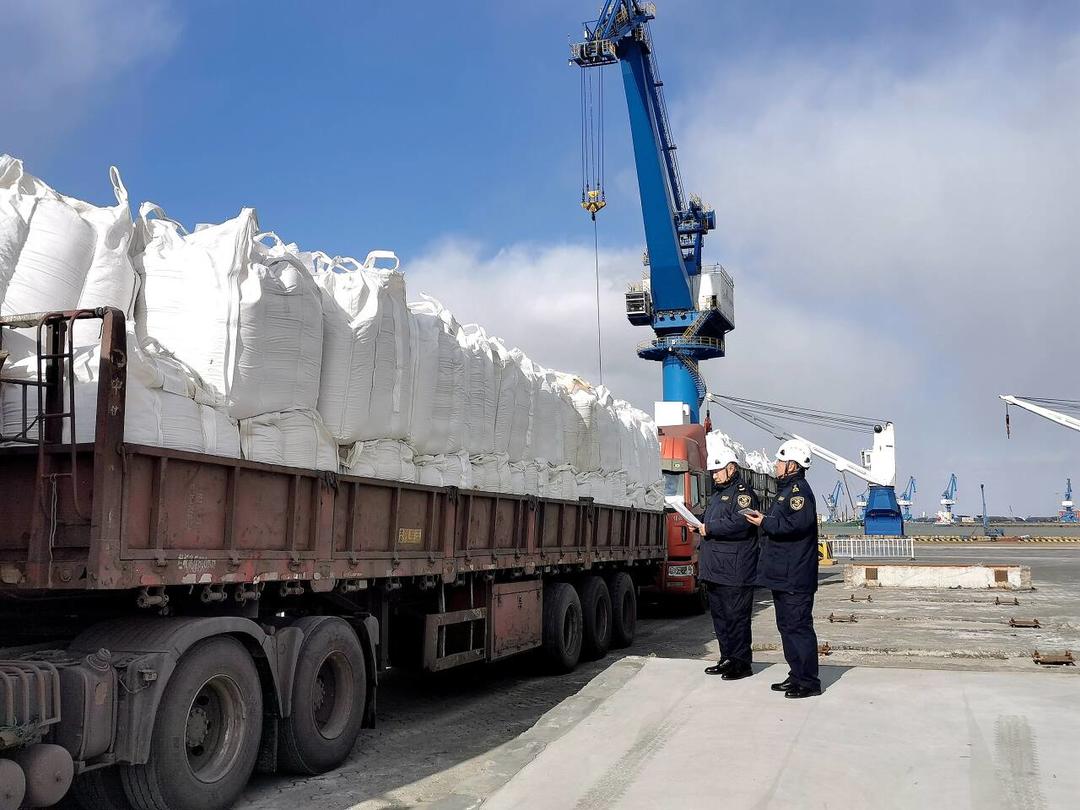
Core Insights - The Weifang Municipal Government is focusing on high-level opening-up during the "14th Five-Year Plan" period, aiming for an average annual growth of 17.1% in import and export volume, supported by smart customs initiatives and enhanced services [1][3]. Group 1: Customs Efficiency and Services - The Weifang Customs is enhancing efficiency and service quality through initiatives like the "Direct Access for Enterprises" service brand and innovative inspection models for hazardous goods and high-tech products [3]. - The proportion of bulk cargo collected at ports has decreased from 50% to 30%, indicating improved logistics and customs processes [3]. - The number of AEO-certified enterprises has reached 38, a 30% increase since the beginning of the "14th Five-Year Plan," leading the Jinan Customs District [3]. Group 2: Trade Facilitation Measures - A total of 45 measures have been introduced to support the development of agricultural comprehensive zones, and all 23 reform measures for bonded zones have been implemented [3]. - The establishment of 11 regulatory operation sites and 15 quarantine facilities for imported animals has positioned Weifang as a leader in the province [3]. - The "Smart Port E-Pass" monitoring platform has been developed, and Weifang Port has been approved as a national pilot for smart port construction [3]. Group 3: Policy and Service Innovations - The customs authority has implemented cloud-based certificate issuance and intelligent review processes, reducing processing times by over 85% [5]. - Since the beginning of the "14th Five-Year Plan," 330,000 certificates of origin have been issued, resulting in a tax reduction exceeding 1 billion yuan [5]. - The first cross-border e-commerce tax payment in the Jinan Customs District was completed, with the payment process shortened from three days to 30 seconds [5].

中国外商投资报告2025-商务部
Sou Hu Cai Jing· 2025-10-10 11:25
Summary of Key Points Core Viewpoint - The "2025 Report on Foreign Investment in China" released by the Ministry of Commerce highlights the resilience of foreign investment in China amidst a global decline, projecting a stable investment environment and continued growth in various sectors. Group 1: Overall Foreign Investment Situation - In 2024, global foreign direct investment (FDI) decreased by 11%, while China attracted $116.24 billion in actual foreign investment, maintaining its status as the largest recipient among developing economies [1][10][11] - The number of newly established foreign-invested enterprises reached 59,000, marking a 9.9% increase [1][10][11] - Reinvestment by foreign enterprises amounted to 162.28 billion yuan, reflecting a 15% increase, with reinvestment in western regions growing by 60.6% [1][10][11] Group 2: Sectoral Analysis - The manufacturing sector attracted $31.12 billion, accounting for 26.8% of total foreign investment, while high-tech manufacturing represented 43.4% of manufacturing FDI [1][10][11] - The service sector accounted for 70.8% of total foreign investment, with significant growth in productive service industries such as inspection and certification [1][10][11] - The health industry is projected to reach a scale of 11.5 to 12 trillion yuan, with increased foreign investment and deepening industry-academia-research collaboration [2][10] Group 3: Policy and Future Outlook - China is committed to high-level opening-up, with policies aimed at reducing market access barriers, ensuring fair competition, and enhancing investment facilitation [1][10][11] - The report emphasizes that China's economic growth provides a stable expectation for foreign investment, with plans to further relax access and expand free trade zones [2][10][11] - The report indicates that foreign enterprises are increasingly viewing China as a favorable investment destination, with a focus on localizing operations and innovation [1][10][11]

深圳:开放促创新 打造共赢新格局
Xin Hua She· 2025-10-07 06:00
Core Viewpoint - Shenzhen is advancing a series of institutional innovations for high-level opening up, continuously deepening the "bringing in" and "going out" strategies, leading to a new win-win pattern of openness [1] Group 1 - Shenzhen's recent institutional innovations are aimed at enhancing its global openness [1] - The strategies of "bringing in" and "going out" are being emphasized to foster international cooperation [1] - The ongoing reforms are expected to create a more favorable environment for investment and trade [1]
以高水平对外开放促进高质量发展
Jing Ji Ri Bao· 2025-10-06 22:10
Core Viewpoint - China's development is closely linked to global prosperity, emphasizing the importance of expanding openness to drive reform and growth [1] Group 1: Trade and Economic Growth - During the "14th Five-Year Plan" period, China's goods trade scale reached over $6 trillion, marking a 32.4% increase from the end of the "13th Five-Year Plan" [2] - High-tech product exports accounted for 18.2% of total goods trade in 2024, reflecting a strong demand for quality products in international markets [2] - Trade with ASEAN has remained robust, with China and ASEAN being each other's largest trading partners for five consecutive years [2] Group 2: Foreign Investment - By mid-2023, actual foreign investment in China reached $708.73 billion, surpassing the target set for the "14th Five-Year Plan" six months ahead of schedule [3] - A total of 229,000 new foreign enterprises were established during this period, contributing significantly to China's economic development [3] Group 3: Institutional Opening - The reduction of the foreign investment negative list and the complete removal of restrictions in the manufacturing sector are key achievements in institutional opening [4] - China is actively pursuing high-standard international trade agreements, including RCEP and CPTPP, to enhance its global economic integration [4] Group 4: New Trade Models - The "Belt and Road" initiative has fostered new growth points, with trade with partner countries increasing from $2.7 trillion in 2021 to $3.1 trillion in 2024, averaging a 4.7% annual growth [7] - Cross-border e-commerce has emerged as a significant channel for trade, with a notable increase in the number of partner countries involved [7] Group 5: Global Market Opportunities - From 2021 to 2024, China imported consumer goods worth 7.4 trillion yuan, showcasing its vast market potential for global partners [8] - The China International Import Expo has attracted over 23,000 foreign exhibitors, highlighting China's commitment to global cooperation and trade [8]
开放新程:一杯奶茶里的开放密码
Xin Hua She· 2025-10-06 03:28
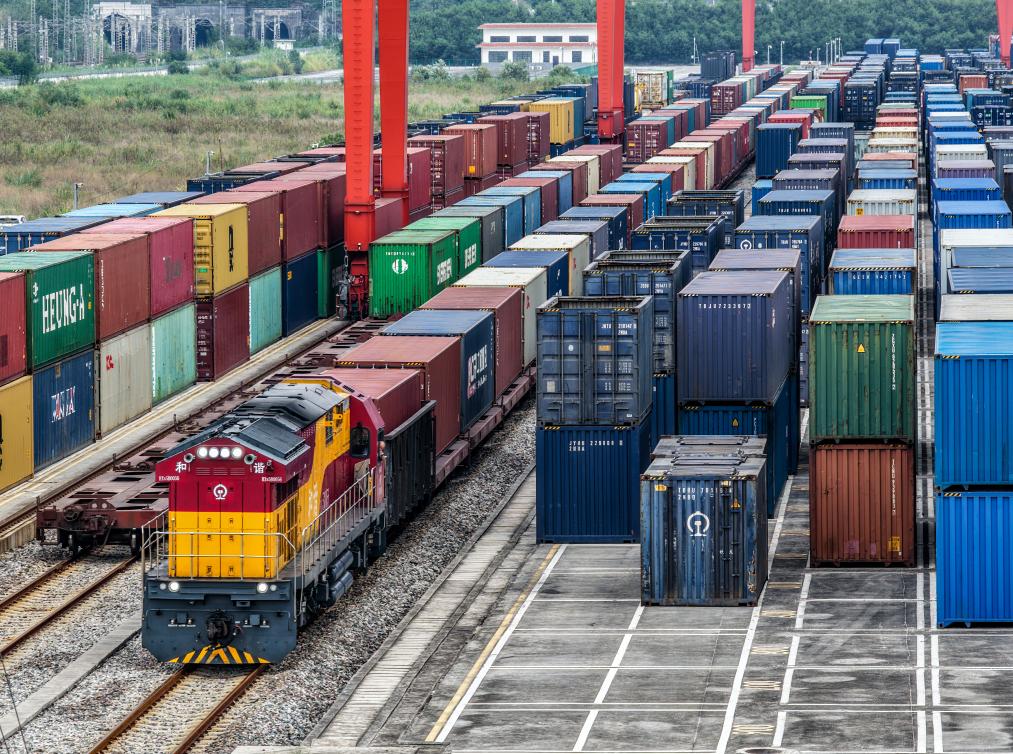
一颗颗圆润的珍珠粉圆的原料是老挝木薯粉,一勺椰浆源自泰国,一缕茶香飘自斯里兰卡,来自欧洲的牛乳、东南亚的时令鲜果、美洲大陆 的巧克力……这些跨越山海的原料,最终在一杯奶茶中相遇,展现出一幅生动的开放图景。 一列西部陆海新通道班列在重庆鱼嘴站等待发车(无人机照片)。新华社记者 唐奕 摄 新华社重庆10月5日电(记者李晓婷)国庆假期,重庆解放碑商圈人流如织。各大"网红"茶饮店铺内生意火爆,来自五湖四海的游客们捧着一杯 杯印有"重庆""勒是雾都"等字样的特色奶茶,在热门地标前举杯打卡。 "这两年,茶饮品牌飞速发展,产品出新速度非常快,品类也十分丰富。"来自贵州的游客崔永是一位"奶茶爱好者"。但令他意想不到的是, 这一杯美味奶茶中竟藏着开放密码—— 今年5月,椰子专线"帕鲁港-洋浦港"直航实现周班化运营,将椰子原料运输时间从40天压缩到7天;2024年起,重庆实现西部陆海新通道中老 泰冷链班列双向对开,东盟进口精品香蕉4日可达重庆,重庆鲜柠檬出口泰国;中欧班列常态化运来荷兰奶制品、斯里兰卡红茶粉等…… 一杯奶茶背后的全球供应链,不仅满足了国内市场的需求,也为沿线国家和地区带来了发展机遇。 "老挝是农业大国,木薯粉的热 ...
大地风华·多彩的答卷
Ren Min Ri Bao· 2025-10-04 21:50
Group 1 - The article highlights the advancements in China's manned space technology since the "14th Five-Year Plan," showcasing the successful extravehicular activities of astronauts aboard the Shenzhou 13 spacecraft [1] - The Fujian aircraft carrier, as China's first to utilize electromagnetic catapult technology, signifies a new stage in naval equipment technology, with the J-35 fighter jet representing a key component of national defense strength [1] - The transformation and upgrade of Xiamen Port as a crucial node in the 21st Century Maritime Silk Road is emphasized, reflecting the busy and grand scene of the port [2] Group 2 - The application of the BeiDou satellite navigation system across various sectors such as energy transportation, agriculture, and urban construction illustrates its deep integration into national economic development [3] - The Hainan Free Trade Port has accelerated its development over the past five years, showcasing a vibrant scene through artistic representations of its infrastructure [3] - The ecological restoration success of the mangrove wetlands in Zhanjiang is highlighted, emphasizing the harmonious coexistence of humans and nature [4] Group 3 - The artistic representation of the Xiong'an New Area's rapid development over eight years reflects the city's bright future and the ambitious goals of the "14th Five-Year Plan" [6] - The article presents a collection of artworks that embody the spirit of the times and the achievements of the past five years, showcasing the diverse artistic expressions of China's development [6][7] - The depiction of offshore wind power and marine ranching platforms illustrates the progress in clean energy development in Guangdong [7]

《中国发展报告2025》出版发行
Zhong Guo Xin Wen Wang· 2025-09-30 18:00
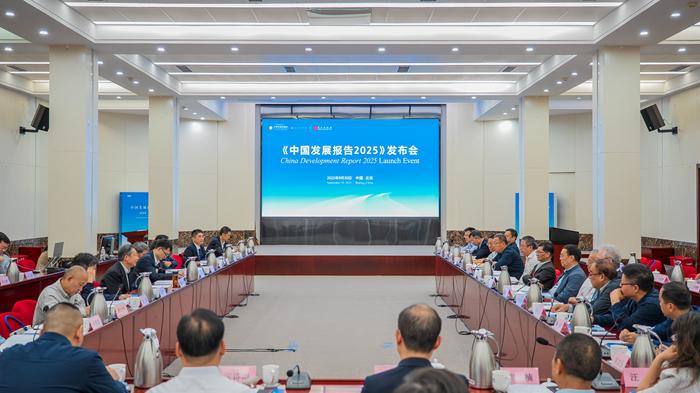
Core Insights - The "China Development Report 2025" emphasizes the importance of comprehensive deepening of reforms and high-level opening up as essential for achieving high-quality development, which is the primary task for building a modern socialist country [3][4] - The report highlights the need for region-specific development of new productive forces, recognizing innovation as the most crucial new driving force for development amid a new wave of technological revolution and industrial transformation [4] - It stresses the importance of balancing five key relationships in economic work, as proposed in the Central Economic Work Conference, which includes effective market and proactive government, total supply and total demand, fostering new momentum while updating old momentum, optimizing increment while revitalizing stock, and enhancing quality while expanding total volume [4] Summary by Sections - The report follows a "1+5+N" framework, documenting overall development achievements, major results under the new development philosophy of innovation, coordination, green development, openness, and sharing, and research findings on significant development issues [3] - It includes four important research outcomes from the Development Research Center of the State Council, focusing on stimulating new demand, the future potential of the service industry, insights on cultivating the embodied intelligence industry, and unleashing the potential of the low-altitude economy [3]
10月1日起全面使用电子发票 全国铁路10月11日起实行新的列车运行图
Yang Shi Wang· 2025-09-30 05:39
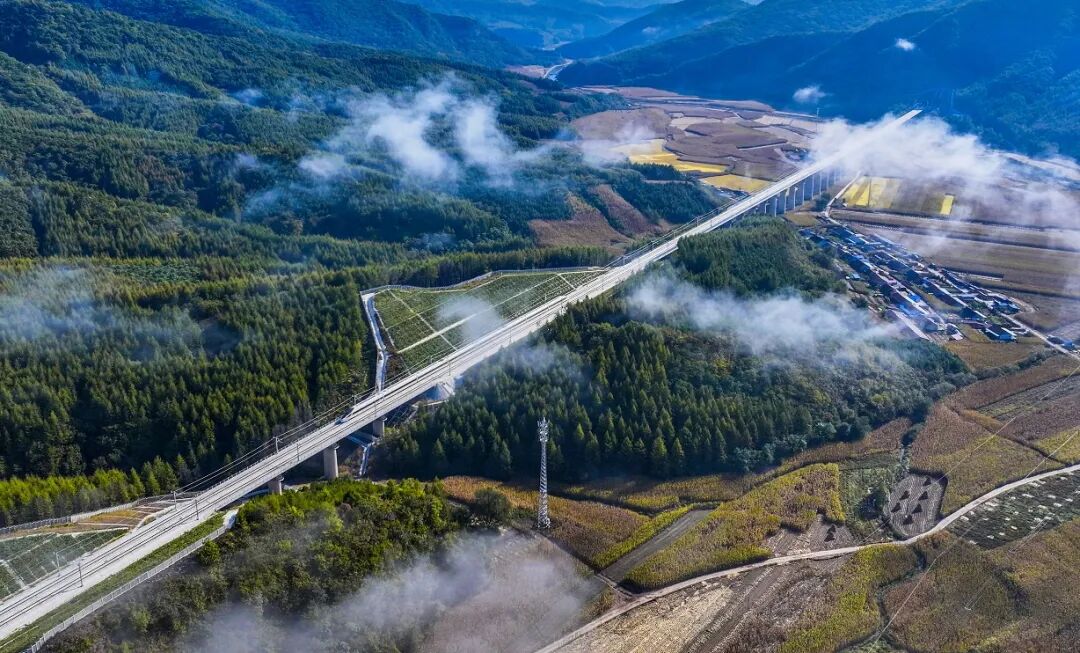
Core Points - The new train operation schedule implemented from October 11 aims to maintain the scale of passenger and freight train operations while optimizing the structure of train services, with over 13,000 scheduled passenger trains and more than 23,000 freight trains [1][3] Group 1: Passenger Transport Enhancements - The introduction of new high-speed rail lines, such as the Shenyang to Jiamusi and Xiangyang to Jingmen routes, will significantly reduce travel times between major cities in Northeast and Central China, facilitating regional economic development [3][5] - The operation of high-speed trains at speeds of 350 km/h on key routes will enhance service quality and meet the demand for high-quality travel experiences [3][8] Group 2: Freight Transport Optimization - The adjustment of freight train operations includes the addition of 15 fast freight trains, expanding the logistics network and supporting domestic economic circulation [5][6] - The introduction of intercity and multimodal transport trains aims to improve logistics efficiency, with a total of 130 intercity trains and 173 multimodal transport trains scheduled [6][8] Group 3: Service Quality Improvements - The railway sector is enhancing passenger services by offering specialized tourist trains and improving ticketing processes, including the use of electronic invoices and discounts for specific groups [8] - For freight services, the implementation of online booking and market-based pricing aims to provide high-quality logistics solutions and reduce overall logistics costs [8]
国资委:国资央企要聚焦产业兴疆 积极在疆投资布局
Zheng Quan Shi Bao Wang· 2025-09-30 00:55
Core Viewpoint - The State-owned Assets Supervision and Administration Commission (SASAC) emphasizes the importance of central enterprises focusing on industrial development in Xinjiang, promoting technological and industrial innovation, and enhancing the region's competitive industries [1] Group 1: Investment and Development Focus - Central enterprises are encouraged to actively invest in Xinjiang, aiming to integrate technological and industrial innovation to foster competitive industrial clusters [1] - The SASAC highlights the need for tailored development of new productive forces in Xinjiang, aligning with local advantages [1] Group 2: Cultural and Economic Integration - The "Harmonious Rural Path" platform is to be utilized by central enterprises to support the integration of culture and tourism in Xinjiang [1] - There is a call for deep participation in the construction of the Silk Road Economic Belt core area, facilitating high-level opening up of Xinjiang [1] Group 3: Social Welfare and Community Engagement - The meeting prioritizes the improvement of people's livelihoods, with a commitment to increasing support in industries, employment, talent, and consumption [1] - Implementation of "small but beautiful" welfare projects is emphasized to aid in the comprehensive revitalization of rural areas in Xinjiang, ensuring broad participation from various ethnic groups in the development process [1]
新疆:敞开怀抱向世界
Ren Min Wang· 2025-09-29 07:52
Core Insights - The implementation of the visa-free policy between China and Russia has led to an increase in Russian tourists entering Xinjiang, marking a significant step in enhancing international cooperation and connectivity [1] - Xinjiang is emerging as a vital hub for trade and investment, with a notable increase in foreign trade enterprises and export orders, reflecting its growing importance in the global market [2][6] - The rise of new employment opportunities, such as "ferry drivers" and cross-border workers, showcases the economic benefits of Xinjiang's open policies and trade facilitation measures [3][5] Trade and Investment - The trade volume in the Kashgar Free Trade Zone has exceeded 6.87 billion yuan since its establishment, with strong demand for construction materials and electrical equipment in Central Asia [1] - In the first seven months of this year, the number of foreign trade enterprises in Xinjiang reached 3,396, a year-on-year increase of 25.4%, indicating a broadening of its trade network to 223 countries and regions [2] - The "Belt and Road" initiative is positioning the Urumqi International Land Port as a key logistics hub, attracting numerous enterprises, including foreign companies [1] Employment and Economic Growth - The new "ferry driver" model for vehicle exports has proven to be more efficient and cost-effective, contributing to significant income for local residents and creating job opportunities [4] - The rise of new employment types, such as "ferry drivers" and cross-border workers, reflects the positive impact of open policies on local economies and individual livelihoods [5] - The transportation model is projected to save companies 150 million yuan in costs by 2024, with total income for "ferry drivers" exceeding 90 million yuan [4] Infrastructure and Connectivity - Xinjiang has established 19 open ports and over 119 international road transport routes, accounting for more than one-third of the national total, enhancing its connectivity with Central Asia and Europe [6] - The region is actively promoting a market-oriented and law-based business environment, with comprehensive reforms in the Xinjiang Free Trade Zone aimed at fostering international cooperation [6] - Cultural and academic exchanges are being strengthened, with initiatives to invite foreign guests and promote cross-border tourism, further enhancing Xinjiang's global engagement [6] Trade Performance - Xinjiang's foreign trade value has consistently surpassed 200 billion yuan, 300 billion yuan, and 400 billion yuan from 2022 to 2024, demonstrating its resilience and growth potential [7] - The region's transition from isolation to openness over the past seventy years highlights the critical role of open policies in driving economic prosperity [7]