AI智能体

Search documents
AI技术未来发展趋势预测
Sou Hu Cai Jing· 2025-09-21 13:31
Group 1: Technological Breakthroughs - The emergence of native multimodal large models will replace piecemeal multimodal systems, achieving a 300% improvement in inference efficiency through deep integration of text, images, audio, and 3D data [1] - The acceleration of world models will establish a core technology foundation for embodied intelligence by 2025 [1] - The training paradigm will shift towards post-training scaling laws, optimizing reinforcement learning to reduce computational power consumption by 50% [4] Group 2: Industry Restructuring Trends - AI agents will provide hyper-personalized product customization, increasing customer satisfaction by 40% [6] - Real-time decision systems will enhance the speed of market response by three times in logistics and marketing [6] - The penetration of humanoid robots in industrial scenarios will achieve millimeter-level control precision, with smart factory coverage exceeding 80%, reducing manufacturing R&D cycles by 28.4% [6] Group 3: Social Integration Challenges - "Responsible AI" will become a mandatory standard, with non-compliant companies facing regulatory penalties and user attrition risks [8] - The automation rate of repetitive jobs will exceed 30%, while demand for creative and emotionally interactive roles will grow by 200% [8] - New mechanisms for privacy and copyright will emerge, with blockchain-enabled AI data rights technology addressing content ownership disputes [8] Group 4: Future Milestones - By 2027, general artificial intelligence (AGI) is expected to pass the Turing test in closed environments, and by 2030, neuromorphic chips will achieve a 1000-fold increase in energy efficiency [12] - By 2035, AI is projected to contribute over 40% to global GDP growth [12]

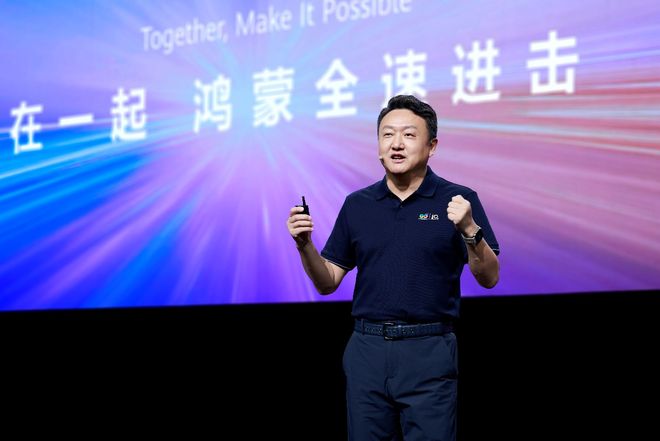
鸿蒙5终端数超1700万,投入10亿支持AI生态创新
Guan Cha Zhe Wang· 2025-09-20 08:22
Group 1 - Huawei announced that the number of HarmonyOS 5 terminal devices has exceeded 17 million and launched the "Tian Gong Plan," committing 1 billion RMB to support the Harmony AI ecosystem innovation [1] - HarmonyOS integrates native AI support at the system level and aims for full-scene interconnectivity through distributed capabilities [1][2] - Huawei's terminal products have fully adopted HarmonyOS 5 this year, covering various categories such as smartphones, computers, tablets, smartwatches, and smart screens [2] Group 2 - The OpenHarmony ecosystem has seen over 130 million lines of code contributed by more than 9,200 community contributors, resulting in over 1,300 hardware and software products across various industries [2] - The AI agent is becoming a crucial direction for the evolution of the Harmony ecosystem, with the "Tian Gong Plan" supporting developers in building more AI meta-services and intelligent frameworks [2] - The Xiaoyi task space feature is currently in testing, capable of autonomously scheduling over 120 integrated tools and third-party intelligent agents for complex task automation [4]
调研速递|天融信接受多家投资者调研 智算云业务成关注焦点
Xin Lang Cai Jing· 2025-09-19 16:24
Core Viewpoint - Tianrongxin is actively engaging with investors regarding its collaboration with Huawei and the development of its intelligent computing cloud business, highlighting significant growth and future potential in these areas [1][3]. Group 1: Investor Relations Activity - The investor activity was part of the "2025 Guangdong District Investor Online Reception Day" held on September 19, 2025, via the "Panorama Roadshow" website [2]. - Key personnel from the company included Chairman and General Manager Li Xueying, and other executives [2]. Group 2: Collaboration with Huawei and Business Growth - Since launching its cloud computing products in 2019, Tianrongxin's cloud computing business has experienced a compound annual growth rate (CAGR) of 44.76%, with this segment accounting for 9.06% of total revenue in 2024 [3]. - The company launched the intelligent computing integrated machine in February 2025, upgrading its cloud computing business to intelligent computing cloud, with nearly 100 million yuan in business opportunities [3]. - Recent collaboration with Huawei has led to the release of intelligent computing integrated machine models based on the Kunpeng + Ascend architecture, currently generating revenue in the million-level range [3]. Group 3: Market Trends and Future Outlook - The intelligent computing cloud accounted for 12.40% of overall business in the first half of 2025, a year-on-year increase of 3% [3]. - The AI and security market is projected to grow significantly, with IDC forecasting the Chinese security intelligent body market to reach $1.6 billion by 2028, with a CAGR exceeding 230% [3]. - The network security industry is expected to see a market size of $17.1 billion by 2028, with a CAGR of 9.2% [3]. Group 4: International Expansion and Industry Positioning - Tianrongxin is expanding its international business, participating in digital infrastructure security construction along the "Belt and Road" initiative [3]. - The company is focusing on the automotive internet security sector, collaborating with major enterprises like BAIC and GAC to implement relevant solutions [3]. - The company has seen improvements in gross margin and net margin, with a year-on-year increase of 4.1 percentage points and 15.73 percentage points, respectively, in the first half of the year [3].

AI智能体企业云迹科技上市通关获备案 年服务次数超5亿
Zheng Quan Shi Bao· 2025-09-19 11:42
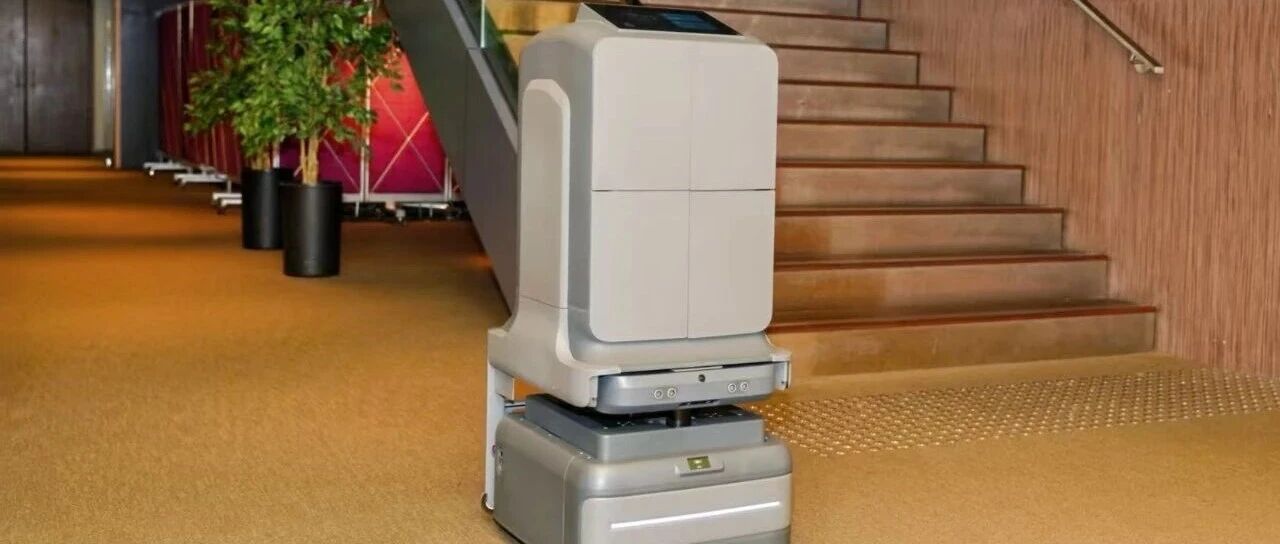
Core Viewpoint - Cloudwalk Technology is taking a significant step towards international capital markets by filing for an overseas listing in Hong Kong, indicating its ongoing commercialization efforts in AI and embodied intelligence [1] Group 1: Company Developments - Cloudwalk Technology plans to issue up to 12,592,500 shares for its overseas listing [1] - The company has achieved over 500 million end-to-end services with its robots in 2024, with a peak of 36,000 robots online simultaneously, ranking first globally [1][8] - The UP series robots represent composite polymorphic robots that integrate multimodal large models and embodied intelligence, enabling precise understanding of human needs and efficient task execution [2][3] Group 2: Technological Advancements - The UP series robots utilize an advanced AI agent scheduling system, allowing for autonomous tool use, multi-task coordination, and group collaboration across various scenarios [3] - Cloudwalk Technology has developed a closed-loop learning system that enhances AI capabilities through perception, cognition, decision-making, execution, and feedback [5] - The robots are designed with modular components, allowing for seamless transitions between different functions, enhancing their adaptability in various environments [8] Group 3: Market Trends - The AI agent market is expected to experience exponential growth, with capabilities doubling every four months by 2025, indicating a significant shift in AI applications from simple tasks to complex projects [6][10] - The Chinese robot service market has grown from RMB 1.5 billion in 2019 to RMB 3 billion in 2023, with a projected CAGR of 26.5% from 2023 to 2028 [10][12] - Cloudwalk Technology is positioned as a leader in the service robot sector, leveraging its technological advantages and strategic sales approach to establish a competitive edge [11][12] Group 4: Competitive Landscape - Cloudwalk Technology is among the first to transition AI systems from "auxiliary tools" to "autonomous collaboration," showcasing the practical application of AI agents in the physical world [9] - The company has attracted significant investment from major players like Tencent and Alibaba, highlighting the industry's growing importance [12] - Other global robot companies are also preparing for capital market entries, indicating a competitive environment in the robotics sector [11][12]
AI智能体企业云迹科技上市通关获备案 年服务次数超5亿
证券时报· 2025-09-19 11:35
Core Viewpoint - Cloudwalk Technology has taken a significant step towards entering the international capital market by filing for an overseas listing in Hong Kong, which reflects its ongoing exploration in the commercialization of AI and embodied intelligence [1][2]. Group 1: AI and Robotics Development - The rapid development of AI is reshaping various industries, with robots as key applications of AI technology, leading to unprecedented changes and opportunities [2][4]. - Cloudwalk Technology's robots are projected to complete over 500 million end-to-end services in 2024, with a peak of 36,000 robots online simultaneously, ranking first globally [2][14]. Group 2: Embodied Intelligence - Embodied intelligence is extending AI capabilities from the digital realm to the physical world, enabling machines to understand environments, make autonomous decisions, and execute tasks [4][10]. - Composite Polymorphic Robots, which integrate multimodal large models and new sensor technologies, are designed to meet future production and service industry needs [4][10]. Group 3: Product Innovation - The UP series robots from Cloudwalk Technology exemplify composite polymorphic robots, integrating advanced AI and sensor systems for precise understanding of human needs and efficient task execution [4][6]. - These robots are capable of multi-task coordination and can operate across various scenarios, such as hotels and hospitals, providing real-time responses to user inquiries and service requests [6][11]. Group 4: Market Growth and Trends - The Chinese robot service market has grown from RMB 1.5 billion in 2019 to RMB 3 billion in 2023, with a projected CAGR of 26.5% from 2023 to 2028, reaching RMB 9.7 billion by 2028 [18][20]. - The AI Agent sector is experiencing exponential growth, with capabilities doubling every four months by 2025, indicating a significant shift in AI applications from simple tasks to complex projects [9][10]. Group 5: Competitive Landscape - Cloudwalk Technology has established a leading position in the service robot sector, leveraging its technological advantages and precise sales strategies amidst a competitive landscape [18][19]. - The company has attracted significant investment from major players like Tencent and Alibaba, highlighting the industry's potential and the importance of continued R&D and commercialization efforts [19][20].
新思科技总裁盖思新:三大技术突破正重塑芯片工程设计范式
Xin Hua Cai Jing· 2025-09-19 08:19
Group 1 - The core viewpoint of the articles highlights that Synopsys is achieving technological breakthroughs in three key areas: system-level design, chip design upgrades, and AI agents, which are reshaping the paradigm of chip engineering design [2] - In system-level design, Synopsys integrates analog and chip design capabilities to provide lifecycle optimization solutions for intelligent systems across various domains such as electronics, electrical, thermal, and mechanical [2] - For chip technology upgrades, Synopsys leverages electronic design automation (EDA) solutions and intellectual property (IP) products, combined with multi-physical field analysis technology, to address complex issues like power consumption, heat dissipation, and electromagnetic compatibility in advanced processes [2] Group 2 - The development framework for intelligent systems is outlined, resembling the automotive industry's evolution from advanced driver-assistance systems (ADAS) to fully autonomous driving, depicting the progression from basic capabilities to advanced decision-making and action capabilities in autonomous multi-agent systems [3] - Synopsys collaborates with various industry players to develop differentiated intelligent systems, which will enhance rather than replace developers, helping R&D teams accelerate innovation and alleviate developer shortages [3] - The future of chip engineering design is emphasized to be in adopting a comprehensive, intelligent-driven approach from chips to systems, with Synopsys positioned at the forefront of this "redesign engineering" transformation [3] Group 3 - In July 2023, under the leadership of Sassine Ghazi, Synopsys successfully completed the acquisition of Ansys, marking a strategic transition from "chip" to "system" [3] - The company asserts that as complex intelligent systems like robots and autonomous vehicles become mainstream, single-domain technical solutions will no longer suffice, necessitating a seamless capability from chips to systems to create greater value for future technological development [3]

数字孪生+AI智能体技术突破 新思科技重塑芯片设计
Di Yi Cai Jing· 2025-09-19 03:08
Core Insights - Synopsys successfully acquired Ansys for $35 billion, marking a strategic shift from "chip" to "system" [4] - The company aims to optimize design across electronic, mechanical, and software fields through digital twin technology and AI agents [4] - Synopsys has achieved global leadership in EDA for advanced process design and multi-physics analysis technologies [6] Group 1: Strategic Developments - The acquisition of Ansys signifies a major transition in Synopsys' business model, focusing on system-level design rather than just chip design [4] - The integration of AI as a core capability in modern chip design is expected to enhance efficiency and support multi-domain optimization [4][5] - Synopsys plans to leverage EDA solutions and IP products to address complex issues in advanced processes, such as power consumption and thermal management [4] Group 2: Industry Context - The CEO of Synopsys emphasized the need for comprehensive solutions that span from chips to systems to meet the demands of complex intelligent systems like robots and autonomous vehicles [5] - TSMC's perspective on digital twins and AI highlights the dual role of supporting AI hardware and meeting customer expectations for integration and efficiency [5] - Synopsys has been active in the Chinese market for over 30 years, contributing to the growth of the semiconductor industry in the region [6]
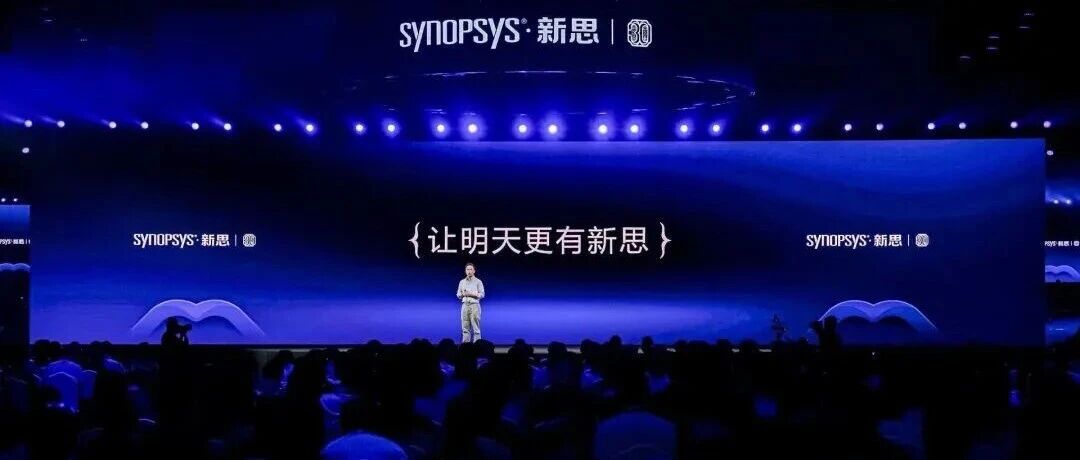
新思科技中国30周年引领AI智能体工程师重塑芯片设计范式
半导体行业观察· 2025-09-19 01:29
Core Viewpoint - Synopsys is celebrating its 30th anniversary in China and is focusing on transforming from a chip-centric company to a system-oriented leader in engineering solutions, emphasizing the integration of digital tools to innovate engineering design paradigms [4][10][12]. Group 1: Company History and Development - Synopsys entered the Chinese market over 30 years ago, initially as an agent, and has since evolved alongside the local semiconductor industry, contributing significantly to academic institutions like Tsinghua University [6][8]. - The company established its leadership in the EDA and IP sectors through strategic acquisitions, such as Avanti, and has fostered local talent development [8][10]. Group 2: Strategic Transformation - The acquisition of Ansys marks a pivotal shift for Synopsys, positioning it as a global leader in providing comprehensive engineering solutions from chip to system [10][12]. - The company aims to address the complexities of modern intelligent systems, such as robotics and autonomous vehicles, by integrating capabilities across the entire technology chain [14][20]. Group 3: Key Technological Breakthroughs - Synopsys is focusing on three critical areas: system-level design, chip technology upgrades, and AI integration, which are reshaping the engineering design landscape [15][17]. - The company is developing a framework for intelligent systems that evolves from basic capabilities to advanced decision-making and action abilities [18]. Group 4: Industry Collaboration and Innovation - Synopsys is collaborating with industry leaders to create differentiated intelligent systems that enhance developer productivity and innovation while addressing developer shortages [20]. - A high-level forum discussed the importance of a holistic approach to product development, emphasizing the integration of hardware, software, and system-level solutions [21][24]. Group 5: Future Outlook and Ecosystem - The conference outlined a technology blueprint from chip to system, highlighting the importance of interdisciplinary collaboration and the role of digital twins in engineering innovation [26][28]. - Synopsys is committed to fostering a vibrant ecosystem that connects global innovation efforts, focusing on talent development and technological breakthroughs [28].
远程银行的“跨越山海”与咫尺服务
Zheng Quan Ri Bao· 2025-09-18 16:22
Core Insights - The banking industry's AI initiatives have shifted from experimentation to essential components of their strategies, with remote banking becoming a key output and service core rather than a cost center [1][2] - The digital transformation in banking is significantly enhancing financial services, leading to a redefined relationship between banks and customers, and the emergence of a "new finance" landscape [1][3] Industry Transformation - Remote banking has evolved from traditional service models to independent departments, now recognized as strategic pillars in banks' digital transformation efforts [1][2] - The integration of AI applications has expanded from isolated functions to comprehensive, system-wide deployments across marketing, risk control, investment advisory, and claims processing [2][3] Technological Advancements - The development of remote banking is characterized by the transition from simple functionality to comprehensive business restructuring, with AI recognized as a core infrastructure rather than an optional tool [3][4] - By 2024, the proportion of intelligent services in banking customer centers is expected to rise to 59.41%, with high identification and resolution rates for robotic queries [4] Service Model Evolution - Remote banking is becoming a versatile service point, capable of handling a wide range of transactions that traditionally required in-person visits, thus enhancing service efficiency and customer experience [3][4] - The shift towards AI-driven services is aimed at providing personalized and efficient financial solutions, with banks focusing on improving customer engagement and operational efficiency [7][8] Strategic Goals - The push for remote banking aligns with national initiatives to enhance digital finance, aiming to overcome geographical and resource limitations of traditional banking [6][10] - Banks are increasingly recognizing the need for a unified customer profile to support targeted marketing and personalized services, thereby increasing customer loyalty [4][6] Challenges and Considerations - Despite advancements, the development of remote banking faces challenges such as the need for process reengineering, insufficient depth of AI application, and the necessity for unified technical standards [9][11] - Data security and privacy protection are critical concerns in the implementation of remote banking, necessitating a focus on compliance and operational efficiency [11]
【公告全知道】人形机器人+减速器+新能源汽车!公司参股企业正在合作与对接的机器人客户包括宇树科技等
财联社· 2025-09-18 15:13
Group 1 - The article highlights significant announcements related to the stock market, including "suspension and resumption of trading, shareholding changes, investment wins, acquisitions, performance reports, unlocks, and high transfers" [1] - A company is collaborating with its invested enterprises on humanoid robots and reducers, with clients including Yushu Technology [1] - Another company has received overseas sample orders for its silicon-based OCS products, completing iterations of 400G/800G computing power products and initiating sample deliveries [1] - A company has received a project notification for a smart cockpit domain controller worth 5.6 billion yuan, involving Huawei's Ascend AI, intelligent agents, robots, and digital currency [1]