产业链

Search documents
刚拿下稀土订单,特朗普又要开第二枪,全球收到通知,中国被布局
Sou Hu Cai Jing· 2025-10-23 17:55
Core Insights - The recent actions by the U.S. regarding tungsten and rare earth minerals reflect a strategic attempt to compete with China in critical mineral resources, particularly in Kazakhstan's undeveloped tungsten mines and through a significant rare earth supply agreement with Australia [1][4][9] Group 1: Tungsten Mining - The U.S. is attempting to negotiate access to a large undeveloped tungsten mine in Kazakhstan, which is crucial for producing strategic materials like armor-piercing ammunition, with 80% of global production currently in China [1] - The U.S. strategy involves using capital and political pressure to secure resources, but China has already established a foothold in Kazakhstan with operational tungsten processing plants, indicating a significant head start in production capabilities [2][8] - Kazakhstan prefers partnerships that promote long-term industrial development, job creation, and technology transfer, which aligns more closely with China's comprehensive industrial chain approach compared to the U.S. model of resource extraction [2][8] Group 2: Rare Earth Elements - The U.S. signed an $8.5 billion supply agreement with Australia for rare earth elements, aiming to reduce dependence on China, but faces challenges in the entire supply chain, particularly in refining and processing capabilities [4][6] - China's dominance in rare earths is not only due to its reserves but also its advanced refining and separation technologies, which the U.S. lacks after decades of industry decline [4][6] - The U.S. strategy appears to be politically motivated, aiming to create a narrative of success in the face of competition with China, despite the significant technological and market gaps that remain [6][9] Group 3: Geopolitical Dynamics - The U.S. approach of combining high-level diplomacy with threats of tariffs has been met with skepticism in Central Asia, where countries like Kazakhstan are wary of such tactics [2][8] - The ongoing competition for control over critical minerals highlights the importance of a complete supply chain, where the ability to process and refine materials is as crucial as the extraction of raw resources [11] - The disparity between U.S. ambitions and actual capabilities in securing a stable supply chain for critical minerals underscores the challenges faced in reversing decades of industrial decline [9][11]


没有稀土,手机退回2G、电车变老头乐!G7再折腾也逃不开中国
Sou Hu Cai Jing· 2025-10-22 01:33
Core Insights - The article emphasizes the critical role of rare earth elements in modern technology, particularly in smartphones, electric vehicles, and military applications, highlighting China's dominance in the global rare earth supply chain [1][3][5] Industry Overview - China currently controls 91% of the global rare earth refining capacity and 94% of magnet production, making it a key player in the industry [3] - The G7 countries are attempting to implement a "price floor" for rare earth elements to counter China's market advantage, but this has led to frustration among companies that still rely on Chinese supplies [7][9] Market Dynamics - The dependency on Chinese rare earths is evident, as companies express concerns about the feasibility of decoupling from China, given the lack of resources and technological capabilities in the West [5][9] - The article notes that any significant disruption in rare earth supply could lead to a regression in technology, affecting everyday life and the performance of electric vehicles [5][9] Consumer Awareness - Consumers are advised to be cautious when purchasing technology products, emphasizing the importance of understanding the materials used, particularly in electric vehicles and smartphones, to avoid subpar performance [12]

美国与澳大利亚签署关键矿产协议,外交部回应
Zhong Guo Ji Jin Bao· 2025-10-21 08:35
Core Viewpoint - The recent mineral agreement between the United States and Australia is perceived as a strategic move to counter China's influence in the global supply chain of critical minerals [1] Group 1: Global Supply Chain - The formation of global supply chains is a result of market and enterprise choices, indicating that geopolitical agreements may influence but not dictate these dynamics [1] - Key mineral resource countries are encouraged to play a proactive role in ensuring the security and stability of industrial and supply chains [1] Group 2: Economic Cooperation - The emphasis is placed on maintaining normal economic and trade cooperation despite geopolitical tensions, highlighting the importance of collaboration in the critical minerals sector [1]
美国与澳大利亚签署关键矿产协议,外交部回应
中国基金报· 2025-10-21 08:16
Core Viewpoint - The article discusses China's response to a key mineral agreement signed between the United States and Australia, which is perceived as a move to counter China. The Chinese government emphasizes the importance of stable supply chains and the role of resource-rich countries in ensuring normal economic cooperation [1]. Group 1 - The agreement between the U.S. and Australia is interpreted as a strategy to "counter China" [1] - China's Foreign Ministry spokesperson highlights that the formation of global supply chains is a result of market and enterprise choices [1] - Resource-rich countries are urged to play a proactive role in ensuring the security and stability of industrial and supply chains [1]
曾坑日本稀土协议的印度,遭中美双重施压后向中国表忠心,向中国立不转卖军令状
Sou Hu Cai Jing· 2025-10-20 11:51
Core Viewpoint - India's recent shift in attitude towards China regarding rare earth elements is driven by a combination of external pressures, particularly from the U.S. tariffs, and internal industrial needs, highlighting the critical dependency on Chinese supply chains for its manufacturing sector [1][19][44]. Group 1: U.S. Tariffs and India's Response - On July 30, the U.S. imposed a 25% tariff on Indian goods, raising the total tariff rate to 50% due to India's imports of Russian oil and military equipment [5][7]. - India's Ministry of External Affairs labeled the U.S. tariffs as "unfair" but faced immediate repercussions, leading to a crisis in its manufacturing sector [7][15]. - The automotive industry in India quickly reacted, urging the government to negotiate with China for rare earth supply permissions to avoid production halts [13][15]. Group 2: China's Export Controls - Concurrently, China announced export controls on rare earth materials, directly impacting India's supply chain [9][34]. - India, despite having rare earth reserves, struggles with extraction and processing capabilities, relying heavily on China for approximately 60% of its rare earth imports [11][28]. - The Indian automotive sector's dependency on Chinese rare earths for electric vehicles and renewable energy technologies has become a critical issue [28][32]. Group 3: India's Commitment to China - In response to the supply chain crisis, multiple Indian companies pledged that rare earth materials sourced from China would only be used domestically, effectively promising not to re-export them [19][30]. - This commitment is seen as a strategic move to ensure continued access to essential materials while maintaining a cooperative stance with China [21][43]. - The Indian government is reportedly considering easing trade restrictions on Chinese imports to stabilize its manufacturing sector [17][21]. Group 4: Long-term Implications - The situation underscores India's reliance on Chinese supply chains, particularly in high-tech industries, and the challenges it faces in developing its own capabilities [26][41]. - India's recent actions reflect a pragmatic approach to international relations, prioritizing economic stability over political alignments [44][48]. - The narrative suggests that future cooperation between India and China in critical resource management could benefit both nations, emphasizing the importance of mutual interests in global trade dynamics [48][50].

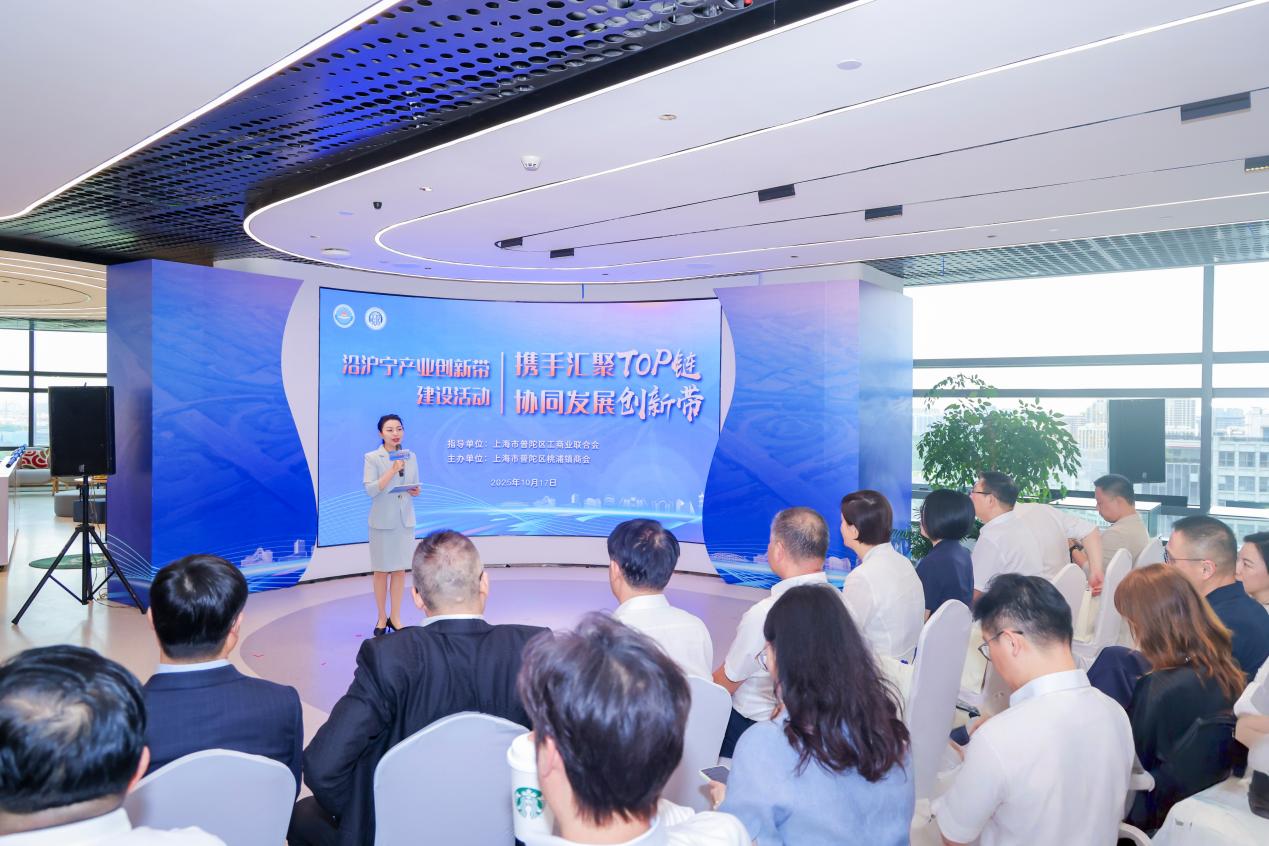
“TOP链”联盟激活区域,桃浦举办沿沪宁产业创新带活动
Guo Ji Jin Rong Bao· 2025-10-17 12:36
Core Viewpoint - The event "Collaborating to Gather the TOP Chain for Coordinated Development and Innovation Belt" marks a significant step in the integration of the Yangtze River Delta and the development strategy of the Putuo District in Shanghai, focusing on the deep integration of innovation, industry, talent, and service chains [3][4]. Group 1: Event Overview - The "TOP Chain" alliance was officially launched, emphasizing the importance of regional collaboration in the context of the Yangtze River Delta integration and Putuo District's development strategy [3]. - The event took place in the Tao Pu area, which is a key node in the innovation belt along the Shanghai-Nanjing route, aligning with the district's strategic layout of "One Belt, One Heart, One City" [1][3]. Group 2: Infrastructure and Connectivity - Tao Pu, as the largest town in Shanghai's central urban area, benefits from a well-connected transportation network, allowing quick access to major hubs like Shanghai West Station and Hongqiao [4]. - The establishment of the "TOP Empowerment Bay" service market aims to provide a one-stop service for enterprises by integrating various resources from government, associations, and businesses [4][5]. Group 3: Collaborative Efforts and Benefits - Representatives from various organizations were appointed as "Tao Pu Business Environment Ambassadors" to enhance regional cooperation and attract more businesses to the area [4]. - The collaboration among cities along the Shanghai-Nanjing route is seen as mutually beneficial, enhancing talent and financial resources while promoting international standards [4]. Group 4: Development and Transformation - The event showcased Tao Pu's transformation from an "industrial rust belt" to a "science and technology innovation belt," highlighting advancements in ecological restoration and the integration of production and urban development [5]. - The launch of the "TOP Chain" alliance and ongoing service optimizations position Tao Pu as a crucial growth engine for economic and social development in Putuo and West Shanghai [5].
从“好邻居”到“超级合伙人” 安阳如何成为河南对接京津冀的“桥头堡”
He Nan Ri Bao· 2025-10-14 23:01
Core Insights - The article highlights the strategic development of Anyang, Henan, as it integrates into the Beijing-Tianjin-Hebei (Jing-Jin-Ji) economic zone, leveraging its geographical advantages to enhance its industrial capabilities and attract high-end manufacturing resources [2][5][14]. Group 1: Industrial Development - Anyang is positioning itself as a key player in the high-end manufacturing and electronic information sectors, with companies like Xuyang Optoelectronics leading the way in developing advanced display materials for various applications [3][4]. - The establishment of a precision glass industry research institute in collaboration with universities and upstream/downstream enterprises aims to enhance technological innovation and attract research resources from the Jing-Jin-Ji region [4][5]. - Anyang's strategy includes creating a "display industry corridor" to embed "Anyang manufacturing" deeply into the regional industrial, supply, and innovation chains [4][5]. Group 2: Collaborative Efforts - The collaboration between Anyang and Jing-Jin-Ji is characterized by a mutual exchange of resources, where Anyang provides manufacturing space while Jing-Jin-Ji offers technological expertise [5][14]. - The city has successfully attracted over 10 upstream and downstream enterprises, enhancing its industrial ecosystem and reducing delivery times to Jing-Jin-Ji clients by 30% [4][12]. - Anyang's proactive approach to integrating with the Jing-Jin-Ji market has resulted in a significant increase in project investments, with 121 projects totaling approximately 1047.57 billion yuan in the last three years [12]. Group 3: Innovation and Technology - The establishment of the Blue Sky Laboratory, focusing on low-altitude economy and drone technology, exemplifies Anyang's commitment to overcoming innovation barriers and enhancing its technological capabilities [9][11]. - The city has developed 33 application scenarios and established 14 national standards in drone technology, showcasing its potential in the low-altitude economy [11][12]. - Anyang's dual-center innovation model links it with major universities and research institutions in Beijing, facilitating the transformation of technological achievements into practical applications [11][12]. Group 4: Cultural and Economic Integration - Anyang is leveraging its rich cultural heritage to attract tourism from the Jing-Jin-Ji region, with nearly one-third of its out-of-province visitors coming from this area [13]. - The city has initiated various cultural projects and collaborations to enhance its visibility and appeal within the Jing-Jin-Ji market [12][13]. - Anyang's participation in joint ecological governance efforts with Jing-Jin-Ji has led to improved air quality, with a reported increase in the number of good air quality days [13].

欧洲连续出招,中方稀土禁令釜底抽薪
Sou Hu Cai Jing· 2025-10-10 01:16
Group 1 - The European Union has taken a strong stance against China by issuing a statement regarding Taiwan and reducing the tax-free quota for steel, which has led to increased tariffs on excess amounts [3][4] - China responded to these actions by announcing export controls on rare earth-related technologies, effectively closing loopholes that could allow technology transfer to bypass China [3][4] - The situation highlights the critical role of China in the rare earth supply chain, particularly for military applications, indicating that Western countries may struggle to maintain their supply without Chinese resources [4] Group 2 - Europe is facing significant internal challenges, including tight government finances, high inflation, and a decline in manufacturing, prompting countries like Italy and Switzerland to seek cooperation with China [2] - The EU's aggressive economic stance towards China has not yielded the expected benefits and has instead exacerbated its fragile economic situation, leading to rising internal dissent [5] - The rapid exchange of actions between Europe and China within a 24-hour period underscores the urgency of addressing supply chain vulnerabilities and internal consensus in Europe [5]
双向奔赴 “虎”聚星城
Chang Sha Wan Bao· 2025-10-08 01:46
Core Insights - The article highlights the strategic shift of major companies from Guangdong to Hunan, particularly focusing on Changsha, as they seek to capitalize on the region's favorable business environment and growth potential [2][3][5]. Group 1: Investment and Business Environment - BYD has established its first new energy vehicle base in Central China, while other companies like Huike and Gree have also made significant investments in Changsha [2][4]. - Changsha has been recognized for its excellent business environment, receiving accolades such as "Best City for High-Quality Development Business Environment" and ranking in the top 10 for four consecutive years in a national survey of private enterprises [5][13]. - The city has implemented a comprehensive service system for businesses, enhancing administrative efficiency and responsiveness to corporate needs [4][13]. Group 2: Innovation and Talent Resources - Changsha aims to become a global research and development center, with a research investment intensity of 3.3%, leading to numerous innovative achievements and a strong talent pool of 3.15 million [7][8]. - The presence of several prestigious universities in Changsha provides a continuous supply of skilled professionals, supporting the local economy and industry [8]. - The city has been recognized as "China's Most Livable City" for 17 consecutive years, contributing to its attractiveness for talent retention and recruitment [9]. Group 3: Industrial Development and Collaboration - The collaboration between Changsha and Huawei has led to the establishment of the Hongmeng Ecological Innovation Center, enhancing the local digital economy and innovation ecosystem [10][12]. - Changsha has developed 17 industrial chains, including engineering machinery and advanced energy storage materials, fostering a robust manufacturing sector [14]. - The city is focused on creating a win-win scenario for both local and incoming businesses, emphasizing the importance of a strong industrial ecosystem and supportive policies [12][14].

私募研究员的坦白局:选出一只好股票真的很复杂!
雪球· 2025-09-27 04:02
Core Viewpoint - The article emphasizes the importance of stock selection in private equity investment, detailing a structured four-step process for identifying and validating potential investment opportunities. Group 1: Stock Selection Process - The first step involves screening and project initiation, which can be approached from three perspectives: macroeconomic, industry-specific, and individual stock analysis [6][11][12]. - The article highlights the significance of industry analysis, suggesting that mature industries can be mapped into clear supply chains, which can be analyzed to identify promising companies [13][19]. - A reverse deduction method is recommended for stock selection, starting from the downstream of the supply chain and moving upwards to identify companies with strong bargaining power and profit certainty [17][21]. Group 2: Validation and Research - The second step focuses on validation and research, which is described as the most critical and complex phase. It involves qualitative and quantitative analyses [24][32]. - Qualitative research assesses the company's competitive advantages, including technology validation, customer dependency, and management credibility [26][28][30]. - Quantitative analysis emphasizes the importance of cash flow over reported profits, as well as scrutinizing the company's expenditures to ensure alignment with its strategic claims [32][34]. Group 3: Decision Making and Tracking - The third step involves decision-making and purchasing, where researchers present their findings to an investment committee for approval, often requiring detailed investment memorandums [39][43]. - The final step is tracking and reviewing the investment post-purchase, ensuring that the original investment thesis remains valid and adjusting positions as necessary [45]. Group 4: Investment Performance - The article concludes that successful stock selection by skilled private equity researchers can lead to significant excess returns, particularly in bullish market conditions [48].