
住房公积金制度改革

Search documents
月供减少!存量公积金贷款利率下调
Zhong Guo Jing Ying Bao· 2025-12-31 12:39
Core Viewpoint - The housing provident fund loan interest rates in multiple regions will be lowered starting January 1, 2026, which will reduce monthly payments for eligible borrowers [1][2]. Group 1: Interest Rate Adjustments - Since December 26, 2025, various housing provident fund management centers, including those in Zhengzhou, Jiaxing, Yan'an, and Hangzhou, have announced automatic adjustments to the loan interest rates for eligible borrowers [2]. - The interest rates for personal housing provident fund loans issued before May 8, 2025, will be uniformly adjusted to the new lower rates without requiring any action from borrowers [2][3]. - The new interest rates effective from May 8, 2025, are set at 2.1% for loans of 5 years or less and 2.6% for loans over 5 years for the first home, while the second home rates are 2.525% and 3.075% respectively [2]. Group 2: Financial Impact - For a loan of 850,000 yuan over 30 years, the interest savings for first-time homebuyers will be approximately 40,446.08 yuan, while for second-time buyers, the savings will be around 41,840.82 yuan due to the rate adjustments [3]. - The current difference between commercial loan rates and provident fund rates is minimal, with some commercial rates in Beijing dropping to around 3.20%, indicating a supportive stance towards the real estate market [3]. Group 3: Future Policy Directions - Since 2025, over 270 policy changes related to the housing provident fund have been implemented nationwide, including increasing loan limits and reducing down payment ratios [4]. - There is potential for further interest rate reductions, although not urgent, as the overall interest rate environment remains relatively low [4]. - The Central Economic Work Conference highlighted the need to stabilize the real estate market and promote the construction of quality housing, indicating that further reforms to the housing provident fund system may be forthcoming to support healthy development in the real estate sector [4].
新政后,北京房贷利率能降多少?
Xin Lang Cai Jing· 2025-12-29 01:48
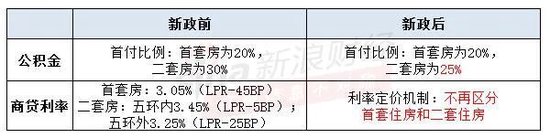
Core Viewpoint - Beijing's real estate market is undergoing significant policy changes aimed at optimizing housing conditions and stimulating demand, particularly for non-local residents and families with multiple children [1][8]. Group 1: Policy Changes - The new policy eliminates the distinction between first and second home loan interest rates, and reduces the minimum down payment for second homes purchased with public housing funds from 30% to 25% [1][2]. - Non-local families can now purchase homes in the inner fifth ring of Beijing with a minimum of two years of social insurance or income tax payments, down from three years, while the requirement for the outer fifth ring is reduced to one year [5][6]. Group 2: Market Impact - The changes are expected to lower the cost of purchasing second homes, potentially saving buyers nearly 160,000 yuan in total interest payments over a 30-year loan for a 2 million yuan mortgage [4][5]. - The average listing time for properties in Beijing has increased by 25% year-on-year, indicating a growing difficulty in market absorption, which the new policies aim to address by lowering entry barriers [6][7]. Group 3: Broader Implications - The policy is seen as a precursor to similar adjustments in other major cities like Shanghai and Shenzhen, reflecting a broader trend of easing housing market restrictions across China [8][9]. - The adjustments are part of a larger strategy to support housing demand and improve market conditions, particularly in light of recent declines in housing prices and sales volumes [7][8].

样本城市周度高频数据全追踪:二手房网签面积同比降幅较11月全月扩大-20251228
CMS· 2025-12-28 12:37
Investment Rating - The report maintains a recommendation for the industry, indicating a positive outlook for the sector's fundamentals and expectations for the industry index to outperform the benchmark index [8]. Core Insights - The report highlights a significant decline in the year-on-year net signed area for second-hand homes, with a decrease of 30% compared to the previous year, which is an expansion of 15 percentage points from November [4]. - In contrast, the year-on-year decline in the net signed area for new homes has narrowed to 26%, improving by 9 percentage points from November [4]. - The central economic work conference has shifted its focus from "greater efforts to stabilize the real estate market" to "focusing on stabilizing the real estate market," suggesting potential support for urban renewal and housing fund reforms [6]. - The report emphasizes the importance of the difference between net rental yields and mortgage rates as a key observation for total demand in both new and second-hand housing markets [6]. Summary by Sections New Home Market - The year-on-year decline in new home net signed area has narrowed, with the average area signed in sample cities showing improvement compared to the past four years [10][11]. - The report indicates that the new home market is experiencing a more favorable supply-demand environment compared to the second-hand market [6]. Second-Hand Home Market - The year-on-year decline in second-hand home net signed area has expanded, with the average area signed in sample cities remaining at a relatively high level compared to the last five years [15][18]. - The report notes that the average viewing numbers for second-hand homes in 12 sample cities have decreased year-on-year, indicating a potential slowdown in market activity [43]. Land Acquisition - The cumulative land transaction area from January to November has seen a year-on-year decline of 14%, with the average transaction price showing a narrower increase of 7% [22]. - The report highlights a significant increase in the number of unsold land parcels, indicating a potential oversupply in the market [33]. Market Liquidity - The report assesses liquidity indicators, noting a tightening in macro-level liquidity in December, which may impact market conditions [47]. - The proportion of listings with price increases has decreased slightly, indicating a cautious market sentiment [48]. Inventory and Unsold Properties - The report indicates an increase in the unsold inventory of new homes, with the de-stocking cycle lengthening compared to October [33]. - The report also highlights that the de-stocking cycles for first and second-tier cities have increased, suggesting a potential slowdown in sales [33].
能抵物业费、大病支出、装电梯!公积金还能这么用→
Xin Lang Cai Jing· 2025-12-24 05:26
Core Viewpoint - The Central Economic Work Conference held on December 10-11 in Beijing emphasized the need to deepen the reform of the housing provident fund system and to promote the construction of "good houses" in an orderly manner [1] Group 1: Housing Provident Fund Policy Changes - Various regions have introduced policies to optimize the conditions for using the housing provident fund, increasing support for residents in renting and purchasing homes [1] - The housing provident fund can now be used not only for buying and renting homes but also for covering property fees, major medical expenses, and installing elevators, among other areas of public welfare [1] Group 2: Specific Regional Policies - In Shijiazhuang, from December 15, employees can withdraw up to 2,000 yuan annually from their provident fund to pay for property fees [3] - In Xuzhou, starting December 1, the provident fund can be used to pay property fees, with a maximum withdrawal of 8,000 yuan per year for one property [4][5] - In Shenyang, new policies allow for the withdrawal of the housing provident fund to pay property service fees, contingent on not having made other withdrawals in the same year [7] Group 3: Medical Expense Withdrawals - Hainan Province has introduced a policy allowing families to withdraw from the housing provident fund to cover medical expenses exceeding 10,000 yuan after insurance reimbursements, effective from December 1, 2025 [10] - Chengdu has expanded the range of serious illnesses eligible for provident fund withdrawals from 11 to 35 conditions [10][11] - The list of serious illnesses includes conditions such as severe cancer, major organ transplants, and severe chronic diseases [11]
能抵物业费、大病支出、装电梯!公积金还能这么用
Yang Shi Xin Wen· 2025-12-24 05:19
Core Viewpoint - The Central Economic Work Conference held on December 10-11 in Beijing emphasized the need to deepen the reform of the housing provident fund system and to promote the construction of "good houses" in an orderly manner [1] Group 1: Housing Provident Fund Reforms - Various regions have introduced policies to optimize the conditions for using the housing provident fund, increasing support for residents in renting and purchasing homes [1] - The housing provident fund can now be used for a wider range of purposes, including paying property management fees, covering major medical expenses, and installing elevators [1] Group 2: Specific Regional Policies - In Shijiazhuang, from December 15, employees can withdraw up to 2,000 yuan annually from their provident fund to pay property management fees for their self-owned residences [2] - In Xuzhou, starting December 1, residents can withdraw their provident fund to pay property management fees once a year, with a limit based on the total property management fees paid in the previous year, capped at 8,000 yuan [3][4] - In Suzhou, the housing provident fund can be withdrawn for property management fees, with a limit of one withdrawal per year and a requirement that no withdrawals have been made in the previous twelve months [6] - In Shenyang, new policies allow residents to withdraw their provident fund for property management fees if they have not made other withdrawals that year [7] - In Tianjin, residents can apply to withdraw their provident fund for the installation of elevators in existing residential buildings [8] - In Guangzhou, residents can withdraw funds for the renovation of old elevators in their properties [10] - In Shenzhen, new regulations allow for the withdrawal of funds for the installation or replacement of old elevators starting December 15 [11] Group 3: Medical Expense Withdrawals - In Hainan, starting December 1, 2025, families can withdraw from their provident fund to cover medical expenses exceeding 10,000 yuan after insurance reimbursements for major illnesses [12] - Chengdu has expanded the list of major illnesses eligible for provident fund withdrawals from 11 to 35, including severe conditions like cancer and major organ transplants [13][14][15]
着力稳定房地产市场将有这些重点
Xin Hua Wang· 2025-12-23 08:40
Core Viewpoint - The 2026 real estate market direction is a major focus, with emphasis on stabilizing the market through various strategies [1] Group 1: Policy Measures - The Ministry of Housing and Urban-Rural Development aims to implement city-specific policies to control supply, reduce inventory, and optimize supply [1] - There will be a focus on revitalizing existing land through urban renewal and village reconstruction, as well as acquiring existing commercial housing for use as affordable housing, resettlement housing, dormitories, and talent housing [1] - The government will enhance the supply of affordable housing and implement quality improvement projects for housing [1] Group 2: Financing and Market Support - The "white list" system for real estate projects will be further utilized to support reasonable financing needs of real estate companies [1] - Local governments are encouraged to fully utilize their regulatory autonomy to adjust and optimize real estate policies, supporting both rigid and improved housing demands [1] - A new model for real estate development will be established, including a project company system for real estate development and a main bank system for financing [1] Group 3: Sales and Risk Management - The promotion of a "see it, buy it" system for the sale of commercial housing aims to fundamentally prevent delivery risks [1] - For those continuing with pre-sales, there will be standardized supervision of pre-sale funds to protect the legal rights of homebuyers [1]
石家庄、天津……多地公积金使用范围拓宽
Sou Hu Cai Jing· 2025-12-23 06:25
Core Viewpoint - The article discusses the ongoing optimization of housing provident fund policies across various regions in China, highlighting the expansion of support for both home purchases and rentals, as well as the potential for systemic reform at the national level to enhance the effectiveness of this financial tool in stabilizing the real estate market and improving residents' living conditions [1][9]. Group 1: Policy Enhancements - Various cities are increasing the limits for housing provident fund withdrawals, such as Shijiazhuang raising the annual rental withdrawal limit to 24,000 yuan per person [1]. - The central economic work conference has prioritized the reform of the housing provident fund system as a key task for the real estate sector in 2026, indicating a shift towards a more comprehensive national reform [1][9]. - The China Index Academy reports approximately 270 optimization policies for the housing provident fund since 2025, with expectations for continued trends in 2026 [1][9]. Group 2: Loan Support and Coverage Expansion - Cities like Tianjin and Foshan are increasing the maximum loan limits for first and second homes, with Tianjin proposing limits of 1.2 million yuan and 1 million yuan respectively [2]. - The policies are becoming more refined, with specific adjustments for families with multiple children, such as increased loan amounts for families with two or three children [2]. - There is a notable expansion in the use of housing provident funds for rental support, with cities like Shijiazhuang increasing the rental withdrawal limit and allowing monthly direct payments for rent [3]. Group 3: Broader Usage and Flexibility - The scope of housing provident fund usage is being broadened to include payments for property management fees, home repairs, and even medical expenses in some regions [3][4]. - Cities are also relaxing the eligibility criteria for withdrawals, allowing family members to assist in home purchases and withdrawals for medical emergencies [4][5]. - The initiative to enhance participation from flexible employment individuals is underway, with policies in place to facilitate their access to the housing provident fund [5]. Group 4: Future Outlook and Challenges - Experts predict that by 2026, the housing provident fund system will continue to evolve, with further optimizations in loan limits and processes for cross-regional recognition [8][9]. - The potential for a "one fund for multiple uses" model is anticipated, which could expand the fund's application to areas like home renovations and elder care [7]. - Challenges remain, including structural issues within the system, such as regional disparities in fund availability and the need for better integration with other financial systems [6].
住建部:着力稳定房地产市场
财联社· 2025-12-23 05:03
Core Viewpoint - The article emphasizes the need to stabilize the real estate market in China through targeted policies and measures, focusing on inventory reduction, supply optimization, and the promotion of affordable housing initiatives [1]. Group 1: Policy Measures - The Ministry of Housing and Urban-Rural Development stresses the importance of city-specific policies to control supply, reduce inventory, and optimize housing supply [1]. - There is a push for the acquisition of existing commercial housing for use as affordable housing, relocation housing, dormitories, and talent housing [1]. - The article highlights the need for a quality improvement initiative for housing and the orderly promotion of "good housing" construction [1]. Group 2: Financing and Development - The article discusses the role of the "white list" system for real estate projects to support reasonable financing needs of real estate companies [1]. - It calls for city governments to effectively utilize their autonomy in real estate regulation, adjusting policies to support both rigid and improved housing demands [1]. - The article proposes a new model for real estate development, emphasizing the establishment of a project company system and a main bank system for financing [1]. Group 3: Sales and Consumer Protection - The promotion of a "see it, buy it" approach in property sales aims to fundamentally mitigate delivery risks [1]. - For those continuing with pre-sales, there will be a focus on regulating pre-sale fund supervision to protect the legal rights of homebuyers [1]. Group 4: Community and Service Improvement - The article mentions the deepening of housing provident fund system reforms and the implementation of property service quality enhancement actions [1]. - It explores new operational models for community organizations, including coordination between community committees, homeowners' committees, and property service companies [1]. - The article advocates for a "property service + life service" model to promote property services directly into households [1].

全国住房城乡建设工作会议:商品房销售推进现房销售制,实现“所见即所得”,从根本上防范交付风险
Xin Lang Cai Jing· 2025-12-23 04:36
Core Viewpoint - The national housing and urban-rural construction work conference emphasized the need to implement a "see and buy" system for commercial housing sales to fundamentally prevent delivery risks [1] Group 1: Housing Sales Regulations - The conference advocates for the promotion of the current housing sales system to ensure transparency and reduce risks associated with property delivery [1] - For those continuing with pre-sales, there will be a focus on regulating pre-sale fund supervision to protect the legitimate rights and interests of homebuyers [1] Group 2: Housing Fund and Property Services - There will be a deepening of the reform of the housing provident fund system to enhance its effectiveness [1] - An initiative to improve property service quality will be implemented, exploring new operational models under the leadership of community party organizations, residents' committees, and property service companies [1] - The conference encourages the integration of property services with lifestyle services, promoting the concept of "property services into households" [1]
住房城乡建设部:着力稳定房地产市场
Xin Hua She· 2025-12-23 04:28
Core Viewpoint - The National Housing and Urban-Rural Development Work Conference emphasizes stabilizing the real estate market through targeted policies and measures to manage supply and demand effectively [1] Group 1: Policy Measures - The Ministry of Housing and Urban-Rural Development, led by Minister Ni Hong, focuses on city-specific strategies to control new supply, reduce inventory, and optimize supply [1] - There is a push for utilizing existing land through urban renewal and village redevelopment, including acquiring existing commercial housing for affordable housing and other uses [1] - The government aims to enhance the quality of housing supply and implement a housing quality improvement project to promote the construction of "good houses" [1] Group 2: Financing and Sales - The conference highlights the importance of the "white list" system for real estate projects to support reasonable financing needs of real estate companies [1] - Local governments are encouraged to utilize their autonomy in real estate regulation to adjust policies that support both rigid and improved housing demands [1] - The introduction of a main bank system for real estate financing and a shift towards selling existing homes to mitigate delivery risks are also emphasized [1] Group 3: Institutional Reforms - The reform of the housing provident fund system is set to deepen, aiming to improve service quality in property management [1] - New operational models are being explored for community organizations and property service companies under the leadership of community party organizations [1] - The initiative to integrate property services with daily life services aims to enhance the overall living experience for residents [1]