供应链转移

Search documents
弘则•策略中美关税协议落地对出口贸易影响
2025-05-19 15:20
Summary of Conference Call Records Industry Overview - The records primarily discuss the impact of new US tariff policies on export trade, particularly focusing on logistics, cross-border e-commerce, and the shifting supply chain dynamics in response to these tariffs [1][2][3][5][11]. Key Points and Arguments Tariff Impact on Logistics and Export - The new US tariff policy has led to a significant increase in logistics costs, with container shipping rates rising to $6,000, an increase of $1,000 to $1,500 compared to previous rates. A surge in shipping demand is expected to last for about one to two months, with a peak in exports anticipated in June [1][6][13][75]. - The overall tariff burden has increased by approximately 30% compared to 2024, with different products facing varying rates. For instance, toys are subject to a 25% tariff, while lithium battery products face rates between 20% to 30% [2][5][14]. Cross-Border E-commerce Growth - Cross-border e-commerce is rapidly developing in regions such as Russia, Mexico, and the Middle East, with Russia seeing a significant increase in light industrial product imports from China. Mexico remains a crucial channel for exports to the US, while the Middle East is experiencing increased investment [1][3][11]. - Despite the growth in e-commerce, traditional trade still dominates, although its share is gradually declining as e-commerce expands [40]. Supply Chain Adjustments - Many companies are shifting production capacity to Southeast Asia, particularly in industries like electric tools and lawnmowers, to take advantage of lower tariffs and maintain supply chain efficiency. This transition is not significantly affected by short-term changes in tariffs [7][9][66]. - Consumer electronics companies have established mature supply chains in Southeast Asia but still rely on China for about 70% of their production capacity. Companies without factories in Southeast Asia are considering relocating closer to the US, such as in Mexico or Canada, to mitigate tariff risks [9][10][66]. Future Expectations and Strategies - Companies are cautiously optimistic about future tariff negotiations after the 90-day grace period, avoiding excessive rush to export. They are prioritizing existing orders, including those for the Christmas season, which are being expedited [5][54]. - The logistics sector is expected to see continued price increases, potentially reaching $8,000 for shipping containers as demand surges [3][13][75]. Market Dynamics and Consumer Behavior - The average tariff level currently stands at approximately 50%, with significant variations across different products. The burden of these tariffs is primarily borne by importers, with cross-border e-commerce platforms able to pass on costs to consumers [23][80]. - The demand for low-value products, such as Christmas goods, is expected to rise as companies rush to fulfill orders before potential tariff increases [20][79]. Regional Trade Developments - The records highlight that trade with Russia has been increasing significantly, driven by a combination of market size and strengthened trade relations following geopolitical shifts. This trend is expected to continue as companies diversify their markets away from the US [47][81]. Other Important Insights - The logistics market is currently experiencing tight capacity, with shipping costs expected to remain high for the next month or two due to accumulated orders from previous months [75][86]. - Companies are exploring various strategies to mitigate the impact of tariffs, including relocating production and utilizing overseas warehouses to maintain competitiveness in the face of rising costs [65][66][84]. This summary encapsulates the critical insights from the conference call records, focusing on the implications of tariff changes on logistics, e-commerce, and supply chain strategies within the current trade environment.
Canalys:经济不确定性压制需求 一季度东南亚智能手机市场同比下滑3%
智通财经网· 2025-05-19 06:23
Core Insights - The Southeast Asian smartphone market experienced a 3% year-on-year decline in Q1 2025, marking the first drop after five consecutive quarters of growth [1][3] - Samsung regained the top position with 4.3 million units shipped, holding a 19% market share, while Xiaomi was the only top five vendor to achieve a year-on-year growth of 4%, reaching 4 million units and a 17% market share [1][7] - The average selling price (ASP) increased by 5% to the highest level since 2023, driven by a wave of high-end product launches in Q4 2024, which reduced disposable income for retailers [3][6] Market Performance - Samsung: 4.3 million units, 19% market share, down 3% year-on-year [7] - Xiaomi: 4.0 million units, 17% market share, up 4% year-on-year [7] - Transsion: 3.3 million units, 15% market share, down 20% year-on-year [7] - OPPO: 3.2 million units, 14% market share, down 16% year-on-year [7] - Vivo: 2.7 million units, 12% market share, down 3% year-on-year [7] Strategic Insights - Companies need to maintain flexible product portfolio strategies to quickly respond to changing market dynamics, as demonstrated by Xiaomi's rise to second place through strategic product launches [3][4] - Diversification of sales channels is crucial for mitigating risks associated with market volatility, particularly in the entry-level segment [3][6] - Vietnam is emerging as a key market for smartphone production due to its stable governance and improving infrastructure, providing opportunities for brands to expand their 5G product lines [6]



日本央行审议委员中村豊明:如果资本支出延迟情况扩大,可能会促使企业将供应链转移到海外,以应对供应限制。
news flash· 2025-05-16 04:07
Core Viewpoint - The Bank of Japan's policy board member, Toyoaki Nakamura, indicated that an expansion in delays of capital expenditures could lead companies to shift their supply chains overseas to mitigate supply constraints [1] Group 1 - The potential for increased capital expenditure delays may influence corporate strategies regarding supply chain management [1] - Companies may consider relocating supply chains internationally as a response to domestic supply limitations [1]
川普威胁库克:我不希望你在印度生产iPhone
Sou Hu Cai Jing· 2025-05-16 02:04
Core Viewpoint - Apple has been gradually shifting its production focus from China to India, driven by geopolitical risks and cost advantages, despite challenges in quality and consistency [3][4][6]. Group 1: Production Shift - Since the late 1990s, Apple has outsourced production to Chinese factories, particularly Foxconn in Shenzhen and Zhengzhou, benefiting from lower labor costs and efficient supply chain logistics [1]. - The trade war initiated by the Trump administration in 2018 prompted Apple to begin relocating its supply chain and production bases outside of China [3]. - Apple started establishing production bases in India as early as 2017, with approximately 7% of iPhone shipments expected to come from India by the end of 2023, a figure projected to increase in the coming years [4]. Group 2: Geopolitical Influences - Trump's recent comments indicate a desire for Apple to shift production back to the U.S., expressing dissatisfaction with the company's expansion in India [6][8]. - Despite Trump's encouragement for Apple to build factories in the U.S., the feasibility of large-scale iPhone production domestically remains low due to the existing supply chain concentrated in Asia [8][10]. Group 3: Investment Plans - Apple has committed to investing $500 billion in the U.S. over the next four years, including a new server factory in Houston, Texas, to support cloud services [10]. - While Apple is making investments in specific areas within the U.S., the immediate prospect of manufacturing iPhones domestically is challenging due to the lack of necessary infrastructure and workforce [10].

关税战“躺赢”!美银:印度取代日本成基金经理最爱亚洲股市
智通财经网· 2025-05-14 11:22
印度股市近期因与邻国巴基斯坦的冲突而承压。4月22日,克什米尔地区发生袭击事件,造成26名平民死亡。两国于5 月10日同意停火,本周开盘后两国股市应声飙升。 这些发现支持了印度最近的市场趋势,自4月2日美国总统唐纳德·特朗普推出关税以来,印度股市反弹。由于印度对本 土消费的依赖程度高于出口,关税引发的全球市场波动促使投资者将印度视为相对避风港。 外资大举涌入印度股市 自4月2日以来,印度基准股指Nifty 50指数的表现超过了许多亚洲股市,仅次于日本和印尼股市。 智通财经APP获悉,美国银行证券最新的月度调查显示,印度已取代日本成为基金经理最青睐的亚洲股市,因为这个 南亚国家可能受益于全球贸易紧张局势下的供应链转移。 调查显示,42%的基金经理表示增持了印度股票,39%的人增持了日本股票,6%的人增持了中国股票。泰国的情况最 差。共有109位受访者回答了该调查的区域性问题,他们的资产总额达2340亿美元。 包括Ritesh Samadhiya在内的美国银行证券策略师在5月13日的报告中表示:"印度成为最受青睐的市场,被认为可能受 益于关税影响后供应链的重新调整。在印度,基础设施和消费仍然是投资者密切关注的主要 ...

特朗普逼着斯凯奇卖身救命
虎嗅APP· 2025-05-09 13:14
以下文章来源于商业弧光 ,作者柳柳 商业弧光 . 听风者,捕光人,最准点的商业节拍 出品|虎嗅商业消费组 作者|柳柳 编辑|苗正卿 题图|视觉中国 看似业绩还在平稳增长的背后,关税压力、供应链成本飙升及消费疲软正在成为压垮"美国鞋王"斯凯奇 的"隐形杀手"。 近日,斯凯奇宣布同意被知名投资公司3G资本收购,这一消息震惊市场。后者曾主导百威英博、汉堡王和 卡夫亨氏等多起大型收购案。 根据协议,3G资本将以每股63美元的现金收购斯凯奇所有流通股,交易预计在今年第三季度完成,交易总 额约94亿美元。交易完成后,斯凯奇将从纽交所退市,转为私人控股企业。 斯凯奇现任董事长罗伯特·格林伯格及核心管理团队将全员留任,私有化后的战略重心将转向"供应链弹性建 设",包括在越南增设自动化工厂、在墨西哥布局区域配送中心。 斯凯奇方面对虎嗅表示,私有化目前对于中国市场的组织架构不会有影响。彭博社指出,此次私有化将帮 助斯凯奇缓解关税压力。在没有上市公司报告的要求后,公司将能够采取措施,使其免受关税影响。 机构普遍观点,斯凯奇选择此时私有化,实为规避上市公司监管压力,以便在关税风波中掌握更大的经营 自主权。 供应链转移阵痛 关税引发的 ...

苹果眼里没有“最大甲方”
美股研究社· 2025-05-09 11:43
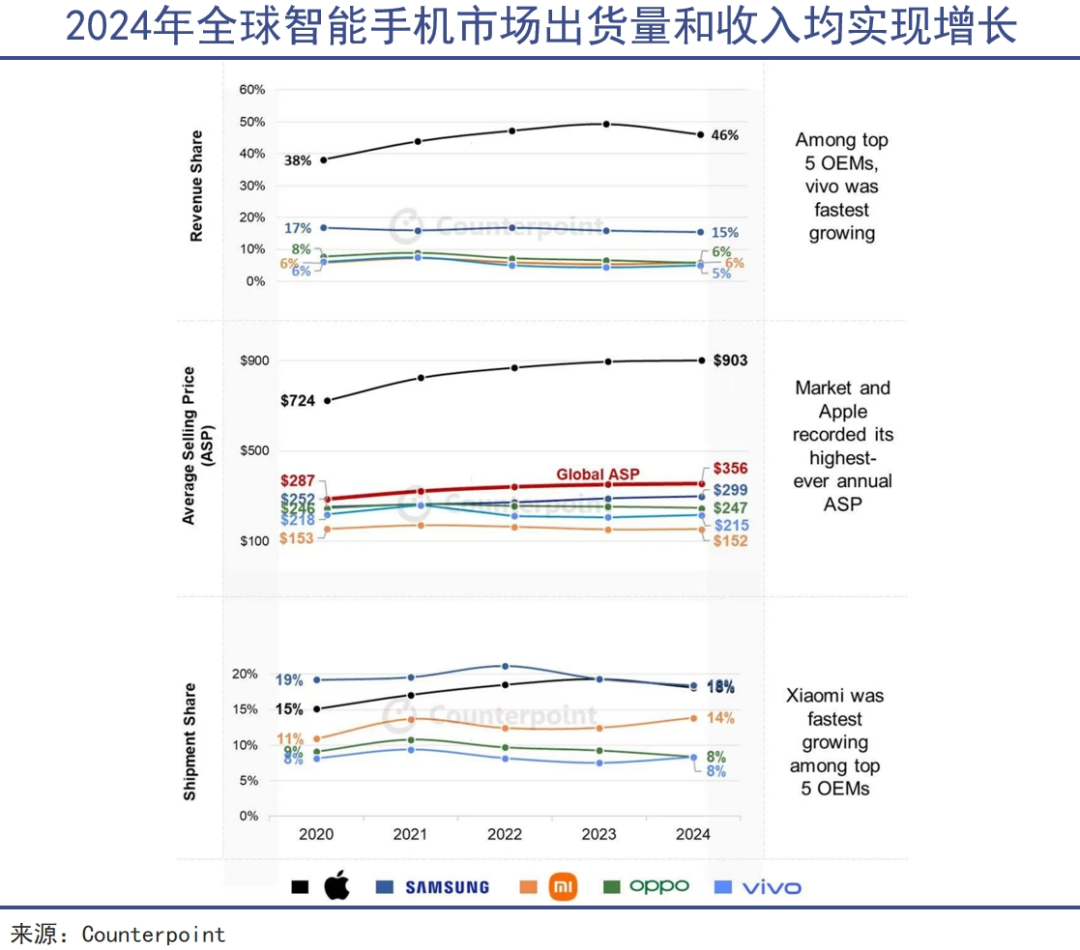
Core Viewpoint - The article discusses Apple's strategy of decoupling from China, highlighting its reliance on Chinese suppliers while simultaneously reducing their importance in its supply chain. This shift is driven by geopolitical tensions and Apple's desire to maximize profits by moving production to countries like India and Vietnam [4][6][20]. Group 1: Apple's Market Position and Strategy - Apple generated $64.6 billion in revenue from the Chinese market last year, making it one of the largest foreign companies operating in China [4]. - Despite its significant revenue from China, Apple's share of components sourced from Chinese suppliers has decreased to 2% [5][11]. - Apple's net profit margin is 24%, while the average net profit margin for its Chinese suppliers is only 4%, indicating a significant disparity in profit distribution [11][31]. Group 2: Supply Chain Dynamics - Apple has established a "wolf-raising" strategy, where it pressures existing suppliers while simultaneously nurturing secondary suppliers to prevent any single supplier from becoming too powerful [4][18]. - The number of Apple factories in Vietnam has increased from 15 in 2018 to 35 currently, reflecting a shift in production focus [23]. - Apple plans to increase its manufacturing share in India to 25% by 2025, with local production expected to rise significantly [24][27]. Group 3: Competitive Landscape - Huawei has regained market leadership in China with a 19.4% market share, while Apple's market share has declined by 7.7% [35]. - Chinese consumers are increasingly turning to domestic brands like Xiaomi and Huawei, which may further challenge Apple's market position [42]. - Companies like Luxshare Precision and OFILM are diversifying their business models to reduce dependency on Apple, indicating a shift in the supply chain landscape [38][41]. Group 4: Geopolitical and Economic Implications - The ongoing US-China trade tensions are influencing Apple's supply chain decisions, as the company navigates a complex landscape of political and economic factors [45]. - Apple's actions reflect a broader trend of companies reassessing their global supply chains in response to geopolitical pressures [45].

特朗普逼着斯凯奇卖身救命
Hu Xiu· 2025-05-09 02:53
看似业绩还在平稳增长的背后,关税压力、供应链成本飙升及消费疲软正在成为压垮"美国鞋王"斯凯奇 的"隐形杀手"。 斯凯奇现任董事长罗伯特·格林伯格及核心管理团队将全员留任,私有化后的战略重心将转向"供应链弹 性建设",包括在越南增设自动化工厂、在墨西哥布局区域配送中心。 斯凯奇方面对虎嗅表示,私有化目前对于中国市场的组织架构不会有影响。彭博社指出,此次私有化将 帮助斯凯奇缓解关税压力。在没有上市公司报告的要求后,公司将能够采取措施,使其免受关税影响。 机构普遍观点,斯凯奇选择此时私有化,实为规避上市公司监管压力,以便在关税风波中掌握更大的经 营自主权。 供应链转移阵痛 关税引发的连锁反应正在撕裂全球供应链。为此买单的不只有消费者。2025年4月,特朗普政府宣布对 进口鞋类征收最高达46%的"对等关税",而美国超过90%的鞋类依赖进口,耐克50%的鞋类产自越南, 阿迪达斯39%的产能集中于越南工厂,斯凯奇60%的产能依赖亚洲供应链。其中,中国和越南是其重要 的生产地。 如此加征关税直接导致鞋类企业成本暴涨,利润率腰斩。原本1100元的一双球鞋涨至1700元,高性价比 的优势不再。 财报显示,斯凯奇2024年净利润 ...
弘则出口企业四月调研反馈,关税影响下的出口企业现状如何?
2025-05-08 15:31
Summary of Conference Call Records Industry Overview - The records focus on the impact of U.S. punitive tariffs on Chinese export enterprises, particularly in April 2025, highlighting significant declines in exports to the U.S. and the resulting strategies adopted by Chinese companies to cope with the new trade environment [1][2][4][5]. Key Points and Arguments 1. **Impact of Tariffs on Exports**: - Following the implementation of U.S. tariffs in April 2025, there was a substantial drop in Chinese exports to the U.S., with many companies halting shipments or returning goods [1][2][4]. - Specific industries such as zippers, power tools, and automotive parts were notably affected, with some companies reporting order reductions of up to 50% [2][4]. 2. **Response Strategies by Chinese Companies**: - Companies adopted various strategies, including stockpiling goods, adjusting export destinations, and relocating production overseas [1][3][19]. - High-value, low-cost products continued to be exported despite tariffs, as importers could still absorb the costs [8][19]. 3. **Inflationary Effects in the U.S.**: - The tariffs have significantly contributed to rising inflation in the U.S., with most imported products facing additional tariffs of 15%-20%, leading to increases in the Producer Price Index (PPI) and Consumer Price Index (CPI) [10][27]. 4. **Market Diversification**: - Companies are gradually reducing reliance on the U.S. market, shifting focus to Europe and emerging markets, and adjusting product pricing accordingly [3][14][19]. 5. **E-commerce Resilience**: - The Chinese cross-border e-commerce sector has shown resilience, with online sales less affected by tariffs compared to offline channels, as companies utilize overseas warehouses to manage inventory [28][29]. 6. **Challenges in Supply Chain Transition**: - Transitioning supply chains to Southeast Asia presents challenges, including increased costs and production inefficiencies, as well as stricter origin certification requirements [15][16][45]. 7. **Future Trade Dynamics**: - There are indications of potential easing of tariffs, with discussions around possibly lowering average tariffs on Chinese imports [11]. - The overall economic outlook remains pessimistic, with expectations of negative impacts on both the U.S. and global economies due to the tariffs [27]. Additional Important Insights - **Order Trends**: Despite the challenges, about 61%-62% of surveyed companies reported stable or increasing orders from non-U.S. markets, indicating some resilience in global demand [26]. - **Emerging Market Opportunities**: There are growth opportunities in emerging markets, particularly in infrastructure-related sectors, as demand for construction equipment rises [22]. - **Logistics and Shipping**: The logistics sector faces significant risks due to halted trade routes, necessitating new solutions and adjustments in supply chain strategies [33][34]. This summary encapsulates the critical insights from the conference call records, providing a comprehensive overview of the current state of the Chinese export industry in light of U.S. tariffs and the strategies being employed to navigate these challenges.
苹果眼里没有“最大甲方”
Hu Xiu· 2025-05-06 05:58
Core Viewpoint - Apple is increasingly distancing itself from China, focusing on maximizing profits while reducing reliance on Chinese suppliers and manufacturing, amidst a backdrop of escalating trade tensions between the US and China [1][68]. Group 1: Apple's Market Position - Apple generated $64.6 billion in revenue from the Chinese market last year, making it one of the largest foreign companies operating in China [3][4]. - Despite its significant revenue from China, Apple's share of components sourced from Chinese suppliers has dwindled to just 2% [7][20]. - In the first quarter of this year, Apple saw its market share in China shrink, with Huawei surpassing it to become the market leader [9][46]. Group 2: Supply Chain Dynamics - Apple employs a "wolf-raising" strategy, squeezing profits from existing suppliers while nurturing secondary suppliers to prevent any single supplier from becoming too powerful [6][23]. - The company has shifted low-value manufacturing to developing countries, maintaining high profit margins by controlling design and marketing [12][18]. - In 2024, Apple captured 18% of global smartphone shipments, commanding nearly half of the market size and 80% of industry profits [13][18]. Group 3: Production Shifts - Apple plans to increase its manufacturing presence in India, aiming for 25% of its production to occur there by 2025 [26][32]. - The number of Apple factories in Vietnam has risen from 15 in 2018 to 35 currently, indicating a significant shift in production strategy [29]. - The share of iPhone production in India has increased from 1% to 14% over four years, while China's share has decreased from 98% to 85% [38]. Group 4: Financial Performance and Challenges - Apple's net profit margin reached 24% in the 2024 fiscal year, while the average net profit margin for 22 listed Chinese suppliers is only 4% [18]. - The decline in Apple's reliance on Chinese manufacturing has led to significant economic impacts in regions like Zhengzhou, where mobile phone exports dropped by 49.1% in the first half of 2024 [40][41]. - Companies like Luxshare Precision and OFILM have begun diversifying their business models to reduce dependence on Apple, with Luxshare expanding into automotive components [50][52]. Group 5: Competitive Landscape - Huawei has rebounded strongly, capturing 19.4% of the Chinese market in the first quarter, while Apple's market share has declined by 7.7% [46]. - The shift in consumer preferences towards domestic brands like Xiaomi and Huawei is contributing to a decline in Apple's market dominance in China [61][62]. - Apple faces increasing competition not only from domestic brands but also from its own supply chain partners, who are diversifying their client bases [50][58].