信披违规

Search documents
退市后 “秒还”占款,龙宇股份空窗期收购又是“套路”?
Di Yi Cai Jing Zi Xun· 2025-09-19 06:53
Core Viewpoint - The article discusses the unusual circumstances surrounding the delisting of Longyu Co., Ltd. due to significant non-operating fund occupation by its major shareholder, amounting to 868 million yuan, and the subsequent repayment of 337 million yuan shortly after delisting, raising questions about the underlying capital maneuvers [1][3][13]. Group 1: Delisting and Financial Background - Longyu Co., Ltd. was delisted on July 3, 2025, primarily due to the major shareholder's 868 million yuan non-operating fund occupation and consecutive "unable to express opinion" audit reports for 2023 and 2024 [3][13]. - The company reported a net asset of 3.693 billion yuan and cash reserves of 1.1 billion yuan at the end of 2023, indicating a strong financial position prior to delisting [3][4]. - Despite external offers for high-priced acquisitions to help maintain its listing status, the major shareholder rejected these proposals [4]. Group 2: Post-Delisting Actions - Within 20 days post-delisting, Longyu's major shareholder and related companies repaid 337 million yuan, suggesting some repayment capability despite previous refusals to settle before delisting [5][13]. - The repayment raised suspicions as it contradicted typical market behavior where companies strive to protect their listing status [5]. Group 3: Acquisition and Corporate Governance - During the "information disclosure gap" between delisting and re-listing on the National Equities Exchange and Quotations, Longyu acquired 100% of Shanghai Yunman Yisuan Information Technology Co., Ltd. without public disclosure [6][8]. - The acquisition was linked to the repayment of the 337 million yuan, with allegations that funds were cycled through related parties, potentially harming minority shareholders [8][10]. - The new executive appointed during this period had significant ties to the acquired company, raising further questions about governance and transparency [7][8]. Group 4: Regulatory and Legal Implications - Regulatory scrutiny intensified following the discovery of significant undisclosed related-party transactions, leading to administrative penalties and investigations into financial misconduct [13][14]. - The remaining 500 million yuan in fund occupation remains a concern for minority shareholders, with potential plans to use company funds for further acquisitions to settle these debts [13][14]. - Legal actions have been initiated by affected investors, resulting in favorable judgments against Longyu for losses incurred due to misleading statements [14].

一周债市看点|金科地产发行人重整计划获批并进入执行阶段,时代控股未能偿还到期债务86.87亿元
Xin Lang Cai Jing· 2025-08-31 09:12
Group 1: Jin Ke Real Estate - Jin Ke Real Estate Group announced that its restructuring plan has been approved by the court and has entered the execution phase, with a total of 2.628 billion yuan in restructuring investment funds received [1] - The company reported a significant loss of 31.97 billion yuan in 2024, compared to a loss of 8.732 billion yuan in 2023, representing a year-on-year decline of 266.11% [1] - Jin Ke Real Estate has 98 records of being executed in the past year, with a total amount of 1.256388 billion yuan involved [1] Group 2: Taihe Group - Taihe Group was fined 6 million yuan by the China Securities Regulatory Commission for failing to disclose major lawsuits and significant omissions in its annual report [2] - The company reported an undistributed profit of -32.888 billion yuan as of December 31, 2024, with unmade losses exceeding one-third of the total paid-in capital of 2.4889 billion yuan [2] - The major reasons for the losses include large investment losses due to asset auctions, increased financing costs, and provisions for asset impairment and expected liabilities [2] Group 3: New Light Holdings - New Light Holdings announced that it has completed cash distribution according to the court-approved restructuring plan, involving amounts of 1 billion yuan, 1 billion yuan, and 710 million yuan for its bonds [3] - The restructuring plan for New Light Holdings and 35 other companies has entered the execution phase, with a trust plan established on November 18, 2024 [3] - The company previously applied for bankruptcy in April 2019 [3] Group 4: Times Holdings Group - Times Holdings Group announced that it has failed to repay due debts of 8.687 billion yuan, leading to its inclusion on the list of dishonest executors [4] - The company reported a significant loss of 13.655 billion yuan in 2024, compared to a loss of 3.565 billion yuan in 2023, representing a year-on-year decline of 283.01% [4] - The company is facing a major lawsuit involving the freezing of assets valued at 651.85 million yuan [4] Group 5: ST Dongshi - ST Dongshi announced that its subsidiary's bank account has been frozen with an amount of 292.5 million yuan due to historical legal disputes [5] - The company expects a net loss of between 126 million yuan and 105 million yuan for the first half of 2025, primarily due to declining revenue and high fixed costs [6] - The company reported a continuous loss of 900.3 million yuan in 2024, compared to a loss of 362 million yuan in 2023 [6] Group 6: R&F Properties - R&F Properties expects a net loss of approximately 4.08 billion yuan for the first half of 2025, compared to a net loss of 2.33 billion yuan in the same period last year [6] - The company reported a continuous loss of 15.405 billion yuan in 2024, compared to a loss of 19.95 billion yuan in 2023 [7]
闽清富豪黄其森和建行高管黄曦都在东北受审
Sou Hu Cai Jing· 2025-08-25 12:56
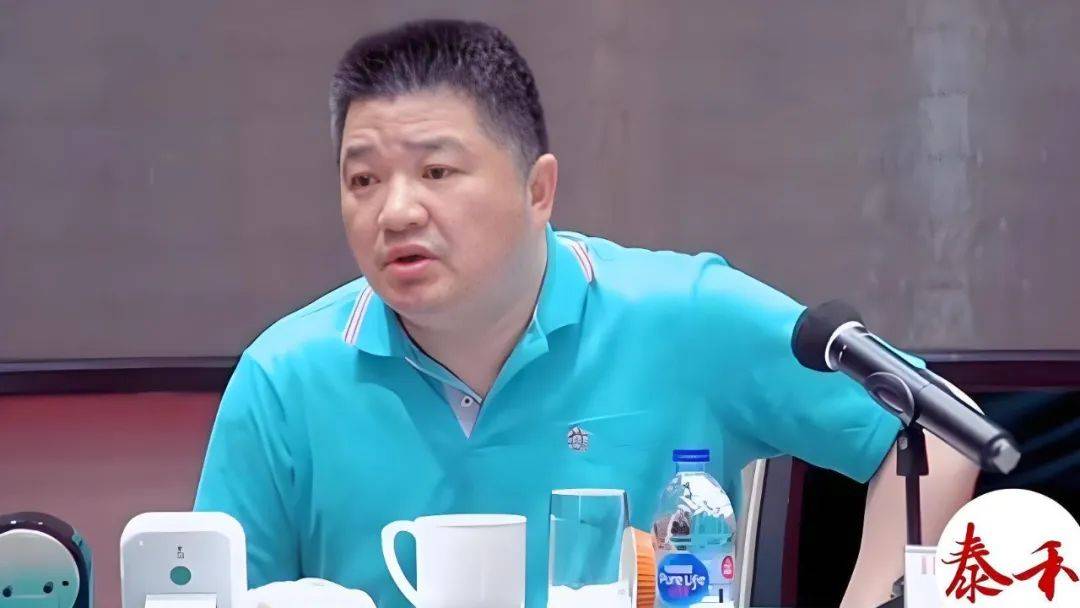
Group 1 - The chairman of Taihe Group, Huang Qisen, has been detained in Liaoning, marking a significant development in the company's ongoing debt crisis [2] - Huang Qisen's peak wealth was in 2020, with a net worth of 20 billion yuan, ranking 99th on the global real estate billionaire list, while Taihe Group aimed for a sales target of 200 billion yuan [4] - The company's public bond default in July 2020 marked the beginning of Huang Qisen's debt crisis, which escalated with further investigations and legal issues [4][6] Group 2 - Taihe Group's total assets were reported at 164.7 billion yuan, with total liabilities at 187.1 billion yuan by the end of 2024, indicating insolvency [6] - The company faced severe financial repercussions, including a delisting from the A-share market due to its stock price falling below 1 yuan for 20 consecutive trading days [6][8] - Taihe Group has been involved in 23 major lawsuits during the 2020-2022 reporting period, with the total amount in dispute exceeding 15.8 billion yuan, leading to significant penalties for the company and its executives [8][10] Group 3 - Huang Qisen and other executives were fined a total of 17.4 million yuan for serious violations in annual reports, with Taihe Group itself fined 6 million yuan [10] - There are allegations of corruption and misconduct against Huang Qisen, including potential involvement in the case of former vice president Huang Xi, who is under investigation [12]

楼起楼落,港交所已无03333
Mei Ri Jing Ji Xin Wen· 2025-08-25 11:16
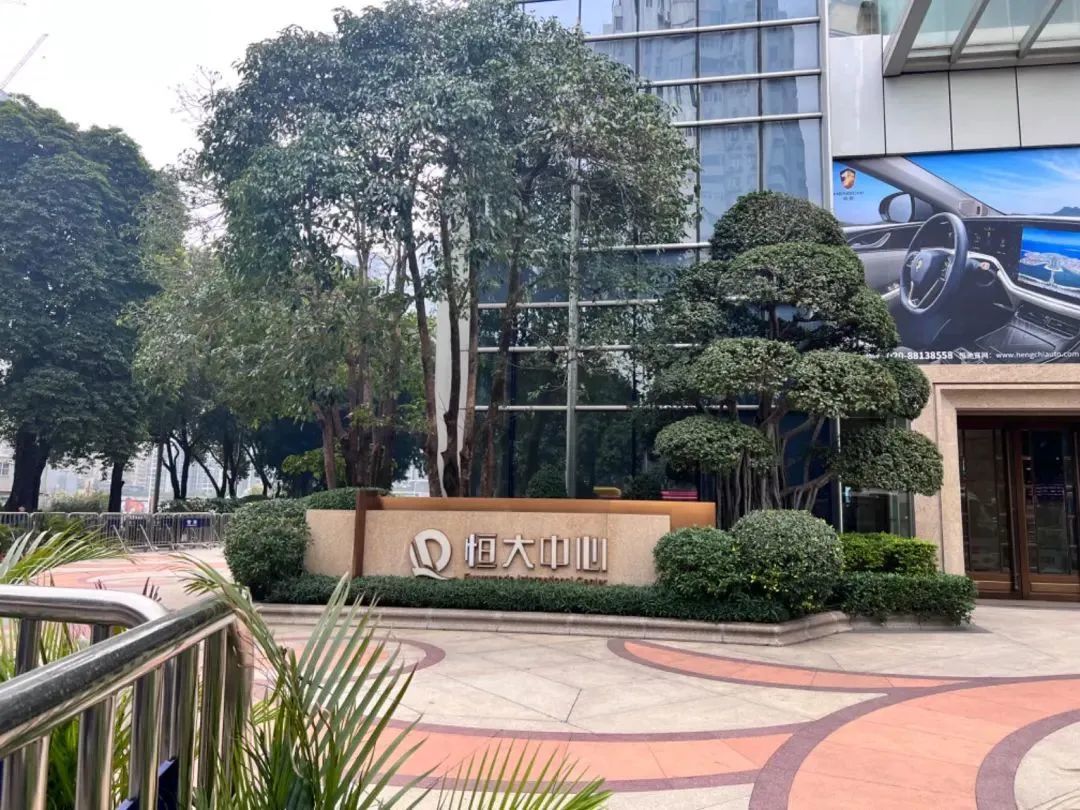
Core Viewpoint - China Evergrande's listing status on the Hong Kong Stock Exchange will be canceled effective August 25, 2025, due to prolonged suspension and financial insolvency [1][3]. Group 1: Financial Status and Legal Proceedings - China Evergrande has been suspended from trading since January 29, 2024, and has faced a court-ordered liquidation due to severe insolvency and inability to repay debts [2][6]. - The company has been found to have inflated revenues by over 560 billion yuan and profits by over 90 billion yuan through fraudulent accounting practices between 2019 and 2020 [7]. - As of the latest report, the total debt claimed against China Evergrande amounts to approximately 350 billion HKD (about 45 billion USD), while its last reported liabilities were around 275 billion USD [13][14]. Group 2: Asset Management and Recovery Efforts - The liquidators have identified total assets under their control valued at approximately 27 billion HKD, with liquid cash around 2 billion HKD [12]. - Legal actions are ongoing against former executives for their roles in the financial mismanagement, with claims for approximately 6 billion USD in dividends and compensation [11]. - The liquidation process aims to protect creditor interests and may allow for more flexible asset management post-delisting, although it may reduce transparency and bargaining power for creditors [16].
氯碱主业承压 中泰化学上半年亏损1.94亿元
Zhong Guo Jing Ying Bao· 2025-08-22 06:06
Core Viewpoint - Zhongtai Chemical has reported continuous losses for three consecutive years, with significant declines in both revenue and net profit, primarily due to a challenging market environment in the chlor-alkali industry and its textile business [1][2]. Financial Performance - In the first half of 2025, Zhongtai Chemical achieved operating revenue of 13.955 billion yuan, a year-on-year decrease of 8.32% [1]. - The net profit attributable to shareholders was a loss of 194 million yuan, an improvement from a loss of 243 million yuan in the same period last year [2]. - For the full year of 2023, the company reported an operating revenue of 37.118 billion yuan, down 28.15%, and a net loss of 2.865 billion yuan [2]. - In 2024, operating revenue further declined to 30.123 billion yuan, a decrease of 18.84%, with a net loss of 977 million yuan [2]. Industry Context - The chlor-alkali industry is experiencing low overall market conditions, with significant price declines in PVC products impacting Zhongtai Chemical's performance [3][4]. - The price of liquid caustic soda fell dramatically from 3,000 yuan per ton in Q4 2024 to 852 yuan per ton by August 2025, leading to reduced profit margins for companies in the sector [3]. - The PVC powder market has shown a downward trend, with the average price for SG-5 (PVC powder) at 4,939 yuan per ton in the first half of 2025, down 11.23% year-on-year [3]. Regulatory Issues - Zhongtai Chemical faced penalties for information disclosure violations, including financial fraud, leading to a fine of 5 million yuan and a warning from regulatory authorities [6][7]. - The company was found to have engaged in non-operating fund occupation transactions totaling 7.718 billion yuan between 2021 and 2022, significantly impacting its financial reporting [6].

上海金融法院披露十大案例:不要心存侥幸,上市公司的哪些“尾巴”易被抓?
Di Yi Cai Jing· 2025-08-21 04:20
Core Viewpoint - The Shanghai Financial Court and the Shanghai Securities Regulatory Bureau have released ten typical cases of securities false statements, providing clear regulatory guidance for market participants regarding disclosure violations and responsibilities [1][2]. Group 1: Securities False Statements Cases - The cases include notable companies such as *ST Jintai, Zhong An Ke, Shanghai Electric, and Feikai Materials, as well as delisted companies like Delisted Fuxin and *ST Ba'an [1][2]. - The five judicial cases focus on issues like "deceptive" share buybacks, the identification of predictive information, and the application of "safe harbor" rules [2][3]. - In the *ST Jintai case, executives were found liable for failing to fulfill share buyback commitments, resulting in a compensation of approximately 780,000 yuan to investors [2][3]. Group 2: Regulatory Enforcement Cases - The regulatory cases highlight frequent violations such as "shell protection" financial fraud, performance-related financial manipulation, and misuse of control rights by actual controllers [3][4]. - Specific cases include *ST Jintai's executives violating buyback commitments, financial fraud by subsidiaries of Shanghai Shihua, and illegal share reductions by Feikai Materials' controlling shareholders [4][6]. - The Shanghai Securities Regulatory Bureau emphasizes strict enforcement and increased penalties for key individuals involved in financial fraud [6][7]. Group 3: Legal and Regulatory Framework - The report indicates that as of December 2024, the Shanghai Financial Court has accepted 18,040 securities false statement liability disputes, with a total amount in dispute of 7.646 billion yuan [7]. - The complexity of civil compensation cases in the securities market is highlighted, with challenges in evidence collection and fact determination due to ongoing administrative or criminal investigations [7]. - The report calls for improved integration of civil, administrative, and criminal accountability mechanisms in handling false statement cases [7].
*ST京蓝再陷信披违规泥潭 公司及相关责任人被罚1050万元
2 1 Shi Ji Jing Ji Bao Dao· 2025-08-19 11:33
Core Points - *ST Jinglan Technology Co., Ltd. received an administrative penalty for falsifying financial statements related to its subsidiary Zhongke Dingshi Environmental Engineering Co., Ltd. [1] - The company inflated its 2020 revenue by 162.91 million yuan, which accounted for 14.06% of the reported revenue, and inflated net profit by 57.71 million yuan, representing 2.27% of the reported net profit [1] - This is not the first time *ST Jinglan has faced penalties for regulatory violations, as previous reports for 2021 and 2022 also contained undisclosed goodwill impairment issues [2] Financial Impact - The inflated figures resulted in a total penalty of 10.5 million yuan for *ST Jinglan and responsible individuals [1] - The company’s actions led to significant discrepancies in its financial reporting, affecting both revenue and profit metrics [1] Investor Implications - Investors who purchased shares between specific dates may be eligible for compensation, with legal support available for those affected [2] - The company’s ongoing regulatory issues may impact investor confidence and stock performance moving forward [2]

卡倍亿信披违规收监管措施 A股募10.7亿去年收2警示函
Zhong Guo Jing Ji Wang· 2025-08-19 07:45
Core Viewpoint - 卡倍亿 has received an administrative regulatory measure decision from the Ningbo Securities Regulatory Bureau due to non-compliance with disclosure requirements regarding shareholder equity changes [1][2] Group 1: Regulatory Actions - The Ningbo Securities Regulatory Bureau issued a decision on August 14, 2025, requiring 卡倍亿 to correct its actions and participate in regulatory discussions due to undisclosed changes in shareholder equity [1][2] - 卡倍亿's controlling shareholder increased their stake from 56.97% to 57.11% without proper announcement, violating the regulations [1][2] - The company is required to submit a written rectification report within ten working days and enhance its compliance with securities laws [2] Group 2: Previous Violations - This is not the first instance of regulatory scrutiny for 卡倍亿; the company received two warning letters in a month last year regarding its executives' trading activities [2][3] - Specific violations included short-term trading of convertible bonds by executives, which occurred within a prohibited timeframe [3] Group 3: Financial Background - 卡倍亿 was listed on the Shenzhen Stock Exchange on August 24, 2020, raising approximately 259.49 million yuan through its initial public offering [4] - The company has conducted multiple rounds of fundraising through convertible bonds, with the total amount raised across three instances reaching approximately 1.067 billion yuan [6][7]
*ST天茂信披违规引连锁反应:立案调查、股价震荡及终止上市
2 1 Shi Ji Jing Ji Bao Dao· 2025-08-14 13:29
Core Viewpoint - *ST Tianmao has faced a series of challenges since 2025, including delayed annual reports, stock price drops, and plans to voluntarily delist, raising concerns about investor rights and company transparency [1][2][4]. Group 1: Disclosure Issues - On April 29, 2025, *ST Tianmao announced it could not release its 2024 annual report and Q1 2025 report on time, citing the need for further information [2]. - The stock price fell to 3.04 yuan per share, marking the largest single-day drop in three months, reflecting investor concerns over the company's disclosure practices [2]. Group 2: Financial Performance and Liquidity Concerns - The company is primarily reliant on its subsidiary, Guohua Life, which is facing significant operational pressures, with a projected loss of 500 million to 750 million yuan for the full year of 2024 [3]. - Guohua Life reported a high surrender payment of 20.6 billion yuan in 2023, with compensation expenses surging to 21.822 billion yuan in the first three quarters of 2024, indicating increasing liquidity risks [3]. Group 3: Delisting Plans - On August 14, 2025, *ST Tianmao announced plans to voluntarily withdraw its A-shares from the Shenzhen Stock Exchange due to significant uncertainties affecting the company [4]. - A shareholder meeting is scheduled for August 25, 2025, to discuss the delisting proposal, with stock trading suspended from August 14, 2025 [4].

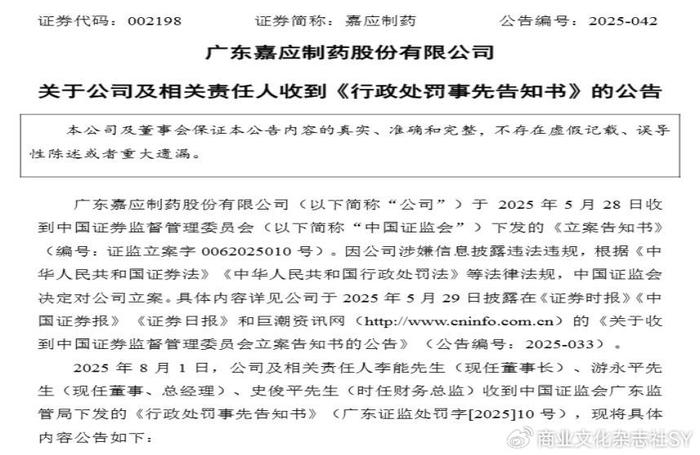
商业锐评丨资本游戏反噬:嘉应制药信披违规背后的治理困局
Xin Lang Cai Jing· 2025-08-07 00:04
Group 1 - The core issue revolves around a carefully orchestrated fund transfer of 219 million yuan, representing 28.83% of the company's net assets, through a subsidiary to an affiliated party, revealing severe governance failures within the company [4][5] - The chairman, who is also the actual controller of the affiliated party, initiated this operation just two months after taking office, leading to accusations of self-dealing and a complete collapse of corporate governance [4][5] - The company's financial integrity is questioned as it reported a 28.83% year-on-year revenue increase and a 197.23% profit surge in Q1 2025, while its operating cash flow plummeted by 193.73% to -11.83 million yuan, indicating a significant disconnect between profit and cash flow [5][6] Group 2 - The controversy began with a contentious reverse merger, where a pharmacy chain acquired 7% of the company for 355 million yuan, but the investment has since lost over 30% of its value due to the company's stock price decline and ongoing investigations [6][8] - The pharmacy chain's business model, heavily reliant on franchise stores, faces challenges in a competitive market, with a gross margin of only 18.9%, significantly below the industry average [6][8] - The company's reliance on a single product, which saw a 38.6% price drop due to centralized procurement, has led to a 29.46% revenue decline, raising concerns about its sustainability in a price-sensitive market [5][6] Group 3 - The ongoing centralized procurement policies are reshaping the pharmaceutical industry, with companies facing pressure to lower prices or risk losing market access, highlighting the need for innovation and compliance [7][8] - Regulatory changes in 2025 will eliminate the lowest price bidding system, increasing compliance costs for companies that have previously relied on capital operations rather than genuine product development [7][8] - The company faces potential delisting risks if it continues to report negative profits and revenue below 100 million yuan for two consecutive years, with its recent performance indicating a troubling trend [8][9]