可信数据空间

Search documents
天融信(002212) - 2025年10月30日投资者关系活动记录表
2025-10-31 01:41
Financial Performance - In the first three quarters of 2025, the company's revenue was 12.02 billion yuan, a year-on-year decrease of 24.01% [3] - R&D expenses decreased by 15.05%, sales expenses decreased by 6.48%, and management expenses decreased by 17.23% [3] - The net profit attributable to shareholders was -2.35 billion yuan, a decline of 39.10% year-on-year [3] - In Q3 2025, revenue was 3.76 billion yuan, down 46.96% year-on-year, with net profit at -1.71 billion yuan, a decrease of 568.00% compared to the same period last year [3] Project and Order Status - Q3 revenue decline was primarily due to slower project progress compared to the same period in 2024 [3] - The total number of signed and pending orders remained stable year-on-year, indicating a potential for recovery [3] - Key industries such as telecommunications and transportation showed revenue growth of 13.14% and 18.73% respectively [3] Cost Management - Total expenses in the first three quarters of 2025 were 12.14 billion yuan, a decrease of 11.13% year-on-year [4] - The company has effectively controlled costs, with a reduction in total expenses compared to previous years [4] Industry Trends and Opportunities - The network security industry is expected to see significant growth driven by new policies and AI technologies [15] - The Chinese network security market is projected to reach $17.8 billion by 2029, with a compound annual growth rate of 9.7% [15] - Key government projects in various sectors are expected to drive demand for security solutions, with budgets ranging from 300 million yuan to 288 billion yuan across different initiatives [4][5][6] Product Development and Innovation - The company’s "Smart Cloud" product line generated 1.29 billion yuan in revenue, accounting for 10.73% of total revenue, with a year-on-year increase of 7.59% [3] - The gross margin improved to 63.62% in the first three quarters of 2025, up from 61.04% in 2024 [3] - The company is focusing on AI-enabled security solutions, with significant investments in quantum security and data protection technologies [18][19] Future Outlook - The company anticipates a recovery in revenue and profitability, with expectations to meet performance targets for employee stock ownership plans [14] - The "14th Five-Year Plan" is expected to create substantial market opportunities in data security and AI applications [13] - The company is actively pursuing strategic partnerships to enhance its capabilities in quantum security and AI-driven solutions [18][19]

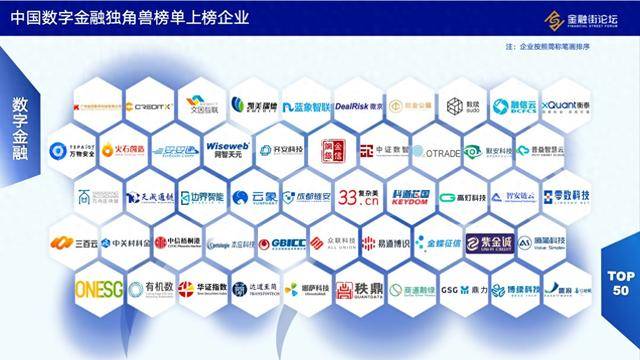
中国数字金融独角兽榜单发布,京企占比超四成
Sou Hu Cai Jing· 2025-10-30 12:50
Core Insights - Beijing has been recognized as the "unicorn city" of digital finance, with over 40% of the digital finance enterprises listed in the "China Digital Finance Unicorn List (2025)" originating from the city [1][3]. Group 1: Overview of the Unicorn List - The "China Digital Finance Unicorn List" was organized by the Beijing Financial Street Research Institute for three consecutive years, featuring 50 selected enterprises across five categories [1]. - The five categories include Comprehensive Technology Platforms, Regulatory Technology and Security Technology, Blockchain and Payment Technology, Artificial Intelligence and Big Data, and Green Financial Technology, with 10 companies selected in each category [1]. Group 2: Distribution and Characteristics of Listed Enterprises - Over 60% of the companies in the Artificial Intelligence and Big Data category are based in Beijing, while over 50% in the Green Financial Technology category are also located there [3]. - 72% of the listed companies were established between 2 to 10 years ago, indicating a relatively young industry [3]. - In terms of valuation, 46% of the companies are valued at over 700 million yuan, and 38% are valued between 100 million to 700 million yuan, showcasing significant market potential [3]. Group 3: Trends in Digital Finance Development - Key trends identified include the deep integration of large models into financial services, accelerated development of multimodal technology, and a growing emphasis on data security and privacy protection [3]. - The competitive landscape is evolving with differentiated competition, deeper integration of digital finance with the real economy, and increasing attention to stablecoins [3].

聚焦汽车数智生态新机遇, 共探可信数据空间建设新路径!2025中国汽车数智生态峰会11月天津启幕
Zhong Guo Qi Che Bao Wang· 2025-10-30 07:32
Core Viewpoint - The automotive industry is accelerating its transformation towards intelligence, connectivity, and electrification, with data being a core element for innovation and high-quality development. The "2025 China Automotive Digital Intelligence Ecosystem Summit" aims to build a trusted data ecosystem in the automotive sector, focusing on key issues such as trusted data space construction and cross-industry collaborative innovation [2][3]. Group 1: Summit Structure and Focus - The summit will feature a "main forum + thematic forums" structure, covering core industry topics and specific needs [3]. - The main forum will include authoritative voices from government leaders and the release of the "Overall Planning and Practical Path for the Construction of Trusted Data Space in the Automotive Industry" by China Automotive Data Co., which will provide specific directions for data security and collaboration [2]. - The thematic forums will address core pain points in the industry chain's digital transformation, focusing on user, insurance, battery, and refueling themes to facilitate deep exchanges and resource connections [3]. Group 2: Key Achievements and Initiatives - The summit will mark the launch of the "Trusted Data Space Platform for the Automotive Industry," which aims to address long-standing data sharing challenges and strengthen the data foundation for digital transformation [4]. - The "Battery ID International Digital Ecosystem Co-construction Achievements" will be released, along with the initiation of the "Battery ID Data Cross-border Pilot," focusing on core applications of power batteries and facilitating international collaboration and cross-border data flow [4]. Group 3: Engagement and Collaboration - The summit will provide a multi-perspective approach to industry pain points, combining theory and practice to deliver value, with industry research institutions analyzing the essence of data elements and trends in trusted data space development [5]. - Cross-industry leaders will share practical cases of cross-domain integration, exploring data value in scenarios such as "automotive + energy" and "automotive + communication" [5]. - Registration for the summit is open until November 25, 2025, inviting industry representatives to participate in discussions on new data value and the construction of a trusted ecosystem [5].

构建数据协同基础设施 纾解民营企业融资难题
Zheng Quan Shi Bao· 2025-10-29 18:39
Core Insights - The discussion at the 2025 Financial Street Forum focused on how financial innovation can better support the development of private enterprises, emphasizing the need for institutional design and data infrastructure to address coordination issues among different government departments [1][2] Group 1: Financial Support for Private Enterprises - Establishing a comprehensive credit evaluation system for private enterprises will enable financial institutions to provide precise credit financing support, alleviating the difficulties of financing for these businesses [1] - The lack of collateral remains a significant barrier to financing for private enterprises, and financial institutions are innovating by utilizing government data and transaction data to enhance creditworthiness [1] Group 2: Data Coordination and Infrastructure - The concept of a "trusted data space" is proposed as a new data collaboration infrastructure based on institutional design and advanced technology, aimed at creating a clear, secure, and efficient data circulation system [2] - Utilizing technologies such as privacy computing, blockchain, and federated learning can help achieve rigid constraints required by institutions while ensuring data remains controlled during circulation [2] Group 3: Cultivating Patient Capital - The current industrial upgrade in China necessitates the presence of institutions or investment funds that can support long-term growth for enterprises, highlighting the importance of creating an environment that fosters patient capital [3] - Government departments are encouraged to optimize the legal business environment and establish incentive mechanisms to help facilitate effective investment and financing [3]
2025年中国数据要素行业发展研究报告——卓越者、典型案例与专家之声
艾瑞咨询· 2025-10-26 00:05
Core Insights - Data is recognized as the fifth production factor, characterized by non-competition, replicability, and unlimited growth potential, making its value extraction process more complex than traditional production factors [1] - The development of the data factor market relies heavily on a clear policy framework and implementation pathways, with local data trading institutions and data merchants emerging as key drivers [1] - The establishment of a robust supply and demand ecosystem is essential to achieve the goals of effective data utilization and security [1] Group 1: Industry Overview - The data factor market is currently in a critical phase driven by policies and practical explorations, with the establishment of the National Data Bureau marking a significant step towards a unified national data market [19][20] - By 2025, the market size is projected to exceed 200 billion, with a compound annual growth rate of over 25% [23] - The construction of a complete national data circulation system is planned over the next five years, aiming to facilitate the integration of data into the real economy and break data monopolies [27] Group 2: Evaluation of Service Providers - The selection of "Outstanding Service Providers in the Data Factor Industry" is based on comprehensive evaluations by iResearch and industry experts, focusing on the capabilities of data developers, operators, and IT technology providers [2][4] - The evaluation model includes four core dimensions: industry depth, product and technology capabilities, service capabilities, and ecosystem capabilities [4] - The top 30 data factor service providers are categorized into four types, reflecting their competitive strengths in various aspects [7] Group 3: Case Studies and Applications - Neusoft's City Data Value Empowerment Platform integrates data to enhance urban services in health, employment, and smart governance, creating a comprehensive service ecosystem [11][12] - The "Fujian Health Public Service Operation Platform" aims to provide a full lifecycle service system, while the "City Human Resources Development Platform" connects various stakeholders to promote employment and training [15] - The focus on high-quality data sets and specialized intelligent entities is expected to become mainstream, with ecosystem co-construction and scenario-building capabilities as core competitive advantages [20]


个人征信持牌机构入局可信数据空间建设 钱塘征信“先行先试”
Zhong Guo Jing Ying Bao· 2025-10-21 12:25
Core Insights - Qiantang Credit has recently become a licensed personal credit institution in Zhejiang, aiming to create a trustworthy data space for individuals by integrating public and commercial data [1][2] - The initiative is part of Zhejiang's exploration of a "personal credit economy," which seeks to enhance the value of personal credit through effective management tools [1] - The chairman of Qiantang Credit emphasizes that the personal credit economy will help individuals realize "credit as an asset," fostering a sustainable economic ecosystem [1] Group 1: Company Developments - Qiantang Credit has been authorized as a public data operator in Zhejiang, marking a significant step in the establishment of a personal credit management system [1] - The company plans to implement its services in various sectors, including credit services and flexible employment, by reducing information asymmetry and transaction costs [1][2] - Qiantang Credit has integrated nearly 100 compliant commercial data sources, showcasing a new path for the fusion of public and commercial data in the credit sector [2] Group 2: Industry Context - The model being developed by Qiantang Credit bears similarities to South Korea's MyData service, which empowers individuals to manage and share their data [2][3] - MyData has successfully attracted over 50 million subscribers in South Korea, generating significant revenue and fostering a data-driven ecosystem [2] - Experts suggest that China's higher level of digital governance and public data infrastructure, combined with a larger user base, presents a substantial market demand for personal credit management services [3]
神思电子:中标济南城市可信数据空间建设项目
Xin Lang Cai Jing· 2025-10-21 11:59
Group 1 - The company, as the leading unit, has won the bid for the first segment of the Jinan Urban Trusted Data Space Construction Project, with a bid amount of 123 million yuan [1] - The company also won the bid for the second segment of the Trusted Data Space Construction Project, with a bid amount of 57.1 million yuan [1] - The total amount for both segments is approximately 161 million yuan, accounting for 17.62% of the company's audited operating income for the year 2024 [1]

神思电子:中标可信数据空间建设项目
Mei Ri Jing Ji Xin Wen· 2025-10-21 11:17
Group 1 - Company Shensi Electronics announced that it has won the bid for the Jinan Urban Trusted Data Space Construction Project, with a total bid amount of 123.2 million yuan for the first section and 57.1 million yuan for the second section [1] - The project is a joint effort with China Electronics Cloud Computing Technology Co., Ltd. and Inspur Cloud Information Technology Co., Ltd. [1] - The bidding was conducted by Jinan Big Data Group Co., Ltd., which is a significant shareholder of Shensi Electronics, thus constituting a related party transaction [1]
2025年第42周计算机行业周报:短期Token数据波动不改AI长期趋势-20251021
Changjiang Securities· 2025-10-20 23:30
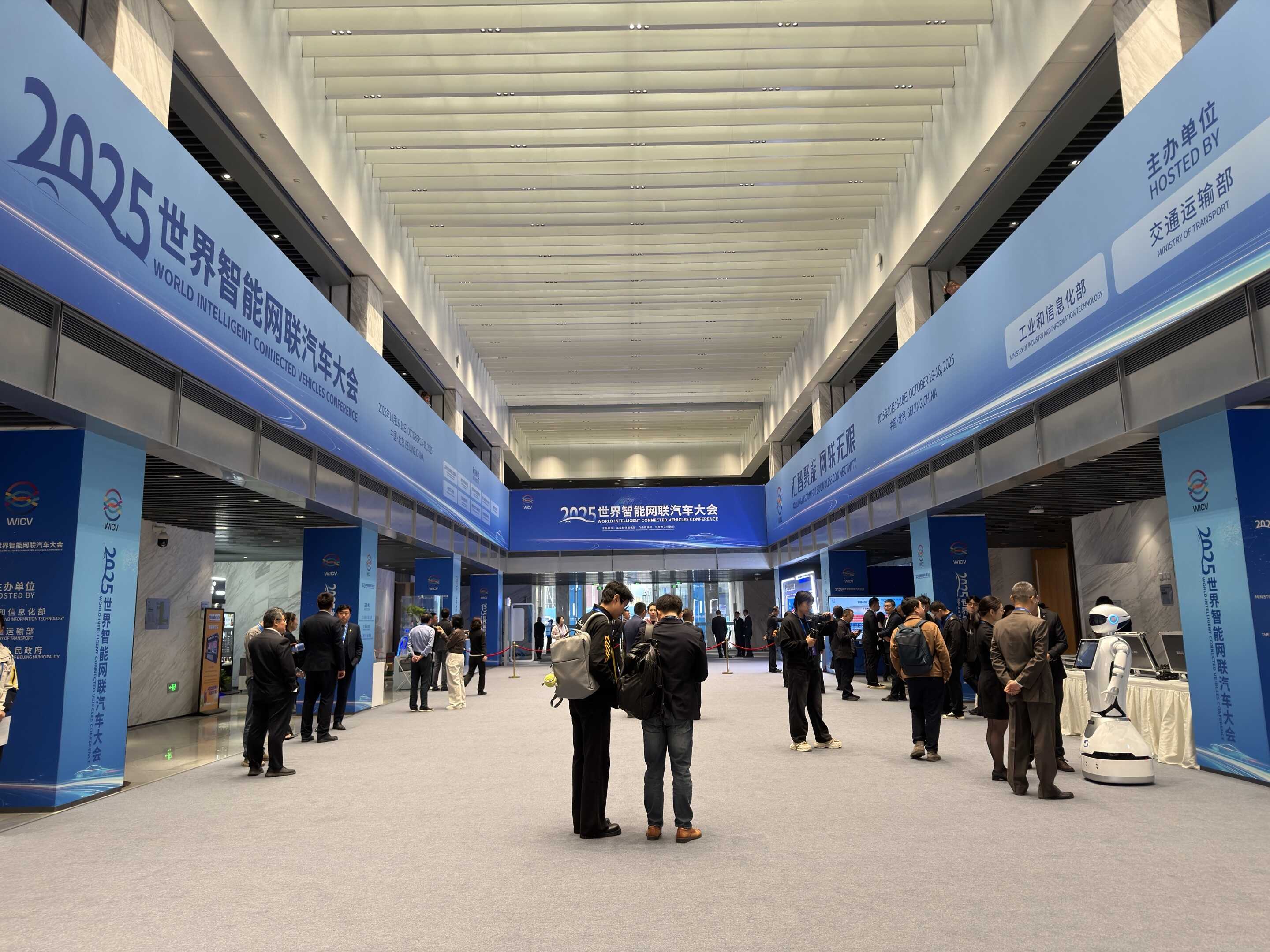
Investment Rating - The report maintains a "Positive" investment rating for the software and services industry [7]. Core Insights - The computer sector experienced a significant decline of 5.63% last week, ranking 27th among major industries in the Yangtze River region, with a trading volume accounting for 7.00% of the total market [2][4]. - Despite short-term fluctuations in Token data, the long-term growth trend of AI remains intact, with a strong outlook for domestic AI application monetization and commercial investment opportunities [6][57]. - Key events include the 2025 World Intelligent Connected Vehicle Conference, the successful launch of 12 low-orbit satellites for satellite internet, and the opening of the 2025 China International Digital Economy Expo [5][22][43]. Summary by Sections Market Performance - The computer sector saw a substantial pullback, with the Shanghai Composite Index closing at 3839.76 points after a 1.47% decline [4][16]. - Notable activity was observed in domestic software stocks, with several companies showing significant gains [18]. Key Recommendations - Focus on AI infrastructure and cloud vendors, domestic model export companies, and firms that excel in vertical scenarios to achieve marginal returns [6][57]. - The report emphasizes the importance of the intelligent driving sector and satellite internet as areas for potential investment opportunities [31][42]. Events and Developments - The 2025 World Intelligent Connected Vehicle Conference highlighted the integration of AI in the automotive industry, with a push for standardization in autonomous driving technologies [22][25]. - The successful launch of low-orbit satellites marks a significant step in the development of satellite internet, with expectations for accelerated commercialization [32][37]. - The 2025 China International Digital Economy Expo showcased the potential of trusted data spaces in empowering various industries [43][49].
2025WICV闭幕,推动智能网联汽车产业链上下游协同创新
Zhong Guo Jing Ji Wang· 2025-10-20 02:19
Core Insights - The 2025 World Intelligent Connected Vehicles Conference (WICV) successfully concluded after three days, featuring 17 significant events with over 8,000 representatives from more than 10 countries and regions, and over 21 million online views [1] Policy and Regulation - The Ministry of Industry and Information Technology (MIIT) emphasized the importance of policies and standards in supporting the development of intelligent connected vehicles, with plans to focus on technological innovation, regulatory frameworks, industrial applications, and international cooperation for high-quality industry growth [3] - The MIIT highlighted the necessity of enhancing safety measures in the intelligent connected vehicle sector, advocating for a multi-level dialogue mechanism and innovative safety products to address cybersecurity challenges [3] Technology and Innovation - The China Association of Automobile Manufacturers noted that the intelligent connected vehicle industry is at a critical juncture for scaling up, facing challenges such as key technological breakthroughs and the need for improved standards and regulations [4] - The MIIT discussed advancements in "Artificial Intelligence + Automotive" technologies, focusing on automation, cockpit intelligence, and the importance of developing safety standards for these innovations [4] Data and Applications - The National Data Bureau reported that data is a crucial engine for digital economic development, with initiatives underway to establish a trusted data space in the automotive sector, aiming to overcome barriers to data circulation [5] - The MIIT stated that demonstration applications are essential for the large-scale commercialization of intelligent connected vehicles, with significant progress already made in testing and deployment [6] Conference Outcomes - The conference released the "Top Ten Achievements in Intelligent Connected Vehicle Standardization," providing a clear path for industry development and safety regulation [7] - A series of reports and agreements were announced, including the "Intelligent Connected Vehicle Network Technology Roadmap (2025-2030)" and the launch of collaborative testing actions for integrated vehicle-road-cloud technologies [7]