和平宪法

Search documents
恪守“和平宪法”,日本才有立世之本(钟声)
Ren Min Ri Bao· 2025-11-25 22:42
Core Points - Japan is attempting to break free from the constraints of international law as a defeated nation in World War II, leading to a potential resurgence of militarism [1][3] - Recent actions by Japan, including the export of lethal weapons and discussions to revise security policies, indicate a departure from post-war international order [1][2] - The international community has expressed concern over Japan's shift away from its long-standing commitment to peace and adherence to international agreements [3][4] Summary by Sections Japan's Recent Actions - Japan has relaxed weapon export restrictions and is exporting lethal weapons for the first time since 2023 [1] - The ruling party is discussing revisions to the "security three documents" and plans to deploy offensive weapons in the southwestern islands near Taiwan [1][2] International Legal Obligations - International documents like the UN Charter and the Potsdam Declaration clearly outline Japan's obligations as a defeated nation, including disarmament and restrictions on military capabilities [2] - Japan's constitution and political agreements emphasize a commitment to peaceful development and conflict resolution through non-military means [2] Domestic and International Reactions - There is growing alarm among international scholars and governments regarding Japan's militaristic rhetoric and actions, which contradict its constitutional commitments [3] - Protests have emerged within Japan, with citizens demanding the Prime Minister retract controversial statements and uphold peace principles [3][4] Historical Context and Future Implications - The historical lessons from World War II highlight the importance of Japan adhering to international law and its own peace constitution to avoid repeating past mistakes [4] - The international community has a responsibility to uphold the post-war order and prevent the resurgence of Japanese militarism [4]
恪守“和平宪法” 日本才有立世之本(钟声)
Ren Min Ri Bao· 2025-11-25 22:19
Core Viewpoint - Japan is attempting to break free from the constraints of international law as a defeated nation in World War II, leading to a potential resurgence of militarism, which poses a serious threat to peace and stability in Asia and the world [1][4]. Group 1: Japan's Recent Actions - Japan has made several dangerous moves, including the first export of lethal weapons since easing restrictions in 2023, discussions within the ruling party to revise security documents, and plans to deploy offensive weapons on islands near Taiwan [1][3]. - These actions are seen as a blatant disregard for international obligations and a significant challenge to the post-war order recognized by the international community [1][2]. Group 2: International Legal Framework - Key international documents, such as the UN Charter and the Potsdam Declaration, clearly outline Japan's obligations as a defeated nation, including the complete disarmament and prohibition of maintaining industries that could lead to rearmament [2][3]. - Japan's commitment to peace is further reinforced by the Japan-China Joint Statement and Article 9 of the Japanese Constitution, which emphasizes a path of peaceful development and the renunciation of war [2][3]. Group 3: Domestic and International Reactions - There is growing concern from the international community regarding Japan's right-wing movements that challenge fundamental principles of peace, including calls for military intervention in Taiwan and discussions to abandon the "Three Non-Nuclear Principles" [3][4]. - Scholars and officials from other countries, including Malaysia and Russia, have criticized Japan's leadership for its historical misconceptions, while domestic protests have emerged against the Prime Minister's controversial statements [3][4]. Group 4: Historical Context and Responsibility - The historical context emphasizes the importance of acknowledging past mistakes to avoid repeating tragedies, with a call for Japan to adhere to international law and its own peace constitution [4]. - The international community has a responsibility to uphold the post-war order and ensure that Japan's militaristic tendencies do not resurface, with a warning that any unilateral actions by Japan could lead to a reevaluation of its historical transgressions [4].
扩张军力动作不断 日本有何企图?专家解读→
Yang Shi Xin Wen· 2025-11-24 19:31
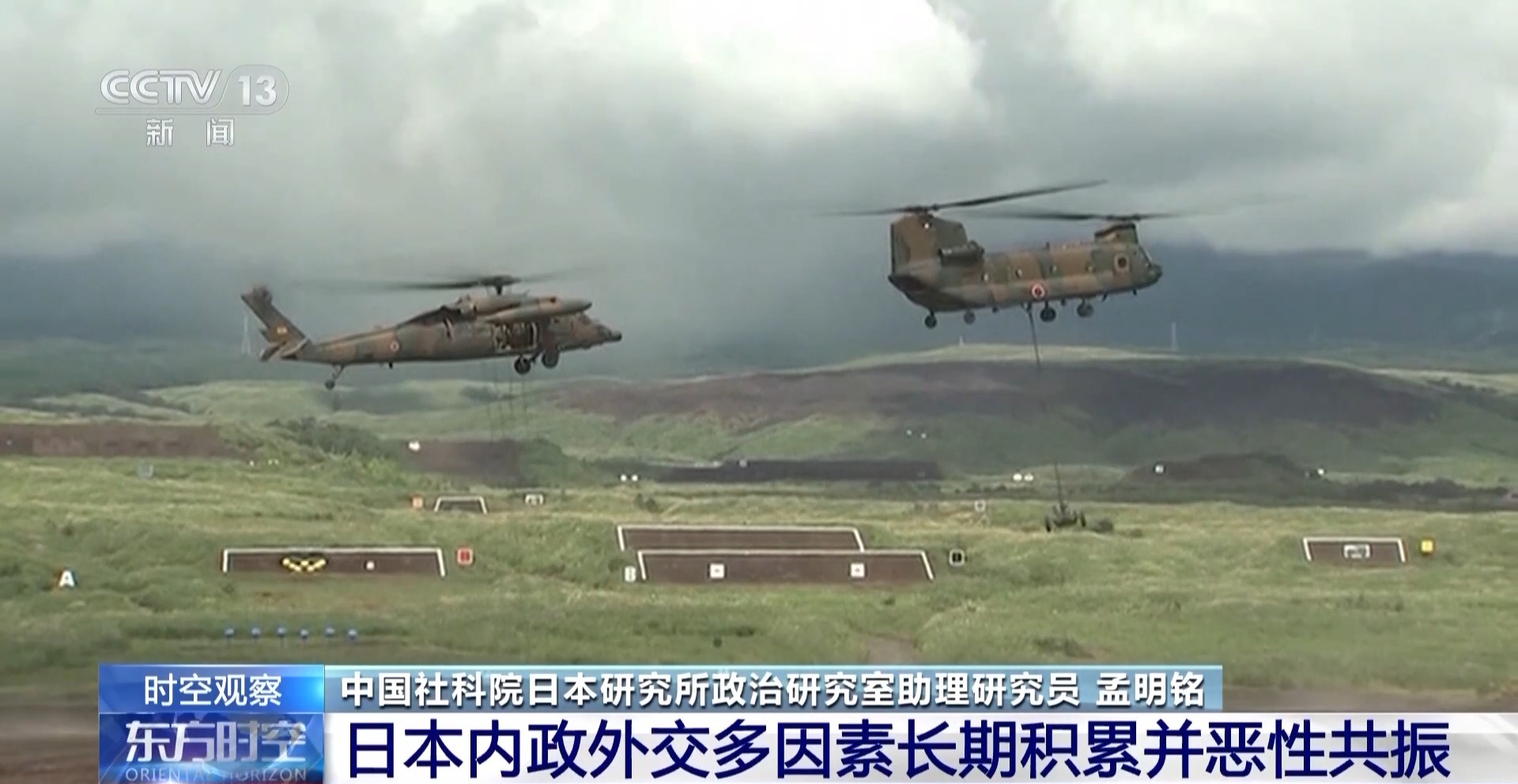
Group 1 - The Japanese government has completed the export of "Patriot" missile systems to the United States, marking the first export of lethal weapons since the relaxation of arms export restrictions [1] - Prime Minister Fumio Kishida has initiated the establishment of a new central intelligence agency, the "National Intelligence Agency," aiming to create a Japanese version of the CIA [1] Group 2 - There are efforts by Japanese right-wing forces to amend the "Three Non-Nuclear Principles" to introduce and potentially use nuclear weapons under the guise of "nuclear sharing" [2] - Kishida's provocative statements on Taiwan, history, territory, and security issues reveal a dangerous historical and strategic perspective held by Japanese right-wing forces [2] - The resurgence of right-wing thought in Japan is attributed to the incomplete reckoning of militaristic crimes post-World War II, compounded by U.S. encouragement of Japan's militaristic tendencies [2][4] Group 3 - The strategic anxiety of Japan's ruling elite is driven by stagnation in national power and the rise of China, leading to a desire to break free from post-war peace constraints and pursue a "normal state" status [4] - Japan is on a perilous path of undermining its "Peace Constitution" while attempting to assert itself in regional security matters [4][6] - The conservative shift in Japan's national security strategy poses significant risks to regional stability and security [6]

告诫日方停止妄言,划定涉台清晰红线,中方重申《联合国宪章》警告日本
Huan Qiu Shi Bao· 2025-11-23 22:48
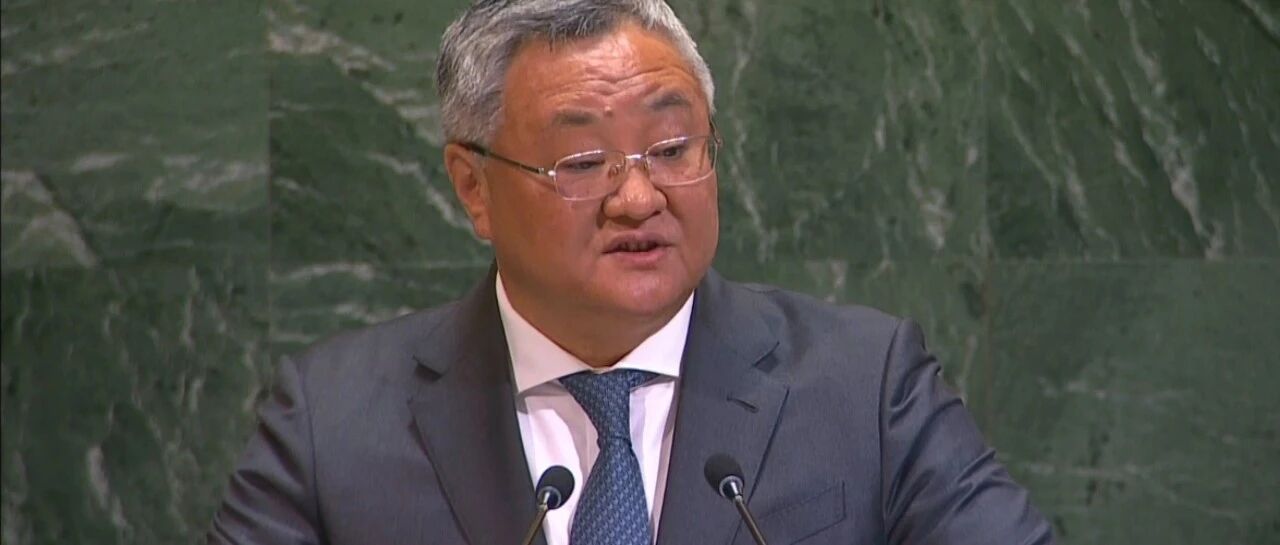
Core Viewpoint - The Chinese government has issued a strong warning to Japan regarding its involvement in the Taiwan Strait situation, asserting that any military intervention would be considered an act of aggression, and China will exercise its right to self-defense as per the UN Charter and international law [1][2] Group 1: China's Position - China's permanent representative to the UN, Fu Cong, emphasized that Japan's Prime Minister Kishi's remarks violate international law and provoke the Chinese people and nations that suffered from Japanese aggression [1] - The letter sent to the UN will be distributed to all member states, aiming to alert Japan to cease its provocative rhetoric and to inform the international community about Japan's dangerous legislative moves to expand its collective self-defense capabilities [1][2] Group 2: International Reactions - The letter has been described as the strongest wording used by China in response to the most severe bilateral crisis between China and Japan in recent years, with a clear message to defend its rights [1] - The Chinese Embassy in Japan referenced the "enemy clause" of the UN Charter, which allows for military action against nations that have previously engaged in fascist or militaristic policies without needing Security Council authorization [2] Group 3: Historical Context - Analysts highlight that Japan's attempts to exercise collective self-defense and military threats are legally unfounded, given its status as a World War II defeated nation and its constitutional commitment to renounce war [2][3] - The shift in Japan's stance from a peace-oriented nation to one seeking military capabilities poses a significant threat to regional and global stability, challenging the post-war international order [3]
焦点访谈|公然挑衅,执意玩火!高市早苗挑衅言论会造成什么样的恶果?
Yang Shi Wang· 2025-11-23 13:41
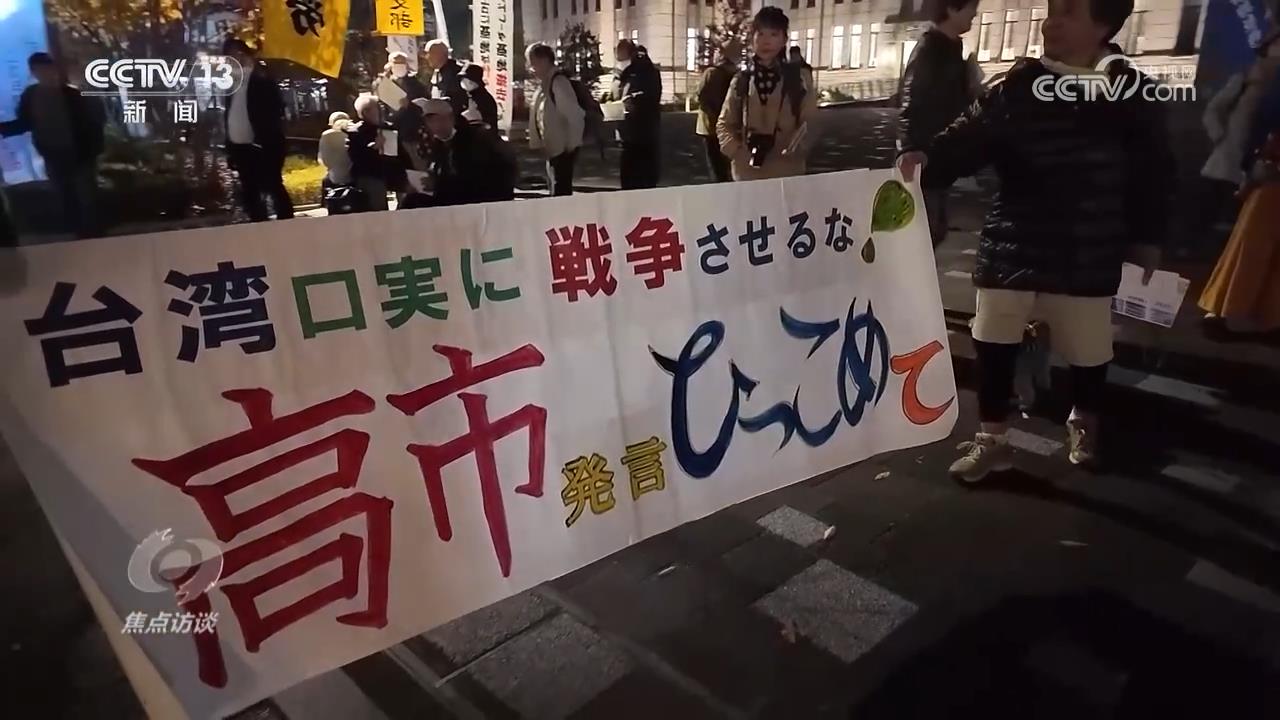
Core Viewpoint - The provocative remarks made by Japanese Prime Minister Sanae Takaichi regarding Taiwan have escalated tensions in Sino-Japanese relations and have drawn widespread condemnation from various parties [1][3][15] Group 1: Political Context - Takaichi's statements suggest a potential military intervention in the Taiwan Strait, linking Taiwan's situation to Japan's collective self-defense rights [3][5] - The remarks have been met with strong criticism from both China and the international community, highlighting the dangerous implications for regional stability [5][9] - China's UN representative has firmly stated that any military intervention by Japan would be met with a strong defense of China's sovereignty [3][9] Group 2: Legal and Historical Implications - Takaichi's comments violate several key political documents, including the Japan-China Joint Statement and the Japan-China Peace and Friendship Treaty, undermining the long-standing political commitments between the two nations [5][7] - The assertion that "Taiwan's issues are Japan's issues" represents a significant departure from Japan's post-war pacifist constitution and international legal norms [9][11] - Historical documents, such as the Cairo Declaration and the Potsdam Proclamation, affirm Taiwan as part of China, further complicating Japan's legal standing on the issue [7][9] Group 3: Domestic and International Reactions - There have been widespread protests in Japan against Takaichi's remarks, indicating significant domestic opposition to her stance [3][11] - China has implemented countermeasures, including suspending imports of Japanese seafood and advising citizens against travel to Japan, to assert its position on the matter [13][15] - The international community has largely condemned Takaichi's statements, reflecting a broader concern over the resurgence of militarism in Japan [15]
一意孤行抑或回归理性,日本再次面临抉择(钟声)
Ren Min Ri Bao· 2025-11-21 22:12
Core Viewpoint - The actions and statements of Takashi Sato are leading Japan into a dangerous militaristic path, undermining national interests and global peace [1][2][3] Group 1: Political Implications - Takashi Sato's remarks about Taiwan potentially constituting a "survival crisis" for Japan suggest a willingness to consider military intervention, raising concerns about Japan's strategic direction [1] - Sato's approach reflects a political calculation to solidify support by promoting "China threat" narratives, using serious national policies as tools for personal political gain [2] - The rise of right-wing forces in Japan, as exemplified by Sato, poses a challenge to post-war international order and risks dragging Japan back into militarism [2] Group 2: Economic Consequences - The deterioration of Sino-Japanese relations due to Sato's rhetoric is likely to have significant economic repercussions, particularly affecting trade and tourism [3] - A decline in Chinese tourists could reduce Japan's GDP by 0.36%, translating to an economic loss of approximately 2.2 trillion yen (around 100 billion RMB) [3] - Increased market volatility and risk aversion are evident, with a notable trend of "selling Japan" in capital markets due to concerns over Japan's fiscal outlook and Sato's statements [3]
中方:日本根本没资格“入常”
证券时报· 2025-11-19 09:03
Group 1 - The core viewpoint of the article emphasizes that Japan's recent statements regarding Taiwan are seen as a serious violation of China's sovereignty and a challenge to international justice, undermining the post-war international order [1][2] - The article highlights that this year marks the 80th anniversary of the victory in the Second Sino-Japanese War and the liberation of Taiwan, underscoring Japan's historical aggression and colonial rule during World War II [1] - It is noted that Japan continues to face criticism for its failure to acknowledge its wartime atrocities, including the denial of events such as the Nanjing Massacre and the issue of "comfort women," which reflects a broader trend of historical revisionism [1][2] Group 2 - The article points out that Japan's Prime Minister, Fumio Kishida, has invoked the concept of a "survival crisis," raising concerns about a potential return to militarism, which is viewed as a threat to peace [2] - China warns Japan to cease its interference in domestic affairs and to refrain from provocative actions regarding Taiwan, stating that any military intervention would be considered an act of aggression [2] - The article asserts that China will firmly exercise its right to self-defense as granted by the UN Charter and international law to protect its sovereignty and territorial integrity [2]
中国代表:日本毫无资格要求成为安理会常任理事国
第一财经· 2025-11-19 00:19
Group 1 - The article discusses China's strong condemnation of Japan's recent provocative statements regarding Taiwan, emphasizing that Taiwan is an inseparable part of China and that Japan's remarks violate the one-China principle [3][4][5] - China's representative, Fu Cong, criticized Japanese Prime Minister Fumio Kishida's comments as dangerous and a gross interference in China's internal affairs, undermining international justice and the post-war international order [3][4] - Fu Cong highlighted Japan's historical aggression and colonial crimes, questioning Japan's ability to adhere to its commitments to peace and international justice, especially in light of its militaristic past [4][5] Group 2 - The article warns Japan to cease its provocative actions regarding Taiwan, stating that any military intervention would be considered an act of aggression, and China would respond decisively to defend its sovereignty [5] - Fu Cong's statements reflect a broader concern about Japan's potential return to militarism, raising questions about its commitment to peace and its role in maintaining international security [4][5]
【环时深度】高市涉台挑衅言论法理谬误重重
Huan Qiu Shi Bao· 2025-11-18 22:59
Core Viewpoint - The article discusses the recent provocative statements made by Japanese Prime Minister Sanae Takaichi regarding Taiwan, which are seen as a serious challenge to China's core interests and a violation of established political agreements between China and Japan [1][3][5]. Summary by Sections Political Context - The diplomatic discussions between China and Japan on November 18 highlighted China's stern demand for Japan to retract its erroneous statements regarding Taiwan, which are viewed as a blatant interference in China's internal affairs [1]. - Takaichi's remarks are characterized as a significant deviation from Japan's historical commitments and the political consensus established through four key political documents between the two nations [3][5]. Historical Agreements - The four political documents, including the 1972 Sino-Japanese Joint Statement, affirm that Taiwan is an inseparable part of China and that Japan recognizes the People's Republic of China as the sole legitimate government of China [3][5]. - The 1978 Treaty of Peace and Friendship and subsequent agreements reiterate Japan's commitment to these principles, emphasizing that there is no room for misinterpretation regarding Taiwan's status [5][6]. Legal Implications - The article emphasizes that Takaichi's statements contradict the legal obligations Japan has under international law, particularly the principles outlined in the Sino-Japanese agreements [6][9]. - Experts argue that Japan's claims of "position differences" regarding Taiwan are unfounded, as the issue is clearly defined in both international law and bilateral agreements [6][7]. Military and Security Concerns - Takaichi's reference to a "survival crisis situation" stems from Japan's new security laws, which allow for military action even without direct threats, thus undermining Japan's post-war pacifist constitution [7][8]. - The new security framework has raised concerns about Japan's potential military interventions, which could lead to a significant shift in its defense posture and regional stability [8][11]. International Relations - The article critiques Takaichi's statements as a challenge to the post-war international order and fundamental principles of international law, such as non-interference in domestic affairs [9][10]. - The historical context of Taiwan's status is reinforced by international agreements, including the Cairo Declaration and the Potsdam Proclamation, which affirm Taiwan's return to China [9][10]. Domestic Reactions - There is a growing concern within Japan regarding the rise of right-wing ideologies that threaten the country's pacifist stance and historical narrative [11][12]. - Calls for a return to a peaceful national identity are echoed by various commentators, emphasizing the need for Japan to adhere to its commitments to peace and stability in the region [12].
要动武?日本股市先"崩"为敬!高市早苗的豪赌,撞上中国经济铁壁
Sou Hu Cai Jing· 2025-11-18 15:22
Group 1: Political Developments - Japanese Prime Minister Sanae Takaichi's recent statements suggest a potential military intervention in the Taiwan Strait, indicating a shift in Japan's defense posture [1] - Takaichi's government plans to accelerate defense spending to 2% of GDP, originally set for fiscal year 2027, raising concerns given Japan's high debt levels [3] - The government is also considering changes to its "Three Non-Nuclear Principles," which could allow for the introduction of nuclear weapons [3] Group 2: Military Capabilities - Japan has been quietly building significant offensive capabilities, including the development of "counterstrike capabilities" and the procurement of 400 Tomahawk cruise missiles [4] - The Japan Maritime Self-Defense Force has modified two Izumo-class destroyers to operate F-35B fighter jets, enhancing its naval power [4] - Plans are underway to establish approximately 130 large ammunition depots across the country by 2035 [4] Group 3: Economic Context - Japan's economic dependency on China is substantial, with a 59.1% increase in investments in China in the first half of 2025, and over 30% reliance on Chinese supplies for key industries like automotive and semiconductors [7] - Japan's energy security is precarious, with 98% of its oil imported and 88% of that reliant on the Strait of Malacca, which is outside Japan's control [7] - The government's debt exceeds twice its GDP, raising concerns about the sustainability of increased defense spending [7] Group 4: Public Reaction - Takaichi's remarks have sparked widespread criticism domestically, with former Prime Minister Shigeru Ishiba and other political figures expressing concern over the implications of such statements [8] - Public protests have occurred, with citizens demanding Takaichi retract her statements and apologize [8] Group 5: Historical Context - Analysts draw parallels between Takaichi's rhetoric and historical narratives used to justify Japan's past military expansions, warning that such language may serve as a pretext for aggressive military policies [10] - The potential shift away from Japan's pacifist constitution could escalate regional tensions rather than enhance national security [10]