商业秘密保护

Search documents
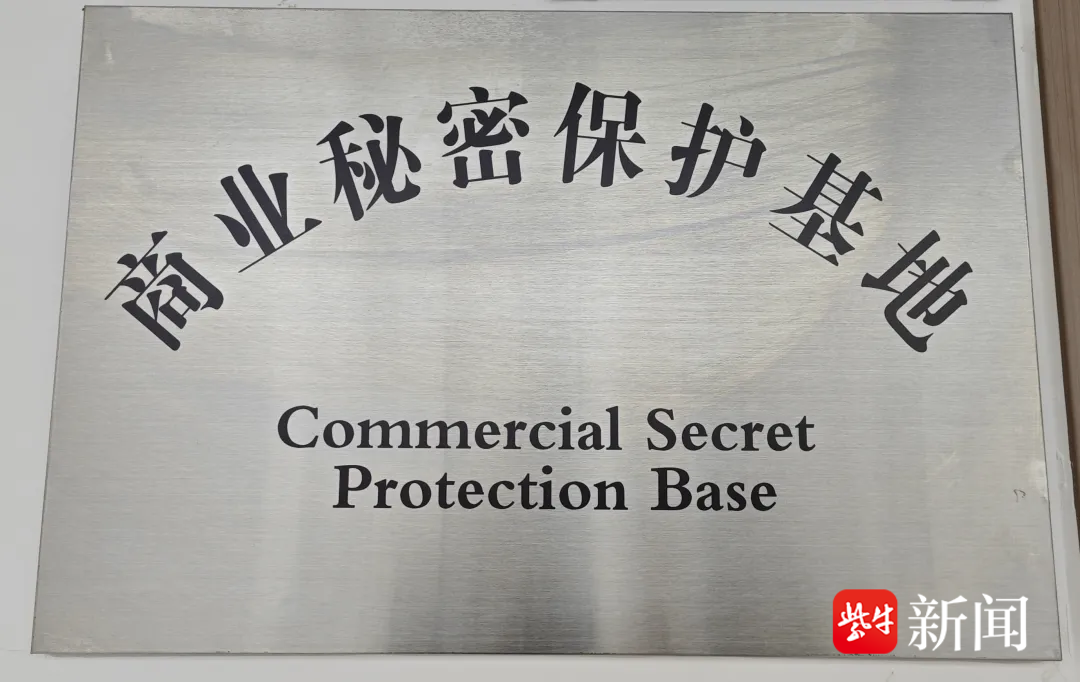
连云港海州区:全市首个商业秘密保护基地落地
Yang Zi Wan Bao Wang· 2025-09-15 07:46
Core Insights - The establishment of the first "Commercial Secret Protection Base" in Lianyungang City marks a significant step in enhancing the service system for enterprises and optimizing the regional business environment [1][3]. Group 1: Purpose and Significance - The base aims to provide one-stop professional services for commercial secret protection and legal rights maintenance, addressing the increasing risks of commercial secret leakage and theft in a competitive market [2][3]. - This initiative aligns with the national strategy to strengthen intellectual property protection and is crucial for enhancing regional industrial security and attracting high-value-added enterprises [3][6]. Group 2: Services Offered - The base will prioritize services for leading enterprises, influential core companies, and high-potential SMEs, offering systematic training in commercial secret management and customized protection plans [6]. - It has already developed the city's first tailored commercial secret protection plan for enterprises, indicating its proactive approach [6]. Group 3: Long-term Goals - Lianyungang plans to learn from advanced regions to establish a commercial secret value assessment mechanism and promote relevant institutional and standard development [6]. - The base will also create a platform for diverse dialogue and service connections, providing precise and comprehensive professional support to stimulate enterprise innovation and contribute to high-quality economic development in the region [6].


男子偷拍未上市问界M9赔25万,自称粉丝溜进厂区
Xin Lang Ke Ji· 2025-09-12 11:34
Core Viewpoint - The case involving the unauthorized filming of the unlisted AITO M9 vehicle has highlighted issues of intellectual property and commercial secrecy within the automotive industry, leading to a court ruling against the individual responsible for the breach [1][2]. Group 1: Incident Overview - On July 11, 2023, a video featuring the AITO M9 was posted online, filmed inside the Seres factory [1]. - The individual, identified as Chen, entered the factory through a temporarily opened barrier and filmed the vehicle during a staff health check [1]. - After being discovered, Chen deleted the footage but later recovered it and published it online, claiming it was done out of fandom and curiosity [1]. Group 2: Legal Proceedings - Seres Company filed a lawsuit against Chen in the Chongqing First Intermediate People's Court, seeking to stop the infringement and claim damages [1]. - The court ruled that the interior design of the AITO M9 constituted a trade secret, and Chen's actions were deemed improper given the company's security measures [1]. - On January 13, Chen was ordered to pay over 250,000 yuan in damages to Seres Company for the infringement [2].


涉及电商等领域 最高法发布一批反不正当竞争典型案例
Zhong Guo Xin Wen Wang· 2025-09-08 02:36
Core Viewpoint - The Supreme People's Court of China has released eight typical cases of unfair competition, emphasizing the importance of strict protection of fair competition order, punishing unfair practices like "free-riding" on well-known brands, and guiding the healthy development of new business models and technologies [1][2][3]. Group 1: Strict Protection of Fair Competition - Unfair competition harms the legitimate rights of other operators and consumers, distorting the market competition mechanism [1]. - The court has imposed punitive damages in cases such as the "centrifugal compressor selection" software and technical secret infringement case, where the defendants were ordered to pay over 166 million yuan for their actions [1][2]. - The "natural protein enzyme 3" case explored cross-border judicial protection of trade secrets, ensuring fair protection for foreign rights holders [1][2]. Group 2: Punishment of Unfair Competition Behaviors - The "certain cow" trademark dispute clarified that registering a similar name to a well-known brand constitutes illegal imitation, even if not yet in use [2]. - The "car maintenance service" case accurately identified and punished misleading information that damages competitors' reputations [2]. - The "moving software" case recognized the illegal scraping of vast amounts of product data as unfair competition, protecting the rights of honest operators [2]. Group 3: Guiding New Business Models - The court has strengthened rules to protect innovative achievements, guiding the healthy development of new business models [3]. - The case involving a third-party trading platform for online games highlighted the responsibility of platforms to prevent illegal activities like cheating and money laundering [3]. - The "transformation comic effect" case affirmed that the structure and parameters of AI models are protected under unfair competition law, promoting orderly competition in the AI industry [3].
米哈游又双叒叕抓泄密内鬼了
3 6 Ke· 2025-09-05 00:06
Core Viewpoint - The recent lawsuit between Shanghai Mihayou and Shenzhen Tencent is primarily initiated by Mihayou to legally obtain user data, which Tencent cannot provide without following proper judicial procedures [1][4][5]. Company Summary - Mihayou has filed a lawsuit against Tencent to access QQ user data, citing the need for legal procedures to obtain such information due to privacy laws [2][4]. - Mihayou's legal department has been actively addressing data leaks, with two significant incidents reported in May 2025 involving unauthorized disclosures of game content [5][7]. - The company has released multiple videos detailing its legal actions against data leaks, gaining significant attention on platforms like Bilibili [7]. Industry Summary - The gaming industry, particularly in the two-dimensional (2D) game sector, faces frequent data leak incidents, with Mihayou's response being notably more aggressive compared to other game types [7][10]. - The core competitiveness of 2D games relies heavily on original artistic materials and storyline content, making leaks detrimental to player engagement and revenue [10][11]. - The industry experiences a 2.3 times greater revenue fluctuation due to leaks compared to other game types, highlighting the financial impact of such incidents [11]. - Legal frameworks regarding the protection of unpublished game content remain ambiguous, particularly concerning what constitutes a commercial secret [12].


惹怒马斯克,北京四中校友疑窃xAI核心机密跳槽OpenAI
Sou Hu Cai Jing· 2025-09-04 09:29
Core Viewpoint - The lawsuit filed by xAI against former engineer Xuechen Li highlights the intense competition for talent and the challenges of intellectual property protection in the AI industry [1][7]. Group 1: Background of the Case - Xuechen Li, a highly regarded talent with a strong academic and professional background, is accused of stealing trade secrets from xAI to join OpenAI [3][4]. - Li's career includes prestigious positions at Google, Microsoft, and xAI, where he contributed to the development of the Grok AI model [4][5]. Group 2: Allegations and Legal Actions - The lawsuit claims that Li sold approximately $4.7 million worth of xAI stock before allegedly copying confidential information to personal storage [5]. - xAI's legal demands include a temporary restraining order to prevent Li from accessing confidential information, a ban on his employment at OpenAI until the situation is resolved, and compensation for economic damages, which are expected to be substantial [5][6]. Group 3: Industry Implications - The case reflects the broader "talent war" in the AI sector, where the movement of key personnel poses risks to companies' core technologies [7][9]. - The outcome of the lawsuit could set new precedents for the boundaries of talent mobility and the protection of trade secrets in the AI industry, raising questions about the balance between individual employment rights and corporate asset protection [9].

北京四中天才少年背刺马斯克,疑窃xAI机密“叛逃”OpenAI
3 6 Ke· 2025-09-01 03:23
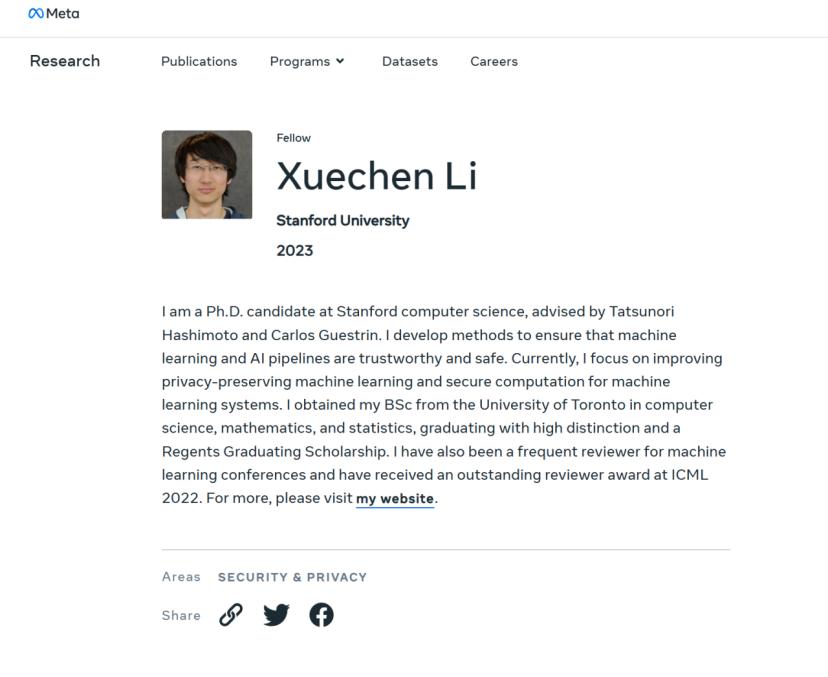
Core Viewpoint - The lawsuit filed by xAI against former employee Xuechen Li centers on allegations of trade secret theft, highlighting the intense competition and risks associated with talent movement in the AI industry [1][17]. Group 1: Background of Xuechen Li - Xuechen Li graduated from Beijing Four School in 2014 and obtained a Bachelor's degree in Computer Science, Mathematics, and Statistics from the University of Toronto in 2019, receiving the Dean's Graduation Scholarship [2]. - He completed his PhD in Computer Science at Stanford University in 2024, focusing on trustworthy and secure methods for machine learning and AI pipelines, and received a scholarship from Meta during his studies [2][4]. - Li has held positions at Google and Microsoft, contributing to significant projects, including work on differential privacy machine learning at Microsoft [5]. Group 2: Events Leading to the Lawsuit - The lawsuit details events that escalated in the summer of 2025, when Li sold approximately $4.7 million worth of xAI stock and subsequently sought additional liquidity by selling another $2 million in stock [7]. - On July 25, 2025, the same day he received the last cash from stock sales, Li allegedly copied confidential information from his work laptop to personal storage [7][8]. - xAI discovered Li's actions during a routine log review on August 11, 2025, and subsequently contacted him to return the stolen data [8]. Group 3: Allegations and Company Response - xAI claims that Li admitted to misappropriating confidential information during a meeting with legal representatives, but he refused to provide access to key accounts that could reveal the extent of the theft [8][12]. - Elon Musk stated that Li's actions went beyond taking a few files, suggesting he may have uploaded the entire codebase of xAI, which would represent a significant loss for the company [11][12]. - The stolen information is described as containing cutting-edge AI technology that could save competitors billions in R&D costs, emphasizing the high stakes involved [12][13]. Group 4: Legal Actions and Implications - xAI is seeking a temporary restraining order to prevent Li from accessing any devices that may contain confidential information and to return all stolen materials [13]. - The lawsuit raises questions about the protection of trade secrets in the AI industry, especially given the high valuations of AI companies, which can reach hundreds of billions [13][17]. - The outcome of this case could set a precedent for talent movement and intellectual property protection in the AI sector, impacting how companies manage their core technologies and employee transitions [17].
马斯克怒了!中国籍工程师套现 700 万美刀后偷了整个代码库等机密信息,转身就入职 OpenAI
程序员的那些事· 2025-08-31 02:29
Core Viewpoint - The article discusses a legal case involving Elon Musk's xAI company suing former employee Li Xuechen for allegedly stealing company secrets after selling $7 million worth of stock and subsequently joining OpenAI [1][4]. Group 1: Case Background - Li Xuechen, a Chinese national and former member of xAI's early engineering team, joined the company in February 2024 and had access to core technology [3][5]. - Li sold approximately $7 million worth of stock in June and July 2025, with the last transaction completed on July 25 [5]. - On July 25, Li allegedly transferred confidential data related to the Grok model to personal storage and attempted to cover his tracks by deleting logs and renaming files [5]. Group 2: Legal Allegations - The lawsuit includes claims of violation of employee confidentiality agreements, theft of trade secrets, violation of the Computer Data and Access Fraud Act, and fraud [4]. - Li signed a confirmation on his last day of employment, promising to delete data, but later refused to provide access to key accounts [6]. - xAI discovered the data breach on August 11, after which Li reportedly admitted to stealing company secrets during a meeting [6]. Group 3: Legal Outlook - Based on available information, it appears that xAI has a strong case and is likely to win the lawsuit [7].
尊湃窃密华为海思芯片技术,一审判决生效!
是说芯语· 2025-08-28 07:34
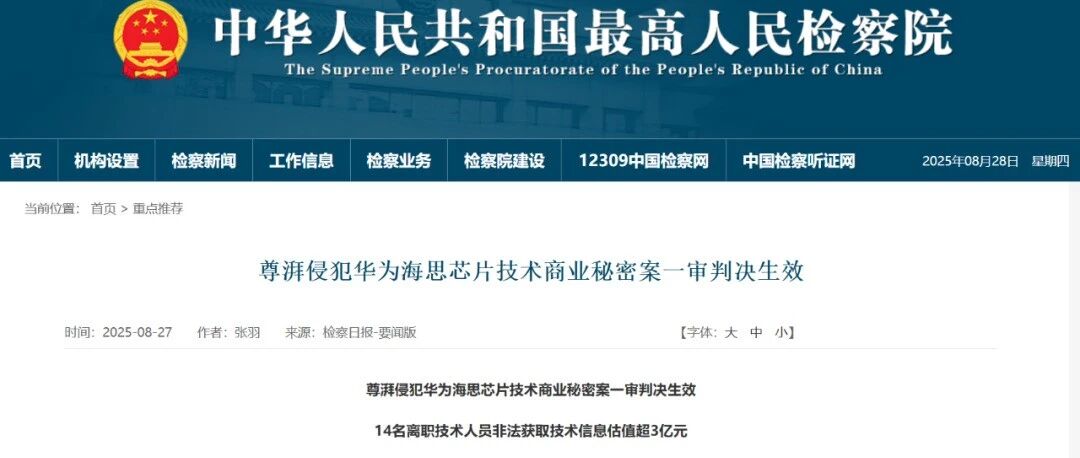
Core Viewpoint - The article discusses the legal case involving the theft of Huawei's HiSilicon chip technology by the company Zunpai, highlighting the severe consequences for the perpetrators and the impact on Huawei's business and technology development [1][6]. Group 1: Case Overview - The Supreme People's Procuratorate announced that the case of Zunpai infringing on Huawei's HiSilicon chip technology trade secrets was judged on July 28, with 14 defendants not appealing within the ten-day period, making the ruling effective [1]. - The illegal acquisition of technology information was valued at 317 million yuan [1]. - The Shanghai Third Intermediate People's Court sentenced the defendants for trade secret infringement, with Zhang Kun receiving a six-year prison term and a fine of 3 million yuan [1][6]. Group 2: Technology Theft Details - Huawei initiated its Wi-Fi chip development project in 2011, with HiSilicon responsible for implementation, achieving significant technological breakthroughs while maintaining strict confidentiality [2]. - After leaving Huawei, Zhang Kun and several former employees founded Zunpai, using high salaries and equity incentives to recruit current and former Huawei staff, who illegally obtained over 40 core technology pieces from Huawei [2][5]. - Techniques for stealing technology included screenshotting, copying, and using personal devices to transfer sensitive information [5]. Group 3: Consequences and Impact - Zunpai's rapid success in developing a Wi-Fi 6 chip within two years raised questions about the legitimacy of their claims, especially given the extensive R&D efforts typically required [3][5]. - Huawei incurred significant losses, including 900 million yuan in R&D expenses for Wi-Fi 6/7 technologies and a 15% reduction in its patent pool due to technology leaks, equating to over 10 million USD in annual losses [6]. - The case revealed that 90% of the technology points overlapped with Huawei's, setting a precedent for future similar cases [7].
侵犯华为芯片商业秘密案判决生效!
国芯网· 2025-08-27 12:07
Core Viewpoint - The article discusses the legal case involving the infringement of Huawei's HiSilicon chip technology trade secrets, highlighting the importance of protecting intellectual property in the semiconductor industry [1][5]. Group 1: Case Background - Huawei's HiSilicon, a wholly-owned subsidiary, invested significant resources in the development of Wi-Fi chip technology since 2011, implementing strict confidentiality measures [3]. - Zhang, the former head of the RF chip development department at HiSilicon, founded Zunpai and recruited several former HiSilicon employees to develop similar Wi-Fi chips, using improper methods to obtain proprietary technology [3][4]. Group 2: Legal Proceedings - On April 10, 2024, the Shanghai Municipal People's Procuratorate filed charges against Zhang and 14 others for trade secret infringement, emphasizing the complexity of the case due to the involvement of multiple defendants and technical information [4]. - The court's first-instance judgment on July 28 confirmed the guilt of all 14 defendants, with Zhang receiving a six-year prison sentence and a fine of 3 million yuan, while others received varying sentences and fines [5]. Group 3: Implications for the Semiconductor Industry - The case underscores the critical role of trade secrets in modern economic development and the necessity for robust legal protections to foster innovation within the semiconductor sector [5].

14名“内鬼”侵犯华为芯片技术,被判刑
券商中国· 2025-08-27 11:34
Core Viewpoint - The case of infringement of Huawei's HiSilicon chip technology trade secrets has been adjudicated, with 14 defendants convicted and a total estimated value of the illegally obtained technology information reaching 317 million yuan [1][4]. Group 1: Case Details - The case involves the illegal acquisition of technical information related to Wi-Fi chip development, which was initiated by Huawei in 2011 and later managed by its subsidiary, HiSilicon [1]. - Zhang, a former head of the RF chip development department at HiSilicon, founded a new company, Zunpai, and recruited several former HiSilicon employees to assist in developing similar Wi-Fi chips [1][2]. - The defendants used improper methods such as screenshots and WeChat transmissions to obtain sensitive technical information from HiSilicon employees [1]. Group 2: Legal Proceedings - On April 10, 2024, the Shanghai Municipal People's Procuratorate filed a public prosecution against the 14 defendants for infringing trade secrets [2]. - The prosecution emphasized the non-public nature and uniqueness of the involved technical information during the legal proceedings [2][3]. - The court accepted the prosecution's opinions and sentencing recommendations, resulting in varying prison sentences and fines for the defendants, with Zhang receiving a six-year sentence and a fine of 3 million yuan [4]. Group 3: Implications for Intellectual Property - The case is highlighted as a typical example of "insider" infringement of trade secrets, indicating significant challenges in prosecution [3]. - The prosecuting authority provided recommendations to the affected company to address internal management vulnerabilities, enhancing their protective measures against future infringements [4]. - The case underscores the importance of trade secrets in modern economic contexts, linking them to the security of core technologies and national high-quality development [4].