
央企重组

Search documents
长安汽车更名背后,是央企重组思路的转变
Xin Lang Cai Jing· 2025-06-26 05:55
Group 1 - The core point of the news is the renaming of China Changan Automobile Group to Chanzhi Automotive Technology Group, marking a significant change in the structure of the company and its strategic direction [1][2][3] - The restructuring reflects a shift in the approach of state-owned enterprises from large-scale mergers to specialized integration, allowing companies with core advantages to upgrade and develop [2][3] - The new name and structure will enhance Changan Automobile's decision-making power, enabling more flexible financing, investment, and acquisition activities [3][4] Group 2 - Changan Automobile has shown strong growth in its self-owned brand sales, reaching 2.226 million units in 2024, accounting for 93% of its total sales [5][6] - The company has successfully established a balanced brand layout in the electric vehicle sector, with significant year-on-year growth in sales for its brands Avita, Deep Blue, and Changan Origin [5][6] - The renaming aims to clarify the company's identity, distinguishing between the parts and whole vehicle sectors, which may facilitate technology output and ecosystem development [6][7]

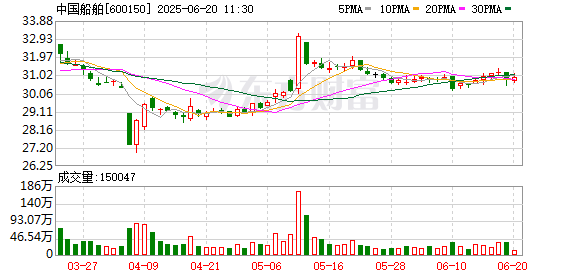
央企重组再落关键一子 诚通金控强力护航中国船舶吸并中国重工
Zheng Quan Shi Bao Wang· 2025-06-20 03:29
Group 1 - China Shipbuilding Industry Company (referred to as "China Shipbuilding") has made significant progress in the stock swap absorption merger with China Shipbuilding Industry Corporation (referred to as "China Heavy Industry") [2] - The cash option mechanism is designed to protect the rights of minority shareholders, providing a standardized and efficient exit strategy for dissenting shareholders [3] - Beijing Enterprises Holdings Limited (referred to as "Beijing Enterprises") will jointly provide cash options with China Shipbuilding Group, demonstrating strong support for the major asset restructuring of state-owned enterprises [2][3] Group 2 - As of December 31, 2024, Beijing Enterprises has total assets of 44.108 billion yuan and net assets of 39.418 billion yuan, with a net profit of 2.690 billion yuan in 2024 [3] - The collaboration between China Shipbuilding Group and Beijing Enterprises goes beyond a single transaction, showcasing deep cooperation in implementing national strategic deployments and optimizing resource integration [4] - The partnership sets a benchmark for state-owned enterprises to complement each other's advantages and collectively serve national strategic goals [5]


观车 · 论势 || 果断停止重组是尊重实际的务实表现
Zhong Guo Qi Che Bao Wang· 2025-06-12 02:07
Core Viewpoint - The decision to halt the merger between Dongfeng and Changan reflects a pragmatic approach to respect the actual circumstances and allows both companies to continue their strategic development independently [1][3][5]. Group 1: Company Performance - Dongfeng's new energy vehicle sales are projected to reach 860,000 units in 2024, representing a year-on-year growth of 64.4% [1]. - From January to May 2024, Dongfeng's cumulative sales of new energy vehicles reached 299,000 units, a staggering increase of 118.1% year-on-year [1]. - Changan's cumulative sales in 2024 are expected to hit 2.684 million units, marking a 5.1% year-on-year increase, the highest in nearly seven years [2]. - Changan's new energy vehicle sales reached 735,000 units in 2024, reflecting a year-on-year growth of 52.8% [2]. - In May 2024, Changan's single-month sales of new energy vehicles surpassed 94,800 units, with a year-on-year increase of 70% [2]. Group 2: Strategic Development - The cessation of the merger allows both Dongfeng and Changan to maintain their strategic stability and focus on their respective market demands and innovation [4]. - The restructuring of Changan's controlling shareholder to an independent central enterprise enhances decision-making efficiency and resource allocation flexibility [4]. - Both companies are positioned to explore collaborative opportunities in technology innovation and market expansion, particularly in new energy technology development and international market penetration [4][5]. Group 3: Industry Context - The automotive industry is undergoing significant transformation towards new energy and intelligent technology, necessitating companies to respond swiftly to market changes [3]. - The decision to stop the merger aligns with the trend of "professional integration" in the industry, as the State-owned Assets Supervision and Administration Commission (SASAC) emphasizes focusing on core responsibilities [3].

重要重组落地,指数震荡向上!
Sou Hu Cai Jing· 2025-06-06 08:28
Group 1 - The core viewpoint of the news is the significant restructuring progress of the Weapon Equipment Group, with seven related listed companies disclosing restructuring details, leading to a strong performance in related concept stocks [1] - The restructuring involves the separation of the automotive business into an independent central enterprise, with the State-owned Assets Supervision and Administration Commission (SASAC) injecting capital into the Weapon Industry Group based on equity [1] - The market has broken through the highest point of the 29-day time window, indicating an acceleration towards the 3417-point high, with June being a rebound month at the weekly level [1][3] Group 2 - The stock market saw over 2100 stocks rise and more than 3000 stocks fall, with a focus on sectors such as weapon equipment restructuring, sports, and electric IoT [1][3] - The overall sentiment expressed in the article is optimistic regarding the future of the A-share market, suggesting that the recent pullbacks present buying opportunities [3]

兵装集团汽车业务分立为独立央企 长安汽车前五月卖车112万辆有望升格
Chang Jiang Shang Bao· 2025-06-05 23:38
Core Viewpoint - The announcement of the separation of the automotive business from China Weapon Equipment Group indicates the establishment of a new central enterprise in the automotive sector, potentially leading to the creation of the third automotive central enterprise in China [2][4][7]. Group 1: Company Developments - Changan Automobile (000625.SZ) received notification from its indirect controlling shareholder, China Weapon Equipment Group, about the separation of its automotive business into an independent central enterprise approved by the State Council [2][4]. - Following the separation, Changan Automobile's indirect controlling shareholder will change, but the actual controller remains the same [4][7]. - The market anticipates that the restructuring may elevate China Changan Automobile Group to the status of an independent central enterprise, marking it as the third automotive central enterprise after China FAW and Dongfeng [7][8]. Group 2: Market Context - The automotive industry is currently facing intense competition, particularly in the electric vehicle sector, which has led to increased pressure on profit margins [8][12]. - The expected merger between Changan and Dongfeng has not materialized, with both companies opting for independent development as a more stable choice in the current market environment [3][13]. - The restructuring of state-owned enterprises in the automotive sector is seen as a strategic move to enhance competitiveness and resource integration [8][12]. Group 3: Financial Performance - In the first five months of the year, Changan Automobile reported sales of 1.12 million units, a year-on-year increase of 1% [12]. - The company achieved a revenue of 34.16 billion yuan in the first quarter, a decrease of 7.73% year-on-year, while the net profit attributable to shareholders was 1.35 billion yuan, reflecting a significant drop from the previous year [12]. - Changan's new energy vehicle sales reached 350,900 units in the first five months, marking a year-on-year growth of 46.89% [12].
长安、东风合并暂停 新汽车央企将成立
Mei Ri Shang Bao· 2025-06-05 22:23
Group 1 - The core development regarding the merger and restructuring of major automotive state-owned enterprises, specifically Changan Automobile and Dongfeng Motor Group, indicates that the anticipated merger has not materialized as expected, with recent announcements clarifying that no asset or business restructuring is currently involved [1][3] - Changan Automobile announced that the China Ordnance Industry Group has received approval from the State-owned Assets Supervision and Administration Commission (SASAC) to separate its automotive business into an independent central enterprise, which will not significantly impact Changan's normal operations [2][3] - Financial results from Changan Automobile show projected revenue of 159.73 billion yuan for 2024, a year-on-year increase of 5.58%, while net profit is expected to decline by 35.37% to 7.32 billion yuan [2] Group 2 - The stock performance of Dongfeng-related companies has been negatively affected by the announcement of the restructuring pause, with Dongfeng Motor shares dropping nearly 8% and closing down 6.94% [4][6] - In contrast, Changan Automobile's stock showed resilience, with a closing increase of 3.34%, while other related stocks in the Changan sector also performed well [5][6] - The automotive industry is witnessing accelerated consolidation among car manufacturers, with companies like Geely, SAIC, and GAC also engaging in internal brand integration and reform [6][7] Group 3 - Analysts suggest that strategic restructuring among central enterprise automakers could enhance supply chain resource integration and reduce inefficient brand competition, potentially increasing market share for state-owned electric vehicle brands [7]
长安、东风重组生变,证券市场反应激烈
Zhong Guo Qi Che Bao Wang· 2025-06-05 05:49
Core Viewpoint - The restructuring plans between Changan Automobile and Dongfeng Motor have faced significant changes, with Changan becoming an independent central enterprise while Dongfeng will not be involved in related asset and business restructuring, leading to market volatility and investor uncertainty [1][2][3]. Group 1: Restructuring Changes - On June 5, Changan announced that its indirect controlling shareholder would be upgraded to an independent central enterprise, while Dongfeng would not participate in the restructuring [1][2]. - The initial expectation of a merger to create a "super fleet" with annual sales exceeding 5 million units has been dashed, marking a substantial pause in the restructuring plans [2][4]. Group 2: Market Reactions - Following the announcement, Changan's stock experienced only a brief fluctuation, while Dongfeng's related stocks, including Dongfeng Motor and Dongfeng Technology, saw significant declines of over 7% [3]. - The market's differing reactions reflect varying expectations, with some investors believing Changan will have greater growth opportunities, while concerns about Dongfeng's competitive position have emerged [3][4]. Group 3: Underlying Logic of Changes - The restructuring changes are influenced by the challenges of merging two companies with distinct corporate cultures and operational strategies, which could lead to internal conflicts and affect integration outcomes [4]. - The restructuring also highlights the complexities of state-owned enterprise reforms, where balancing interests and ensuring effective integration are critical [4][5]. Group 4: Future Prospects - Changan's elevation to an independent central enterprise may provide it with more autonomy and resources, potentially accelerating its development in new energy and intelligent technologies [5][6]. - Despite the current pause, there remains a possibility for future collaboration between Changan and Dongfeng, especially in light of the ongoing transformation in the global automotive industry [5][6].
A股重磅!新央企要来了
Zhong Guo Ji Jin Bao· 2025-06-05 03:49
Core Viewpoint - The restructuring of the automotive business of China Weaponry Equipment Group into an independent central enterprise has significant implications for the automotive industry, particularly for companies like Changan Automobile and other A-share companies under the group [1][2][3]. Group 1: Restructuring Details - Changan Automobile announced that its indirect controlling shareholder will change to China Weaponry Equipment Group, which is undergoing a split of its automotive business into a new central enterprise [1][2]. - The restructuring has prompted collective announcements from several A-share companies under the China Weaponry Equipment Group, including Zhongguang Optical, Hunan Tianyan, Huachuang Technology, Dong'an Power, and Great Wall Military Industry [1][3]. - The split of the automotive business will be managed by the State-owned Assets Supervision and Administration Commission (SASAC) [2]. Group 2: Business Operations - The automotive sector of China Weaponry Equipment Group encompasses four main business segments: complete vehicles, powertrains, components, and trade services, with production bases across nine provinces and an annual production capacity of 2.78 million vehicles and engines [4]. - Both China Weaponry Equipment Group and China Weaponry Industry Group are central enterprises with strategic business synergies, focusing on defense technology and advanced manufacturing sectors [6]. Group 3: Industry Context - The restructuring is part of a broader initiative by SASAC to strategically reorganize central automotive enterprises to enhance industry concentration and competitiveness on a global scale [11]. - Changan Automobile's chairman expressed confidence that the restructuring will not negatively impact the company but will instead enhance its competitive strength and opportunities for growth [12].
盘前汽车股重磅!长安、东风重组最新动态:前者将成独立央企
Di Yi Cai Jing· 2025-06-05 01:31
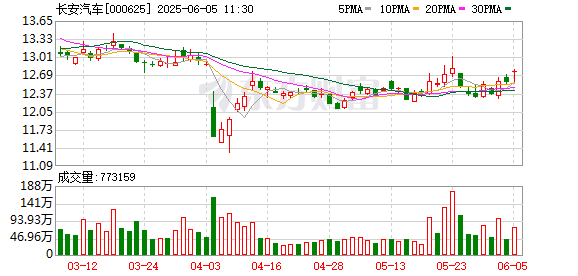
Group 1 - The restructuring of two major automotive state-owned enterprises, Chang'an Automobile and Dongfeng Motor, has progressed with the approval of the State-owned Assets Supervision and Administration Commission (SASAC) [1][2] - The restructuring involves the separation of the military equipment group's automotive business into an independent central enterprise, which will be managed by SASAC [1] - Dongfeng Motor and its subsidiaries have confirmed that their normal operations will not be affected by the restructuring [1] Group 2 - As of the latest report, Dongfeng Motor has a total market value of 15.86 billion yuan, while Chang'an Automobile's market value stands at 124.52 billion yuan [2] - The automotive industry is undergoing significant changes, particularly with the rise of electric and smart connected vehicles, prompting traditional automakers to adapt [2] - SASAC has indicated that state-owned automotive enterprises need to accelerate their development in the electric vehicle sector, with plans for separate assessments of their performance in this area [2] Group 3 - The trend of consolidation among automotive companies is expected to accelerate by 2025, with both inter-company and intra-company resource integration becoming more pronounced [3] - Strategic restructuring of state-owned automotive manufacturers is anticipated to enhance supply chain resource integration and reduce inefficient brand competition, thereby increasing market share in the electric vehicle sector [3] - Recent mergers and restructurings among state-owned enterprises are seen as essential measures to optimize resource allocation and improve efficiency in response to national economic development needs [3]

回归传统核心资产 - 6月A股策略
2025-06-02 15:44
Summary of Key Points from Conference Call Records Industry or Company Involved - The discussion primarily revolves around the A-share market in China, focusing on traditional core assets, consumer sectors, and macroeconomic conditions affecting investment strategies. Core Insights and Arguments 1. **Market Recovery and Core Assets** The market is expected to return to traditional core assets by June 2025 due to improving domestic economic expectations, despite high-frequency data indicating that recovery is still pending. The sentiment around small-cap stocks has reached historical highs, which may trigger a style switch or correction [2][3][4] 2. **Focus on Consumer Sectors** The consumer sector is highlighted, particularly in new consumption areas such as elderly care, medical consumption, and maternal and infant products. Specific recommendations include retail, infant formula, baby care products, and AI toys [1][10] 3. **Performance of Traditional Core Assets** Financial sectors, particularly insurance and commercial banks, are recommended as core assets. Companies that have seen significant price declines since their 2021 highs but have shown continuous performance improvement are also emphasized [4][12][13] 4. **Macroeconomic Factors** Key macroeconomic events include potential peaks and declines in U.S. Treasury yields, domestic political disputes affecting tax reforms, and ongoing tariff issues that may disrupt markets. These factors could lead to short-term adjustments in both U.S. and A-share markets [5][6] 5. **Market Sentiment and Small-Cap Stocks** The sentiment around small-cap stocks is at a 90th percentile high, indicating a potential for profit-taking and market adjustments, which may shift focus from small-cap to large-cap stocks [8] 6. **Investment Recommendations in Consumer Areas** Specific recommendations in the consumer sector include emotional resource providers (e.g., pet companionship, beauty products) and anxiety relief products (e.g., jewelry, new-style tea drinks) [9] 7. **Long-term Focus on Core Assets** Long-term investment strategies should focus on companies that have shown consistent performance improvement over the last three years, particularly in the consumer and pharmaceutical sectors [12][14] 8. **Technological Growth and Mergers** The technology sector is advised to be monitored for potential mergers and acquisitions, especially in hard tech areas. Recent regulatory changes facilitate mergers among state-owned enterprises, which could lead to significant developments in AI, military, and heavy machinery sectors [15] Other Important but Possibly Overlooked Content 1. **Recent Index Adjustments** The recent adjustments to major indices like CSI 300 and CSI 1000 are expected to have significant impacts on ETF holdings, particularly benefiting newly added stocks in the banking sector and electronics [16][17] 2. **Consumer Product Trends** Improvements in production and pricing trends in the liquor and dairy sectors are noted, indicating a recovery in these areas despite overall low urgency in consumer spending [11]