
文化传播

Search documents
“村超”“村马”“村T”等群众文体活动持续出圈 解码贵州“村字号”(文化中国行·视线)
Ren Min Ri Bao· 2025-10-01 21:59
Core Insights - The "Village Brand" activities in Guizhou, including "Village BA," "Village Super," "Village Horse," and "Village T," have gained significant popularity, showcasing local culture and sports while attracting tourism and economic growth [1][2][3] Group 1: Events and Activities - The 2025 "Village BA" national finals will be held in Taipan Village, Guizhou, while the "Village Super" finals concluded in Rongjiang, where a team from Zhaoqing, Guangdong, won the championship [1] - The "Village Horse" league has started in San Du County, attracting over 2,000 horses to participate [1] - The "Village T" fashion show promoting Guizhou's intangible cultural heritage was successfully held during China International Fashion Week [1] Group 2: Cultural Integration - The success of "Village Brand" events is rooted in deep traditional cultural practices, such as football in Rongjiang dating back to the 1940s and basketball in Taijiang linked to agricultural cycles [2][3] - The integration of sports, ethnic culture, and tourism has transformed traditional events into modern attractions, enhancing visitor experiences [3] Group 3: Communication and Promotion - The rise of "Village BA" was initially driven by audience-generated content shared online, leading to widespread visibility and engagement [4] - The local government has trained over 40,000 individuals in new media and e-commerce, resulting in over 12,000 new media accounts and a total online viewership exceeding 90 billion [4] Group 4: Community Involvement - The grassroots involvement of local communities in organizing events has been crucial, with over 116,800 participants in non-heritage performances and 885 cheerleading teams taking part in parades [5] - The government has played a supportive role, ensuring that community initiatives are well-coordinated and effectively executed [5][6] Group 5: Economic Impact - The "Village Brand" initiatives have significantly boosted local economies, with Rongjiang's tourism revenue reaching 2.5 billion in 2024, driven by events like "Village T" [6][11] - The introduction of professional teams for event management has enhanced the marketability of local traditions, as seen in the "Village Horse" events attracting 700,000 visitors and generating 4.73 billion in monthly tourism revenue [7][11] Group 6: Future Prospects - The "Village Brand" activities are paving the way for sustainable economic development, with plans to further integrate cultural and tourism sectors to create a robust economic engine for local communities [10][12] - The success of these initiatives has led to increased confidence among local residents, who are now more engaged in showcasing their cultural heritage and participating in economic activities [8][9]
“空中博物馆”起飞!东航“国博号”主题彩绘飞机首航
Xin Hua Wang· 2025-09-29 15:17
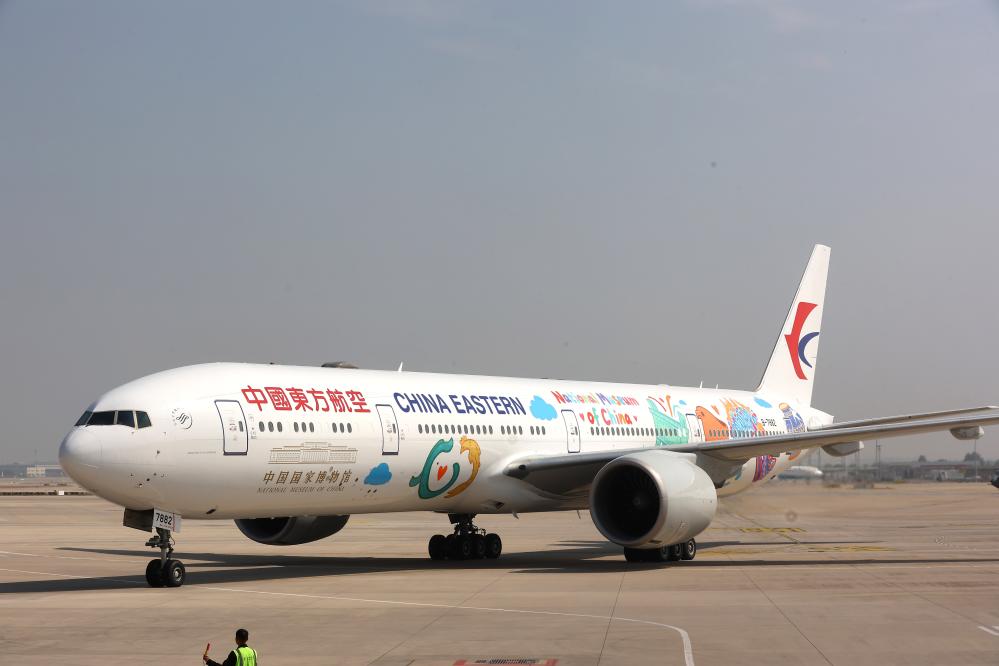
Core Points - The "Guobiao" themed aircraft, featuring cultural artifacts, has commenced its inaugural flight from Beijing Daxing International Airport to Shanghai Pudong and will subsequently fly to Frankfurt, marking the beginning of a cultural exchange journey [1] Group 1: Aircraft and Cultural Collaboration - The aircraft is a collaboration between the National Museum of China and China Eastern Airlines, showcasing a playful dual-sided full-body design [2] - The cabin features an original cloud exhibition, transforming various elements like luggage racks and seatbacks into cultural display spaces, with nearly 50 artifacts and their stories accompanying passengers [2] Group 2: Cultural Promotion and Future Plans - Passengers can read a special publication on board and access an online exhibition through in-flight Wi-Fi, enhancing the cultural experience [2] - The "Guobiao" aircraft is set to gradually operate on key domestic and international routes, including those related to the Belt and Road Initiative, serving as an "aerial bridge" for cultural dissemination [2]


带你“逛”中国,我们是行家(我在中外交流第一线)
Ren Min Ri Bao Hai Wai Ban· 2025-09-26 22:47
Core Insights - The article highlights the increasing demand for bilingual tour guides in China's tourism industry, particularly in the context of the "China Travel" trend, which emphasizes the importance of cultural exchange and storytelling [3][4][7]. Group 1: Industry Trends - The tourism market is experiencing a surge in the need for bilingual guides, who serve as both tour leaders and cultural ambassadors, connecting foreign tourists with Chinese culture [3][4]. - The implementation of a visa-free policy for Spanish passport holders has significantly boosted the number of Spanish tourists visiting Chengdu, with these tourists making up about half of the Spanish-speaking visitors [4]. Group 2: Tour Guide Experiences - Tour guides like Li Mingxiang and Wang Haiyan share their experiences of engaging with foreign tourists, emphasizing the importance of cultural understanding and personalized service in enhancing the travel experience [4][8]. - The guides often face challenges in communication, particularly with complex cultural concepts, but they adapt by preparing in advance and learning from each interaction [6][9]. Group 3: Cultural Exchange - The guides aim to provide immersive cultural experiences, such as teaching tourists about local cuisine and customs, which helps bridge cultural gaps and fosters a deeper appreciation for Chinese culture [5][12]. - Personal anecdotes from guides illustrate the emotional connections formed with tourists, highlighting the role of tour guides as cultural ambassadors who facilitate meaningful exchanges [10][14].

百度搜索:打造“AI赛博文物变身”系列短片
Zhong Zheng Wang· 2025-09-26 14:40
Core Viewpoint - The article highlights the innovative use of AI technology by Baidu to create engaging cultural content, exemplified by a viral video featuring a dinosaur "escaping" from the Shanghai Natural History Museum, which has sparked interest in cultural tourism across various regions in China [1] Group 1: AI Technology and Cultural Integration - Baidu's AI video technology generated a viral video featuring the "Peace Yongchuan Dragon" from the Shanghai Natural History Museum, showcasing the potential of AI in cultural storytelling [1] - The video features the AI dinosaur visiting iconic landmarks and interacting with local cultural symbols, which has led to invitations from various regions for the AI character to visit during the upcoming holiday [1] - Baidu has partnered with over ten cultural tourism authorities, including those from Shaanxi and Gansu, to create a series of short films that blend AI technology with cultural dissemination, enhancing the vibrancy of cultural tourism [1] Group 2: AI Video Creation Tools - In July, Baidu launched an AI intelligent creation tool that allows users to generate videos from a single sentence, streamlining the video production process [1] - The tool provides a seamless experience by automatically generating scripts, breaking down scenes, and creating storyboards and videos, catering to various content needs such as marketing and storytelling [1]

中华神话的价值正被重新发现和阐释
Jie Fang Ri Bao· 2025-09-25 03:35
Core Insights - The article emphasizes the global cultural significance of Chinese mythology, particularly through the digital content represented by the "Black Myth" series, which aims to showcase unique cultural values and narratives to a worldwide audience [1][9]. Group 1: Cultural Significance of Zhong Kui - Zhong Kui is chosen as a character due to his cultural depth and creative flexibility, allowing for diverse artistic interpretations while maintaining cultural recognition [2][3]. - The character's traditional role as a ghost expeller provides a rich narrative potential, differentiating him from typical heroic archetypes and enhancing gameplay mechanics [3][4]. Group 2: Digital Reconstruction of Chinese Mythology - The digital reconstruction of Chinese mythology is seen as a profound cultural dialogue and innovation, contrasting with the successful commercialization of Western mythologies [5][6]. - The article highlights the challenges faced by Chinese mythology in terms of fragmented narratives compared to the cohesive structures of Western mythologies, suggesting a need for a unified approach [6][9]. Group 3: Cultural Confidence and Globalization - The success of the "Black Myth" series reflects a shift from cultural accommodation to cultural confidence, emphasizing the importance of showcasing Chinese cultural elements without dilution [8][9]. - The article argues that the unique cultural heritage of Chinese mythology provides a competitive edge in the international market, advocating for a narrative that resonates with global audiences while remaining true to its roots [9][11]. Group 4: Future of Chinese Cultural Products - The emergence of characters like Zhong Kui signifies a new era in the digital representation of Chinese mythology, offering a systematic cultural expression strategy [7][10]. - The article posits that the ongoing development of the Chinese gaming industry will lead to more culturally rich products that serve as important vehicles for cultural exchange and understanding [11].
|晒书客·果月之书|
Jing Ji Guan Cha Bao· 2025-09-12 10:59
Group 1 - The memoir "My Life as a Philosopher" by Karl Löwith discusses his relationship with Heidegger and the impact of Nazi ideology on philosophy [1] - Löwith, a Jewish scholar, reflects on his forced exile from Germany and his analysis of Heidegger's "Being and Time" in the context of extreme right nationalism [1][2] - The book highlights Löwith's gratitude for his experiences in Italy, contrasting the humanity he found there with the brutality of Germany under Nazi rule [2] Group 2 - The biography "The Unequaled Self" by Claire Tomalin focuses on Samuel Pepys, emphasizing his self-interest and the value of his diaries as a record of personal experiences [3] - Pepys's diaries document his life during significant historical events, including the English Civil War and the Great Fire of London, showcasing his keen observational skills [3] - Tomalin's work illustrates the importance of personal narrative in understanding historical context and individual character [3] Group 3 - Simone de Beauvoir's "Old Age" confronts the realities of aging and death, challenging societal norms around these topics [4] - The book reflects Beauvoir's personal experiences and observations, emphasizing the need for honesty in discussing aging and mortality [4] - Beauvoir critiques the commercialized and sanitized discourse surrounding death in contemporary society [4] Group 4 - "Camus the Journalist" by Maria Santos-Sainz explores Albert Camus's journalistic career, particularly his writings during the rise of fascism and the Algerian crisis [5] - Camus's work as a journalist is characterized by a critical approach to political systems and social issues, reflecting his commitment to moral integrity [5] - The book highlights the distinction between journalism and literature, noting that while journalism addresses contemporary issues, literature speaks to both contemporaries and future generations [5] Group 5 - "The Story of Culture" by Martin Puchner examines the transmission and transformation of cultural works across different contexts and eras [7] - The narrative illustrates the chaotic and interconnected nature of cultural exchange, emphasizing that works cannot be fully understood in isolation [7] - Puchner uses anecdotes to demonstrate how cultural artifacts evolve and are reinterpreted through various lenses [7]
志愿微光汇聚向上力量 青春集结点亮城市之光
Yang Guang Wang· 2025-09-06 07:21
Group 1 - The Shanghai Cooperation Organization Tianjin Summit successfully concluded, highlighting the role of youth volunteers from 10 universities who participated in various tasks during the event [1][11] - A total of 998 youth volunteers were selected from 19,000 applicants, showcasing their professionalism and enthusiasm in roles such as guest reception and logistics [1][11] Group 2 - Tianjin Normal University volunteer Qi Tianzi effectively communicated the traditional craft of Tianjin Zheng's lacquerware to foreign guests, demonstrating cultural confidence and the ability to bridge language barriers [2][5] - The collaborative efforts of volunteers in cultural display roles contributed significantly to the dissemination of Chinese traditional culture during the summit [5] Group 3 - Tianjin Foreign Studies University volunteer Ma Yucong undertook dual responsibilities during the summit, reflecting a family commitment to service, as her parents also participated in various roles [6][7] - The dedication of 235 language service volunteers from Tianjin Foreign Studies University emphasized the importance of using professional knowledge for urban service [7] Group 4 - Nankai University graduate student Su Yuchen showcased advanced technology, including the world's first "dual-modal bionic dexterous hand," during the summit, impressing foreign journalists with its capabilities [8][11] - Su Yuchen's preparation and engagement with foreign guests highlighted the pride in China's scientific achievements and the commitment to advancing research in functional materials [8][11]

外卖大战,不见霸王茶姬的身影
3 6 Ke· 2025-09-02 09:35
Core Viewpoint - Bawang Chaji, the first stock of new tea drinks in the US market, reported better-than-expected financial results for Q2, showcasing resilience amid a challenging economic environment and a slowing domestic tea drink industry [3] Financial Performance - Total revenue for Q2 reached 3.3319 billion RMB, a year-on-year increase of 10.2% [3] - Adjusted net profit was 629.8 million RMB, with a net profit margin of 18.9% [3] - Gross margin improved to 53.9% [3] - Overseas GMV reached 253.2 million RMB, a significant increase of 77.4% year-on-year [3] - The number of global stores reached 7,038, and registered members surpassed 200 million, with a quarterly net increase of 14.55 million, up 42.7% year-on-year [3][10] Strategic Positioning - The company refrains from engaging in price wars, focusing instead on high-value brand strategy and operational efficiency through technological innovation [5][6] - Bawang Chaji emphasizes product innovation and supply chain refinement to achieve sustainable growth [6] - The company has maintained a consistent pricing strategy while increasing the proportion of GMV from takeout to 52% [10] Product Innovation and Cultural Integration - Bawang Chaji has introduced regionally and seasonally limited products, enhancing its market presence and emotional connection with consumers [9] - The company launched products that respect local cultures, such as "谷香焙茶" in Malaysia and "兰花碧螺春" in Singapore, which have become popular [14] - The brand aims to spread tea culture globally, integrating local traditions and community engagement into its business model [18] International Expansion - Bawang Chaji has expanded its international footprint, opening 208 overseas stores in markets like Malaysia, Thailand, and Singapore [12] - The company has successfully entered the Indonesian market, with significant initial sales and user registrations [12][14] - Bawang Chaji's global strategy includes hiring experienced local management to enhance its market presence in North America [15][16] Employee Welfare and Corporate Culture - The company prioritizes employee welfare, offering supplemental medical insurance and implementing initiatives like "夜洁计划" to improve work-life balance [19][20] - Bawang Chaji promotes a culture of employee-first values, believing that satisfied employees lead to better customer service and, ultimately, improved company performance [19][21] Future Outlook - The company plans to initiate a core ingredient upgrade plan in the second half of the year, focusing on key raw materials [21] - Bawang Chaji aims to transition from rapid expansion to a more refined operational approach, ensuring sustainable growth and value creation for its membership ecosystem [21][22]
外卖大战,不见霸王茶姬的身影
36氪未来消费· 2025-09-02 09:18
Core Viewpoint - The company, Bawang Chaji, has demonstrated resilience in a challenging market by focusing on product innovation and operational efficiency rather than engaging in price wars [4][5][7]. Financial Performance - For the second quarter ending June 30, 2025, Bawang Chaji reported total revenue of 3.3319 billion RMB, a year-on-year increase of 10.2% [4]. - The adjusted net profit was 629.8 million RMB, with a net profit margin of 18.9% and a gross margin of 53.9% [4]. - Overseas market performance was strong, with a GMV of 253.2 million RMB, up 77.4% year-on-year [4]. Market Strategy - Bawang Chaji's founder emphasized the importance of not participating in price wars, advocating for a high-value brand strategy and operational efficiency through technological innovation [7][9]. - The company has maintained a consistent pricing strategy while increasing its GMV from takeout orders to 52% [15]. Product Innovation - Bawang Chaji focuses on product innovation to differentiate itself in a market known for homogenization, launching regionally and seasonally limited products [10][14]. - Signature products like "Boyar Absolute String" have been developed to appeal to a broad consumer base, contrasting with the fruit tea trend [13]. Global Expansion - The company has made significant strides in international markets, with 208 overseas stores opened in regions like Malaysia, Thailand, and Singapore [18]. - Bawang Chaji's entry into new markets, such as Indonesia and the Philippines, has been met with strong consumer interest, evidenced by high initial sales and user registrations [19][20]. Cultural Integration - Bawang Chaji integrates local culture into its product offerings, enhancing its appeal in international markets [27]. - The company has also engaged in community initiatives, such as employing individuals with disabilities and providing healthcare benefits to employees [28]. Future Outlook - The company plans to upgrade core raw materials and continue focusing on sustainable growth strategies, aiming to solidify its position in the market [30]. - Bawang Chaji aspires to become the "Starbucks of the East," indicating ambitious growth and brand recognition goals [31].

文化观察:出海微短剧如何摆脱“低级感”?
Zhong Guo Xin Wen Wang· 2025-08-30 23:21
Core Viewpoint - The micro-short drama industry is experiencing rapid growth and is becoming a significant cultural export for China, but it faces challenges related to content quality and cultural representation [2][4][6]. Group 1: Industry Growth and Characteristics - The micro-short drama market is projected to exceed 50 billion yuan in 2024, indicating explosive growth in recent years [2]. - Zhejiang province has emerged as a leader in the micro-short drama sector, with a complete production chain and a high number of production agencies and platforms [3]. - In the first seven months of this year, over 2,300 micro-short drama crews have been hosted in Hengdian, with an expected total of over 4,000 crews for the year [3]. Group 2: Challenges and Criticisms - The industry is facing criticism for a perceived "low-level" quality in content, attributed to three imbalances: commercial versus artistic focus, global versus local cultural elements, and technology versus content innovation [4]. - The reliance on proven "hit" formulas has led to a saturation of similar themes, such as revenge and family drama, which diminishes artistic diversity [4]. - Simplifying content to remove Chinese cultural elements has resulted in a loss of cultural identity, failing to resonate with international audiences [4]. Group 3: Recommendations for Improvement - Experts suggest that micro-short dramas should focus on enhancing quality, rooting in local culture, and expanding internationally while balancing local expression with global appeal [5][7]. - There is a call for deeper exploration of Chinese cultural essence in micro-short dramas, integrating local narratives that reflect real-life experiences [7]. - Establishing a collaborative mechanism between academia and industry is recommended to maintain artistic exploration while ensuring scalability and platform development for micro-short dramas [8].