汽车高端化

Search documents
“CEO天团”打卡尊界S800的背后
财联社· 2025-10-30 05:22
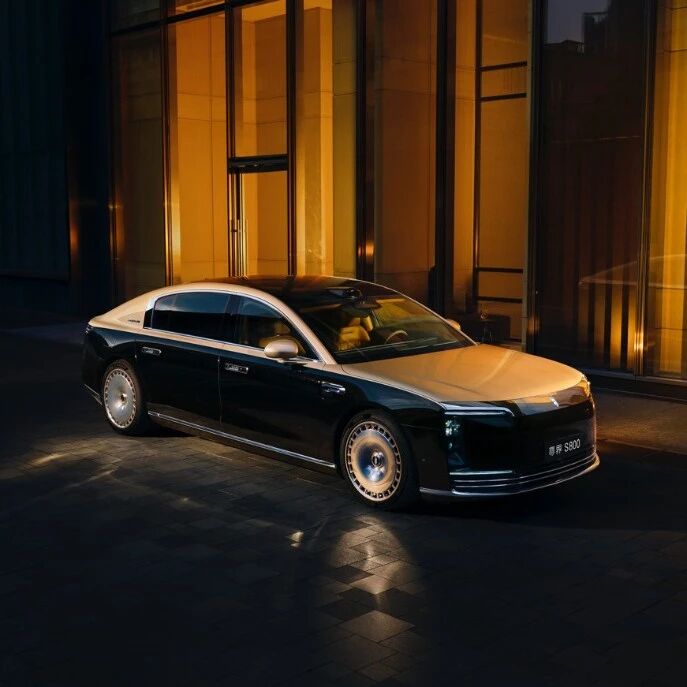
Core Viewpoint - The launch of the Zun Jie S800 has disrupted the ultra-luxury car market, indicating a fundamental shift in the purchasing logic of high-net-worth individuals in China [1][16][22] Group 1: Market Dynamics - The Zun Jie S800 has gained significant recognition among high-net-worth individuals, showcasing the efforts and courage of the Chinese automotive industry [4][12] - The vehicle has achieved over 15,000 pre-orders within four months of its launch, demonstrating strong demand and stability in orders [8][11] - The S800's delivery volume reached 1,918 units in September, marking a successful first full month of deliveries [8][11] Group 2: Consumer Preferences - High-net-worth individuals are increasingly prioritizing product quality, design, and multi-dimensional experiences over traditional brand prestige when purchasing luxury vehicles [18][22] - The S800 has garnered attention from various sectors, including business leaders and celebrities, who appreciate its blend of luxury and practicality [5][8][12] - The vehicle's innovative features, such as privacy protection and advanced safety technologies, resonate well with the needs of high-net-worth consumers [14][15] Group 3: Technological Integration - The S800 incorporates Huawei's advanced technology, enhancing its appeal as a new benchmark in the ultra-luxury sedan market [8][12] - The vehicle features a unique digital chassis and a comprehensive active protection system, setting it apart from traditional luxury cars [15][22] - The integration of smart technology and user experience has redefined luxury, moving beyond mere aesthetics to include functionality and security [12][22] Group 4: Industry Implications - The success of the Zun Jie S800 signifies a shift in the competitive landscape of the ultra-luxury car market, challenging established foreign brands [11][16] - The vehicle's rapid acceptance among high-net-worth individuals reflects a broader trend in the automotive industry towards electric and intelligent vehicles [22] - The S800's performance illustrates the potential for Chinese automotive brands to reshape consumer perceptions and market dynamics in the luxury segment [22]

汽车视点 | 30万元级腾势N8L上市,比亚迪高端化亟需一款“走量车”
Xin Hua Cai Jing· 2025-10-29 01:24
Core Insights - The launch of the new model N8L by Tengshi brand is aimed at the large six-seat SUV market, with a price range of 299,800 to 329,800 yuan, and initial market reactions are positive [1][3] - The N8L has received more small orders than expected, particularly from family users, indicating strong demand for family-oriented features [1][2] - The N8L is positioned as a key product for Tengshi and BYD's overall high-end strategy, aiming to achieve scale in the high-end market [3][4] Product Features - The N8L includes 49 storage spaces, a third-row seat that can slide 10 cm, and a hidden storage space of 51 liters in the trunk, all designed to address family travel needs [1][2] - The vehicle features a collaboration with Midea's high-end appliance brand COLMO for smart home integration, allowing users to control home appliances via voice commands from the car [2] - Safety is emphasized as a core aspect of the N8L, with a body structure made of 2000MPa hot-formed steel and advanced safety technologies [2] Market Positioning - Tengshi has established itself as a high-end brand since the launch of the D9 model in 2022, with an average transaction price of around 350,000 yuan for new models in 2024 [4][5] - The brand aims to compete in the high-end SUV market, having faced challenges in achieving expected sales for previous models N7 and N8 [5][6] - The introduction of the N8L is seen as a strategic move to strengthen Tengshi's market position and support BYD's overall high-end strategy [6][7] Industry Trends - BYD's focus on high-end, global, and intelligent development is becoming evident, with a notable increase in the sales proportion of high-end brands [7][8] - The overall sales of BYD's high-end brand series reached 296,000 units in the first nine months of the year, accounting for 9% of total sales, reflecting a growth of approximately 3 percentage points year-on-year [8] - The competitive landscape is shifting as more domestic brands, including Leap Motor, are entering the high-end market, indicating a broader trend among manufacturers to enhance their high-end offerings [8][9]

晨会纪要:2025年第177期-20251021
Guohai Securities· 2025-10-21 02:07
Group 1: Pig Industry - The pig industry is undergoing a period of regulatory control, with measures aimed at reducing production capacity to stabilize prices. Short-term pressures on prices are expected due to increased market supply, but the overall regulatory approach is likely to be moderate, focusing on sustainable price recovery [3][4] - The recommendation is to focus on leading companies such as Muyuan Foods and Wens Foodstuffs, while also considering opportunities in lower-cost producers like Dekang Agriculture and Shennong Group [3] Group 2: Poultry Industry - The poultry sector is expected to see improvements in its fundamentals, with significant updates in breeding stock. In September 2025, 136,800 sets of grandparent stock were updated, contributing to a total of 803,300 sets for the year [4] - The recommendation includes companies like San Nong Development and Lihua Stock, as the market dynamics are anticipated to shift positively [4] Group 3: Animal Health - The competitive landscape in the animal health sector is expected to improve, supported by government initiatives to optimize the veterinary drug industry and encourage innovation among leading firms [5] - The clinical trials for African swine fever vaccines are progressing, with companies like BioFeng and Zhongmu Bio receiving clinical approval, which could enhance market prospects for these vaccines [5] Group 4: Planting Industry - The pig-to-grain price ratio is continuing to decline, which may benefit companies that have invested early in genetically modified seed development. Companies like Suqian Agricultural Development and Longping High-Tech are recommended [6] Group 5: Feed Industry - The feed industry is experiencing price fluctuations, but there is an expectation of increased market concentration. Hai Da Group is recommended, with a focus on He Feng Stock as a potential opportunity [7] Group 6: Pet Industry - The pet economy is thriving, with domestic brands gaining significant market share. The profitability of the industry is improving, and companies like Guibao Pet and Zhongchong Stock are recommended for investment [8] Group 7: Automotive Industry - In September 2025, wholesale automotive sales increased by 14.9% year-on-year, with significant growth in new energy vehicles, which accounted for 46.1% of total new car sales [9][10] - The launch of new models like the Leap D19 and Wei Brand's Gaoshan 7 is expected to enhance market competitiveness, with the latter achieving a sales price of 285,800 yuan [10][11] - The automotive sector is recommended for investment, particularly in companies that are positioned for high-end and intelligent vehicle development, such as Li Auto and BYD [12] Group 8: Beauty and Healthcare - Meili Tianyuan's acquisition of Siyuanli for 1.25 billion yuan is set to strengthen its position in the high-end beauty market, with the deal structured as 67% cash and 33% stock [14][15] - The acquisition is expected to enhance revenue and profit scales, with projected revenues of 3 billion yuan in 2025, growing to 5.2 billion yuan by 2027 [16]
800亿零跑朱江明,仰攻高价车
2 1 Shi Ji Jing Ji Bao Dao· 2025-10-18 10:53
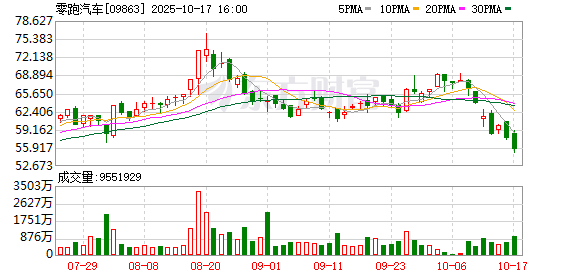
Core Viewpoint - The company aims to penetrate the high-end market with its new D19 model, leveraging unique technology and a cost-effective strategy to attract consumers who value practicality and quality over luxury pricing [3][9][14]. Group 1: Product Launch and Strategy - The D19 is a full-size SUV with a three-row layout, positioned to cater to the growing demand for larger vehicles among multi-child families in China [4][5]. - The launch event for the D19 was strategically held near the Oriental Pearl Tower in Shanghai, emphasizing the brand's ambition to align with high-end market expectations [3]. - The D19 is designed to compete with high-end models, featuring similar interior quality to vehicles priced at 700,000 yuan but offered at a price point around 300,000 yuan [9][10]. Group 2: Market Positioning and Competition - The automotive industry is seeing a surge in six-seat models, with the D19 entering a competitive segment that includes offerings from brands like Geely and NIO [6][8]. - The company faces challenges in overcoming consumer perceptions of being a mid-range brand, necessitating a focus on building trust and differentiating its high-end offerings [8][9]. - The strategy of offering high-quality products at lower prices is seen as a smart approach to gain traction in the high-end market [9][14]. Group 3: Financial Performance and Projections - The company reported a significant turnaround, achieving profitability with a net profit of 30 million yuan in the first half of the year, alongside a gross margin increase to 14.1% [14]. - The management has raised its delivery guidance for 2025 from 500,000-600,000 units to 580,000-650,000 units, projecting a net profit of 500 million to 1 billion yuan for the year [14]. - The long-term goal is to reach annual sales of 1 million vehicles by 2026, with multiple new models planned for release [14].
中国品牌高端化标杆,比亚迪汉长续航版上市
Zhi Tong Cai Jing· 2025-10-11 13:41
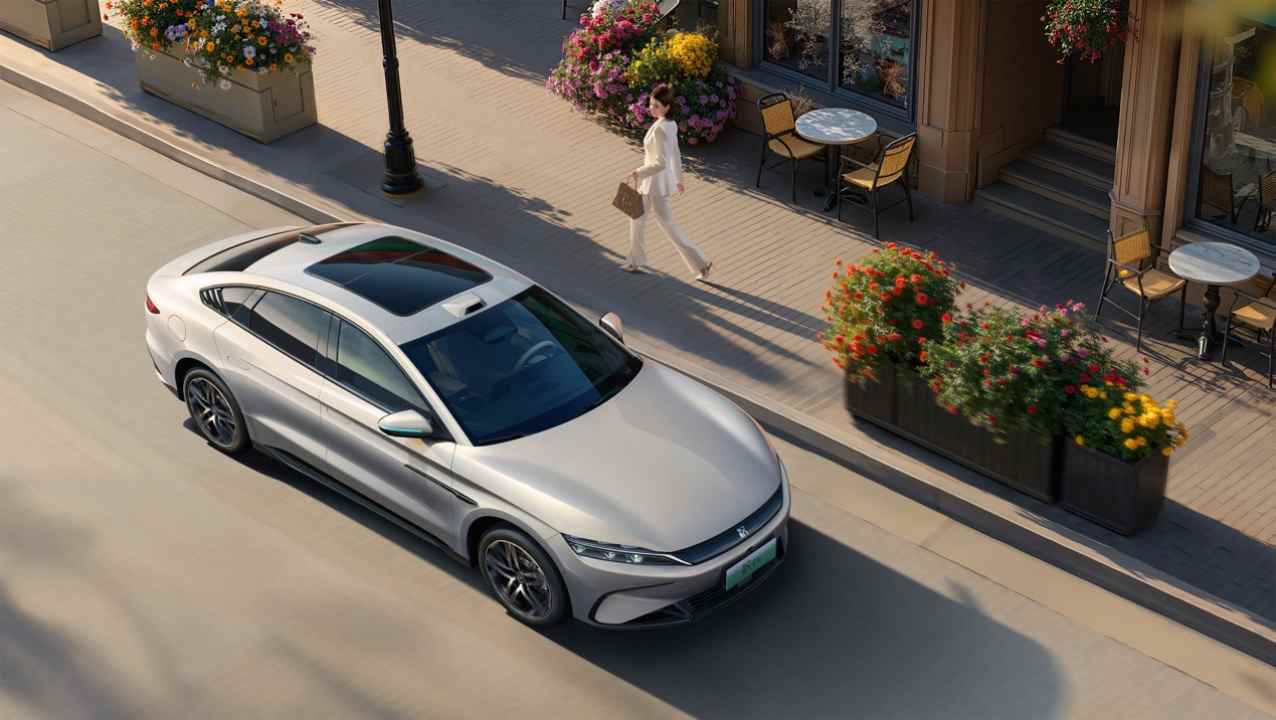
Core Insights - BYD's Han Long Range Edition was officially launched on October 11, 2025, focusing on six luxury dimensions: aesthetics, comfort, ecology, intelligence, safety, and efficiency [1] - The Han family has achieved cumulative sales of over one million vehicles, establishing a significant market milestone [1] Group 1: Powertrain and Efficiency - The Han DM-i Long Range Edition features the fifth-generation DM technology, achieving a pure electric range of 245 kilometers and a low fuel consumption of 3.44L/100km, with a comprehensive range of 1560 kilometers [2] - The Han EV Long Range Edition offers a starting pure electric range of 635 kilometers, reaching up to 705 kilometers, with a 0-100 km/h acceleration time of 6.9 seconds and an energy consumption of 10.6 kW·h per 100 kilometers [2] Group 2: Aesthetics and Comfort - The Han Long Range Edition introduces three new colors: Frosted Gold, Pine Shadow Green, and Distant Peak Blue, catering to the aesthetic preferences of younger consumers [3] - The interior features upgrades such as a laser-brushed panel and high-quality materials, along with a fully upgraded electronic gear shift for a premium cabin atmosphere [3] Group 3: Smart Features and Safety - The vehicle is equipped with the DiLink 100 smart cockpit and integrates Deepseek's large model, enhancing connectivity and entertainment options [4] - The Han Long Range Edition includes a TBC high-speed tire blowout stability system, which enhances safety during high-speed driving by providing real-time responses to tire blowouts [6] Group 4: Intelligent Ecosystem - The vehicle integrates with various smart products for family travel, ensuring comfort and safety for users [5] - The Han Long Range Edition features the Yunlian-C intelligent damping control system, which adjusts suspension based on real-time road conditions [5]
中国品牌高端化标杆,比亚迪(01211)汉长续航版上市
智通财经网· 2025-10-11 13:38
Core Insights - BYD's Han Long Range version officially launched on October 11, 2025, focusing on six luxury dimensions: aesthetics, comfort, ecology, intelligence, safety, and efficiency [1] - The Han family has achieved cumulative sales exceeding one million units, establishing a significant market milestone [1][16] Group 1: Performance and Technology - The Han DM-i Long Range version features a pure electric range of 245 kilometers and an ultra-low fuel consumption of 3.44L/100km, with a comprehensive range of 1560 kilometers [2] - The Han EV Long Range version offers a starting pure electric range of 635 kilometers, reaching up to 705 kilometers, with a 0-100 km/h acceleration time of 6.9 seconds and a power consumption of 10.6 kW·h per 100 kilometers [2] Group 2: Aesthetics and Comfort - The Han Long Range version introduces three new colors: Frosted Gold, Pine Shadow Green, and Distant Peak Blue, catering to the aesthetic preferences of a younger market [4] - The interior features upgrades such as a laser-brushed panel, high-quality leather materials, and an electronic gear shift, enhancing the luxury experience [6] Group 3: Smart Features and Safety - The vehicle is equipped with the DiLink 100 smart cockpit and integrates Deepseek's large model, adding features like car connectivity and karaoke [8] - The Han Long Range version includes the TBC high-speed tire blowout stability system, which enhances safety during high-speed driving by providing real-time responses to tire blowouts [14] - The "Tian Shen Zhi Yan" driver assistance system supports over 300 parking scenarios, showcasing the vehicle's advanced autonomous capabilities [13]
晨会纪要:2025年第170期-20251010
Guohai Securities· 2025-10-10 01:03
Group 1: Company Insights - The report highlights the continuous improvement in the financial performance of Guoshengtang, with a revenue of 1.495 billion yuan in H1 2025, representing a 9.5% year-on-year increase, and a net profit of 152 million yuan, up 41.9% year-on-year [3][4] - Guoshengtang has launched 10 AI models in traditional Chinese medicine, enhancing service quality and patient experience through AI technology [3] - The company has maintained a high cash dividend and stock repurchase ratio, with a mid-year dividend of 0.35 HKD per share and a total repurchase amount of 166 million HKD as of October 3, 2025 [4] Group 2: Industry Trends - The report notes that the industrial automation sector is experiencing a recovery, with Inovance Technology achieving a revenue of 20.509 billion yuan in H1 2025, a 26.73% increase year-on-year, and a net profit of 2.968 billion yuan, up 40.15% year-on-year [17][19] - The electric vehicle sector is also highlighted, with Inovance's revenue from this segment reaching 9 billion yuan in H1 2025, a 50% increase year-on-year, driven by new model launches and increased production [20] - The automotive industry is seeing a shift towards high-end and intelligent upgrades, supported by government policies encouraging vehicle replacement, which is expected to boost sales in 2025 [33]




比亚迪系列专题:技术为本,向高端化演进
Guolian Minsheng Securities· 2025-10-09 13:54
Investment Rating - The report maintains an investment rating of "Outperform the Market" for BYD [7] Core Viewpoints - The luxury image of traditional brands is a result of historical accumulation, technology, and brand strength. Under the wave of new energy, domestic brands are redefining luxury through new technologies. BYD's path to high-end positioning relies on its technological advantages to foster brand preference among consumers [4][11] - BYD's high-end strategy is built on "technology foundation, brand stratification, and global expansion," utilizing a three-tier brand matrix for precise market coverage [11][59] Summary by Sections Introduction: Where Will BYD's High-End Path Lead? - In 2024, BYD's passenger car sales reached 4.25 million units, with models priced below 200,000 yuan accounting for 84.3% of sales. The launch of the Tengshi D9 in 2022 marked the beginning of BYD's high-end journey, followed by the introduction of the Yangwang and Fangchengbao brands [8][15] Quantitative Standards for Successful High-End Definition - High-end brands are defined as those with an average price above 300,000 yuan. In 2024, 14 brands met this criterion, with six being domestic brands. The top three brands by sales were traditional luxury brands "BBA," followed by domestic brands like Li Auto and AITO [20][23] Key to BYD's High-End Breakthrough: Focus on Technological Strength - BYD's high-end strategy includes the Tengshi brand, which integrates advanced technologies to create a comprehensive product matrix. The Tengshi brand achieved sales of 107,000 units in 2024, with an average transaction price of approximately 350,000 yuan [32][36] - The Fangchengbao brand focuses on the personalized automotive market, leveraging leading technologies to create unique products [46] Investment Recommendations - The report suggests that BYD's exploration of high-end positioning is gradually correcting its strategic direction, with a focus on technology-driven sales growth. The "Universal Intelligent Driving" strategy is expected to accelerate brand high-end positioning and enhance revenue and profit margins in the medium to long term [12][59]
吉利汽车拟进行23亿港元股份回购计划,特斯拉正式发布廉价版Model3/Y:——汽车行业周报-20251009
Guohai Securities· 2025-10-09 06:10
Investment Rating - The report maintains a "Recommended" rating for the automotive sector [1] Core Insights - The automotive industry is expected to benefit from the continuation of the vehicle replacement policy in 2025, supporting upward consumer demand. The sector is undergoing a transformation towards high-end and intelligent upgrades, with a focus on companies that can provide quality vehicles priced above 300,000 yuan [6][15] - The report highlights several companies as potential beneficiaries: Li Auto, JAC Motors, Geely, BYD, and Great Wall Motors, with a recommendation to pay attention to Seres [6][15] - The report also notes that the penetration rate of advanced driving assistance systems is expected to increase significantly due to the "affordability" of high-level intelligent driving, recommending companies like XPeng Motors, Huayang Group, Desay SV, and Coboda [6][15] - The report emphasizes the potential for mass production of robots, recommending companies with high certainty and leading positions in the industry chain, such as Top Group, Sanhua Intelligent Control, and Beite Technology [6][15] Summary by Sections Recent Trends - The automotive sector outperformed the Shanghai Composite Index, with a weekly increase of 1.7% from September 29 to September 30, 2025, compared to the Shanghai Composite Index's increase of 1.4% [16] - Notable stock performances include Li Auto, XPeng Motors, NIO, and Geely, with respective changes of -4.6%, +1.5%, +6.2%, and +7.9% during the same period [16] Company Focus and Earnings Forecast - Key companies and their earnings per share (EPS) forecasts for 2024 to 2026 are highlighted, with recommendations to buy for several companies including Silver Wheel, Baolong Technology, and BYD [8][53] - The report provides a detailed table of stock prices, EPS, and price-to-earnings (PE) ratios for various companies, indicating a bullish outlook for the automotive sector [53] Industry Indicators - In August 2025, the automotive production and sales reached 2.815 million and 2.857 million units, respectively, showing a year-on-year growth of 13% and 16.4% [31] - The report notes that the production and sales of passenger vehicles were 2.5 million and 2.54 million units, with year-on-year growth of 12.5% and 16.5% [31]
比亚迪 | 9月:批发环比回升 高端化稳步突破【民生汽车 崔琰团队】
汽车琰究· 2025-10-08 14:44
Core Viewpoint - The company reported a slight decline in wholesale sales of new energy vehicles in September, but there was a month-on-month increase, indicating a recovery in terminal demand driven by continued subsidies in some regions [2][3]. Group 1: Sales Performance - In September, the wholesale sales of new energy passenger vehicles reached 393,000 units, down 5.9% year-on-year but up 5.8% month-on-month [3]. - Cumulative wholesale sales from January to September for new energy passenger vehicles totaled 3.219 million units, representing a year-on-year increase of 17.6% [3]. - The sales of plug-in hybrid vehicles in September were 188,000 units, down 25.6% year-on-year but up 9.4% month-on-month, while pure electric vehicle sales were 205,000 units, up 24.3% year-on-year and 2.7% month-on-month [3]. Group 2: Brand Performance and High-end Strategy - The company has made significant adjustments to its high-end brands, particularly the Tengshi brand, to enhance brand system construction and overcome high-end bottlenecks [4]. - The launch of the Fangchengbao Titanium 7, a mid-large SUV, has driven brand sales upward, with over 10,000 orders in the first week [4]. Group 3: International Expansion - In September, the export sales of new energy vehicles reached 71,000 units, a year-on-year increase of 115.8% but a month-on-month decrease of 11.8% [5]. - Cumulative exports from January to September totaled 697,000 units, up 134.0% year-on-year, supported by increasing demand in markets like Turkey, Brazil, and Europe [5]. - The company is accelerating its overseas factory establishment, with new plants planned in Uzbekistan, Hungary, Turkey, and Indonesia, which is expected to boost profitability [5]. Group 4: Financial Projections - The company forecasts revenues of 990.81 billion yuan, 1,188.97 billion yuan, and 1,397.04 billion yuan for 2025, 2026, and 2027 respectively, with net profits of 45.402 billion yuan, 60.353 billion yuan, and 70.419 billion yuan [6][9]. - The expected earnings per share (EPS) for 2025, 2026, and 2027 are 4.98 yuan, 6.62 yuan, and 7.72 yuan respectively, with corresponding price-to-earnings (PE) ratios of 22, 16, and 14 [6][9].