
海洋经济

Search documents
第五届汕尾发展大会召开 88个项目签约 总投资超197亿元
Nan Fang Ri Bao Wang Luo Ban· 2026-01-16 07:53
Group 1 - The fifth Shantou Development Conference was held on January 15, focusing on the theme of "Collaborative Development of the Greater Red Bay Area, Building a New Growth Pole for the Marine Economy" [1] - The conference aimed to gather wisdom from various sectors to explore new paths for the marine economy and to jointly draft a new blueprint for high-quality development in Shantou and the Greater Red Bay Area [1] - Shantou has implemented the "High-Quality Development Project for 100 Counties, 1,000 Towns, and 10,000 Villages," emphasizing the transformation of marine resource advantages into development strengths [1] Group 2 - During the "14th Five-Year Plan" period, the number of registered business entities in Shantou increased from 172,000 to 341,000, with an average annual growth rate of 14.69% [1] - The number of newly established enterprises and the number of individual businesses transitioning to enterprises grew at average annual rates of 19.54% and 8.60%, respectively [1] - The resident population in Shantou exceeded 2.7 million, achieving three consecutive years of growth [1] Group 3 - The fifth Shantou Development Conference resulted in the signing of 88 projects with a total investment amount of 19.788 billion yuan [2] - Key industries discussed included new energy vehicles, marine engineering equipment, marine energy, marine ranching, coastal tourism, and public platforms [2] - Zhongke Fenggu Energy (Shenzhen) Co., Ltd. signed a project related to graphene raw materials, which will be applied in new energy batteries, aerospace, and medical fields [2] Group 4 - The conference marked a transition for Shantou's marine economic development from "single-point breakthroughs" to "full-domain collaboration," enhancing the momentum for building a strong marine economy [2]
中国造船业连续16年居世界第一,全市场首只船舶ETF正式启航
Jin Rong Jie· 2026-01-12 00:44
Core Insights - The Chinese shipbuilding industry is experiencing growth, with a completion volume of 38.53 million deadweight tons from January to September 2025, representing a year-on-year increase of 6.0% [1] - As of the end of September, the hand-held order volume reached 242.24 million deadweight tons, marking a year-on-year growth of 25.3% [1] - The three major indicators of China's shipbuilding industry accounted for 53.8%, 67.3%, and 65.2% of the global total, maintaining a leading position worldwide [1] Industry Overview - The shipbuilding ETF (Fund Code: 560710, Subscription Code: 560713) is the first index fund focused on shipbuilding, tracking the CSI Smart Shipbuilding Industry Index, which includes 40 representative listed companies in shipbuilding-related fields [2] - The top three weighted sectors in the index are Marine Equipment III (45.06%), Other Power Equipment III (13.62%), and Energy Heavy Equipment III (9.52%), providing a comprehensive capture of the industry ecosystem [2] - The index heavily focuses on core assets, with companies under the China Shipbuilding Group accounting for 56% of the index, indicating strong coverage of industry leaders [2] Market Dynamics - The shipbuilding industry is in an upward trajectory due to multiple favorable factors, including global economic recovery, increased shipping demand, and urgent replacement needs due to an aging global fleet [2] - The industry has entered a new long-cycle starting point, supported by policies promoting "renewal and replacement," leading to sustained upward momentum in market conditions [2] - The CSI Smart Shipbuilding Industry Index has shown strong historical performance, with a growth of 56.70% since its base date (December 31, 2019), outperforming traditional shipbuilding indices and the CSI 300 Index [2] Fund Management - The shipbuilding ETF will be managed by experienced fund manager Su Huaqing, who has 7 years of experience in the securities industry [3] - The fund benefits from the quantitative research capabilities of the established investment team at the fund company, which has been active since 2009 [3] - The launch of the shipbuilding ETF aligns with national strategies for marine economic development and aims to attract social capital into sustainable marine sectors [3]
新城市志|港口“晴雨表”,折射中国经济韧性与活力
Xin Lang Cai Jing· 2026-01-10 08:14
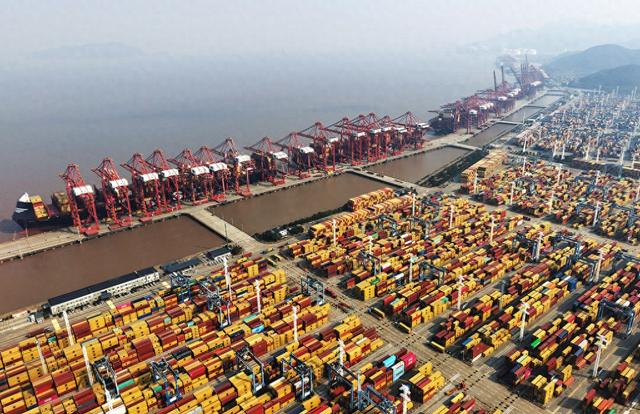
Core Insights - China holds multiple positions among the world's top 10 ports, with Shanghai and Ningbo-Zhoushan ports achieving remarkable performance in 2025, reflecting the resilience and vitality of China's foreign trade [1][3] Group 1: Port Performance - In 2025, Shanghai Port's container throughput reached 55.06 million TEUs, maintaining its position as the world's largest port for 16 consecutive years [1] - Ningbo-Zhoushan Port achieved a cargo throughput of over 1.4 billion tons in 2025, marking its 17th consecutive year at the top globally [1] - The performance of these ports is seen as a barometer of economic conditions, showcasing their operational strength and the robustness of China's foreign trade [1] Group 2: Distinction Between Ports - Ningbo-Zhoushan Port leads in cargo throughput measured in tons, while Shanghai Port excels in container throughput measured in TEUs [3] - The strategic positioning of these ports is influenced by natural endowments and their respective missions, with Shanghai focusing on high-value container transport and Ningbo-Zhoushan on bulk and energy transport [3][4] Group 3: Cargo Types and Statistics - In 2024, Shanghai Port handled 3.63 million vehicles, a 15% increase year-on-year, surpassing Antwerp-Bruges Port to become the world's largest in this category [4] - Ningbo-Zhoushan Port is responsible for 45% of iron ore and over 90% of oil product transshipment in the Yangtze River Economic Belt [4] Group 4: Connectivity and Infrastructure - By the end of 2025, Ningbo-Zhoushan Port had 309 container shipping routes connecting over 700 ports in more than 200 countries, with a connectivity index ranking second globally [5] - Shanghai Port had nearly 350 international routes by 2024, maintaining the top global connectivity for 13 consecutive years [5] Group 5: Trade and Economic Indicators - In the first 11 months of 2025, China's total goods trade value reached 41.21 trillion yuan, a 3.6% increase year-on-year, with exports growing by 6.2% and imports by 0.2% [7] - National port cargo throughput and container throughput reached 16.75 billion tons and 320 million TEUs respectively, with year-on-year increases of 4.4% and 6.6% [7] Group 6: Future Potential and Challenges - The "14th Five-Year Plan" emphasizes enhancing maritime capabilities and developing a modern infrastructure system, positioning ports as crucial hubs for marine economic development [10] - There is still room for optimization in China's port transportation system, with a significant reliance on road transport for container handling, which is higher than in developed countries [11] - Initiatives to improve intermodal transport systems are underway, such as the construction of canals to enhance connectivity and efficiency [11][12]

科技兴海、产业强海、生态护海——宁波海洋经济活力迸发
Jing Ji Ri Bao· 2026-01-09 21:58
Core Viewpoint - Ningbo Zhoushan Port is set to exceed a container throughput of 40 million TEUs by 2025, maintaining its position as the world's leading port for cargo throughput for 17 consecutive years [1]. Group 1: Port Development and Capacity - Ningbo Zhoushan Port currently operates over 300 container shipping routes and has increased its sea-rail intermodal services to 29 routes, connecting more than 700 ports across over 200 countries and regions [1]. - The port's efficiency is enhanced by advanced automation technologies, including a self-developed "dual-core brain" system for container operation scheduling, allowing for precise digital control [3]. Group 2: Economic Growth and Investment - A recent investment promotion conference in Xiangshan County resulted in the signing of 33 projects with a total investment of 21.19 billion yuan, focusing on cutting-edge fields such as aerospace and deep-sea technology [2]. - The Ningbo Marine Economy Development Demonstration Zone is positioned as the main battleground for the city's marine economic development, moving away from traditional investment models to a technology-driven approach [2]. Group 3: Marine Industry Innovations - Ningbo has made significant advancements in marine equipment manufacturing, including underwater robots capable of operating at depths of 6,000 meters and high-voltage underwater cables, marking breakthroughs in domestic technology [5]. - The city is also developing a deep-sea wind power mother port, which will support the development of 28 million kilowatts of deep-sea projects in Zhejiang Province [6]. Group 4: Sustainable Development and Environmental Protection - The establishment of a 200 MW floating solar power station in Cixi City demonstrates Ningbo's commitment to balancing economic benefits with ecological sustainability, providing power for nearly 100,000 households and reducing carbon emissions by approximately 190,000 tons [8]. - Ningbo is enhancing marine ecological protection through initiatives like the national-level marine release platform and coastal ecological restoration projects, which aim to restore significant areas of marine ecosystems [8][9]. Group 5: Future Prospects - The development of marine economy in Ningbo is expected to yield substantial growth, with the potential for significant contributions from marine industries, as indicated by the establishment of a regional blue carbon trading platform [9].
荣成市创新推出“海域确权一件事”审批效能提升45%
Qi Lu Wan Bao· 2026-01-09 03:10
再造审批流程,实现流程通。设立海域审批"一站式"综合服务专区,推行"一窗受理"模式,企业只需提 交一次材料即可完成预审、设立、续期等5大类海域使用申请手续办理,企业申报材料准备时间压缩 50%,窗口办理时长压缩 60%。整合申请表单,将海域审批的申请书与不动产登记的申请表合"二为 一",实现"一表申请"。填表要素从40个减少至25个,审批材料精简30%以上。 强化数字赋能,实现数据通。构建协同联动机制,通过政务内网与税务、自然资源、海洋发展等部门共 享海域批复信息,实现信息互联互通,推动海域审批数字化。推行"云上评审"模式,搭建"智慧化"审批 平台,通过腾讯会议、钉钉等交互方式,组织专家线上联合评审海域使用权续期合理性,实现审批环节 全流程电子化。截至目前,累计完成80余宗、超 7000公顷海域的云上评审工作,节约成本10余万元。 荣成市海域面积约4920平方公里(738万亩),发展海洋经济具有得天独厚的优势。今年以来,荣成市 聚焦海域使用审批关键环节,以"高效办成一件事"改革为抓手,创新推出"海域确权一件事"集成服务模 式,大幅提升审批效率与服务品质,为海洋经济发展注入强劲动力。 优化批前服务,实现政策通。 ...
【中国海油(600938.SH/0883.HK)】践行增量降本之路,油气巨头助力建设海洋强国 ——动态跟踪报告(赵乃迪/蔡嘉豪/王礼沫)
光大证券研究· 2026-01-08 23:04
Core Viewpoint - China National Offshore Oil Corporation (CNOOC) has established a comprehensive marine energy development system, positioning itself as a leader in the marine energy sector, focusing on technological innovation and the transition to a new energy system to support the construction of a marine power nation [4]. Group 1: Performance and Financials - CNOOC's performance in 2023 has significantly exceeded historical oil price levels, demonstrating resilience during periods of declining oil prices [5]. - The company's free cash flow has improved markedly, exceeding 100 billion yuan from 2022 to 2023, with the interest-bearing debt ratio decreasing from 17% in 2021 to 6% in the first half of 2025 [5]. - CNOOC plans to achieve capital expenditures of 125 to 135 billion yuan in 2025, laying a solid foundation for long-term production growth, and commits to a dividend payout ratio of no less than 45% from 2025 to 2027 [5]. Group 2: Production and Cost Efficiency - CNOOC's oil and gas production is projected to grow rapidly, with a compound annual growth rate (CAGR) of 8.0% for crude oil and 10.5% for natural gas from 2021 to 2024 [7]. - The company's estimated oil equivalent reserves for 2024 stand at 7.3 billion barrels, with the cash flow value of these reserves still underestimated [7]. - The average cost per barrel for the first three quarters of 2025 is expected to be $27.35, a decrease of 2.8% year-on-year, which is significantly lower than competitors in both domestic and international markets [7]. Group 3: Energy Transition and ESG Governance - CNOOC is actively pursuing the acquisition of new energy resources and project development, promoting offshore wind power alongside oil and gas production [8]. - The company aims to replace 760 million kilowatt-hours with green electricity through shore power projects by 2024, with expectations to exceed 1 billion kilowatt-hours in 2025, representing a year-on-year increase of approximately 30% [8]. - CNOOC is exploring pathways for the industrialization of offshore CCS/CCUS and is developing two offshore CCUS bases in Bohai and Hainan, maintaining a stable ESG rating that ranks among the top in the petrochemical industry [8].


【光大研究每日速递】20260109
光大证券研究· 2026-01-08 23:04
Group 1: Financial Data and Trends - The expected new loans for December are projected to be around 0.8 to 1 trillion, with a loan growth rate near 6.3% [5] - Social financing growth is anticipated to be around 8.3%, influenced by seasonal credit expansion and increased loan write-offs [5] - M2 growth is expected to stabilize with potential increases due to heightened fiscal spending, while M1 growth may be relatively moderate due to high base effects [5] Group 2: Industry Insights - China National Offshore Oil Corporation (CNOOC) has established a comprehensive marine energy development system, focusing on conventional and deep-water oil and gas, LNG, and offshore wind power [6] - CNOOC aims to enhance oil and gas reserves and production, drive technological innovation, and transition towards a new energy system, contributing to the construction of a marine power nation [6] - Sinopec, as a major oil and gas producer and refiner, is transitioning from a fossil fuel giant to a leader in green transformation, aligning with national energy strategies [7] Group 3: Company Developments - Shuanglin Co., Ltd. has expanded its automotive parts business through acquisitions and is now focusing on screw rod business, which is expected to drive future growth [8] - Maogeping has entered a strategic cooperation framework with the global consumer investment firm, RWC, to enhance global market expansion and optimize capital structure [8]

巨力索具(002342):传统索具龙头,深海+商业航天新兴业务多点开花
NORTHEAST SECURITIES· 2026-01-08 07:02
Investment Rating - The report assigns an "Accumulate" rating to the company, indicating a potential stock price increase of 5% to 15% over the next six months [12]. Core Insights - The company, JiuLi Sogoo, has achieved profitability in the first three quarters of 2025, with revenue of 1.743 billion yuan, a year-on-year increase of 13.2%, and a net profit of 11.06 million yuan, up 397.1% year-on-year. This growth is attributed to downstream structural optimization and the expansion of emerging businesses [1]. - The deep-sea mooring business is positioned to benefit from national strategic initiatives, with the company investing 100 million yuan to establish a wholly-owned subsidiary in Tianjin to expand production capacity for deep-sea mooring products [1]. - In the commercial aerospace sector, the company has upgraded its offerings from general rigging to high-value, high-tech core systems for rocket recovery, positioning itself as a key player in a rapidly growing market [2]. - The company is accelerating its overseas market expansion, having secured significant international projects, which are expected to contribute substantially to its revenue growth [2]. Financial Summary - The company forecasts revenues of 2.954 billion yuan in 2025, 3.874 billion yuan in 2026, and 4.955 billion yuan in 2027, with corresponding net profits of 21 million yuan, 51 million yuan, and 85 million yuan respectively [3]. - The earnings per share (EPS) are projected to be 0.02 yuan in 2025, 0.05 yuan in 2026, and 0.09 yuan in 2027, with price-to-earnings (PE) ratios of 420.94, 170.35, and 102.83 respectively [3]. - The company’s total assets are expected to grow from 5.721 billion yuan in 2024 to 6.845 billion yuan in 2027, reflecting a robust growth trajectory [14].

冰山冷热涨2.07%,成交额1.00亿元,主力资金净流入190.96万元
Xin Lang Cai Jing· 2026-01-08 02:18
Group 1 - The stock price of Iceberg Cold Chain increased by 2.07% on January 8, reaching 7.38 CNY per share, with a trading volume of 100 million CNY and a turnover rate of 2.29%, resulting in a total market capitalization of 6.223 billion CNY [1] - The company experienced a net inflow of main funds amounting to 1.9096 million CNY, with large orders accounting for 20.65% of purchases and 18.11% of sales [1] - Year-to-date, the stock price has increased by 0.82%, but it has decreased by 1.86% over the last five trading days and by 4.77% over the last 20 days, while showing a 16.04% increase over the last 60 days [1] Group 2 - As of September 30, the number of shareholders for Iceberg Cold Chain was 60,800, a decrease of 9.99% from the previous period, while the average number of circulating shares per person increased by 12.16% to 11,139 shares [2] - For the period from January to September 2025, the company reported a revenue of 3.613 billion CNY, a year-on-year decrease of 2.73%, and a net profit attributable to shareholders of 90.2931 million CNY, down 4.53% year-on-year [2] Group 3 - Iceberg Cold Chain has distributed a total of 1.211 billion CNY in dividends since its A-share listing, with cumulative distributions of 75.8891 million CNY over the past three years [3]

海南高速:海南省海洋发展有限公司是我公司的联营企业,公司对其持股比例为28.09%
Mei Ri Jing Ji Xin Wen· 2026-01-08 00:55
海南高速(000886.SZ)1月8日在投资者互动平台表示,海南省海洋发展有限公司是我公司的联营企 业,公司对其持股比例为28.09%。根据工商登记信息显示,上述有关企业均为海南省海洋发展有限公 司的投资企业,有关活动情况请咨询海南省海洋发展有限公司及相关单位。 (记者 王晓波) 每经AI快讯,有投资者在投资者互动平台提问:在海洋经济方面,海南高速投资了海南省海洋发展有 限公司,珊瑚海(海南)旅游开发有限公司、海南省民德海洋发展有限公司,水发海洋(海南)有限公 司,中电科国海信通科技(海南)有限公司。请问公司这些海上旅游景点,是否有计划开展回馈股东活 动? ...
