环保

Search documents
加州将全面禁用塑料购物袋
Zhong Guo Hua Gong Bao· 2025-12-24 04:08
Core Viewpoint - California will implement a comprehensive ban on plastic bags starting January 1, 2026, as part of its environmental policy to reduce plastic waste and promote the use of sustainable materials [1] Group 1: Legislation Details - A new state law in California, effective September 22, 2024, will prohibit the distribution of plastic shopping bags in grocery stores, pharmacies, liquor stores, and convenience stores [1] - The law mandates that paper bags used by these stores must initially contain at least 40% recycled materials, increasing to over 50% by January 1, 2028 [1] Group 2: Legal and Financial Implications - California recently reached a settlement of $1.753 million with four major plastic bag manufacturers due to their failure to meet state recycling requirements [1] - The state has been investigating seven plastic bag manufacturers for non-compliance with recycling mandates [1]
韩国为促进环保计划对一次性塑料杯收费
Qi Lu Wan Bao· 2025-12-23 10:50
Group 1 - The South Korean government plans to charge for disposable plastic cups used in restaurants and cafes, aiming to promote environmental sustainability [1] - Starting from 2027, the government will prohibit food and beverage businesses from providing disposable plastic cups for free, requiring consumers to pay for them [1]
提倡环保 韩国计划对一次性塑料杯收费
Xin Hua She· 2025-12-22 06:12
Core Viewpoint - South Korea plans to charge for disposable plastic cups used in restaurants and cafes starting in 2027, aiming to promote environmental sustainability while raising concerns among businesses about potential impacts on sales [1][3]. Group 1: Policy Changes - The South Korean government will prohibit food and beverage businesses from providing disposable plastic cups for free, requiring consumers to pay for them [1]. - There will be a gradual phase-out of paper cups, starting with large coffee shops, and plastic straws will only be provided upon consumer request [1][2]. Group 2: Business Concerns - Many businesses fear that the new regulations may lead to increased beverage prices and inconvenience for consumers [3]. - A typical cup of Americano currently costs about 3,800 KRW (approximately 18 RMB), and charging for plastic cups could complicate cost calculations for large coffee chains, potentially resulting in direct price hikes [3]. - A staff member from a family café expressed concerns about the inconvenience of replacing paper cups with reusable tableware, which would also increase the cleaning workload for the café [3]. Group 3: Public Sentiment and Previous Policies - There is heightened public concern due to past experiences with plastic reduction policies, such as the previously implemented but later suspended paper straw policy, which caused confusion [3]. - South Korea had previously attempted a "disposable cup deposit system," but it failed due to complaints from both businesses and consumers about its operational difficulties [3].
让食物发挥“余热”,点赞!
Xin Lang Cai Jing· 2025-12-20 08:46
Core Insights - The 24-hour "Food Bank" in Shenzhen's Futian District has gained popularity for providing free food such as bread and vegetables to low-income and disabled individuals, showcasing a unique approach to urban welfare [1] - The initiative employs a refined management system that prioritizes special groups, ensuring efficient distribution through online reservations and QR code scanning, with surplus food available to all citizens [1] - The food bank has operated for three and a half years, benefiting 484,000 individuals, and emphasizes environmental sustainability by reducing food waste while demonstrating urban compassion [1] Management Innovation - The food bank's model focuses on "first benefiting the needy, then the general public," with a whitelist of individuals verified by local streets [1] - Food items are sourced from donations by large supermarkets and chain bakeries, ensuring safety and traceability [1] - The combination of technology and institutional measures facilitates a smooth and secure flow of goodwill [1] Social Impact - The initiative alleviates financial burdens for individuals such as sanitation workers and struggling families, highlighting its role in supporting those striving to improve their lives [1] - The model is seen as a potential template for other cities, emphasizing that urban modernization should include detailed care for every individual [2]
你穿的摇粒绒,可能是塑料瓶变的
Xin Lang Cai Jing· 2025-12-19 17:24
Group 1 - The core idea of the article is the transformation of plastic bottles into fleece fabric, highlighting the environmental benefits and innovative processes involved in this recycling method [1][7]. - Fleece and plastic bottles share a common raw material, PET (polyethylene terephthalate), but they are not equivalent; the processing methods and properties differ significantly [2][3]. - The recycling process involves four main steps: cleaning the plastic bottles, melting and purifying the material, modifying the molecular structure, and finally spinning the fibers into fleece fabric [4][5][6]. Group 2 - China can recycle 20 billion plastic bottles annually into fleece, which could wrap around the Earth 30 times, and the carbon footprint of this production process is reduced by 60% compared to traditional fabrics [7]. - Not all fleece is made from recycled plastic bottles; most polyester fibers still come from petroleum, and recycled options are not yet mainstream due to higher costs and limited raw materials [8]. - Major brands like Adidas and H&M plan to switch half of their clothing lines to recycled polyester, and consumers can identify these products by looking for labels indicating "recycled polyester" or "rPET" [8].
一个鼓励「不买」的品牌,如何年入15亿美元?|New Look专访
36氪· 2025-12-19 13:19
Core Viewpoint - Patagonia is a unique company that integrates environmental values into its core business model, challenging the traditional profit-maximization approach while maintaining a commitment to sustainability and social responsibility [6][8]. Group 1: Company Overview - Patagonia generates approximately $1.5 billion in annual revenue and has a valuation exceeding $3 billion, with no current plans for an IPO or sale [8]. - The company donates 1% of its revenue to environmental causes and has committed to reinvesting profits into sustainability initiatives through the Holdfast Collective [8][9]. - Patagonia's founder, Yvon Chouinard, made a historic decision to donate 98% of the company's shares to a non-profit organization, ensuring the company's mission remains focused on environmental protection [8]. Group 2: Environmental Challenges - Patagonia faces a fundamental contradiction: to protect the environment, it must continue to operate as a business, which inherently produces pollution [9][10]. - The company acknowledges that growth and a reduction in carbon footprint cannot coexist without significant changes in production practices [9][10]. - Patagonia's product footprint vice president, Matt Dwyer, emphasizes the need for practical solutions rather than idealistic approaches to sustainability [9][10]. Group 3: Product Development and Sustainability - Patagonia conducts lifecycle assessments for its products, identifying that materials account for 85%-90% of its environmental impact [13][27]. - The company has implemented a rigorous evaluation process for new products, including a design quality scorecard and lifecycle assessments, to ensure environmental standards are met [27][28]. - Patagonia is focused on using natural and recycled materials, such as recycled fishing nets and organic cotton, to improve sustainability while also enhancing the livelihoods of farmers [32][34]. Group 4: Market Position and Strategy - Patagonia operates with a global product line driven from its California headquarters, without developing specific products for individual markets [52][53]. - The company prioritizes product quality and customer experience, believing that a strong product foundation is essential for any sustainability efforts [57]. - Patagonia's Worn Wear program, which focuses on repair and resale, is seen as a way to promote a culture of sustainability, despite its logistical challenges [49][50].

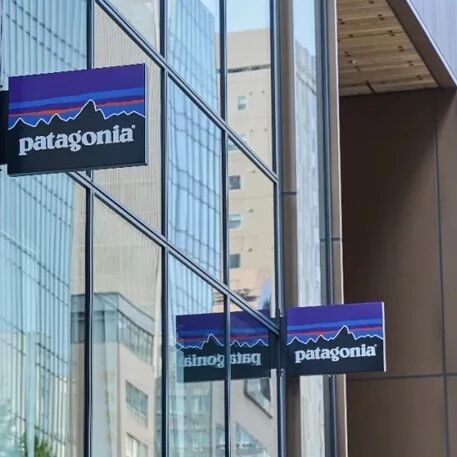
一个鼓励「不买」的品牌,如何年入15亿美元?|New Look 专访
36氪未来消费· 2025-12-19 02:05
Core Viewpoint - The article discusses the possibility of a modern enterprise driven by mission rather than profit, using Patagonia as a case study of a company that integrates environmental values into its core operations while navigating the challenges of profitability and sustainability [5][6]. Group 1: Patagonia's Business Model - Patagonia has a unique business model that challenges the traditional profit-maximization premise by embedding its values into the company's structure, donating 1% of revenue to environmental causes and even transferring 98% of its ownership to a nonprofit organization [5][6]. - The company generates approximately $1.5 billion in annual revenue and has a valuation exceeding $3 billion, while maintaining a commitment to environmental responsibility [6]. - Patagonia's leadership emphasizes that the company does not plan to become a multinational corporation to avoid dilution of decision-making power [6][40]. Group 2: Environmental Challenges - Patagonia faces inherent contradictions in its mission: to protect the planet while continuing to produce goods that inevitably contribute to pollution [6][7]. - The company acknowledges that growth in business operations leads to increased carbon footprints, and it is actively seeking ways to balance business growth with environmental stewardship [19][36]. - Patagonia's product footprint vice president, Matt Dwyer, highlights the difficulty of achieving sustainability goals while maintaining product demand, stating that the best environmental protection may involve reducing consumption [7][36]. Group 3: Product Development and Sustainability - Patagonia conducts lifecycle assessments for its products, evaluating greenhouse gas emissions, water usage, and waste, and is willing to cancel products that do not meet environmental standards [23][24]. - The company focuses on using recycled materials and improving supply chain practices to reduce environmental impact, with significant efforts directed towards sourcing materials like recycled fishing nets and organic cotton [28][30]. - Dwyer emphasizes that the company must consider the entire lifecycle of products, including the manufacturing process, to effectively reduce pollution [25][30]. Group 4: Market Position and Future Outlook - Patagonia's strategy includes a focus on product quality and customer experience, with a commitment to continuous improvement in sustainability practices [55][56]. - The company is cautious about expanding into new markets or product lines, preferring to concentrate on existing sports and outdoor activities to maintain product leadership [52][53]. - Patagonia's approach to environmental responsibility is seen as a complex balance of business needs and ethical considerations, with ongoing discussions about the impact of product offerings on the environment [45][46].
洪汇新材盛汉平:以“双重身份”贯通产融 驱动实业韧性增长
Shang Hai Zheng Quan Bao· 2025-12-18 19:03
Core Viewpoint - The appointment of Sheng Hanping as the chairman of Honghui New Materials reflects the challenges and responsibilities of managing a manufacturing company, emphasizing the need for a comprehensive approach to business operations in the face of market competition and external pressures [2]. Group 1: Company Overview - Honghui New Materials specializes in the research and development of specialty vinyl copolymers, offering a diverse product matrix including vinyl acetate copolymer resins and various water-based series [3]. - The company is one of the few globally to successfully promote the water-based application of specialty vinyl copolymers, which are essential for environmentally friendly coatings [3]. Group 2: Market Trends - The demand for water-based coatings is increasing due to rising environmental and safety production requirements, particularly in sectors like insulation coatings, furniture paints, and automotive interior adhesives [4]. - The market potential for water-based coatings is significant, especially if two-wheeled electric vehicles fully transition to these products [4]. Group 3: Strategic Development - Sheng Hanping's dual role allows for a synergy between financial support and industrial development, enhancing Honghui New Materials' growth potential [5]. - The company is leveraging the resources of its parent organization, Xishan Guotou, which includes various departments that can provide strategic collaboration and financial services [5][6]. Group 4: Future Plans - Honghui New Materials aims to enhance its product development, focusing on high-performance coatings and adhesives for sectors such as electronics, photovoltaic storage, and automotive components [7]. - The company is committed to improving its production capacity and product structure through technological upgrades, targeting low-cost, environmentally friendly, and high-quality products [7][8]. - The strategic guideline of "Three Transformations and One Enhancement" will focus on efficient project management, market-oriented production, and meticulous financial management to strengthen the company's governance and operational efficiency [8].

洪汇新材盛汉平:以“双重身份”贯通产融,驱动实业韧性增长
Shang Hai Zheng Quan Bao· 2025-12-18 18:24
Core Viewpoint - Honghui New Materials has completed foundational work in finance, governance, and strategy, aiming to build a resilient and innovative industry leader with a healthy business structure of "stable fundamentals + strong new engines" [2][8] Group 1: Company Overview - Honghui New Materials focuses on the research and development of specialty vinyl copolymers, offering a diverse product matrix including vinyl acetate copolymer resins and water-based acrylic series [3][4] - The company is one of the few globally to achieve the water-based application of specialty vinyl copolymers, which are essential for environmentally friendly coatings [4] Group 2: Market Position and Growth Potential - The core advantage of water-based coatings lies in their low VOC emissions, aligning with current environmental policies and market trends, leading to increased demand in various sectors [4] - The company has entered the supply chains of leading enterprises in multiple industries, indicating strong market positioning [4] Group 3: Strategic Development - Honghui New Materials is leveraging the resources of Xishan Guotou, a state-owned platform, to enhance its operational capabilities through financial support, technological innovation, and international expansion [5][6] - The company is focusing on product development, targeting high-performance coatings and adhesives for sectors such as electronics, automotive, and renewable energy [7][8] Group 4: Future Directions - The company aims to enhance compliance governance and implement a strategy of "three transformations and one enhancement," focusing on efficient project management, scientific production management, and meticulous financial control [8] - Honghui New Materials is advancing its production capacity with ongoing upgrades to existing facilities, aiming for low-cost, environmentally friendly products [7][8]

晚报 | 12月19日主题前瞻
Xuan Gu Bao· 2025-12-18 14:34
Group 1: Digital Human Industry - The first national standard for virtual digital humans in China has been officially released, providing unified technical requirements and evaluation standards for customer service virtual digital humans [1] - The standard covers a comprehensive technical specification system, including modules for image generation, visual interaction, voice interaction, emotional interaction, image driving, and operation maintenance [1] - The virtual digital human industry is transitioning from a technical exploration phase to a large-scale application phase, with the core market expected to reach 48.06 billion yuan by 2025, driving the overall market size to exceed 640 billion yuan [1] Group 2: Environmental Protection Equipment - The Ministry of Industry and Information Technology and the Ministry of Ecology and Environment have jointly released the "National Encouraged Major Environmental Protection Technology Equipment Catalog (2025 Edition)," which includes 115 major environmental protection technology equipment items [2] - The catalog focuses on high-quality development needs in environmental protection equipment, guiding enterprises to concentrate on breakthroughs in key core technologies [2] - The environmental protection equipment manufacturing industry is expected to reach a production value of 1.5 trillion yuan by 2027, with the penetration rate of intelligent environmental protection equipment technology projected to increase from 60% in 2025 to 85% by 2030 [2] Group 3: 3D Printing Technology - A fully 3D-printed turbofan engine developed by a collaboration of institutions has completed ground testing, marking China's first fully 3D-printed turbofan engine [3] - This engine utilizes additive manufacturing technology to achieve integrated component formation, reducing the number of core components by over 40% and decreasing structural weight by 25% [3] - The design improvements enhance the engine's high-temperature component cooling, operational energy efficiency, and reliability [3] Group 4: Macro and Industry News - The State Council has issued opinions on combating illegal activities related to tobacco, including internet sales of tobacco products and electronic cigarettes [4] - The Ministry of Agriculture and Rural Affairs reports that over 95% of crop varieties are independently bred, with domestic seed sources holding over 80% market share in livestock, aquaculture, and vegetables [4] - The Shenzhen Stock Exchange will review the IPO application of Shenzhen Dapu Microelectronics Co., Ltd., which is the first unprofitable company to be accepted for listing [4]