
生命健康

Search documents
中非创新合作与发展论坛开幕 多项合作签约
Zhong Guo Xin Wen Wang· 2025-11-20 07:50
Group 1 - The 2025 China-Africa Innovation Cooperation and Development Forum opened in Wuhan, attended by representatives from 43 countries and regions, including government officials, diplomats, and representatives from Chinese and African higher education institutions and enterprises [1] - A total of 39 cooperation agreements were signed during the forum, including 10 projects focused on key industries such as artificial intelligence, modern agriculture, life health, and new energy [1] - The forum also saw the establishment of 23 service platforms, including the "Africa Intelligent Construction Promotion Center" [1] Group 2 - Hubei Province has established an innovation cooperation system covering African countries, creating a collaboration network with 150 domestic and African institutions [2] - The China-Africa Innovation Cooperation Center in Hubei has set up six branches in Africa and organized 112 institutions into a technology transfer collaboration network [2] - Hubei's trade with Africa exceeded 30 billion RMB in the first seven months of this year, marking a 42.5% year-on-year increase [2]
孙东:港府本周四公布北都新田科技城创科产业发展规划概念纲要
Zhi Tong Cai Jing· 2025-11-17 06:14
Core Viewpoint - The Hong Kong government will announce the development plan for the Northern Metropolis New Tin Technology City, focusing on innovation and technology industries, with an emphasis on life sciences, robotics and AI, new energy materials, and green technology [1] Group 1: Development Focus - New Tin Technology City will primarily focus on innovation and technology industries, targeting sectors such as life health, robotics and artificial intelligence, new energy materials, and green technology [1] - The development will emphasize product prototyping and small-scale production, tailored to Hong Kong's unique characteristics [1] Group 2: Development Phases - The government plans to develop New Tin Technology City in five phases, based on the timing of land release and industry entry [1] - Three hubs will be established as core areas, with a development model referencing the Science Park approach, including the establishment of a platform company for management [1] Group 3: Strategic Positioning - New Tin Technology City's positioning differs from the Lok Ma Chau Loop and other technology parks in Hong Kong, focusing on advanced manufacturing as the core industry [1] - The aim is to establish a comprehensive innovation and technology industry system in Hong Kong, providing ample land for large-scale production, while the Lok Ma Chau Loop primarily focuses on research and development [1]
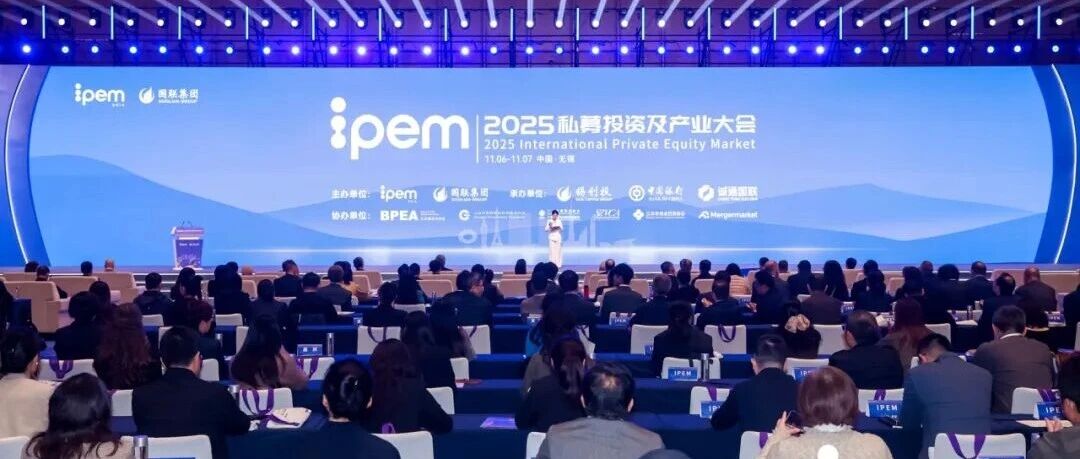
2025IPEM私募投资及产业大会在锡开幕
FOFWEEKLY· 2025-11-08 09:41
Core Insights - The "2025 IPEM Private Equity and Industry Conference" aims to create a high-level platform for cross-border investment and industrial collaboration, gathering global capital and industry resources [1][12] - The conference focuses on three core topics: "Innovation Leadership, Cross-Border Investment, and Supply Chain Advantages," promoting a new global investment landscape through collaboration and innovation [12] Group 1: Conference Overview - The conference is co-hosted by IPEM and Guolian Group, with support from various financial institutions, aiming to bridge capital and industry communication between Wuxi and Europe [1][6] - Approximately 260 representatives from renowned private equity firms and industry leaders worldwide attended the event [3] Group 2: Key Speakers and Their Messages - Jean-Pierre Raffarin, former French Prime Minister, emphasized that funds are the best link for international cooperation and expressed hope for discovering quality projects through the conference [9] - Gilles Bakhsa, founder and chairman of IPEM, highlighted the extensive influence of IPEM in international capital markets and the effective integration of business philosophies between China and foreign entities [8] Group 3: Strategic Goals and Future Directions - Wuxi aims to enhance its international business environment and foster innovation in sectors like AI, healthcare, and green energy, creating a platform for global entrepreneurs and investors [6][11] - The conference seeks to establish a "capital-industry-market" triangular dialogue mechanism covering Asia, Europe, and the Middle East, facilitating precise connections between LPs, GPs, and industry players [12]

人文温度融合科技精度 互联网勾勒浙江乌镇新图景
Zhong Guo Xin Wen Wang· 2025-11-05 08:28
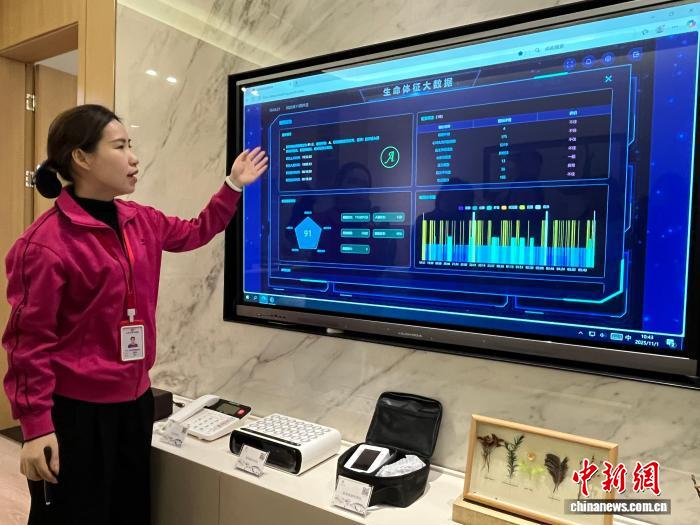
Core Insights - The integration of technology and human warmth in Wuzhen is transforming the living conditions for the elderly, showcasing advancements in smart elderly care through the use of robots and data monitoring systems [1][3]. Group 1: Digital Economy Development - Wuzhen has evolved from having 12 digital economy-related enterprises in 2014 to over 1,000 in 2024, indicating significant growth in the digital sector [4]. - The digital economy's contribution to Wuzhen's industrial output has increased from 15.8% in 2014 to 47.3% in 2024, highlighting the town's shift towards a more digital-centric economy [4]. - The establishment of the "Direct to Wuzhen" industrial park is fostering innovation and entrepreneurship, particularly in the fields of "three intelligences and one network" and life sciences [2]. Group 2: Smart Technology and Infrastructure - Wuzhen is becoming a hub for smart automotive technology, with over 30 companies, including Furuitek, establishing operations in the area, contributing to a growing industrial cluster [7]. - The town features advanced public infrastructure, including autonomous delivery vehicles and smart public transport, supported by 32 testing roads for intelligent connected vehicles [7]. - The "Wuzhen Housekeeper" initiative is enhancing grassroots governance through digital applications, creating a feedback loop for public concerns [7]. Group 3: Future Prospects - The upcoming 2025 World Internet Conference in Wuzhen is expected to further highlight the town's transformation and its role in the digital economy [2]. - The collaboration between AI data services and local development aims to explore new applications for data, indicating a focus on integrating technology with community needs [2].
习近平主席推动构建亚太命运共同体金句
Ren Min Ri Bao· 2025-10-30 22:37
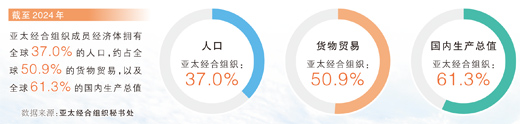
Core Points - The article emphasizes the importance of multilateralism and an open economy in fostering regional economic integration and cooperation within the Asia-Pacific region [3][4][12] - It highlights the need for collaboration to address global challenges such as climate change and economic disparities, advocating for a green and inclusive development model [7][8][12] - The article stresses that economic globalization is irreversible and that countries should avoid protectionism and unilateralism to ensure sustainable growth [5][10] Group 1: Economic Cooperation and Integration - The Asia-Pacific region should actively promote the process of establishing a free trade area, respecting economic laws and leveraging comparative advantages [3][4] - There is a call to dismantle barriers to trade, investment, technology, and services to maintain stable supply chains and promote economic circulation [3][4] - The article asserts that cooperation is essential for development, and non-cooperation poses significant risks [3][4] Group 2: Green and Sustainable Development - The need for a green and low-carbon transformation in development is emphasized, with a focus on achieving harmony between humans and nature [7][8] - The article advocates for collaborative efforts in technology and economic cooperation to facilitate a digital and green transition [8][12] - It highlights the importance of sustainable development that balances economic growth with environmental protection and social equity [9][12] Group 3: Inclusive Development - The article stresses the necessity of inclusive development that benefits all countries and populations, particularly in addressing poverty and inequality [12][14] - It calls for a focus on shared prosperity and ensuring that development outcomes are equitably distributed among different social groups [12][13] - The importance of international cooperation in helping developing countries achieve their development goals is underscored [14]
中国经济不靠奇迹,只靠真本事
Sou Hu Cai Jing· 2025-10-30 04:12
Core Viewpoint - The recent economic data from China's National Bureau of Statistics demonstrates resilience in the face of external pressures and internal challenges, indicating that the economy is not only stable but also progressing steadily [1][3][9] Economic Stability - China's GDP growth rate remains stable within a reasonable range, with manufacturing PMI returning to expansion, and social consumption rebounding [1][4] - The economy is characterized by a strong internal market, supported by 1.4 billion people, and a robust manufacturing sector [6][9] Structural Transformation - Emerging industries are growing at a faster pace than traditional sectors, with significant contributions from equipment manufacturing, digital economy, renewable energy, artificial intelligence, and life sciences [4][6] - The shift from "capacity-driven" to "innovation-driven" growth reflects a deeper structural change in the economy, focusing on quality rather than quantity [4][6] Resilience and Adaptation - Despite external fluctuations in orders and internal consumption challenges, China continues to find ways to buffer against downturns through stable infrastructure investment and a recovering private sector [6][7] - The economy's resilience is attributed to a strong internal circulation potential and the creativity of its workforce [6][9] Global Positioning - China's foreign trade structure is optimizing, with new growth points emerging in regions such as ASEAN, Africa, the Middle East, and Latin America [6][9] - The share of high-tech manufacturing exports is increasing, particularly in sectors like new energy vehicles, batteries, and solar panels [6][9] Employment and Social Stability - Employment levels are increasing despite pressures, with urban unemployment rates remaining stable and limited price fluctuations [7][9] - The focus on food security, social welfare, and disaster prevention systems contributes to the overall stability of the economy [7] Conclusion - The narrative surrounding China's economy is one of strength and perseverance, countering external pessimism with tangible results and a commitment to sustainable growth [9]
为“亚太引擎”注入中国动力
Xin Hua She· 2025-10-28 07:05
Core Viewpoint - The upcoming APEC informal leaders' meeting in South Korea is set against a backdrop of sluggish global economic growth and rising protectionism, highlighting the region's desire for an open world economy and shared prosperity [1] Group 1: Economic Cooperation - China is a steadfast advocate for regional open cooperation, with trade relations with APEC economies becoming increasingly tight, as evidenced by a 2% year-on-year increase in imports and exports to APEC economies, reaching 19.41 trillion yuan, which accounts for 57.8% of China's total trade [2] - China's commitment to high-quality implementation of the Regional Comprehensive Economic Partnership (RCEP) and its progress in joining the Comprehensive and Progressive Agreement for Trans-Pacific Partnership (CPTPP) and the Digital Economy Partnership Agreement (DEPA) demonstrate its determination to build an open APEC economy [2] Group 2: Innovation and Development - The current wave of technological revolution and industrial transformation presents opportunities for digital and green development, which are crucial for shaping new advantages in the Asia-Pacific region [3] - China's advancements in mobile payment technology and renewable energy projects in various countries illustrate its role in enhancing productivity and promoting sustainable development in the region [3] Group 3: Inclusive Growth - The uneven development in the Asia-Pacific region necessitates a focus on inclusive growth, with China advocating for the use of the APEC platform to strengthen economic and technical cooperation, particularly for developing economies and vulnerable groups [4] - China's global development initiative has yielded results in the Asia-Pacific, with specific projects aimed at poverty alleviation and public health cooperation, reflecting its commitment to shared development [4] - The 14th Five-Year Plan outlines China's future development blueprint, emphasizing its potential to provide new opportunities for the Asia-Pacific and global development through sustained modernization and high-level openness [4]

新华时评丨为“亚太引擎”注入中国动力
Xin Hua She· 2025-10-28 01:24
Group 1: Core Perspectives - The upcoming APEC informal leaders' meeting in South Korea is set against a backdrop of sluggish global economic growth and rising protectionism, highlighting the region's desire for an open world economy and shared prosperity [1] - China is committed to promoting regional integration and connectivity, leveraging technological innovation to enhance development momentum, and fostering inclusive growth to inject new energy into the Asia-Pacific economy [1][2] Group 2: Economic Cooperation - Open cooperation is deemed essential for the Asia-Pacific region, with China being a key trade partner and a vital node in regional supply chains, as evidenced by a 2% year-on-year increase in China's trade with APEC economies, reaching 19.41 trillion yuan, which constitutes 57.8% of China's total trade [2] - China's proactive engagement in regional trade agreements, such as the RCEP and the completion of the China-ASEAN Free Trade Area 3.0 negotiations, underscores its commitment to building an open Asia-Pacific economy [2] Group 3: Innovation and Development - The current wave of technological revolution and industrial transformation presents opportunities for digital and green development, with China focusing on enhancing productivity through collaboration in cutting-edge fields like AI and healthcare [3] - Successful examples of Chinese technology facilitating local economies, such as mobile payment systems in Malaysia and renewable energy projects in Thailand, illustrate the shared innovation opportunities and sustainable development goals [3] Group 4: Inclusive Growth - The uneven development in the Asia-Pacific necessitates a focus on inclusive growth, with China advocating for economic and technical cooperation to support developing economies and marginalized groups [4] - China's global development initiative is yielding results in the region through various projects aimed at poverty alleviation and public health cooperation, reflecting its commitment to a win-win cooperation model [4] - The recent approval of China's 15th Five-Year Plan outlines a roadmap for future development, promising to unleash greater market potential and cooperation opportunities for the Asia-Pacific and global development [4]
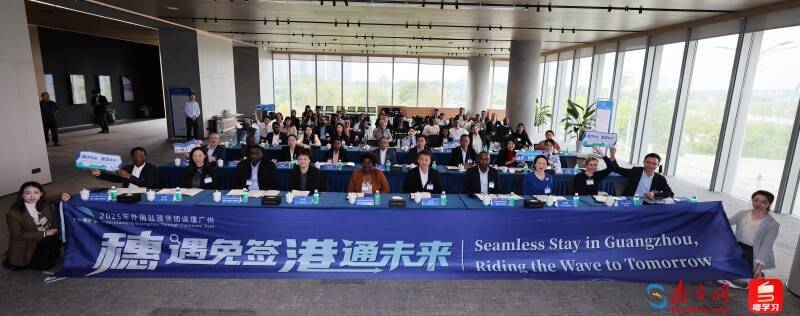
27国外交官“读懂广州”!南沙以便利化政策链接全球
Sou Hu Cai Jing· 2025-10-25 08:46
Core Insights - Guangzhou is enhancing its international appeal through a series of policies aimed at facilitating travel and tourism, including visa-free transit and tax refund measures [1][3][5] Group 1: Policy Promotion - The Guangzhou government, in collaboration with the Nansha District government, hosted an event to promote the cruise and yacht industry, visa-free transit, and tax refund policies, attended by consular officials from 27 countries [1] - A detailed presentation on entry and exit facilitation policies was provided, covering international traveler services and the latest tax refund policies, which include "immediate refund" stores and centralized refund points [3] Group 2: Infrastructure and Development - Nansha is positioned as a key hub connecting the Pearl River Delta with Hong Kong and Macau, with ongoing infrastructure upgrades, such as the new terminal at Baiyun International Airport, expected to boost traveler throughput [5] - The Nansha International Cruise Home Port has established routes to Hong Kong, Japan, Vietnam, and the Philippines, with the "Costa Mediterranea" cruise ship achieving over 100,000 passenger visits and a 75% average occupancy rate [8] Group 3: Innovation and Education - The "Yuexiu iPARK" industrial park is focused on integrating industry, academia, and research, collaborating with Hong Kong University of Science and Technology to promote strategic emerging industries like AI and health [5][6] - The innovative management and interdisciplinary approach of Hong Kong University of Science and Technology (Guangzhou) were highlighted, showcasing a new academic structure that encourages cross-disciplinary collaboration [8] Group 4: Economic Potential - The cruise and yacht industry in Nansha is being actively developed, with plans for Hong Kong-registered yachts to enter Nansha for maintenance by March 2025, laying the groundwork for regular cooperation between the two regions [8] - The local government emphasizes Guangzhou's rich cultural and commercial resources, promoting it as an attractive destination for tourism, work, and living [9]
“十四五”期间 徐汇区交出多个“第一”答卷 区域经济实现历史性跨越
Jie Fang Ri Bao· 2025-10-17 01:25
Core Insights - Xu Hui district has achieved significant economic milestones during the "14th Five-Year Plan," including a projected GDP exceeding 400 billion yuan, ranking first among central urban areas [1] - The district has focused on high-quality development, international cultural metropolis construction, and enhancing urban living standards, resulting in a historic economic leap [1] Economic Development - Xu Hui has emphasized "innovation-driven, application-oriented, and ecological support" as key strategies, fostering collaboration with major universities and research institutions [2] - The district's service industry has seen an average annual growth rate of 10.2%, with the total industrial output value ranking first among central urban areas [2] - The number of foreign-funded enterprises in Xu Hui has reached nearly 3,400, with actual foreign investment expected to grow by 79.2% compared to the previous five-year period [2] Infrastructure and Urban Planning - Xu Hui is developing a series of high-energy functional clusters along the riverside, including media ports and digital valleys, enhancing urban infrastructure and tourism [3] - The district has completed fixed asset investments totaling 226 billion yuan, doubling the amount from the previous five-year period, with an expected investment of 56 billion yuan this year [3] Social Welfare and Community Development - The district has renovated 11.5 million square meters of old housing, benefiting approximately 180,000 residents, and has implemented various community improvement projects [4] - Xu Hui has upgraded its "15-minute community life circle," establishing new schools and healthcare facilities, and is exploring innovative elderly care models [4] - By the end of the "14th Five-Year Plan," social welfare investments in Xu Hui are projected to double compared to the end of the previous plan [4]