
离境退税政策

Search documents
经常账户顺差处于合理均衡区间 跨境双向投融资稳中向好
Jin Rong Shi Bao· 2025-10-09 02:13
Core Insights - The report indicates that China's current account surplus reached $294.1 billion in the first half of 2025, remaining within a reasonable equilibrium range [1] - The total import and export volume of goods increased by 2% year-on-year, while service trade grew by 6%, with a 13% reduction in the service trade deficit [1] - Foreign investment returns improved, with China's outbound investment income and foreign investment income in China increasing by 13% and 7% year-on-year, respectively [1] Economic Performance - The report highlights a balanced pattern between the current account surplus and the non-reserve financial account deficit, indicating a stable international balance of payments [1][2] - By the end of June 2025, China's foreign financial assets and liabilities exceeded $11 trillion and $7.2 trillion, respectively, with a net foreign asset of $3.8 trillion, marking a 16% increase from the end of 2024 [1] Cross-Border Trade and Investment Facilitation - In the first half of 2025, over $700 billion in cross-border trade facilitation services were processed, reflecting an 11% year-on-year increase [3] - The report outlines measures to enhance cross-border investment and financing, including the cancellation of domestic reinvestment registration for foreign-invested enterprises and facilitating cross-border financing for technology enterprises [4] Regional Development Support - The report emphasizes support for the construction of the Shanghai International Financial Center and the implementation of a series of foreign exchange facilitation policies in free trade zones [5] Tourism and Travel Growth - The inbound tourism market has accelerated, with inbound tourist numbers and travel income both increasing significantly; inbound travel income reached $24.3 billion, a 42% year-on-year increase [8] - The report notes that the relaxation of visa policies and the optimization of tax refund policies have contributed to the growth in inbound tourism [10][11]
“China Travel”持续升温 “中国游”“中国购”成为新时尚
Yang Shi Wang· 2025-10-08 16:18
Core Viewpoint - The expansion of visa-free transit policies to 55 countries and the implementation of the "buy and refund" tax refund policy in China have led to an increase in foreign tourists, making "China travel" and "China shopping" a new trend [1] Group 1 - The visa-free transit policy has been extended to 55 countries, facilitating easier travel for foreigners to China [1] - The "buy and refund" tax refund policy is now fully promoted across the country, enhancing the shopping experience for international visitors [1] - The combination of these policies has resulted in a significant rise in the number of foreign tourists visiting China during the holiday season [1]
无人机、手机、潮玩……外国游客的“China Travel”购物清单更新了
Yang Shi Xin Wen Ke Hu Duan· 2025-10-08 04:05
Core Insights - The consumption market in China is thriving during the National Day and Mid-Autumn Festival holidays, with a significant influx of foreign tourists due to policies like visa exemptions and tax refunds [1][6] Group 1: Inbound Tourism Trends - The Black River border checkpoint saw a 38.46% year-on-year increase in inbound travelers during the first six days of the holiday [2] - Russian tourists are particularly drawn to the Black River area, enjoying local culture and cuisine [1][2] - In Chongqing, international tourists are attracted by the city's unique landscape and spicy cuisine, with a European tour group visiting multiple attractions [2][3] Group 2: Shopping Preferences of Foreign Tourists - Foreign tourists are increasingly interested in a variety of Chinese products, moving beyond traditional souvenirs to include trendy items like electronics and toys [4][5] - In Shanghai, shopping districts are actively promoting sales and special events to attract foreign shoppers, with many tourists taking advantage of tax refund services [4][5] Group 3: Tax Refund Policies and Their Impact - The introduction of streamlined tax refund services has made shopping more convenient for foreign tourists, with cities like Shanghai and Shenzhen implementing innovative solutions [5][6] - Guizhou and Jilin provinces have recently launched tax refund policies, enhancing the shopping experience for international visitors and increasing the appeal of local products [6][7]
“中国游”火热 “中国购”升温 中国魅力成为磁吸外国游客的密码
Yang Shi Wang· 2025-10-08 04:04
Core Viewpoint - The recent National Day and Mid-Autumn Festival holiday in China saw a significant increase in foreign tourist arrivals, driven by policies such as visa exemptions and tax refunds, leading to a booming consumption market [1][3][18]. Group 1: Foreign Tourist Arrivals - A trial visa exemption policy for Russian passport holders has led to a surge in foreign tourists, particularly in the border city of Heihe, with a 38.46% year-on-year increase in inbound travelers during the first six days of the holiday [3][5]. - The vibrant local markets, such as the early morning market in Heihe, have attracted many foreign visitors, showcasing a lively atmosphere with over 1,600 stalls [3][5]. Group 2: Tourist Experiences and Attractions - Cities like Chongqing have also seen a rise in international visitors, who are drawn to the unique landscape and local cuisine, such as spicy dishes [6]. - New initiatives, such as an upgraded English version of cultural tourism maps and bilingual volunteer service stations, have been introduced in Chongqing to enhance the experience for foreign tourists [8]. Group 3: Shopping Trends - The shopping habits of foreign tourists are evolving, with a shift from traditional souvenirs to trendy items like electronics and local brands, as seen in places like Shenzhen's Huaqiangbei [15]. - Major shopping districts in cities like Shanghai have launched promotional activities to attract foreign shoppers, resulting in a noticeable presence of tourists carrying shopping bags [13]. Group 4: Tax Refund Policies - The implementation of streamlined tax refund services has improved the shopping experience for foreign tourists, with cities like Shanghai introducing a paperless tax refund process [15][17]. - New tax refund policies are being rolled out in more regions, including Guizhou and Jilin, enhancing the convenience for foreign shoppers and contributing to increased international appeal [19][22][26]. - Guizhou has reported a significant increase in inbound travelers, with a 194% year-on-year growth in exit-entry personnel, supported by the introduction of tax refund services and international flight routes [24].


从“中国游”到“中国购” 外国游客在中国都有哪些“心头好”
Yang Shi Wang· 2025-10-08 00:05
Core Viewpoint - The recent National Day and Mid-Autumn Festival holiday in China saw a significant increase in foreign tourist arrivals, driven by policies such as visa exemptions and tax refunds, leading to a booming consumption market [1][4][17]. Group 1: Foreign Tourist Preferences - Foreign tourists are increasingly drawn to local markets and traditional experiences, as evidenced by a Russian tourist's interest in exploring local culture and cuisine in Heihe [2][4]. - The vibrant atmosphere of local markets, such as the early market in Heihe with over 1,600 stalls, has attracted many foreign visitors, resulting in a 38.46% year-on-year increase in inbound travelers at the Heihe border [4][19]. - In Chongqing, international tourists are enjoying local delicacies like Mapo Tofu and experiencing the city's unique cultural offerings, with a European travel group expressing surprise at the destination's appeal [6][19]. Group 2: Shopping Trends - The shopping habits of foreign tourists are evolving, with a shift from traditional souvenirs to a wider range of products, including trendy items and electronics, as seen in Shenzhen's Huaqiangbei market [11][12]. - Tourists from Belarus and the UK highlighted the appeal of unique Chinese products and the convenience of tax refund services while shopping in Shanghai [9][11]. - The introduction of enhanced tax refund services across various regions, including Shanghai and Guizhou, has made shopping more attractive for foreign visitors, encouraging them to purchase more [14][17]. Group 3: Policy Enhancements - The implementation of a "paperless" tax refund system in Shanghai has streamlined the process for foreign tourists, significantly improving efficiency [14]. - Guizhou and Jilin provinces have recently introduced tax refund policies, expanding the reach of these services and enhancing the shopping experience for international visitors [17][21]. - The combination of tax refunds, visa exemptions, and duty-free shops is creating a comprehensive service model that boosts international tourism in regions like Guizhou [19].

上海前8个月离境退税商品销售超20亿元
Sou Hu Cai Jing· 2025-09-19 11:58
Group 1 - The core viewpoint of the article highlights the significant growth in the number of departure tax refund applications and the total value of goods involved, indicating the ongoing benefits of the departure tax refund policy at Shanghai ports [1][4] - In the first eight months of this year, Shanghai Customs verified 96,600 departure tax refund applications, with a total goods value of 2.07 billion RMB, representing a year-on-year increase of 168% and 83% respectively, surpassing the total for the previous year [1] - At Pudong Airport, a major national entry and exit aviation hub, 86,800 departure tax refund applications were verified, with refunds totaling 203 million RMB, reflecting a year-on-year growth of 180% and 91.9% [1][4] Group 2 - The average refund amount per departure tax refund application for foreign travelers at Shanghai ports has exceeded 2,300 RMB, making shopping in China increasingly attractive for international visitors [4] - Shanghai Customs has established departure tax refund service windows in all three terminals of Pudong International Airport, equipped with five bilingual self-verification machines, enabling verification to be completed in as little as 10 seconds [4][9] - The number of departure tax refund stores in Shanghai has increased from 777 at the end of last year to over 1,530, nearly doubling and achieving full coverage across all 16 districts of the city [9]
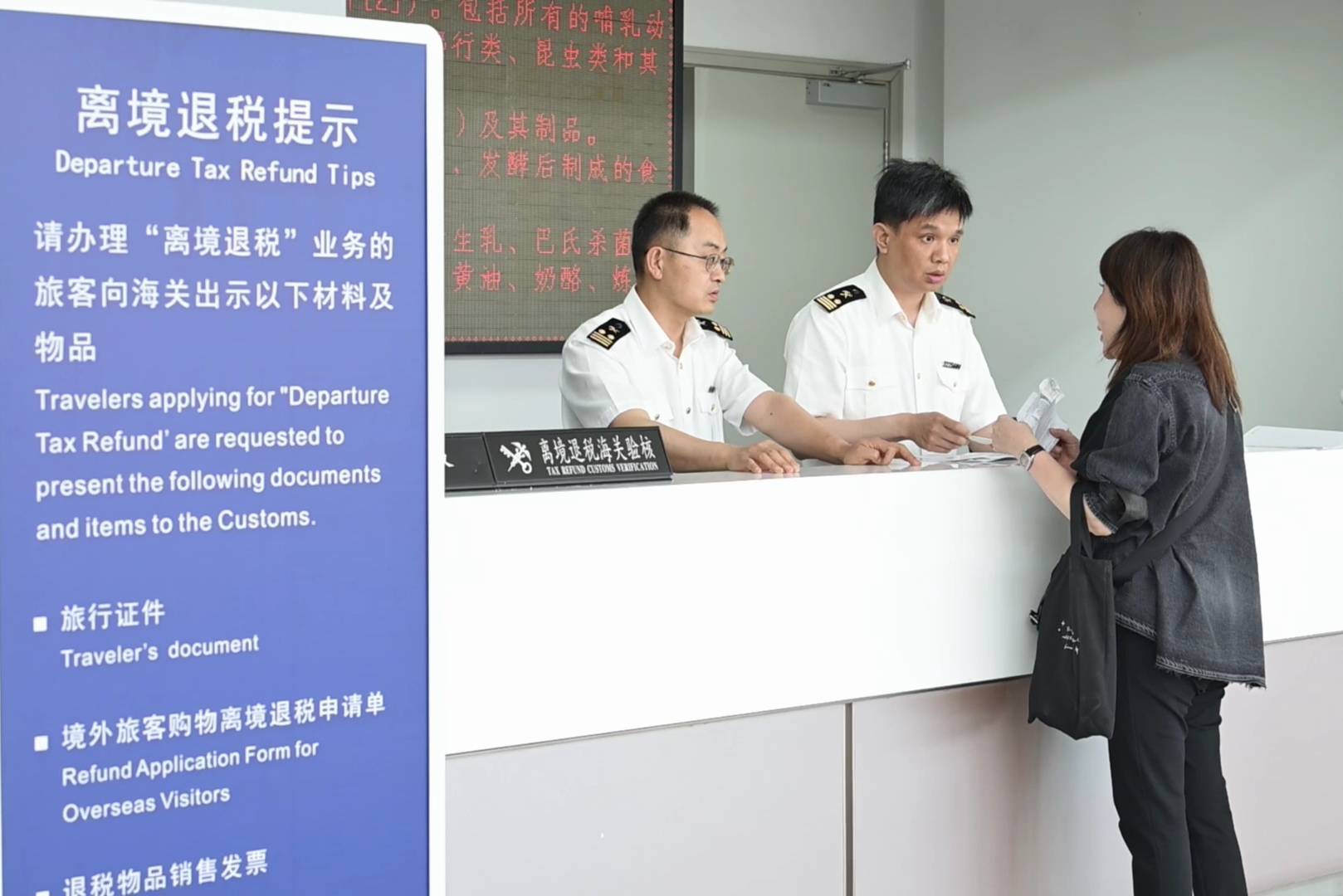
上海前8个月离境退税商品销售超20亿元 平均每票金额超2万元
Xin Hua Cai Jing· 2025-09-19 06:34
Core Insights - Shanghai's customs has seen a significant increase in the number of departure tax refund applications, with 96,600 applications and a total product value of 2.07 billion RMB in the first eight months of the year, representing a growth of 168% and 83% respectively compared to the same period last year, surpassing the total volume of the previous year [1] - At Pudong Airport, there were 86,800 departure tax refund applications and refunds totaling 203 million RMB, marking a year-on-year increase of 180% and 91.9% [1] - The average amount of goods eligible for departure tax refund per traveler has exceeded 20,000 RMB, with an average refund amount of over 2,300 RMB, indicating an increasing attractiveness of shopping for international travelers in Shanghai [1] Group 1 - Shanghai Customs has established departure tax refund service windows in all three terminals of Pudong International Airport, equipped with five bilingual self-service verification machines, allowing for verification in as little as 10 seconds [1] - The Shanghai Hongqiao Airport Customs has enhanced the departure tax refund experience for international travelers by providing multilingual services and improved signage [1] - The convenience of departure tax refunds is also being extended to Shanghai's cruise ports, reflecting ongoing reforms [1] Group 2 - In line with national policies to optimize departure tax refund policies and expand inbound consumption, Shanghai is positioning itself as the "first stop" for inbound tourism in China [2] - Initiatives such as "packaging and coding" and "self-service verification" are being rapidly promoted in Shanghai, with the "Departure Tax Refund Mobile App" gradually enabling full online processing of departure tax refunds [2] - The number of departure tax refund stores in Shanghai has increased from 777 at the end of last year to over 1,530, nearly doubling and achieving full coverage across all 16 districts of the city [2]
5月至8月海南口岸退税商品金额超1900万元
Sou Hu Cai Jing· 2025-09-18 00:49
Core Insights - The implementation of the new departure tax refund policy has significantly increased the volume and value of tax refund claims from May to August 2023, with a notable growth in both metrics compared to the first four months of the year [1] - The policy aims to stimulate inbound tourism consumption and related industry development, reflecting a strategic move by the government to enhance consumer spending [1] Group 1: Departure Tax Refund Statistics - From May to August 2023, Haikou Customs verified a total of 1,274 departure tax refund items, with a total refund amount of 19.085 million yuan, representing increases of 86.5% and 232.1% respectively compared to January to April [1] - In August 2023 alone, Haikou Customs verified 533 departure tax refund items, marking a month-on-month increase of 92.4% and a year-on-year increase of 67.6%, achieving the largest growth rate of the year [1] - The total refund amount in August reached 7.875 million yuan, which is a 10.4-fold increase compared to the same month last year [1] Group 2: Policy Changes and Impact - The Ministry of Commerce and other departments issued a notice to optimize the departure tax refund policy, lowering the minimum refund threshold from 500 yuan to 200 yuan and easing the conditions for tax refund store registration [1] - The number of registered departure tax refund stores in Sanya increased dramatically from 11 to 60, leading to a wider variety of refundable goods [1] - Haikou Customs has enhanced its promotional efforts and streamlined the verification process, establishing a 24-hour dedicated tax refund service to improve customer experience and efficiency [2]
文旅部:落实好离境退税政策,增加非遗产品、文创产品、消费类电子产品供给
Bei Jing Shang Bao· 2025-09-17 09:48
Core Viewpoint - The Ministry of Culture and Tourism emphasizes that culture and tourism have become essential needs for people's quality of life and are increasingly becoming dominant consumption sectors [1] Group 1: Future Focus Areas - The Ministry will focus on four key areas: product updates to increase new supply, innovative activities to empower new scenarios, revitalizing business formats to meet new demands, and enhancing services to expand inbound tourism [1] Group 2: Inbound Tourism Initiatives - The Ministry aims to improve the convenience of inbound tourism services and promote the national tourism image through initiatives like "Hello! China" and "Happy Spring Festival" to enhance the overseas recognition and appeal of quality cultural and tourism resources [1] - There will be an effort to enrich inbound tourism products by adding unique travel routes suitable for inbound tourists [1] - The implementation of departure tax refund policies will be prioritized, including setting up tax refund shops in areas with high concentrations of foreign visitors and increasing the supply of intangible cultural heritage products, cultural creative products, and consumer electronics [1] - The promotion of "buy now, refund later" measures is intended to attract more foreign tourists to travel and shop in China, with recent guidance for travel platforms to launch information on tax refund shop locations, starting with Shanghai [1]
政策优化扩入境消费 海南口岸离境退税大幅增长
Zhong Guo Xin Wen Wang· 2025-09-16 13:17
Core Insights - The implementation of the new departure tax refund policy has significantly boosted the volume and value of tax refund claims at Haikou Customs, with a notable increase in both the number of claims and the total amount refunded compared to earlier months [1][2] Group 1: Policy Impact - From May to August 2023, Haikou Customs verified 1,274 departure tax refund claims, amounting to 19.085 million yuan, representing increases of 86.5% and 232.1% respectively compared to the first four months of the year [1] - In August alone, there were 533 verified claims, marking a month-on-month increase of 92.4% and a year-on-year increase of 67.6%, achieving the largest growth rate of the year [1] - The departure tax refund policy allows international travelers to receive VAT refunds on goods purchased at designated stores upon leaving the country, which is crucial for promoting inbound tourism and related industries [1] Group 2: Policy Optimization - The Ministry of Commerce and other departments have optimized the departure tax refund policy by lowering the minimum purchase amount for refunds from 500 yuan to 200 yuan and easing the registration requirements for refund stores [1] - The number of registered departure tax refund stores in Sanya increased from 11 to 60, and the variety of refundable goods has expanded to include clothing, bags, headphones, watches, and cameras [1] Group 3: Service Enhancement - Haikou Customs has enhanced promotional efforts for the departure tax refund service by setting up multilingual signage and electronic displays at the port to help travelers understand the process [2] - The customs has optimized the verification process by establishing a 24-hour dedicated tax refund service, allowing for quick verification of goods within 2 minutes [2] - Future plans include strengthening inter-departmental collaboration and further optimizing the verification process to enhance the effectiveness of the departure tax refund policy [2]