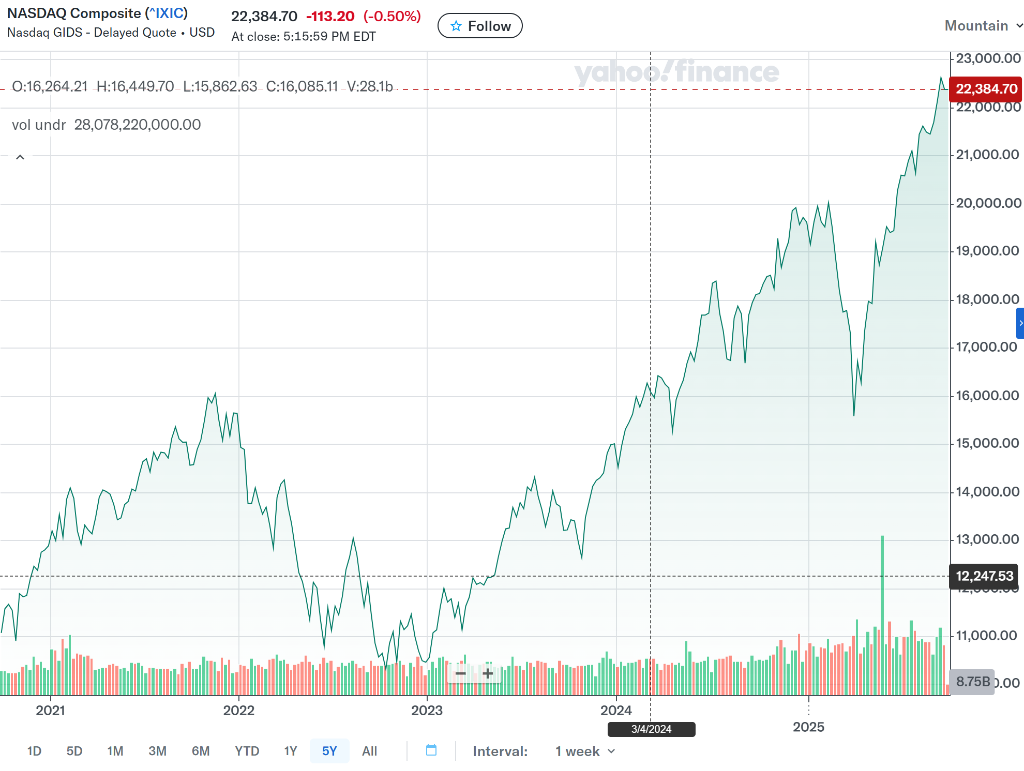
科技泡沫

Search documents
AI热潮下的资本博弈:从美股三季报到科技泡沫的警钟,博弈的历史总在重演!
Sou Hu Cai Jing· 2025-10-29 07:37
Group 1 - The global capital markets experienced significant volatility, particularly in US stocks and cryptocurrencies, marking the beginning of the Q3 earnings season [1] - The performance of technology giants, central to the current "AI narrative," will not only affect their valuations but also significantly influence global capital flows, especially in China's tech sector [1] - The Nasdaq Golden Dragon China Index has rebounded over 25% since its low in 2023, with notable performances from Chinese companies like Xpeng Motors, JD.com, Baidu, and Pinduoduo, driven by AI technology breakthroughs and record high QDII fund sizes [3] Group 2 - Concerns arise regarding whether the high valuations of many AI-related companies are justified, as they are based on optimistic future profit expectations while the commercialization of technology remains in its early stages [4] - External risks persist, particularly for Chinese concept stocks facing audit scrutiny under the US Foreign Companies Accountability Act, which could lead to delisting risks for some companies [4] - The potential impact of a shift in the Federal Reserve's monetary policy is significant, as tightening liquidity could adversely affect high-valuation tech stocks, reminiscent of the 2000 internet bubble burst [4] Group 3 - Chinese investors should be cautious of the "buying the bag" risk, as past incidents like the Luckin Coffee fraud led to massive market losses for investors [6] - In the current AI frenzy, some institutions may inflate stock prices through concept hype, leaving retail investors to bear the losses once they exit [6] - Ordinary investors are advised to remain calm and focus on companies' actual profitability, technological advancements, and governance structures rather than speculative trading [6]


诺奖得主:美国经济处于反常状态 关键领域发展受阻
Zhong Guo Xin Wen Wang· 2025-10-25 00:36
Group 1 - The core viewpoint is that the U.S. economy is in an abnormal state, characterized by significant uncertainty due to erratic policies, which have severely hindered development in key areas such as research and education [1] - The current economic situation shows severe divergence, with the AI sector thriving while other sectors stagnate, indicating a "K-shaped" recovery where low- and middle-income consumers are facing difficulties [1][2] - There is a growing concern among economists about a potential recession, drawing parallels to the tech bubble of the 1990s, as signs of distress emerge in the private credit market [2] Group 2 - The Trump administration's policies have created substantial uncertainty, discouraging business investments, particularly through cuts in support for scientific research and education [2] - The aggressive stance of the U.S. government on renewable energy is seen as a factor contributing to the country's lag in this sector, with significant tax incentives for clean energy projects being removed [2] - Major renewable energy projects have been canceled, which could have provided power to millions of households, indicating a detrimental impact on the clean energy development landscape [2]
黄金:近月涨15%回调不足2%成投资避风港
Sou Hu Cai Jing· 2025-10-16 06:55
Core Viewpoint - Gold is experiencing one of the most robust bull markets in recent years, with a significant increase in both institutional and retail demand [1] Group 1: Market Performance - Over the past month, gold prices have risen approximately 15%, with a pullback of less than 2% [1] - The strong demand for gold is attributed to growing concerns over the high valuations in the U.S. stock market and discussions surrounding a potential tech bubble [1] Group 2: Investment Sentiment - Gold is becoming a core component of diversified investment portfolios as investors seek a safe haven amid market anxieties [1] - Although concerns regarding the market may be exaggerated, the perception of gold as a refuge for anxious investors is providing support for its demand [1]
美银最新调查:超半数基金经理高呼“AI股已泡沫化”
智通财经网· 2025-10-14 12:37
Group 1 - The proportion of global fund managers who believe that the AI sector is in a bubble has reached a historical high, with approximately 54% of respondents indicating that technology stocks are currently overvalued [1] - The Nasdaq 100 index has increased by 18% year-to-date, with a forward P/E ratio rising to nearly 28 times, surpassing the 10-year average of 23 times [1] - Concerns about overvaluation have intensified, with worries about global stock market valuations also peaking in the latest survey [1] Group 2 - Fund managers' stock allocation reflects a degree of market optimism, with the proportion of funds invested in U.S. stocks reaching an eight-month high [3] - Concerns about an economic recession have decreased to the lowest level since early 2022, despite a decline in cash holdings [3] - The "AI bubble" is viewed as the largest tail risk in the current market, followed by inflation resurgence, concerns over the independence of the Federal Reserve, and risks of dollar depreciation [3]

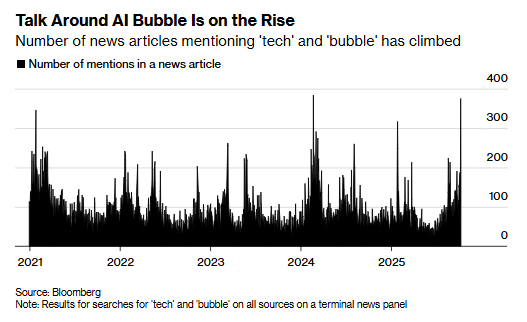
英伟达对OpenAI千亿美元投资引发“循环交易”质疑
财富FORTUNE· 2025-10-12 13:07
Core Viewpoint - Nvidia's recent $100 billion investment in OpenAI raises concerns about a potential financial bubble in the AI sector, as the valuation of companies in this field may not align with their actual revenue and profit calculations [2][9] Investment Network Complexity - Nvidia has established a complex investment network, notably with OpenAI and Coreweave, where investments lead to mutual benefits, creating a cycle of funding and procurement that obscures the true flow of capital [3][5] - Nvidia's investments allow companies like OpenAI and Coreweave to secure financing at rates comparable to established firms like Microsoft, significantly lower than what startups typically face [5][8] Financial Transactions and Implications - Nvidia has committed to purchasing cloud computing resources from Coreweave, with total expenditures reaching approximately $75 billion for GPUs, indicating a strategy where investments are recouped through sales [6][8] - The company has also engaged in similar agreements with other cloud firms, further entrenching its position in the AI infrastructure market [6][8] Concerns Over Valuation Bubble - Analysts express concerns that Nvidia's financing practices resemble those seen during past tech bubbles, where companies provided loans to customers, leading to inflated valuations and eventual market corrections [9][10] - The rental agreements with OpenAI allow the latter to avoid high depreciation costs, placing the burden on Nvidia, which could lead to inventory issues if demand does not meet expectations [9][10] Historical Parallels - The current situation draws parallels to the dot-com bubble, where excessive financing led to unsustainable growth and significant market corrections, raising alarms about Nvidia's current investment strategies [10][11]


美股创新高细数背后因素 投资者对未来乐观仍存避险情绪
Xin Lang Cai Jing· 2025-10-08 19:16
Group 1 - The U.S. stock market showed strong performance with the Nasdaq and S&P 500 indices reaching new all-time highs despite uncertainties, including the Federal Reserve's mixed signals on interest rate cuts [1] - Nvidia's stock rose approximately 2% following positive comments from CEO Jensen Huang regarding chip demand and support for Elon Musk's AI startup xAI [1] - The market remains optimistic despite ongoing government shutdown concerns, with investors potentially seeking safe-haven assets like gold and Bitcoin [2] Group 2 - Concerns about a tech bubble are countered by investment strategist Michael Brown, who argues that valuations of tech giants remain reasonable and have ample room for growth [3] - The trend of investors turning to alternative assets like gold and Bitcoin indicates ongoing attention to political and economic uncertainties [3] - AI-related investments continue to support tech stocks, even as the market navigates between peaks and corrections [3]
深夜,暴涨!一则重磅消息,引爆!
券商中国· 2025-10-08 16:13
Group 1: Technology Sector Performance - The U.S. technology stocks experienced a strong rebound, with the Philadelphia Semiconductor Index rising over 1.5% and major companies like AMD and Micron Technology increasing by more than 4% [2][3] - Nvidia's CEO Jensen Huang highlighted high demand for the Blackwell chip, indicating positive market sentiment [4][5] - Dell Technologies surged over 10% after raising its sales and profit growth forecasts for the next two years, driven by AI product demand [3] Group 2: Nvidia's Investments and AI Development - Nvidia confirmed a $2 billion investment in Elon Musk's AI startup xAI, which recently raised $20 billion in funding [4][6] - Huang expressed regret for not investing earlier in OpenAI, noting its exponential revenue growth and the strategic partnership between Nvidia and OpenAI [7] - Nvidia is transitioning from a chip manufacturer to a computing platform company, aiming to build an AI ecosystem and differentiate itself from competitors like AMD [7] Group 3: Rare Earth Sector Developments - Critical Metals saw a significant stock surge, rising over 23% after announcing a strategic supply agreement with REalloys Inc. to supply 15% of its rare earth concentrate from the Tanbreez project [2][9] - The U.S. government is providing unprecedented support to expand domestic rare earth production, aiming for complete independence in the supply chain [11] - The partnership with REalloys Inc. follows a similar agreement with Ucore Rare Metals, bringing the total committed production to 25% for U.S. customers [9]

策略师:对美股科技泡沫的担忧过度了
Xin Lang Cai Jing· 2025-10-07 11:39
Core Viewpoint - Concerns regarding a technology bubble are considered excessive, with the valuations of the seven major tech stocks in the S&P 500 being in line with their average over the past five years [1] Group 1: Market Performance - The seven major tech stocks have delivered a total return exceeding 300% over the past five years [1] - There is still potential for further price increases in the coming months, supported by strong earnings growth and resilient economic fundamentals [1] Group 2: Economic Environment - The current monetary policy environment is becoming increasingly accommodative, which is expected to support continued market upward trends [1] - The overall market is likely to follow the path of least resistance, indicating a bullish outlook [1]
A股牛市机会还在?鲍威尔警告后美股调整,美联储还要降息?
Sou Hu Cai Jing· 2025-09-30 01:15
Core Viewpoint - The U.S. stock market is experiencing volatility due to concerns over high valuations and potential risks associated with Federal Reserve policies, which could impact both U.S. and A-share markets [1][3][15] Group 1: U.S. Stock Market Valuation Concerns - The S&P 500 index's expected price-to-earnings ratio has reached 22 times, nearing the 25 times seen during the dot-com bubble [3] - Despite strong corporate profits supporting the market, there are fears of a potential market collapse due to overreactions to Federal Reserve monetary policies [3][4] - The S&P 500 index is projected to rise to 7,700 points by the end of 2026, but risks remain prevalent [3] Group 2: Federal Reserve Policy Impact - In August 2025, the Federal Reserve's policy shifted significantly, leading to expectations of interest rate cuts, which pressured the dollar index and lowered U.S. Treasury yields [6] - The U.S. economy is facing structural challenges, including a growing fiscal deficit and persistent inflationary pressures, prompting the Fed's policy changes [6] - The shift in global capital flows is evident, with funds moving from the U.S. to European and Asian markets, benefiting A-share markets due to their valuation advantages [6] Group 3: Global Market Interconnection - The U.S. dollar's status as a global reserve currency provides substantial external liquidity to the U.S. stock market [8] - The Federal Reserve's monetary policy has a significant "spillover effect," influencing financial markets worldwide [9] - The technological innovations led by U.S. companies like NVIDIA and Broadcom are reshaping global economic structures and political orders [10][11] Group 4: Future Outlook for U.S. Stocks - As of September 25, 2025, the S&P 500 index has risen approximately 22% year-to-date, while the Nasdaq index has increased about 16% [13] - The S&P 500's price-to-earnings ratio stands at 29.3 times, and the Nasdaq's at 42.8 times, indicating high valuations that may obscure market clarity [13] - Wall Street firms anticipate at least one more interest rate cut by the end of the year, which could bolster market performance [13] Group 5: Conclusion - The U.S. stock market's high valuations, Federal Reserve policies, and global market interconnections create a complex and dynamic environment [15] - While strong technology stocks and expectations of rate cuts provide support, inherent risks necessitate vigilance and careful investment decisions [15]
高盛宏观交易员谈美股:上周可能是反弹的顶部,本周将出现微弱的逆转迹象
Hua Er Jie Jian Wen· 2025-09-26 08:34
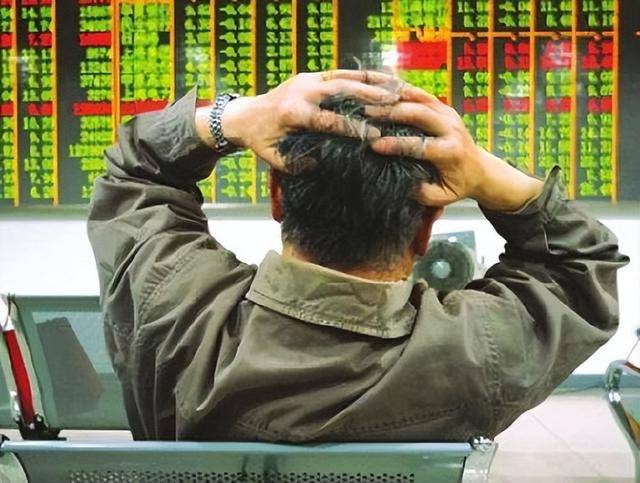
Core Viewpoint - The recent rebound in the US stock market may have reached its peak, with signs of a potential market correction emerging this week [1][7]. Group 1: Market Performance - The Nasdaq index has experienced a continuous rise, with 11 out of the last 13 trading days showing gains, indicating a strong performance in the tech sector [2][4]. - Non-profitable tech stocks surged by 8%, while popular short-sell stocks rose by 6.7%, showcasing a significant rally in speculative investments [2][4]. Group 2: Investor Sentiment and Positioning - Despite the apparent market exuberance, fundamental investors have shown negative alpha for the first time in six weeks, indicating a disconnect between market indices and actual investment performance [4][9]. - There is a notable contradiction where investors hold bullish positions while simultaneously expressing concerns about the market's sustainability [5][9]. Group 3: Valuation Concerns - The current price-to-earnings (PE) ratio for the top five companies stands at 28, which is lower than historical peaks of 40 in 2021 and 50 in 2000, suggesting that while valuations are high, they are not at extreme levels [4][7]. - Signs of "bubble-like" conditions are emerging in the primary market, with some companies being valued at over 100 times their annual recurring revenue [4][5]. Group 4: Market Cycle Analysis - The market is at a crossroads, questioning whether it is at the end of a long expansion cycle or at the beginning of a new one characterized by low interest rates and high corporate activity [7][9]. - The transition from market euphoria to a more cautious stance may be underway, with last week potentially marking the peak of the current rebound [7][9].