精细化运营

Search documents
万辰集团:精细运营与供应链提效有望驱动业绩持续释放-20260128
HTSC· 2026-01-28 02:30
Investment Rating - The investment rating for the company is maintained as "Buy" with a target price of RMB 276.00 [1] Core Views - The report highlights that fine operations and supply chain efficiency improvements are expected to drive performance, with a focus on expanding product categories and enhancing store operations [6][7] - The company is projected to maintain a rapid store opening pace, with ongoing expansion in non-food categories and proprietary brands, which will support same-store performance [6][8] - The gross margin is expected to continue improving due to collaboration with upstream suppliers to enhance supply chain efficiency [9] Financial Projections - Revenue is forecasted to grow significantly, with expected figures of RMB 32,329 million in 2024, RMB 51,941 million in 2025, RMB 62,330 million in 2026, and RMB 72,305 million in 2027, reflecting growth rates of 247.86%, 60.66%, 20.00%, and 16.00% respectively [5] - Net profit attributable to the parent company is projected to reach RMB 293.52 million in 2024, RMB 1,381 million in 2025, RMB 2,054 million in 2026, and RMB 2,520 million in 2027, with growth rates of 453.95%, 370.61%, 48.67%, and 22.71% respectively [5] - The report anticipates a steady increase in gross margin, with figures of 11.0%, 11.8%, and 12.1% for the first three quarters of 2025 [9] Operational Insights - The company has deepened its membership operations, with 150 million members and an increase in purchase frequency among active members [7] - The integration of instant retail services has expanded the customer base, with over 10,000 stores participating in this initiative [7] - Continuous optimization of supply chain operations is expected to enhance cost advantages and improve operational efficiency [9] Valuation Adjustments - The net profit forecasts for 2025-2027 have been adjusted upwards by 12.1%, 23.4%, and 12.6% to RMB 1,381 million, RMB 2,054 million, and RMB 2,520 million respectively [10] - The target price is set at RMB 276, based on a 25x PE ratio for 2026, reflecting the company's supply chain efficiency and operational improvements [10]
万辰集团(300972):精细运营与供应链提效有望驱动业绩持续释放
HTSC· 2026-01-28 01:39
Investment Rating - The investment rating for the company is maintained as "Buy" with a target price of RMB 276.00 [1] Core Views - The report indicates that fine operations and supply chain efficiency improvements are expected to drive performance, with a focus on expanding product categories and enhancing store operations [6][7] - The company is projected to maintain a rapid pace of store openings, with ongoing expansion in non-food categories and proprietary brands, which will support same-store performance [6][8] - The gross margin is expected to continue improving due to collaboration with upstream suppliers to enhance supply chain efficiency [9] Financial Projections - Revenue projections for the company are as follows: - 2024: RMB 32,329 million - 2025: RMB 51,941 million (up 60.66%) - 2026: RMB 62,330 million (up 20.00%) - 2027: RMB 72,305 million (up 16.00%) [5] - Net profit attributable to the parent company is forecasted to be: - 2024: RMB 293.52 million - 2025: RMB 1,381 million (up 370.61%) - 2026: RMB 2,054 million (up 48.67%) - 2027: RMB 2,520 million (up 22.71%) [5] - The report also highlights an increase in EPS from RMB 1.55 in 2024 to RMB 13.34 in 2027 [5] Operational Insights - The company has deepened its membership operations, with 150 million members and an increase in purchase frequency among active members [7] - The integration of instant retail services has expanded the customer base within a 3-5 km radius of stores, contributing to significant sales growth [7] - Continuous optimization of supply chain and operational efficiency is expected to enhance gross margin and overall profitability [9] Valuation Adjustments - The net profit forecasts for 2025-2027 have been adjusted upwards by 12.1%, 23.4%, and 12.6% respectively, reflecting improved operational efficiency and profitability [10] - The target price is set at RMB 276, based on a 25x PE ratio for 2026, indicating a premium valuation due to the company's competitive advantages [10]
预亏损21亿元,永辉超市要“挂科”了?
Sou Hu Cai Jing· 2026-01-28 01:16
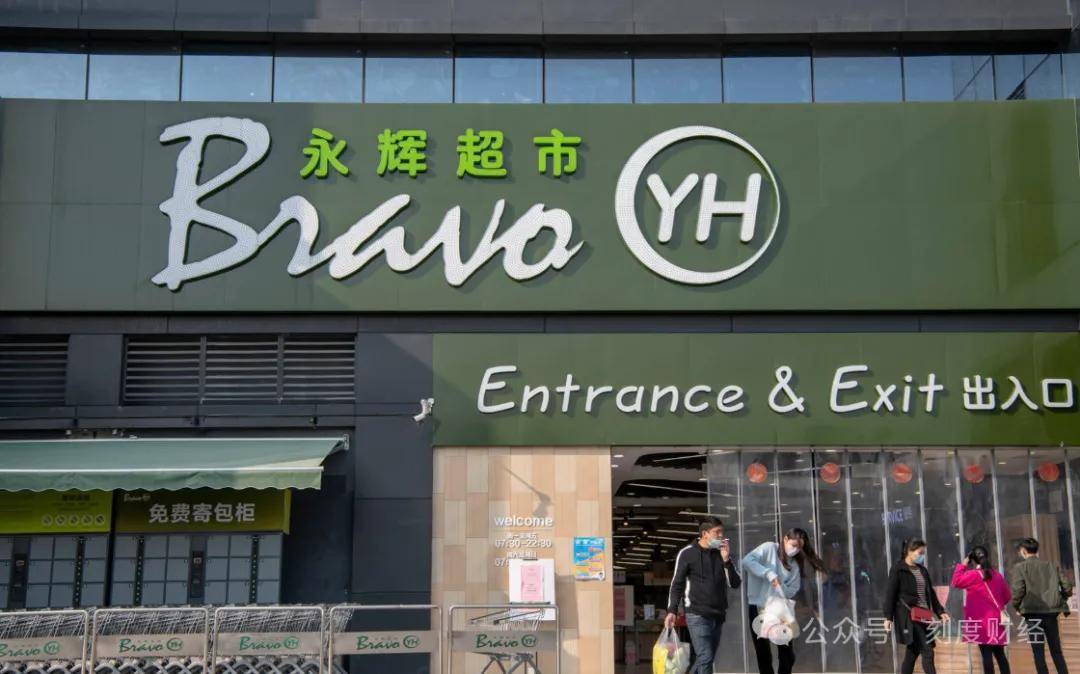
Core Viewpoint - Yonghui Supermarket is projected to incur a net loss of 2.14 billion yuan in 2025, with a net loss of 2.94 billion yuan after deducting non-recurring items, raising concerns about its operational strategy and sustainability in the retail sector [2][4]. Group 1: Financial Performance and Store Closures - In 2025, Yonghui closed 381 stores, averaging one closure per day, resulting in a loss of 1.174 billion yuan from store adjustments and closures, accumulating over 11.6 billion yuan in losses over the past five years [4][12]. - The company reported a non-recurring net loss of 2.94 billion yuan, which has become a significant burden for its operations [5][12]. - Despite the challenges, 31 reformed stores completed in 2024 saw sales increase to 4.662 billion yuan in 2025, a 71% year-on-year growth, with profits rising by 112% [25][29]. Group 2: Strategic Challenges and Market Position - Yonghui's traditional expansion strategy has led to a decline in store profitability, with many locations operating at a loss due to high operational costs and ineffective supply chain management [11][12]. - The shift in consumer preferences towards convenience and quality has diminished the market share of traditional supermarkets, including Yonghui, which struggles to adapt to these changes [10][13]. - The company's attempts to emulate the successful model of "Fat Donglai" have faced difficulties due to structural differences, including its status as a publicly listed company, which complicates the implementation of flexible management practices [21][22]. Group 3: Competitive Landscape and Future Outlook - The retail landscape is evolving, with instant retail becoming mainstream, pushing traditional supermarkets to either adapt or face obsolescence [29]. - Yonghui's transformation is seen as a broader industry challenge, emphasizing the need for a comprehensive restructuring of strategy, supply chain, and organizational systems to regain consumer trust [29]. - The company faces skepticism from investors due to ongoing losses and management's stock sell-off, raising questions about its ability to stabilize and grow in the future [26][29].


广州若羽臣科技股份有限公司 2025年年度业绩预告
Zhong Guo Zheng Quan Bao - Zhong Zheng Wang· 2026-01-27 23:45
Performance Forecast - The company expects a positive net profit for the year 2025, with an anticipated increase of over 50% compared to the previous year [1] Reasons for Performance Change - The self-owned brand business has experienced rapid revenue growth, with the launch of a strategic product, fragrance laundry detergent, leading to explosive sales [2] - The brand management business has achieved significant growth through deep collaboration with multiple brands, reinforcing the company's leading position in full-chain and full-channel digital services [2] - The company is implementing a refined operational strategy, focusing on supply chain management, marketing, and operational management to optimize costs and improve resource utilization, resulting in a substantial increase in overall operational efficiency [2]

若羽臣:预计2025年净利润1.76亿元至2亿元
Zhong Zheng Wang· 2026-01-27 13:20
Core Viewpoint - The company, Ruoyuchen, forecasts a net profit of 176 million to 200 million yuan for 2025, representing a year-on-year growth of 66.61% to 89.33% [1] Group 1: Financial Performance - The expected basic earnings per share for 2025 is projected to be between 0.57 yuan and 0.64 yuan [1] - The company anticipates significant growth in net profit, indicating strong financial health and operational efficiency [1] Group 2: Business Strategy - In the proprietary brand business, the company has launched a strategic product, a scented laundry detergent, which has contributed to sales growth [1] - The brand management business has strengthened through deep collaborations with multiple brands, enhancing the company's advantages in full-link and full-channel digital services [1] Group 3: Operational Efficiency - The company is implementing a refined operational strategy, focusing on supply chain management, marketing, and operational management to optimize costs [1] - Strict control over expenses and budgets, along with continuous optimization of business processes, has effectively reduced operational costs and improved resource utilization efficiency [1]
若羽臣发布2025年年度业绩预告 盈利能力持续提升
Zhi Tong Cai Jing· 2026-01-27 09:05
智通财经APP获悉,1月27日晚间,若羽臣(003010.SZ)发布2025年年度业绩预告。公告显示,公司预计 2025年实现归属于上市公司股东的净利润1.76亿元至2亿元,同比增长66.61%至89.33%;基本每股收益 预计为0.57元至0.64元,公司盈利能力呈现稳步提升态势。 内部管理方面,2025年,若羽臣持续推进精细化运营战略,从供应链管理、市场营销,运营管理等多个 维度着手,深挖成本优化空间。通过对费用和预算的严格把控,以及对业务流程的持续优化,公司有效 降低了运营成本,提升了资源利用效率,整体经营效益得到了大幅提升。 品牌管理业务方面,与多品牌的深度合作,进一步巩固了若羽臣在全链路、全渠道数字化服务领域的领 先地位,实现业绩高增。 自有品牌业务方面,绽家在保持多款单品在细分领域的领先优势基础上推出战略单品香氛洗衣液,上市 后实现销售爆发;斐萃在产品端、渠道端持续发力,推动收入高速增长。 若羽臣在自有品牌及品牌管理业务上的持续发力,以及内部管理的优化,使得公司2025年年度业绩预期 向好,展现了其在新消费品牌领域的综合实力与成长韧性。 ...
若羽臣:预计2025年归属于上市公司股东的净利润17600万~20000万元
Sou Hu Cai Jing· 2026-01-27 08:47
Group 1 - The company expects a net profit attributable to shareholders of 176 million to 200 million yuan for 2025, representing a year-on-year growth of 66.61% to 89.33%, with basic earnings per share projected at 0.57 to 0.64 yuan [1] - The main driver of the performance change is the rapid growth in self-owned brand business, with the launch of a strategic product, fragrance laundry detergent, leading to explosive sales [1] - The brand management business has achieved significant growth through deep cooperation with multiple brands, further consolidating the company's leading position in the full-link, full-channel digital service sector [1] Group 2 - The company is continuously promoting a refined operational strategy in 2025, focusing on supply chain management, marketing, and operational management to explore cost optimization [1] - The company has maintained leading advantages in several product segments, contributing to the overall revenue growth [1] - The company’s revenue growth is also supported by ongoing efforts in product and channel development [1]
奶酪第一股换帅!“少壮派”职业经理人接班
Guo Ji Jin Rong Bao· 2026-01-27 04:20
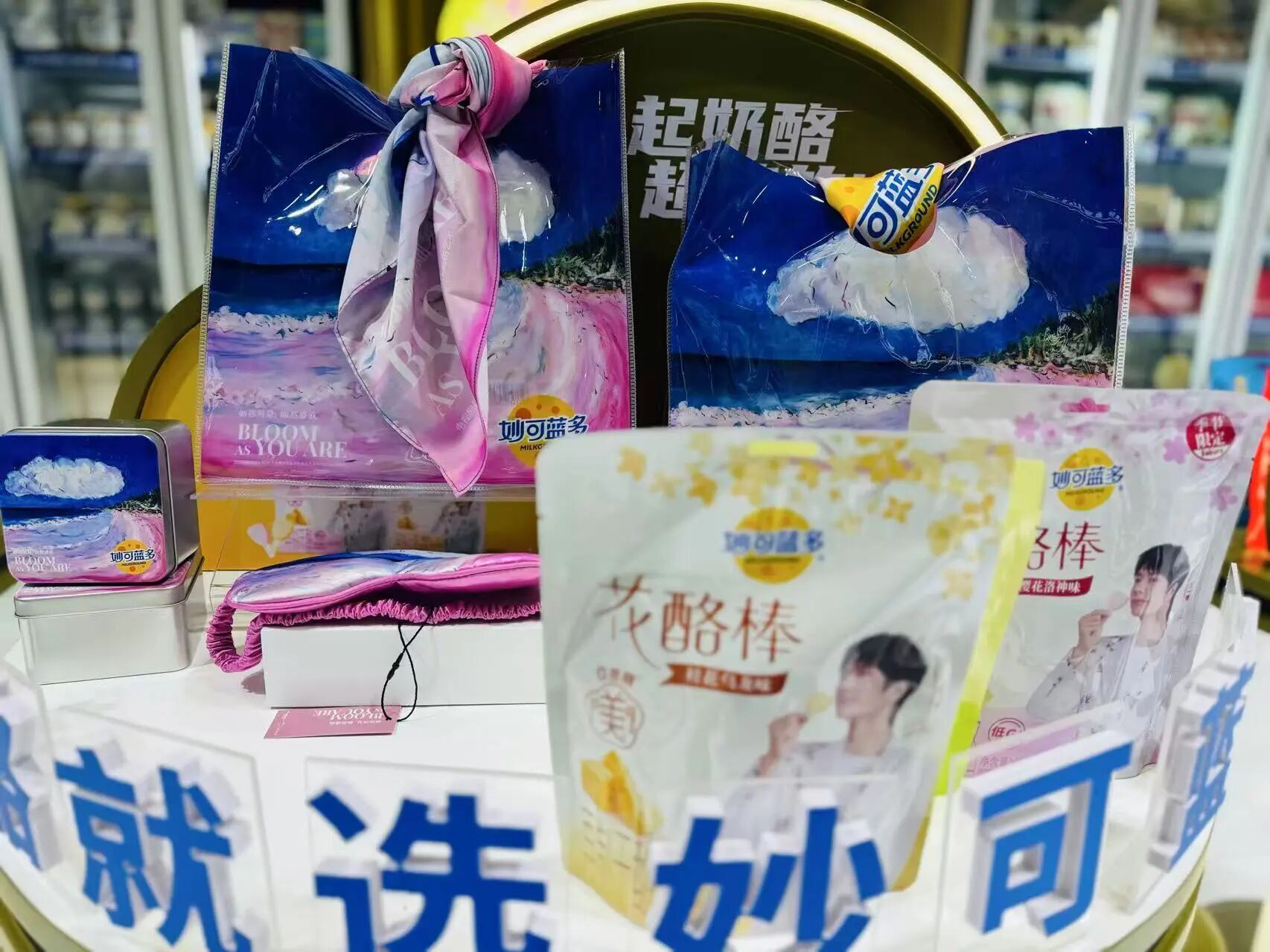
当前妙可蓝多正处于战略转型关键期,2026年公司计划从中等规模食品企业迈入大型生产制造企业,去年前三季度,妙可蓝多实现营收39.57亿元,同期归 母净利1.76亿元,增长106.88%。 1月26日,"奶酪第一股"妙可蓝多发布重磅人事公告,原行政总裁蒯玉龙正式接替创始人柴琇出任公司CEO,柴琇被免去副董事长、总经理及法定代表人职 务,任期终止日期较原定的2027年11月提前。 此次人事调整也标志着妙可蓝多结束创始人主导时代,正式迈入少壮派职业经理人带领的专业化经营新阶段。 孙婉秋 摄 柴琇离任的直接导火索为其关联方通过体外并购基金提供的担保债务逾期,债权人为妙可蓝多第一大股东蒙牛,该事件预计导致公司2025年净利润减少1.19 亿至1.27亿元。尽管柴琇曾承诺个人兜底该基金亏损,但未能履行,这也加速了蒙牛系全面接管进程。同日披露的权益变动公告显示,蒙牛于2025年12月29 日至2026年1月23日期间增持133.22万股,持股比例由36.77%升至37.04%,进一步巩固了控股地位。 对于蒯玉龙的接任,市场并不意外,某种意义上,其过往资历和展现出的能力高度契合当前妙可蓝多的发展需求。 进入妙可蓝多之前,蒯玉 ...

中国连锁经营协会:2025年超六成便利店企业销售实现增长
Xin Hua Wang· 2026-01-26 10:36
Core Insights - The China Chain Store & Franchise Association's report indicates that over 60% of convenience store companies are expected to see year-on-year sales growth by 2025, primarily driven by comparable store sales growth and store expansion [1] Group 1: Sales Growth and Store Expansion - Sales growth for convenience stores is mainly attributed to comparable store sales, followed by sales increases from store expansion [1] - The overall number of convenience store locations in China is projected to continue growing, although the growth rate is expected to slow down [1] Group 2: Store Size and Growth Rates - Companies with store counts between 501 to 1000, 1001 to 3000, and 3001 to 10000 are experiencing the highest average growth rates of 10.8%, 8.5%, and 6.9% respectively [1] Group 3: Profitability and Online Orders - More than half of the surveyed companies are maintaining stable profitability, with 67.9% reporting an increase in online orders [1] Group 4: Strategic Focus for 2026 - Nearly 70% of companies plan to focus on optimizing product categories, refining operations, and developing private labels as key initiatives for 2026, with a consensus on enhancing "product strength" [1] - Companies are expected to maintain stable strategic choices, with a decrease in cross-regional development and an increase in efforts to densify regional store presence and invest in technology and capital [1]
90后酒店投二代,开始批量回家接班丨老板有话说
3 6 Ke· 2026-01-26 02:40
Core Insights - The article discusses the transition of family-owned private enterprises in China, particularly focusing on the new generation of hotel investors, referred to as "second-generation hotel investors" or "投二代" [2][3] - These second-generation investors are facing a different market environment compared to their predecessors and are tasked with innovating and breaking through in a saturated market [3] Group 1: Transition and Challenges - Approximately 3 million family-owned private enterprises in China are at a critical juncture as the first generation of entrepreneurs ages and prepares to pass on their businesses [2] - The new generation, often educated and with international backgrounds, is entering the hotel industry, bringing a more rational and pragmatic perspective to hotel investments [8][9] - The second-generation investors are grappling with the decision of whether to rely on their parents' established business models or to carve out their own paths in the industry [3][4] Group 2: Training and Experience - A notable example is W, a second-generation hotel investor who started from the grassroots level, rotating through various roles in his family's hotels to gain comprehensive operational knowledge [4][6] - This hands-on experience is seen as essential for developing leadership skills and understanding the intricacies of hotel management, which cannot be replaced by formal training [6][7] Group 3: Generational Differences - Conflicts often arise between the second-generation investors and their parents regarding business strategies, such as the choice between local and international hotel brands [8][9] - The younger generation tends to focus more on user experience and refined operations, contrasting with the older generation's emphasis on location and traditional management practices [9][10] Group 4: Marketing and Engagement - The second-generation investors are leveraging social media and content creation to engage with customers, contrasting with the more reserved approach of the first generation [12][13] - They are increasingly involved in the day-to-day management of their hotels, using platforms like short video apps to showcase their operations and connect with a younger audience [12][16] Group 5: Future Outlook - As the first generation retires, the second-generation investors are expected to adapt to new market dynamics and consumer preferences, focusing on innovation and customer engagement [17][18] - The article suggests that the future of the hotel industry will require these new leaders to be proactive and capable of navigating the complexities of modern business environments [17]