
肿瘤免疫治疗

Search documents
双总裁时代的百济神州,还有哪些故事可讲?
Guo Ji Jin Rong Bao· 2025-12-19 15:25
Core Viewpoint - BeiGene has appointed Dr. Wang Lai as co-CEO alongside Wu Xiaobin, marking a dual-CEO structure aimed at enhancing management stability and addressing market concerns [1][5]. Group 1: Leadership Changes - Dr. Wang Lai, previously the global head of R&D, will now also serve as the President of BeiGene, overseeing R&D, business development, and alliance management [1]. - Wu Xiaobin remains as co-CEO and COO, recognized for his significant contributions to the company, including the successful commercialization of key products [2]. Group 2: Financial Performance - BeiGene reported a turnaround in profitability, with a net profit of 450 million RMB in the first half of 2025, compared to a loss of 2.877 billion RMB in the same period last year, driven by strong sales of its self-developed products [3]. - The company’s revenue for the first three quarters reached 27.595 billion RMB, a year-on-year increase of 44.2%, prompting an upward revision of its full-year revenue guidance to between 36.2 billion and 38.1 billion RMB [4]. Group 3: Product Performance - The global sales of the BTK inhibitor, Zepzelca (Zebutinib), reached 12.527 billion RMB in the first half of 2025, marking a 56.2% increase, with the U.S. market contributing significantly [3]. - The PD-1 inhibitor, Tislelizumab (BeiGene's key product), generated sales of 2.643 billion RMB in the same period, reflecting a 20.6% increase, bolstered by new indications and increased hospital access [3]. Group 4: Market Challenges - Despite the positive financial results, BeiGene faces intense competition in the oncology immunotherapy sector, particularly for its main products, Tislelizumab and Zepzelca [5][6]. - The PD-1 market in China is highly competitive, with multiple domestic players and established international competitors, necessitating strategic maneuvers to maintain market share [6]. - Zepzelca, while showing strong sales growth, competes against the established BTK inhibitor, Ibrutinib, which holds a significant market share and poses challenges for BeiGene's growth [6][7]. Group 5: R&D and Future Outlook - Continuous investment in R&D is crucial for BeiGene to keep pace with rapid technological advancements in the oncology field and to develop new products that can sustain growth [7].

复宏汉霖:纳武利尤单抗生物类似药HLX18用于多种实体瘤治疗的1期临床试验申请获美国食品药品管理局批准
Zhi Tong Cai Jing· 2025-12-19 09:11
Core Viewpoint - The company has received FDA approval for its self-developed biosimilar HLX18, a recombinant anti-PD-1 humanized monoclonal antibody, for use in various solid tumors, indicating a significant advancement in its clinical development pipeline [1] Group 1: Product Development - HLX18 is a biosimilar to nivolumab, with potential indications including melanoma, non-small cell lung cancer, malignant pleural mesothelioma, renal cell carcinoma, classical Hodgkin lymphoma, head and neck squamous cell carcinoma, urothelial carcinoma, gastric cancer, gastroesophageal junction cancer, esophageal adenocarcinoma, esophageal cancer, colorectal cancer, and hepatocellular carcinoma [1] - The company plans to conduct Phase 1 clinical trials in the United States once conditions are met [1] Group 2: Mechanism of Action - The PD-1 receptor expressed on T cells binds to its ligands PD-L1 and PD-L2, which can inhibit T cell proliferation and cytokine production [1] - Tumor cells can upregulate PD-1 ligands, leading to the suppression of activated T cells' immune surveillance against tumors [1] - Nivolumab, as a human immunoglobulin G4 (IgG4) monoclonal antibody, binds to the PD-1 receptor, blocking its interaction with PD-L1 and PD-L2, thereby inhibiting the immune suppressive response mediated by the PD-1 pathway, including anti-tumor immune responses [1]
【Cell】以色列学者发文:揭示免疫逃逸新机制并提出增强肿瘤免疫力的治疗途径
Sou Hu Cai Jing· 2025-12-16 14:35
Core Insights - The study published in the journal "Cell" reveals that melanoma cells secrete large extracellular vesicles (melanosomes) that express major histocompatibility complex (MHC) molecules, which stimulate CD8+ T cells through T cell receptors (TCR), leading to T cell dysfunction and apoptosis [3] Group 1: Immune Evasion Mechanism - Melanoma cells utilize MHC export to protect themselves from cytotoxic T cell attacks, revealing a novel immune evasion mechanism [3][7] - The research indicates that melanosomes carry tumor-associated antigens with higher affinity and immunogenicity, competing directly with TCR-MHC interactions [3] Group 2: Impact of Inhibiting Melanosome Secretion - Inhibition of melanosome secretion significantly reduces tumor immune evasion, enhancing the effectiveness of CD8+ T cells in the tumor microenvironment [3][7] - The use of the depigmenting agent kojic acid, which blocks melanin production, resulted in decreased melanosome secretion without affecting melanoma proliferation or MHC I expression [4][5] Group 3: Experimental Findings - In mouse models, the inhibition of melanosome secretion led to increased infiltration of CD8+ T cells into the tumor microenvironment and slowed tumor growth [5][7] - The study demonstrates that blocking melanosome secretion can enhance the activity and effectiveness of tumor-infiltrating CD8+ T cells [7]

Nature子刊:杨帆团队等开发癌症免疫治疗新策略,利用三特异抗体重构免疫互作,治疗免疫冷肿瘤
生物世界· 2025-12-11 10:00
编辑丨王多鱼 排版丨水成文 在许多 " 免疫冷肿瘤 " 中,能够识别肿瘤的特异性 T 细胞十分稀缺,而相当数量状态良好的 T 细胞却因无法识别肿瘤抗原而长期 " 旁 观 " 。与此同时,肿瘤内部又充斥免疫抑制性的巨噬细胞,使得 T 细胞难以维持持续杀伤。 如何让 " 旁观者 " 真正投入战斗,并反向利用巨噬细胞为免疫反应助力,成为破解实体瘤免疫治疗瓶颈的关键。 2025 年 12 月 10 日,上海交通大学医学院附属仁济医院、上海市妇科肿瘤重点实验室 杨帆 研究员团队联合 庄光磊 研究员和 狄文 教授,在 Nature 子刊 Nature Biomedical Engineering 上 发表了题为: A trispecific antibody engaging T cells with tumour and myeloid cells augments antitumour immunity 的研究论文。 该研究开发了一种三特异性抗体—— B7H3×CD3×PDL1 ,能够同时结合 T 细胞、肿瘤细胞和巨噬细胞,以增强抗肿瘤免疫。 该研究提出了一条突破传统的肿瘤免疫治疗的新路径——不再依赖稀有的肿瘤特异性 ...

港股异动 | 康方生物(09926)早盘涨超3% 依沃西方案一线治疗TNBC更新数据于ESMO IO 2025发布
智通财经网· 2025-12-11 02:01
Core Viewpoint - Kangfang Biopharma's innovative PD-1/VEGF bispecific antibody, Ivosidenib, shows promising efficacy in treating locally advanced unresectable or metastatic triple-negative breast cancer (TNBC) in a phase II clinical study, highlighting its potential in first-line therapy [1][2] Group 1: Clinical Development - Ivosidenib has demonstrated superior efficacy data in a phase II clinical study presented at the ESMO IO conference, indicating significant clinical potential for TNBC treatment [1] - The drug has been included in the Breakthrough Therapy Designation (BTD) list by the National Medical Products Administration (NMPA) in China, based on its excellent efficacy and safety profile [1] - A multicenter, randomized, double-blind phase III clinical study (HARMONi-BC1/AK112-308) for Ivosidenib in TNBC is currently progressing efficiently [1] Group 2: Regulatory Approvals - Ivosidenib is the first PD-1/VEGF bispecific antibody globally, with its first indication expected to receive approval from the NMPA in May 2024 for locally advanced or metastatic non-small cell lung cancer (nsq-NSCLC) after progression on EGFR-TKI treatment [2] - The drug was included in the national medical insurance catalog in November 2024, enhancing its accessibility [2]

Nature:邵峰院士发现新型癌症免疫疗法——ALPK1激动剂,有望克服STING和TLR激动剂面临的挑战
生物世界· 2025-12-11 00:38
编辑丨王多鱼 排版丨水成文 2025 年 12 月 10 日,北京生命科学研究所/清华大学生物医学交叉研究院 邵峰 实验室 ( 田笑影 博士、 博士研究生 刘佳琪 为论文第一作者 ) 在 Nature 期刊 发表了题为: Agonists for cytosolic bacterial receptor ALPK1 induce antitumour immunity 的研究成果。 19 世纪, 美国外科医生 威廉·科利 (William Coley) 观察到部分癌症患者在发生细菌感染后肿瘤 会 缩 小 甚至消退, 基于此,他尝试使用灭活的细菌混合物 (即"科利毒素") 来激发患者的免疫系统以 治疗 肿瘤,这 是肿瘤 免疫治疗 的早期尝试。 20 世纪中期, F. Macfarlane Burnet 和 Lewis Thoma s 提 出"免疫监视"理论,为免疫系统识别并清除肿瘤提供理论基础。随后,IL-2、IFN-α 等细胞因子疗法在 1980-1990 年代获批, 拉开了现代免疫治疗的序幕。 这项研究 首次阐明了 ALPK1 激动剂 作为一种 新型癌症免疫疗法 的巨大潜力 。 ADP-Hep 衍生物 UD ...

再度入选高新技术企业公示名单 东北制药创新实力获国家权威认证
Zheng Quan Ri Bao· 2025-12-09 15:49
Core Viewpoint - Northeast Pharmaceutical Group has been recognized as a high-tech enterprise again, reflecting its strong capabilities in core technology research and development, as well as the transformation of scientific achievements [1][2]. Group 1: Recognition and Certification - The company has been included in the first batch of high-tech enterprises for 2025, as announced by the National High-tech Enterprise Recognition Management Work Leading Group Office [1]. - The high-tech enterprise recognition cycle is every three years, with strict requirements on the number of independent intellectual property rights, research projects, and the ability to transform scientific achievements [1]. Group 2: Research and Development Investment - The company has significantly increased its R&D investment, with a 95% year-on-year growth in R&D expenses in the first three quarters of this year [2]. - Major breakthroughs have been achieved in cutting-edge fields such as tumor immunotherapy, with multiple tumor-targeted cell therapy products under development [2]. Group 3: Strategic Importance of Recognition - The renewed recognition as a national high-tech enterprise will provide the company with tax benefits, policy support, and opportunities for high-end market collaborations, enhancing its core competitiveness and industry influence [2]. - The company currently owns five high-tech enterprises, creating a strong cluster of innovation capabilities within the group [3]. Group 4: Future Development Plans - The company plans to leverage this recognition to further increase R&D resource investment, accelerate the industrialization of scientific achievements, and optimize its product structure [3]. - The focus will be on enhancing core competitiveness and contributing to the high-quality development of the pharmaceutical industry [3].

布局TCE肿瘤疗法千亿蓝海,时迈药业能否博得市场青睐?
Zhi Tong Cai Jing· 2025-12-09 05:40
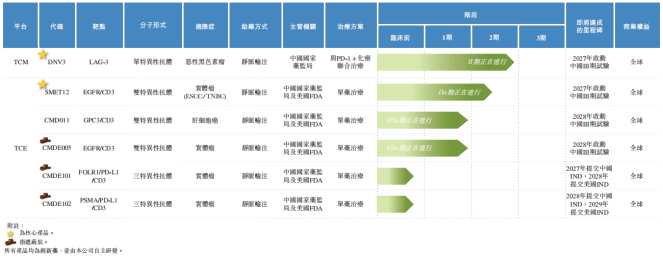
Core Viewpoint - Zhejiang Shimai Pharmaceutical Co., Ltd. has submitted an IPO application to the Hong Kong Stock Exchange, aiming to capitalize on the growing T cell engager (TCE) therapy market, which is experiencing rapid development and increasing interest from major international pharmaceutical companies [1][6]. Company Overview - Founded in 2017, Shimai Pharmaceutical is a pioneer in next-generation TCE therapies, focusing on utilizing the human immune system to combat cancer [1]. - The company has developed a next-generation TCE therapy that can be selectively activated in tumors for the treatment of solid tumors [1]. Financial Performance - Shimai Pharmaceutical is currently in the clinical research phase with no commercialized products. The company reported revenues of 14.649 million, 6.618 million, and 2.278 million RMB for 2023, 2024, and the first half of 2025, respectively [2]. - The company has incurred losses of 74.943 million, 59.899 million, and 25.42 million RMB over the same periods, showing a trend of narrowing losses [2]. - Research and development expenses were 76.109 million, 53.382 million, and 22.389 million RMB for the same periods, with employee costs being a significant component [2]. Product Pipeline - Shimai Pharmaceutical has four innovative drug candidates in clinical stages and two additional candidates in preclinical stages targeting solid tumors [2][5]. - The lead candidate, DNV3, targets LAG3 and has shown promising clinical data, including a 44.4% objective response rate in melanoma patients previously treated with PD-(L)1 inhibitors [3][4]. - SMET12, another candidate, is a potential first-in-class intravenous TCE for EGFR-positive advanced solid tumors and is currently in Phase IIa clinical trials [5]. Market Potential - The global TCE market is projected to grow from $400 million in 2020 to $3 billion by 2024, with a compound annual growth rate of 67.6%, and could reach $47.5 billion by 2030 and over $120 billion by 2035 [9][11]. - The TCE therapy offers advantages over CAR-T therapies and antibody-drug conjugates (ADCs), making it a promising direction for next-generation cancer immunotherapy [6][9]. Competitive Landscape - The TCE field is witnessing significant interest, with over $8.5 billion in transactions in 2024 alone, as major pharmaceutical companies enter the market [8]. - Currently, only two TCE drugs for solid tumors have been globally approved, indicating a substantial market opportunity for companies like Shimai Pharmaceutical that focus on this area [11][13]. Strategic Positioning - Shimai Pharmaceutical's focus on solid tumor TCE therapies positions it well in a market with limited competition, as most domestic players are still concentrated on hematological malignancies [13][14]. - The company’s innovative drug candidates are developed through specialized platforms, creating a competitive barrier in the TCE space [5].
亿帆医药(002019.SZ):子公司在研产品N-3C01注射液获得临床试验批准通知书
Ge Long Hui A P P· 2025-12-08 11:21
Core Viewpoint - Yifan Pharmaceutical (002019.SZ) has received approval from the National Medical Products Administration for clinical trials of its innovative macromolecule drug N-3C01 injection, aimed at treating advanced solid tumors and non-muscle invasive bladder cancer (NMIBC) [1] Group 1: Drug Development - The drug N-3C01 is a recombinant IL-15/IL-15Rα fusion protein developed using DNA recombinant technology [1] - N-3C01 activates NK cells and CD8+ T cells, enhancing their anti-tumor efficacy, as demonstrated in preclinical studies [1] - The drug has shown a dose-dependent ability to inhibit tumor growth in mouse models [1] Group 2: Safety and Efficacy - N-3C01 has demonstrated good safety profiles in short-term and long-term safety trials conducted on rats and monkeys [1] - The mechanism of action involves simulating the binding of IL-15 to immune effector cell receptors, thereby activating immune responses against tumors [1]

亿帆医药:子公司在研产品N-3C01注射液获得临床试验批准通知书
Ge Long Hui· 2025-12-08 11:19
Core Viewpoint - Yifan Pharmaceutical (002019.SZ) announced that its wholly-owned subsidiary Hefei Xinzhu Biotechnology Co., Ltd. received approval from the National Medical Products Administration for clinical trials of the innovative macromolecule drug N-3C01 injection, aimed at treating advanced solid tumors and non-muscle invasive bladder cancer (NMIBC) [1] Group 1: Drug Development - N-3C01 is a recombinant IL-15/IL-15Rα fusion protein produced using DNA recombinant technology [1] - The drug activates NK cells and cytotoxic T cells, enhancing their anti-tumor efficacy through the binding of IL-15 with immune effector cell receptors [1] - Preclinical studies indicate that N-3C01 can activate human NK cells and CD8+ T cells in vitro, and it shows a dose-dependent tumor growth inhibition in mouse models [1] Group 2: Safety and Efficacy - N-3C01 demonstrated good safety profiles in short-term and long-term safety trials conducted on rats and monkeys [1]