能源独立

Search documents
为讨好特朗普,欧盟对俄罗斯下狠手,提前一年淘汰俄液化天然气
Sou Hu Cai Jing· 2025-09-21 10:49
Core Viewpoint - The European Commission has proposed a significant change in the energy landscape by banning the import of Russian liquefied natural gas (LNG) starting January 1, 2027, reflecting a growing urgency for energy independence from Russia [1][3]. Group 1: Financial Implications - The EU currently pays between €500 million to €700 million monthly for Russian LNG imports, translating to an annual outflow of €6 billion to €8.4 billion, which is a crucial source of foreign exchange for Russia [3]. - The accelerated timeline for the ban, moved up by a year, indicates the EU's increasing urgency regarding energy independence [3]. Group 2: Strategic Considerations - The proposal aims to weaken Russia's financial capabilities, as energy export revenues are a significant part of the Russian federal budget, contributing hundreds of billions annually [12]. - The EU's decision is influenced by multiple factors, including pressure from the U.S. government to reduce reliance on Russian energy, which is viewed as a security risk [7]. Group 3: Political Dynamics - The proposal marks a fundamental shift in the EU's energy policy, as previous sanctions did not target natural gas due to the need for unanimous agreement among member states [15]. - Some EU member states, particularly landlocked ones, face significant challenges in transitioning away from Russian pipeline gas, necessitating substantial investment and time to develop alternative infrastructure [17]. Group 4: Implementation Challenges - The proposal must undergo a complex approval process to become legally binding, requiring specific majority support in the European Council and simple majority approval in the European Parliament [22]. - There are discussions among European Parliament members to include pipeline gas in the ban and to expedite the implementation timeline, indicating a growing resolve to eliminate dependence on Russian fossil fuels [24].

美西方又一次破防:中国发现万吨级铀矿,一举成铀矿大国!
Sou Hu Cai Jing· 2025-09-19 11:17
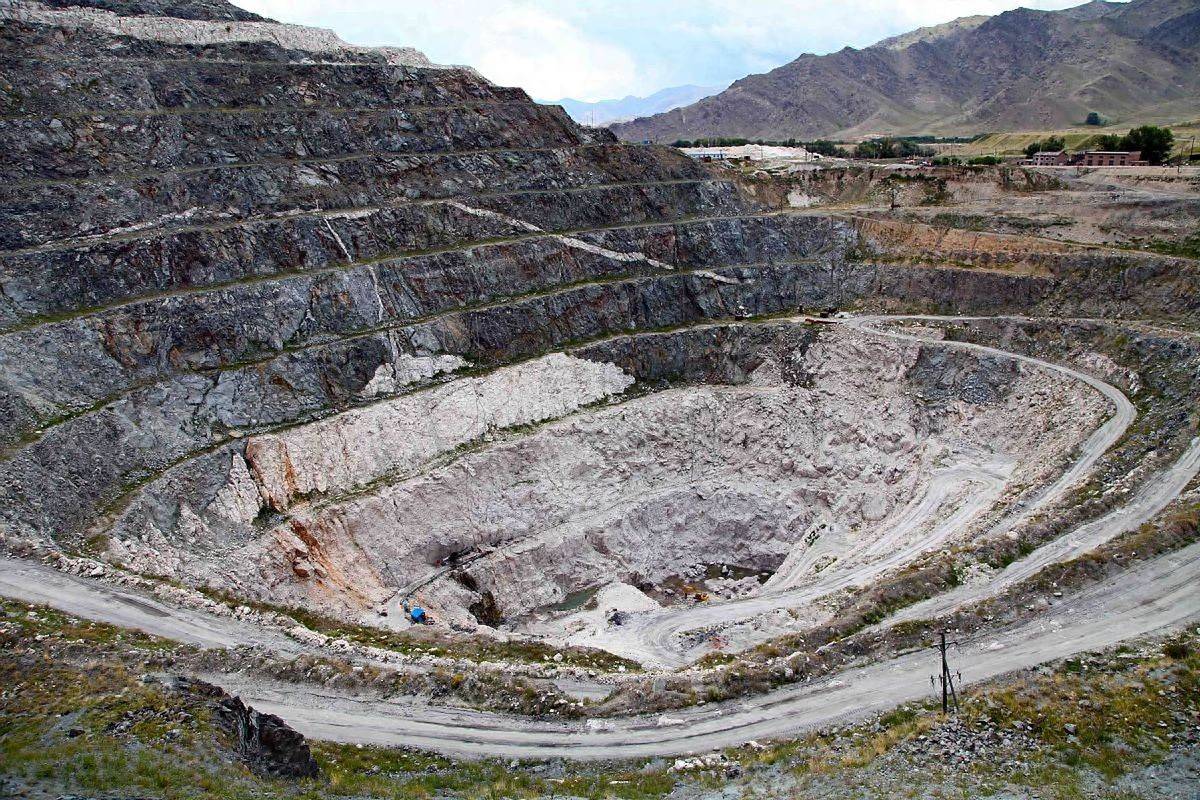
Core Viewpoint - Nuclear energy is a critical arena in great power competition, and control over uranium resources equates to control over future energy security [1] Group 1: Historical Context - Initially, China had minimal uranium resources, with only 17.4 million tons identified from 1950 to 2000, failing to rank in the top ten globally [3][5] - By 2009, China's nuclear power capacity surged, requiring 9,830 tons of uranium annually, while domestic production was only 1,885 tons, leading to a significant shortfall of 8,000 tons [3][5] Group 2: Challenges Faced - China relied heavily on uranium imports from countries like Kazakhstan, Australia, and Namibia, facing challenges such as price volatility and geopolitical pressures [5][14] - The phrase "we are a nuclear power but a uranium-poor country" encapsulated the frustration within China's nuclear industry during this period [5] Group 3: Breakthroughs in Uranium Exploration - A shift in geological exploration theory led Chinese geologists to explore sedimentary basins for uranium, resulting in the discovery of significant deposits in regions like Ordos and Tarim [7][9] - The introduction of innovative exploration methods, such as "coal-uranium co-exploration" and "oil-uranium co-exploration," drastically reduced costs and doubled efficiency [9][12] Group 4: Recent Discoveries and Developments - The discovery of the Daying uranium mine in the Ordos Basin, with over 50,000 tons of reserves, marked a significant milestone in China's uranium mining history [11] - By 2025, China is expected to have discovered one-third of its total uranium resources in the past decade, establishing four major uranium mining bases [13] Group 5: Future Projections - China's uranium self-sufficiency is projected to rise from under 20% in 2020 to over 40% by 2025 and potentially exceed 60% by 2030, reducing reliance on imports [14] - The shift in uranium resource control is expected to alter the international uranium pricing dynamics, enhancing China's bargaining power [14][16] Group 6: Strategic Implications - The advancements in uranium mining signify a move towards energy independence for China, impacting its nuclear power generation and military capabilities [16][19] - The goal is to establish a global uranium supply chain and enhance China's position in the international energy landscape [16][19]
美国能源新政“挂倒挡”的负外部性
Guo Ji Jin Rong Bao· 2025-09-13 00:19
Core Viewpoint - The article discusses the drastic shift in U.S. energy policy under President Trump, moving away from renewable energy sources like solar and wind, while favoring traditional fossil fuels such as oil and natural gas, leading to significant implications for both domestic energy markets and global climate efforts [1][5][11]. Group 1: Historical Context of U.S. Energy Policy - The U.S. faced severe economic challenges during the 1970s oil crisis, prompting a focus on energy independence and the development of renewable energy, leading to significant legislation supporting clean energy [2][3]. - Under President Obama, clean energy policies reached a peak, with substantial investments and incentives for solar and wind energy, which were seen as crucial for economic recovery [4]. Group 2: Recent Policy Changes and Impacts - Despite initial setbacks under Trump, the renewable energy market continued to grow due to strong state-level policies and corporate demand, but the Biden administration's policies further revitalized the sector with extended tax credits and new incentives [5][6]. - The "Big and Beautiful" Act introduced by Trump significantly rolled back clean energy incentives, effectively creating barriers for new solar and wind projects, which could lead to a substantial decline in renewable energy investments [6][14]. Group 3: Economic and Employment Implications - The tightening of clean energy policies has resulted in a significant drop in renewable energy investments, with a reported decrease of $20.5 billion (36%) in the first half of the year compared to the previous year [14]. - The renewable energy sector has already seen over 165,000 job losses in the first half of the year, with projections indicating a potential loss of 600,000 clean energy jobs by 2030 due to the reversal of energy transition policies [16]. Group 4: Global Climate and Geopolitical Considerations - Trump's energy policies are seen as detrimental to global climate efforts, as they undermine the role of renewable energy in combating climate change and could lead to increased carbon emissions [17][19]. - The shift in U.S. energy policy is also viewed as a strategic move to weaken China's competitive advantage in the solar and wind sectors while asserting U.S. dominance in traditional energy markets [18][19].
中俄蒙签天然气大单,“中国不在乎西方怎么想”
Guan Cha Zhe Wang· 2025-09-03 01:34
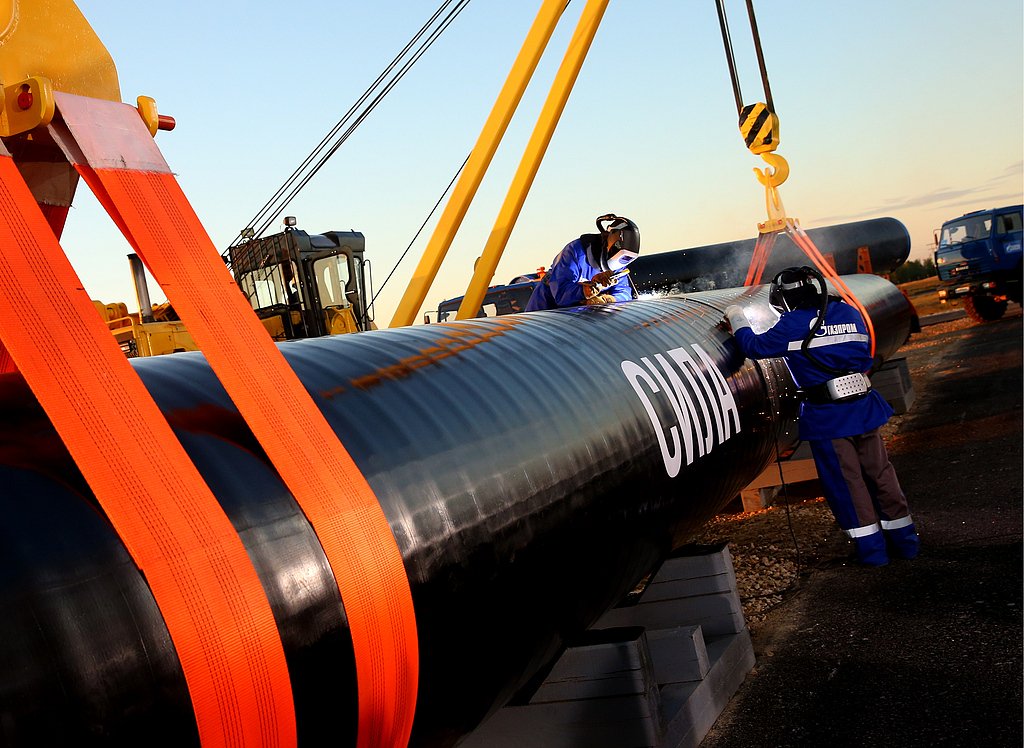
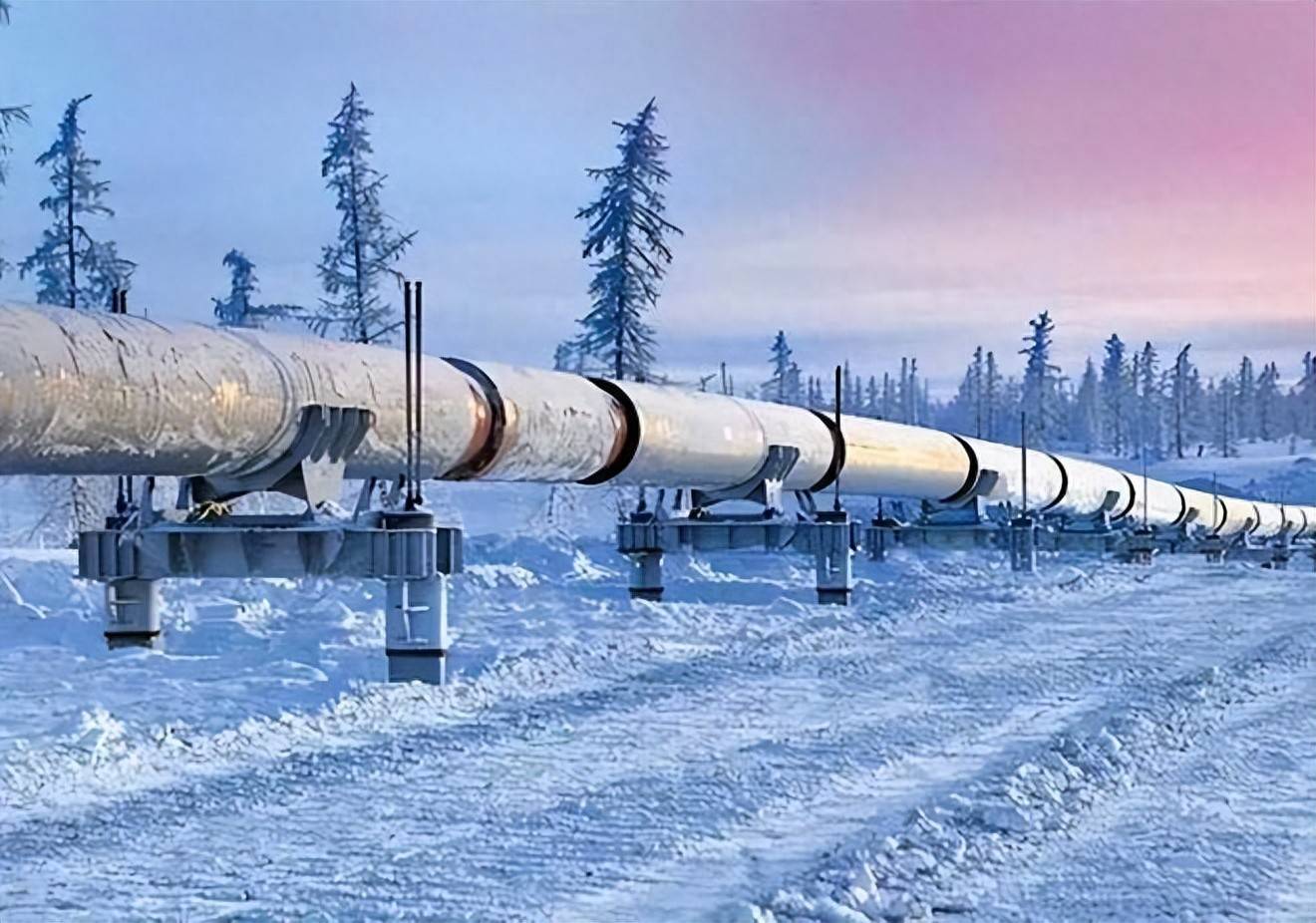
Core Viewpoint - The signing of the memorandum for the "Power of Siberia-2" gas pipeline between Russia and China marks a significant shift in energy geopolitics, indicating China's growing influence and its disregard for Western pressures to limit cooperation with Russia [1][2]. Group 1: Project Details - The "Power of Siberia-2" pipeline will transport up to 50 billion cubic meters of gas annually from Russia to China via Mongolia for a duration of 30 years [1]. - The project is seen as a potential replacement for the "Nord Stream 2" pipeline, which has been sidelined due to geopolitical tensions [2]. - The pipeline's construction has faced delays primarily due to unresolved issues regarding gas pricing and pipeline routing between Russia and China [6]. Group 2: Economic Implications - Russia is shifting its energy export focus towards China following the loss of the European gas market, which was previously a high-profit segment [2]. - The energy trade between China and Russia constitutes over one-third of their total trade volume, with Russia being China's largest source of crude oil and natural gas imports [4]. - The agreement to increase the annual gas supply through the existing "Power of Siberia" pipeline from 38 billion cubic meters to 44 billion cubic meters reflects the strengthening of energy ties between the two nations [7]. Group 3: Political Context - The cooperation between Russia, China, and Mongolia is supported by political agreements, with the leaders of the three countries agreeing to extend the economic corridor planning until 2031 [8]. - The recent agreements signed during the meeting of the three nations indicate a formal transition from political negotiations to commercial execution of the pipeline project [8].

Peninsula Energy Ltd (PEN) Update / Briefing Transcript
2025-08-27 02:02
Summary of Peninsula Energy Ltd (PEN) Conference Call - August 26, 2025 Company Overview - **Company**: Peninsula Energy Ltd (PEN) - **Industry**: Uranium Mining - **Location**: Wyoming, USA Key Points and Arguments Operational Updates - **Production Delays**: The company faced delays in the construction and commissioning of the Central Processing Plant (CPP), originally targeting dried yellowcake production by March 31, which has now been pushed back by six months [4][5][6] - **Wellfield Development**: Limited on-site resin storage capacity led to a slowdown in wellfield development, impacting production timelines [4][5] - **Mine Unit 3 Challenges**: Issues with the design and flow rates in Mine Unit 3 have extended the acidification process to nine months and recovery to over three years [5][10] Financial Position - **Contract Book**: The company had GBP 5,740,000 locked in over nine years on a take-or-pay basis, with GBP 470,000 for 2025 and GBP 900,000 for 2026. A significant reset of the contract book was necessary, terminating GBP 5,140,000 in contracts with no commitments for 2026 and 2027 [5][11][36] - **Capital Raise**: A capital raise of $70,000,000 was announced, with funds allocated for infrastructure, wellfields, and header houses [51][53][55] Production Outlook - **Horizon Plans**: - **Horizon One**: Expected production of up to 50,000 pounds in 2025, with the first dried yellowcake anticipated in September [23][57] - **Horizon Two**: Projected production of 400,000 to 600,000 pounds per annum in 2026 and 2027, with 60% from Mine Unit 4 [24][29] - **Horizon Three**: Focus on increasing production capacity and efficiency, with potential funding from the U.S. government [28][29] Market Position - **Uranium Demand**: The U.S. consumes approximately 50,000,000 pounds of uranium annually, with a significant gap between consumption and domestic production [18][50] - **Regulatory Environment**: Positive relationships with regulators have facilitated approvals for production and operational activities [17][32] Management Changes - **Board Restructuring**: A refreshed board and management team have been implemented, including the appointment of a new CFO and Non-Executive Chairman [12][13][33] Strategic Initiatives - **Cost Management**: The company is working on initiatives to improve cost efficiency, including potential partnerships for acid production and optimizing drilling processes [16][45][46] - **Exploration Upside**: Significant resources at the Lance project and exploration potential at Kendrick and Dagger projects, with Dagger being twice the grade of Lance [14][49] Risk Management - **Operational Risks**: Key concerns include the performance of the ore body, grade recovery curves, and flow rates, which are critical for production success [64] Additional Important Information - **Production Capacity**: The CPP has a capacity of 2,000,000 pounds, with plans to expand to 3,000,000 pounds pending additional infrastructure [32][43] - **Market Sentiment**: The company aims to regain investor confidence and is focused on delivering on promises made during the reset plan [58][80] This summary encapsulates the critical aspects of Peninsula Energy's current operational status, financial outlook, and strategic direction as discussed in the conference call.

中国又一大型页岩气田诞生,1650亿立方米页岩气储量,新项目让特朗普心如死灰!
Sou Hu Cai Jing· 2025-08-23 04:41
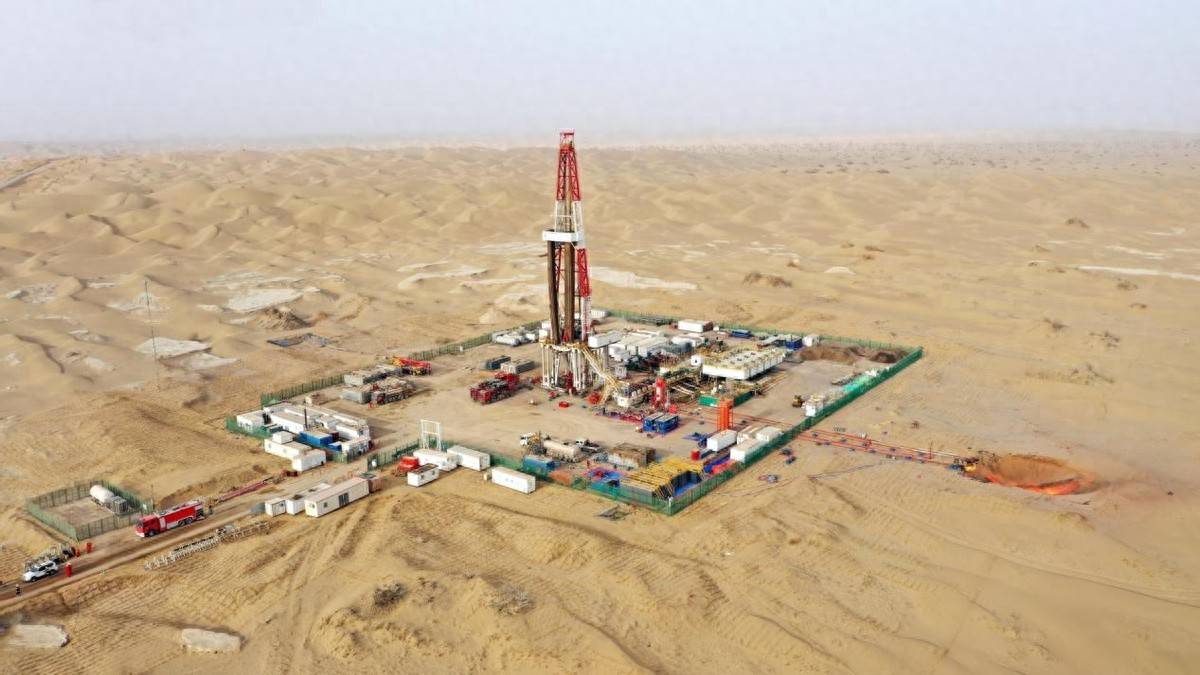
Group 1 - China, as the world's largest energy consumer, is reducing its reliance on the US and has discovered significant shale gas reserves in the Hongxing shale gas field, amounting to 1650.25 billion cubic meters [1] - The extraction of shale gas from the Hongxing field presents technical challenges due to its depth of 3300 to 5500 meters and complex terrain, but innovative theories and technological improvements have significantly increased production rates from 89,000 cubic meters per day to 323,500 cubic meters per day [1][3] - The development of shale gas enhances China's energy independence and security, allowing for a reduction in external energy dependency [3] Group 2 - China is diversifying its energy supply sources, notably increasing imports of Urals crude oil from Russia, which have nearly doubled to an average of 75,000 barrels per day since August [3] - The relationship between China and Russia is strengthening, with both countries benefiting from their complementary energy needs, while the US's pressure tactics have not yielded the desired results [5] - The trend indicates that energy relationships are becoming more complex in a globalized economy, and the US's aggressive policies may push China to seek alternative energy sources [5] Group 3 - China's advancements in shale gas development and restructuring of external energy supply chains reflect a resilient and flexible energy strategy [7] - The production from the Hongxing shale gas field demonstrates China's potential and determination in the energy sector, while the US's hegemonic approach may hinder its market opportunities [7] - The future global energy landscape will see continued competition and cooperation between China and the US, with China needing to strengthen partnerships with neighboring countries and major energy producers [7]
“争抢英特尔”背后:全球核心资产正经历一场重估
3 6 Ke· 2025-08-20 01:49
Group 1 - The core assets' value is being redefined by national security, supply chain stability, and energy independence, with significant capital inflows from the US, France, Japan, and emerging economies [1][4] - SoftBank's $2 billion equity investment in Intel at $23 per share highlights the strategic importance of Intel in the US semiconductor manufacturing and supply chain expansion [2][3] - The US government's potential plan to convert part of the $10.9 billion subsidy for Intel into approximately 10% equity indicates a shift towards non-market valuation based on strategic necessity rather than current profitability [2][4] Group 2 - The shift in asset pricing logic reflects a global re-evaluation of core assets, with examples including the French government's takeover of EDF and Japan's national fund investing in JSR [3][4] - The transition from a focus on efficiency and capital returns to prioritizing national security and supply chain stability is reshaping the underlying logic of asset pricing [4] Group 3 - Key global core assets include major players in defense, semiconductor manufacturing, and energy sectors, such as Lockheed Martin, Intel, and NextEra [6][8][11] - The list of global core assets emphasizes the strategic importance of companies in the semiconductor and energy sectors, which are crucial for national security and economic stability [5][10][12]

真的“神反转”!俄罗斯执行“断气”,欧洲国家竟有如此手段
Sou Hu Cai Jing· 2025-08-20 00:29
Core Insights - The ongoing energy conflict between Russia and Europe has intensified since the Ukraine conflict, with Russia cutting off gas supplies to Austria starting November 16, 2024, in response to a legal dispute with Austrian oil and gas company OMV [1][3][5] - Europe has prepared for such disruptions by significantly increasing its natural gas storage, achieving over 90% capacity by the end of October 2024, which has allowed it to manage the winter demand without major crises [7][9] - The European Union (EU) has been actively diversifying its energy sources, reducing reliance on Russian gas from 45% in 2021 to 19% in 2024, and aims to further decrease this figure by 2025 [13][15] Energy Supply Dynamics - Austria's gas imports from Russia accounted for about 20% of its total imports, and the sudden halt in supply led to a spike in energy prices [3][5] - Despite the cut in pipeline gas, Russia's overall gas exports to Europe increased by 18% to 20% in the first eleven months of 2024, reaching over 50 billion cubic meters, although liquefied natural gas (LNG) has become the dominant supply source [5][9] - The EU's RePowerEU plan aims to eliminate dependence on Russian energy by 2030, with sanctions targeting LNG and Russian gas projects already in place [5][9] Storage and Demand Management - The EU's strategic storage efforts have been crucial, with storage facilities exceeding 90% capacity ahead of winter, allowing for a stable supply during peak demand [7][9] - As of early 2025, the EU's gas storage levels are projected to drop significantly, with major countries like Germany and France facing lower inventory levels [7][9] - The EU's approach includes increasing imports from Norway, the US, and Qatar, while also enhancing energy efficiency and renewable energy usage [9][13] Geopolitical Implications - The Nord Stream pipeline explosions in 2022 have heightened Europe's awareness of energy security, prompting a shift towards independence from Russian gas [11][15] - The geopolitical landscape of energy supply is evolving, with Europe learning to diversify its energy sources and not rely solely on one supplier [15] - The ongoing energy crisis has led to increased competition for global gas supplies, particularly with rising demand in Asia [11][13]
“争抢英特尔”背后:全球核心资产正经历一场重估
阿尔法工场研究院· 2025-08-20 00:04
Core Viewpoint - The value of core assets is being redefined by national security, supply chain stability, and energy independence as capital from the US, France, Japan, and emerging economies enters the market [2] Group 1: Investment Activities - SoftBank reached a $2 billion equity investment agreement with Intel, purchasing shares at $23 each [3] - The US government is considering converting part of the $10.9 billion subsidy under the CHIPS and Science Act into approximately 10% equity in Intel, potentially making it the largest shareholder [4] - This competition for Intel highlights its strategic role in the expansion of the US advanced semiconductor manufacturing and supply chain [4][5] Group 2: Strategic Importance of Intel - Intel's value has transcended its individual corporate worth, becoming a foundational infrastructure for US technological sovereignty [5] - The hidden value in Intel's asset package includes its role as a "national security vehicle" and "supply chain stabilizer" [6] - The US government's plan to convert subsidies into equity reflects a non-market valuation based on Intel's strategic necessity rather than its current profitability [6] Group 3: Global Capital Movements - The shift in capital movements indicates a global revaluation of core assets, with similar actions seen in France, Japan, and Saudi Arabia [7] - The French government has fully nationalized EDF, while Japan's national fund invested 900 billion yen in JSR, a leader in photoresists [7] - Central banks in Beijing and Warsaw are accumulating gold, indicating a trend towards securing national resources [7] Group 4: Changing Asset Valuation Logic - The previous focus on efficiency and globalization is being replaced by a new paradigm prioritizing national security, supply chain stability, and energy independence [9] - The traditional metrics of market discount rates and capital returns are being diminished in importance, with new core indicators emerging [9]
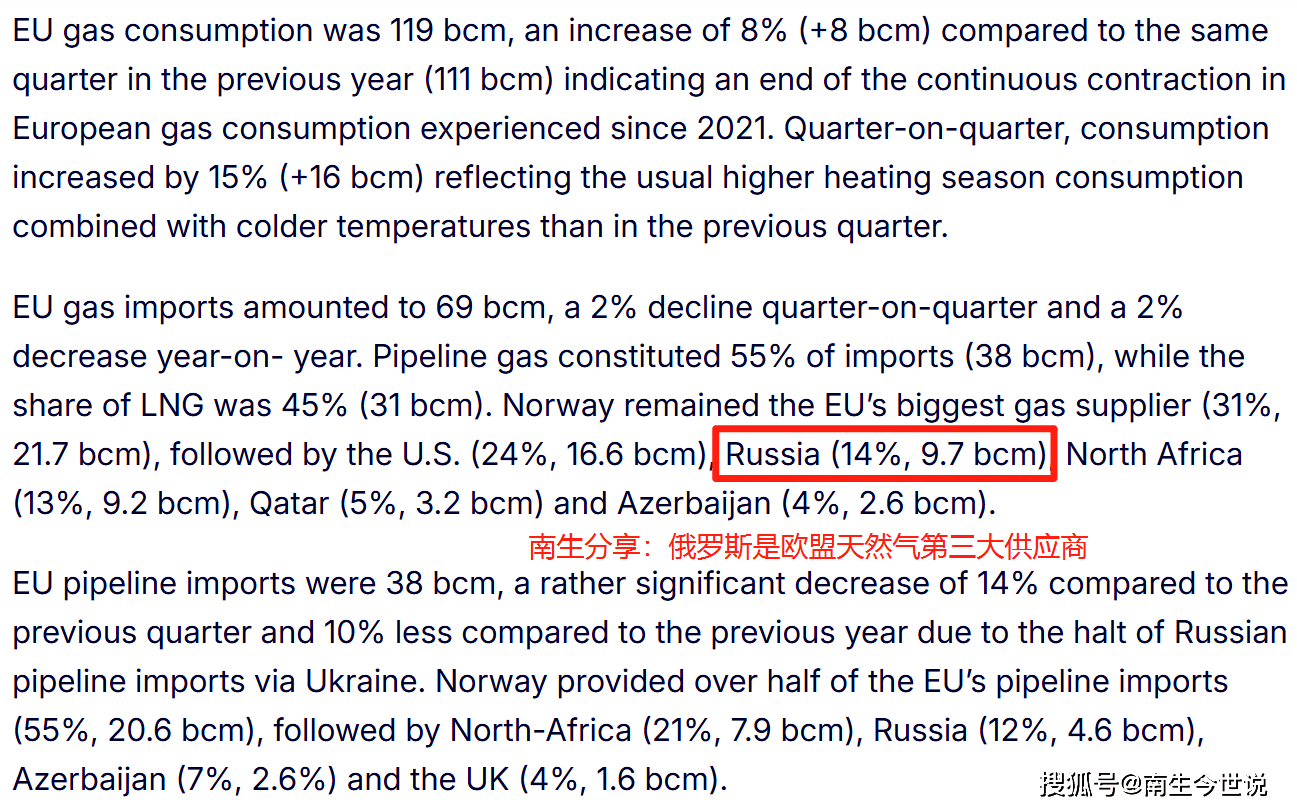
排第三,占据14%的比例!三年了,欧盟还是绕不开俄罗斯的能源
Sou Hu Cai Jing· 2025-08-19 19:51
Core Insights - Despite significant efforts by the EU to reduce dependence on Russian energy, Russia remains a crucial energy supplier, holding the third position in natural gas exports to the EU [1][2][4] Natural Gas Supply Dynamics - In Q1 2025, the total natural gas imports to the EU reached 69 billion cubic meters, with Norway as the largest supplier (31% share), followed by the US (24%) and Russia (14%) [1][2] - The EU's natural gas consumption rebounded to 119 billion cubic meters, marking an 8% year-on-year increase, ending a decline that persisted since 2021 [2] Shift in Supply Sources - The supply landscape has dramatically changed, with Russian pipeline gas supply dropping significantly due to the cessation of pipeline transport through Ukraine, leading to a 45% quarter-on-quarter and 39% year-on-year decline, now constituting only 12% of total EU imports [4] - In Q1 2025, Russia became the second-largest LNG supplier to the EU, providing 5.1 billion cubic meters, which accounted for 16% of the EU's total LNG imports [4] Economic Implications - The average wholesale natural gas price in Europe surged to €47 per megawatt-hour, a 71% increase year-on-year, driven by geopolitical risks and rapid inventory depletion [7] - Retail prices for EU households rose by 6% year-on-year, reaching €112 per megawatt-hour, with Germany experiencing a 28% increase, reflecting the economic costs of transitioning away from Russian energy [7] Energy Policy Challenges - The reliance on Russian LNG has paradoxically deepened, despite the EU's efforts to reduce dependency on pipeline gas, highlighting the complexities of the EU's energy transition [5][9] - The report underscores the ongoing challenges in achieving energy independence for the EU, as geopolitical realities continue to influence energy supply dynamics [9]